
A solar panel is the final product of a linked manufacturing chain: quartz-derived silicon is purified into polysilicon, crystallized into ingots, sliced into wafers, processed into photovoltaic cells, and assembled with glass and protective layers into a module. A module produces direct-current electricity, but a working home or business installation also needs mounting, wiring and an inverter. Understanding each stage helps you judge technology, supply risk and what a quoted solar price actually includes.
The supply chain at a glance
Most commercial panels follow a crystalline-silicon route. The material changes form several times before it becomes a finished panel, and each step has different equipment, energy needs and geographic concentration.

As an Amazon Associate I earn from qualifying purchases.
| Stage | What happens | Output | Why it matters to buyers |
|---|---|---|---|
| Polysilicon | Metallurgical-grade silicon reacts with hydrogen and chlorine in processes such as Siemens or fluidized-bed methods. | At least 99.999999% pure silicon, according to the U.S. Department of Energy (DOE) trade overview. | Electricity is a major cost, so energy prices and plant outages can affect later stages. |
| Ingot | Polysilicon is melted and crystallized. Czochralski pulling makes monocrystalline ingots; directional solidification can make multicrystalline ingots. | Large silicon crystals ready for slicing. | Crystal type determines the wafer starting material and the technology used in the cell. |
| Wafer | Diamond-coated wire saws cut an ingot into thin disks. | Thin silicon wafers; the removed sawdust is called kerf. | Wafer capacity is one of the most geographically concentrated parts of the chain. |
| Cell | Wafers are textured, doped, coated and fitted with metal contacts. | A semiconductor device that converts sunlight into electrical current. | Cell design, rather than the glass frame alone, determines much of a module’s electrical behavior. |
| Module (panel) | Copper ribbons connect cells; the cell strings are laminated between glass and encapsulant, backed by polymer or another sheet of glass, framed and fitted with junction-box hardware. | A weather-protected panel producing DC power. | A module is not a complete electrical system; installation hardware and power electronics are separate. |
How polysilicon becomes a wafer
1. Purifying silicon into polysilicon
The chain starts with quartz-derived material that is first converted into metallurgical-grade silicon. Manufacturers then use hydrogen, chlorine and high-temperature chemical processing to remove impurities. The DOE defines polysilicon in its trade overview as silicon with purity of at least 99.999999%. That extreme purity is necessary because small amounts of unwanted material can interfere with the semiconductor behavior needed in a photovoltaic cell.
What’s actually slowing this PC down?
Pick the symptom - the matching free tool is one click away.
Polysilicon is supplied as a fine-grained solid. It is not yet a panel component and cannot simply be wired to produce useful household electricity. It is the feedstock for growing or casting a crystalline ingot.
#1 Best Overall
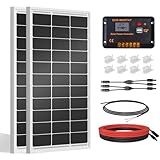
- [Wide Application]: Daily Output 800wh/day under 4 hours full sunshine condition. Perfect for RV, Caravan, Marine, Camper, Electric scooter, Golf Carts, Power wheels, Trolling motor, Tool trailer, Backup power supply for cabin shed home etc.
- [Excellent Performance]: ECO-WORTHY solar panels use high-performance monocrystalline solar cells, which can provide up to 21.5% higher efficiency sufficient light conditions.size:35.2*23.1.37in
- [Durable]: Corrosion-resistant aluminum alloy frame, so that the panel can be used for decades, and can withstand strong wind (2400Pa) and snow load (5400Pa), with a long service life. Ip65 rated junction box provides complete protection.:
- [Complete and Easy]: The back of the pre-drilled and plug-and-play cables allow quick installation, the kit can be connected in series (24V) or parallel (12V) if you need. What you will get: 2 pcs 100W mono solar panel + 2 set of Z mounting brackets + 30A solar controller + 1 pair of 16.4ft 10 awg solar cables + 1 pair of 2-in-1 connectors + 1 pair of 4.92ft tray cable.
- [Support]: 1 year with 24/7 tech support, if any problems or questions about the product,please do not hesitate to let us know through Amazon or call ECO-WORHTY hotline for solution.
2. Growing or casting an ingot
In a Czochralski process, purified silicon is melted and a seed crystal is slowly pulled from the melt, producing a single-crystal, or monocrystalline, ingot. Directional solidification can instead produce a multicrystalline ingot containing multiple crystal grains. The ingot is a large solid block or cylinder, not a thin solar wafer.
The distinction is a manufacturing pathway, not a guarantee that one finished panel will outperform every other panel. Cell architecture, module design and operating conditions also affect electrical output.
3. Slicing wafers and managing kerf
Wire saws coated with diamond particles slice the ingot into many thin wafers. Cutting removes a portion of silicon as dust known as kerf. Kerf is a material loss in the sawing operation, so factories continually work to control saw-wire use, wafer thickness and breakage. The wafer is the platform on which the photovoltaic device is built; it is still not a functioning cell until it receives semiconductor treatments and contacts.
Recommended Free Tools
How a wafer becomes a photovoltaic cell
Surface preparation and light management
Cell production begins by texturing the wafer’s surface. Texturing changes how light interacts with the silicon so more of it can enter rather than reflect away. The wafer is then prepared for the electrical junction that allows sunlight-generated charges to be separated and collected.
Rank #2

- 【Efficient Performance】This Starter Kit can generate an average of 500Wh of electricity per day (varies with sunlight). The solar panel boasts a 22.5% cell efficiency, 1.3% higher than other counterparts. Each panel dispatched from our facility undergoes 100% EL testing, ensuring that your panel is completely free from any hidden cracks.
- 【Market-Leading Service Plan】Enjoy worry-free usage with our market-leading service plan, providing 10 years of coverage for solar panel material and workmanship, along with a 2-year plan for the charge controller. Additionally, benefit from a 25-year service plan for the power output of the panel.
- 【Exceptional Safety】Certified by UL 61730, CSA C22.2#61730, IEC 61730/IEC 61215, our solar panel withstands 2400Pa wind and 5400Pa snow loads. Featuring IP65-rated J-box and IP67-rated solar connectors, rest assured, it can tackle any weather challenge.
- 【Remote Monitoring】The Wanderer PWM Charge Controller features an RS232 Bluetooth port. By adding a Renogy BT-1 Bluetooth Module, you can remotely monitor your solar system on the Renogy DC Home app. Keep track of voltage and current at any time, and receive timely warnings for over-voltage, under-voltage, and over-discharge.
- 【Excellent Compatibility】The solar kit with the Wanderer 30A PWM Charge Controller, supports expansion up to 400W with additional solar panels and is compatible with AGM, Gel, Flooded, and Lithium batteries.
Doping, coatings and contacts
Manufacturers dope selected regions of the silicon, apply coatings and add metal contacts. Doping creates the electrical properties needed for a photovoltaic junction. Coatings help manage reflection and electrical losses, while contacts provide a path for current to leave the cell. The resulting device is the basic current-producing unit in a module.
At this point, the product is still a fragile cell. It does not have the glass, encapsulant, frame or junction-box hardware needed for outdoor service. Cells are therefore tested, sorted and sent to module assembly, either within the same company or to another factory.
How cells become a finished module
Tabbing and stringing
Module assembly connects cells electrically and mechanically. Copper ribbons are attached to the cells’ busbars in a process commonly described as tabbing. Cells are then arranged and connected into strings so their voltages and currents combine in a useful configuration.
Lamination and protection
The cell strings are placed between glass and an encapsulant, a polymer layer that holds the cells in position and protects them from moisture and mechanical stress. A module may use a polymer backsheet on the rear or a second sheet of glass. Heat and pressure laminate these layers into a sealed panel.
Rank #3
Frame, junction box and testing
An aluminum frame or another structural edge supports handling and mounting. A junction box and associated hardware provide the external electrical connection and protect the connection points. The completed module is inspected and electrically tested before shipping. Its job is to deliver DC electricity reliably outdoors; conversion to the AC used by most buildings happens elsewhere in the system.
Module versus a complete solar installation
“Panel,” “module,” “kit” and “system” are often used as though they mean the same thing, but they describe different scopes.
| What you are buying | Normally includes | What remains to be supplied |
|---|---|---|
| Module or panel | Finished laminated panel, frame and junction-box hardware. | Mounting, wiring, inverter or microinverters, permits, labor and site-specific electrical equipment. |
| Solar panel kit | A module or modules plus some selected hardware; contents vary by seller and package. | Any omitted racking, cable, disconnects, inverter, batteries, design work or installation. |
| Complete system | Modules, mounting structures, wiring and an inverter or microinverters, with design and installation scope defined by the provider. | Items outside the written proposal, such as utility upgrades or unusual roof work, if applicable. |
A module generates DC power. An inverter converts DC to AC for building loads or grid connection; microinverters perform that conversion at individual modules. Racking holds the modules, and wiring connects the array to the power electronics and building. When comparing prices, confirm whether a quote is for modules only, a kit with partial hardware, or an installed system.
Quick wins for a faster PC:
Repair Windows errors before they cause bigger problemsFix Now →Fix the driver behind crashes, sound loss and screen glitchesFind Drivers →Clear out junk files and repair common Windows errorsFree Scan →Crystalline silicon and thin-film are different supply chains
Crystalline silicon
Crystalline silicon includes monocrystalline and polycrystalline products and uses the polysilicon-to-ingot-to-wafer-to-cell sequence described above. The DOE’s photovoltaic primer says about 95% of panels on the market use monocrystalline or polycrystalline silicon, making this the dominant commercial pathway.
Rank #4

- 【High Conversion Rate】This 20W solar panel with monocrystalline A+ solar cell has an excellent cell efficiency of 21%-30%. Designed to charge and maintain 12V rechargeable batteries like LiFePO₄, Lithium Ion, AGM, SLA, GEL, EFB, MF, etc. Keep batteries in charged for trailer, tractor, truck, boat, motorcycle, RV, car, lawn mower, water pump, gate opener, electric fence, etc
- 【Built to Last】 Low-iron tempered glass surface and corrosion-resistant aluminum frame, make this solar panel 100% waterproof and rustproof, and provide the prolonged lifespan up to 25 years. This 12V solar panel can withstand all weather conditions such as sandstorm, strong wind, thunderstorm, blizzard, hail, etc. It can withstand up to 2400Pa wind pressure and 5400Pa snow load
- 【Smart MPPT Controller】The charging efficiency of this upgraded 10A controller is 30% higher than other controllers on the market. Its intelligent three-stage charging design effectively prevents the battery from overcharging, over-voltage and short circuit. It takes no power from the battery. You will clearly know the charging status of the battery through the two indicator lights on the controller
- 【360° Adjustable Bracket & Plug-and-Play Installation】Comes with a fully 360° angle adjustable mounting bracket, which allows you to adjust the solar panel to the optimal sun-facing angle for maximum solar energy absorption and higher charging efficiency. Pre-drilled mounting holes and matched screws greatly simplify the installation process, no complicated tools or professional skills are required. All cable connections support plug-and-play, enabling quick and effortless installation and disassembly for both indoor and outdoor scenarios.
- 【Complete Accessories & Reliable After-Sales Service】Our SOLPERK Solar Panel kit includes 1*20W solar panel, 1*smart MPPT charge controller, 1*adjustable mounting bracket, 1*alligator clip, 1*O-ring and a full set of mounting accessories to meet your diverse installation and use needs. We offer 1-year professional after-sales service and lifetime technical support, with 7×24-hour online customer service to respond to your questions and solve problems within 24 hours, bringing you a worry-free shopping and using experience.
Cadmium telluride thin film
Cadmium telluride (CdTe) thin film follows a different route. Instead of first making silicon wafers, the semiconductor material is deposited directly onto glass. The DOE’s supply-chain review reported that crystalline silicon represented 84% of the U.S. market and CdTe 16% in 2020. Those figures describe that U.S. market snapshot, not every country or today’s global mix.
| Comparison | Crystalline silicon | CdTe thin film |
|---|---|---|
| Core manufacturing sequence | Polysilicon, ingot, wafer, cell, then module. | Semiconductor deposited directly on glass; no silicon-wafer stage. |
| Commercial prevalence | About 95% of panels on the market use mono- or polycrystalline silicon, according to DOE. | Principal thin-film alternative discussed in DOE materials; 16% of the U.S. market in the cited 2020 review. |
| Supply-chain exposure | Exposed to polysilicon, ingot and wafer capacity as well as cell and module assembly. | Uses a different material and deposition route, so its upstream bottlenecks are not identical to silicon’s. |
Where panels are made and why concentration matters
The International Energy Agency (IEA) identified concentration and polysilicon bottlenecks as supply-security concerns in its 2022 solar supply-chain analysis. Its 2026 analysis estimated that China accounted for around 85% of solar supply-chain production capacity and about 95% of photovoltaic wafer capacity. These are dated, aggregate capacity estimates, not a current country-by-country production table, and they should not be treated as the origin of every individual panel.
Concentration matters because a disruption at a small number of upstream plants can affect many downstream manufacturers. Trade rules, shipping interruptions, factory outages and changes in energy costs can alter availability or delivery times even when a panel is assembled in a different country. The location printed on a module therefore tells only part of the story: the wafer, cell and other components may have crossed several borders before final assembly.
Electricity is an upstream cost driver
According to the IEA’s 2022 executive summary, electricity accounted for over 40% of polysilicon production costs and nearly 20% of ingot and wafer costs. Those percentages are cost shares in the cited analysis, not a forecast of retail-panel prices. They explain why power prices, curtailments and outages can influence upstream economics and eventually feed into wafer, cell or module offers.
Best Value

- Portable Generator with 60W Solar Panel Included: with a big battery pack, ZeroKor 300W solar powered generator are powerful enough to charge smartphones,tablets,laptops,headphones or other outdoor small camping supplies(Tips:Using electrical appliances over 300W may damage the portable solar generator, especially some devices that are prone to heat or built-in air compressor such as coffee maker,Hair dryer, water pump etc )
- Multiple Charging outlets for camping gear with SOS Flashlight: with 2* 300W Max wall AC outlets, 1* DC port (9V-12.6V/10A max ), 3* 5V/3A Max USB ports, 1*quick charge USB port (5V/3A 9V/2A Max), Flashlight with reading mode and SOS mode for your outdoor Adventures, our portable solar power station offers a versatile charging solution,allowing you to charge your outdoor smart devices directly from a wall AC outlet
- Multiple Charging Optional, Solar Panel Charger 60W Included: ZeroKor portable power bank generator can be recharged by Home AC outlet, DC5521 13V-23V Solar Panel (Portable Power Station built-in MPPT), 12V Carport. Take the portable solar power bank generator with you on-the-go and never worry about power shortage,the portable AC outlet design makes it more suitable for Tent camping OFF-Grid
- Built in BMS(Battery Management System) : ZeroKor portable power station features short circuit protection, over-current protection, over-voltage protection, overload protection and overheating protection. The built-in cooling fan system will automatically start and stop according to the portable battery pack internal temperature during use. Acting as a portable solar power bank, it accommodates multiple devices simultaneously, making it perfect for indoor and outdoor use
- HIGH CONVERSION EFFICIENCY: ZeroKor solar panels 60W monocrystalline solar cell have a high conversion efficiency of 20.5%, and its performance is better than that of polycrystalline solar panels under the condition of insufficient light
What the chain means for household and business budgets
Compare the scope of every quote
A low price may cover only modules, while another quote may include the inverter, racking, wiring, engineering and installation. Put each proposal into the same scope before comparing dollars per watt or total project cost. Ask for the module count, rated output, inverter type, mounting hardware, cable lengths, shipping, labor and any excluded work in writing.
Expect supply risk to appear indirectly
You may not see a separate “polysilicon” line on an invoice. Upstream conditions generally appear through module availability, quoted lead time, substitutions or a revised price. A concentrated supply chain does not mean prices always move in one direction; it means disruptions can travel through several stages before reaching a buyer.
Check what a kit actually contains
The phrase “solar panel kit” is useful for finding a packaged product, but kits are not standardized. Before paying, verify:
- How many modules are included and the rated output of each.
- Whether an inverter or microinverters are included, and whether they match the intended electrical service.
- Which racking, rails, fasteners and roof or ground-mount parts are supplied.
- Whether DC and AC cables, connectors and protective equipment are included, and their stated lengths.
- Whether the package is intended for a permitted grid-connected installation, an off-grid setup or a small portable use.
- Which warranties apply to the module, power electronics and installation, and who handles a claim.
- What shipping damage, taxes, site work and professional labor cost extra.
A kit can be convenient, but missing one system component can erase the apparent saving if it has to be purchased separately or makes the package incompatible with the site.
Durability and the time horizon for a solar purchase
The DOE’s Solar Photovoltaic Cell Basics says modules are expected to last for 25 years or more and still produce more than 80% of their original power after that time. This is an expectation for module service life, not a promise that every installation will deliver the same output. Roof orientation, shade, temperature, weather, wiring, inverter life and maintenance also affect a complete system’s results.
For personal-finance planning, separate the long-lived module from components that may have different replacement timelines. A module purchase is a multi-decade asset decision, while an inverter, mounting repair or electrical upgrade can create a different future expense. Keep the module and system documentation so the owner can identify the manufacturer, model, installation date and warranty terms.
A practical glossary
| Term | Plain-language meaning |
|---|---|
| Metallurgical-grade silicon | Less-pure silicon feedstock that is further refined to make polysilicon. |
| Polysilicon | Ultra-high-purity silicon used to make crystalline ingots. |
| Ingot | A large crystal or cast block of silicon before it is sawn. |
| Wafer | A thin slice of an ingot prepared for cell processing. |
| Cell | The semiconductor device that converts light into DC electricity. |
| Module or panel | Interconnected cells sealed behind glass and protective layers. |
| Kerf | Silicon sawdust removed while wire-sawing an ingot. |
| Inverter | Power electronics that convert the module’s DC output to AC. |
Questions to answer before signing or ordering
- Is the quoted product a module, a partial kit or a complete installed system?
- Where were the module, cells and wafers made, and is that information documented for the specific model?
- What happens if the quoted model is unavailable: is substitution allowed, and must you approve it?
- Which components carry separate warranties and who provides service?
- Are shipping, storage, permits, electrical upgrades and labor included?
- Does the proposed inverter match the array and the building’s electrical connection?
- What production or power figure is being promised, and what assumptions accompany it?
The central financial lesson is to price the whole system and its risks, not just the visible glass panel. Polysilicon, wafers, cells and modules are connected stages, and a bottleneck or cost change upstream can affect the product that eventually reaches your roof.
Quick Recap
Product prices and availability are accurate as of the date/time indicated and are subject to change. Any price and availability information displayed on Amazon at the time of purchase will apply.




