
The most useful thermostat setting is a schedule that matches your household’s real occupancy—but the right schedule depends on the heating and cooling equipment. For many conventional systems, the U.S. Department of Energy (DOE) says lowering the thermostat 7–10°F for eight hours a day in fall and winter, then raising the setting in spring and summer, can save as much as 10% per year on heating and cooling. That is a general estimate, not a promise for every home. Heat-pump owners should take a different approach: ENERGY STAR recommends choosing a comfortable temperature and leaving it steady, with the system set to Heat or Cool rather than Auto.
A smart thermostat can automate those choices, learn routines, provide remote control and show energy feedback. It does not create guaranteed savings by itself. Savings depend on your equipment, insulation, weather, rates, schedule and how the thermostat is configured.
As an Amazon Associate I earn from qualifying purchases.
Identify your HVAC system before changing the schedule
Thermostat advice is not interchangeable across all heating and cooling systems. Find out whether your home uses a conventional system, a heat pump or newer variable-speed equipment before applying a setback.
Conventional heating and cooling
Furnaces, boilers and many standard central air-conditioning systems generally fit the DOE’s broad setback guidance. When the home is empty or people are asleep, the system can run less because the indoor temperature is allowed to move away from the occupied comfort setting. A programmable or smart thermostat can restore the occupied setting before people need the space.
#1 Best Overall

- Save up to 23% every year on heating and cooling costs, adjusts to your set schedule to save energy when you’re gone and optimize comfort when you’re home. Compared to a hold of 72
- Compatible with 85% of systems, check your system’s compatibility with our online ecobee Compatibility Checker on the ecobee support page
- Change your temperature by easily tapping the color touchscreen or using the ecobee app. Plus, free software upgrades ensure you get the best out of your Smart Thermostat Essential, for years to come
- Automatically adjusts to your set schedule to save energy when you’re gone and optimize comfort when you’re home. Keep track of your energy consumption when you're on the go on the ecobee app
- Easy DIY install. No C Wire, no problem. Get the ecobee Power Extender Kit (PEK) for homes without a C-Wire and keep your walls looking nice with our trim kit – both sold separately
Heat pumps
Heat pumps require a separate branch of the advice. The DOE warns owners not to use a conventional setback approach unless the thermostat is designed for heat pumps. ENERGY STAR’s consumer guidance says heat pumps do not save energy by being turned down while occupants are away or asleep; it recommends a steady, comfortable temperature instead. Use Heat or Cool mode rather than Auto, unless the equipment maker specifically instructs otherwise.
This matters because a heat pump may use a different, less efficient operating mode when recovering from a large setback. A controller supplied or approved by the equipment manufacturer may be appropriate for some high-efficiency systems. Verify the control strategy in the heat-pump documentation before creating a schedule.
Multispeed and other advanced equipment
Newer multispeed systems can respond to a setback and recovery differently from single-stage equipment. DOE benchmarking work is specifically examining evaluation problems involving these operating modes. A runtime-based estimate that seems reasonable for a conventional furnace may not translate directly to a multispeed heat pump or air conditioner.
Quick wins for a faster PC:
Scan for outdated or missing drivers - takes under a minuteDriver Scan →Clear out junk files and repair common Windows errorsFree Scan →What the DOE savings estimate actually means
The DOE’s 2022 Energy Saver guidance attaches the figure “as much as 10% per year” to a particular behavior: lowering the thermostat 7–10°F for eight hours each day in fall and winter, then raising the setting in spring and summer. The number is a general estimate for heating and cooling, not a guaranteed reduction on an individual bill. Your result can be smaller—or different—because of climate, building envelope, equipment efficiency, indoor temperature, recovery behavior and utility rates.
Rank #2
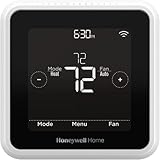
- High use of the scheduling feature of the T5 thermostat saved customers between 8 and 16% on heating and cooling bills. Dollar savings range based on nationwide average annual single-family detached home's heat and cooling bills; actual savings varies based on consumption.
- Save Energy and Get Rewarded. Check with your energy provider about available energy savings rebates to save on your purchase. Plus, eligible customers can enroll in their local Utility's "DEMAND RESPONSE PROGRAM" which can reward you for allowing the utility to slightly adjust your AC or furnace temperature settings when there is high energy demand.
- 7-Day Flexible Scheduling or Location Based Temperature Control. It’s your choice. 7-day scheduling programs your thermostat. Geofence technology helps make you comfortable by using your smartphone’s location to know when you’re away and when you return.
- Auto Home and Away Mode. Enjoy ideal temperatures at home, then save when away.
- ENERGY STAR certified. Help save energy, track your heating and cooling with monthly energy reports and get personalized tips on reducing energy use.
Do not treat the estimate as a required temperature rule. In an August 21, 2019 statement, the DOE said, “It is the position of DOE that Americans should set their thermostats to whatever temperature they choose.” Energy-saving settings are an option, not a mandate. Comfort, health, pets, plants and moisture control can justify a different setting.
Use occupancy to decide when a setting should change
A useful schedule has distinct periods instead of one temperature for the entire day. Start with a calendar of when the home is occupied, when everyone sleeps and when it is reliably empty.
- Occupied period: Use a temperature that is comfortable for the people who are home. There is no single cooling setpoint established by the cited DOE guidance for every climate, home or occupant.
- Sleep period: For a conventional system, this is a practical time to apply a setback or setup. For a heat pump, keep the comfortable setting steady unless the manufacturer provides different instructions.
- Away period: A predictable workday or school absence can be scheduled on a conventional system. If occupancy changes frequently, use a manual hold or geofencing only when you can verify that it will not create unwanted heating or cooling cycles.
- Transition period: Schedule recovery before people return rather than waiting until the house is uncomfortable. Heat-pump recovery should follow the equipment maker’s guidance.
For cooling, the DOE material supports raising the setting during sleep or absence but does not establish one universally optimal number. Choose the highest setting that remains acceptable for your household and building, then adjust it based on comfort and actual bills rather than copying a number from another climate.
Program a conventional-system schedule
Menu names vary by thermostat, but the workflow is similar on programmable and smart models. Make one change at a time so you can tell what affected comfort and energy use.
Rank #3

- PRIVACY PROTECTION*: Sensi won’t sell your personal information to third parties
- EASY DIY INSTALLATION: Use the built-in level and step-by-step app instructions for a quick installation. Works with HVAC equipment found in most homes. Common wire (c-wire) is not required in most applications
- SAVE ABOUT 23% ON HVAC ENERGY*: The ENERGY STAR-certified Sensi smart thermostat can help you save energy with features like flexible scheduling, remote access and usage reports
- SIMPLE CONFIGURATION: Looks and feels like a thermostat. Has buttons and fits the same space as a traditional thermostat so you don’t have to patch and paint your walls
- SMART MAINTENANCE: Sensi can help monitor the performance and efficiency of your HVAC system by delivering valuable usage reports, alerts about your equipment, and maintenance reminders like filter replacement
- Confirm the system type. In the thermostat’s equipment or setup screen, identify whether it controls a furnace, boiler, central air conditioner, heat pump or another system. Stop if the equipment is a heat pump and the control does not offer heat-pump-specific settings.
- Open the schedule editor. Look for Schedule, Program or Routine. Most devices let you set separate periods for weekdays and weekends.
- Enter the occupied periods first. Set the times people normally wake, return home and go to bed. Use a comfortable heating or cooling setting for those periods.
- Add the sleep and away periods. On a conventional system, apply the DOE example as a starting framework: a 7–10°F change for about eight hours. Use a smaller change if comfort, pets, plumbing or humidity requires it.
- Set recovery times. Have the thermostat return to the occupied setting before the room is needed. Avoid assuming that every system recovers at the same rate.
- Save and observe. Check the next several days for missed periods, excessive runtime, uncomfortable rooms or auxiliary heat. Adjust one period rather than rewriting the entire schedule.
- Use a temporary hold when plans change. Programmable thermostats can normally accept a manual override without erasing the rest of the program. Confirm whether the hold expires at the next period or remains until you cancel it.
Features that make a smart thermostat useful
Scheduling and automatic holds
Smart models can store multiple daily settings and may make it easier to change them from an app. The value is reliable execution: the thermostat can lower or raise a conventional system during a known absence and restore the occupied setting automatically.
Learning and geofencing
Learning algorithms infer routines from adjustments, while geofencing uses a phone’s location to estimate when occupants leave or return. Treat both as convenience features. Review the schedule they create, because an unusual workday, a guest or a phone left at home can produce the wrong decision.
Remote control and energy feedback
Remote access is useful when travel, weather or an unexpected return changes the plan. Energy-use feedback can show runtime or the apparent effect of a setting, but it is not a utility-grade bill forecast. Compare the display with your actual statements and account for weather and occupancy.
Recommended Free Tools
Certification is evidence, not a personal guarantee
ENERGY STAR says certified smart thermostats are independently certified using actual field data. Its criteria include scheduling, feedback about the energy consequences of settings, information about HVAC energy use, utility-program capability and device-performance requirements. Current criteria include a lower 95% confidence limit of at least 8% weighted national-average annual heating-runtime reduction and 10% for cooling; separate weighted national-average 20th-percentile thresholds are 4% for heating and 5% for cooling. These are certification statistics, not a fixed percentage off every household’s bill. The criteria also require reporting average resistance-heat utilization in heat-pump installations.
Rank #4

- EASY DIY INSTALLATION: Do it yourself fast with a built-in level and simple step-by-step instructions. Works with the HVAC equipment found in most homes
- COMMON WIRE REQUIREMENTS: Common wire(C-Wire) required for heat pump and heat/cool only systems. C-wire not required on most systems
- SAVE ABOUT 23% ON HVAC ENERGY: ENERGY STAR-certified and packed with features that help you save money, including flexible scheduling, geofencing, remote access and usage reports
- PRIVACY PROTECTION: Sensi won’t sell your personal information to third parties or leverage your thermostat activity data for targeting or advertising purposes
- CONTROL FROM ANYWHERE: The top-rated mobile app for Android and iOS devices makes it easy to control your comfort from a smartphone or tablet
Compare thermostat approaches by what they can do
| Control approach | Schedule automation | Manual override | Remote control and feedback | Best fit |
|---|---|---|---|---|
| Manual thermostat | No stored schedule | Adjustment is made at the device | No app-based features | A household that changes settings reliably by hand |
| Programmable thermostat | Multiple daily periods can be stored | Overrides can normally leave the rest of the program intact | Not a defining feature | A predictable routine where lower purchase cost matters |
| Smart thermostat | Schedules plus learning or geofencing on supported models | App and device changes can usually be temporary or scheduled | Remote control, energy-use feedback and software updates are common | Someone who wants automation, visibility or remote adjustment |
DOE notes that basic programmable thermostats can be cheaper, while ENERGY STAR describes smart products as adding features. Neither category is automatically best: the important comparison is compatibility, scheduling behavior, power requirements and the quality of feedback.
Check compatibility before buying
Do not select a thermostat solely because it advertises a savings percentage. Use this checklist before purchase or installation:
- Match the HVAC equipment. Confirm support for the exact heating and cooling arrangement, including heat pumps, auxiliary or emergency heat, two-stage equipment and high-efficiency systems. ENERGY STAR notes that a controller from the equipment maker may be appropriate for some very high-efficiency systems.
- Inspect the wiring. Most, but not all, smart thermostats use a C-wire for continuous power. If your wall plate lacks a C-wire, the model may be incompatible or may require an adapter. Compatibility is model-specific; do not assume that a spare wire is connected at the equipment.
- Check certification and incentives. If you are relying on an energy-saving claim, look for ENERGY STAR certification. Utility incentives can support certified products, but eligibility, amounts and availability are local and can change.
- Confirm installer requirements. Some systems need configuration at the air handler, furnace or outdoor unit. Follow the thermostat and HVAC manufacturer instructions, and use a qualified technician when wiring or high-voltage equipment is involved.
- Review privacy and account controls. A connected thermostat may require an account, app and software updates. Understand how schedules, location permissions and household access are managed before enabling geofencing.
Measure whether the schedule helps your home
A fair test compares similar periods rather than one unusually mild or severe day. Record the thermostat settings, occupied hours, outdoor conditions and utility usage. Compare bills or measured consumption across several billing periods while noting changes such as vacations, guests, ventilation, humidity or equipment service.
Do these 3 things before closing this tab:
1Repair Windows errors before they cause bigger problems2Fix the driver behind crashes, sound loss and screen glitches3Clear out junk files and repair common Windows errorsUse the thermostat’s runtime display as a diagnostic, not as proof of savings. A shorter runtime can coincide with higher auxiliary heat, a different operating stage or weather that changed the load. DOE’s work on multispeed equipment is a reminder that operating mode matters when interpreting results.
Best Value

- ENERGY STAR certified smart thermostat for home that helps you save energy and stay comfortable.Connectivity : Wi-Fi - 802.11b/g/n 2.4 GHz, 802.11a/n 5 GHz Wi-Fi., Wireless interconnect : Bluetooth Low Energy Please refer to the product description section below for all applicable legal disclaimers.Product note: You can also check your system’s compatibility before purchasing a Nest thermostat with our online Nest Compatibility Checker on the Google Nest support page
- The Nest Thermostat is designed to work without a C wire in most homes, but for some systems, including heating only, cooling only, zone controlled, and heat pump systems, you’ll need a C wire or other compatible power accessory
- Nest Thermostat turns itself down when you leave, so you don’t waste energy heating or cooling an empty home. Lock feature: No
- Programmable thermostat that lets you create an energy efficient schedule in the Google Home app on your Android or iPhone
- Remote control lets family members change the thermostat temperature from anywhere on a phone, laptop, or tablet[1]
If comfort worsens, rooms swing widely in temperature or the system runs continuously, restore the last comfortable schedule and investigate airflow, filtration, insulation, sizing or equipment faults. A thermostat cannot correct a blocked filter, failing sensor or poorly balanced duct system.
Common mistakes and how to correct them
- Applying a furnace setback to a heat pump: Switch to a steady comfortable setting and verify heat-pump controls with the manufacturer.
- Using Auto mode on a heat pump: Select Heat or Cool as ENERGY STAR advises, unless the equipment documentation specifies another mode.
- Copying a universal cooling number: The cited DOE guidance does not establish one best cooling setpoint. Choose a comfortable setting for your climate and occupants.
- Assuming “smart” means guaranteed savings: Learning, geofencing and feedback automate decisions; they do not establish an individual bill reduction.
- Ignoring recovery behavior: A large change can trigger a different stage or auxiliary heat. Reduce the size of the change, lengthen recovery or consult the equipment instructions.
- Leaving a temporary hold active: Check whether the hold expires at the next scheduled period. Cancel it when normal scheduling should resume.
- Buying without checking the C-wire: Confirm power requirements and adapter compatibility before removing the old thermostat.
A practical decision rule
If you have a conventional system and predictable occupancy, a programmable thermostat may be enough: schedule a setback during sleep or reliable absence, then return to a comfortable setting before occupancy. A smart thermostat is optional when you want remote changes, learning, geofencing or energy feedback.
If you have a heat pump, prioritize a compatible heat-pump control and a steady comfortable setting over a large setback. In every case, treat the DOE’s “as much as 10%” figure as a conditional estimate, verify the equipment instructions, and judge the result from your own comfort and measured energy use.
Quick Recap
Product prices and availability are accurate as of the date/time indicated and are subject to change. Any price and availability information displayed on Amazon at the time of purchase will apply.




