
Do these 3 things before closing this tab:
1Fix the driver behind crashes, sound loss and screen glitches2Repair Windows errors before they cause bigger problems3Scan for outdated or missing drivers - takes under a minuteSome links on this page are affiliate links: if you buy through them we may earn a commission, at no extra cost to you.
Short answer: Signal Relief appears to be a real product sold through a functioning business—not a nonexistent or obvious online-shopping scam. But that answers only the commercial question. The therapeutic question is less reassuring: the patch has preliminary research and many positive testimonials, yet the independent human evidence remains weak, the device is not established as FDA-approved or FDA-cleared for pain treatment, and the purchase price is high.
The fairest verdict is legitimate product, unproven pain-relief technology, and an expensive purchase that should be considered only as a cautious adjunct—not a replacement for diagnosis or prescribed care. If you try it, buy directly from the official store, document the exact guarantee shown at checkout, and protect your ability to return it.
As an Amazon Associate I earn from qualifying purchases.
The Tool Desk
Outbyte Driver Updater FREEFix the driver behind crashes, sound loss and screen glitchesFind Drivers →Outbyte PC Repair FREERepair Windows errors before they cause bigger problemsFix Now →Signal Relief verdict
- Commercial legitimacy: The product, website, customer-service operation, and return process appear to be real.
- Effectiveness: Possible, but not established. The evidence is small, short-term, company-linked, or incomplete.
- FDA status: Do not describe Signal Relief as FDA-approved or FDA-cleared for pain relief. The registered study identifies it as an unapproved/uncleared device.
- Value: Difficult to justify at roughly $179 for one patch or $479 for three unless the cost is affordable even if it does not work.
- Best use: A drug-free, passive experiment after the cause of pain has been evaluated—not a miracle cure and not a substitute for medical treatment.
Research snapshot: August 10, 2026. Prices, promotions, review totals, and guarantee language can change, so verify the final offer before paying.
What is Signal Relief?
Signal Relief is a reusable patch marketed for back, knee, joint, neck, shoulder, and muscle discomfort. It is described as:
Popular on Amazon
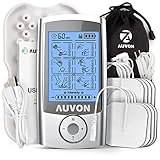
- Professional TENS Machine: The AUVON Electric Massager can excite and stimulate the sensory nerves and muscles, activate the specific natural pain gate mechanism, relax your body and have pain management anytime you feel the need with our medical grade TENS electrotherapy pulse massager and accessories
- TENS Pads with Upgrade Gel: The low-impedance solid gel has been upgraded to the industry-leading adhesive, which can provide premium self-stick performance and easy clean-up after 45 uses for a longer lifespan. You may also find it quite easy to find compatible electrodes (2mm pigtail TENS Unit pads) on the market for you to choose from
- Upgrade 24 Choices for Pain Relief: The AUVON electronic TENS device has as many as 24 user-friendly pre-programmed massage modes and adjustable timing, making it much easier to use than other traditional electric therapy products, which may require you to set the pulse frequency and duration of each pulse manually (the 24 sub-mode choices are under the 6 massage modes)
- Rechargeable Lithium Battery: No worries about treatment interruption for dead AA batteries anymore. It can give you continuous use for up to 10 hours. The power indicator would keep you aware of the remaining battery life. Tips: Turn on the unit first, then recharge it with the included wall charger; fully recharged in 1 hour
- What You Receive: 1 x AUVON TENS Muscle Relaxer, 8 x Square Electrode Pads, 2 x Lead Wires (1/2 Wire), 1 x Pads Holder, 1 x Type-C Cable, 1 x Pouch, 1 x Professional User Manual, our 12-month warranty and Technical support, and friendly customer service. Important Notice: TENS units should NOT be used by individuals with pacemakers, pregnant women, or those with epilepsy. Consult your doctor before use if you have any medical conditions
- Drug-free and passive
- Battery-free and wire-free
- Reusable and water-resistant
- Intended to be placed on or near the area of greatest discomfort
Unlike a medicated pain patch, it is not designed to release lidocaine, menthol, capsaicin, methyl salicylate, or another active drug. Unlike a TENS unit, it does not use a powered control box, wires, or electrical pulses delivered through electrodes. The company’s FAQ specifically distinguishes the product from TENS.
The study protocol describes a thin, flexible, three-layer construction with protective insulating layers around a middle layer containing nano-capacitive arrays. The patch is supplied with adhesive strips. Signal Relief’s technology page describes a conductive-particle or micro-antenna array that supposedly interacts with electrical signals associated with pain.
Windows Errors? Fix Them Before They Spread
Repair common Windows errors and clear accumulated junk for a smoother, more stable PC - no reinstall needed.Free scan · no reinstallCrashes, No Sound, or Screen Glitches?
Random freezes, missing sound and display glitches usually trace back to one bad driver. Find and replace yours safely.Free scan · under a minuteIs it really “natural”?
“Natural” is a potentially misleading word for this product. Signal Relief is drug-free and passive, but it is not an herbal, botanical, or supplement-based treatment. The company also uses “chemical-free” language, while related product labeling describes man-made conductive and metallic materials. A more accurate description is a passive wearable patch containing a proprietary conductive or capacitive material layer.
The company’s explanation—that discomfort changes electrical signaling and the patch diverts or absorbs part of the pain message—is a proposed mechanism, not an established biological fact. The published study says the mechanism is not clearly delineated and presents the electrical interaction as a theory. A patent or patent-pending claim, even if valid, would also show only that an invention was claimed or examined—not that it reliably relieves pain. (Company technology explanation; published study; company review page)
Is Signal Relief FDA-approved or FDA-cleared?
There is no basis in the reviewed public records to call Signal Relief an FDA-approved pain patch or an FDA-cleared pain-relief device. ClinicalTrials.gov identifies the product in registered study NCT05288114 as an unapproved/uncleared device. The study protocol says it was being sold as a general-wellness product. (ClinicalTrials.gov record; study protocol)
The FDA’s general-wellness policy can apply to certain low-risk products whose intended use is general wellness. That policy does not mean the FDA tested a product or confirmed that it treats chronic pain. The reviewed search of the FDA’s 510(k) database did not identify public clearance for Signal Relief’s pain-relief claims.
Free tools Windows power users keep installed
One-click scans. No signup required.
Therefore, be skeptical of advertisements or reviews using phrases such as “FDA-tested,” “FDA-certified,” “FDA-approved pain technology,” or “clinically proven” without explaining exactly which study supports the statement. The product’s general-wellness positioning is a regulatory description, not proof of effectiveness.
What do the Signal Relief studies actually show?
The evidence is not empty, but it is much less conclusive than a sales page can make it sound. Here is the appropriate hierarchy:
| Evidence | Design and result | What limits the conclusion? |
|---|---|---|
| NCT05288114 registered pilot | Small, single-group, open-label pilot for chronic musculoskeletal pain. The registry lists 44 participants; the published paper reports 42 enrolled and 32 in the completed-trial analysis. Of those 32, 24 achieved at least a 30% reduction in VAS pain. | No placebo or sham group, short seven-day follow-up, subjective outcomes, company sponsorship, and attrition. |
| Published pilot paper | Reported a 59.7% average VAS reduction and a 44% average Brief Pain Inventory reduction. No adverse events were reported. | Large improvements in an uncontrolled, open-label study can reflect placebo effects, natural pain fluctuation, regression to the mean, altered behavior, or study attention. “No adverse events reported” does not mean side effects are impossible. |
| 2025 company-hosted placebo-controlled summary | 112 adults with chronic back or knee pain: 91 active-patch participants and 21 placebo participants. Average pain reduction was 42% with the active patch versus 34% with placebo. | The public document is a short company-hosted summary, not a full independently reviewed publication. Important methodological and statistical details are missing. |
| 2025 case report | One 75-year-old man with chronic low-back pain from an L2–L3 disc herniation reported 90%–100% relief while wearing the patch. | One patient’s experience cannot predict how the product will work for other people. |
| Independent evidence assessment | ConsumerLab’s January 2026 medically reviewed assessment concluded that the human evidence supporting Signal Relief’s pain-relief claims is weak. | This is an assessment of a limited evidence base, not a large independent clinical trial. |
The registered pilot: encouraging signal, weak proof
ClinicalTrials.gov lists NCT05288114 as a completed pilot sponsored by Signal Relief. The protocol enrolled adults with chronic musculoskeletal pain and baseline pain of at least 4 on a 10-point visual analog scale. Participants were instructed to wear the patch for seven days, removing it only for showering or swimming. The primary endpoint was at least a 30% reduction in pain; medication use and adverse events were secondary measures.
The published paper reports that 24 of 32 people included in the completed-trial analysis met the 30% threshold, with a 59.7% average VAS reduction and a 44% average Brief Pain Inventory reduction. Seven participants did not complete the study because the patch was difficult to affix, especially around the neck and shoulder. The registry and publication report slightly different enrollment numbers—44 in the registry and 42 in the paper—which is another reason to look at the full methods rather than rely on a promotional statistic. (published pilot; protocol)
This is a signal worth testing in better trials, not proof that the patch caused the improvement. Participants knew they were wearing the active product, there was no placebo comparison, and pain naturally rises and falls. Expectations, changes in activity, reduced medication use, and the attention of participating in a study could all influence the result.
The medication findings deserve special caution. The study reports large reductions in non-opioid and opioid use, but participants were asked to refrain from or reduce pain medicine, and the analysis used only a subset of participants. The study does not show that Signal Relief can safely replace a prescribed medication. Never stop or reduce prescribed treatment without the prescriber’s guidance.
The 112-person placebo-controlled study
This is the most potentially informative result because it included a placebo group. Signal Relief’s 2025 white paper describes a double-blind, placebo-controlled study of 112 adults with chronic back or knee pain. It reports a 42% average pain reduction in the active group versus 34% in the placebo group. It also says 71% of active-patch participants reported relief within 15 minutes and 98% reported relief at some point during 72 hours, with no adverse events reported. (company-hosted study summary)
Those numbers should not be repeated as “98% of people were helped” without the context. The 98% figure refers to 91 active-patch participants reporting a reduction at some point during a 72-hour period, according to the company summary. The difference between active and placebo was eight percentage points in average pain reduction. That could be meaningful, but the public summary does not provide enough information to judge its statistical reliability or clinical importance.
What’s actually slowing this PC down?
Pick the symptom - the matching free tool is one click away.
Also popular on Amazon

- Need Prescription Strength Pain Relief? A TENS unit muscle stimulator and TENS machine that provides pain relief, acts as a muscle massager or shoulder massager, provides carpal tunnel relief, and acts as a muscle relaxer(great for muscle recovery)
- Over 3M TENS 7000 Devices Sold. A consumer over the counter favorite back pain relief device and a leader in physical therapy equipment for providing immediate and lasting drug-free muscle pain relief from back pain, neck pain, tennis elbow, and bursitis
- A Leader Since 2008 In Nerve Pain Relief. A 15+ year favorite TENS device among medical professionals for delivering back pain relief as well as treating common ailments like neck pain relief, carpal tunnel relief, arthritis, elbow, and foot pain
- Get Immediate Pain Relief. TENS machine comes with multiple TENS therapy modes that will provide instant muscle pain relief. An electrotherapy machine with everything needed for TENS therapy, a class leader in electric massagers for muscles
- Everything Needed for TENS Therapy. This TENS therapy unit comes with everything needed to get started: the medical-grade TENS unit, 2 lead wires, a four-pack of reusable premium electrode pads, one 9V battery, user manual, and a hard carrying case
For example, the available summary provides limited detail about randomization, allocation concealment, how the placebo was made, whether participants could tell which patch they received, missing data, protocol deviations, baseline comparability, confidence intervals, and independent oversight. The company’s studies page says the patch “outperformed placebo at every measurement point,” but the linked summary does not provide complete measurement-point data for independent verification. (Signal Relief studies page)
The single-patient case report
The 2025 case report in Pain Medicine Case Reports describes a 75-year-old man with an L2–L3 disc herniation who reported 90%–100% relief while wearing the nCAP Signal Relief Patch. It is useful evidence that the product has been used in a clinical setting and that a patient experienced substantial relief. It is not evidence that most people will have the same result. (PubMed record; full case report)
Overall evidence rating
ConsumerLab’s January 2026 review considered the registered trial, the published pilot, and the case report and characterized the human evidence as weak. That assessment fits the evidence hierarchy: a company-hosted placebo-controlled summary is promising but incomplete; the published pilot is small and uncontrolled; the case report is anecdotal at the clinical level; and testimonials are not clinical proof. (ConsumerLab assessment)
Is Signal Relief a scam commercially?
There is evidence of a real product and an operating sales organization. The current website lists customer-service contact information in Rexburg, Idaho and identifies Caliber Med, LLC in its privacy-policy contact information. Its terms page also refers to Relief Sciences, USA. (contact page; privacy policy; terms of service)
There is also a corporate-history issue worth understanding. Signal Relief, Inc. filed a voluntary Chapter 11 bankruptcy case in Utah on June 14, 2024; the case is listed as closed on March 26, 2025. That does not by itself prove fraud, and it does not establish that the current store is or is not the same legal entity. However, the public pages reviewed do not clearly explain the relationship among Signal Relief, Inc., Caliber Med, LLC, and Relief Sciences, USA. That ambiguity matters when evaluating warranty and refund continuity. (bankruptcy case record; Utah Bankruptcy Court calendar)
So the answer to “is it a scam?” depends on the meaning:
- Nonexistent-product scam? The evidence does not support that conclusion.
- Guaranteed pain cure? The marketing should not be treated as proof of that claim.
- Low-risk purchase? No. The product is expensive, the guarantee language has varied, and customers report both product and refund problems.
What do customers say?
Customer feedback is mixed, and the different sources should not be combined into one average because they have different sample sizes, selection effects, and levels of independence.
Company-hosted reviews
When accessed during the research period, the official 3-pack product page displayed approximately 3.85 out of 5 from more than 11,800 reviews. The same page’s summary described both significant relief and reports of no benefit, and noted that placement appeared to influence results. The company also claims more than 700,000 users and a 97% satisfaction rate. Those figures are company-reported; the public pages do not provide the underlying survey method, denominator, time period, or independent verification. (official product page; company response article)
Onsite reviews can reveal practical issues, but they are not a controlled clinical dataset. The seller controls the platform, product-page presentation, review display, and review-summary wording.
BBB and Trustpilot
The Better Business Bureau lists Signal Relief as not BBB accredited. One BBB profile listed nine complaints in the preceding three years, including six closed in the prior 12 months; the complaints involved service, product, and delivery issues. A separate BBB customer-review profile displayed an average of 2.6 out of 5 from five reviews. (BBB complaints; BBB customer reviews)
Trustpilot displayed only three reviews and a score of approximately 3.6 out of 5, including positive reports and one reviewer who called the product a scam after experiencing no pain relief. Trustpilot itself warns that such a small review base may not be representative. (Trustpilot reviews)
Recurring customer themes
Positive reports
- Less lower-back pain
- Improved knee or upper-back comfort
- More comfortable walking, working, or sleeping
- Benefit after finding a preferred placement
- No medication-related side effects
Negative reports
- No noticeable relief
- High price
- Patch or adhesive coming loose
- Difficulty finding the right placement
- Stiffness or bulk
- Refund dissatisfaction or delays
- Shipping costs not returned
- Customer-service frustration
These anecdotes are useful for identifying possible failure modes, not for estimating the true success rate. People with unusually good or bad experiences may be more likely to post, and pain outcomes are particularly vulnerable to expectation effects and natural variation.
How much does Signal Relief cost?
Official store pages reviewed during the research period showed inconsistent promotional pricing:
Also popular on Amazon

- Multifunctional and Portable Massager Machine: The 3-in-1 TENS, EMS, RELAX professional device is an ideal option for pain management. TENS offers pain relief in the arm, shoulder, leg, waist, back caused by exercise or normal household work activities. EMS improves muscle performance. RELAX helps soothe your body and dispel fatigue. This compact and thin muscle stimulator with an aluminum alloy body can be carried anywhere to achieve body relaxation anytime
- A Drug-free Pain Relief Choice: If you want to relieve body pain, you can try to use this TENS machine instead of taking pills. This electronic pulse massager activates a specific natural pain mechanism to relax your body in a non-invasive and drug-free way. The back pain relief device allows you to enjoy body relaxation in a drug-free way
- More Options for Gradual Pain Relief: This electric massager for muscles features 40 current levels and 24 pre-programmed modes that allow you to enjoy gradual relief therapy without shock feelings. The therapy time is adjustable up to 90 minutes in continue mode. The stim machine with the A/B channel can offer the relaxing options of 2 or 4 pads at the same time
- American Gel TENS Unit Pads: The TENS unit electrode pads adopt the industry-leading US adhesive gel for better self-adhesive performance and are easy to clean after 45 uses. Upgraded TPE connecting wires are less prone to tangling and breakage
- What You Receive: 1 x Dual Channel Electrodes Muscle Stimulator, 8 x Square 2" TENS Machine Pads, 4 x Large Rectangular 2" x 4" Pads, 2 x Lead Wires, 1 x Pads Holders, 1 x Type-C Cable, 1 x User Manual, 1 x Storage Pouch, AUVON 24-month warranty support, and friendly customer service
| Product or offer | Observed price range | Important qualification |
|---|---|---|
| One 4.5-inch patch | About $179–$179.95 | Promotions and landing pages may reduce the price. |
| Three-pack | About $479 | Return requirements may apply to the entire multipack. |
| Five-pack | About $699 | Large upfront commitment if the technology does not help. |
| Replacement adhesives | About $25–$40 | These are an additional ownership cost. |
| Promotional landing pages | About $89–$144 for certain offers | Check the final checkout page and its guarantee terms. |
Verify the final total at checkout on the official store. Taxes, shipping, optional shipping protection, replacement adhesive, and the possibility that the patch does not work all affect the real cost.
The company’s cost-per-day framing
If a $179 patch genuinely lasts one year, the nominal cost is about $0.49 per day. At $144, it is about $0.39 per day. A $479 three-pack used over one year works out to about $1.31 per day for the bundle. These are simple purchase-price calculations, not a measure of value or effectiveness. They exclude adhesives, taxes, shipping, shipping protection, and the possibility of receiving no benefit.
A cost-per-day claim can make a large upfront purchase feel inexpensive. The more important question is whether you can comfortably lose the full purchase price if the patch fails to improve your pain.
Refund policy, warranty, and purchase risks
The detailed official refund policy reviewed for this article says returns must be initiated within 45 days of purchase. It also says:
- Only purchases made directly through Signal Relief qualify.
- Every item in a multipack must be returned; partial multipack returns are not accepted.
- Shipping fees and shipping insurance are non-refundable.
- The refund is issued after the returned items are received and inspected.
- Used adhesive strips should be removed for sanitary reasons.
- Intentional cuts, heat damage, or alterations can void the refund.
- Customers should retain tracking information.
There is a significant caveat: different official pages have displayed different money-back periods, including 45 days, 90 days, and 120 days. The detailed refund-policy page says 45 days, while other landing pages have advertised longer windows. Do not rely on a generic “money-back guarantee” statement. Save the terms attached to the exact offer you purchase. (detailed refund policy; 90-day promotional page; 120-day promotional page)
The product page states that the patch includes a one-year product warranty, while the FAQ says it is built to last at least one year with proper care and may last longer. A warranty against product defects is not the same as a guarantee that the patch will relieve pain. (product page; FAQ)
Shipping protection deserves a close read
The website offers optional shipping protection priced at 3% of the order value. Its terms say the charge is non-refundable after processing and include language stating that the customer waives chargeback rights or disputes related to the shipping-protection service. That is a description of the contract language—not a determination that every such provision is enforceable in every situation. Read the terms before adding the protection, and save a copy. (shipping-protection terms)
Recommended Free Tools
Refund-protection checklist
- Screenshot the offer: Capture the product price, guarantee period, refund conditions, shipping fees, and any subscription or upsell language before ordering.
- Save the confirmation: Keep the order email, invoice, and the URL of the offer.
- Use the test period carefully: Track pain and function rather than relying on one unusually good or bad day.
- Start early: If it is not helping, contact the company by email or phone well before the stated deadline. Keep the correspondence.
- Return the complete order: For a multipack, include every patch and required component.
- Photograph the package: Keep photos of the contents and the sealed return package.
- Use trackable shipping: Retain the tracking number and delivery confirmation until the refund appears.
- Watch your payment account: If the company does not process an eligible refund, your saved documentation will be more useful when communicating with the seller or payment provider.
How to use the patch, according to the available instructions
Signal Relief says placement on or near the source of greatest discomfort can affect results. Its guidance recommends trying a location for a period before moving the patch. The pilot study found that some participants had difficulty affixing it, especially around the neck and shoulder. Placement difficulty is therefore a practical concern, not just a theoretical one. (official FAQ; placement guidance; pilot study)
The study protocol instructed continuous wear for seven days except while showering or swimming. The consumer FAQ says many customers report better results after leaving the patch in place for up to 72 hours before changing locations. Those are different kinds of information: one is a study protocol and the other is consumer guidance. Neither establishes a medically validated universal wear schedule.
The company says the patch can work through a light layer of clothing, although closer skin contact is preferred. For care, the FAQ instructs users to hand-wash it with water and mild detergent, avoid alcohol-based products, air-dry it, and never use a washing machine or dryer. Do not cut or tear the patch; the company says alteration can void both the warranty and money-back guarantee. (FAQ; warranty and reviews page)
A more disciplined personal trial
If a clinician has already evaluated the pain and you decide the price is acceptable, use a simple test rather than judging the product from a marketing claim:
Quick wins for a faster PC:
Scan for outdated or missing drivers - takes under a minuteDriver Scan →Clear out junk files and repair common Windows errorsFree Scan →- Record your baseline pain, sleep, walking, work, and other relevant activities for several days.
- Choose one specific placement and record when the patch is applied, removed, or repositioned.
- Keep other treatments and activity patterns as consistent as practical. Do not stop prescribed medication to test the patch.
- Record both pain intensity and function. A lower number is useful, but being able to sleep or walk more comfortably may be the more meaningful outcome.
- Set a personal decision point before buying—for example, a repeatable improvement that is clearly noticeable and worth the price.
- If there is no meaningful benefit, begin the return process early enough to meet the written deadline.
This approach cannot eliminate placebo effects, but it can reduce the chance of spending hundreds of dollars based on one favorable afternoon.
Independent reader supportYour contribution helps us test, update, and keep practical guides available for everyone.Safety: drug-free does not mean risk-free
The company advises consulting a healthcare professional before use if you have diabetes, circulation problems, chronic pain, a skin condition, a nerve disorder, or an implantable device. It also says not to use the patch during pregnancy. The pilot protocol excluded people with pacemakers, defibrillators, implanted pain devices, other neuromodulation devices, and pregnancy. (technology page; FAQ; study protocol)
Also popular on Amazon
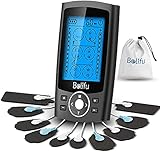
- Multifunctional Tens Massager with 24 Preprogrammed Massage Modes for Pain and Muscle Relief. TENS unit help relieve pain associated with sore and aching muscles in the shoulder, waist, back, neck, upper extremities (arm), and lower extremities(leg) due to strain from exercise or normal household work activities. Electric massager is also intended to be used to stimulate healthy muscles in order to improve and facilitate muscle performance.
- Non Invasive, Non Drug Choice for Relieving Pain. Great Device You Can Use at Home for Pain Management. If you want to relieve pain, just trying Belifu TENS massager. It is with human body simulation technology, microcomputer intelligent control technology, simulates a variety of massage methods. Help for relieving pain associated with sore and aching muscles in the shoulder, waist, back, neck, upper extremities (arm), and lower extremities(leg) due to strain from exercise or household work.
- A/B Dual Channels with 24 Modes, 20 level Intensity and Time Control. relax Any Time Anywhere with Pocket Size! You can operate it with different intensity settings for each channel. With portable size, it can be used in the office, car or travel on the go.Total body relaxation: use for back, knee, shoulder, ankles, wrist and elbow and make this the most powerful weapon for your body relax.
- Built in Powerful Rechargeable Lithium Battery,with 10 Upgraded Reusabale Pads-- It can be connected to wall charger, power bank or laptop USB port to charge. Don't worries about treatment interruption for dead AA batteries any more. With battery level indicator remind you charge timely. Includes 10 top-tier adhesive pads for up to 50 uses, reusable and compatible, ensuring long-lasting comfort in TENS therapy.
- Free Dust-Proof Drawstring Storage Bag, Reusable Fastening Cable Ties and 10 Pcs of Self Adhesive Conductive Reusable Pads. No more cable mess after use with fastening cable ties. A quick and easy solution for tens lead wires management. Hassle free storage system for the tens massager and wires.
The small cited studies reported no adverse events, but that should not be rewritten as “no side effects.” Possible practical problems include skin irritation, adhesive reactions or contact dermatitis, device-related discomfort, and the patch coming loose during activity. More importantly, masking pain can delay attention to a worsening condition. A pain patch is not a diagnosis or a treatment for the underlying cause.
Seek medical evaluation instead of self-treating with a patch if pain is new, severe, rapidly worsening, unexplained, or follows significant trauma. Prompt attention is especially important with weakness, progressive numbness, fever, chest pain, bowel or bladder changes, or other concerning neurologic or systemic symptoms.
Do these 3 things before closing this tab:
1Scan for outdated or missing drivers - takes under a minute2Clear out junk files and repair common Windows errors3Fix the driver behind crashes, sound loss and screen glitchesSignal Relief compared with alternatives
The right comparison depends on what is causing the pain. A passive patch is not automatically better than an intervention with a known active ingredient, and neither is appropriate for every person.
| Option | Potential advantage | Trade-off or question to ask |
|---|---|---|
| Exercise, physical therapy, and rehabilitation | Addresses movement, strength, conditioning, and function rather than only the pain sensation. | Requires a plan tailored to the diagnosis and consistent participation. For chronic low-back pain, the American College of Physicians recommends non-drug approaches such as exercise, rehabilitation, acupuncture, mindfulness-based stress reduction, tai chi, yoga, cognitive behavioral therapy, and spinal manipulation depending on the patient and condition. (ACP guidance) |
| Topical NSAID for appropriate knee osteoarthritis | Has a known active ingredient and is recommended by the AAOS guideline to improve function and quality of life when not contraindicated. | Medication history, kidney and gastrointestinal risks, allergies, pregnancy, and other contraindications matter. (AAOS guideline) |
| Menthol, methyl salicylate, lidocaine, or capsaicin products | Use recognizable active ingredients with different expected effects and safety instructions. | They can irritate skin or create other risks if misused; follow the product label. FDA materials discuss topical pain-relief products and warnings. (FDA topical pain-relief review; FDA warning) |
| TENS | Uses a powered device to deliver electrical stimulation through electrodes and has a different design from Signal Relief. | It is not interchangeable with Signal Relief. Do not assume the passive patch has the same evidence, mechanism, or regulatory status as a cleared TENS device. (Signal Relief FAQ; FDA TENS classification) |
| Heat, cold, and clinician-guided pain care | May be inexpensive and useful for some short-term symptoms or as part of a broader plan. | These options also depend on the cause of pain and should not delay evaluation of persistent or concerning symptoms. |
Who might reasonably try Signal Relief?
A cautious trial may be reasonable if all of the following are true:
- Your recurring or chronic pain has already been medically evaluated.
- You specifically want a non-drug adjunct.
- You understand that the benefit is uncertain and may be no better than placebo.
- You can afford the purchase without sacrificing essentials or taking on harmful debt.
- You buy directly from the official store and save the applicable terms.
- You are willing to test placement systematically and track results.
- You will not replace prescribed medication, physical therapy, or medical follow-up without professional advice.
Who should probably skip it?
- Anyone expecting an FDA-proven pain treatment or a guaranteed result
- Anyone who cannot comfortably risk nearly $180 or more
- Anyone seeking strong, independently replicated randomized evidence
- Anyone uncomfortable with the conflicting 45-, 90-, and 120-day guarantee language
- Anyone concerned about the unclear relationship among the current website’s listed entities and the former Signal Relief, Inc. bankruptcy history
- Anyone with an implanted electronic or neuromodulation device who has not received clinician clearance
- Anyone who is pregnant or has the medical conditions for which the company recommends professional consultation
- Anyone with unexplained, severe, progressive, or neurologically concerning pain
Bottom-line buying decision
Buy only as a cautious, documented experiment if you want a passive drug-free adjunct and can afford to lose the money. Signal Relief is not best categorized as a fake product, but “legitimate product” does not mean “proven treatment.” The most favorable evidence is a company-hosted placebo-controlled summary showing 42% average reduction with the active patch versus 34% with placebo. The published pilot found large improvements, but it was open-label, uncontrolled, small, short, and affected by incomplete follow-up. A one-person case report and customer testimonials add context, not reliable proof.
If your priority is strong independent evidence, predictable cost, or treatment of an undiagnosed condition, skip the patch and direct the money toward evaluation, rehabilitation, or an evidence-supported option appropriate to your diagnosis. If you do order, use the smallest sensible commitment, capture the exact refund terms, track your outcome, and start the return process early if the product does not provide clear, repeatable value.
Quick wins for a faster PC:
Repair Windows errors before they cause bigger problemsFix Now →Scan for outdated or missing drivers - takes under a minuteDriver Scan →Frequently Asked Questions
Is Signal Relief a legitimate company or a scam?
Signal Relief appears to be a real commercial product with a functioning website, customer-service operation, and return process. However, commercial legitimacy does not prove that the patch works. The current site lists Caliber Med, LLC and Relief Sciences, USA, while Signal Relief, Inc. has a documented Chapter 11 history; the public pages reviewed do not clearly explain how those entities are related.
Does Signal Relief have FDA approval or clearance for pain relief?
Do not treat it as FDA-approved or FDA-cleared for pain treatment. ClinicalTrials.gov identifies the study product as an unapproved/uncleared device, and the product was described in the protocol as a general-wellness product. General-wellness positioning is not FDA confirmation of pain-relief effectiveness.
How strong is the evidence that Signal Relief works?
The evidence is preliminary. A small open-label pilot reported substantial improvement, and a company-hosted 112-person summary reported 42% average improvement with the active patch versus 34% with placebo. But the summary lacks important public methodological and statistical details, and independent evidence assessments have characterized the overall human evidence as weak.
Is Signal Relief the same as TENS?
No. TENS uses a powered device, wires or electrodes, and electrical stimulation. Signal Relief is marketed as a passive patch without a battery or electrical pulses. Its mechanism and evidence should not be assumed to match those of a TENS unit.
Can I return Signal Relief if it does not work?
The detailed official refund policy reviewed for this article says the return must be initiated within 45 days, only direct purchases qualify, multipacks must be returned in full, and shipping fees and shipping insurance are non-refundable. Other official landing pages have advertised 90- and 120-day guarantees, so screenshot the terms for the exact offer before ordering and use trackable return shipping.
The Bottom Line
Bottom line: Signal Relief looks like a real product, not an obvious shopping scam, but its pain-relief claims remain under-proven. Consider it only as an optional adjunct after medical evaluation, and only if the high upfront cost is affordable and you are prepared to document the refund process.




