
What’s actually slowing this PC down?
Pick the symptom - the matching free tool is one click away.
For most people, checking is the better account for everyday spending, bill payments and cash access; savings is better for emergency reserves and less-frequent goals. You do not have to choose only one. A checking account can keep your monthly cash flow accessible, while a savings account separates money you are trying not to spend. The right combination depends on how often you move money, the fees and minimums in the specific offer, the interest rate after conditions are met, and the account’s transaction rules.
There is no universally superior account type. Compare the current account agreement and fee schedule—not just the advertised rate—before opening either account.
As an Amazon Associate I earn from qualifying purchases.
Checking vs. savings at a glance
| Question | Checking account | Savings account |
|---|---|---|
| Typical job | Frequent purchases, bill payments, direct deposits and cash withdrawals | Emergency funds, planned expenses and money you want to keep separate from spending |
| Access | Usually debit card, checks, electronic payments, ATM and branch access, depending on the institution | Usually electronic transfers, ATM or branch access; debit cards and checks vary by account |
| Interest | Often low or no interest, although interest-bearing checking is available | Usually earns interest; the APY and conditions vary |
| Transactions | Designed for many transactions | May have institution-specific limits or fees for certain transfers and withdrawals |
| Fees | May include monthly maintenance, overdraft, out-of-network ATM and check-related fees | May include monthly maintenance, excess-transaction and minimum-balance fees |
| Best fit | Money you expect to spend this month | Money you want available but do not expect to spend routinely |
These are common patterns, not legal definitions of every account. Institutions can package features differently, so read the disclosures for the exact account you are considering.
Recommended Free Tools
What a checking account is designed to do
A checking account is a transaction account: money enters and leaves regularly. Employers can send direct deposits, and you can use the balance for rent, utilities, subscriptions, groceries, card purchases, checks and cash withdrawals. The Consumer Financial Protection Bureau describes checking, demand-deposit and NOW accounts as transaction-oriented deposit accounts; the labels and features can differ by institution (CFPB explanation of checking and related accounts).
#1 Best Overall

- Compact and Sturdy: These checkbook registers offer clear pages with 17 lines each, making it easy to track account withdrawals; The bold layout and spacious rows and columns (0.32 in wide) provide a comfortable writing experience
- Simplify financial management: The Casmonal account books help you effortlessly remember automatic deductions, dodge overdraft risks, and gain insight into your spending patterns, making financial tracking simple and clear
- Financial instruments: These transaction Registers simplifie your financial monitoring, helping you easily manage your balance, precisely budget, and work towards your financial goals; It's a convenient tool for achieving financial success
- Personal and Small Business Finances: The check register simplifies tracking of payments and deposits, equipped with columns for item numbers, transactions, and balances, making it an ideal tool for managing both personal and small business finances
- Small and Portable: These compact 6x3 inches checkbooks are perfect for on-the-go financial tracking and feature a stylish calendar from 2026 to 2028, guiding you through a better financial journey
When checking is the practical choice
- You pay several bills or make card purchases each week.
- You need a debit card or checks for routine payments.
- Your paycheck or benefits arrive by direct deposit.
- You withdraw cash regularly.
- You want transaction alerts and a running record of available spending money.
Checking is not automatically free. A bank or credit union may charge a monthly maintenance fee, require direct deposit or a minimum balance to waive it, and charge overdraft or ATM fees. A “free checking” label may apply only when listed conditions are met.
What a savings account is designed to do
A savings account holds money for a reserve or a goal rather than serving as your payment hub. Common uses include an emergency fund, a tax or insurance reserve, a down-payment fund, tuition, travel or a large annual bill. Keeping that money apart from checking can reduce accidental spending while preserving access for a genuine need.
When savings is the practical choice
- You want to build an emergency reserve.
- You are saving for a purchase with a known future date.
- You do not need to make numerous payments from the account.
- You want to earn interest on cash that would otherwise sit idle.
- You can plan transfers instead of relying on the account for daily cash withdrawals.
Savings access varies. Some accounts offer an ATM card; others permit only transfers to a linked checking account or branch withdrawals. Confirm the available methods before assuming you can pay a bill directly from savings.
Outdated Drivers Are Slowing You Down
One free scan finds every outdated or missing driver and matches the right update for your exact hardware.Free scan · exact hardware matchWindows Errors? Fix Them Before They Spread
Repair common Windows errors and clear accumulated junk for a smoother, more stable PC - no reinstall needed.Free scan · no reinstallHow to compare accounts beyond the advertised APY
An annual percentage yield (APY) matters only in relation to your balance, the rate conditions and the fees you actually incur. A checking account paying interest can be worthwhile, but a higher rate may require a large balance or carry a higher monthly fee. The CFPB advises comparing the interest you are likely to earn with the fees you would pay rather than choosing on rate alone (CFPB guidance on interest-bearing checking).
| Comparison point | What to ask | Why it changes the decision |
|---|---|---|
| APY and rate | Is the rate variable? Is a promotional period, balance tier or activity requirement involved? | A stated rate may apply only to part of your balance or while conditions are satisfied. |
| Monthly maintenance fee | What is the exact fee, and what waives it? | A recurring fee can exceed the interest earned on a modest balance. |
| Minimum opening deposit | How much is needed to open the account? | A high opening requirement may make an otherwise attractive account unusable. |
| Ongoing minimum balance | Is there a balance threshold, and how is it measured? | Dropping below the threshold may trigger a fee or reduce the APY. |
| Access | Are debit cards, checks, ATMs, branches, mobile deposits and external transfers available? | The account must support the way you actually move money. |
| Transfer and withdrawal rules | Are there limits, per-transaction charges or excess-use fees? | Frequent transfers can turn a low-cost savings account into an expensive one. |
| Overdraft terms | Are transactions declined, covered from another account or charged a fee? Are alerts available? | The same purchase can have very different consequences depending on the setting. |
| Insurance | Is the institution insured by the FDIC or NCUA, and how does coverage apply to your ownership category? | Insurance protects qualifying deposits only within applicable limits and categories. |
Regulation DD (Truth in Savings) is intended to help consumers compare deposit accounts. Its disclosures cover APY, interest rates, minimum-balance requirements, opening information and fee schedules (Regulation DD text). Use those disclosures and the current account agreement as your source of truth; online summaries can be outdated.
Fees and waiver conditions that often decide the winner
The CFPB says institutions may charge maintenance fees on checking, savings or money market deposit accounts. A provider may waive a fee when you maintain a stated balance, receive qualifying direct deposit or meet another condition. The institution must disclose the fee and how to avoid it when the account is opened, although terms can later change with notice (CFPB explanation of monthly maintenance fees).
Rank #2

- 12 Easy Read Register Checkbook Transaction Registers: Balance your check account withdrawals with this checkbook register featuring 16 lines per pages. This thicker body paper is small enough to carry in your pocket or wallet. Column headings are bold easy to read.
- Made in the USA. Each register has 444 lines. Lines are gray in color. Standard checkbook registers having Item No. Date, Description of Transaction, Payment Debit, Deposit Credit and Balance Column.
- High-quality ink print is easy on the eyes and a great booklet for easy insertion into your checkbook.
- Calendars on Back: Check register has up-to date 2025-2026-2027 calendars printed on the back.
- Checkbook Measures: Checkbook register measures 6x3 inches.
Calculate the fee in your own situation
- Write down the balance you normally keep, not an unusually high month.
- List the conditions you can reliably meet, such as direct deposit or a minimum balance.
- Find the monthly fee if you miss a condition and multiply it by the number of months you might miss.
- Estimate interest using the balance you realistically expect to maintain.
- Subtract unavoidable fees from estimated interest. Compare the result with another account, including one that pays no interest but has fewer conditions.
For example, an interest-bearing checking account may look attractive until a required balance is larger than the amount you need for spending or a monthly charge consumes the interest. Conversely, a savings account with a modest APY can still be useful if it has no maintenance fee and helps you preserve an emergency reserve.
Free tools Windows power users keep installed
One-click scans. No signup required.
Savings transfer limits: what changed and what did not
The Federal Reserve removed the requirement that institutions enforce the former six-transfer monthly limit on savings deposits in 2020. That change did not require every bank or credit union to permit unlimited savings transactions. Institutions may retain their own limits or charge fees for exceeding them, and the current agreement controls (CFPB guidance on savings transaction charges).
Do not assume that every transfer is treated the same way. The account agreement may distinguish between online transfers, automatic transfers, telephone transfers, checks, debit transactions, ATM withdrawals and branch transactions. Ask the institution which activity counts toward a limit and what happens after you reach it.
How to avoid an unexpected savings fee
- Use checking for routine purchases and recurring bills.
- Schedule a small number of planned transfers into savings.
- Keep a separate buffer in checking so you do not repeatedly pull money back from savings.
- Read the fee schedule before making a series of transfers.
- Set low-balance and transaction alerts so you can adjust before a fee occurs.
A 2023 CFPB report on consumer overdraft experiences notes that some people use a checkbook register while monitoring finances; a paper register is optional, but a spreadsheet or app can serve the same tracking purpose (CFPB overdraft report).
Interest-bearing checking: when it can make sense
Interest-bearing checking combines transaction access with an APY. It may be useful when you keep a substantial operating balance and can meet every waiver condition. It is less compelling when the rate is conditional, the balance requirement is high or the monthly fee is difficult to avoid.
Quick wins for a faster PC:
Fix the driver behind crashes, sound loss and screen glitchesFind Drivers →Repair Windows errors before they cause bigger problemsFix Now →Use this break-even test
- Determine the average balance that would actually remain in checking.
- Apply the account’s stated APY to that balance; if the rate is tiered or capped, calculate each tier separately.
- Subtract monthly fees you cannot reliably waive.
- Include costs such as out-of-network ATM fees or required services.
- Compare the net result with a no-fee checking account plus a separate savings account.
The CFPB’s concise advice is to compare checking fees and terms so the structure costs less for the way you bank, because unnecessary fees can exceed the interest earned on a monthly balance (CFPB consumer guidance).
Rank #3
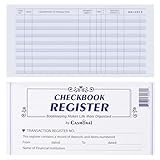
- Compact and Sturdy: These checkbook registers offer clear pages with 17 lines each, making it easy to track account withdrawals; The bold layout and spacious rows and columns (0.32 in wide) provide a comfortable writing experience
- Simplify financial management: The Casmonal account books help you effortlessly remember automatic deductions, dodge overdraft risks, and gain insight into your spending patterns, making financial tracking simple and clear
- Financial instruments: These transaction Registers simplifie your financial monitoring, helping you easily manage your balance, precisely budget, and work towards your financial goals; It's a convenient tool for achieving financial success
- Personal and Small Business Finances: The check register simplifies tracking of payments and deposits, equipped with columns for item numbers, transactions, and balances, making it an ideal tool for managing both personal and small business finances
- Small and Portable: These compact 6x3 inches checkbooks are perfect for on-the-go financial tracking and feature a stylish calendar from 2026 to 2028, guiding you through a better financial journey
Protecting deposits: FDIC, NCUA and the $250,000 figure
For qualifying deposits at an FDIC-insured bank, the CFPB describes coverage of up to $250,000 per individual account holder, with aggregation based on ownership category and the accounts held at the same bank. The $250,000 figure is not automatically a separate allowance for every checking and savings account. Review how your accounts are titled and how balances are combined (CFPB deposit-safety guidance).
Credit-union deposits may have comparable protection through the National Credit Union Administration (NCUA), subject to its rules and the institution’s insurance status. Before depositing a large balance:
- Verify the bank’s FDIC membership or the credit union’s NCUA insurance.
- Check whether the account is a deposit account covered by that insurance.
- Consider ownership categories and combined balances at the same institution.
- Do not treat a “bank-like” product or investment as insured merely because it offers a debit card.
Money market accounts and money market mutual funds are different
A money market deposit account is a bank or credit-union deposit account. It may offer a different combination of rate, balance requirement, access and transaction restrictions than ordinary checking or savings (CFPB money market account explanation).
Do these 3 things before closing this tab:
1Fix the driver behind crashes, sound loss and screen glitches2Repair Windows errors before they cause bigger problems3Scan for outdated or missing drivers - takes under a minuteA money market mutual fund is an investment, not a checking or savings deposit account, even if it permits check writing. Its value, protections and rules are different. Confirm which product you are opening before moving emergency cash.
A practical decision process
- Separate spending from reserves. Estimate the money needed for bills, card purchases and cash withdrawals between paydays. That amount belongs in checking or another transaction account.
- Identify reserve goals. List emergencies and planned expenses that should remain available but untouched. Those amounts generally fit savings.
- Map your access needs. Decide whether you need checks, a debit card, ATM access, branch service, mobile deposit or same-day transfers.
- Read the complete fee schedule. Record maintenance, overdraft, ATM, returned-payment, excess-transaction and transfer fees.
- Test the conditions. Ask whether you can consistently meet direct-deposit, balance or activity requirements in ordinary months.
- Check rate mechanics. Note whether the APY is variable, tiered, capped, promotional or conditional.
- Verify insurance. Confirm FDIC or NCUA status and how your ownership category affects coverage.
- Choose the simplest setup that works. If two accounts solve the problem with fewer fees and fewer accidental transfers, use both rather than forcing one account to do everything.
Which account fits common situations?
You are paid by direct deposit and pay bills online
Use checking for the direct deposit and scheduled payments. Set an automatic transfer to savings after payday for emergencies or a specific goal. Make sure the transfer date leaves enough checking balance for pending card transactions.
You have irregular income
Keep a larger checking buffer because income timing is less predictable. Build a separate savings reserve when cash flow allows, and favor accounts whose fees do not depend on a high recurring balance.
Rank #4

- 24 Easy Read Checkbook Registers for Personal Checkbook
- Standard checkbook register measuring 3" x 6".
- The white and blue background makes recording clearer and less prone to eye fatigue.
You are building an emergency fund
Use savings so the reserve is separated from spending. Choose an account with convenient emergency access, no fee that would erode a small balance, and transaction terms you understand.
You keep a large cash balance
Compare the net APY after fees and verify insurance aggregation. If balances approach coverage limits, understand ownership categories and the effect of holding multiple accounts at the same institution before deciding where to place additional deposits.
You make many ATM withdrawals
Checking is usually the better primary account because it is built for frequent transactions. Compare the institution’s ATM network, reimbursement policy and out-of-network fee rather than assuming savings withdrawals are free.
You want the highest possible return but still need access
Compare savings, interest-bearing checking and money market deposit accounts on the same balance, fee and access assumptions. A higher APY with a restrictive limit or high minimum may produce less usable value than a slightly lower rate with no fee.
Independent reader supportYour contribution helps us test, update, and keep practical guides available for everyone.How to set up and manage both accounts
- Open checking first if it will receive income. Confirm routing and account numbers, then update payroll or benefit deposits.
- Link savings at the same or another insured institution. Verify ownership and transfer timing before relying on the account for an emergency.
- Create an automatic savings transfer. Use a fixed amount or percentage that leaves enough for known bills and an irregular-expense buffer.
- Turn on alerts. Useful alerts include low checking balance, large withdrawals, incoming deposits, transfer completion and unusual card activity.
- Reconcile regularly. Compare posted transactions with your budget, allowing for pending card authorizations and scheduled payments.
- Review terms after notices. Rates, fees, waiver conditions and transaction limits can change; save the notice and update your comparison.
Common mistakes and how to correct them
Choosing the highest advertised rate
Problem: The rate may apply only to a limited balance, require direct deposit or disappear after a promotional period. Fix: Calculate net interest using your normal balance and all unavoidable fees.
The Tool Desk
Outbyte PC Repair FREEClear out junk files and repair common Windows errorsFree Scan →Outbyte Driver Updater FREEFix the driver behind crashes, sound loss and screen glitchesFind Drivers →Using savings as a daily wallet
Problem: Frequent withdrawals can trigger institution-specific limits or charges. Fix: Move routine spending to checking and reserve savings for planned or emergency transfers.
Best Value
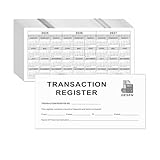
- Compact and Sturdy: These checkbook registers offer clear pages with 14 lines each, making it easy to track account withdrawals; The bold layout and spacious rows and columns (0.55" width) provide a comfortable writing experience.
- Small and Portable: These compact 6" x 3" checkbooks are perfect for on-the-go financial tracking and feature a stylish calendar from 2026 to 2028, guiding you through a better financial journey.
- Premium Material: This checkbook register uses high-quality cardboard, which is designed to prevent feathering and seepage. White Paper is ink-proof and thick enough to avoid ink bleeding through, offering you a smooth writing experience.
- Simplify financial management: The check register simplifies tracking of payments and deposits, equipped with columns for item numbers, transactions, and balances, making financial tracking simple and clear.
- A Thoughtful and Practical Gift: The checkbook registers is not only an ideal choice for yourself but also a perfect present. Great for enterprises, public institutions, individual business owners or individual users. It's a convenient tool for achieving financial success.
Assuming “free” means no conditions
Problem: A maintenance fee may apply when direct deposit stops or the balance falls below a threshold. Fix: Read the account-opening disclosure and fee schedule, then set an alert before the waiver condition is missed.
Ignoring overdraft settings
Problem: A transaction can be declined, paid with a fee, or covered by a linked account depending on your election. Fix: Review overdraft coverage, linked-account transfers and alert options before relying on the account.
Confusing deposit insurance with investment protection
Problem: A money market mutual fund is not the same as a money market deposit account. Fix: Confirm the product type and applicable protection before depositing emergency cash.
Overlooking ownership categories
Problem: The $250,000 insurance figure may be aggregated across accounts in the same ownership category at one institution. Fix: Verify coverage using the institution’s insurance information and your actual account titles.
Bottom line
Use checking for money that must move frequently and savings for money that should remain available but out of the spending stream. Many households need both. Make the final choice by comparing the specific account’s access, APY conditions, maintenance and overdraft fees, minimums, transaction rules and FDIC or NCUA insurance—not by relying on the account label or a headline rate.
Quick Recap
Product prices and availability are accurate as of the date/time indicated and are subject to change. Any price and availability information displayed on Amazon at the time of purchase will apply.




