
Do these 3 things before closing this tab:
1Repair Windows errors before they cause bigger problems2Scan for outdated or missing drivers - takes under a minute3Clear out junk files and repair common Windows errorsThere is no single Massachusetts rent-versus-buy answer. Compare a rental and a purchase that meet the same needs, in the same area, over the number of years you expect to stay. Count every recurring, upfront, and selling cost—not just rent versus mortgage principal and interest—and show both monthly cash flow and the eventual equity you might keep.
What the Massachusetts numbers tell you—and what they do not
Massachusetts is expensive enough that a rough comparison can produce a seriously misleading result. The state’s Executive Office of Housing and Livable Communities (EOHLC) reported a $610,000 median single-family home price in 2024, 10% higher than the prior year. Its analysis estimated that prospective buyers would need about $162,000 in annual household income to afford a home under the assumptions used.
As an Amazon Associate I earn from qualifying purchases.
Greater Boston was much higher, with a reported $950,000 median single-family price in 2024. Neither figure is a quote for a particular town, condominium, multifamily property, or household. A median also does not tell you the taxes, insurance, condition, or monthly payment for the home you are considering.
The U.S. Census Bureau reported a $2,755 median monthly housing cost for Massachusetts homeowners with a mortgage in 2024. That measure includes mortgage payments, property taxes, insurance, utilities, and various fees. It describes existing households in a statistical survey; it is not a new-buyer quote and cannot be divided into the state median home price to create a break-even point. In the same release, the median share of income spent on that owner housing-cost measure was 21.4%, while the median share going toward rent was 31%. These are different populations and measures, not proof that buying is cheaper.
#1 Best Overall

- EFFECTIVELY MANAGE YOUR MONEY - Our budget planner helps you take control of your finances by providing sections for financial goals, savings, debts, daily expenses, monthly budget, monthly budget review. This finance planner is a good finance book and will help you manage your money effectively.
- PREMIUM QUALITY - Our budget planner is made with high-quality 100gsm paper that reduces ink leakage, fraying, and shade issues. The sturdy and flexible cover,, helps protect the pages. The metal lay-flat twin-wire binding ensures durability and longevity.
- ORGANIZED MONTHLY GOALS & BUDGETS - Our 12-month budget planner helps you set monthly goals, budgets, reviews, and develop good monetary habits, strategies, and action plans. Write down monthly financial goals, put reminders of bills and payments on the calendar, plan your monthly budget in each category, track daily expenses, and review the monthly budget at the end of the month.
- FLEXIBLE USAGE - Our undated finance planner allows you to start at any time and place, making it convenient to use. It has a perfect size of 8.6x5.9 inches and fits in every bag, so it's always at hand.
- CREATE FINANCIAL FREEDOM - Our budget planner is your chance to develop monthly habits, monetary strategies, and action plans to start your journey to long-term financial freedom. It allows you to track monetary flow and review each area for improvements. With this 1-Years budget book, you can take the first step towards financial freedom.
EOHLC’s state page also describes Massachusetts as the fourth most expensive state for a two-bedroom rental, citing the National Low Income Housing Coalition. The retrieved state passage does not identify the underlying report year, so treat that rank as historical context rather than a current ranking until the original edition is checked.
Start with an apples-to-apples housing match
A fair comparison begins before you enter a number in a calculator. Match the homes as closely as possible:
- Location: Use the same municipality or a genuinely comparable neighborhood, including commute, transit, schools, services, parking, and flood or other location risks.
- Usable space and capacity: Compare similar bedrooms, bathrooms, storage, outdoor space, accessibility, and ability to accommodate your household.
- Condition and amenities: A renovated rental with included appliances is not equivalent to a fixer-upper. Account for central air, laundry, parking, security, and common facilities.
- Housing type: Compare an apartment with a comparable condominium or a rental house with a comparable single-family purchase. A detached house normally brings different maintenance and utility obligations than a unit.
If buying would mean moving farther from work or accepting fewer amenities, record that as a separate lifestyle tradeoff. Do not call the cheaper but materially different home a lower-cost version of the same choice.
Choose the time horizon before doing the math
Buying creates costs at purchase and sale, so the expected holding period is one of the most important inputs. Write down a realistic minimum, likely, and maximum stay—for example, a possible move after a job change, a planned family change, or a retirement date. Then run all three cases.
Do not publish or rely on a universal Massachusetts “break-even year.” The point at which buying overtakes renting depends on the specific price, rent, loan, down payment, taxes, insurance, maintenance, market values, selling costs, and tax situation. A short stay can leave purchase and sale costs spread over too few months; a longer stay gives more time to build equity, but also exposes you to more repairs, tax changes, insurance increases, and market risk.
Build the renter’s complete cost
Use the rent actually available for the matched property, not a statewide average. Your renter worksheet should include:
Rank #2
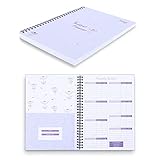
- Customize & Get Budgeted - With blank free of pre-filled categories and months budgeting pages, Soligt undated budget planner gives you complete control of your finances on a daily monthly and annual basis and enable you to manage your personal finance, cash money payment, and budgeting effective without any restrictions.
- Keep you on Track & Organized - The budget book journal provides 12 cute pockets for effortless bill, receipt, envelopes storage, along with a spacious layout perfect for recording and tracking incomes, expenses, savings, debt payoff, bills calendar and paying with ease.
- Achieve Financial Goals - This bill organizer provides a simple yet comprehensive budgeting system that is perfect for home household or small business beginners and encourages celebrating successes while identifying opportunities for improvement, both visually appealing and user-friendly.
- Your perfect companion - The Spiral bound budgeting notebook is the perfect small size, measuring at 9.25 x 6.81" and featuring a durable hardcover and 100 gsm paper. Lightweight and portable, It is easy to take with you wherever you go and built to last throughout the year.
- Bonus Month Tabs - The paycheck Budget Planner Financial Organizer boasts colored sticker labels to aid in simple navigation through your budget pages, ensuring added convenience and ease of use to help locate important information quickly and efficiently.
- Base rent: Enter the starting monthly rent and model plausible increases at each renewal or move.
- Tenant-paid utilities: Include electricity, gas, heat, water, sewer, trash, and internet when they are not included.
- Renter’s insurance: Price a policy for the household’s contents and liability needs.
- Required or likely fees: Include parking, amenity, pet, storage, application, broker, and move-in or move-out charges only when they apply to your situation.
- Moving and re-leasing costs: If your horizon includes a move, estimate the next home’s rent, deposits, moving expense, and any new broker or application fees.
Rent is not necessarily the same every year. Model at least a lower, central, and higher increase assumption rather than treating a first-year listing as a fixed long-term price. At the same time, do not assume that you will remain in the same unit indefinitely; flexibility often has value precisely because a renter can change location or housing size.
What’s actually slowing this PC down?
Pick the symptom - the matching free tool is one click away.
Build the owner’s complete cost
A mortgage principal-and-interest quote is only one line in an ownership budget. CFPB guidance identifies the following additional costs, and Massachusetts-specific charges must be obtained for the property you are evaluating:
- Mortgage principal and interest: Use the actual loan amount, interest rate, term, and type offered to you.
- Property taxes: Obtain the current assessment and tax rate from the municipality, then ask how a sale or reassessment could affect the bill. Do not substitute a statewide median.
- Homeowners insurance: Get a quote for the address, construction, coverage limits, deductible, and risks such as wind or water damage.
- Mortgage insurance: Include it when the loan requires it; the amount and cancellation rules depend on the loan and down payment.
- Condominium or homeowners-association fees: Include current dues and investigate what they cover, reserve funding, special assessments, and likely increases.
- Utilities: Owners generally pay the full household utility bill. Obtain actual bills or a realistic estimate for the property rather than carrying over a renter’s smaller unit cost.
- Maintenance, repairs, and improvements: Include a cash reserve based on the home’s age, systems, inspection findings, and your own repair tolerance. No Massachusetts-specific statewide maintenance percentage is established by the figures here, so use property-specific estimates and disclose any assumption.
MassHousing’s homebuyer guidance contrasts the responsibilities directly: “When you rent a home, your landlord covers maintenance and repairs.” A homeowner instead pays for repairs, updates, and improvements. That difference affects both your budget and your time. An owner also gains control over renovations, subject to local rules, condominium documents, permits, and financing constraints.
Count the cash needed before and at closing
The down payment is not the entire amount required to buy. Keep a separate cash-to-close schedule so a low monthly payment does not hide a liquidity problem.
MassHousing says buyers may need funds to make an offer and cover closing costs. Depending on the transaction, charges can include:
The Tool Desk
Outbyte PC Repair FREERepair Windows errors before they cause bigger problemsFix Now →Outbyte Driver Updater FREEFix the driver behind crashes, sound loss and screen glitchesFind Drivers →- Home inspection and, where appropriate, pest or other specialist inspections
- Attorney fees
- Title search and related title charges
- Appraisal
- Loan-origination charges
- Home warranty
- Real-estate brokerage fees or other transaction-specific charges
- Prepaid taxes, insurance, interest, and escrow funding required by the lender
Request an itemized estimate rather than applying a generic percentage to every Massachusetts purchase. Which charges apply, and who pays them, depends on the contract, property, lender, and local practice. Keep an emergency reserve after closing; using every available dollar for the down payment can make an affordable monthly payment unsafe when a furnace, roof, or assessment arrives.
Rank #3

- Helps you budget and track personal spending
- Offers weekly and monthly tracking in a ledger-style format
- Includes yearly summary
Include the cost of selling
If your ownership horizon ends with a sale, add the costs of listing and transferring the property, payoff of the remaining mortgage, attorney and recording charges, moving, and any repairs or concessions needed to sell. The exact brokerage and transaction charges vary by agreement and market; obtain written estimates for the likely sale date.
Your ownership outcome is not the sale price alone. A useful calculation is:
net sale proceeds = sale price − selling costs − remaining mortgage balance − other liens
Recommended Free Tools
Then compare those proceeds with the cash you invested and the owner costs you paid during the holding period. If you retain the home rather than sell it, the calculation is an estimated current equity value, not spendable cash.
Separate monthly cash flow from economic cost
Show two views instead of forcing everything into one “monthly cost.”
| View | What to include | Why it matters |
|---|---|---|
| Monthly cash flow | Rent or mortgage payment, taxes, insurance, mortgage insurance, association fees, utilities, maintenance reserve, and other recurring bills | Tests whether the household can pay the bills every month and keep adequate cash reserves. |
| Whole-period economic cost | Upfront purchase costs, recurring owner costs, selling costs, and the owner’s net equity or sale proceeds; compare with all renter costs over the same period | Shows what the housing choice consumed after accounting for the asset value retained at the end. |
Principal payments are monthly cash outflows, even though they reduce the loan balance and build equity. Do not label the full mortgage payment “rent,” and do not treat principal as a free expense. A transparent worksheet displays the principal separately, tracks the balance reduction, and states the assumed ending value and sale costs.
Rank #4

- Comprehensive Income & Expense Planner: This 108-page financial planner helps you take complete control of your money. It includes dedicated sections for tracking every source of income and every expense, no matter how small. Whether you need to monitor daily spending, plan a monthly budget, or prepare for tax season, this planner gives you a clear, organized system.
- Clear Layout & Easy to Write: Each page features a clean, well-organized design with clearly labeled columns for income sources, expense categories, revenues, profits, and other relevant information. The organized sections simplify tracking and help you stay consistent with your bookkeeping routine.
- Enough Writing Space: This planner offers generous writing space for each entry, so you can record detailed descriptions, multiple transactions, or notes about upcoming bills. Each page gives you room to be thorough, perfect for tracking everything from grocery receipts to monthly rent, freelance income to utility bills.
- Portable and Convenient: This compact book measures 9.5” x 6.7” with a sturdy spiral binding, which is easy to carry in your bag, backpack, or keep on your desk. This portable planner makes it easy to stay on top of your money anytime, anywhere. Perfect for use at home, in the office, or on the go.
- Wide Usages: It is suitable for personal budgeting, family household expenses, small business bookkeeping, freelance income tracking, or even rental property management. It's also great for college students learning to manage money, couples saving for a big purchase, or anyone working toward debt freedom or savings goals
Get property-specific and loan-specific inputs
Replace estimates with documents as soon as you can. Ask for:
Crashes, No Sound, or Screen Glitches?
Random freezes, missing sound and display glitches usually trace back to one bad driver. Find and replace yours safely.Free scan · under a minuteWindows Errors? Fix Them Before They Spread
Repair common Windows errors and clear accumulated junk for a smoother, more stable PC - no reinstall needed.Free scan · no reinstall- A lender Loan Estimate: Massachusetts Division of Banks explains that this form provides interest-rate and closing-cost details and helps consumers compare mortgage offers. Request one from each lender you are seriously considering and compare the same loan amount, term, points, and lock assumptions.
- Loan structure: Fixed-rate mortgages keep the rate unchanged for the loan term. Adjustable-rate mortgages can change periodically. Common terms include 15, 20, and 30 years. Compare the initial rate, adjustment schedule, caps, payment changes, and remaining balance—not only the first payment.
- Borrowing-capacity information: Prequalification does not require a specific home, but final capacity depends on income, recurring obligations, down payment, and credit history. A lender’s maximum is not the same as a safe household budget.
- Municipal tax information and insurance quotes: Use the exact address and ask about reassessment, exemptions, deductibles, and coverage exclusions.
- Condominium documents, if applicable: Review the budget, reserves, insurance, meeting minutes, pending litigation, restrictions, and possible assessments.
- Inspection findings and contractor estimates: Convert visible or likely repairs into dated cash outflows rather than a vague maintenance line.
Use a worksheet that exposes the assumptions
Set up one column for renting and one for buying, with rows for each year of the planned horizon. Keep these inputs visible:
| Input | Renting | Buying |
|---|---|---|
| Starting monthly housing payment | Contract rent plus tenant-paid utilities and insurance | Principal and interest plus taxes, insurance, mortgage insurance, association fees, utilities, and maintenance reserve |
| Annual change assumption | Rent and utility changes; note lease or move timing | Tax, insurance, fee, utility, and maintenance changes; note fixed-rate versus adjustable-rate loan behavior |
| Upfront cash | Deposit, application, broker, moving, and other actual charges | Down payment, inspection, appraisal, attorney, title, origination, prepaid items, and other closing charges |
| End-of-horizon value | No home equity; include the value of retained cash only if you model it explicitly | Estimated property value less selling costs and mortgage balance, if sold |
| Flexibility and responsibility | Ability to move; landlord normally handles covered repairs | Control and stability; owner carries repairs, improvements, market, tax, insurance, and assessment risk |
Use monthly or annual timing consistently. If you compare a five-year rental with a seven-year ownership period, the result is meaningless even if every individual number is accurate.
Run scenarios instead of trusting one forecast
At minimum, run a lower, central, and higher case for the variables that can change the decision:
- Interest rate and loan type, including the possible payment path for an adjustable-rate mortgage
- Annual rent changes and the cost of moving to a new rental
- Property-tax, insurance, utility, and association-fee increases
- Repair timing and size, based on inspection and system age
- Home-price change at the sale date
- Length of stay
- Down payment size and the cash reserve left after closing
The purpose is not to predict appreciation. It is to identify which assumptions make the decision fragile. If buying works only if the home rises in value, repairs stay near zero, and you remain for a long time, say so plainly. If renting works only under unusually low rent increases or requires repeated moves, disclose that dependency.
Understand taxes without overstating the benefit
Mortgage interest and real-estate taxes are not automatic dollar-for-dollar savings. IRS guidance generally requires itemizing deductions to claim qualifying home-mortgage interest and real-estate taxes, and limits apply. A household using the standard deduction should not automatically subtract a mortgage-interest “tax saving” from the cost of buying.
Best Value

- Customize & Get Budgeted - With blank free of pre-filled categories and months budgeting pages, Soligt undated budget planner gives you complete control of your finances on a daily monthly and annual basis and enable you to manage your personal finance, cash money payment, and budgeting effective without any restrictions.
- Keep you on Track & Organized - The budget book journal provides 12 cute pockets for effortless bill, receipt, envelopes storage, along with a spacious layout perfect for recording and tracking incomes, expenses, savings, debt payoff, bills calendar and paying with ease.
- Achieve Financial Goals - This bill organizer provides a simple yet comprehensive budgeting system that is perfect for home household or small business beginners and encourages celebrating successes while identifying opportunities for improvement, both visually appealing and user-friendly.
- Your perfect companion - The Spiral bound budgeting notebook is the perfect small size, measuring at 9.25 x 6.81" and featuring a durable hardcover and 100 gsm paper. Lightweight and portable, It is easy to take with you wherever you go and built to last throughout the year.
- Bonus Month Tabs - The paycheck Budget Planner Financial Organizer boasts colored sticker labels to aid in simple navigation through your budget pages, ensuring added convenience and ease of use to help locate important information quickly and efficiently.
Tax treatment depends on the applicable tax year, loan, property use, filing situation, deduction limits, and other deductions. Use the latest IRS guidance and a qualified tax professional for a decision that depends on a projected tax benefit. Do not count a tax benefit unless you can explain the qualification and include the opportunity cost of giving up the standard deduction, where relevant.
Consider assistance programs—but verify current terms
MassHousing says its mortgage programs apply to Massachusetts primary residences and have eligibility requirements that include income and credit factors. Its reviewed FAQ advertises down-payment assistance of up to $30,000 in every Massachusetts city and town. Program availability, funding, caps, eligible properties, repayment terms, and borrower requirements can change. Confirm the current rules directly before including assistance in your cash-to-close calculation.
Treat assistance as a financing input, not as proof that ownership is affordable. Include any deferred, repayable, or shared-equity obligation in the ending-cost calculation and test the budget without assistance if funding could disappear before you close.
Free tools Windows power users keep installed
One-click scans. No signup required.
Compare the nonfinancial tradeoffs explicitly
| Decision axis | Renting | Buying |
|---|---|---|
| Monthly cash flow | Usually simpler; rent and fees can change at renewal or after a move. | More line items; fixed-rate principal and interest may be stable while taxes, insurance, fees, utilities, and repairs change. |
| Upfront cash and liquidity | Deposit and move-in costs are usually lower, but confirm actual fees. | Down payment and closing costs can consume substantial cash; preserve reserves. |
| Long-term result | No ownership equity; money not spent on a down payment remains available only if you save or invest it. | Principal reduction can create equity; the result depends on value, debt, holding period, and selling costs. |
| Flexibility | Useful when employment, household size, or location may change. | Less flexible because selling or renting out the home has cost, timing, and legal consequences. |
| Maintenance and control | Landlord generally handles covered repairs; the lease limits alterations. | Owner controls improvements but pays for repairs, updates, and maintenance. |
| Risk exposure | Exposed primarily to rent increases, renewal risk, and moving costs. | Exposed to rates, taxes, insurance, repairs, association assessments, and property values. |
EOHLC describes renting as useful for people who may move, lack long-term job security, lack qualifying income or assets, or do not want owner responsibilities. It describes ownership as potentially better suited to households with steady income and sufficient assets. Those are decision factors, not a universal recommendation.
A practical decision sequence
- Define the matched homes and location. Record size, condition, amenities, commute, and services.
- Set three occupancy horizons. Include an early move case, your most likely stay, and a longer stay.
- Collect documents. Obtain leases or listings, a Loan Estimate, tax information, insurance quotes, association documents, inspection results, and closing-cost estimates.
- Calculate renter cash flow. Add rent, utilities, insurance, applicable fees, rent changes, and moving costs.
- Calculate owner cash flow. Add all recurring ownership costs and a property-specific maintenance reserve.
- Calculate cash to close and remaining reserves. Do not use equity as an emergency fund until it can actually be accessed.
- Calculate the ending position. For a sale, subtract selling costs and the mortgage balance from the assumed sale price. For renting, show the cash retained and any savings plan separately.
- Stress-test the result. Change rates, rent, repairs, insurance, taxes, prices, and the stay length. Identify the assumptions that reverse the result.
- Make the decision using both affordability and fit. Reject a purchase that leaves no safe reserves even if its long-term spreadsheet result looks favorable.
Common mistakes that invalidate the comparison
- Using only principal and interest: This omits taxes, insurance, mortgage insurance, association fees, utilities, maintenance, and transaction costs.
- Comparing different homes: A smaller rental and a larger purchase answer different lifestyle questions.
- Ignoring the down payment’s opportunity cost: Show the cash required and what liquidity remains; if you model investment returns on retained cash, state the assumption rather than treating it as guaranteed.
- Assuming appreciation: Test flat or lower-value outcomes; do not make a purchase depend on an unproven forecast.
- Forgetting the sale: A short holding period can be dominated by purchase and selling costs.
- Counting a tax deduction automatically: Itemization and statutory limits matter.
- Using statewide medians as personal quotes: The $610,000 state median, $950,000 Greater Boston median, and $2,755 Census owner-cost figure are context, not substitutes for local documents.
- Spending every dollar at closing: Keep reserves for repairs, deductibles, job interruptions, and ordinary life expenses.
- Relying on an outdated program or rate: Mortgage rates, taxes, insurance, rents, assistance programs, and tax law change. Refresh inputs before signing.
What a sound conclusion looks like
Your final worksheet should state the matched properties, occupancy horizons, loan terms, rent and cost assumptions, upfront cash, reserves, ending value method, selling-cost assumptions, tax treatment, and the scenarios that change the result. It should answer two separate questions: Can this household safely carry the monthly and upfront cash burden? and Which option leaves the better expected financial position for this household’s likely time in the home?
For some Massachusetts households, renting is the rational choice because flexibility, lower upfront cash, and transferred maintenance responsibility outweigh the chance to build equity. For others, a long expected stay, stable income, adequate reserves, and a suitable property can make buying attractive. The answer comes from your documented local inputs—not from a statewide median or a mortgage calculator that stops at principal and interest.
Quick Recap
Product prices and availability are accurate as of the date/time indicated and are subject to change. Any price and availability information displayed on Amazon at the time of purchase will apply.




