
Free tools Windows power users keep installed
One-click scans. No signup required.
A portable generator is usually the cheaper way to buy backup power. It has a much lower equipment price and can keep selected appliances or circuits running. A whole-house, permanently installed standby generator costs substantially more because it includes fixed wiring, a transfer switch, fuel-line work, permits, a pad and professional installation. In return, it can start automatically and support far more of the home.
The right comparison is not just the price of the generator. Include the safe connection hardware, installation, fuel, maintenance, outage convenience and the amount of your home you actually need to power.
As an Amazon Associate I earn from qualifying purchases.
Portable vs. whole-house generator: the cost picture
| Cost or feature | Portable generator | Whole-house standby generator |
|---|---|---|
| Published equipment price | $600–$1,500 for a regular 5,000–8,000-watt unit, according to Consumer Reports’ 2025/2026 buying guide | $3,000–$5,500 before installation, according to Consumer Reports’ 2025/2026 buying guide |
| Connection to home circuits | Usually a transfer switch or interlock kit; Consumer Reports lists $450–$1,500 to buy and install one | Permanent transfer switch installed beside the main breaker |
| Fuel and connection work | You position the unit, connect it and refuel it manually; gasoline or propane storage is your responsibility | Commonly connected to natural gas or propane, with fuel-line work and code-compliant installation |
| Coverage | Selected appliances or circuits, limited by generator output and the transfer equipment | Can support whole-home loads when correctly sized and installed |
| Starting and transfer | Manual setup and startup | Starts and transfers automatically when utility power fails |
| Mobility | Can be moved, stored or used at another location | Tied to the property |
| Resale value | No standardized figure is published in the cited sources | No standardized figure is published in the cited sources |
These are national published ranges, not a quote for your property. A standby installation can vary with local labor rates, permits, the distance to the gas meter or propane tank, the electrical configuration and the concrete or composite pad required. Fuel prices and local code requirements also change the long-term cost.
Crashes, No Sound, or Screen Glitches?
Random freezes, missing sound and display glitches usually trace back to one bad driver. Find and replace yours safely.Free scan · under a minutePC Slower Than It Used to Be?
A free scan shows the junk files, broken settings and background clutter dragging Windows down - then fixes them in one click.Free scan · Windows 10 & 11What you are actually buying
Portable generator
A portable generator is a movable gasoline or propane engine-generator. You wheel or carry it to an outdoor location, start it, connect approved cords or a transfer system, and monitor fuel and load. The common 5,000–8,000-watt class can run essential circuits such as a refrigerator, freezer, lights, internet equipment, furnace controls or a sump pump, but not necessarily all of them at the same time.
#1 Best Overall

- 𝗣𝗼𝘄𝗲𝗿𝗳𝘂𝗹 𝗢𝘂𝘁𝗽𝘂𝘁 - 4400 peak watts and 3400 running watts, perfect for RV camping and home backup
- 𝗠𝘂𝗹𝘁𝗶-𝗢𝘂𝘁𝗽𝘂𝘁 𝗢𝗽𝘁𝗶𝗼𝗻𝘀 - Includes 2*120V AC ports, 1*12V DC port, 1*RV port
- 𝗟𝗼𝗻𝗴 𝗥𝘂𝗻𝘁𝗶𝗺𝗲: Runs for up to 14 hours at 25% load with ECO mode, 2 gallon fuel tank with fuel gauge, allows you to check fuel levels at a glance, keeping you prepared
- 𝐋𝐨𝐰 𝐍𝐨𝐢𝐬𝐞: Under 72 dBA from 23FT away, this generator provides steady power for your home during a power outage or RV nights
- 𝗟𝗶𝗴𝗵𝘁𝘄𝗲𝗶𝗴𝗵𝘁 𝗮𝗻𝗱 𝗣𝗼𝗿𝘁𝗮𝗯𝗹𝗲: Only 56lbs, easy to move around
A portable unit is not a substitute for a permanent electrical installation. If you want to energize circuits through the home wiring, an electrician installs a transfer switch or an interlock kit. The device isolates the selected circuits from the utility supply so generator electricity cannot flow backward onto utility lines. Without that isolation, a dangerous backfeed can injure utility workers, damage equipment or start a fire.
Whole-house standby generator
A whole-house generator is permanently mounted outside and connected to the home’s electrical panel through an automatic transfer switch. Consumers Energy describes permanent generators as systems connected to the home that switch over automatically when utility power is lost. Natural gas and propane are common fuel sources.
Installation normally includes placing the generator on a suitable pad, connecting the fuel line, installing the transfer switch beside the main breaker, completing required electrical and fuel inspections, and commissioning the system. Generac’s buyer guidance describes an outage simulation as part of the process so the installer can verify starting, transfer and return to utility power.
Quick wins for a faster PC:
Repair Windows errors before they cause bigger problemsFix Now →Scan for outdated or missing drivers - takes under a minuteDriver Scan →Where the portable option saves money—and where it does not
Lower equipment entry price
The equipment gap is the clearest reason a portable generator is cheaper. Consumer Reports’ 2025/2026 buying guide puts a regular 5,000–8,000-watt portable unit at $600–$1,500. The same guide lists stationary home-standby equipment at $3,000–$5,500 before installation.
Rank #2

- Ultra-Lightweight: At only 7.5 lbs, the Explorer 300 delivers a robust 292Wh capacity while remaining 17% lighter than the industry average. The sleek, integrated handle makes it effortless to carry on long hikes or pack with your camping gear, providing reliable off-grid power without adding bulk to your load.
- Versatile Power for 6 Devices: Equipped with 2 AC outlets, a 100W USB-C PD port, 2 USB-A ports, and a 120W car port. With a 300W rated output (600W peak surge), it easily handles laptops, drones, and cameras, while also serving as a dependable cpap battery for camping or a robust solar powered generator when paired with panels.
- Built to Last: Upgraded with premium LiFePO4 chemistry, this portable generator delivers over 4,000 charge cycles before reaching 70% capacity. This ensures more than 11 years of reliable service life, making it a sustainable and durable energy partner for a decade of exploration.
- Fast Solar Charging: Perfect for off-grid use, this solar powered generator pairs seamlessly with Jackery panels. Reach 80% capacity in approximately 2.8 hours with a 100W solar panel, or maintain your gear with a portable 40W panel (80% in 7.5 hours), making it an essential part of your hunting essentials.
- WHAT YOU GET: 1* Jackery Explorer 300 Portable Power Station, 1*AC adapter, 1* car charger cable, 1* user guide (𝐒𝐨𝐥𝐚𝐫 𝐏𝐚𝐧𝐞𝐥 𝐍𝐨𝐭 𝐈𝐧𝐜𝐥𝐮𝐝𝐞𝐝.)
That difference is meaningful if your goal is a few essential circuits rather than uninterrupted operation of the entire house. It is also easier to defer the purchase of a larger unit: you can begin with a load plan for refrigeration, lighting, communications and heating controls instead of paying to cover every large motor and heating element.
Connection hardware is a real part of the portable budget
Using extension cords for a few outdoor appliances can avoid electrical-panel work, but it creates cord management, weather and trip hazards and does not power built-in circuits. A transfer switch or interlock is the safer approach when you need selected circuits inside the house. Consumer Reports estimates $450–$1,500 to buy and install this equipment. The final amount depends on the panel design, circuit count, wiring distance and local labor.
An interlock generally allows a properly sized generator to feed a designated breaker while mechanically preventing the utility main and generator breaker from being on together. A transfer switch can select specific circuits or loads. Your electrician should identify which arrangement is listed for your panel and accepted by the local authority having jurisdiction.
What’s actually slowing this PC down?
Pick the symptom - the matching free tool is one click away.
Standby installation adds infrastructure
A permanent system needs more than the generator cabinet. Budget for a pad, clearances, a transfer switch, fuel-line connection, electrical labor, permits and inspections. The fuel-line distance and whether the existing gas service can supply the generator are especially important. A propane installation may require tank capacity and regulator changes.
Rank #3

- Gasoline: 5300 Running Watts & 6500 Peak Watts; Propane: 4800 Running Watts & 5800 Peak Watts; 4.7 Gallon Fuel Tank with Fuel Gauge; Up to 14.5 Hours of Run Time with 120/240V Volt Selector Switch
- Features One 5–20R 120V 20V Household Duplex Receptacle, One RV-Ready TT-30R 30A Receptacle, and One Transfer Switch Ready L14-30R 30A Receptacle; All Outlets Have Rubber Covers for Added Safety
- Plug-and-Play: Comes with Oil, an Oil Funnel, Propane Hose, Tool Kit, Wheel Kit, and a User’s Manual to Get You Started Right Out of the Box (Minimal Assembly Required)
- Powered by a 274 CC Westinghouse 4-Stroke OHV Engine Featuring a Long-Lasting Cast Iron Sleeve with Automatic Low Oil and Carbon Monoxide (CO) Shutdown
- All Westinghouse Portable Generators are Functionally Tested in the Factory and May Contain Minimum Residual Oil and/or Fuel Odor; EPA Compliant; Backed By 3-Year Limited Service, Labor, and Parts Coverage and Nationwide Customer Service Network
Because those items are property-specific, the cited national equipment range cannot be converted into one reliable installed price. Request an itemized quote that separates the generator, transfer equipment, pad, fuel work, permits, taxes, startup and any service agreement.
Operating and maintenance costs
Portable fuel and hands-on operation
Portable generators consume fuel while running and require you to keep an adequate, legally stored supply. Generac’s 2024 buyer guide says portable units may need refueling approximately every 6–12 hours, depending on load and tank size. A heavy load, cold weather or a small tank can shorten that interval.
During an outage you also provide the labor: move the generator into position, verify that the exhaust is clear, connect the approved equipment, start it, balance loads, monitor fuel, shut it down for refueling and secure it afterward. Those tasks have an opportunity cost that is easy to overlook when comparing purchase prices.
The Tool Desk
Outbyte PC Repair FREERepair Windows errors before they cause bigger problemsFix Now →Outbyte Driver Updater FREEScan for outdated or missing drivers - takes under a minuteDriver Scan →Standby fuel and service
A standby generator avoids carrying fuel cans to the machine, but it still has operating costs. Natural-gas or propane consumption depends on the model and electrical load, and the utility or delivered-fuel rate varies by location. You should also plan for periodic oil and filter service, battery replacement, inspections and test runs. DOE and the Pacific Northwest National Laboratory emphasize routine maintenance and regular testing for backup generators.
Rank #4
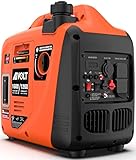
- 🔌 Safe for Sensitive Electronics | <3% THD Clean Power Inverter Generator - This portable inverter generator with advanced inverter tech delivers stable, clean power (THD <3%), safe for your phones, laptops, or small tools. It’s the perfect for home office backups during blackouts or generator for camping - keep your devices charged without worry
- ⚡ Powerful & Fuel-Efficient | Runtime: 8 hrs at 25% load, 2 hrs at full load – This AIVOLT quiet gas inverter generator, powered by a 60cc 4-stroke OHV engine with copper windings, delivers 1600 starting watts and 1260 running watts. The eco-mode switch intelligently adjusts fuel consumption, enabling up to 8 hrs of continuous operation at 25% load for significant fuel savings, while full 1260W operation runs approximately 2 hrs (refuel as needed). Perfect for camping, RV trips, tailgating, job sites, and home backup.
- 🔇 Ultra-Quiet (57 dBA) & Lightweight - This portable quiet generator (57 dBA at 23ft) is quieter than a normal conversation— no more noisy distractions during camping or backyard gatherings, truly a silent gas generator. At just 28lbs, it’s 20% lighter than similar models, a handy small inverter generator easy to carry to campsites or job sites as your go-to quiet generator for camping
- 🔌🔗 Multifunctional Panel & Parallel Capability - This portable inverter generator comes with 2x120V outlets and 2 USB ports (Type-A/C), perfect for charging phones while running a camping fridge. 3 indicator lights and an hour meter let you monitor power status in real time. Need more power? Connect two AIVOLT VS1600101 quiet inverter generators via a parallel kit (not included) to double your output seamlessly
- 🛡️ CO Protect & Comprehensive Safety - This gas powered generator features built-in CO Alert tech that auto-shuts down when unsafe CO levels are detected, protecting your family. Low oil auto-shutdown and overload protection also safeguard both the generator and your electronics - make it a safe for home or RV use, no safety worries
Some owners arrange an annual maintenance visit; others follow the manufacturer’s schedule themselves where permitted. Include those recurring costs in a multi-year comparison rather than treating the higher standby purchase price as the only difference.
Coverage: what can each option run?
Make a portable load plan
List the circuits and appliances that matter during an outage, then record both their running watts and their starting or surge watts. Motors in refrigerators, freezers, well pumps, furnaces and sump pumps can require a brief surge above their normal draw. Add the running loads you expect to use simultaneously and check that the generator and transfer equipment can handle the highest starting combination.
Typical priority groups include:
- Refrigerator and freezer
- Furnace controls or a boiler circulation pump
- Sump pump or well pump, if the generator can handle its starting surge
- Selected lighting circuits
- Internet modem, router and phone charging
- Medical equipment that has an approved backup-power procedure
Electric resistance heaters, central air conditioners, electric water heaters, ovens and vehicle chargers can consume most of a portable generator’s capacity. They may need to remain off or be managed one at a time. Never assume that a generator rated for a certain number of watts can safely power every circuit on a panel.
Size a standby system for the loads you expect
“Whole-house” describes the installation goal, not a promise that every appliance can run simultaneously regardless of size. The installer should calculate continuous and starting loads, account for large motors and heating equipment, and select a transfer switch and generator that are compatible with the service. A smaller standby system may cover essential circuits; a larger one can cover more of the panel.
Best Value

- Automatic Home Backup Made Portable: Pair with the Westinghouse WATS200 Automatic Transfer Switch for automatic backup power. This revolutionary, first-of-its-kind technology combines standby convenience with portable versatility. Exclusive to Westinghouse. Switch sold separately.
- Built for Longer Engine Life: The powerful 550cc engine features a pressure lubrication system that delivers oil to critical components, reducing friction and wear. A reusable oil screen captures abrasive particles and contaminants for cleaner oil and long-lasting engine performance.
- Power for sensitive electronics: Less than 5% THD delivers cleaner power for phones, computers and TVs. Copper windings help it run cooler and last longer. Up to 19 hours at 25% load on a 9.5-gallon gas tank, with push-button and remote start.
- Fuel flexibility: Choose gasoline, propane or natural gas. Delivers 11,500 running/14,500 peak watts on gasoline. 50A and 30A outlets pair well with an interlock kit, manual transfer switch or Westinghouse WATS200 ATS system for home backup (sold separately).
- Built-in safety and support: Automatic low-oil shutdown helps protect the engine, while the CO sensor shuts down the generator when elevated carbon monoxide is detected. Backed by a 3-year limited residential warranty and lifetime technical support.
Ask whether the quote includes load management for large appliances. Managed loads can let a generator serve more circuits without sizing the engine for every high-demand device at once, but the controls and permitted wiring must be included in the design.
Independent reader supportYour contribution helps us test, update, and keep practical guides available for everyone.Safe setup and installation procedures
Portable generator procedure
- Choose the outdoor location. Place the generator outdoors, away from doors, windows and fresh-air intakes. Keep the exhaust path clear and follow the manufacturer’s clearance instructions.
- Check the fuel and oil before starting. Use the fuel specified for the model, inspect for leaks and never refuel a hot or running engine.
- Keep the generator dry. Use weather protection designed for generator operation without blocking ventilation. Do not operate it in a garage, basement, shed or other enclosed space.
- Connect only through approved equipment. Use heavy-duty outdoor cords for individual appliances, or connect the generator inlet to a code-compliant transfer switch or interlock installed by a qualified electrician.
- Never energize a wall outlet. Consumers Energy warns: “Never plug a portable generator into a wall outlet; you could damage your home’s wiring.” A male-to-male cord is particularly hazardous and should never be used.
- Start with major loads off. Start the generator according to its manual, then add circuits gradually so starting surges do not trip the breaker.
- Monitor operation. Watch fuel, oil warnings, extension-cord temperature, unusual noise and carbon-monoxide alarms. Shut down if you detect a fault or fuel leak.
- Refuel only after shutdown and cooling. Plan around the expected 6–12-hour refueling interval and store fuel in approved containers under local fire rules.
Standby installation procedure
- Obtain a site and load assessment. The installer confirms clearances, soil and pad requirements, fuel availability, electrical service and the loads to be supported.
- Confirm permits and code requirements. Permanent generators must meet local, state and national fire and electrical codes. Consumers Energy says installation should be performed by a licensed electrical contractor.
- Install the pad and generator. The unit is anchored on a suitable base with required ventilation and service clearances.
- Install the transfer switch. The switch is wired beside the main breaker or at the location specified by the design, with utility and generator sources interlocked.
- Connect and test the fuel system. The contractor verifies pipe sizing, regulators, shutoff valves, leak testing and the capacity of the natural-gas or propane supply.
- Complete commissioning. The installer starts the unit, verifies voltage and frequency, simulates utility failure, observes automatic transfer, then confirms return to utility power.
- Record maintenance requirements. Keep the model, serial number, oil type, filter schedule, battery information and service contact with your electrical-panel documentation.
Safety rules that should decide the purchase
| Risk | Portable-generator control | Standby-generator control |
|---|---|---|
| Carbon monoxide | Outdoor placement away from openings and intakes; use working carbon-monoxide alarms inside the home | Follow the manufacturer’s exhaust clearances and have the permanent installation inspected |
| Backfeeding | Use a transfer switch or listed interlock; never connect to a wall outlet | Use the installed automatic transfer switch and approved wiring |
| Fire and fuel | Store gasoline or propane legally, keep fuel away from ignition sources and refuel only after shutdown and cooling | Have a licensed contractor install and test fuel piping, regulators and shutoffs |
| Overload | Calculate running and starting watts; add loads gradually | Use professional load calculations and load-management controls where needed |
| Weather and moisture | Keep the machine dry without restricting airflow | Maintain the enclosure, pad and drainage according to the installation instructions |
Carbon-monoxide poisoning can occur without an obvious smell. Place alarms according to local guidance, test them regularly and leave the home immediately if an alarm sounds or anyone develops headache, dizziness, nausea or confusion.
Convenience during a short outage or a long outage
Short, occasional outages
A portable unit can be the economical choice when outages are uncommon and you are comfortable powering only priorities. It can be stored until needed, transported to another property and sold or repurposed independently of the house. The trade-off is that it is unavailable until someone is present to deploy it.
Frequent outages or unattended properties
A standby system’s automatic start and transfer matter most when outages happen while you are away, at night or during severe weather. It can keep refrigeration, heating controls, security and communications operating without a person outside in hazardous conditions. Permanent installation also avoids repeatedly routing cords through doors or deciding which appliance to unplug.
Automation does not eliminate maintenance. A discharged starting battery, closed fuel valve, overdue service or failed transfer switch can still prevent operation, which is why routine testing is part of ownership.
Which choice fits your budget and risk tolerance?
Choose a portable generator when:
- Your primary goal is the lowest initial equipment cost.
- You can tolerate manual setup, monitoring and refueling.
- You need only selected circuits or appliances.
- You have a safe outdoor location and legal fuel-storage plan.
- You may want to move the generator or use it at another property.
Choose a whole-house standby system when:
- Automatic operation is worth paying for.
- Outages are frequent, prolonged or likely to occur while nobody is home.
- You need broad coverage for heating, refrigeration, pumps, communications and other essential loads.
- You can fund professional electrical and fuel-line work, permits and a permanent pad.
- You prefer a fixed system rather than storing and deploying equipment.
Neither option is universally cheaper over its entire life. The portable path minimizes initial spending but shifts more work, fuel handling and outage risk to you. The standby path requires a larger capital commitment and ongoing service, but buys automatic operation and wider coverage.
Questions to ask before accepting a quote
- Which circuits or appliances will operate simultaneously, and what starting-watt assumptions were used?
- Is the quoted generator price separate from the transfer switch, pad, wiring, fuel-line work, permits, inspection and startup?
- Does the existing natural-gas or propane service have sufficient capacity?
- What clearances, sound limits and property-line rules apply at this address?
- Who obtains permits and coordinates inspections?
- What maintenance schedule, test-run procedure and battery-replacement interval does the installer recommend?
- What happens if the utility fails while the generator is being serviced?
- For a portable setup, which listed transfer switch or interlock fits the existing panel, and where will the outdoor inlet be installed?
Bottom line
For most households comparing purchase prices, the portable generator wins: its equipment cost is far below that of a stationary standby system. Add the required transfer switch or interlock, however, and the portable setup is no longer a plug-and-play purchase. A whole-house generator costs more because it permanently connects to the home, fuel supply and automatic transfer equipment. Pay the premium when automatic operation and broad coverage justify it; choose the portable route when selected circuits, mobility and a lower entry cost matter more.
Quick Recap
Product prices and availability are accurate as of the date/time indicated and are subject to change. Any price and availability information displayed on Amazon at the time of purchase will apply.




