
What’s actually slowing this PC down?
Pick the symptom - the matching free tool is one click away.
Some links on this page are affiliate links: if you buy through them we may earn a commission, at no extra cost to you.
Short answer: Nvidia closed at $118.42 on Monday, January 27, 2025, down from $142.62 the previous trading day. That was a closing decline of approximately 16.97%, conventionally rounded to 17%. The drop erased about $589 billion in quoted equity value—not $589 billion in cash from Nvidia’s bank account—and temporarily pushed the company below Apple and Microsoft in market capitalization.
The catalyst was investor panic over DeepSeek, a Chinese AI company whose open-source DeepSeek-R1 model and earlier DeepSeek-V3 technical report appeared to show that highly capable AI could be developed with far less computing expense than the market had assumed. The episode did not demonstrate that Nvidia’s current business had collapsed. It forced investors to reconsider the future amount, type, and profitability of AI infrastructure spending.
As an Amazon Associate I earn from qualifying purchases.
Windows Errors? Fix Them Before They Spread
Repair common Windows errors and clear accumulated junk for a smoother, more stable PC - no reinstall needed.Free scan · no reinstallOutdated Drivers Are Slowing You Down
One free scan finds every outdated or missing driver and matches the right update for your exact hardware.Free scan · exact hardware matchThe corrected Nvidia selloff numbers
The original headline’s 15% figure described the move during the trading session, while the completed session produced a larger closing decline. Nvidia’s closing prices were:
| Measure | Result |
|---|---|
| Friday, January 24, 2025 close | $142.62 |
| Monday, January 27, 2025 close | $118.42 |
| Close-to-close decline | $24.20 per share, or approximately 16.97% |
| Market capitalization before the selloff | Roughly $3.5 trillion |
| Market capitalization after the close | Roughly $2.9 trillion |
| Market-cap decline | Approximately $589 billion; some reports cited about $593 billion |
| Previous Nvidia one-day market-cap record | Approximately $279 billion on September 3, 2024 |
The closing price is reported in a contemporaneous SEC filing. The difference between the two closing prices was $24.20. Using approximately 24.3 billion shares, that change implies about $588 billion in equity value, consistent with the widely reported $589 billion figure. Variations in share counts, data vendors, and the precise time used for the calculation explain why some reports gave a figure closer to $593 billion.
Popular on Amazon
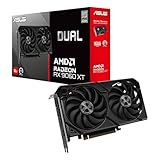
- Axial-tech fans now feature a smaller fan hub that facilitates longer blades and a barrier ring that increases downward air pressure
- 2.5-slot design allows for greater build compatibility while maintaining cooling performance
- 0dB technology lets you enjoy light gaming in relative silence
- Dual BIOS switch lets you toggle between Quiet and Performance BIOS profiles
- Dual ball fan bearings last up to twice as long as sleeve bearing designs
At the time, this was reported as the largest nominal, single-session market-capitalization loss by a public company. That definition matters. It was not the largest percentage decline in a stock, the largest loss in a company’s assets, or the largest amount of cash ever lost by a business. A Nasdaq Dorsey Wright commentary dated July 20, 2026, still described the January 27 decline as the largest event under that market-cap measure.
Nvidia had been competing with Apple and Microsoft for the top tier of global company valuations. After the selloff reduced its value to approximately $2.9 trillion, Nvidia fell below both companies in the market-cap rankings.
Why did 15% become 17%?
Breaking-news headlines are often written before a trading session ends. As Nvidia shares fell sharply on January 27, early reports described a decline of roughly 15%. That was an intraday snapshot, not the final result. The stock continued trading lower or remained near its lows before closing at $118.42.
There are four different numbers readers can encounter in a fast-moving market story:
- The early-session decline: the percentage change at the time a report was published.
- The intraday low: the largest percentage decline reached at any point during the session compared with the prior close.
- The closing decline: the difference between the prior close and the official closing price. For January 27, this was approximately 17%.
- The market-cap loss: the change in the value of all outstanding shares, calculated from the share-price change and the share count.
The original Forbes URL retained wording referring to a 15% fall even though the finished report described a roughly 17% closing decline. Techmeme’s contemporaneous coverage also reflects how the story developed during the session. For a definitive account, the closing figure is the appropriate one.
What does it mean to say Nvidia lost $589 billion?
Nvidia did not transfer $589 billion to investors, pay a $589 billion bill, or withdraw that amount from its balance sheet. The figure represents a reduction in the stock market’s quoted value of Nvidia’s equity.
Free tools Windows power users keep installed
One-click scans. No signup required.
Market capitalization is calculated as:
Share price × shares outstanding = market capitalization
When a stock price falls, the value assigned to every outstanding share falls with it. The calculation therefore produces a very large change in total quoted equity value even though the company’s cash, factories, employees, contracts, and accounting records do not instantly change by the same amount.
Individual shareholders who sold during the decline could realize losses. Shareholders who continued holding experienced an unrealized decline based on the new market price. The market-cap figure is not a direct cash loss suffered equally by every shareholder, nor is it necessarily a transfer of that exact amount to short sellers or other market participants.
What happened before the selloff?
| Date | Event | Why it mattered |
|---|---|---|
| December 2024 | DeepSeek published the technical report for DeepSeek-V3. | The report described a large mixture-of-experts model and a relatively low reported training-compute cost. |
| January 20, 2025 | DeepSeek announced DeepSeek-R1. | DeepSeek presented R1 as a reasoning model with performance comparable with OpenAI’s o1 on selected tasks. |
| January 24, 2025 | Nvidia closed at $142.62. | This became the reference price for the next trading session. |
| January 27, 2025 | Nvidia closed at $118.42. | The stock fell approximately 17%, erasing about $589 billion in market capitalization. |
| January 28, 2025 | Nvidia rebounded approximately 8.8%. | Investors began arguing that cheaper AI could expand usage rather than destroy demand for computing. |
What was DeepSeek, and why did it alarm investors?
DeepSeek is a Chinese AI company that released models whose technical disclosures received unusually intense attention from the technology and investment markets. The immediate catalyst was DeepSeek-R1, announced on January 20, 2025. DeepSeek described R1 as a reasoning model and reported results comparable with OpenAI’s o1 on selected benchmarks and tasks.
R1 was especially disruptive to investor expectations because DeepSeek made the model and technical approach unusually accessible through an open-source release. Developers could examine, use, modify, and build on the model more freely than they could with a fully closed commercial system. DeepSeek also released smaller distilled models based on Qwen and Llama, potentially making capable reasoning systems easier to run on a wider range of hardware.
Also popular on Amazon

- Powered by the NVIDIA Blackwell architecture and DLSS 4
- Powered by GeForce RTX 5060
- Integrated with 8GB GDDR7 128bit memory interface
- PCIe 5.0
- WINDFORCE cooling system
The backdrop was DeepSeek-V3, whose December 2024 technical report described:
- 671 billion total parameters;
- approximately 37 billion parameters activated per token through a mixture-of-experts architecture;
- 14.8 trillion training tokens; and
- approximately 2.788 million Nvidia H800 GPU-hours for the reported full training run.
The report also described training on a cluster of 2,048 Nvidia H800 GPUs. That figure refers to the hardware and training run described by DeepSeek; it does not mean DeepSeek’s entire company, research program, product infrastructure, or all later model work used only 2,048 chips.
Investors interpreted the disclosures as evidence that a company could approach frontier-model capabilities with substantially less expensive hardware and less training compute than assumed. Whether that conclusion was ultimately correct across all models and commercial workloads was uncertain. But markets price future expectations, and the disclosures directly challenged the assumptions supporting Nvidia’s extraordinary valuation.
Do these 3 things before closing this tab:
1Fix the driver behind crashes, sound loss and screen glitches2Repair Windows errors before they cause bigger problems3Scan for outdated or missing drivers - takes under a minuteThe crucial caveat: DeepSeek did not train all of its AI for $5.6 million
The $5.6 million number was repeated widely as a shorthand claim that DeepSeek had built a ChatGPT rival for only a few million dollars. That framing is misleading for several reasons.
- It referred to V3, not simply R1. DeepSeek-R1 was built on the V3 base model and involved additional stages, including cold-start data and reasoning-focused reinforcement learning. The V3 compute estimate should not be relabeled as the total cost of R1.
- It measured one reported training run. DeepSeek’s technical report says the figure excluded prior research and ablation experiments. It therefore did not represent every failed run, design test, or earlier model that contributed to the final system.
- GPU rental cost is not total project cost. The estimate did not necessarily include data acquisition and preparation, employee compensation, servers, networking, electricity, facilities, software development, evaluation, safety work, or post-training.
- Training is only one part of operating an AI product. Serving a model to millions of users requires inference hardware, memory, networking, storage, reliability engineering, and ongoing software work.
Independent estimates added further context. A Center for Strategic and International Studies analysis, summarizing estimates from SemiAnalysis, said DeepSeek may have had access to roughly 50,000 Hopper-generation GPUs and more than $1.6 billion in GPU-server capital expenditure. Those figures are estimates, not audited company accounts, and they should not be treated as a definitive replacement for DeepSeek’s narrower training-run disclosure.
The careful conclusion is that DeepSeek reported an unusually efficient V3 training process. It did not prove that the company’s entire AI effort cost $5.6 million or that R1 was trained for exactly that amount.
Why efficiency could be bad news for Nvidia
Nvidia’s stock had been valued on the expectation that businesses would spend heavily and continuously on advanced accelerators, data centers, networking, and related infrastructure. DeepSeek introduced a plausible bearish scenario:
- Lower compute intensity could reduce GPUs needed per model. If comparable results could be achieved with fewer or less expensive accelerators, customers might buy fewer of Nvidia’s highest-priced systems for a given training objective.
- Hyperscalers could lower capital-spending plans. Microsoft, Amazon, Alphabet, Meta, and other large technology companies had been investing enormous sums in AI data centers. If model development required fewer GPUs, investors could question whether those spending plans would continue at the same pace.
- Pricing power and margins could come under pressure. More efficient models and a wider supply of open systems could give customers more alternatives, weakening Nvidia’s ability to charge premium prices for the most advanced hardware.
- AI services could become more competitive. Open models can reduce the software barrier to entry. If more companies could build capable AI products, the economics of selling AI applications could become more commoditized.
- Inference might move toward cheaper accelerators. If many production workloads could run adequately on smaller or less expensive chips, customers might not need Nvidia’s most advanced systems for every query.
- The core assumption about scaling was challenged. The market had increasingly assumed that better AI required adding vast quantities of expensive GPUs. DeepSeek suggested that architecture, training methods, data quality, and software efficiency could also produce major gains.
This was a forward-looking valuation shock. It was not evidence that Nvidia had suddenly missed its current quarter or that its existing customer orders had vanished on January 27.
Nvidia’s actual business was still exceptionally strong
Before the DeepSeek selloff, Nvidia’s reported results showed rapid growth rather than an operating collapse. For the third quarter of fiscal 2025, Nvidia reported $35.1 billion in revenue, including $30.8 billion from its data-center business. The company guided to fourth-quarter revenue of approximately $37.5 billion, plus or minus 2%. Those figures are available in Nvidia’s fiscal 2025 third-quarter results.
Nvidia’s October 27, 2024 Form 10-Q also provided evidence about near-term demand. The company said Blackwell shipments were scheduled to begin in fiscal fourth-quarter 2025, that Hopper and Blackwell systems faced supply constraints, and that demand for Blackwell was expected to exceed supply for several quarters in fiscal 2026.
Also popular on Amazon

- Powered by Radeon RX 9070 XT
- WINDFORCE Cooling System
- Hawk Fan
- Server-grade Thermal Conductive Gel
- RGB Lighting
The same filing disclosed approximately $28.9 billion in inventory-purchase and long-term supply or capacity obligations, substantially related to Blackwell capacity and components. These commitments did not eliminate the long-term risk that AI economics could change. They did show why an immediate collapse in Nvidia’s near-term revenue was not the most likely interpretation of the company’s own filings.
In other words, the stock fell because investors reassessed the future size and profitability of the AI market—not because Nvidia announced that its existing business had stopped working.
Why DeepSeek could also increase Nvidia demand
The bearish interpretation was not the only possible one. More efficient AI can create a classic volume-versus-cost question: if each query becomes cheaper, will customers simply spend less, or will they run many more queries and deploy many more applications?
The bullish Nvidia case included several points:
- Cheaper AI can expand usage. Lower costs may encourage companies to add AI features, agents, search tools, customer-service systems, coding assistants, and other applications that were previously uneconomical.
- Training and inference are different. A relatively efficient training run does not prove that serving a popular model at high throughput will require little infrastructure.
- Scale still matters. Large inference deployments require memory capacity, high-speed interconnects, networking, throughput, reliability, and efficient software—not merely a model file.
- More models can mean more compute. Customers might use efficiency gains to deploy additional models, run more experiments, or offer AI to more users instead of cutting total computing budgets.
- Nvidia sells a platform, not only a chip. Its data-center offering includes GPUs, networking, complete systems, software, CUDA, libraries, and tools for accelerated computing. Improved model efficiency could reduce hardware intensity while leaving demand for a broad inference platform.
Nvidia’s response reflected this argument. The company called DeepSeek an excellent AI advancement
but said inference still requires significant Nvidia GPUs and high-performance networking. Nvidia also said the relevant models illustrated how new AI systems could be created using widely available models and export-compliant computing. That was Nvidia’s position, not an independent legal determination about every export-control issue.
The Tool Desk
Outbyte Driver Updater FREEScan for outdated or missing drivers - takes under a minuteDriver Scan →Outbyte PC Repair FREEClear out junk files and repair common Windows errorsFree Scan →The January 27 market move did not resolve the question. It showed that investors had become highly sensitive to any evidence that useful AI could be produced with less premium hardware.
Training cost is not the same as inference cost
This distinction is central to understanding the selloff.
| Stage | What it involves | Why the DeepSeek headline did not settle the issue |
|---|---|---|
| Training | Using large datasets and computing resources to create or refine model parameters. | V3’s reported GPU-hour figure described one training run and excluded important costs. |
| Post-training | Fine-tuning, reasoning reinforcement learning, evaluation, safety work, and related refinement. | R1 involved additional stages beyond the V3 base model. |
| Inference | Running the trained model to answer user requests or perform tasks. | A popular model may require substantial ongoing hardware, memory, networking, and power. |
| Commercial operation | Serving users reliably, storing data, monitoring systems, and maintaining software. | These costs were not captured by multiplying GPU-hours by an assumed hourly rate. |
Mixture-of-experts architecture can reduce the amount of computation activated for each token, but it does not make the total parameter set irrelevant. Large models still create memory, communication, storage, and serving challenges. Likewise, a low marginal compute cost for one experiment does not establish that a company can serve millions of users cheaply at the required speed and reliability.
The market’s bearish and bullish interpretations
| Question | Bearish Nvidia interpretation | Bullish Nvidia interpretation |
|---|---|---|
| Does efficiency reduce GPU demand? | Fewer GPUs may be needed for each model or query. | Lower costs may expand total query volume enough to increase aggregate demand. |
| Does open source hurt Nvidia? | Hardware and AI services could become more commoditized. | More developers and companies may build applications, broadening the market. |
| Does DeepSeek need Nvidia? | Its results appeared to show that the most expensive top-end systems were not always necessary. | DeepSeek’s development and deployment still involved significant Nvidia-related infrastructure, and inference remains hardware-intensive at scale. |
| Does lower training cost reduce capital spending? | Hyperscalers may slow data-center construction and accelerator purchases. | Cheaper experimentation may accelerate deployment and create new infrastructure demand. |
| Does model efficiency threaten Nvidia’s margins? | Customers may need fewer premium systems and gain negotiating leverage. | Nvidia’s networking, systems, software, and integrated platform may remain difficult to replace. |
| Does China’s progress threaten Nvidia? | Export restrictions may be less effective, while Chinese alternatives could improve. | Restricted access may increase demand for compliant Nvidia products and domestic alternatives alike. |
Both cases contain assumptions that could prove right in different parts of the market. Efficiency may reduce the cost of a particular AI task while increasing the number of AI tasks performed. The financial result for Nvidia depends on which effect is larger, how quickly it occurs, and whether competitors can offer comparable hardware and software at lower prices.
The selloff spread beyond Nvidia
January 27 was not just an isolated Nvidia event. The Nasdaq Composite fell approximately 3.1%, while the S&P 500 declined approximately 1.5%. Broadcom, Arm, Oracle, and other AI-linked companies also fell sharply.
Semiconductor companies were hit particularly hard because the DeepSeek thesis directly questioned the growth of accelerator demand. Data-center builders, power providers, and other infrastructure companies also came under pressure as investors reconsidered how much electricity, cooling, and new construction the AI boom would require.
Market concentration amplified the effect. Nvidia was one of the largest components of major indexes and exchange-traded funds. When a company with that weight falls nearly 17%, index funds and benchmarks feel a mechanical impact even if the other companies in the portfolio have not changed fundamentally. The broad-market decline was therefore partly a direct Nvidia effect and partly a broader reassessment of the AI investment cycle.
Also popular on Amazon

- Axial-tech fans now feature a smaller fan hub that facilitates longer blades and a barrier ring that increases downward air pressure
- Phase-change GPU thermal pad helps ensure optimal heat transfer, lowering GPU temperatures for enhanced performance and reliability
- 2.5-slot design allows for greater build compatibility while maintaining cooling performance
- Dual-ball fan bearings last up to twice as long as standard conventional sleeve bearings designs
- 0dB technology lets you enjoy light gaming in relative silence
What happened the next day?
Nvidia closed up approximately 8.8% on Tuesday, January 28, 2025, after the extreme selloff. Investors bought the dip, and analysts argued that DeepSeek’s efficiency could increase AI adoption rather than eliminate the need for computing infrastructure. Coverage from Investing.com documented the rebound.
Recommended Free Tools
The recovery did not prove that the bearish thesis was wrong. It did demonstrate that the market had not reached a settled conclusion about DeepSeek’s long-term effect. The rapid reversal was consistent with a repricing of expectations and uncertainty—not with a confirmed collapse in Nvidia’s orders or financial results.
What the event meant for personal-finance investors
For investors, the episode illustrated several practical points:
- Do not confuse market capitalization with cash. A headline saying that a company lost hundreds of billions of dollars describes a change in the market value of its shares.
- Check whether a percentage is intraday or closing. A 15% breaking-news figure can become a 17% final-session figure once the market closes.
- Separate business results from valuation expectations. Nvidia’s latest reported revenue and data-center results remained extremely strong while investors marked down the price they were willing to pay for future growth.
- Understand indirect exposure. A person may hold Nvidia through an S&P 500 fund, technology fund, employer retirement plan, or other diversified investment without owning NVDA shares directly.
- Do not treat a single market reaction as proof. The stock decline showed what investors feared about AI infrastructure economics. It did not by itself establish that DeepSeek had made Nvidia obsolete.
- Watch the unit economics. The lasting question is not merely how much it cost to train one model. It is how much compute is required per useful output, how many outputs customers will request, and which companies capture the resulting revenue and profit.
DeepSeek also raised questions about export controls and the availability of advanced chips. Nvidia said the computing involved was export-control compliant. That statement should be reported as Nvidia’s position rather than expanded into an unsupported claim that every question about hardware access had been independently resolved.
Bottom line
Nvidia’s January 27, 2025 selloff was correctly described after the close as a roughly 17% decline that erased approximately $589 billion in market capitalization. The earlier 15% figure was a live intraday description. The loss was a repricing of Nvidia’s publicly traded equity, not a $589 billion withdrawal from the company’s cash.
Quick wins for a faster PC:
Repair Windows errors before they cause bigger problemsFix Now →Fix the driver behind crashes, sound loss and screen glitchesFind Drivers →Clear out junk files and repair common Windows errorsFree Scan →DeepSeek shocked investors because its reported V3 training economics and the release of R1 challenged the assumption that advanced AI would always require ever-larger purchases of Nvidia’s most expensive hardware. But the frequently cited $5.6 million figure covered a narrow estimate for one V3 training run, not DeepSeek’s total company budget or the full cost of R1 and commercial inference.
The episode therefore exposed a genuine risk to Nvidia’s future pricing power and growth assumptions without proving that its business had failed. The decisive long-term issue is whether AI efficiency reduces total infrastructure spending—or makes AI cheap enough that companies run vastly more models, queries, and applications.
Frequently Asked Questions
Did Nvidia really lose $589 billion in cash on January 27, 2025?
No. Approximately $589 billion was erased from Nvidia’s quoted market capitalization as its share price fell. That is a change in the market value of outstanding shares, not a matching cash withdrawal, accounting charge, or direct loss from Nvidia’s balance sheet.
Did DeepSeek-R1 cost only $5.6 million to develop?
Not according to the evidence cited here. The widely repeated $5.576 million estimate came from DeepSeek-V3’s reported 2.788 million H800 GPU-hours multiplied by an assumed $2 per GPU-hour. It did not include all research, failed experiments, data, salaries, infrastructure, post-training, or inference, and it should not be presented as the total cost of DeepSeek-R1.
Do these 3 things before closing this tab:
1Scan for outdated or missing drivers - takes under a minute2Repair Windows errors before they cause bigger problems3Fix the driver behind crashes, sound loss and screen glitchesWhy did Nvidia rebound after falling nearly 17%?
Nvidia rose approximately 8.8% on January 28 as investors bought the dip and considered the possibility that cheaper AI would expand overall usage. A more efficient model can reduce compute required per task while increasing the number of tasks companies and consumers are willing to run.
Did DeepSeek make Nvidia obsolete?
No. The January 27 move showed that investors questioned Nvidia’s future growth, pricing power, and exposure to AI capital spending. It did not prove obsolescence. Nvidia’s business also includes networking, systems, CUDA software, libraries, and inference infrastructure, while large-scale model deployment can still require substantial computing capacity.
The Bottom Line
The accurate takeaway: DeepSeek did not erase $589 billion of Nvidia’s cash or prove that the company’s business had collapsed. It erased roughly $589 billion of market value by challenging how much compute investors believed future AI would require. Nvidia’s long-term outlook depends on whether efficiency primarily reduces hardware demand or unlocks enough new AI usage to increase total demand.




