
Recommended Free Tools
Store chocolate and dry groceries in cool, dry, stable conditions; use airtight, food-grade containers for pantry staples; and keep perishable foods at safe refrigerator or freezer temperatures. Chocolate needs protection from heat, moisture, temperature swings and strong odors. Flour, rice, cereal, pasta, grains, sugar, spices, nuts, baking mixes and pet food last best when sealed against humidity and insects. Refrigerate foods at or below 40°F (4°C), freeze them at 0°F (-18°C), and discard food that has been exposed to unsafe temperatures or shows spoilage.
The storage decision that prevents most waste
Match each grocery to the environment it actually needs instead of putting everything in the refrigerator. Shelf-stable dry foods need a clean, cool, dry cabinet and a barrier against air, moisture and insects. Chocolate needs the same basic climate but extra protection from odors and temperature swings. Perishables need controlled cold, while frozen foods need a consistently frozen compartment.
As an Amazon Associate I earn from qualifying purchases.
| Food category | Best location | Controls that matter most | Main failure modes |
|---|---|---|---|
| Chocolate | Cool, dry, dark cabinet at a stable temperature, unless the package label requires chilling | Tight wrapping or an airtight container; protection from sunlight, heat, humidity and strong odors | Bloom, softened or gritty texture, condensation and odor pickup |
| Dry groceries | Clean, dry pantry cabinet | Clean food-grade airtight container, dated label and first-in, first-out rotation | Staleness, moisture damage, insects and larvae |
| Refrigerated foods | Refrigerator at or below 40°F (4°C) | Covered or sealed storage, cold-air circulation and prompt chilling | Pathogen growth after temperature abuse, leaks and odor transfer |
| Frozen foods | Freezer at 0°F (-18°C) | Sealed packaging, steady temperature and sensible loading | Thawing, quality loss and freezer burn |
These controls also protect a household budget. Food that stays usable is food you do not have to replace, and buying a quantity that can be consumed while quality is high avoids tying up money in spoiled stock.
How to store chocolate without bloom or odor pickup
Use a stable, dry place first
Keep bars, chips, cocoa products and filled chocolates sealed or tightly wrapped in a cool, dry, stable place away from direct sunlight, radiators, ovens, hot appliances and sinks. Moisture can damage the surface and texture; repeated warming and cooling can do the same even when the room is not especially hot. Strong-smelling foods can transfer odors through loose packaging, so do not leave chocolate beside coffee, onions, spices or open leftovers.
#1 Best Overall

- Help Organize Your Kitchen and Pantry: Imagine every time walking to your kitchen or pantry, found everything is neatly organized. No longer messy, you can get everything you want very quickly. With the stackable and space-saving design, these containers will make more efficient use of every inch of your kitchen pantry cabinets
- 4 Size Combinations Fit Your Needs: Our kitchen storage container set comes in 4 different sizes. Includes 6 Tall Container (2.5quart/2.8 liters), 6 Large Containers (1.8quart/2.0 liters), 6 Medium Containers (1.5quart/1.6 liters), 6 Small Containers (0.7quart/0.8 liters). Suitable for storing spaghetti, baking supplies, cereal, flour, sugar, oats, pasta, rice, coffee, tea, snacks, nuts and other dry goods
- Airtight Containers Keep Food Fresh: The side-locking lids with silicone gasket make these storage containers airtight, and the top flips open easily. The airtight storage system will always keep your food dry and fresh. All have the same lids make it easy to wash dry and reuse with ease
- BPA Free and Food Grade Material: Vtopmart pantry storage containers are made of durable plastic, BPA free, which have a longer life than many other brands plastic containers. Clear containers make it convenient to see what's inside, you can easily get what you want without opening every container
- 24 Reusable Labels: Except 24pcs dry food storage containers, you will also receive 24pcs labels. They are reusable, you can switch contents whenever you need. Just wipe clean with a damp cloth to change what you have written, Peel and Re-stick
Keep the original wrapper when it is intact. If it does not close tightly after opening, wrap the product snugly and place it in an airtight, food-safe container. A container should be clean and completely dry before chocolate goes in; residual water or a damp lid creates the condensation the package was meant to prevent.
When refrigeration is appropriate
There is no single refrigerator rule for every chocolate product. Follow the package label and consider the actual room conditions. Chilling can be appropriate when the room is hot enough to soften the product or when the manufacturer specifically directs refrigeration. In a normally cool, dry room, refrigeration may create more quality problems than it solves because a cold package attracts condensation when opened.
If you must chill chocolate, protect it from refrigerator humidity and odors:
Rank #2
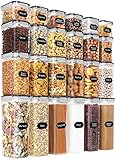
- Bundle Set: This kitchen & pantry organizers and storage set comes with 24 containers, they are inlaid together, so at first glance you may think there is only the same size, but when you take it apart, you will find FOUR different sizes. Includes 6 Large Tall Containers (2.5 quart /2.8 liters), 6 Large Containers (1.8 quart /2.0 liters), 6 Medium Containers ( 1.3 quart /1.4 liters), 6 Small Containers (0.7 quart /0.8 liters). Perfect for storing flour, sugar, spaghetti, rice, nuts, cereal, snacks, pasta, and more
- Sealing Safe: These flour and sugar containers are equipped with a silicone sealing strip and four locking lids to ensure that water and air cannot enter it, So as to better ensure the freshness and health of the ingredients in the clear storage containers for organizing and make the food very dry
- Well Organizer: These air tight sealable containers for food are designed to be superimposed, which is neat and saves space. Cereal containers storage set can be easily placed in cabinets and other places where you want to place them, They can be cleaned in the dishwasher (but not the lids), easy to use and convenient
- Premium Materials: You won't have to worry about the health of your family, as PRAKI airtight food storage containers for pantry set is made of premium plastic. These pasta storage containers for pantry make it easy to find the food item in the cabinet
- No Confusion: Except 24 PCS kitchen storage containers, you will also receive 40 pieces Labels and 1 Marker, which will help you never confuse flour with powdered sugar or baking powder with baking soda. The clear plastic let you see what is in the large pantry storage containers, you can get what you want easily
- Place the chocolate in its original wrap or a tight inner wrap.
- Put that package inside an airtight container or a sealed storage bag, pressing out excess air without crushing the product.
- Keep it away from uncovered foods with strong aromas and from areas where liquid can drip.
- When removing it, leave the package sealed until it reaches room temperature, then open it. This lets condensation form on the outside of the package rather than on the chocolate.
Never move a cold, unsealed chocolate bar directly into warm, humid air. Water on the surface can dissolve sugar and leave a rough, pale appearance.
Recognize bloom as a quality issue
A pale, gray or dusty film is commonly called bloom. Sugar bloom results when moisture dissolves sugar at the surface and the sugar recrystallizes; fat bloom occurs when cocoa fat migrates and recrystallizes after heat or temperature changes. Bloom usually changes appearance and mouthfeel rather than making the chocolate automatically unsafe. Discard chocolate with mold, an abnormal smell, a leaking filling or other signs of actual spoilage. If the only change is bloom and the package has remained dry and intact, it may still be usable in baking, but the package label and your own quality judgment take priority.
Do not promise a universal chocolate shelf life
Chocolate formulations differ: a plain bar, filled confection, high-cocoa product and chocolate containing nuts or dairy do not age in exactly the same way. Package type, opening date, temperature and humidity also matter. Use the manufacturer’s date and storage instruction, record when you opened a package, and buy an amount your household can use while the quality is high instead of relying on a generic number of months.
Rank #3
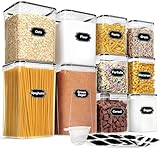
- 3 Sizes for Different Purpose: Our 10 pack flour sugar storage container set includes 3 different sizes, including 2 extra-large rice containers (6.5L/220fl oz/6.8qt) that can hold 10lb rice; 2 large flour containers (5.2L/176fl oz/5.5qt), each holding 5lb flour; and 6 medium sugar containers (2.5L/84.5fl oz/2.6qt), each holding 2lb sugar. The pantry organizers and storage containers also includes 20PCS label, a measuring cup and a marker, making it the perfect canister set for bakers and home organizers to store flour and sugar
- Airtight and Leak-proof: These airtight food storage containers feature four-sided locking lid with a silicone gasket that creates a tight seal. Kitchen storage containers effectively keep air and water out, ensuring flour, sugar and snacks stay fresh, dry and clump-free for much longer
- Food Grade Clear Material: HKJ Chef pantry storage containers are made of durable, BPA free plastic and designed for long-term daily use, ensuring safer and healthier food storage for your family. Clear containers make it convenient to see what's inside, you can easily get what you want without opening every plastic containers with lids
- Stackable Space-Saving Design: The canisters sets for the kitchen feature a stackable design that maximizes space in kitchen and pantry. Flour storage container fit perfectly in counter, cabinets and fridge. The large food storage containers with lids eliminate clutter and the risk of torn food bags, keep everything in order for a neater cooking space
- Useful and Convenient Accessories: The wide opening makes snack containers easy to use measuring cups, and the included labels and marker allow you to label food items and expiration dates, making these containers for flour and sugar highly practical for daily home baking. Dry food storage containers with lids perfect for storing flour, sugar, rice, cereal, baking supplies, spaghetti, oats, pasta, snacks and other dry goods
Protecting flour, rice, cereal, pasta and other dry groceries
Set up an airtight pantry system
The cited dry-food guidance says foods keep fresh longest in airtight containers, which also keep out insects. Choose clean, food-grade containers with lids that close firmly. The container should be large enough for the quantity you routinely use but not so large that food sits for months after opening. Transparent sides or a clearly visible label make it easier to monitor stock.
Do these 3 things before closing this tab:
1Repair Windows errors before they cause bigger problems2Scan for outdated or missing drivers - takes under a minute3Clear out junk files and repair common Windows errors- Clean the shelf and remove crumbs, dust and spilled grains before loading food.
- Check each package for tears, dampness, webbing, clumps, larvae or an unusual smell.
- Transfer sound food to a dry, airtight container. Keep a package label or write the product name and the date opened on the container.
- Place newer purchases behind older containers so the older food is used first.
- Wipe the outside of containers and keep the cabinet dry; a clean seal is part of the pest barrier.
Do not pour a new purchase on top of an old remainder. Emptying, cleaning and refilling the container prevents an overlooked old portion from becoming the source of staleness or insects.
Adjust the container to the food
- Flour and baking mixes: Keep them completely dry and sealed. Lumps, a musty smell or visible webbing are reasons to isolate and inspect the product.
- Rice, grains and pasta: Use a rigid container that prevents package tears and closes tightly after each serving. Store different grains separately so one infested container does not contaminate the whole pantry.
- Cereal: Close the inner liner or transfer the cereal after opening. A folded cardboard box alone is not an insect-proof seal.
- Sugar and spices: Keep lids dry and clean. Moisture causes caking and can make a lid fail to close properly.
- Nuts: Protect them from air, heat and humidity; buy a quantity that can be consumed while quality is high and follow the label for any refrigeration instruction.
- Pet food: Treat it as a dry grocery. Keep the original product information, transfer only into a clean food-grade container, and do not mix a new lot with old residue.
Buy and rotate for quality, not maximum quantity
Bulk buying is economical only when the household can use the food before quality declines. Compare the package size with your normal rate of use, storage space and ability to keep the container sealed. Date every opened container, use older stock first and inspect products when restocking. This simple inventory practice reduces duplicate purchases and makes it less likely that an old bag of flour or rice will be forgotten behind newer groceries.
Rank #4
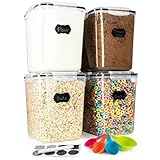
- COMPLETE CONTAINER SET: This set comes with 4 premium large rice airtight containers (5.3L/179oz), a 4pc measuring scoop set, a chalkboard marker & 8 reusable labels. With this perfect bundle you will enjoy your organized pantry and perfect kitchen experience.
- LARGE SQUARE CONTAINERS: These large containers are square shaped and roomy allowing you to effortlessly reach in till the bottom and scoop out any food without getting yourself dirty. Stop bothering with the rice flour and sugar bags or perhaps the slim narrow containers that give you little to no access to reach your food.. Enjoy your next scoop!
- SOLID AIRTIGHT SEAL: The silicone gasket on the lids and the 4 sided locking hinges create a full airtight seal ensuring that no air or water seeps in, keeping your food to its maximum freshness. No need for the old clips on the bags, with these canisters you will have a true pantry dream.
- STACKABLE & ORGANIZED: This container set is designed to get you organized and maximize your space. With the large flat lids and identical bottom, these containers are perfect to be stacked on top of each other without tipping over, and when not in use the perfect design allows you to store them away one inside another to maximize your space.
Keeping refrigerated and frozen groceries safe
Set the temperatures with a thermometer
U.S. Food and Drug Administration guidance from 2023 says to keep the refrigerator at or below 40°F (4°C) and the freezer at 0°F (-18°C). An appliance dial is not proof of the actual internal temperature, so use a refrigerator thermometer and a freezer thermometer, place them where they can be read, and investigate readings above the targets.
| Control | Required practice | Why it matters |
|---|---|---|
| Refrigerator | At or below 40°F (4°C) | Slows growth of organisms that can make food unsafe |
| Freezer | 0°F (-18°C) | Keeps food frozen for safe storage and preserves quality better than partial thawing |
| Prompt chilling | Refrigerate or freeze perishables promptly | Limits time in the 40–140°F food-safety danger zone identified by USDA Food Safety and Inspection Service guidance (2015) |
| Cold-air movement | Do not overpack the appliance | Allows cold air to circulate and reduces warm pockets |
Seal foods and apply the two-hour rule
Keep refrigerated foods covered or in sealed storage bags. Separate leaking packages, clean spills promptly and leave room around containers so cold air can move. The FDA’s two-hour rule says perishable food should not remain unrefrigerated for more than two hours, or more than one hour when the surrounding temperature is above 90°F. The 40–140°F range is the USDA food-safety danger zone; time in that range is a safety concern, not merely a quality issue.
When groceries arrive, put perishables away before unpacking shelf-stable items. Divide large amounts into shallow, covered portions when appropriate so they cool more quickly, and label leftovers with the date they entered the refrigerator. Freeze food you will not use within the period stated on its package or in current food-safety guidance rather than waiting for a quality problem to appear.
Best Value
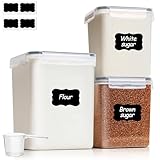
- Suitable for Flour and Sugar Set: Our air tight pantry storage containers include a 5.5 Qt flour container that easily holds 5 lb flour and two 2.6 Qt sugar containers that each can easily hold 2 lb sugar, perfect for baking supplies; They are also suitable for storing cereal, pasta, rice, oatmeal, snacks, beans and other pantry dry foods
- Keep Your Food Fresh: Our air tight containers for food has strong side-locking lids to block moisture and preserve freshness.The excellent seal may make lids firm initially—hold down the lid and lock both side clips with both hands for an easy lock
- Useful and Convenient Accessories: The set of cereal container included 4 labels and a 120 mL measuring cup; The flour storage container accessories help you differentiate between similar ingredients and ensure precise measurement during baking or cooking
- Food Grade Clear Material: Crafted from food grade plastic, the rice container is durable for everyday use; The clear kitchen storage containers allow you to quickly check the quantity and quality of contents at a glance, suitable for your pantry storage
- Space-Saving Design: The pantry organizers and storage are designed to be stackable, making them great helpers for pantry and kitchen; The large food storage containers with lids eliminate clutter and the risk of torn food bags, keep everything in order
What to do when pantry moths, weevils or larvae appear
Inspect every dry-food package
One insect near a pantry is a signal to inspect all dry foods, not proof that only the open bag is affected. Look for live insects, larvae, shed skins, webbing, pinholes, clumping and unusual odors in flour, rice, cereal, pasta, grains, baking mixes, spices, nuts, sugar and pet food. Check unopened packages as well as opened ones.
Remove the source safely
- Seal each suspect package in a waste bag before carrying it through the home, and discard infested food rather than trying to pick out insects.
- Take all remaining pantry items off the shelf.
- Vacuum or wipe shelves, corners, cracks and hardware where crumbs or eggs may remain.
- Empty the vacuum or discard cleaning materials promptly so insects cannot escape back into the room.
- Inspect unaffected packages again, then move sound food into airtight containers.
- Monitor the cabinet during subsequent restocking and repeat inspection if insects reappear.
Do not spray a pesticide as the first response or apply any chemical where it can contact exposed food. If a pesticide is considered, use only a product legally labeled for that setting, follow its label exactly, remove or protect food first, and observe all re-entry and cleanup directions. Physical removal, cleaning and airtight storage are the primary controls described in the cited guidance.
How to decide whether food is still usable
Separate quality loss from a safety hazard
Staleness, bloom, freezer burn, slight color change and odor pickup are quality problems. Pathogen growth, mold, infestation and food held at unsafe temperatures are safety concerns. A food can look acceptable and still be unsafe after temperature abuse, while a bloomed chocolate bar can look unattractive yet remain usable if it has stayed dry, sealed and free of mold.
Quick wins for a faster PC:
Repair Windows errors before they cause bigger problemsFix Now →Scan for outdated or missing drivers - takes under a minuteDriver Scan →Clear out junk files and repair common Windows errorsFree Scan →| Observation | Decision | Reason |
|---|---|---|
| Chocolate has bloom but no mold, leaking filling or abnormal odor | Follow the label and your quality preference; consider using it in cooking if acceptable | Bloom is generally an appearance and texture change |
| Dry food has insects, larvae, webbing, mold or a musty odor | Seal and discard it | Infestation or mold makes the product unsuitable |
| Perishable food exceeded the applicable time outside refrigeration | Discard it | Time in the danger zone can create a safety hazard even without visible change |
| Package is swollen, leaking, badly torn or wet | Do not taste; discard and clean the storage area | Package failure can allow contamination or spoilage |
| Product is simply past a printed date | Read the label wording and assess the product-specific guidance | Dates and shelf lives vary by formulation, package and storage conditions |
Why there is no universal shelf-life chart
No single number applies to all chocolate or groceries. Formulation, packaging, humidity, temperature, whether the package was opened and the manufacturer’s instructions change the answer. FoodKeeper, a FoodSafety.gov resource, provides storage tips for more than 650 foods and beverages; use that product-specific guidance together with the package label rather than applying one pantry rule to every item.
A low-waste routine that protects your grocery budget
At purchase
- Check package integrity and choose quantities that match your household’s consumption rate.
- Note special instructions, including whether the product must be refrigerated after opening.
- For foods you buy infrequently, write the purchase date on the package or container.
At home
- Put perishables into a refrigerator at or below 40°F (4°C) or a freezer at 0°F (-18°C) promptly.
- Move dry foods into clean, airtight, food-grade containers after inspection.
- Store chocolate away from sunlight, heat, moisture and strong odors; chill it only when conditions or the label justify it.
Each week
- Use older containers first and check lids, seals and labels.
- Look for crumbs, webbing, insects, dampness, leaks or unusual smells.
- Record what needs to be used soon and plan meals before buying more.
When something goes wrong
Isolate the questionable item, avoid tasting it to test safety, and clean the storage area. For a pantry infestation, inspect every dry package and transfer sound food to airtight containers. For a refrigerator or freezer temperature failure, check the thermometer, limit door opening and follow current FDA or USDA instructions for deciding what can safely be kept.
Quick Recap
Practical storage checklist
- Chocolate is sealed, dry, dark and away from strong odors.
- Any refrigerated chocolate is sealed until it reaches room temperature before opening.
- Dry groceries are in clean, food-grade airtight containers.
- Containers carry the product name and opening date, and older stock is in front.
- Pantry shelves and cracks are clean and free of crumbs.
- Every dry-food package has been inspected if an insect or larva is found.
- The refrigerator reads 40°F (4°C) or below and the freezer reads 0°F (-18°C).
- Perishables are chilled promptly and are not left out beyond the two-hour rule, or one hour above 90°F.
- Food showing infestation, mold, dangerous temperature exposure, leaking or severe package damage is discarded.
- Package labels and product-specific guidance take precedence over generic shelf-life assumptions.
Product prices and availability are accurate as of the date/time indicated and are subject to change. Any price and availability information displayed on Amazon at the time of purchase will apply.




