
What’s actually slowing this PC down?
Pick the symptom - the matching free tool is one click away.
Keep your recurring lifestyle close to its pre-raise level until you have assigned the extra money. Calculate the increase that actually reaches your bank account, then automate transfers on payday to an emergency fund, high-interest debt and retirement or other investments. Give yourself a defined amount for enjoyment, but postpone permanent commitments such as a larger lease, a new car payment or a stack of subscriptions until the higher costs fit comfortably inside your cash-flow buffer.
This approach addresses the core problem: lifestyle inflation, also called lifestyle creep, is spending that expands as income rises before your financial goals are funded. The raise is real, but so are the taxes, benefit deductions and recurring bills that can absorb it.
As an Amazon Associate I earn from qualifying purchases.
What lifestyle inflation is—and why a raise can still feel small
Lifestyle inflation is the automatic expansion of spending when income increases. A raise may produce a better apartment, more restaurant meals, upgraded travel, convenience services or a newer vehicle without any single purchase feeling reckless. Over time, however, those choices become recurring obligations. Fidelity describes lifestyle creep as spending growing with income while savings fall behind; raises, bonuses and job changes can all trigger it.
Quick wins for a faster PC:
Clear out junk files and repair common Windows errorsFree Scan →Fix the driver behind crashes, sound loss and screen glitchesFind Drivers →The danger is not every treat. A carefully chosen improvement in quality of life can be worthwhile. The danger is allowing temporary excitement to become a permanent monthly baseline before you decide what the additional income should accomplish. Mabel Nuñez, founder of Girls on the Money, told the Associated Press that if a raise funds a new car, a new home or frequent nights out, “your rate of spending might surpass your new income.”
#1 Best Overall

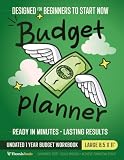
- Effective Budget Planning - Take control of your finances with the budget account book. This comprehensive planner allows you to plan and track your income, expenses, savings, and financial goals in one convenient place. With its intuitive layout and easy-to-use sections, you can stay organized and make informed decisions to achieve financial success.
- User-Friendly Layout - The budget planner features a user-friendly layout designed for easy navigation and organization. Each month, you'll find dedicated budget pages where you can set financial goals, track your income, and plan your expenses. Additional sections include debt trackers, savings goals, bill payment trackers, and more, making it simple to stay on top of your finances.
- Undated Monthly Calendar & Bonus Stickers - Featuring undated calendar each month, you'll have ample space to mark paydays, bills due, appointments, and important dates. Say goodbye to difficult writing spaces. Plus, we've included 3 cute sticker sheets that allow you to personalize your financial organizer and make budgeting more fun. Dates are not pre-printed and are completed by the user.
- Reliable and Convenient Design - Our monthly budget planner is designed for your convenience and built to last. The elastic band keeps everything securely in place, and the dual-sided pocket provides extra storage. Experience a budget planner that combines practicality and durability.
- Master Budgeting with Ease - Our financial planner includes a complete guidebook that provides valuable insights and instructions for optimal usage. From setting financial goals to tracking expenses, this guidebook offers step-by-step guidance and practical tips. Whether you're new to budgeting or an experienced user, this resource will help you make the most of your budget planner, empowering you to achieve financial success.
A larger paycheck can therefore feel small for several reasons:
- Payroll taxes, retirement contributions, health insurance and other benefits reduce the gross increase.
- Small recurring upgrades compound: a few subscriptions, delivery fees and convenience purchases can become a substantial fixed bill.
- Higher spending creates a new reference point, so the old lifestyle starts to feel restrictive even when it was previously comfortable.
- More income can conceal weak cash reserves or expensive debt rather than solve them.
The practical objective is not to reject every upgrade. It is to make the raise serve a written priority before it is absorbed by unplanned commitments.
Start with the raise you actually receive
Use the first changed pay statement
Do not allocate a promotion from the salary figure in the offer letter. Wait for the first pay statement that reflects the new withholding, benefits and retirement deductions. The difference between the old and new net pay is the amount available for your plan.
- Compare a pre-raise pay statement with the first statement after the increase.
- Record the change in net pay per pay period, not only the annual salary change.
- Multiply the per-pay-period increase by the number of pay periods in a year to estimate the recurring annual amount.
- Check whether the change includes a one-time bonus, retroactive adjustment or temporary deduction. Do not treat a one-time payment as permanent monthly income.
If a promotion changes benefits or retirement deductions later, recalculate. Your raise rule should use the amount that reliably arrives after those deductions, not a gross figure that may never be available to spend.
Freeze permanent upgrades for one or two budget cycles
Keep housing, transportation, subscription and convenience changes discretionary while you observe the new cash flow for at least one or two full budget cycles. You can still celebrate with a meal, outing or other one-time purchase. A lease, financed vehicle or recurring service is different: it commits future paychecks before you know whether the raise is being used as intended.
This short waiting period also exposes expenses that appear affordable in isolation but compete with annual insurance, maintenance, school costs, travel or irregular medical bills. A new fixed payment should fit after those obligations and after planned saving, not merely fit in the first month.
Build a written raise-allocation rule
A written rule turns an ambiguous question—“What should I do with my raise?”—into a repeatable payday decision. There is no authoritative universal instruction to save a specific percentage of every raise. The appropriate split depends on taxes, debt interest, existing cash, job stability, household obligations and time-bound goals. Treat percentages as planning choices, not as financial laws.
Rank #2

- Effective Budget Plan Book – Take control of your finances with the SUNEE budget account book. This all-in-one budget planner allows you to plan and track your income, expenses, savings, and financial goals. Its intuitive layout and easy-to-use sections help you stay organized and make smart decisions to reach financial success. Our financial planner also included a comprehensive guidebook with valuable tips and instructions to help you get the most out of your budgeting planner.
- Full-Page Calendars – Each month’s full-page calendar provides plenty of space to track paydays, bills due dates, appointments, and important events. No more cramped boxes or tight writing areas, you can easily plan and organize your schedule at a glance.
- Colorful Pages Layout and Tabs – This vibrant budget planner features a user-friendly design for easy navigation and organization. Each month includes dedicated budget pages to set financial goals, track income, and plan expenses. Additional sections like debt trackers, savings goals, and bill payment trackers make managing your finances a breeze. The colorful backgrounds on each page offer clear, instant visibility.
- Bonus 4 Stickers and Convenient Design – This monthly budget planner is built for convenience and durability. Water-resistant cover protects against spills, while the elastic band keeps everything secure, and the dual-sided pocket offers extra storage. Plus, we’ve included 4 adorable sticker sheets to personalize your planner and make budgeting more enjoyable. Experience a budget planner that combines practicality with lasting quality.
- UNDATED DESIGN & 1 YEAR USE - Undated finance books start with 1 page-financial goals, 1 page-Mind Map, 1 page-Financial Strategy, 1 page-Tactics, 2 pages-Important Dates, 4 pages-Bill Tracker, 4 pages-Saving Tracker, 8 pages-Debt Tracker, followed by 12 Months(10 pages per month, 1 unique color for each month). 2 pages-Christmas Budgeting, 2 pages-Yearly Summary, 2 pages-Check Register and 12 pages-Notes(dotted). It is UNDATED, so you could start at any time, suitable for 1 year use.
Choose the destinations before payday
List the destinations that matter in your situation and assign each a dollar amount or percentage of the net increase. A useful rule can include:
- Emergency savings: cash reserved for unplanned expenses.
- Expensive debt: additional payments on high-interest revolving balances after a basic cash cushion is in place.
- Retirement or other long-term investments: increased contributions that match your time horizon and account rules.
- Near-term goals: a sinking fund for a known expense such as a move, tuition, repairs or a planned trip.
- Guilt-free spending: a defined amount you can use without reopening the entire budget.
Putting savings on the budget as a fixed line prevents it from being treated as whatever remains at the end of the month. The Consumer Financial Protection Bureau (CFPB) advises assessing spending with a financial-management tool and including regular savings contributions in the budget.
Illustrative allocation, not a universal formula
The following structure shows how a rule can work without prescribing a percentage for every household. Replace the categories and amounts with your own net increase.
| Destination | Decision question | How to implement |
|---|---|---|
| Emergency reserve | Could an unexpected bill force new borrowing? | Automate a transfer to a separate, accessible cash account. |
| High-interest debt | Are interest charges undermining progress? | Set an extra payment above the required minimum once a basic buffer exists. |
| Retirement or investing | Does the contribution support a long-term goal? | Increase payroll deferral or an automatic account transfer. |
| Near-term goal | Is a known expense likely within the next few years? | Use a named sinking fund so the money is not mistaken for spending cash. |
| Enjoyment | What improvement can you afford without a recurring obligation? | Set a fixed monthly or per-pay-period allowance. |
When debt, cash reserves and job stability differ widely, two households with the same raise may rationally choose different allocations. The rule matters because it makes the choice deliberate and repeatable.
Automate the plan on payday
Automation is most effective when money moves before discretionary spending creates a new habit. The CFPB’s evidence review identifies behavioral and choice-environment approaches as one of three major savings pathways, and describes ready savings products and automatic behavior as promising approaches.
- Open or designate separate accounts for emergency cash and named goals so the money is visible and less likely to be spent accidentally.
- Schedule transfers for the day your paycheck arrives, or use payroll deductions where your employer allows them.
- Increase retirement contributions through the plan’s payroll system if that is your chosen destination.
- Leave the amount assigned to regular bills in the account used for those bills.
- Keep the enjoyment allowance in your ordinary spending account so the plan does not feel like a total spending freeze.
- Review the first two or three transfers for timing, overdraft risk and accuracy before making the system permanent.
Automation does not replace review. A transfer that causes overdrafts, ignores a changed bill or leaves too little for necessary expenses must be adjusted. The point is to remove repeated willpower decisions, not to stop looking at the results.
Protect a cash buffer before taking on bigger fixed costs
The CFPB defines an emergency fund as “a cash reserve that’s specifically set aside for unplanned expenses or financial emergencies.” It calls building such a fund an essential first step and notes that even small amounts can help people recover from shocks and pursue larger goals.
Rank #3

- Effective Budget Planning - Take control of your finances with the budget account book. This comprehensive planner allows you to plan and track your income, expenses, savings, and financial goals in one convenient place. With its intuitive layout and easy-to-use sections, you can stay organized and make informed decisions to achieve financial success.
- User-Friendly Layout - The budget planner features a user-friendly layout designed for easy navigation and organization. Each month, you'll find dedicated budget pages where you can set financial goals, track your income, and plan your expenses. Additional sections include debt trackers, savings goals, bill payment trackers, and more, making it simple to stay on top of your finances.
- Undated Monthly Calendar & Bonus Stickers - Featuring undated calendar each month, you'll have ample space to mark paydays, bills due, appointments, and important dates. Say goodbye to difficult writing spaces. Plus, we've included 3 cute sticker sheets that allow you to personalize your financial organizer and make budgeting more fun. Dates are not pre-printed and are completed by the user.
- Reliable and Convenient Design - Our monthly budget planner is designed for your convenience and built to last. The elastic band keeps everything securely in place, and the dual-sided pocket provides extra storage. Experience a budget planner that combines practicality and durability.
- Master Budgeting with Ease - Our financial planner includes a complete guidebook that provides valuable insights and instructions for optimal usage. From setting financial goals to tracking expenses, this guidebook offers step-by-step guidance and practical tips. Whether you're new to budgeting or an experienced user, this resource will help you make the most of your budget planner, empowering you to achieve financial success.
Use the raise to create or strengthen a dedicated reserve for events such as a necessary repair, an insurance deductible, an urgent trip or a period without income. Keep this money accessible and separate from accounts used for routine spending. The correct size depends on your household’s obligations, income reliability and existing resources; the available guidance does not establish one universal balance for every person.
Free tools Windows power users keep installed
One-click scans. No signup required.
Liquidity changes the decision about lifestyle upgrades. A payment that appears manageable when employment is steady can become dangerous if a job change, illness or family obligation removes income. The CFPB’s 2024 survey brief reported that fewer households could cover a month of expenses after losing their main income source, underscoring why a larger paycheck should not automatically become a larger fixed-cost structure.
Direct part of the raise to costly debt
After securing a basic cash buffer, consider directing part of the increase to high-interest revolving debt. Paying down a guaranteed interest cost improves cash flow; investment returns, by contrast, are uncertain. The reviewed official sources do not set a single interest-rate cutoff, so use the rate, balance, minimum payment and your need for liquidity to decide priority.
Compare debt repayment with investing
| Destination | What is known | Main trade-off |
|---|---|---|
| Debt repayment | Interest avoided on the balance is a guaranteed benefit, subject to the account terms. | Money sent to the creditor is less liquid; keep an emergency reserve first. |
| Retirement account | Contributions may receive tax treatment or an employer match according to the plan. | Access can be restricted, and investment value can rise or fall. |
| Taxable investment | Funds may be more accessible than retirement assets. | Returns are uncertain and may create tax consequences. |
| Cash reserve | Available for unplanned expenses and protects against new borrowing. | Cash may earn less than a long-term investment and can lose purchasing power over time. |
Some households split the raise among these destinations rather than choosing only one. The right mix depends on whether a short-term shock or an expensive balance is the more urgent risk.
Increase long-term saving as income rises
A raise is an opportunity to increase retirement or other investment contributions before spending adjusts upward. Fidelity’s guidance emphasizes that the savings rate may need to rise as income rises. Review the account’s tax treatment, contribution limits, investment choices, access rules and employer match before changing the amount.
Outdated Drivers Are Slowing You Down
One free scan finds every outdated or missing driver and matches the right update for your exact hardware.Free scan · exact hardware matchWindows Errors? Fix Them Before They Spread
Repair common Windows errors and clear accumulated junk for a smoother, more stable PC - no reinstall needed.Free scan · no reinstallUse a contribution change that your ordinary budget can sustain. A temporary increase that forces withdrawals or new credit is not progress. If your employer’s payroll system allows a percentage change, confirm the effect on each paycheck; if it allows a fixed dollar amount, compare that amount with the net raise and your other transfers.
Long-term contributions should not be presented as a substitute for emergency liquidity. Money needed for a likely near-term expense may belong in cash or a dedicated savings account rather than a volatile investment.
Rank #4

- Unlock Your Financial Potential: Harness the power of financial mastery with our budget planner Undated . It's the ultimate tool for reaching your financial aspirations while gaining a comprehensive overview of your monthly income, savings, debts, and daily expenses. Seize control of your finances and elevate your financial game.
- User-Friendly Design: Our monthly budget planner features an intuitive layout, making it easy to navigate and understand. Each month includes dedicated budget pages to help you set financial goals, track income, and plan expenses. Additional sections such as debt tracker, savings tracker, bill tracker, and more ensure that managing your financial is a breeze.
- Start Whenever, Wherever: Our budget notebook is undated, allowing you to begin your financial planner journey whenever you're ready. Compact and conveniently sized at 5.5" x 8.5", it easily fits into any bag, ensuring it's always by your side, ready to guide your financial decisions.
- Functionality with Style: Our account book not only looks elegant but is also highly functional. With features like an elastic band and double-side pocket, it enhances practicality for effective budget planning. The twin-wire binding allows for 180° layflat, keeping your financial bill calendar plan safe and organized.
- Personalize Your Path to Financial Success: Our monthly bill planner includes three sticker sheets to unleash your creativity. Planning instructions provide guidance, while inspirational quotes on each monthly calendar page serve as constant reminders to stay focused on your financial goals.
Track the pre-raise baseline and catch creep early
You cannot identify lifestyle inflation from memory alone. Use bank and card statements or a financial-management tool to measure several months of pre-raise spending. Record recurring bills separately from variable categories so a one-time celebration does not look like a new monthly norm.
Baseline categories to record
- Housing, utilities, insurance and transportation payments.
- Groceries, dining, delivery and convenience purchases.
- Subscriptions, memberships and recurring digital services.
- Debt minimums and additional payments.
- Retirement, investment and other savings transfers.
- Irregular expenses converted into a monthly sinking-fund amount.
After the raise, compare actual spending with that baseline each month. A category that repeatedly expands requires a choice: keep it as a deliberate quality-of-life improvement and fund it, or reverse it before it becomes a fixed obligation.
Recommended Free Tools
Use a recurring-cost audit
- Download or review the last two or three months of transactions.
- Mark every recurring charge, including annual services divided into a monthly equivalent.
- Label each as necessary, goal-related, chosen enjoyment or unplanned creep.
- Cancel or downgrade charges in the last category before adding a new commitment.
- Set a calendar reminder to repeat the audit monthly for the first quarter after the raise, then at a frequency that fits your finances.
This process distinguishes intentional spending from inertia. It also prevents a one-time bonus or unusually high month from quietly becoming the new baseline.
Use incentives carefully—and do not count on them
Behavioral features can make saving easier, but incentive evidence should not be mistaken for a guaranteed personal result. A CFPB review published in 2020 found that modest interest-rate increases of 1% to 5% produced little effect on saving behavior in the studies considered, while larger incentives of 10% to 20% above-market rates and matching arrangements increased saving. One example in that literature was a $0.50 match for every $1 saved up to $1,000.
A separate CFPB 2022 analysis of a Qapital dataset reported that 81% of savings goals used spending-contingent rules such as purchase round-ups. These tools may help people act on an existing plan, but they do not determine whether a goal is large enough, whether debt is being addressed or whether spending is rising elsewhere.
If you use a match, round-up or other behavioral feature, read the account terms, limits, access rules and expiration conditions. Treat any incentive as an addition to your own contribution, not as the foundation of the plan.
The Tool Desk
Outbyte PC Repair FREEClear out junk files and repair common Windows errorsFree Scan →Outbyte Driver Updater FREEScan for outdated or missing drivers - takes under a minuteDriver Scan →Decide whether a lifestyle upgrade is affordable
Before accepting a new recurring expense, test it against the full cash flow rather than the raise alone. Include taxes, insurance, maintenance, fees, irregular costs and the savings transfers already assigned.
Best Value
Questions for a proposed upgrade
- Is the cost recurring, and can it be canceled without a penalty?
- Does it remain affordable if income falls temporarily or a major bill arrives?
- Will it delay an emergency reserve, debt payoff or time-bound goal?
- Have you observed the new net pay for at least one or two budget cycles?
- Could a one-time purchase deliver most of the benefit without creating a permanent bill?
- Would you still choose it if the raise were smaller than expected after withholding?
If the answer depends on every paycheck arriving exactly as planned, the commitment is too tight. Delay it, choose a smaller version or fund it from a sinking account until the cash flow proves durable.
A practical 30-day implementation plan
Days 1–7: measure
- Collect the old and new pay statements.
- Calculate the recurring net increase after withholding, benefits and retirement deductions.
- List current recurring costs, debt balances, cash reserves and near-term goals.
- Pause decisions on new leases, vehicle financing and additional subscriptions.
Days 8–14: assign
- Write the raise rule with dollar amounts or percentages for emergency cash, debt, long-term saving, goals and enjoyment.
- Choose account destinations and confirm contribution limits, tax treatment and employer-plan rules where relevant.
- Set a maximum for discretionary upgrades that does not reduce the planned transfers.
Days 15–21: automate
- Schedule payday transfers and payroll contribution changes.
- Check that transfer dates match pay dates and will not cause overdrafts.
- Name accounts for their purpose so emergency cash is not confused with spending money.
Days 22–30: verify
- Reconcile the first transfer and the first month’s spending.
- Compare each category with the pre-raise baseline.
- Correct any shortfall, duplicate transfer or recurring charge that appeared unintentionally.
- Schedule a monthly review and a deeper recurring-cost audit after the first quarter.
Common failure modes and fixes
Budgeting from gross salary
Symptom: the plan assigns money that never reaches your account. Fix: rebuild it from the first post-raise pay statement and revisit it if deductions change.
Making several permanent upgrades at once
Symptom: a new car, larger home and more subscriptions consume the raise together. Fix: freeze recurring upgrades, test one change at a time and calculate its complete monthly and irregular cost.
Do these 3 things before closing this tab:
1Repair Windows errors before they cause bigger problems2Fix the driver behind crashes, sound loss and screen glitches3Clear out junk files and repair common Windows errorsSaving only what remains
Symptom: transfers are skipped whenever spending rises. Fix: place emergency, debt and investment contributions in the budget as fixed lines and automate them on payday.
Over-automating without monitoring
Symptom: transfers create overdrafts or leave too little for necessary bills. Fix: review the first several pay cycles, keep a bill buffer and change the schedule or amount when cash flow changes.
Counting an incentive as guaranteed growth
Symptom: a match, round-up or higher rate is treated as proof that the plan will work. Fix: make the personal contribution sustainable on its own and verify the incentive’s conditions.
Using investments as emergency cash
Symptom: a market decline or access restriction collides with an urgent bill. Fix: maintain a separate cash reserve for unplanned expenses before increasing money committed to long-term assets.
How to review the plan when circumstances change
Review the allocation whenever pay, benefits, debt, housing, dependents or job stability changes. A promotion with variable compensation should be handled differently from a guaranteed salary increase. Direct recurring income through the raise rule; treat a bonus, overtime payment or irregular award as a separate decision unless it becomes reliably recurring.
If a category rises, first determine whether the increase is intentional. A necessary medical, family or transportation cost may deserve a new budget line. An automatic convenience purchase may be reversible. Preserve the distinction so that a temporary event does not become a permanent lifestyle expectation.
General education cannot account for your tax jurisdiction, account rules, debt contracts or household obligations. For decisions involving taxes, investments or debt restructuring, confirm the relevant rules and obtain individualized professional advice when needed.
Quick Recap
Product prices and availability are accurate as of the date/time indicated and are subject to change. Any price and availability information displayed on Amazon at the time of purchase will apply.




