
Stocking up saves money only when you buy items your household will use, at a genuinely lower total cost, before they spoil, degrade, or crowd out safer storage. The reliable method is simple: take a quick inventory, estimate your real use rate, compare the complete cost per usable unit, buy an amount you can store and rotate, then review what went unused.
This is routine household planning, not a contest to accumulate the biggest pantry. Keep everyday stock decisions separate from emergency preparation, where the goal is resilience rather than chasing a sale.
As an Amazon Associate I earn from qualifying purchases.
The five-part method for a waste-resistant stock-up
Use the same sequence every time you consider a multipack, warehouse-size package, promotion, or concentrated product:
What’s actually slowing this PC down?
Pick the symptom - the matching free tool is one click away.
- Inventory: Check cupboards, refrigerator, freezer, bathroom shelves, laundry area, and other storage. Record what is available, where it is, and what is nearly depleted.
- Use rate: Estimate how quickly your household actually consumes the item. Base the estimate on your normal routines, not an optimistic plan.
- Value check: Compare equivalent unit prices and the complete checkout cost, including delivery, shipping, taxes, membership fees, and deal conditions.
- Storage check: Confirm that the amount will fit safely and that the product can be stored under the label’s conditions.
- Rotation and review: Put older stock in front, use or freeze food in time, and adjust the next purchase when items repeatedly remain unused.
A paper list or shared phone note is enough. The system works because it links the purchase to a real need, a realistic time horizon, and a physical place to keep it.
#1 Best Overall

- Help Organize Your Kitchen and Pantry: Imagine every time walking to your kitchen or pantry, found everything is neatly organized. No longer messy, you can get everything you want very quickly. With the stackable and space-saving design, these containers will make more efficient use of every inch of your kitchen pantry cabinets
- 4 Size Combinations Fit Your Needs: Our kitchen storage container set comes in 4 different sizes. Includes 6 Tall Container (2.5quart/2.8 liters), 6 Large Containers (1.8quart/2.0 liters), 6 Medium Containers (1.5quart/1.6 liters), 6 Small Containers (0.7quart/0.8 liters). Suitable for storing spaghetti, baking supplies, cereal, flour, sugar, oats, pasta, rice, coffee, tea, snacks, nuts and other dry goods
- Airtight Containers Keep Food Fresh: The side-locking lids with silicone gasket make these storage containers airtight, and the top flips open easily. The airtight storage system will always keep your food dry and fresh. All have the same lids make it easy to wash dry and reuse with ease
- BPA Free and Food Grade Material: Vtopmart pantry storage containers are made of durable plastic, BPA free, which have a longer life than many other brands plastic containers. Clear containers make it convenient to see what's inside, you can easily get what you want without opening every container
- 24 Reusable Labels: Except 24pcs dry food storage containers, you will also receive 24pcs labels. They are reusable, you can switch contents whenever you need. Just wipe clean with a damp cloth to change what you have written, Peel and Re-stick
Start with an inventory, not a coupon
Before shopping, do a quick pass through every place essentials might be hiding. Include opened packages, backup supplies, items in a garage or utility closet, and food in the freezer. Count usable quantity rather than assuming an unopened package is still suitable; check damaged packaging, unusual odors, leaks, and products past their recommended use period.
What to record
- Item and form (for example, liquid detergent, powder, canned beans, frozen vegetables).
- Quantity and package size.
- Storage location and whether the space is currently full.
- Usual use, such as breakfasts, packed lunches, cleaning, or pet care.
- Items that are nearly depleted, repeatedly ignored, or difficult to use before quality declines.
Planning meals around food already on hand, household preferences, and good buys is the approach recommended by USDA MyPlate. Its guidance also supports planning leftovers and combining fresh, frozen, and shelf-stable foods, with fresh items used first: MyPlate’s weekly meal-planning guidance.
Turn the inventory into a short buying list
Write the intended use beside each item. “Two cans for Wednesday’s chili” is more useful than “stock up on canned food.” Separate genuine replacements from speculative purchases. If no one can name when or how the household will use an item, leave it off this trip.
Estimate how much your household really uses
Use a recent, ordinary period as your baseline. If you have receipts, count purchases and leftovers over four to eight weeks; otherwise, compare package levels before and after a typical month. Adjust for guests, travel, school breaks, dietary changes, pets, seasonal weather, and planned events.
Use a practical time horizon
Choose a horizon that matches the product and your routines. A frequently used shelf-stable staple may justify buying through the next several normal shopping cycles. A fragile fresh item may justify only the next few days. Cleaning concentrate may last longer, but the label still controls its storage and safe-use period after opening.
Rank #2
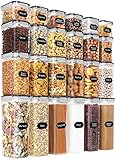
- Bundle Set: This kitchen & pantry organizers and storage set comes with 24 containers, they are inlaid together, so at first glance you may think there is only the same size, but when you take it apart, you will find FOUR different sizes. Includes 6 Large Tall Containers (2.5 quart /2.8 liters), 6 Large Containers (1.8 quart /2.0 liters), 6 Medium Containers ( 1.3 quart /1.4 liters), 6 Small Containers (0.7 quart /0.8 liters). Perfect for storing flour, sugar, spaghetti, rice, nuts, cereal, snacks, pasta, and more
- Sealing Safe: These flour and sugar containers are equipped with a silicone sealing strip and four locking lids to ensure that water and air cannot enter it, So as to better ensure the freshness and health of the ingredients in the clear storage containers for organizing and make the food very dry
- Well Organizer: These air tight sealable containers for food are designed to be superimposed, which is neat and saves space. Cereal containers storage set can be easily placed in cabinets and other places where you want to place them, They can be cleaned in the dishwasher (but not the lids), easy to use and convenient
- Premium Materials: You won't have to worry about the health of your family, as PRAKI airtight food storage containers for pantry set is made of premium plastic. These pasta storage containers for pantry make it easy to find the food item in the cabinet
- No Confusion: Except 24 PCS kitchen storage containers, you will also receive 40 pieces Labels and 1 Marker, which will help you never confuse flour with powdered sugar or baking powder with baking soda. The clear plastic let you see what is in the large pantry storage containers, you can get what you want easily
Calculate a conservative usable amount:
Usable amount = expected consumption during the chosen horizon × a small, realistic buffer
The buffer should cover ordinary variation, not a fantasy scenario. If your use varies widely, buy the smaller amount and reassess after you see how quickly it moves.
Quantity rules by product type
| Product type | Quantity rule | What can make the purchase wasteful |
|---|---|---|
| Frequently used, shelf-stable staples | Buy enough for predictable use while the package remains within its quality and storage guidance. | Buying more than the household can rotate, or choosing a package that cannot be sealed after opening. |
| Fresh produce, dairy, meat, and other perishables | Buy what planned meals can use, preserve, freeze, or share before quality or safety declines. | Multi-buy deals that exceed the week’s meals or freezer capacity. |
| Frozen foods | Match the amount to freezer space and the rate at which your household eats frozen portions. | Overfilling the freezer, losing track of dates, or buying foods no one wants after the first serving. |
| Cleaning and laundry products | Consider economy sizes or concentrates when use is regular and the label permits the storage arrangement. | A large container that leaks, degrades after opening, or remains unused for years. |
| Infrequently used equipment | Consider borrowing or sharing before purchasing a dedicated item. | Owning bulky equipment that is used once or needs maintenance while taking permanent storage space. |
Does buying in bulk actually save money?
Only if the household uses the entire usable quantity. The U.S. Environmental Protection Agency states: “Buying in large quantities (e.g., buy one, get one free deals) only saves money if you use all the food before it spoils.” Read the full guidance at EPA’s Preventing Wasted Food At Home.
Calculate cost per usable unit
Start with:
Total price ÷ amount your household can realistically use = cost per usable unit
“Total price” is not necessarily the shelf tag. For an online order, include shipping, handling, delivery, taxes, and required membership charges. The Federal Trade Commission explains what to include when comparing online offers and how to check terms at FTC’s online-shopping guidance.
Rank #3
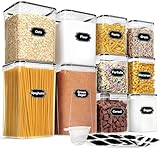
- 3 Sizes for Different Purpose: Our 10 pack flour sugar storage container set includes 3 different sizes, including 2 extra-large rice containers (6.5L/220fl oz/6.8qt) that can hold 10lb rice; 2 large flour containers (5.2L/176fl oz/5.5qt), each holding 5lb flour; and 6 medium sugar containers (2.5L/84.5fl oz/2.6qt), each holding 2lb sugar. The pantry organizers and storage containers also includes 20PCS label, a measuring cup and a marker, making it the perfect canister set for bakers and home organizers to store flour and sugar
- Airtight and Leak-proof: These airtight food storage containers feature four-sided locking lid with a silicone gasket that creates a tight seal. Kitchen storage containers effectively keep air and water out, ensuring flour, sugar and snacks stay fresh, dry and clump-free for much longer
- Food Grade Clear Material: HKJ Chef pantry storage containers are made of durable, BPA free plastic and designed for long-term daily use, ensuring safer and healthier food storage for your family. Clear containers make it convenient to see what's inside, you can easily get what you want without opening every plastic containers with lids
- Stackable Space-Saving Design: The canisters sets for the kitchen feature a stackable design that maximizes space in kitchen and pantry. Flour storage container fit perfectly in counter, cabinets and fridge. The large food storage containers with lids eliminate clutter and the risk of torn food bags, keep everything in order for a neater cooking space
- Useful and Convenient Accessories: The wide opening makes snack containers easy to use measuring cups, and the included labels and marker allow you to label food items and expiration dates, making these containers for flour and sugar highly practical for daily home baking. Dry food storage containers with lids perfect for storing flour, sugar, rice, cereal, baking supplies, spaghetti, oats, pasta, snacks and other dry goods
| Comparison step | Question to answer | Why it matters |
|---|---|---|
| Match the product | Are the formulation, concentration, size, and quality equivalent? | A lower price for a diluted, smaller, or unwanted version is not a true saving. |
| Normalize the unit | What is the price per ounce, gram, liter, load, sheet, or other meaningful unit? | Package design can make a larger-looking box more expensive per use. |
| Add checkout costs | Are delivery, shipping, taxes, or a membership required? | A low shelf price can become a higher household cost after fees. |
| Apply the usable-quantity test | Will every unit be used before spoilage, degradation, or a change in need? | Discarded or abandoned product has a real cost, even when it was free. |
| Check the condition | Does the offer require buying two, selecting a subscription, or accepting an unwanted variety? | The discount may depend on quantities you cannot use. |
Illustrative calculation
Suppose a 12-pack costs $18 and a six-pack costs $10. The larger package is $1.50 per unit versus about $1.67 per unit for the smaller one. If your household uses only eight units before the product loses quality, the extra four units are not a $2 saving; they are part of the amount you paid but did not use. If delivery or a membership fee applies only to the larger order, recalculate with those charges included.
Do these 3 things before closing this tab:
1Scan for outdated or missing drivers - takes under a minute2Clear out junk files and repair common Windows errors3Fix the driver behind crashes, sound loss and screen glitchesDo not treat any one retailer, promotion, or national discount as universally best. Prices, package sizes, and availability vary by location and date.
Handle perishables as a separate decision
Fresh food has a shorter and less forgiving use window than most shelf-stable goods. Plan meals and portions first, then buy the quantity those plans can consume. The FDA’s consumer guidance says, “Don’t buy more food than can be used before it spoils.” See FDA’s food-waste and food-safety guidance.
Use a fresh-first plan
- Schedule meals that use the most delicate produce, herbs, dairy, and prepared foods first.
- Keep frozen and shelf-stable alternatives for later meals so a change in plans does not strand fresh ingredients.
- Portion meat, bread, and other freezable foods when you bring them home; label the date and contents.
- Freeze, preserve, share, or cook surplus while it is still in good condition.
- Schedule a regular “use what’s on hand” meal instead of shopping automatically.
FDA recommends checking the refrigerator, freezer, and pantry before shopping, planning meals, and buying only what is expected to be used. Its additional tips are at FDA’s Tips to Reduce Food Waste.
Do not use printed dates as a single safety rule
In the United States, federal law generally does not require quality-based date labels on packaged foods, except infant formula, and labeling practices are not uniform. A date may relate to quality rather than an automatic safety deadline. Follow the product label, storage history, and signs of spoilage; when in doubt about a safety-sensitive food, discard it. Local requirements and product-specific instructions can differ.
The Tool Desk
Outbyte Driver Updater FREEScan for outdated or missing drivers - takes under a minuteDriver Scan →Outbyte PC Repair FREERepair Windows errors before they cause bigger problemsFix Now →Rank #4
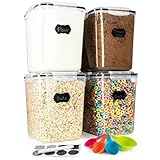
- COMPLETE CONTAINER SET: This set comes with 4 premium large rice airtight containers (5.3L/179oz), a 4pc measuring scoop set, a chalkboard marker & 8 reusable labels. With this perfect bundle you will enjoy your organized pantry and perfect kitchen experience.
- LARGE SQUARE CONTAINERS: These large containers are square shaped and roomy allowing you to effortlessly reach in till the bottom and scoop out any food without getting yourself dirty. Stop bothering with the rice flour and sugar bags or perhaps the slim narrow containers that give you little to no access to reach your food.. Enjoy your next scoop!
- SOLID AIRTIGHT SEAL: The silicone gasket on the lids and the 4 sided locking hinges create a full airtight seal ensuring that no air or water seeps in, keeping your food to its maximum freshness. No need for the old clips on the bags, with these canisters you will have a true pantry dream.
- STACKABLE & ORGANIZED: This container set is designed to get you organized and maximize your space. With the large flat lids and identical bottom, these containers are perfect to be stacked on top of each other without tipping over, and when not in use the perfect design allows you to store them away one inside another to maximize your space.
Store supplies so they remain usable
Storage capacity is part of the purchase decision. Do not buy more than can be kept at the temperature, humidity, light level, and ventilation the label requires. A crowded refrigerator or freezer can also make it harder to see older items and maintain safe conditions.
Food temperature and containers
- Keep the refrigerator at or below 40°F and the freezer at 0°F, as FDA advises.
- Use clean, airtight, labeled containers for foods purchased from bulk bins; record the product and the date you transferred it.
- Keep raw foods separated from ready-to-eat foods and follow package directions after opening.
- Use FoodKeeper and FoodSafety.gov storage guidance for item-specific time limits rather than guessing.
Rotate every time you put something away
Place the oldest safe item at the front and the newest behind it. Keep a small marker or labels nearby. For freezer items, group similar foods and maintain a simple list on the door so food does not disappear beneath newer purchases.
Rotation is not permission to keep questionable food. If a package is leaking, swollen, moldy, or otherwise unsafe, follow local disposal guidance rather than trying to salvage it.
Independent reader supportYour contribution helps us test, update, and keep practical guides available for everyone.Stock household goods without creating a chemical or clutter problem
EPA encourages larger economy sizes for products used frequently and concentrates when they suit the household. That logic can apply to laundry detergent, dishwashing products, and similar supplies, but every label controls dilution, ventilation, shelf life, and safe handling. Read EPA’s consumer guidance on buying household products.
Free tools Windows power users keep installed
One-click scans. No signup required.
Check the use pattern before choosing a large package
- Calculate loads, washes, or applications per month rather than comparing container volume alone.
- Confirm that the concentrated product is compatible with your equipment and that you will measure the correct dose.
- Make sure the container can be lifted, closed, and stored without leaking.
- Keep cleaners, pesticides, paints, oils, batteries, and other hazardous products in their labeled containers and away from children, pets, food, heat, and ignition sources.
Leftover cleaners, paints, oils, batteries, and pesticides can be household hazardous waste. EPA explains handling and disposal considerations at Household Hazardous Waste.
Best Value
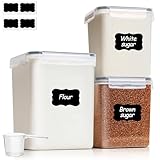
- Suitable for Flour and Sugar Set: Our air tight pantry storage containers include a 5.5 Qt flour container that easily holds 5 lb flour and two 2.6 Qt sugar containers that each can easily hold 2 lb sugar, perfect for baking supplies; They are also suitable for storing cereal, pasta, rice, oatmeal, snacks, beans and other pantry dry foods
- Keep Your Food Fresh: Our air tight containers for food has strong side-locking lids to block moisture and preserve freshness.The excellent seal may make lids firm initially—hold down the lid and lock both side clips with both hands for an easy lock
- Useful and Convenient Accessories: The set of cereal container included 4 labels and a 120 mL measuring cup; The flour storage container accessories help you differentiate between similar ingredients and ensure precise measurement during baking or cooking
- Food Grade Clear Material: Crafted from food grade plastic, the rice container is durable for everyday use; The clear kitchen storage containers allow you to quickly check the quantity and quality of contents at a glance, suitable for your pantry storage
- Space-Saving Design: The pantry organizers and storage are designed to be stackable, making them great helpers for pantry and kitchen; The large food storage containers with lids eliminate clutter and the risk of torn food bags, keep everything in order
Borrow or share rarely used equipment
For a ladder, specialty tool, or large lawn-and-garden machine used only occasionally, sharing or borrowing can prevent both a purchase and years of storage. EPA discusses sharing large equipment and choosing reusable cleaning tools such as mops, rags, and sponges at What You Can Do. This works only when access, hygiene, responsibility, and timing are clear; it is an option, not a requirement.
Keep emergency supplies separate from everyday stock
Routine stock-up planning asks, “What will we use soon?” Emergency planning asks, “What can keep us fed if normal shopping, cooking, water, or refrigeration is interrupted?” Mixing the two can lead to buying specialized products that never enter normal rotation.
FoodSafety.gov recommends at least a three-day food supply for an emergency in U.S. guidance. It advises choosing foods with long storage life that need little or no cooking, water, or refrigeration, and accounting for dietary needs and pets. It also says, “When storing food, it is not necessary to buy dehydrated or other types of emergency food.” Read the complete recommendation at FoodSafety.gov’s emergency food guidance.
Recommended Free Tools
Build and refresh the reserve
- List household members, medical or dietary needs, pets, and any equipment required to open or prepare food.
- Select foods the household already accepts and can store safely, rather than buying unfamiliar survival products.
- Include water and items that need little or no refrigeration or cooking, consistent with local emergency advice.
- Mark a review date and use older reserve items in ordinary meals before replacing them.
- During a power outage, follow USDA FSIS instructions for evaluating refrigerated and frozen food at Keeping Food Safe During an Emergency.
The three-day figure is a U.S. preparedness baseline, not a universal duration for every hazard, climate, jurisdiction, or household. Local emergency-management guidance may call for more.
A repeatable shopping and review routine
Before leaving home or placing an order
- Scan all storage areas and update quantities.
- Choose meals or household tasks that will consume the purchase.
- Write the maximum quantity that fits your use rate and storage space.
- Check equivalent unit prices and all fees.
- Read offer conditions, package sizes, and storage instructions.
When the items arrive
- Inspect for damage, leaks, thawing, or short remaining quality windows.
- Put older items in front and label opened bulk-bin food.
- Portion or freeze foods that will not be used within their safe window.
- Store hazardous products separately and securely.
At the next review
- Compare what you expected to use with what remains.
- Record items repeatedly left over, spoiled, or disliked.
- Reduce the next quantity for slow-moving items; increase only when repeated use supports it.
- Note changes in household size, routines, pets, diet, or storage before the next purchase.
Common stock-up mistakes and the fix
| Mistake | What happens | Fix |
|---|---|---|
| Shopping from a promotion instead of an inventory | You buy duplicates while essentials you need remain missing. | Inventory first and write the intended use beside each purchase. |
| Comparing package prices only | A larger package looks cheaper but costs more per usable unit after fees. | Normalize the unit and include every checkout charge. |
| Buying perishables in bulk | Food spoils before the household can eat it. | Plan portions, freeze, preserve, share, or buy a smaller amount. |
| Ignoring storage limits | Items are crushed, hidden, exposed to heat, or impossible to rotate. | Measure available space and reject quantities that cannot be stored safely. |
| Treating emergency food as a bargain | Specialized products sit unused and may not match dietary needs. | Choose familiar, long-storage foods and refresh them through normal use. |
| Assuming a date label answers every safety question | Good food is discarded unnecessarily, or unsafe food is kept too long. | Use product-specific instructions, storage history, and spoilage checks. |
What the waste figures mean for a household budget
EPA estimates that one-third of all food in the United States goes uneaten. It also estimates that about 96% of households’ wasted food ended up in landfills, combustion facilities, or down the drain to the sewer system in 2019. EPA has cited an estimate of almost $3,000 per year in uneaten food for the average family of four; the page does not specify a year for that figure, so it should not be treated as a current or universal household cost. These are national estimates, not a prediction of what your household will waste.
The practical implication is narrower and more useful: an apparent discount is not a saving when it increases the amount you throw away, cannot store safely, or never use.
Quick Recap
Product prices and availability are accurate as of the date/time indicated and are subject to change. Any price and availability information displayed on Amazon at the time of purchase will apply.




