Recommended Free Tools
The best LinkedIn profile is targeted to one realistic role family, uses the language recruiters search for, proves its claims with results, and makes the next step—contacting or referring you—obvious. Start by choosing a primary target role, then revise your headline, About section, Experience, Skills, work samples, location, and availability around that target.
LinkedIn optimization can improve discoverability, relevance, credibility, and job recommendations. It cannot guarantee recruiter messages, interviews, or a job. LinkedIn is simultaneously a searchable candidate record, a professional landing page, a source of data for job recommendations, and a credibility check that employers may review alongside your resume.
As an Amazon Associate I earn from qualifying purchases.
Recruiters do not evaluate every LinkedIn profile in the same way. They search for combinations of job titles, skills, tools, locations, credentials, industries, and evidence that someone can perform the work. LinkedIn says its Recruiter tools can use both skills explicitly listed in the Skills section and skills inferred from the headline, About section, job titles, position descriptions, certifications, courses, and other profile text. See LinkedIn’s documentation on Recruiter Skills Match and searching for candidates by role, location, and skills.
What’s actually slowing this PC down?
Pick the symptom - the matching free tool is one click away.
That makes the goal more demanding than adding a few keywords. A profile must be easy to find, easy to understand, believable, and easy to act on.
#1 Best Overall

- Note: Notepad, paper, and pen are NOT included; the package contains only the portfolio
- Perfect Size: The portfolio binder measures 9.6" x 12.6", designed to hold writing pads, A4 and letter-sized paper, ideal organizer for business, office, conference and school
- Premium Faux Leather: Crafted from premium faux leather with excellent stitching, this binder is lightweight, durable, and stain-resistant, perfect for a professional look
- Strong Metal Clip: Our folder features a versatile design with multiple slots and pocket, a pen loop, and a sturdy metal clip to securely hold your papers in place
- Classical & Practical: Our Padfolio clipboard is perfect for storing business cards, IDs, documents, pens, and tablets; it meets all your daily office needs in one compact design
What an optimized LinkedIn profile actually does
| Job | What the profile should accomplish |
|---|---|
| Searchability | Appear relevant when someone searches for your target title, skills, tools, industry, credentials, or location. |
| Clarity | Tell a recruiter what you do and what role you want within seconds. |
| Proof | Support your claims with accomplishments, scope, projects, certifications, recommendations, or work samples. |
| Conversion | Give a relevant visitor a reason and a practical way to contact, refer, or interview you. |
These are related but different outcomes. A complete profile may be easier to discover, but completeness alone does not establish relevance or competence. LinkedIn’s profile level meter progresses from Beginner to Intermediate to All-star as recommended sections are completed. Treat that meter as a completeness checklist—not as a ranking hack or hiring score.
1. Choose the job you want before editing the profile
Do not begin by asking, What can I put on LinkedIn? Begin with, What role should the right recruiter associate with me?
- Choose one primary target role. For example, Product Marketing Manager, Data Analyst, Customer Success Manager, or Business Systems Analyst.
- Add two or three adjacent titles that genuinely fit your experience. A Product Marketing Manager might also fit Product Marketing Lead or Go-to-Market Manager; that does not mean the headline should contain five unrelated careers.
- Collect 10 to 15 current job postings for those roles, preferably from several employers and industries you would consider.
- Build a keyword inventory. Record recurring titles, skills, tools, credentials, deliverables, performance measures, industries, and work-model language.
- Separate the terms into four groups: must-have terms you can support, useful synonyms, nice-to-have terms, and terms you cannot honestly claim.
Using several postings is important. One employer may call the same work Revenue Operations, Sales Operations, or Go-to-Market Operations. Repeated language across multiple postings is a stronger signal of market terminology than a phrase copied from one description.
| Category | What to collect | Example |
|---|---|---|
| Job titles | Common market-facing titles and close equivalents | Marketing Operations Manager, Revenue Operations Manager |
| Skills | Capabilities required to perform the role | Lifecycle marketing, forecasting, stakeholder management |
| Tools | Platforms, applications, and technologies | Salesforce, HubSpot, SQL, Tableau |
| Outcomes | Results the employer measures | Pipeline growth, retention, cost reduction |
| Credentials | Degrees, licenses, and certifications | PMP, CPA, RN license, AWS certification |
| Context | Industries, customers, and operating environments | B2B SaaS, healthcare operations, nonprofit fundraising |
| Work model | Location and working arrangement | Remote, hybrid, on-site, willing to relocate |
Now connect every important term to evidence. If a posting asks for Salesforce, identify where you used Salesforce, what you did with it, and what changed. If you have only watched tutorials, completed coursework, or used a tool briefly, describe that accurately as a project or learning experience rather than presenting yourself as an experienced practitioner.
2. Fix the first screen: photo, headline, location, and introduction
The introduction section is the part most likely to be scanned first. On desktop, go to Me → View profile → select the Edit icon in the introduction section. LinkedIn commonly places your name, profile photo, background photo, headline, current position, education, location, industry, contact information, and availability settings there. Labels can vary by device, language, geography, and account.
Use a recognizable, current photo
Use a clear, recent image in which you are recognizable and appropriately presented for your field. It does not have to be a studio portrait, but a blurry vacation image, group photo, logo, or stock photograph creates unnecessary doubt. LinkedIn says a profile photo should reflect the member’s likeness and may remove images consisting solely of logos, emojis, landscapes, animals, words, flags, childhood photos, stock images, celebrities, or fictional characters. Its current upload guidance lists JPG or PNG format, a maximum file size of 8 MB, and dimensions between 400 × 400 and 7680 × 4320 pixels. LinkedIn may crop the image.
LinkedIn also says members with a profile photo receive up to twice as many profile views. That is a LinkedIn platform claim, not proof that a photo causes more interviews or job offers. More views help only if the rest of the profile is relevant and credible.
Free tools Windows power users keep installed
One-click scans. No signup required.
Write a searchable headline, not just a job title
Your headline appears below your name and in search results. LinkedIn Talent Solutions describes a 220-character limit and recommends using the headline as more than a current job title. Verify the live editor if LinkedIn changes the limit or interface; the LinkedIn headline guidance is the primary reference.
A useful structure is:
Target role or professional identity | two to four valuable skills or tools | evidence or specialty | industry or context
Examples:
- Product Marketing Manager | B2B SaaS | Positioning, GTM Strategy, Customer Research | Launches that improve pipeline conversion
- Data Analyst | SQL, Python, Tableau | Forecasting and customer analytics for healthcare operations
- Former Teacher → Learning Designer | Curriculum Development, LMS, Adult Learning | Building practical training programs
- Operations Manager | Process Improvement, Vendor Management, KPI Reporting | Scaling fulfillment teams in e-commerce
- Independent UX Researcher | Interviews, Usability Testing, Figma | Helping fintech teams reduce product friction
Put the most important role or keyword early. Use the market-facing term recruiters recognize, while keeping the official title in Experience. If your internal title is obscure, you can clarify it honestly—for example, Business Systems Analyst (ERP Product Owner). Do not replace a real title with a more senior or unrelated one merely because it has more search volume.
Avoid making seeking opportunities your entire headline. It describes availability but not capability. You can mention that you are open to work in the headline or About section after stating what you do. Also avoid adding credentials, claims, or keyword strings to the name field. LinkedIn’s profile authenticity guidance warns against manipulating the name, headline, Experience, or Education fields and against keyword stuffing.
Make location and context accurate
Use the city or metropolitan area where you actually live. If you are willing to relocate, say so in About or your Open to Work preferences; do not claim to live in a city merely to appear in local searches. Location is used in LinkedIn matching and job recommendations, so an incorrect location can create both missed opportunities and misleading recruiter results.
Choose an industry that reasonably describes your target work, not simply the industry of your last employer. Add an accurate current position, education, and contact method. Your background image can reinforce your field—a clean product screenshot, architectural detail, data visualization, or restrained brand image—but it should not compete with the headline or reveal confidential information. LinkedIn recommends a background image of 1584 × 396 pixels; JPG or PNG files should be under 8 MB. Rendering varies across screens.
3. Write an About section that converts profile visits
The About section should answer six questions in order:
- What do you do?
- Who or what do you help?
- What are you especially good at?
- What evidence supports that?
- What roles, projects, or conversations interest you?
- How should someone contact you?
On desktop, go to View profile → scroll to About → select the Edit icon. LinkedIn’s About-section guidance describes this space as a place to express your mission, motivation, and skills. Short paragraphs and bullets are both appropriate.
Do these 3 things before closing this tab:
1Clear out junk files and repair common Windows errors2Scan for outdated or missing drivers - takes under a minute3Repair Windows errors before they cause bigger problemsA practical structure is:
- Opening: target identity and value.
- Middle: two or three areas of expertise.
- Proof: selected results, scope, industries, systems, or projects.
- Close: target opportunity and a specific invitation to connect.
For example:
I’m a data analyst who helps healthcare operations teams turn fragmented information into decisions they can act on.
My work includes SQL analysis, dashboard development, forecasting, and stakeholder reporting. In recent roles, I built recurring revenue and churn reporting that reduced weekly manual reporting time by 40%, and partnered with operations leaders to identify process changes that improved service-level visibility.
I’m particularly interested in data analyst and business intelligence roles in healthcare, financial services, and other data-intensive organizations. Selected work is available in the Featured section.
Rank #2
 STYLIO Padfolio Portfolio Organizer Binder | Interview Resume Folder, Legal Document, Business Card Holder |w/Letter-Sized Notepad | Handsome Piano Noir Faux Leather Folio Matte Finish, Accent Stitch
- ✅ STYLE MEETS FUNCTION – Elegant design featuring convenient, safe pockets ideal for documents, business cards, travel tickets, pitch proposals & resumes. Includes a pen holder & refillable writing pad
- ✅ SLEEK & PROFESSIONAL – Make a strong first impression with this modern portfolio with a classy piano black matte finishing. Fits most briefcases & bags
- ✅ PREMIUM DURABILITY – Ideal for today’s hectic business travel schedules, this document holder is water resistant and reinforced with accent stitching
- ✅ IDEAL GIFT – College graduation seeking out their first job? Looking to up your Wall Street game? This is the best gift for men & women!
- ++ ONE YEAR GUARANTEE ++ We stand fully behind the quality of our product & offer a full 1 YR WARRANTY
I’m open to connecting with hiring managers, recruiters, and analytics professionals working on operational decision-making. The best way to reach me is through LinkedIn or the contact details on my profile.
Special offer. See more information about Outbyte and uninstall instructions. Please review EULA and Privacy policy.
Replace every example with a defensible fact. If you have no professional metrics, use project scope, time saved, users served, volume handled, quality improvements, or a specific deliverable. Do not manufacture numbers.
A fill-in template:
I’m a [target role] who helps [team, organization, or customer] achieve [outcome] through [capability].
My work includes [skill or tool], [skill or tool], and [skill or tool]. In [recent role, project, or study], I [action] for [scope] and [result or learning].
I’m especially interested in [role types, industries, or problems]. Selected work: [portfolio, project, or Featured link].
The Tool Desk
Outbyte PC Repair FREERepair Windows errors before they cause bigger problemsFix Now →Outbyte Driver Updater FREEFix the driver behind crashes, sound loss and screen glitchesFind Drivers →Special offer. See more information about Outbyte and uninstall instructions. Please review EULA and Privacy policy.I’m open to connecting with [recruiters, hiring managers, peers, or collaborators] working on [relevant area]. Contact me through [preferred method].
The About field is often reported as allowing 2,600 characters, but LinkedIn’s public Help article does not clearly establish that as a permanent limit. Draft to the live editor and check the limit before finalizing; a current third-party reference is Wordlimit.ai’s LinkedIn character guide.
4. Turn Experience into evidence instead of duties
Experience is where a recruiter tests whether your headline and skills are supported by actual work. On desktop, go to View profile → Experience → Show all experiences → edit an existing role or Add position.
For each relevant position:
- Use the accurate employer and official title.
- Enter truthful dates and location or work model where relevant.
- Explain scope: team size, budget, customers, systems, geography, volume, or responsibility.
- Use target-role terminology naturally in the title and description.
- Lead with accomplishments rather than routine responsibilities.
- Associate relevant skills with the position when LinkedIn permits it.
- Add media, documents, or links only when you have permission to share them.
Use this bullet pattern:
Action + work performed + scale or method + measurable result
Windows Errors? Fix Them Before They Spread
Repair common Windows errors and clear accumulated junk for a smoother, more stable PC - no reinstall needed.Free scan · no reinstallCrashes, No Sound, or Screen Glitches?
Random freezes, missing sound and display glitches usually trace back to one bad driver. Find and replace yours safely.Free scan · under a minuteWeak:
Managed marketing campaigns and social media.
Stronger:
Led paid and organic acquisition campaigns across LinkedIn and Google, increasing qualified demo volume by 34% while reducing cost per qualified lead by 18%.
More examples:
| Field | Duty-focused version | Evidence-focused version |
|---|---|---|
| Data | Created reports for management. | Built SQL and Tableau dashboards for operations leaders, replacing manual weekly reporting with a self-service view of volume, backlog, and service-level trends. |
| Operations | Managed vendors and improved processes. | Consolidated vendor intake and introduced a standard review workflow, shortening average approval time by 22% across a regional operations team. |
| Customer success | Worked with customers to solve problems. | Managed a portfolio of mid-market accounts, leading adoption reviews and renewal plans that contributed to a 96% gross retention rate. |
| Education | Taught classes and created lesson plans. | Designed project-based instruction for 120 students, using formative assessment data to adjust lessons and improve completion of assigned work. |
Recent and highly relevant roles may need three to six strong bullets. Older or less relevant positions can use fewer, shorter bullets. A job description is not a resume dump: select the experiences that explain why you fit the target role.
Use metrics without exposing confidential information
You can show scale without naming proprietary revenue or customer information. Consider:
- A percentage change instead of a dollar amount.
- A range instead of an exact confidential figure.
- The number of customers, users, cases, projects, or team members served.
- A qualitative scale such as a national program or a multi-site operation.
- The operational result, such as faster cycle time, fewer defects, improved adoption, or reduced manual work.
Never invent a percentage because an accomplishment bullet looks better with one. If a result cannot be quantified, explain the problem, your contribution, method, and observable outcome.
Handle titles, contracts, and associations accurately
Keep an internal title accurate in Experience. A market-facing equivalent can appear in the headline or in parentheses when it genuinely clarifies the work. Do not inflate seniority.
LinkedIn permits jobs, internships, contract work, and other qualifying professional experiences, but the association must accurately reflect professional experience. Being a customer or user of a company does not qualify as working there. LinkedIn’s Experience-section guidance explains these requirements.
Freelancers and contractors can group work under an accurate business or independent-contractor entry, then identify representative clients or projects where permission allows. Veterans should translate military titles and duties into civilian terminology without erasing the official service history—for example, explain logistics, team leadership, compliance, procurement, or operations in terms a civilian recruiter recognizes.
Explain gaps without oversharing
An unexplained gap is not automatically disqualifying, but a clear timeline reduces confusion. LinkedIn offers a Career Break section among its profile sections. Use a category such as caregiving, health, education, travel, military service, or personal development if it is useful, but do not disclose sensitive personal details you do not want public. A short explanation in About can also clarify a transition.
5. Build a targeted Skills section
LinkedIn allows up to 100 skills in the Skills section. That is a ceiling, not a target. A list of every skill you have encountered can dilute the profile and make the most relevant capabilities harder to see.
Rank #3

- 30-Pocket Portfolio Display Book: Each art binder with 30 bound clear sheet protectors, letting you show 60 pages of 9x12" letter size or smaller. Folder measures 12 7/8" (L) x 9 11/16" (W) x 11/16" (G).
- Customizable Spine Title: You can label and identify your watercolors, sketches, scrapbook, art pieces, sheet music, certificates, and other projects by customizing the reversible spine insert.
- High Transparency & Lies Flat When Open: Our presentation book with crystal clear PP sheet protectors offers complete transparency for checking through and organizing. Bound sheet protector lies flat when open, free your hands.
- Archival Quality & Heavy Duty: Made from durable and light weight polypropylene which is archival quality, acid-free, non-stick, and non-glare, and water-proof. Thickened and sturdy cover won’t easy to crack and keeps your clear sleeves from being damaged.
- Multi-Function: Not only suitable for long-term storage but also for displaying your paintings, photos, artwork, drawing, stencils. Great gift for students, teachers, office workers, secretaries, musicians, painters, etc.
Use three layers:
- Target-role skills: the capabilities that occur most often in your selected job postings.
- Tools and technologies: platforms and systems you have genuinely used, such as Salesforce, SQL, Python, Figma, Workday, HubSpot, AWS, or Tableau.
- Supporting skills: capabilities that explain how you operate, such as stakeholder management, forecasting, vendor management, regulatory compliance, instructional design, or change management.
On desktop, use View profile → Add profile section → Core → Add skills. Select LinkedIn’s standardized suggestions when possible. To reorder them, go to Skills → Edit → More → Reorder and place the most important target-role skills first. See LinkedIn’s instructions for adding and removing skills and reordering skills.
Use the same concept in more than one natural context when appropriate. For example, list SQL as a standardized skill, mention SQL in an Experience bullet, and link a relevant dashboard or analysis in Featured. If a recruiter searches for an acronym or its spelled-out equivalent, LinkedIn Recruiter may recognize related terminology, but writing the term clearly once is better than repeating it mechanically.
The strongest pattern is:
Skill → where you used it → what changed
SQL — used to build recurring-revenue and churn dashboards that reduced weekly reporting time by 40%.
Quick wins for a faster PC:
Fix the driver behind crashes, sound loss and screen glitchesFind Drivers →Repair Windows errors before they cause bigger problemsFix Now →Endorsements are supporting evidence, not proof by themselves
Skill endorsements are quick validation from connections. LinkedIn says endorsements can contribute to profile strength and help with discovery related to those skills, but they are not a promise of recruiter ranking, interviews, or employment. An endorsed skill that never appears in your work history or projects is still a weak claim.
Ask colleagues to endorse skills they have actually seen you use, and reciprocate only when you can do so honestly. Prioritize demonstrated capability over collecting endorsements.
6. Add a proof layer with Featured, projects, and recommendations
Use Featured as a portfolio shelf
Featured should show the evidence a recruiter would otherwise have to request. Appropriate items include:
- Portfolio projects and case studies.
- Presentations, research, or published articles.
- Product demonstrations.
- Design work, code repositories, or personal-site links.
- Public documents, images, videos, or high-quality posts.
- Selected certificates when they add meaningful context.
For every item, provide context: What is it? What did you do? What capability does it demonstrate? What should the viewer notice?
Quick wins for a faster PC:
Repair Windows errors before they cause bigger problemsFix Now →Scan for outdated or missing drivers - takes under a minuteDriver Scan →Clear out junk files and repair common Windows errorsFree Scan →For example, do not feature a link titled Dashboard. Use a caption such as: Operations analytics project: designed the data model, wrote SQL transformations, and built the Tableau dashboard to show backlog and service-level trends. Sample data is anonymized.
LinkedIn describes Featured as a place for authored posts, articles, external media, documents, images, videos, and links in its Featured-section FAQ. However, LinkedIn also has a current Help page stating that adding profile content to Featured may be available only to Premium Business, Sales Navigator, and Recruiter subscribers. The Help pages are not perfectly consistent, so controls may vary by account. If you cannot access the Featured controls, use relevant Experience media, a personal website, or a public portfolio instead; do not assume Premium is necessary for the rest of your profile.
Request specific recommendations
A recommendation is written social proof; an endorsement is a lightweight skill signal. Recommendations can be especially useful when they describe the context, your contribution, and the result.
LinkedIn says recommendations can be requested from first-degree connections with whom you work or have worked. There is no overall limit, but only one recommendation can be requested or given per position, per member. On desktop, the path is Me → View profile → Recommendations → Plus icon → Ask for recommendation. LinkedIn’s request instructions show that the request includes the relationship, position at the time, and a personalized message.
Free tools Windows power users keep installed
One-click scans. No signup required.
Good people to ask include:
- A former manager or project lead.
- A cross-functional partner.
- A client or customer, where appropriate.
- A direct report who can speak credibly about your leadership.
- A professor, internship supervisor, or volunteer leader for an early-career profile.
Make the request easy to answer. Mention the project and the strengths you hope they can address:
Would you be comfortable writing a recommendation about our reporting redesign? If useful, you could mention how I translated stakeholder requirements into the dashboard, kept the project on schedule, and reduced the team’s manual reporting workload. Please write only what you can support from your experience working with me.
Consider verification, but do not confuse it with qualification
LinkedIn may offer identity, workplace, and educational-institution verification depending on geography and eligibility. In the United States, identity verification is available through CLEAR for eligible members using the mobile app. See LinkedIn’s verification overview and its U.S. identity-verification information.
Verification can be a useful trust signal, particularly when a recruiter is deciding whether a profile appears authentic. LinkedIn reports that verified members see 60% more profile views and 50% more engagement on average. Those are LinkedIn-reported platform figures; they do not establish that verification causes more interviews or job offers. Verification cannot replace relevant experience, credentials, or work samples.
7. Configure public visibility and Open to Work carefully
Choose how much of your profile should be public
For most people seeking inbound opportunities, enabling a public profile improves the chance that a recruiter, referral source, or hiring manager can find the page outside LinkedIn. A public profile may appear to nonmembers, people who are not signed in, Google, Bing, Yahoo, DuckDuckGo, and approved third-party services or integrations.
On desktop, go to Me → View profile → select the Edit icon beside Public profile & URL. Enable public visibility and choose which sections may appear publicly. LinkedIn explains that the public profile is a simplified version of the full profile, so making a section visible on your profile does not guarantee that every viewer or search engine will display every detail. Changes can take weeks or months to appear in search engines because LinkedIn does not control their refresh schedules. See LinkedIn’s public-profile visibility guidance.
Public visibility is not appropriate for everyone. If you face stalking, harassment, workplace retaliation, discrimination, or another safety concern, privacy can reasonably outweigh discoverability. Review your public sections, contact details, activity visibility, and off-LinkedIn visibility before expanding reach.
Rank #4

- Note: Notepad, paper, and pen are not included
- Padfolio Dimensions: 12.6" x 9.8" (32 x 25 cm). The ideal size to securely hold and organize Letter/A4 documents & legal notepads
- Impeccable Organization: Everything has its place. Portfolio folder Keep your resume, notes, papers, business cards, and writing instruments neatly arranged and instantly accessible for any meeting or interview
- Universal & Professional: folio is sophisticated, gender-neutral design is perfect for students, interns, and professionals across all fields, making a polished statement in classrooms, offices, and corporate events
- Smart Functionality: The 360° flip-and-lay-flat design portfolio binder ensures effortless writing anywhere—from the conference room to on-the-go
Create a clean custom URL
A custom URL makes the profile easier to share and easier for people to identify. LinkedIn says the customizable portion can be 3 to 100 characters, cannot contain spaces or special characters, and can be changed up to five times within six months. It is a professionalism and sharing improvement, not a guaranteed Google-ranking factor.
Use a format such as:
- linkedin.com/in/firstname-lastname
- linkedin.com/in/firstname-lastname-field
- linkedin.com/in/name-profession
Avoid random numbers, outdated employers, promotional slogans, or a role title that may soon become inaccurate. Use the Edit your custom URL control in the public-profile settings. See LinkedIn’s custom public profile URL instructions.
Use Open to Work according to your risk tolerance
LinkedIn currently offers three visibility choices:
| Setting | What it signals | Trade-off |
|---|---|---|
| All LinkedIn members | Shows your career interests broadly and adds the green #OpenToWork photo frame. | Current coworkers and managers can see it. |
| Recruiters only | Shares preferences with people using LinkedIn Recruiter. | LinkedIn attempts to hide the signal from recruiters at your current company, but cannot guarantee confidentiality. |
| Visible only to you | Uses preferences to influence job recommendations without broadcasting availability. | Does not provide recruiters with the same availability signal. |
On desktop, use Me → View profile → Open to → Finding a new job. Some accounts may display wording such as Choose what you need in your next job. Enter target job titles, locations, location types, employment types, start date, and visibility, then save.
If you are employed and want discretion, Recruiters only is a reasonable choice—but it is not a confidentiality guarantee. LinkedIn uses the current company listed on your profile to determine whom to exclude, and errors or other visibility paths are possible. Keep your current employer and current role accurate if you rely on that exclusion.
What’s actually slowing this PC down?
Pick the symptom - the matching free tool is one click away.
8. Align LinkedIn with your resume and applications
LinkedIn is not an external applicant-tracking system, and LinkedIn Recruiter is not the same as an employer’s ATS. They are separate systems with different search, matching, parsing, and review processes:
- LinkedIn Recruiter: helps recruiters search LinkedIn profiles using titles, skills, locations, filters, and other signals.
- LinkedIn job recommendations: use profile information such as headline, About, Experience, education, location, and preferences.
- LinkedIn applications: may transmit your full LinkedIn profile along with your resume, cover letter, screening answers, and contact information.
- An external ATS: parses the resume and application submitted to the employer and may use separate screening rules.
- Human review: evaluates whether your history, claims, communication, and evidence make sense together.
LinkedIn says an employer may receive the member’s full profile in addition to application materials when the member applies to a job. External application flows can differ, so treat the profile and resume as connected documents. See LinkedIn’s application-data explanation.
Before applying, check:
- Your name and contact information.
- Employer names, titles, and dates.
- Current employment status.
- Location and remote, hybrid, or on-site preferences.
- Certifications, licenses, and education.
- Core skills and tools.
- Employment gaps and transitions.
- The target role in your headline and Open to Work preferences.
- Whether every prominent LinkedIn claim is supported by the resume, Experience, or a project.
Do not use a LinkedIn headline to claim a role that your resume contradicts. A career changer can state the new target identity in the headline while preserving the accurate employment history and explaining the transition through transferable achievements, projects, certifications, and About.
9. Adapt the profile to your situation
Career changers
Lead with the new target role, not only the previous occupation. Translate past accomplishments into transferable capabilities, then add proof in the form of projects, coursework, certifications, volunteer work, or a portfolio. Recommendations should emphasize relevant strengths such as analysis, communication, leadership, process improvement, or customer understanding.
PC Slower Than It Used to Be?
A free scan shows the junk files, broken settings and background clutter dragging Windows down - then fixes them in one click.Free scan · Windows 10 & 11Outdated Drivers Are Slowing You Down
One free scan finds every outdated or missing driver and matches the right update for your exact hardware.Free scan · exact hardware matchStudents and recent graduates
Use projects, internships, research, relevant coursework, volunteer experience, student organizations, certifications, portfolio work, tools, and project outcomes. Describe coursework as coursework; do not inflate it into professional employment. LinkedIn’s Experience rules require professional associations to be represented accurately.
Laid-off workers and confidential searches
Use a target-role headline rather than making the entire headline an announcement of unemployment. Set Open to Work according to your privacy preference, and make the end date of the previous role accurate. A layoff does not require a defensive explanation in About. If you want to explain availability, use a straightforward line such as, After completing my role at [company], I’m pursuing product operations opportunities focused on launch execution and cross-functional planning.
Freelancers and contractors
Position yourself around the problem you solve and the deliverables you create. Use a business or independent-contractor entry where accurate, list representative engagements only with permission, and feature redacted case studies or public work. Explain the tools, client type, scope, and outcomes rather than creating a vague list of services.
Veterans
Keep military service accurate, but translate specialized terms into civilian language. Explain the size of teams, operational responsibility, logistics, procurement, compliance, training, risk management, technology, or mission outcomes in terminology that matches your target postings.
People returning after a career break
Use the Career Break section when it clarifies the timeline. A category is enough; sensitive medical, family, or personal details are optional. Add current projects, training, volunteer work, or certifications if they demonstrate that your skills are current.
Remote workers and people willing to relocate
Keep your actual location accurate, then specify remote, hybrid, or on-site preferences and realistic relocation targets. State travel or relocation availability in About. Do not list every city in the headline or claim local residence where you do not live.
Multilingual profiles
Review every language version after a major update. LinkedIn says edits to a secondary-language profile do not automatically mirror changes made to English-language Experience entries. An outdated translated version can create the same credibility problem as an outdated resume.
Independent reader supportYour contribution helps us test, update, and keep practical guides available for everyone.10. Use networking and job alerts to create opportunities
A strong profile has limited value if nobody relevant encounters it. Profile optimization improves discovery; networking creates access; application quality determines whether a specific opportunity progresses. Use all three.
Do these 3 things before closing this tab:
1Repair Windows errors before they cause bigger problems2Fix the driver behind crashes, sound loss and screen glitches3Clear out junk files and repair common Windows errorsUseful actions include:
- Connect with people with whom you have a real professional relationship.
- Follow target companies and relevant leaders if a connection is not yet appropriate.
- Comment thoughtfully on work-related discussions.
- Contact a job poster when LinkedIn provides that option and your message is relevant.
- Ask for targeted referrals from people who know your work.
- Set job alerts for your selected role family and locations.
LinkedIn’s guidance on job-search best practices and following versus connecting supports relationship-based activity. Do not send mass connection requests. LinkedIn warns that sending too many invitations or inviting people who do not know you can trigger restrictions; see its invitation guidance.
Best Value
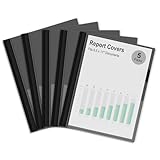
- Clear Front Report Cover with Black Back: Quickly identify and access your documents without opening the cover while the black back provides professional and stylish look, perfect for business presentations and academic, meetings, or interviews where fast retrieval matters
- Heavy-Duty 3-Prong Fastener Secures Documents Firmly: Rugged metal prongs reliably hold standard 8.5 x 11 inches letter size 3-hole punched papers, with an expandable design that accommodates up to 100 sheets, perfect for thick reports or multi-project documentation
- Lightweight Yet Durable Design: Slim yet durable plastic construction makes it easily fits in briefcases, backpacks, or file organizers for effortless portability to offices, schools, or business travel, and the back pocket can hold receipts, business cards or loose notes
- Effortless Document Management: Simple 3-prongs mechanism allows quick addition or removal of hole-punched pages, maintaining organized, up-to-date materials with minimal hassle
- Versatile Professional Solution: Keeps interview resumes, client presentations, classroom reports, contracts, training manuals, and student assignments, this report cover maintains documents crisp, ideal for business professionals, students and teachers
Job alerts are useful for disciplined monitoring, not a replacement for employer research or tailored applications. LinkedIn allows up to 20 job alerts, with daily or weekly delivery. Set alerts around a small number of role-and-location combinations instead of creating an unmanageable stream. See LinkedIn’s job-alert instructions.
Posting every day is not a proven universal ranking tactic. LinkedIn says search and recommendation systems use multiple signals, including profile information, activity, connections, and search behavior, but does not publish a simple posting-frequency formula. Post or comment when you have something relevant to contribute: a project lesson, analysis, case study, useful resource, or informed observation. Avoid generic engagement bait.
11. Premium features are optional, not a prerequisite
Core profile editing, Experience, Skills, About, public visibility, Open to Work, and recommendations should not be presented as requiring Premium. A free account can contain a targeted, credible profile.
The Tool Desk
Outbyte Driver Updater FREEFix the driver behind crashes, sound loss and screen glitchesFind Drivers →Outbyte PC Repair FREEClear out junk files and repair common Windows errorsFree Scan →Premium may provide additional job insights, AI-assisted writing, or access to features such as Top Applicant. LinkedIn says Top Applicant appears when a member is in the top 50% of applicants for at least one role and that role has at least 10 applicants. It is a visibility aid, not evidence that the employer will hire you.
Some Featured controls may also vary by account tier, as noted above. Do not buy Premium to compensate for a vague headline, unsupported skills, or missing accomplishments. Improve the profile fundamentals first.
12. Common LinkedIn optimization mistakes
- Generic headline: Experienced professional seeking new opportunities says little about the work you can do.
- Trying to target everything: five unrelated job families make it harder to understand your direction.
- Keyword stuffing: repeating the same terms in every section harms readability and can violate LinkedIn’s guidance.
- Inflated titles: replacing an accurate title with a more senior or unrelated one creates a credibility problem.
- Duty-only Experience: responsibilities without scope, tools, or results do not show capability.
- Unverified skills: a long skills list without corresponding examples asks recruiters to take too much on faith.
- Outdated information: old dates, obsolete tools, a stale photo, or a previous target role can undermine current applications.
- Wrong location: claiming a city where you do not live may produce misleading matches.
- No evidence: claims without projects, metrics, recommendations, certifications, or media are difficult to evaluate.
- Oversharing publicly: personal contact information, client data, internal documents, or sensitive employment details can create privacy and professional risks.
- Resume mismatch: inconsistent titles, dates, employers, or certifications can make an otherwise strong application look unreliable.
- Treating All-star as a guarantee: completion is not the same as relevance, proof, or competitiveness.
- Assuming Open to Work is private: Recruiters only reduces exposure but does not guarantee confidentiality.
- Assuming activity beats substance: daily posting cannot replace a clear target and credible evidence.
A 30-minute LinkedIn optimization pass
This quick pass will not replace a full rewrite, but it can remove the highest-friction problems:
- □ Choose one primary target role and two or three honest adjacent titles.
- □ Review 10 to 15 job postings and identify the five most useful terms you can support.
- □ Rewrite the first words of your headline around the target role.
- □ Confirm your photo is current and recognizable.
- □ Confirm your location, industry, current position, and contact method.
- □ Rewrite the opening two lines of About to state what you do and whom you help.
- □ Replace at least three duty statements in Experience with action-and-result bullets.
- □ Add the most relevant standardized skills and remove unrelated ones.
- □ Associate important skills with the Experience entries or projects that demonstrate them.
- □ Add one to three safe, contextualized work samples, if Featured is available.
- □ Request one recommendation from someone who can discuss a specific project.
- □ Choose All LinkedIn members, Recruiters only, or Visible only to you for Open to Work.
- □ Set public-profile sections and create a clean custom URL.
- □ Compare LinkedIn with your resume for names, titles, dates, skills, locations, and certifications.
- □ View the profile while logged out or use the public preview to check what strangers can see.
- □ Set focused job alerts and follow target companies.
- □ Review privacy settings and learn how to report suspicious recruiter outreach.
Protect yourself from fraudulent outreach
Improving discoverability can attract legitimate recruiters and scammers. Before sharing personal information, verify the recruiter’s employment history, the company’s official website and Company Page, the job posting, and the email domain. Be cautious when someone pressures you to move immediately to WhatsApp, Telegram, or another channel.
LinkedIn warns about payment requests, fake checks, requests for passwords, early requests for Social Security numbers or bank information, and pressure to purchase equipment or send money. See LinkedIn’s job-search safety guidance. A real recruiter should be able to explain the role, hiring company, process, and next step without demanding sensitive financial information.
How to tell whether the profile is working
Do not judge success only by total profile views. Track whether the right people are finding and understanding you:
- Are profile viewers from your target industries or role families?
- Are search appearances associated with relevant titles and skills?
- Are recruiter messages about roles you would actually accept?
- Do visitors click your portfolio or Featured items?
- Are referrals and conversations becoming more specific?
- Do applications produce fewer questions about basic fit?
If views rise but the messages are irrelevant, narrow the target and correct your location or skills. If the right people view the profile but do not contact you, improve proof, clarity, and the call to action. If recruiters cannot find you, check the target title, standardized skills, Experience language, public visibility, and Open to Work preferences.
There is no publicly documented formula showing that a particular keyword density, number of endorsements, posting frequency, or All-star status guarantees a higher recruiter ranking. LinkedIn uses multiple signals and does not publish their weights. Optimize for accurate relevance and human confidence rather than trying to reverse-engineer an algorithm.
Frequently Asked Questions
Do I need LinkedIn Premium to optimize my profile?
No. Core profile editing, the About and Experience sections, Skills, recommendations, public visibility, and Open to Work are not generally presented as Premium requirements. Premium may add job insights, AI tools, Top Applicant, or some account-specific controls, but it cannot replace a clear target, accurate history, and credible evidence.
Is Open to Work set to Recruiters only completely private?
No. LinkedIn attempts to hide that signal from recruiters at your current company using the current employer listed on your profile, but it explicitly cannot guarantee complete privacy. If discretion is important, also keep your employer and dates accurate, review public visibility, and understand that other people may still infer your search.
How many LinkedIn skills should I list?
LinkedIn permits up to 100 skills, but you do not need to fill all 100. Prioritize the skills and tools that recur in your target postings and that you can demonstrate in Experience, Projects, certifications, or work samples. A focused list is more credible than a long list of unrelated terms.
Will optimizing LinkedIn bypass an employer’s ATS?
No. LinkedIn Recruiter, LinkedIn job recommendations, an employer’s ATS, and human review are different systems. Align LinkedIn with your resume so titles, dates, skills, and credentials are consistent, but tailor the resume and application to the specific employer as well.
Recommended Free Tools
How often should I post on LinkedIn to get noticed by recruiters?
There is no reliable public rule that daily posting improves recruiter ranking. Post or comment when you can demonstrate relevant expertise, share a useful project lesson, or contribute thoughtfully to an industry conversation. A targeted profile with evidence is more important than posting frequency.
The Bottom Line
Optimize LinkedIn in this order: choose a realistic target role, extract terminology from multiple current postings, state that role clearly in the headline and About section, prove it through accomplishment-focused Experience entries and relevant work samples, configure accurate location and availability, align the profile with your resume, and build genuine professional relationships. Use public visibility and Open to Work only to the extent that fits your privacy and employment situation. The objective is not to look optimized to an algorithm; it is to help the right recruiter quickly find, trust, and contact you.
Quick Recap
Product prices and availability are accurate as of the date/time indicated and are subject to change. Any price and availability information displayed on Amazon at the time of purchase will apply.




