
Free tools Windows power users keep installed
One-click scans. No signup required.
When utility rates rise, the fastest way to regain control is to separate the charges on your bill, then target the uses that consume the most electricity. In most homes, heating and cooling are the largest opportunity; after that, shift flexible loads such as laundry, dishwashing, water heating and electric-vehicle charging into cheaper hours, reduce drafts, and use assistance or rebates for improvements you cannot fund alone.
Do not assume a lower advertised cents-per-kilowatt-hour rate will produce a lower bill. Your result depends on the full tariff, your hourly usage, fixed charges, demand rules and whether your home can respond to the plan.
As an Amazon Associate I earn from qualifying purchases.
Read the bill before changing your habits
A rate increase can affect several different lines, and each line responds to a different action. Download at least 12 months of bills if possible and mark the billing period, total kilowatt-hours (kWh), price per kWh, and every additional charge.
The Tool Desk
Outbyte PC Repair FREERepair Windows errors before they cause bigger problemsFix Now →Outbyte Driver Updater FREEFix the driver behind crashes, sound loss and screen glitchesFind Drivers →- Energy charges: These are the kWh you use multiplied by the applicable supply rate. You can reduce them by using fewer kWh or, on a time-based tariff, by moving usage to lower-priced periods.
- Peak-demand charges: Some tariffs charge for your highest demand during a short interval. A single period when several large appliances run together can set the monthly peak. Reducing that peak, rather than only reducing total kWh, is the way to lower this line.
- Fixed customer charges: These cover account, meter or service costs. Conservation normally will not reduce them, so do not count them as savings from an efficiency project.
- Supply and delivery charges: A supplier may provide the electricity while the utility delivers it. Both portions can change when a tariff changes; compare the combined amount.
- Taxes and public-benefit charges: These may be calculated as fixed amounts or percentages. They can remain even after energy use falls.
Use the bill’s tariff name and effective date to find the complete rate sheet. A plan advertised at a low energy rate can still cost more if it has high fixed charges, expensive peak periods or a demand component.
#1 Best Overall

- Save up to 23% every year on heating and cooling costs, adjusts to your set schedule to save energy when you’re gone and optimize comfort when you’re home. Compared to a hold of 72
- Compatible with 85% of systems, check your system’s compatibility with our online ecobee Compatibility Checker on the ecobee support page
- Change your temperature by easily tapping the color touchscreen or using the ecobee app. Plus, free software upgrades ensure you get the best out of your Smart Thermostat Essential, for years to come
- Automatically adjusts to your set schedule to save energy when you’re gone and optimize comfort when you’re home. Keep track of your energy consumption when you're on the go on the ecobee app
- Easy DIY install. No C Wire, no problem. Get the ecobee Power Extender Kit (PEK) for homes without a C-Wire and keep your walls looking nice with our trim kit – both sold separately
Estimate what is actually controllable
For a simple energy-only bill, multiply each period’s kWh by its rate and add the fixed, delivery and tax lines. If your bill has demand pricing, identify the interval that created the peak and what equipment was operating then. This tells you whether your first move should be efficiency, scheduling, or peak management.
Test a time-of-use plan before you enroll
Time-of-use (TOU) tariffs charge different prices during set periods, such as an evening peak and an overnight off-peak window. Dynamic plans can change with wholesale conditions and may provide a price signal with much less notice. Either type can lower costs, but only when your actual schedule fits the tariff.
Model your own hourly usage
- Export hourly or interval usage from the utility portal, or record meter readings at the intervals the utility supports.
- Copy the plan’s peak, shoulder and off-peak windows, including weekends and seasonal changes.
- Mark flexible loads: clothes washing and drying, dishwashing, electric water heating, pool pumps, battery charging and electric-vehicle charging.
- Build a conservative schedule that moves those loads only when the home, equipment and household routine can support it.
- Multiply the modeled kWh in each period by that period’s price. Add the plan’s fixed charges, delivery charges, taxes and any enrollment fee.
- Compare the modeled total with your current plan using the same months and weather. Ask the utility whether you can opt out, how long enrollment lasts and whether an early-exit rule applies.
Contact the utility before changing plans to confirm eligibility, exact peak windows, seasonal definitions, minimum terms and whether a smart meter is required. A TOU plan can backfire if your largest loads occur during the expensive window or if you cannot shift them reliably.
What’s actually slowing this PC down?
Pick the symptom - the matching free tool is one click away.
Manage demand when the tariff includes it
If a demand charge applies, avoid starting several high-power devices at once. Stagger an electric dryer, oven, water heater, pool pump and vehicle charger, and use automatic controls only after verifying that they do not create a new simultaneous spike. Total kWh and peak demand are separate targets.
Prioritize heating and cooling
The U.S. Department of Energy’s 2023 guidance attributes about 30% of a typical utility bill to home heating. That makes HVAC behavior and the building envelope the first place to look when rates rise.
Rank #2
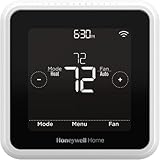
- High use of the scheduling feature of the T5 thermostat saved customers between 8 and 16% on heating and cooling bills. Dollar savings range based on nationwide average annual single-family detached home's heat and cooling bills; actual savings varies based on consumption.
- Save Energy and Get Rewarded. Check with your energy provider about available energy savings rebates to save on your purchase. Plus, eligible customers can enroll in their local Utility's "DEMAND RESPONSE PROGRAM" which can reward you for allowing the utility to slightly adjust your AC or furnace temperature settings when there is high energy demand.
- 7-Day Flexible Scheduling or Location Based Temperature Control. It’s your choice. 7-day scheduling programs your thermostat. Geofence technology helps make you comfortable by using your smartphone’s location to know when you’re away and when you return.
- Auto Home and Away Mode. Enjoy ideal temperatures at home, then save when away.
- ENERGY STAR certified. Help save energy, track your heating and cooling with monthly energy reports and get personalized tips on reducing energy use.
Use thermostat setbacks correctly
DOE states: “You can save as much as 10% a year on heating and cooling by simply turning your thermostat back 7°-10°F for 8 hours a day from its normal setting.” Apply the setback while occupants are asleep or the home is empty, then return to a safe, comfortable setting before people need the space.
- Use a schedule rather than relying on memory.
- Do not set a temperature that creates a health or freeze risk for occupants, pets or plumbing.
- For heat pumps, follow the equipment manufacturer’s guidance. Some systems lose efficiency or activate expensive auxiliary heat after a large setback; a smaller, steady adjustment may be better.
- Check whether your utility offers a demand-response thermostat program and read the temperature-control terms before enrolling.
The 10% figure is a potential annual heating-and-cooling saving, not a guarantee for every home. Weather, insulation, equipment condition and the starting thermostat setting all change the result.
Seal drafts and improve insulation
Air leakage makes every heating or cooling hour more expensive. Start with low-cost work you can inspect yourself:
- Caulk stationary cracks around window and door frames and where building materials meet.
- Install weatherstripping around movable doors and windows so the seal compresses when closed.
- Seal accessible duct leaks with materials intended for ductwork; do not cover ducts with ordinary cloth tape.
- Inspect attic and crawl-space insulation after correcting moisture, drainage and ventilation problems. Insulation installed over a wet or poorly ventilated area can conceal damage.
DOE’s 2013 guidance reports potential annual draft-reduction savings of 5% to 30%. The same guidance says that combining maintenance, equipment upgrades, insulation, air sealing and thermostat changes can cut heating and cooling use by 20% to 50%. Those are broad potential ranges, not promises; a professional assessment can identify the largest leakage paths and avoid unsafe combustion or ventilation changes.
What weatherization results look like
An Oak Ridge National Laboratory evaluation summarized by DOE in 2014 found about 12% average savings, or $223 annually, in one group of weatherized homes. That result describes that evaluation, its homes and its energy prices; it should not be applied as a guaranteed return for another property.
Rank #3

- PRIVACY PROTECTION*: Sensi won’t sell your personal information to third parties
- EASY DIY INSTALLATION: Use the built-in level and step-by-step app instructions for a quick installation. Works with HVAC equipment found in most homes. Common wire (c-wire) is not required in most applications
- SAVE ABOUT 23% ON HVAC ENERGY*: The ENERGY STAR-certified Sensi smart thermostat can help you save energy with features like flexible scheduling, remote access and usage reports
- SIMPLE CONFIGURATION: Looks and feels like a thermostat. Has buttons and fits the same space as a traditional thermostat so you don’t have to patch and paint your walls
- SMART MAINTENANCE: Sensi can help monitor the performance and efficiency of your HVAC system by delivering valuable usage reports, alerts about your equipment, and maintenance reminders like filter replacement
Consider an ENERGY STAR certified smart thermostat
ENERGY STAR’s 2025 consumer guidance says an ENERGY STAR certified smart thermostat can reduce heating and cooling bills by more than 8% and save about $50 per year on average. It cites approximately $100 in annual savings for a home that is unoccupied much of the day.
Those estimates assume the thermostat is installed correctly and actually changes the schedule. Before buying, check:
- Wiring: Confirm the existing terminals and whether a common wire or included adapter is required.
- System type: Verify compatibility with heat pumps, multi-stage equipment, radiant systems, or electric resistance heat.
- Internet and app requirements: Some functions depend on a home network or a vendor account.
- Demand-response terms: A utility program may adjust your setpoint during events. Know the event hours, override method, incentive and privacy terms.
- Rebates: Check the utility’s current list of qualifying models and the required receipt, installation date or preapproval.
Renters should obtain permission before replacing a thermostat and should keep the original control for move-out. A smart thermostat cannot compensate for an incompatible HVAC system or a poorly sealed building.
Reduce or shift secondary loads
After HVAC, look for equipment that can run at a different time or that operates unnecessarily.
Move flexible use into cheaper periods
On a TOU or dynamic plan, schedule the dishwasher, clothes washer and dryer, electric water heating, pool pump and EV charging during the utility’s lower-priced window. Use the appliance’s delayed-start feature or a properly rated timer. For an EV, set a charging limit and start time that finish before the next trip rather than charging immediately at the evening peak.
Outdated Drivers Are Slowing You Down
One free scan finds every outdated or missing driver and matches the right update for your exact hardware.Free scan · exact hardware matchWindows Errors? Fix Them Before They Spread
Repair common Windows errors and clear accumulated junk for a smoother, more stable PC - no reinstall needed.Free scan · no reinstallRank #4

- EASY DIY INSTALLATION: Do it yourself fast with a built-in level and simple step-by-step instructions. Works with the HVAC equipment found in most homes
- COMMON WIRE REQUIREMENTS: Common wire(C-Wire) required for heat pump and heat/cool only systems. C-wire not required on most systems
- SAVE ABOUT 23% ON HVAC ENERGY: ENERGY STAR-certified and packed with features that help you save money, including flexible scheduling, geofencing, remote access and usage reports
- PRIVACY PROTECTION: Sensi won’t sell your personal information to third parties or leverage your thermostat activity data for targeting or advertising purposes
- CONTROL FROM ANYWHERE: The top-rated mobile app for Android and iOS devices makes it easy to control your comfort from a smartphone or tablet
Water heating can be both an efficiency and a scheduling opportunity. A timer or utility-controlled water heater should preserve enough hot water for hygiene and household needs; do not disable safety controls or exceed the equipment’s installation instructions.
Find always-on and unusually large loads
A plug-in electricity monitor can show the draw of a refrigerator, dehumidifier, entertainment system, computer equipment or other plug-in device. Measure one device at a time for long enough to capture its normal cycle. Prioritize equipment with high wattage, long run times or a continuous standby draw.
- Replace frequently used incandescent or halogen lamps with efficient lighting.
- Enable sleep and power-management settings on computers, monitors and game systems.
- Unplug chargers and small appliances that draw power while idle, or place them on a switchable power strip.
- Clean refrigerator coils as directed by the manufacturer.
- Clean the dryer lint filter after every load and keep the exhaust path clear.
These measures may produce modest savings individually, but they cost little and can reduce the baseline that every future rate increase applies to.
Evaluate larger upgrades by lifecycle cost
Major projects can lower energy use for years, but the right choice depends on climate, fuel prices, equipment condition, installation quality and available incentives. Compare the purchase and installation cost, expected service life, maintenance, financing cost, remaining useful life of the existing equipment and the value of any rebate.
Do these 3 things before closing this tab:
1Fix the driver behind crashes, sound loss and screen glitches2Repair Windows errors before they cause bigger problems3Scan for outdated or missing drivers - takes under a minuteHeat-pump water heaters
ENERGY STAR’s 2025 flyer reports that an ENERGY STAR heat-pump water heater uses 70% less energy on average and can save a family of four $550 per year compared with a standard electric water heater. The $550 figure is for that household comparison, not a universal bill reduction.
Best Value
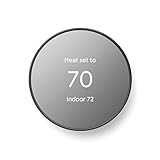
- ENERGY STAR certified smart thermostat for home that helps you save energy and stay comfortable.Connectivity : Wi-Fi - 802.11b/g/n 2.4 GHz, 802.11a/n 5 GHz Wi-Fi., Wireless interconnect : Bluetooth Low Energy Please refer to the product description section below for all applicable legal disclaimers.Product note: You can also check your system’s compatibility before purchasing a Nest thermostat with our online Nest Compatibility Checker on the Google Nest support page
- The Nest Thermostat is designed to work without a C wire in most homes, but for some systems, including heating only, cooling only, zone controlled, and heat pump systems, you’ll need a C wire or other compatible power accessory
- Nest Thermostat turns itself down when you leave, so you don’t waste energy heating or cooling an empty home. Lock feature: No
- Programmable thermostat that lets you create an energy efficient schedule in the Google Home app on your Android or iPhone
- Remote control lets family members change the thermostat temperature from anywhere on a phone, laptop, or tablet[1]
Confirm that the unit fits the available space and climate, has the required airflow and condensate management, and can be installed on the existing electrical circuit. Ask about noise, recovery time, maintenance and whether the electrical panel needs an upgrade. A contractor should size the tank for household demand and explain how vacation or high-demand modes work.
Heat pumps for space conditioning
A heat pump can replace or supplement electric resistance or combustion heating, but savings depend on the existing system, outdoor temperatures, electricity and fuel rates, and the home’s insulation. Obtain a load calculation rather than choosing a unit from square footage alone. Verify cold-weather performance, backup-heat controls, duct condition, refrigerant-service capability and local incentives.
Insulation and high-efficiency windows
Insulation and air sealing generally address heat flow and leakage more directly than replacing windows. Correct moisture and ventilation problems first, and ask for an assessment that identifies the attic, crawl space, ducts or wall areas with the largest losses. High-efficiency windows can help when existing units are damaged or very leaky, but their payback is site-specific and the installation quality matters as much as the label.
Compare the main options before spending
The table separates measured or reported figures from items that must be established for your home and tariff. Savings percentages are potential or average values from the named guidance, not guarantees.
| Action | Upfront cost | Reported energy or bill effect | Can shift use to cheap periods? | Payback | Comfort impact | Renter-friendly | Compatibility and maintenance | Rebates or demand response |
|---|---|---|---|---|---|---|---|---|
| Thermostat setback | No purchase required | Up to 10% annually on heating and cooling when set back 7°-10°F for eight hours a day (DOE, 2023) | No; it reduces runtime rather than moving a load | Immediate if the schedule works | Temperature changes require household acceptance | Usually yes, with permission for a programmed control | Follow heat-pump manufacturer guidance; no special maintenance | Utility programs vary |
| Caulking, weatherstripping and duct sealing | Material and labor amounts not stated in DOE guidance | Potential draft-related savings of 5%–30% per year (DOE, 2013) | No | Not stated in DOE guidance | Usually improves comfort by reducing drafts | Small removable measures often are; major work may require permission | Inspect seals; address moisture and ventilation before insulating | Weatherization and utility programs vary |
| ENERGY STAR certified smart thermostat | Purchase and installation prices not stated in ENERGY STAR guidance | More than 8% lower heating and cooling bills and about $50 per year on average; approximately $100 for a home unoccupied much of the day (ENERGY STAR, 2025) | Yes, when linked to a utility demand-response program | Not stated in ENERGY STAR guidance | Automated setbacks can reduce comfort during events | Only with owner approval and compatible equipment | Check wiring, HVAC type, internet and app requirements | Model eligibility and incentives vary by utility |
| Load scheduling | Often none when appliances have delayed start; equipment or timer costs not stated | kWh reduction not stated; savings come from lower-period prices | Yes | Depends on the tariff spread and schedule | Requires planning and may delay appliance use | Yes if the renter controls the appliance | Use rated timers and preserve safety settings | TOU and demand-response terms vary |
| Heat-pump water heater | Purchase and installation prices not stated in ENERGY STAR guidance | 70% less energy on average and $550 per year for a family of four versus a standard electric water heater (ENERGY STAR, 2025) | Limited; controls may allow scheduling | Not stated in ENERGY STAR guidance | Noise, recovery time and space requirements differ by model | Usually requires owner approval | Check space, airflow, condensate, circuit capacity and maintenance | Local rebates vary |
Use assistance when the bill is unaffordable
Do not wait for a shutoff notice before asking for help. The Low Income Home Energy Assistance Program (LIHEAP) can support qualifying households with energy bills, crisis assistance, weatherization and minor energy-related repairs. The Weatherization Assistance Program can fund efficiency work for eligible households, and utilities often run separate efficiency, appliance-rebate or demand-response programs.
Eligibility, funding, income limits, waitlists and rebate amounts vary by state, utility, household size and date. Use the official program information for your state and ask the utility for current terms. Keep recent bills, proof of income, identification, lease or ownership documents and equipment receipts available; each program sets its own documentation rules.
A practical order of operations
- Week 1: establish the baseline. Save 12 months of bills, record kWh and charge types, and note the tariff’s peak windows and fixed charges.
- Week 1: measure before buying. Use a plug-in monitor on suspicious loads and inspect thermostat schedules, filters, refrigerator coils, dryer airflow and visible drafts.
- Week 2: make no-cost changes. Set a safe HVAC schedule, enable power management, turn off unnecessary standby loads and move existing appliance schedules into verified off-peak periods.
- Week 2 or 3: seal obvious leaks. Weatherstrip movable doors and windows, caulk stationary cracks and arrange duct or insulation work after moisture and ventilation checks.
- Week 3: model a new tariff. Use your interval data and real schedule to compare TOU or dynamic pricing, including every fixed, delivery, demand and tax charge.
- Week 4: check programs. Ask about smart-thermostat rebates, weatherization, appliance incentives, demand-response payments and LIHEAP or other assistance.
- Before a major purchase: Obtain an equipment-specific estimate, verify compatibility and panel capacity, and calculate the lifecycle cost using your actual rates rather than a national average.
Common mistakes that erase savings
- Counting fixed charges as efficiency savings: A lower kWh total does not remove a fixed customer charge.
- Switching plans from the headline rate alone: Include delivery, supply, demand, taxes, seasonal peak windows and minimum terms.
- Creating a new demand peak: Running several large appliances simultaneously can increase a demand charge even when total monthly kWh falls.
- Using a large heat-pump setback without checking the manual: Auxiliary heat can run and cost more than expected.
- Installing a thermostat without checking compatibility: Wiring, heat-pump controls, multi-stage equipment and internet requirements can prevent proper operation.
- Insulating before solving moisture or ventilation problems: This can conceal damage or create indoor-air-quality risks.
- Assuming a published percentage is your personal return: DOE and ENERGY STAR figures are averages or potential ranges tied to particular guidance, homes and conditions.
- Missing program deadlines: Rebates may require preapproval, a qualifying model, an approved contractor or an installation date within a specified period.
When a rate increase still leaves the bill high
If your usage falls but the bill does not, compare the current and previous tariff line by line. A supply-rate increase, delivery adjustment, demand charge, tax change or higher fixed charge may be responsible. If kWh rises unexpectedly, check weather, occupancy, HVAC runtime, water-heater operation and any new appliance. Ask the utility for a meter test or billing review when the pattern does not match your household’s use.
Keep a monthly record of kWh, peak demand if shown, average indoor setpoint and major schedule changes. That record distinguishes a successful efficiency measure from a temporary effect caused by mild weather or a shorter billing period.
Quick Recap
Product prices and availability are accurate as of the date/time indicated and are subject to change. Any price and availability information displayed on Amazon at the time of purchase will apply.




