
Some links on this page are affiliate links: if you buy through them we may earn a commission, at no extra cost to you.
Do not assume an unfamiliar merchant name is fraud—but do not ignore it. Open the transaction in your card issuer’s official app or website, capture the full descriptor and transaction details, compare it with purchases, subscriptions, authorized users, and payment platforms, and contact the issuer immediately if nobody authorized it.
This guide is for U.S. consumer credit cards. Debit cards, business cards, and some charge accounts follow different error-resolution rules and deadlines.
As an Amazon Associate I earn from qualifying purchases.
First decide: unfamiliar, unauthorized, or a billing error?
These descriptions matter because they lead to different next steps:
- Unfamiliar: You do not immediately recognize the merchant name, amount, date, or location. The charge may still be legitimate.
- Unauthorized: Neither you nor anyone with actual, implied, or apparent authority made or approved the transaction. This is the category to report as suspected fraud.
- Billing error: You recognize the merchant or transaction but dispute the amount, a duplicate charge, a canceled service, a missing credit, non-delivery, or another billing detail.
A spouse, child, employee, joint account holder, or authorized user may have made a purchase you did not personally make. Depending on the account agreement and the circumstances, the issuer may treat that transaction as authorized. Federal law defines unauthorized use in terms of a person acting without actual, implied, or apparent authority and without providing a benefit to the cardholder. See the definition in 15 U.S.C. § 1602.
Popular on Amazon

- 1:[Security Value set]: Ultimate premium identity theft protection sleeve set, made of aluminum foil waterproof materia, protect women,men’s credit cards,debit cards from electronic theft, fit into wallets and travel wallets. includes 12 rfid credit cards protectors in bright colors and 4 rfid passport protectors.
- 2:【Multi-Color, Lightweight Design】:Slim profile design fits easily into your wallet or purse without taking up extra space. these tiny slim RFID blocking sleeves ensures you will never be a victim of high-tech crime.Multiple colors, match your credit card with different color protectors, easy and quick to find the card you want.
- 3:【Safe and Durable】:Made from special RFID Aluminum foil material,High quality aluminum foil material can effectively shield electronic device scanning. Can effectively prevent card degaussing and theft brush, Rfid blocking sleeves envelopes for credit cards protect against scanning of digital and electronic chips by thieves to provide superior travel security.
- 4:【Suitable Size and Wide applicability】:credit card sleeves rfid blocking size : 91mm high / 3.58in, wide 63mm/ 2.48in, Passport Protector Size: 135mm high / 5.3in, wide 10.5mm/ 4.1in.Perfect fit credit cards, bank cards and passports with easy insertion.The ultra-thin design also fits perfectly into most women's and men's wallets. Bring safety and convenience to your life and travel.
- 5:【Perfect service】: Thank you very much for purchasing our products, To provide customers with satisfactory products and services is our eternal pursuit, at any time if you have any questions, please feel free to contact us, we are very happy to help you, and we will provide you with satisfactory service in 24 hours
If you recognize the merchant but the charge is wrong, start by preserving your evidence and, when appropriate, asking the merchant for a correction or refund. If you truly did not authorize the transaction—or several suspicious charges appear—contact the card issuer first rather than delaying while you investigate.
Step 1: Open the full transaction details
Use the issuer’s official mobile app or type the issuer’s known website address manually. Do not click an unexpected fraud-alert link in a text or email, and do not give your card number, CVV, password, Social Security number, or online-banking credentials to a charge-lookup website or an unverified caller.
Recommended Free Tools
Look under labels such as Recent transactions, Pending, Posted, Activity, Transaction details, Recurring payments, Card controls, or Dispute a transaction. Labels and available information vary by issuer, card network, account type, transaction channel, and whether the charge is pending or posted.
Record or screenshot as much of the following as the issuer displays:
- Exact statement descriptor, including abbreviations, asterisks, phone numbers, and location codes
- Amount and currency
- Transaction date and posting date
- Whether the entry is pending or posted
- Merchant city, state, country, and phone number
- Whether it was online, in person, by phone, or made through a digital-wallet token
- Whether it is marked recurring or card-not-present
- Any authorized-user name or “also known as” information
- Claim, dispute, or transaction reference numbers
An issuer’s app may expose more detail than a monthly statement. For example, Chase says transaction details may include a merchant name, telephone number, and prior activity with that merchant; its app also provides a transaction-reporting workflow. That does not mean every issuer provides the same fields. See Chase’s dispute guidance and Chase’s transaction-reporting instructions.
Also check the PDF or paper statement. It can show the exact descriptor used for the billing-error deadline, along with the issuer’s billing-dispute or billing-inquiries address. That address may be different from the address where you send payments.
Quick wins for a faster PC:
Clear out junk files and repair common Windows errorsFree Scan →Fix the driver behind crashes, sound loss and screen glitchesFind Drivers →Repair Windows errors before they cause bigger problemsFix Now →Step 2: Read the statement descriptor correctly
The name on a credit-card statement is a payment descriptor, not necessarily the storefront name you remember. It may identify:
- The store or consumer-facing brand
- A legal entity, parent company, franchisee, or local operator
- A payment processor or payment facilitator
- A marketplace and, sometimes, its seller
- A subscription billing entity
- A shortened or truncated merchant name
- A merchant name followed by a city, state, country, phone number, or location code
- Apple, Google, Amazon Pay, PayPal, or another platform rather than the ultimate seller
Visa’s Merchant Data Standards Manual requires recognizable merchant information but also contemplates payment-facilitator and sponsored-merchant arrangements. Stripe explains that a descriptor may be shortened, dynamic, or based on a merchant’s “doing business as” name, URL, or legal entity. See Stripe’s statement-descriptor documentation.
A reliable descriptor lookup method
- Copy the descriptor exactly. Keep punctuation, numbers, abbreviations, and asterisks.
- Search it in quotation marks. Search the exact text first, then add the city, phone number, state, or country.
- Test likely relationships. Search a possible parent company, processor, marketplace, or subscription service.
- Match the amount and date. A name match alone is weak evidence; a matching receipt, amount, date, and location is much stronger.
- Confirm through an official record. Check the merchant’s order history, receipt, subscription page, or verified support channel.
- Treat lookup databases as clues only. Services such as WhoBilled.Me and ChargeDetective may identify a likely billing label, but they cannot confirm who used your card and do not replace the issuer’s investigation.
Never enter complete card credentials into a site that promises to identify a charge. The safest confirmation usually comes from your issuer, a receipt, or the account that made the purchase.
Step 3: Check whether the charge is pending or posted
A pending charge is generally an authorization hold, not the final settled transaction. It can reduce your available credit temporarily, change amount, or disappear. A posted charge has normally settled and is the entry that issuers typically use for a formal credit-card dispute.
Free tools Windows power users keep installed
One-click scans. No signup required.
Pending holds are common with:
- Restaurants, where a tip may be added later
- Hotels and rental cars, which may authorize an estimated or incidental amount
- Gas stations, which may place a temporary hold
- Online orders, including orders that later fail or are canceled
- Small verification authorizations, sometimes around $1
One pending entry and one posted entry can look like duplicate charges even though they represent one transaction at different stages. A canceled order may also leave an authorization temporarily visible.
Also popular on Amazon

- Advanced RFID secure sleeve designed to protect credit cards, money cards, identification cards from electronic fraud or theft; RFID shields are a superb debit card protector, RFID blocking to provide superior travel security.
- Made from special RFID blocking material, this credit cards holder is thin and lightweight. certified secure sleeves for credit cards protect against scanning of digital and electronic chips by thieves, tear- and water-resistant
- RFID sleeve with electronic armor is the identity theft protection for your bank cards. this credit card and ID holder prevents electronic access to your cards. valuable credit card protection, an ID card protector. RFID to block scanning and skimming
- Credit card protection sleeve designed with color coding system to find each card easily and quickly. RFID credit card holder have different colors for superior convenience. the special high quality rigid aluminum foil coating of these tiny slim RFID blocking wallets ensures you will never be a victim of high-tech crime
- Includes 12x RFID credit card protector sleeves for ultimate fraud prevention and travel safety
Issuer timing is not universal. Chase says credit-card pending charges generally post within one to three business days. Capital One says transactions usually post within 72 hours but may take up to five days. These are issuer-specific estimates, not a guaranteed deadline for every transaction.
Do not wait for a suspicious transaction to post before notifying the issuer. Some issuers require posting before accepting a formal credit-card dispute, but suspected fraud should still be reported immediately so the issuer can advise you, monitor the account, or block further attempts. Capital One specifically advises reporting suspected fraud even while a transaction is pending. See Chase’s pending-transaction explanation and Capital One’s pending-transaction guidance.
Step 4: Check the common legitimate explanations
Before labeling an unfamiliar name as fraud, reconcile the transaction against:
- Authorized users, household members, family-sharing accounts, and shared devices
- Receipts, emails, text confirmations, and shopping histories
- Free trials that converted to paid subscriptions
- Annual renewals that are not billed monthly
- Delayed merchant posting after the purchase date
- Marketplace orders billed under the marketplace name
- Restaurants, hotels, gas stations, and rental-car holds or adjustments
- Small verification charges
- Stored-card accounts and recurring payments you forgot to cancel
- Business or employee purchases if the card is used for work
Also inspect payment platforms and app stores. A platform descriptor identifies the billing channel, not necessarily the person who made the purchase.
Apple charges
For an entry such as apple.com/bill or itunes.com/bill, go to reportaproblem.apple.com, sign in with each relevant Apple Account, and review the purchase history. Search by the exact amount if the item is not obvious. Check App Store subscriptions, email receipts, and Family Sharing members. Apple explains that apps, subscriptions, music, movies, and other Apple services may be grouped into one bill; see Apple’s purchase-history instructions and its Apple.com/bill charge guidance.
If another person may have accessed the Apple Account, change its password and enable multifactor authentication. If the Apple history does not explain the transaction, contact the card issuer as well.
Google and Google Play charges
Google says Google Play descriptors generally begin with GOOGLE* and may include the app developer, app name, or content type. Check Google Payments subscriptions and services, Google Play purchase history, family members, and subscriptions. Use Google’s unauthorized-charge instructions and Google Play’s charge-reporting page.
What’s actually slowing this PC down?
Pick the symptom - the matching free tool is one click away.
If the descriptor does not use the expected Google format or the purchase is absent from your Google accounts, do not assume Google is responsible. Contact the card issuer. Google states that its own support process generally accepts unauthorized-transaction claims for credit-card, debit-card, or PayPal transactions within 120 days; that is a Google support window and does not replace the issuer’s billing-error deadline.
Amazon Pay charges
An Amazon Pay transaction may involve a purchase made on another merchant’s website. Sign in to Amazon Pay, open Check your Amazon Pay orders, select the Activity tab, and open Details & Support. Amazon Pay activity is separate from the normal order history on Amazon’s retail website. See Amazon Pay’s unauthorized-charge guidance and instructions for viewing Amazon Pay transactions.
If the activity does not explain the charge, use Amazon Pay’s support or claim process when appropriate and notify the card issuer. Do not provide sensitive information to someone who contacts you claiming to be Amazon support.
Also popular on Amazon
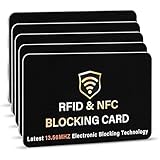
- SECURE YOUR WALLET FROM e-PICKPOCKETING: Prevent potential identity and financial theft through your contactless cards. This is the simplest and most effective prevention solution! Block RFID and NFC signals, protect your personal information, and enjoy peace of mind wherever your travels or business take you.
- JAMMING CHIP: An antenna and jamming chip makes up the main components of the card. The antenna will sense incoming radio waves and draw power for the chip to create a jamming signal. Lifetime usage as the card does not require battery.
- BROAD WORKING DISTANCE: With a 2.4” working distance, your entire wallet stays protected. The premium RFID blocking card helps secure cards within 1.2” on either side, providing reliable protection against electronic pickpocketing.
- ULTRA-THIN & COMPACT: At the size of a standard credit card and at only 0.03” thick, the card will fit into any wallet, purse or card case. Keep your wallet compact with no added bulk from this card. Best for travel, business, and everyday use.
- TEST THE CARD: Test the card is working at your local supermarket. At the self-service checkout machines, combine the card and a contactless card on the payment reader. Payment with the contactless card will be blocked and an error message should occur on the reader.
Other platforms to inspect
Check PayPal activity and automatic payments; Venmo or Cash App activity; Microsoft and Xbox purchase history; PlayStation, Nintendo, Steam, and other gaming accounts; and accounts for Uber, Lyft, DoorDash, Instacart, Airbnb, airlines, hotels, and subscription-management services. Review the merchant’s own Orders, Billing, or Payment methods page.
Do these 3 things before closing this tab:
1Repair Windows errors before they cause bigger problems2Fix the driver behind crashes, sound loss and screen glitches3Clear out junk files and repair common Windows errorsA platform may show only its own transaction record and may not reveal the ultimate merchant. If no account history matches, the card issuer remains the authoritative channel for investigating and disputing the card transaction.
When to contact the merchant—and when to contact the issuer first
| Situation | Best first step | Why |
|---|---|---|
| Recognizable merchant, wrong amount, duplicate charge, missing refund, canceled order, or non-delivery | Contact the merchant, then dispute with the issuer if necessary | The merchant may correct an ordinary billing mistake or issue a refund faster. |
| Truly unauthorized charge or several suspicious charges | Contact the card issuer immediately | The account or card number may be compromised, and further attempts may follow. |
| Merchant cannot be identified | Use the issuer’s official number or app | The issuer can access payment-network information and open the appropriate claim. |
| Merchant contact information came from a suspicious message | Do not call the number in the message; contact the issuer using the number on the card | Fraudsters may impersonate merchants or banks to collect credentials. |
For a suspected unauthorized charge, call the number on the back of the card or use the issuer’s official app. The issuer may be able to lock the card, replace the account number, and tell you whether the transaction was card-present, card-not-present, recurring, or associated with a digital-wallet token.
A useful question to ask the issuer
You can say:
"I’m trying to identify a transaction on my credit-card account. Please tell me the complete merchant descriptor and any available merchant phone number, location, transaction date, posting date, transaction channel, and whether it was recurring, card-not-present, or associated with a digital-wallet token. I did not authorize it unless you identify an authorized user or matching transaction."
The issuer may not disclose every underlying detail, such as a shipping address or IP address. It may investigate by comparing the transaction with your other purchases, reviewing delivery information, comparing signatures where relevant, or requesting documents and statements. The Office of the Comptroller of the Currency describes these investigation steps.
The Tool Desk
Outbyte Driver Updater FREEFix the driver behind crashes, sound loss and screen glitchesFind Drivers →Outbyte PC Repair FREERepair Windows errors before they cause bigger problemsFix Now →How to formally dispute a posted charge
For a posted U.S. consumer-credit-card charge, take these steps:
- Preserve the record. Save a screenshot or PDF and write down the descriptor, amount, transaction date, posting date, card ending, and status.
- Classify the problem accurately. Tell the issuer whether it is unauthorized fraud, a recognized merchant with an incorrect charge, or a product or service dispute.
- Report it promptly. Call the issuer or use its official app. Ask whether the card should be locked, canceled, or replaced.
- Get a claim number. Ask when the issuer expects to respond and whether it wants additional documents.
- Send written notice. Address it to the issuer’s billing-dispute or billing-inquiries address—not automatically the payment address.
- Include the essential facts. Provide your name, address, account number, transaction date, amount, descriptor, and a clear explanation of the error.
- Send copies, not originals. Include receipts, cancellation confirmations, correspondence, return records, or other evidence that supports your position.
- Keep delivery proof. Save a copy of the letter and evidence that the issuer received it.
- Pay undisputed amounts on time. Do not stop paying the entire bill while one transaction is under review.
- Monitor the account. Watch for additional attempts, replacement-card activity, recurring charges, and the eventual credit or written determination.
The Consumer Financial Protection Bureau and the Federal Trade Commission advise consumers to notify the issuer promptly. The CFPB also emphasizes that a written billing-error notice is important even if you already called or submitted an online claim.
Sample written notice
I am disputing an unauthorized credit-card transaction under the Fair Credit Billing Act. The charge first appeared on my statement dated [date]. The statement descriptor is [descriptor], the transaction date is [date], and the amount is [$amount]. I did not make or authorize this transaction, and no authorized user made it. Please investigate, remove the charge and related finance charges if the investigation confirms an error, and send me the result in writing.Use the issuer’s required address and keep proof of delivery. IdentityTheft.gov provides a sample credit-card dispute letter.
Know the U.S. deadlines and liability rules
For qualifying billing errors on a U.S. consumer credit card, the Fair Credit Billing Act generally requires written notice within 60 calendar days after the first periodic statement showing the error was transmitted. The issuer generally must acknowledge the notice within 30 days and resolve the billing error within two complete billing cycles, but no later than 90 days. See CFPB guidance and 12 C.F.R. § 1026.13.
If you did not receive a statement, or it was sent to the wrong address after you properly notified the issuer of an address change, special timing rules may apply. Contact the issuer immediately rather than assuming the deadline has passed.
Also popular on Amazon

- SECURE and SAFE - Protect your credit cards, debit cards, ATM cards, transit cards, and driver's licenses from unauthorized RFID scans and financial fraud.
- EASY TO FIND THE RIGHT CARD - 8 different designs, e.g. using the mountain sleeve to protect your credit card, the jelly fish sleeve to guard your debit card, and the flower sleeve to carry your driver's license, etc.
- PREMIUM QUALITY - It is made of high-quality, durable, and water-resistant paper, with a slim fit design that easily slides into handbags and wallets.
- VIVID COLORS - Colorful pictures brighten up your day! It seems to bring you back to the garden, to the gallery. It's uplifting and stress-relieving to look at.
- EASY TO TEST IF IT WORKS OR NOT - Put the credit card inside the RFID blocking sleeve to see if the PayPass terminal can detect it or not.
Federal law generally limits liability for unauthorized use of a lost or stolen physical credit card to $50, subject to statutory conditions. If only the account number was used and the physical card was not lost or stolen, federal guidance generally provides no liability for the unauthorized charge. Many issuers also offer broader zero-liability protection under their agreements. Prompt reporting remains essential. See 15 U.S.C. § 1643, the FTC’s lost and stolen card guidance, and the CFPB’s guidance on hacked card data.
These credit-card protections should not be casually applied to debit cards. Debit-card error-resolution rules, reporting deadlines, and potential liability are different.
What to pay while the dispute is pending
Do not stop paying the entire balance. While a qualifying billing-error investigation is pending, you generally may withhold the disputed amount and related charges, but you must continue paying unrelated purchases and other required undisputed amounts by the normal due date.
The disputed entry may remain visible on a statement while the issuer investigates, and the issuer may continue reserving that amount against your available credit. The issuer does not necessarily have to provide an immediate refund or restore available credit while reviewing the claim, although its policy may provide provisional credit.
If the issuer determines that the charge was valid, it must explain why, state what is owed, and provide a payment deadline. Follow those written instructions to avoid avoidable interest, fees, or delinquency. See the CFPB’s explanation of payments during a billing-error investigation.
Independent reader supportYour contribution helps us test, update, and keep practical guides available for everyone.Should you replace the card?
Replacement is often appropriate when the card or account number may be compromised, especially when there are multiple suspicious charges or small charges that could be testing activity. Ask the issuer whether the replacement involves a new account number, expiration date, and security code, and whether the existing card should be permanently closed rather than merely locked.
Replacement does not automatically cancel every subscription or recurring payment. Take these steps:
Outdated Drivers Are Slowing You Down
One free scan finds every outdated or missing driver and matches the right update for your exact hardware.Free scan · exact hardware matchWindows Errors? Fix Them Before They Spread
Repair common Windows errors and clear accumulated junk for a smoother, more stable PC - no reinstall needed.Free scan · no reinstall- Review the issuer’s recurring-payment or card-on-file list.
- Cancel unwanted subscriptions directly with the merchant and save confirmation.
- Update legitimate automatic payments with the new credentials.
- Ask whether the issuer participates in a card-account updater service.
- Continue monitoring the account after the replacement arrives.
Visa Account Updater and Mastercard Automatic Billing Updater can provide updated card credentials to participating card-on-file merchants. As a result, a new physical card may not stop every recurring transaction. See Visa Account Updater, Mastercard Automatic Billing Updater, and Capital One’s recurring-transaction guidance.
If the issuer denies your claim
A denial is not necessarily the end of the process. Read the written explanation and ask the issuer for the documentary evidence supporting its decision. Ask how it classified the transaction—for example, as authorized, recurring, card-present, card-not-present, wallet-token, or a merchant dispute.
Appeal in writing within the issuer’s stated deadline and provide relevant evidence, such as:
Also popular on Amazon

- ADVANCED RFID BLOCKING PROTECTION Protect your credit cards, debit cards, and RFID-enabled IDs from unauthorized scanning and electronic theft. Engineered with shielding technology to block common RFID frequencies used in contactless cards for everyday security.
- MADE IN USA – TRUSTED QUALITY & SECURITY Proudly made in the USA with high-quality materials for reliable performance. Designed to meet strict government standards, including FIPS 201 requirements for RFID protection you can trust.
- SLIM WALLET-FRIENDLY DESIGN Ultra-thin sleeves fit easily into any wallet, purse, or travel organizer without added bulk. Perfect for daily use, travel, commuting, and business environments.
- DURABLE, TEAR & WATER RESISTANT Offering long-lasting durability, resistance to tearing, and protection against moisture while keeping your cards safe.
- CONVENIENT 16 PACK FOR FULL COVERAGE Includes 16 individual RFID blocking sleeves so you can protect multiple cards at once or share with family. Ideal for credit cards, IDs, hotel keys, transit cards, and more.
- Proof that you did not make the purchase or were elsewhere, when relevant
- Evidence that the merchant name does not match any account or order you hold
- Subscription-cancellation records
- Return confirmations or proof that goods were never delivered
- Evidence of duplicate billing or an unissued refund
- Statements from authorized users denying the purchase
- Correspondence with the merchant or platform
Continue paying undisputed amounts throughout the appeal. If the issuer has not followed the dispute process or has not resolved the issue after you tried to work with it, submit a complaint through the CFPB’s credit-card complaint channel. The CFPB accepts complaints involving unresolved credit-card billing disputes and charges made without permission.
When a credit freeze or fraud alert makes sense
One unauthorized charge on an existing card does not automatically mean someone opened credit in your name. A card replacement addresses the compromised payment account. A credit freeze blocks prospective creditors from accessing your credit file; it does not stop charges on an existing card.
Consider broader identity-theft steps when personal information may have been exposed, you see unfamiliar accounts or credit inquiries, or the fraud extends beyond one card:
- Review all three credit reports for unfamiliar accounts and inquiries.
- Place a free freeze with Equifax, Experian, and TransUnion if you suspect broader identity theft.
- Place an initial fraud alert by contacting only one credit bureau; that bureau must notify the other two.
- Use IdentityTheft.gov for an FTC identity-theft report and recovery plan if someone used your personal information.
- Change passwords and enable multifactor authentication if an email, Apple, Google, Amazon, PayPal, or other account may have been compromised.
The FTC explains the difference between credit freezes and fraud alerts. A freeze is useful for preventing new-account fraud, but it is not a substitute for reporting the existing card charge.
Quick decision tree
- Is the charge only pending?
- If it is a plausible hotel, restaurant, gas, rental, or canceled-order hold, monitor it and compare the final posted amount.
- If it clearly appears fraudulent, contact the issuer immediately even if a formal dispute must wait until posting.
- Does the exact amount and date match a purchase, subscription, family member, or authorized user?
- If yes, it is probably unfamiliar rather than unauthorized. Confirm the descriptor and resolve any merchant error.
- If no, continue investigating payment platforms and the merchant descriptor.
- Is the merchant recognizable but the transaction wrong?
- Contact the merchant for a refund or correction, preserve evidence, and dispute with the issuer if necessary.
- Does nobody recognize it, or are there several suspicious charges?
- Lock the card if available, contact the issuer using an official channel, and ask about replacement and a fraud claim.
- Has the charge posted?
- Send written billing-error notice to the correct address within the applicable deadline, generally 60 days after the statement showing the error was transmitted.
- Does the issuer deny the claim?
- Request evidence, appeal in writing, keep paying undisputed amounts, and complain to the CFPB if the issuer mishandled the process.
Save-this checklist
- Open the issuer’s official app or website manually.
- Capture the exact descriptor, amount, transaction date, posting date, status, location, phone, channel, and authorized-user information.
- Check household members, authorized users, receipts, email, subscriptions, and shared accounts.
- Review Apple, Google, Amazon Pay, PayPal, app-store, gaming, travel, and delivery histories.
- Search the exact descriptor online as a clue, never as proof.
- Report suspected fraud immediately; do not wait for a pending charge to post.
- Ask the issuer about locking or replacing the card, recurring payments, and account-updater services.
- For a posted consumer-credit-card billing error, send written notice to the billing-dispute address.
- Keep copies and proof of delivery.
- Pay every undisputed amount by the due date.
- Monitor the account and statements until the issue is resolved.
- Check credit reports and consider a freeze or fraud alert only if broader identity theft is suspected.
Frequently Asked Questions
Can I dispute a pending credit-card charge?
Some issuers require a transaction to post before accepting a formal credit-card dispute, but you should report a clearly unauthorized pending charge immediately. The issuer can advise whether to lock or replace the card and how to proceed if the transaction posts.
What’s actually slowing this PC down?
Pick the symptom - the matching free tool is one click away.
Should I call the merchant or my credit-card issuer first?
Call the merchant first for a recognized charge involving a wrong amount, duplicate billing, a missing refund, cancellation, or non-delivery. Contact the issuer first when the charge is genuinely unauthorized, several charges are suspicious, the merchant cannot be identified, or the merchant’s contact information may be fraudulent.
Will replacing my card stop an unwanted subscription?
Not necessarily. Participating card-on-file merchants may receive updated credentials through Visa Account Updater or Mastercard Automatic Billing Updater. Cancel the subscription directly, review recurring payments, update legitimate bills, and continue monitoring after replacement.
Do I need a credit freeze for one unauthorized card charge?
Not automatically. A freeze helps prevent new accounts from being opened using your identity; it does not stop charges on an existing card. Consider freezing your credit and filing an identity-theft report if you also see unfamiliar accounts, inquiries, or evidence that personal information was used.
The Bottom Line
An unfamiliar descriptor is a clue, not proof of fraud. Verify the full transaction details and check authorized users, subscriptions, digital wallets, and platform histories—but report a charge that nobody authorized immediately through the issuer’s official channel. For a posted U.S. consumer-credit-card billing error, preserve the generally applicable 60-day written-notice deadline, send the notice to the correct billing-dispute address, and keep paying the rest of the bill on time.




