
Recommended Free Tools
The cleanest audit trail for a farm or other agricultural business has four linked parts: document each sale when it happens, record that sale in your books, document the deposit of the money, and reconcile the deposit back to the underlying sales records. A bank deposit proves that funds moved into the business account; it does not, by itself, identify which buyers, products, dates, or prices produced the deposit.
The IRS generally lets a business choose a recordkeeping system that fits its operations. The system must clearly show income and expenses, support the amounts reported on tax returns, and preserve the source documents needed to explain those amounts. The practical system below works with a paper receipt book, a spreadsheet, or bookkeeping software.
As an Amazon Associate I earn from qualifying purchases.
What a complete cash-sales trail must show
For every deposit that contains sales proceeds, you should be able to move in both directions:
The Tool Desk
Outbyte PC Repair FREEClear out junk files and repair common Windows errorsFree Scan →Outbyte Driver Updater FREEFix the driver behind crashes, sound loss and screen glitchesFind Drivers →- From an individual sale or sales batch to the amount recorded in the books and the deposit that contains the money.
- From a bank deposit to the receipts, sales log entries, payment settlements, or other source records that make up the deposited amount.
These are related but different records. A customer receipt or point-of-sale entry explains the economic event: who bought what, when, and for how much. A deposit slip and bank statement explain the movement of money from the business’s custody to its bank account. Keeping only one side leaves an explanation gap.
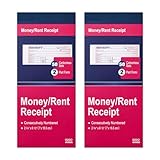
#1 Best Overall

- Long-lasting utility: 100 sheets per book, offering a total of 400 sets for extended use, Size 7-5/8" x 11".
- Two-Part Carbonless Copy: Achieve clean and legible copies for your records with the carbonless copy paper, making organization a breeze.
- Spiral Bound Design: Convenient and user-friendly, the spiral binding allows for easy flipping and writing, ensuring a seamless record-keeping experience.
- Ample Space: Each page accommodates 4 receipts, providing plenty of room to note down detailed information for each transaction.
- Professional-Grade: Ideal for landlords, businesses, and individuals, this receipt book is a reliable and professional tool for tracking financial transactions accurately.
Publication 225, the IRS Farmer’s Tax Guide, states that, except in a few cases, the law does not require any specific kind of records. It also says, “You can choose any recordkeeping system suited to your farming business that clearly shows, for example, your income and expenses.” The format is your choice; clarity, completeness, and traceability are not.
Document the sale when it occurs
Capture the core fields
Use a sequential receipt number or transaction reference so the original sale can be found later. For each cash, check, card, or other sale, record at least:
| Field | What to record | Why it matters |
|---|---|---|
| Date of sale | The date the buyer received the products or the sale otherwise occurred | Establishes when the transaction belongs in the sales log and, for cash-method taxpayers, helps evaluate when income was received |
| Receipt or transaction number | A sequential number or unique reference | Links the sale to a customer copy, book entry, and deposit batch |
| Buyer | Customer name, business name, or a useful market-sale identifier | Identifies the payer, especially when a large cash payment may involve related transactions |
| Products and quantities | For example, 20 boxes of tomatoes, 4 hay bales, or 150 pounds of grain | Explains what generated the revenue and supports inventory or production records where applicable |
| Price and gross amount | Unit price, quantity, subtotal, discounts, taxes collected if applicable, and total charged | Shows how the amount was calculated and separates sales proceeds from amounts collected for another purpose |
| Payment channel | Currency, check, debit card, credit card, electronic transfer, or another method | Lets you match the sale to cash on hand, a card settlement, or a bank transaction |
| Supporting reference | Invoice number, market ticket, delivery record, contract, scale ticket, or card batch number when relevant | Provides additional evidence for non-routine or higher-value sales |
These fields are a practical control, not a universally mandated IRS form. Give the buyer a copy when appropriate and keep the business copy or an electronic image. If a sale is anonymous at a farmers market, use a daily sales sheet and document the market, date, product categories, payment totals, and the person responsible for counting the money.
Do these 3 things before closing this tab:
1Fix the driver behind crashes, sound loss and screen glitches2Clear out junk files and repair common Windows errors3Scan for outdated or missing drivers - takes under a minuteSeparate payment types at the point of sale
Do not treat every amount that will eventually reach the bank as physical cash. Keep separate totals for currency and coins, checks, card receipts, electronic transfers, and amounts owed on account. A single sales total can still be posted to income, but the payment detail is what allows you to explain why a deposit does not equal the day’s gross sales.
Handle refunds and corrections openly
If you cancel a sale, issue a refund, void a receipt, or correct a quantity, retain the original reference and document the adjustment rather than deleting the original entry. A short note identifying the date, amount, reason, and approving person is usually more useful than an unexplained change in the sales log.
Record the sale in the books
Post income once
Enter the sale in the appropriate farm-income account when the business recognizes it under its accounting method. When the sales records are detailed, you can post each transaction. When volume is high, you can post a daily or batch total, provided the original receipts or sales sheets remain available and the batch total can be traced back to them.
For a cash-method taxpayer, the 2025 Schedule F instructions generally treat income as reported in the year it is actually or constructively received. Cash, checks, and debit or credit card payments are common forms of business income. The exact reporting path can change with the entity type, accounting method, product, and transaction terms, so do not assume that every agricultural business uses the same return or timing rule.
What’s actually slowing this PC down?
Pick the symptom - the matching free tool is one click away.
Rank #2

- FOR LANDLORDS and MORE: Adams Money/Rent Receipt books let you offer receipts for rent payments, in-home day care, craft fair sales and other cash transactions
- 200 TWO-PART CARBONLESS RECEIPTS: Get 4 perforated customer receipts per page; the yellow copy stays behind in your book
- SPIRAL-BOUND EFFICIENCY: A neat spiral keeps your duplicates in numerical order for a permanent record of transactions
- CONSECUTIVELY NUMBERED: Large 6-digit numbers in the upper right hand corner help you thumb through orders quickly, Consecutively numbered makes tracking easy
- 200 SETS PER BOOK: Stock up so you never run out; books provide 200 sequentially numbered carbonless sets
Use a batch-control entry when appropriate
A batch-control line can make a busy farm operation manageable without sacrificing detail. For example, a market-day summary might show:
| Batch reference | Date | Currency | Checks | Card receipts | Gross sales |
|---|---|---|---|---|---|
| FM-2026-041 | October 18, 2026 | $420.00 | $185.00 | $635.00 | $1,240.00 |
The supporting sheet should list the individual receipts or the point-of-sale report behind the $1,240 total. If a card processor later deposits $615 after a $20 processing fee, record the gross card sale and the fee separately when your accounting method and chart of accounts require that treatment; do not silently reduce sales to the net bank deposit.
Keep non-sales money out of sales income
Owner contributions, loans, proceeds from selling equipment, insurance payments, and transfers between the farm’s own accounts can appear in the bank feed beside customer receipts. Identify them separately and retain the related documents. Recording every deposit as sales can overstate farm income and make a later reconciliation impossible.
Prepare a deposit record that points back to the sales
List what is included
Before taking money to the bank, create a deposit record showing the deposit date, total amount, account, and the receipt numbers, batch references, or payment settlements included. For a mixed deposit, preserve the components:
- Currency counted and sealed for deposit.
- Each check, or a check listing that identifies payer and amount.
- Card or electronic-settlement reports, including gross amount, fees, and net amount where applicable.
- Any prior-day cash included because it was held temporarily.
Retain the bank’s deposit slip, validated deposit receipt, image of the night-drop or electronic confirmation, and the corresponding bank statement. Publication 583, Starting a Business and Keeping Records (December 2024), lists receipt books and deposit slips as examples of business records.
Do not force the deposit date to equal the sale date
A farm may collect money at a weekend market and deposit it on Monday, or hold a small amount of change for the next market. Record the sale on the sale date, the temporary cash balance in your cash-control record, and the actual deposit on the deposit date. The difference is timing, not a second sale.
Use a deposit reference
Assign a simple reference such as DEP-2026-104. Put that reference in the sales batch, the accounting entry, the deposit log, and any reconciliation worksheet. If the bank statement uses a different transaction identifier, record both references.
Rank #3
- Two-Part Carbonless Receipt Book: Each receipt book has 50 sets of receipts, each with a white/light yellow section and the yellow section is kept in the receipt book to maintain detailed records.
- Consecutive Numbering: Pre-printed numbers on each receipt help you quickly navigate through your order.
- Wraparound Divider: A thick folded cardboard divider is integrated into the back of each receipt book to be used between each two-part sales order to prevent written content from rubbing on subsequent copies of receipts, which can lead to wasted receipts.
- 2 Packs/50 Sets (100 Sets Total): 50 sets of sequentially numbered carbonless receipt books are supplied with each receipt book. You can easily tear off each page of customer receipts and save the yellow part in the receipt book.
- Versatile Use: These receipt books with carbon copies are perfect for offices, businesses, homes, other cash transactions and more.
Reconcile every deposit to the underlying sales
- Start with the bank statement. Enter the statement date, bank transaction description, and cleared amount.
- Find the deposit record. Match the bank amount to the validated deposit slip or electronic confirmation.
- Rebuild the deposit. Add the currency, checks, and settlement amounts listed on the deposit record. Compare that total with the bank amount.
- Trace each component to the books. Link currency and checks to receipt numbers or a daily batch; link card or electronic amounts to the processor report and the related sales.
- Explain differences. Document deposits in transit, cash retained temporarily, refunds, returned checks, processor fees, bank adjustments, or a counting error. Post an adjustment supported by the relevant record.
- Mark the period complete. Initial or electronically approve the reconciliation and retain it with the statement and deposit support.
Suppose a farm’s October 18 market batch contains $420 in currency, $185 in checks, and $635 in card sales. The bank deposit is $1,220 because the card processor remits $615 after a $20 fee. The books should still show $1,240 of gross sales, a $20 processing expense where appropriate, and a $1,220 bank deposit. The reconciliation explains the $20 difference; it does not invent a missing sale or record the deposit as another $1,220 of revenue.
Understand the federal tax connection
Schedule F is common, not universal
Amounts from sales of farm products raised for sale are generally reported as farm income on Schedule F when that schedule applies to the taxpayer. Publication 225 explains that the reporting treatment depends on the type of property and the circumstances. An entity filing a different return, a sale of a business asset, or a transaction involving special inventory rules can follow a different path.
Use the sales ledger to reconcile the annual gross receipts reported on the applicable return. Do not assume the bank statement total is the tax total: the year may contain deposits from earlier sales, card settlements net of fees, refunds, transfers, loans, or proceeds that are not farm sales.
Include information returns in the reconciliation
The 2025 Schedule F instructions say amounts reported on Form 1099-K should be considered along with all other receipts when calculating gross receipts. A 1099-K is not a replacement for your own sales records. Compare it with processor reports, gross sales entries, fees, refunds, and bank settlements, then investigate differences before filing.
Account for state and local rules
Sales-tax collection, exemption certificates, agricultural exemptions, licensing, weights-and-measures records, and commodity-specific requirements vary by state and locality. The federal recordkeeping workflow does not answer those questions. Ask a tax professional or the relevant state agency how long those records must be kept and whether a particular invoice or tax field is required.
Quick wins for a faster PC:
Repair Windows errors before they cause bigger problemsFix Now →Fix the driver behind crashes, sound loss and screen glitchesFind Drivers →When cash receipts may trigger Form 8300
Know the threshold and the payer relationship
Publication 1544 says a trade or business generally must report more than $10,000 in cash received from the same buyer in one transaction or related transactions. Installments, connected transactions, and the definition of “cash” have detailed rules. A series of payments can be related even when no single payment exceeds $10,000.
This test concerns the underlying payment received from the buyer. A bank deposit over $10,000 is not automatically a Form 8300 event, and a deposit under $10,000 does not automatically rule one out. Review the payer, payment instrument, transaction relationship, and total amount under the current Form 8300 instructions.
Rank #4
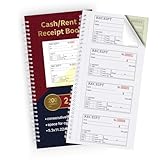
- FOR LANDLORDING & MORE:Money/Rent Receipt books let you offer receipts for rent payments,craft fair sales,business cooperation transactions,in-home day care and other cash transactions.
- 200 TWO-PART CARBONLESS RECEIPTS:Get 4 easy tear-off customer receipts per page,The yellow part stays in the receipt book.
- CONSECUTIVE MARKER NUMBERS:Provide 200 sequentially numbered carbonless sets,making it easy to identify each transaction.
- SIZE:5.3 x 11.2 inches,very portable for use in the workplace or on business trips.A very practical and economical receipt book for small businesses or individuals.
- SMOOTH & CLEAN:With premium paper material,you will feel very smooth when writing.The paper baffle design on the back cover will not allow ink to penetrate into the next receipt and cause contamination.
Observe the filing deadline
IRS guidance says Form 8300 is generally due within 15 days after the payment that takes covered cash receipts over the threshold. Keep a copy of the filed form and the supporting receipts, buyer-identification information, transaction records, and deposit evidence. Because Publication 1544 is dated September 2014 and definitions can be updated, use the current IRS Form 8300 instructions when a transaction approaches the threshold.
Build a threshold-monitoring control
For customers who make repeated or high-value purchases, maintain a running customer-level total of potentially covered cash payments. Include the receipt number, date, amount, payment type, and relationship to earlier transactions. Escalate the file for professional review before accepting or depositing the payment if you are unsure whether payments are related or whether an instrument qualifies as cash.
Choose a recordkeeping format that fits the operation
| Approach | Works well when | Controls to add |
|---|---|---|
| Numbered paper receipt book plus spreadsheet | Sales occur at roadside stands, markets, or deliveries with limited connectivity | Keep sequential copies, lock the completed books, scan important pages, and enter daily totals into the ledger |
| Digital transaction log | One person or a small team records sales on a phone, tablet, or computer | Use unique receipt numbers, restrict edits, back up the file, and preserve exported reports by year |
| Point-of-sale report plus accounting ledger | Many small transactions occur at recurring markets or farm stores | Retain the daily closeout, payment-type totals, refund report, and processor settlement report |
| Invoice and customer-subledger system | Wholesale, institutional, or contract buyers are billed and pay later | Match invoices, delivery evidence, payments, credits, and deposits by customer and invoice number |
| Daily or weekly batch posting | Individual entries are numerous but source reports remain complete | Keep the source detail, document the batch period, and make the batch total agree to the deposit and cash-on-hand records |
The IRS does not endorse a particular ledger, receipt design, or software vendor. A low-tech system is acceptable if it is complete, secure, retrievable, and capable of producing the totals used on the tax return.
Independent reader supportYour contribution helps us test, update, and keep practical guides available for everyone.Organize records for retrieval and review
Use a consistent folder structure by year and record type. A practical arrangement is:
- Sales: receipt images, invoices, market sheets, delivery tickets, and customer correspondence.
- Deposits: deposit log, validated slips, electronic confirmations, and bank statements.
- Processors: card or electronic settlement reports, fee statements, refunds, and Form 1099-K.
- Tax support: annual sales summaries, reconciliation workpapers, Forms 1099, and filed returns.
- Exceptions: returned checks, voids, refunds, corrections, cash shortages, and explanations of unusual items.
Publication 225 says records should support tax returns and be available for IRS inspection. Protect paper records from moisture and pests, restrict access to customer information, back up electronic records, and test that a backup can actually be opened. Preserve the original detail even when you summarize it in a spreadsheet or accounting system.
Common failure points and fixes
“The bank statement is my sales record.”
Why it fails: The statement shows deposits, not the buyers, products, prices, refunds, or non-sales funds inside those deposits.
Fix: Keep a receipt or sales-batch record and link its reference to the deposit.
“I entered the deposit as income.”
Why it fails: If the underlying receipts were already posted, the deposit becomes a second sale.
Fix: Post revenue from the sale record; post the later bank movement to cash or the bank account and reconcile it.
Best Value
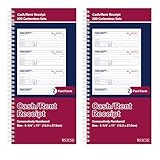
- 【Package Included】You will get 2 receipt book with carbon copies, 200 sets/book,400sets in total. Each receipt book is divided into 2 parts,white,yellow.
- 【Material】Our receipt book with carbon copies are made of paper, not easy to tear, large quantity can meet long time uses.
- 【2 Part Receipt book】Each page contains 4 perforated customer receipts, which can be personalized with company seal or label; yellow receipt copies can be kept in your receipt book.
- 【Wraparound Back Cover】The back cover can be folded between each set of receipts ,which can keep the receipts neat and clear.
- 【Continuous Page Numbers】Each receipt book has a red continuous page number printed on the upper right corner, which can help you determine the chronological order of transactions in each receipt book easily.
“I only track the net card settlement.”
Why it fails: Processor fees and refunds disappear into a smaller sales number, and the ledger may not agree with Form 1099-K or gross receipts reports.
Fix: Retain the processor report and record gross sales, fees, refunds, and net settlement in a way that matches your accounting method.
“Cash means only paper currency.”
Why it fails: Form 8300 uses a specialized definition of cash and has rules for related transactions and installments.
Fix: Review the current instructions when a buyer’s covered payments approach the threshold.
“I can fill in missing receipts at year-end.”
Why it fails: Memory-based reconstruction can omit sales, duplicate them, or misstate dates and payment methods.
Fix: Record sales promptly, perform regular cash counts, and investigate differences while the source documents are still available.
Free tools Windows power users keep installed
One-click scans. No signup required.
“Every agricultural sale belongs on Schedule F.”
Why it fails: Entity type, accounting method, property type, and asset sales can change the reporting treatment.
Fix: Reconcile the ledger to the return that applies to your business and obtain individualized advice for unusual transactions.
A simple monthly close checklist
- All receipt numbers or batch references used during the month are accounted for, including voids and refunds.
- Sales totals are separated by payment channel and agree to the detailed source reports.
- Every deposit has a validated bank record and an itemized deposit worksheet.
- Deposits in transit, retained cash, processor fees, returned checks, and other differences have written explanations.
- Non-sales deposits are identified and posted to the correct account.
- Customer-level cash totals are reviewed for potential Form 8300 obligations.
- Electronic files are backed up and paper records are filed where staff can retrieve them.
- The year-to-date ledger can be reconciled to processor information returns and the tax-preparation workpapers.
What to hand your tax preparer
Provide the annual sales ledger, source-receipt or batch reports, deposit reconciliations, processor statements and Form 1099-K, Forms 1099 received from buyers, records of refunds and returned checks, and documentation for non-sales deposits. Tell the preparer which accounting method and entity return the business uses, whether sales include products purchased for resale, and whether any equipment or other business assets were sold. Those facts can change the reporting analysis even when the bank deposits look ordinary.
Bottom line
For an agricultural business, the defensible chain is sale record → book entry → deposit record → bank statement → reconciliation. Use a format that fits the farm, but make every amount traceable to its source and every deposit explainable by its components. Keep the Form 8300 threshold and deadline in view for large or related cash payments, and treat state, local, entity, accounting-method, and product-specific rules as questions that require fact-specific advice.
Quick Recap
Product prices and availability are accurate as of the date/time indicated and are subject to change. Any price and availability information displayed on Amazon at the time of purchase will apply.




