
Quick wins for a faster PC:
Clear out junk files and repair common Windows errorsFree Scan →Scan for outdated or missing drivers - takes under a minuteDriver Scan →To lower a household gas bill without changing how much you drive, target the gas used for space heating and water heating. Start by separating those uses on your bill, then seal drafts, correct thermostat schedules, maintain the heating system, seal exposed ducts, and reduce water-heater losses. Replace equipment only after those checks show that the building or appliance is still wasting energy.
Your actual savings will depend on climate, weather, house construction, equipment condition, occupancy, and the local gas rate. Published percentages are averages or modeled results, not guarantees for a particular home.
As an Amazon Associate I earn from qualifying purchases.
What usually drives a household gas bill
Space heating and water heating are the first places to investigate. ENERGY STAR says nearly half of the energy used in a home goes to heating and cooling, and its current heating-cost guidance says the average American household spends more than $900 per year on heating and cooling combined. Your gas bill may also include a dryer, fireplace, stove, or other appliance, so identify every gas-connected device before choosing an upgrade.
The Tool Desk
Outbyte PC Repair FREERepair Windows errors before they cause bigger problemsFix Now →Outbyte Driver Updater FREEScan for outdated or missing drivers - takes under a minuteDriver Scan →Look for patterns across at least 12 months of bills. A sharp increase during cold months usually indicates space heating. A relatively steady gas use through summer can include water heating or appliances that operate year-round. A bill can rise even when consumption is unchanged if the utility rate changes, so separate usage charges from fixed delivery charges.
#1 Best Overall

- Save up to 23% every year on heating and cooling costs, adjusts to your set schedule to save energy when you’re gone and optimize comfort when you’re home. Compared to a hold of 72
- Compatible with 85% of systems, check your system’s compatibility with our online ecobee Compatibility Checker on the ecobee support page
- Change your temperature by easily tapping the color touchscreen or using the ecobee app. Plus, free software upgrades ensure you get the best out of your Smart Thermostat Essential, for years to come
- Automatically adjusts to your set schedule to save energy when you’re gone and optimize comfort when you’re home. Keep track of your energy consumption when you're on the go on the ecobee app
- Easy DIY install. No C Wire, no problem. Get the ecobee Power Extender Kit (PEK) for homes without a C-Wire and keep your walls looking nice with our trim kit – both sold separately
| Bill pattern | Likely meaning | Useful next check |
|---|---|---|
| Large winter increase | Space heating is probably the dominant use | Compare gas use with heating degree days and inspect the envelope, thermostat, furnace or boiler, and ducts |
| Similar usage in every season | Water heating or continuously used appliances may be contributing | List water-heater settings, hot-water demand, dryer, fireplace, stove, and other gas appliances |
| Usage falls but the bill barely changes | Fixed charges or a rate change may be masking consumption savings | Compare the usage line and rate, not only the total amount due |
Step 1: Establish a baseline before spending money
Download or collect a year of bills and record the billing dates, gas units, total charges, and rate. If your utility supplies heating degree days, compare winter usage after adjusting for weather. Degree-day adjustment does not make two homes identical, but it helps distinguish a cold winter from a change in equipment performance or household behavior.
Make an appliance inventory. Note whether the home has a forced-air furnace, boiler, storage water heater, tankless unit, gas dryer, fireplace, stove, or other appliance. Record equipment age, model information, filter size, thermostat type, and any rooms that are consistently too cold or too hot. Keep this information for contractors so estimates address the actual system rather than a generic replacement.
Track one change at a time when possible. Photograph the meter or record the utility reading on a regular schedule, and write down thermostat settings, vacancy periods, and unusual weather. Gas savings are measured in usage; a lower dollar bill can result from a rate change, while a higher bill can occur even when efficiency improves during an unusually cold month.
Step 2: Seal drafts and improve insulation before buying equipment
Air sealing and insulation are often the least expensive way to stop paying to heat outdoor air. ENERGY STAR describes sealing and insulating as among the most cost-effective comfort and efficiency measures. DOE says caulking and weatherstripping can offer quick returns, often paying for themselves in a year or less, although your payback depends on materials, labor, leakage, and local rates.
Inspect the places that leak most often
- Attic hatches and the perimeter of attic platforms.
- Rim joists where the foundation meets the floor framing.
- Openings around plumbing, wiring, ducts, and other penetrations.
- Door thresholds and window frames.
- Basement or crawlspace interfaces, including access doors and sill areas.
- Any visibly uneven, compressed, or thin attic insulation.
Use caulk for stationary joints such as fixed trim and small cracks. Use weatherstripping for moving joints such as doors and operable windows. Around combustion-related penetrations, choose fire-resistant materials appropriate for the location, and do not seal over a required vent or combustion-air opening. If you are unsure whether an opening serves a furnace, boiler, water heater, or flue, stop and obtain qualified advice.
Rank #2

- An Alexa thermostat - Amazon Smart Thermostat is an easy way to switch from a traditional thermostats for homes and help reduce energy usage.
- Create comfort zones throughout your home by connecting to select Alexa devices to automatically adjust heating and cooling based on temperature readings or presence detection.
- Save money and energy - After purchase, Amazon will send you an email with details about home thermostat rebates that may be available from energy providers in your area.
- Save energy - According to EPA estimates, ENERGY STAR certified thermostats save an average of $90 on yearly energy bills.
- Programmable thermostat and automatic control - Create your own home, away and sleep schedules, or have Alexa automatically control the temperature with Alexa+ advanced features.
Seal first, then add insulation
When attic insulation is low or uneven, air-seal the attic-floor penetrations before adding climate-appropriate insulation. Adding insulation over an active air leak can hide the path without stopping it. Keep access to electrical equipment, recessed fixtures, and ventilation routes as required by their listings and local code.
EPA and ENERGY STAR’s current methodology estimates that modeled air sealing plus added insulation averages 15% savings on heating and cooling costs and 11% savings on total energy costs. Those are average modeled results. The percentage can be lower in a warm climate and higher in a cold climate, and a house with little leakage to begin with will have less available savings than a very drafty one.
Step 3: Use the thermostat as an occupancy control
Heating an empty or sleeping home wastes gas. DOE says setting back the thermostat by 10% to 15% for eight hours can save as much as 10% on annual heating and cooling costs. The exact result depends on outdoor temperature, the building’s heat-loss rate, recovery settings, and how consistently the schedule is followed.
Choose a schedule that matches real life
- List normal wake, departure, return, and bedtime periods for weekdays and weekends.
- Set a lower temperature during predictable vacancies and sleep, then allow enough recovery time before occupants return.
- Use a hold or override when someone is home unexpectedly so the temporary change does not erase the schedule.
- Review the schedule after a week and correct rooms that become uncomfortable, rather than abandoning the setback entirely.
An ENERGY STAR certified smart thermostat can automate schedules, learn patterns, and provide remote control. ENERGY STAR estimates approximately $100 in annual savings for homes with high heating and cooling bills or substantial vacancy periods. That estimate is conditional, not a guaranteed payment, and homes with low bills or little vacancy may save less.
Confirm compatibility before installation
Compatibility varies among furnaces, boilers, heat pumps, wiring systems, and zoned equipment. Use the thermostat manufacturer’s compatibility checker and compare it with your equipment manuals before purchase. Verify whether the system needs a common wire, special adapter, external sensor, or professional configuration. A thermostat that powers on but cannot control every stage or zone can reduce comfort and erase expected savings.
Rank #3

- PRIVACY PROTECTION*: Sensi won’t sell your personal information to third parties
- EASY DIY INSTALLATION: Use the built-in level and step-by-step app instructions for a quick installation. Works with HVAC equipment found in most homes. Common wire (c-wire) is not required in most applications
- SAVE ABOUT 23% ON HVAC ENERGY*: The ENERGY STAR-certified Sensi smart thermostat can help you save energy with features like flexible scheduling, remote access and usage reports
- SIMPLE CONFIGURATION: Looks and feels like a thermostat. Has buttons and fits the same space as a traditional thermostat so you don’t have to patch and paint your walls
- SMART MAINTENANCE: Sensi can help monitor the performance and efficiency of your HVAC system by delivering valuable usage reports, alerts about your equipment, and maintenance reminders like filter replacement
Step 4: Maintain the heating system and airflow
Maintenance cannot fix an undersized, poorly installed, or failing system, but it can prevent avoidable losses and reveal problems early. For forced-air equipment, check the filter monthly during heavy-use months. Replace it at least every three months, using the exact size and the efficiency rating specified by the equipment manufacturer. A filter that is too restrictive or installed backward can reduce airflow; a filter that does not fit can let dust bypass the intended path.
Free tools Windows power users keep installed
One-click scans. No signup required.
Arrange a professional tune-up each year. Ask the technician to inspect combustion, controls, heat-transfer surfaces, condensate components where applicable, safety controls, and airflow. Keep the service record with the model and serial numbers. If equipment is more than about 10 years old or no longer maintains comfort, ask whether repair, a tune-up, duct correction, or replacement is the best next step rather than assuming a new unit is required.
Installation quality matters as much as the efficiency label. ENERGY STAR says improper installation can reduce efficiency by up to 30%. Request a written scope that identifies sizing, airflow or hydronic balancing, venting, controls, commissioning measurements, and warranty responsibilities. Do not accept a proposal that only lists a model number and a total price.
| Task | Practical interval or trigger | Who should handle it |
|---|---|---|
| Inspect and replace a forced-air filter | Check monthly during heavy-use months; replace at least every three months with the specified size and rating | Most homeowners can do this safely |
| Heating-system tune-up | Once each year | Qualified HVAC professional |
| Equipment evaluation | When equipment is about 10 years old, comfort is poor, or bills remain high after basic corrections | Professional diagnosis, preferably with written measurements |
Step 5: Seal and insulate accessible ducts
Leaky ducts can send heated air into an attic, crawlspace, garage, or unheated basement instead of the rooms you pay to warm. Prioritize supply and return ducts in those locations, especially seams, connections, plenums, and boots. ENERGY STAR says sealing and insulating ducts can improve HVAC efficiency by as much as 20%.
Clean accessible metal surfaces, then seal seams and connections with duct mastic or metal-backed foil tape rated for ductwork. Ordinary cloth duct tape is not a durable substitute. After sealing, insulate ducts located in unconditioned spaces with material suitable for the environment, maintaining access to dampers, service panels, and required clearances.
Do these 3 things before closing this tab:
1Clear out junk files and repair common Windows errors2Scan for outdated or missing drivers - takes under a minute3Repair Windows errors before they cause bigger problemsRank #4

- EASY DIY INSTALLATION: Do it yourself fast with a built-in level and simple step-by-step instructions. Works with the HVAC equipment found in most homes
- COMMON WIRE REQUIREMENTS: Common wire(C-Wire) required for heat pump and heat/cool only systems. C-wire not required on most systems
- SAVE ABOUT 23% ON HVAC ENERGY: ENERGY STAR-certified and packed with features that help you save money, including flexible scheduling, geofencing, remote access and usage reports
- PRIVACY PROTECTION: Sensi won’t sell your personal information to third parties or leverage your thermostat activity data for targeting or advertising purposes
- CONTROL FROM ANYWHERE: The top-rated mobile app for Android and iOS devices makes it easy to control your comfort from a smartphone or tablet
Do not block combustion-air openings, wrap a flue, or disturb venting while working around ducts. Hidden ducts, tight crawlspaces, damaged insulation, balancing problems, and systems that need pressure testing call for a qualified contractor. Ask for before-and-after leakage or airflow measurements when the contractor has the equipment to provide them.
Step 6: Reduce water-heating losses
Water heating is a major household energy use, and it can create a steady gas baseline even when the furnace is off. DOE’s checklist recommends setting a storage water heater to the warm setting, 120°F, which can save energy and reduce scald risk. Follow the heater manual and household health requirements; some situations require a different treatment or professional advice.
Lower standby and distribution losses
- Install a compatible water-heater insulation blanket where the manufacturer permits it.
- Insulate accessible hot-water pipes, particularly near the tank and in unheated areas.
- Keep the thermostat, drain, pressure-relief valve, controls, and labels accessible.
- Never cover a gas flue, combustion vent, burner access area, or pressure-relief device with insulation.
Read the installation manual before fitting a blanket because some newer tanks already have sufficient insulation or prohibit blankets in particular locations. If you see corrosion, a damaged vent, a leaking relief valve, or a flue problem, stop and call a qualified professional.
Consider a heat-pump water heater only as a broader project
An ENERGY STAR certified heat-pump water heater can be a major upgrade, but it changes the fuel and equipment type rather than simply tuning a gas appliance. Check electrical capacity, available space, condensate management, ambient-temperature limits, noise, recovery needs, and local incentives before comparing it with a gas replacement. The right choice depends on site conditions and the cost of electricity and gas in your location.
PC Slower Than It Used to Be?
A free scan shows the junk files, broken settings and background clutter dragging Windows down - then fixes them in one click.Free scan · Windows 10 & 11Crashes, No Sound, or Screen Glitches?
Random freezes, missing sound and display glitches usually trace back to one bad driver. Find and replace yours safely.Free scan · under a minuteStep 7: Decide when an audit or replacement is justified
If drafts, thermostat schedules, filters, annual maintenance, ducts, and water-heater losses have been addressed but usage remains high, obtain a whole-house energy audit. DOE’s weatherization approach evaluates the envelope, HVAC equipment, electrical loads, appliances, and vent safety together. That prevents a new furnace from being sized for leakage that should have been sealed first.
Best Value
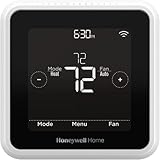
- High use of the scheduling feature of the T5 thermostat saved customers between 8 and 16% on heating and cooling bills. Dollar savings range based on nationwide average annual single-family detached home's heat and cooling bills; actual savings varies based on consumption.
- Save Energy and Get Rewarded. Check with your energy provider about available energy savings rebates to save on your purchase. Plus, eligible customers can enroll in their local Utility's "DEMAND RESPONSE PROGRAM" which can reward you for allowing the utility to slightly adjust your AC or furnace temperature settings when there is high energy demand.
- 7-Day Flexible Scheduling or Location Based Temperature Control. It’s your choice. 7-day scheduling programs your thermostat. Geofence technology helps make you comfortable by using your smartphone’s location to know when you’re away and when you return.
- Auto Home and Away Mode. Enjoy ideal temperatures at home, then save when away.
- ENERGY STAR certified. Help save energy, track your heating and cooling with monthly energy reports and get personalized tips on reducing energy use.
Bring your 12-month bill history, appliance inventory, repair records, and comfort complaints to the auditor or contractor. Request separate prices and expected effects for air sealing, insulation, duct work, repair, tune-up, and replacement. Ask how each estimate was calculated and what measurements will verify completion.
Check your utility and state energy office for rebates before signing a contract. Eligibility, equipment requirements, income rules, and incentive amounts vary by location and can change over time. Get the requirements in writing and confirm whether the contractor, product, permit, and final inspection qualify.
Choose the next action by cost, risk, and certainty
| Option | Best use | Main trade-off |
|---|---|---|
| Weatherstripping, caulk, filter changes, and thermostat settings | Low-cost first steps that address obvious leakage or avoidable runtime | Limited effect if the main loss is hidden insulation, duct leakage, or failing equipment |
| Air sealing and insulation | Drafty homes, low or uneven attic insulation, cold floors, and high winter usage | Up-front labor and material cost; work must match climate and building conditions |
| Duct sealing and insulation | Ducts in attics, garages, crawlspaces, or unheated basements | Access can be difficult, and balancing or testing may be needed |
| Heating-system repair or replacement | Persistent comfort problems, repeated repairs, or equipment older than about 10 years | Highest up-front cost and greatest installation risk if sizing or commissioning is poor |
| Heat-pump water heater | Homes ready to evaluate a fuel and equipment change | Requires electrical, space, climate, installation, and incentive checks |
DIY work is appropriate for straightforward caulking, weatherstripping, thermostat scheduling, and filter replacement when you can follow the equipment instructions. Use qualified help for combustion safety, hidden or inaccessible ducts, major insulation, electrical work, venting, and equipment replacement. The safest savings plan is not the one with the biggest advertised percentage; it is the one supported by your measured usage and a verified diagnosis.
Recommended Free Tools
A practical sequence for the next 30 days
- Days 1–3: Gather a year of bills, separate usage from fixed charges, record rates and degree days when available, and list every gas appliance.
- Days 4–7: Walk the attic, basement, crawlspace, doors, and windows. Photograph leaks, insulation gaps, duct locations, and any blocked or questionable vents.
- Week 2: Apply safe weatherstripping and caulk, correct the thermostat schedule, and replace the filter with the specified size and rating.
- Week 3: Schedule the annual tune-up, ask about duct leakage and airflow, and inspect the water-heater setting and pipe insulation without covering controls or vents.
- Week 4: If usage is still unexpectedly high, obtain an audit or competing written estimates. Check local rebate rules before authorizing work.
How to tell whether the changes worked
Compare gas units for similar weather rather than comparing dollar totals from different rate periods. Use degree-day-adjusted winter bills when available, and note occupancy, thermostat schedules, hot-water demand, and vacancy. Allow enough time to see a pattern; a single mild or severe month can overwhelm a small efficiency change.
Keep receipts, service reports, thermostat changes, and photographs in one file. If a contractor promises a percentage reduction, ask what baseline, weather conditions, and measurement method support it. Published figures from ENERGY STAR, EPA, and DOE are useful for deciding what to investigate, but they cannot predict a universal monthly dollar saving.
Quick Recap
Product prices and availability are accurate as of the date/time indicated and are subject to change. Any price and availability information displayed on Amazon at the time of purchase will apply.




