
The best holiday travel mode is the one that works best from your door to your actual destination on your dates—not the one with the shortest advertised journey or lowest headline fare. Compare the complete price, total time, schedule, connections, disruption plan, flexibility, baggage, accessibility, and arrival point for each realistic itinerary.
Start with two questions used in the U.S. Department of Transportation’s air-traveler guidance: “Am I more concerned with price or with schedule?” and “Will I have to pay extra for checked bags or for seat assignments?” Then apply the same questions to trains and buses, adding terminal access and transfer costs.
As an Amazon Associate I earn from qualifying purchases.
Make the comparison door to door
Advertised travel time normally covers only the vehicle portion. A fair comparison starts when you leave home and ends when you can reach your final stop. Record each component separately:
- Travel from home to the airport, station, or coach terminal.
- Check-in, security, boarding, or platform-arrival time.
- Scheduled time on the aircraft, train, or bus.
- Connections, transfers between terminals, and the time needed to find the next platform or gate.
- Delay allowance, especially before a fixed event or a return flight.
- Travel from the arrival point to your hotel, home, or final destination.
An airport that is far outside the city can erase an apparent flight-time advantage. A central rail station can shorten the final leg even if the train itself is slower. A coach may arrive at a convenient downtown stop—or at a terminal requiring another paid transfer. Put those details in the same calculation instead of treating them as incidental.
#1 Best Overall
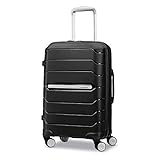
- The Perfect Size: The textured, scratch-resistant exterior of this hardshell carry-on luggage is 15 x 10 x 23 inches" with wheels and meets the cabin size restrictions of most airlines.
- Stay Organized: This small hard-sided carry-on suitcase provides ample packing room with a spacious 20.5" x 14.5" x 10.0" interior. The elastic straps, divider, and pouch ensure everything stays neatly in place
Define the trip before comparing tickets
Fix the constraints
Write down the departure and arrival locations, travel dates, acceptable departure window, latest arrival time, number of travelers, luggage, mobility or accessibility needs, and any event that cannot be missed. A traveler who must arrive for a wedding has a different risk tolerance from someone taking an unstructured weekend break.
Set the priorities
Rank your priorities rather than assuming one mode wins on every measure. Typical priorities include the lowest total cost, a specific arrival time, fewest transfers, easy changes, a central arrival point, a quiet workspace, or the ability to carry bulky luggage. If two priorities conflict, decide which one has priority before looking at prices.
Build a short list of real itineraries
Use current operator schedules and booking systems for the exact date. Include only options you could actually buy: a nominally cheap ticket that requires an impossible connection or an unaffordable terminal transfer is not a genuine alternative. For flights, identify the operating carrier when a ticket carries another airline’s code. For rail and coach, note the operator, service number, and whether any leg is run by a different company.
Free tools Windows power users keep installed
One-click scans. No signup required.
Use this comparison worksheet
Make one row for every candidate itinerary and fill the same fields. This prevents a low headline fare from hiding time, baggage, or connection costs.
| Comparison axis | What to record for every itinerary | Decision question |
|---|---|---|
| Door-to-door time | Home access, check-in or boarding buffer, scheduled travel, transfers, arrival-to-destination time, and a realistic delay buffer | When can you leave home, and when can you realistically reach the final stop? |
| Complete price | Ticket, mandatory taxes and fees, baggage, seat selection, meals or other optional services, terminal access, and local transfers | What will one traveler actually pay to complete the trip? |
| Schedule fit | Departure and arrival times, service frequency, holiday-date availability, and time needed at each interchange | Does the itinerary fit your required window without an exhausting or risky connection? |
| Connection and disruption exposure | Number of legs, separate tickets, connection length, baggage-transfer rules, missed-connection arrangements, and later alternatives | What happens if one leg is late, canceled, or full? |
| Flexibility | Change, refund, cancellation, and fare-restriction terms for every ticket | How much could a date change cost, and until when can you act? |
| Practical fit | Baggage volume, mobility and accessibility requirements, seating, overnight timing, and arrival location | Will the trip be manageable for everyone and useful at the destination? |
Calculate the complete price
Air tickets
For airfares sold in the United States, the Department of Transportation says: “Wherever an airfare is advertised, such as on a website, in an email, or during the booking process, the fare price must include all applicable government taxes and fees, and any mandatory carrier-imposed surcharges.” That included fare is still not necessarily the final trip cost. Optional services such as checked baggage, advance seat selection, Wi-Fi, meals, or other extras can be priced separately.
Add the airport train, bus, parking, tolls, or rideshare at both ends. If a seat assignment is important, include it for every traveler. If baggage must be checked, use the carrier’s allowance and fee for your exact fare and route; do not assume a carry-on will always be free or that one size rule applies to every airline.
Rail and coach tickets
Record the ticket price and every required reservation or supplement, then add local transport to and from stations or terminals. Check whether the quoted fare is tied to a particular departure, whether seat reservations are included, and whether a change requires buying a new ticket. A central station may reduce local-transfer spending, while a peripheral terminal may increase it enough to change the result.
What’s actually slowing this PC down?
Pick the symptom - the matching free tool is one click away.
Compare like with like
Use a per-person total and a group total. Show one-way and return costs separately when the return mode might differ. Keep optional comfort purchases visible rather than burying them in a single total, because a traveler who can travel without a meal or seat selection may reach a different decision from one who cannot.
Rank #2

- Flexible Size & Set Options for Every Trip: Choose the 22” expandable carry-on alone, the 3-piece travel set (22” carry-on + 15” boarding tote + 10” travel kit), or the complete 5-piece set including 30”, 26”, and 22” suitcases with matching travel accessories
- Durable ABS Hardside with Lightweight Construction: Rigid ABS shells protect your belongings while remaining easy to lift, maneuver, and check, ideal for frequent travel and longer trips
- Expandable Design for Extra Packing Capacity: All suitcases expand to provide additional space when needed, giving you flexibility for souvenirs, returns, or extended travel
- Smooth 360° Spinner Wheels & Telescoping Handle: Four multi-directional spinner wheels and a push-button telescopic handle deliver effortless rolling and stable control through airports and terminals
- Coordinated Travel Accessories with Smart Features: Included in the 3 Piece Set and 5 Piece Set options are a 15” boarding tote with add-a-bag sleeve for secure stacking and a compact 10” travel kit to keep essentials organized and accessible
Measure time beyond the timetable
Access and departure procedures
For each airport, station, and coach terminal, estimate the time from home and the time you need before departure. Airports commonly require a larger pre-departure buffer than a city station, but the right allowance depends on the airport, security process, baggage, and operator instructions on your date. Trains and coaches still require time to find the correct platform or bay, board with luggage, and handle accessibility assistance.
Connections
Count every change, including a terminal transfer that appears under one booking. Record the scheduled gap and the walking or transport time between arrival and departure points. A short connection can look efficient but leave no recovery margin; a long connection adds waiting time and may require food or an overnight stay.
Arrival and final transfer
Use the arrival point that matters to your trip, not only the city name. A flight may land at an airport outside the urban area, while a train may arrive downtown. A coach may use a terminal with limited late-night transport. Include the time and cost to reach the hotel or final address, and check whether public transport still operates when you arrive.
PC Slower Than It Used to Be?
A free scan shows the junk files, broken settings and background clutter dragging Windows down - then fixes them in one click.Free scan · Windows 10 & 11Crashes, No Sound, or Screen Glitches?
Random freezes, missing sound and display glitches usually trace back to one bad driver. Find and replace yours safely.Free scan · under a minuteAssess schedule fit on holiday dates
Holiday timetables can be less forgiving than ordinary-week schedules. The Department of Transportation warns that “Flights for holiday periods may sell out months ahead of time, although in many cases you can find a seat if you elect to travel on the holiday itself, e.g. Christmas Day or Thanksgiving Day.” This is qualitative guidance, not a guaranteed booking window or a promise that traveling on the holiday will be cheaper.
Check the exact date, not just the weekday. Compare the first and last departures, service frequency, and the number of alternatives if your preferred departure disappears. Flexibility by a day or by a few hours may expose additional options, but verify the resulting local-transfer and accommodation costs before treating it as a saving.
For a fixed event, plan to arrive with time to recover from an ordinary delay. The more important the appointment, the less attractive a final connection or last departure becomes. A mode with fewer scheduled minutes can still be the worse choice if it leaves no practical alternative after a disruption.
Evaluate connection and disruption risk
One booking versus separate tickets
Identify whether all legs are protected under one booking or bought as separate tickets. Separate tickets can leave you responsible for buying a replacement when an earlier service is late. Even on one booking, read the operator’s missed-connection process and baggage arrangements.
Air connections
The Department of Transportation advises checking the number of stops, the time between flights, which airline operates a code-share flight, and whether bags transfer between airlines. Ask what rebooking arrangements apply if a connection is missed. When arriving on time matters, allow more leeway than the minimum published connection.
Rank #3

- CARRY-ON DESIGN: Best for 1-5 day trips without the hassle of checking luggage; measures 14.8 x 10 x 21.7 inches, including wheels
- DURABLE AND RELIABLE: Extra-thick hard shell with scratch-resistant finish guards against impact and rough handling
- EXPANDABLE: Increase packing space up to 25% for added flexibility and organization
- ORGANIZED INTERIOR: Keep essentials organized with an interior divider and three zippered pockets
- EFFORTLESS TRAVEL: Navigate with ease thanks to four multi-directional wheels, telescoping handle, and short lift handle
Rail and coach connections
Check whether a missed connection is protected, whether you may board a later service, and whether a seat reservation is lost. Note the location of the next platform or terminal and the last practical departure if the first leg is delayed. If a journey uses separate operators, save both customer-service contacts and understand which company controls each ticket.
Have a recovery plan
Before paying, identify at least one later departure, an alternative station or airport, and the cost of an overnight stay if the final service is missed. During peak holiday periods, replacement seats can be difficult to find. The Department of Transportation specifically cautions that finding alternative seats after a disruption may be hard during holidays and other peak periods.
Read flexibility and refund conditions
Two tickets with the same departure can have very different change and refund terms. Check:
- Whether changes are permitted before departure.
- Any change fee, fare difference, or rebooking charge.
- Whether a cancellation produces cash, a credit, or no refund.
- The deadline for changing or canceling.
- Restrictions on transferring a ticket to another traveler.
- Conditions for missed departures and no-shows.
- Whether every leg has the same rules or a separate ticket has stricter terms.
Keep a copy of the conditions shown at checkout. Rules vary by fare, operator, and jurisdiction, and airline procedures can change. Do not infer rail or coach rights from an airline ticket, or vice versa.
Match the mode to practical needs
Heavy or unusual baggage
List the number and dimensions of bags before comparing. Air carriers may charge for checked bags, while rail and coach operators may have their own limits, reservation requirements, or handling rules. Sports equipment, musical instruments, child equipment, and mobility devices need specific confirmation from the operator.
Mobility and accessibility
Check step-free access, assistance-request deadlines, platform or gate changes, boarding methods, accessible toilets, and transfer distances. Ask each operator how assistance works during a connection, especially when changing companies or terminals. A theoretically cheap itinerary is unsuitable if a required assistance service is unavailable at one leg.
Comfort and working time
Consider whether you need a guaranteed seat, power, a quiet environment, or the ability to move around. Treat these as practical requirements only when the ticket or operator confirms them; do not assume a feature from the vehicle type alone.
Do these 3 things before closing this tab:
1Clear out junk files and repair common Windows errors2Fix the driver behind crashes, sound loss and screen glitches3Repair Windows errors before they cause bigger problemsArrival location and late-night safety
Compare the final stop, walking distance, onward transport, and operating hours. A central arrival can reduce both cost and uncertainty. If arrival is late, verify that a reliable transfer exists and that the accommodation accepts that arrival time.
Rank #4

- Effortless Mobility with Dual-Wheel Design: Travel with ease using Sweetcrispy carry-on luggage, featuring a dual-wheel system for smooth and seamless movement. Glide through airports, train stations, and busy streets with minimal effort, ensuring a stress-free travel experience from start to finish
- Spacious & Organized Storage: Designed with travel convenience in mind, this suitcase offers ample storage with dedicated wet and dry mesh compartments, X securing straps, and expandable capacity. The premium zipper closure ensures your belongings stay secure, while the thoughtful layout keeps your items organized and accessible
- Lightweight Yet Durable Construction: Made with a sturdy ABS exterior, this luggage is lightweight for easy handling while offering exceptional durability to withstand the demands of travel. Enjoy peace of mind knowing your belongings are well-protected on your journey
- Built-in TSA Lock for Enhanced Security: Travel confidently with the integrated TSA-approved lock, providing an added layer of security for both domestic and international trips. Keep your valuables safe and avoid the hassle of unauthorized access while traveling
- Adjustable & Resilient Telescopic Handle: Customize your travel experience with the durable, flexible telescopic handle, which adjusts smoothly to your preferred height. Whether you’re navigating through crowded spaces or taking a quick turn, the handle ensures comfort and stability
Understand the evidence by region
United States air travel
The detailed fare and connection guidance cited here comes from the U.S. Department of Transportation and applies to U.S. air-ticketing context. Its included-tax rule is not a universal rule for every country. Use the carrier and applicable regulator for the market where you buy and travel.
United Kingdom rail ticketing
The UK Office of Rail and Road has described work intended to make ticket restrictions clearer and make it easier to buy the right ticket. That context highlights why conditions and pricing transparency matter, but it does not provide a current fare or establish that British rail is faster, cheaper, or more reliable than air or coach on a particular route.
European Union passenger rights
The European Commission describes EU-wide passenger-rights protections for air, rail, and bus or coach travel. The remedy depends on the mode, the disruption, the route, and the ticket. Check the official rule for your journey rather than assuming the same compensation, assistance, or rerouting applies across all three modes.
Quick wins for a faster PC:
Fix the driver behind crashes, sound loss and screen glitchesFind Drivers →Repair Windows errors before they cause bigger problemsFix Now →Scan for outdated or missing drivers - takes under a minuteDriver Scan →A step-by-step booking process
- Write the trip brief. Record dates, origin, final destination, latest acceptable arrival, travelers, baggage, accessibility needs, and non-movable commitments.
- Collect current itineraries. Check operator sites and reputable reservation services for flights, trains, and coaches on the exact dates. Save departure, arrival, stop count, operators, and connection times.
- Map the ground legs. Add home-to-terminal and terminal-to-destination routes, fares, opening hours, and late-night availability.
- Price the complete trip. Add ticket charges, baggage, seat reservations, meals or other necessary extras, parking, and every transfer.
- Test the schedule. Recalculate door-to-door time and include a realistic buffer for security, boarding, walking, and ordinary delays.
- Inspect protection. Identify separate tickets, baggage-transfer rules, missed-connection handling, and realistic later departures.
- Read conditions. Confirm change, refund, no-show, and seat rules for each leg before payment.
- Check the holiday risk. If demand is high, book a workable option rather than relying on a last-minute replacement. Keep an alternative departure and recovery budget.
- Save evidence. Keep the confirmation, fare conditions, baggage rules, assistance requests, and operator contact details together.
Common mistakes that produce a bad choice
- Comparing vehicle time only: ignoring terminal access, pre-departure procedures, transfers, and the final leg.
- Using the headline fare: leaving out baggage, seat selection, mandatory supplements, or local transport.
- Assuming a connection is protected: buying separate tickets without checking missed-connection consequences.
- Ignoring the operating carrier: treating a code-share as if the marketing airline controls every procedure.
- Booking the last possible departure: leaving no recovery option before a fixed event.
- Assuming rights are interchangeable: applying airline rules to rail or coach travel, or one country’s rules to another.
- Choosing a distant terminal without pricing the transfer: allowing a low fare to conceal a costly or unavailable final connection.
- Assuming carry-on rules are universal: failing to check the specific carrier’s allowance and dimensions.
When each mode can be the sensible choice
Choose a flight when
The airport itinerary fits your required arrival window after adding ground travel and buffers, the complete price remains acceptable with baggage and seats, and you have a workable plan for connections and disruption. Do not choose it solely because the aircraft’s scheduled time is shortest.
Choose a train when
The station locations, timetable, ticket conditions, baggage arrangements, and accessibility fit your trip better than the alternatives. A central station and a simple itinerary may matter more than the vehicle’s nominal speed.
Choose a coach when
The terminal access, schedule, baggage policy, comfort, and connection plan meet your needs and the complete cost is competitive. Check late-night arrival transport and the operator’s change and disruption rules before buying.
Make the final decision
After filling the worksheet, eliminate any itinerary that fails a non-negotiable requirement: an impossible arrival time, unavailable accessibility assistance, an unaffordable total, or an unacceptable connection risk. Among the remaining options, choose according to your stated priority—price, schedule, simplicity, flexibility, or practical fit.
Recommended Free Tools
There is no route-independent ranking in the available evidence. Flights, trains, and buses can each be the best answer on different dates and routes. The defensible choice is the itinerary whose complete door-to-door cost, time, conditions, and backup plan match your actual holiday needs.
Quick Recap
Product prices and availability are accurate as of the date/time indicated and are subject to change. Any price and availability information displayed on Amazon at the time of purchase will apply.




