
Recommended Free Tools
Some links on this page are affiliate links: if you buy through them we may earn a commission, at no extra cost to you.
The safest choice depends on your required software, not the logo on the lid. Choose a MacBook if you need macOS or Xcode, rely on iPhone integration, or want a quiet, power-efficient portable computer and do not depend on Windows-only software. Choose a Windows laptop if you need a Windows-only application, PC gaming, touchscreen or pen input, a 2-in-1 design, a discrete NVIDIA or AMD GPU, or a particular port or peripheral.
From a personal-finance perspective, the best laptop is the one that avoids an expensive workaround, replacement, or software failure. Before comparing prices, identify your non-negotiable applications, games, accessories, memory, storage, and display requirements. A MacBook Air, a Windows ultraportable, and a Windows gaming laptop may cost similar amounts while serving completely different purposes.
As an Amazon Associate I earn from qualifying purchases.
Start with the requirements that can eliminate a platform
Do not begin with battery-life charts or brand preferences. First determine whether your school, employer, software, or hobby requires a particular operating system or hardware feature.
- Do you need Xcode or another Apple-only development tool?
- Does your school or employer require a Windows-only application such as Microsoft Access, specialized accounting software, CAD, engineering software, laboratory software, or a testing browser?
- Do you play a specific game that requires Windows, DirectX, a particular launcher, or kernel-level anti-cheat?
- Do you need CUDA, an NVIDIA GPU, a discrete graphics processor, or a large amount of graphics memory?
- Do you need a touchscreen, active stylus, tablet mode, or detachable keyboard?
- Will you connect an HDMI monitor, SD card, USB-A device, Ethernet cable, projector, printer, scanner, audio interface, camera, or security key?
- Do you need more than one external monitor?
- Does a VPN, smart-card reader, printer, scanner, lab instrument, or other accessory require a specific driver?
- Must Windows run locally, or would a remote Windows computer or cloud PC be acceptable?
If the answer to one of these questions is “yes,” verify the exact application or device before buying. A virtual machine or compatibility layer may be useful, but “it starts” does not necessarily mean that every driver, plug-in, graphics feature, or peripheral will work correctly.
Popular on Amazon
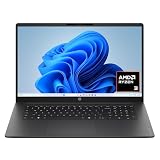
- FULL HD IPS DISPLAY - Enjoy vibrant, crystal-clear images with 178-degree wide-viewing angles
- AMD RYZEN 3 30 PROCESSOR - Everyday performance you can count on; Multitask, stream, game casually, and edit photos smoothly with responsive power and vibrant HDR visuals
- ENJOY UP TO 14 HOURS AND 15 MINUTES OF BATTERY LIFE - HP Fast Charge restores battery from 0 to 50% in approximately 45 minutes
- AMD RADEON 610M GRAPHICS - Experience smooth entertainment; Built for streaming and multitasking, enjoy realistic visuals and efficient performance for work and play
- STORAGE AND MEMORY - 512 GB PCIe NVMe M.2 SSD offers fast speed and efficient storage; and 8 GB LPDDR5 RAM memory boosts performance with higher bandwidth
If a Windows laptop later has a missing or outdated hardware driver, Outbyte Driver Updater is an optional tool to consider for checking available updates.
The short decision table
| If your priority is… | Safer default | Why |
|---|---|---|
| Web browsing, documents, email, video calls, and streaming | Either | Both platforms handle common productivity work well. Compare the actual keyboard, screen, webcam, battery, and price. |
| iPhone integration | MacBook | macOS integrates AirDrop, Handoff, iPhone Mirroring, Universal Clipboard, Continuity Camera, calls, and messages. |
| Windows-only business, school, engineering, or government software | Windows | Native Windows support is usually simpler than emulation or virtualization. |
| iOS, iPadOS, watchOS, tvOS, visionOS, or macOS development | MacBook | Xcode requires a Mac running a supported version of macOS. |
| PC gaming | Windows | Windows offers the broadest game, driver, launcher, anti-cheat, and discrete-GPU compatibility. |
| Touch, stylus, 360-degree hinge, or detachable design | Windows | Windows has a much wider range of 2-in-1 and pen-enabled computers. |
| GPU-heavy rendering, CUDA, or local AI work | Usually Windows | Windows provides more laptops with discrete NVIDIA and AMD graphics. The exact application still matters. |
| Quiet, lightweight general-purpose travel computer | Usually MacBook Air or premium Windows ultraportable | Both categories can be excellent. Compare the exact model’s battery, weight, keyboard, ports, and measured performance. |
| Repairability or user upgrades | Model-dependent, often Windows | Some Windows business laptops offer replaceable memory, SSDs, batteries, or keyboards; many thin Windows laptops do not. |
MacBook versus Windows laptop: compare categories, not brands
“Windows laptop” is not one product category. Windows machines range from inexpensive basic laptops to premium ultraportables, business systems, gaming laptops, creator machines, mobile workstations, convertibles, rugged computers, and ARM-based Copilot+ PCs. Microsoft separates ordinary laptops, gaming PCs, 2-in-1s, and performance PCs in its own shopping categories.
Do these 3 things before closing this tab:
1Repair Windows errors before they cause bigger problems2Fix the driver behind crashes, sound loss and screen glitches3Clear out junk files and repair common Windows errorsUse like-for-like comparisons:
- Compare a MacBook Air with a premium Windows ultraportable.
- Compare a MacBook Pro with a premium creator laptop or mobile workstation.
- Compare a MacBook Neo with genuinely comparable budget Windows laptops, not a high-end gaming machine.
- Compare a MacBook with a Windows gaming laptop only when gaming is part of the requirement.
There is no meaningful answer to “Are MacBooks more expensive?” without specifying the quality, performance, display, memory, storage, graphics hardware, and form factor being compared. A low-priced Windows laptop may have a dim display, 8GB of memory, a small SSD, weak construction, and a short useful life. A premium Windows laptop can cost as much as—or more than—a similarly equipped MacBook.
macOS and Windows: the practical workflow differences
Where macOS is usually the better fit
- Apple-platform development: Xcode and Apple SDKs require a Mac. The current Xcode system requirements specify a Mac running a supported macOS version.
- Apple-device continuity: Apple documents features including AirDrop, Handoff, iPhone Mirroring, Universal Clipboard, Continuity Camera, Sidecar, iPhone calls, text-message forwarding, Instant Hotspot, and Apple Watch unlocking. Requirements vary by device, operating-system version, and region; see Apple’s Continuity requirements.
- Unix-oriented development: macOS provides a Unix-based command-line environment. That can be convenient for developers whose toolchains do not require Windows-only drivers or applications.
- Simple product range: Apple offers fewer laptop families than the Windows market, which can make the purchase decision easier once you have chosen the MacBook class.
- Portable general-purpose work: MacBook Air models combine a conventional clamshell design, a large haptic trackpad, strong built-in audio and microphones, and Apple silicon’s power-efficient design. These are product characteristics, not guarantees that every user will prefer macOS.
Where Windows is usually the better fit
- Application breadth: Windows is the native target for many business, education, engineering, manufacturing, laboratory, government, and accounting applications.
- Hardware choice: You can choose among many screen sizes, prices, processors, graphics cards, port arrangements, keyboards, hinges, and service options.
- Gaming: Windows is the safer starting point for PC games, especially games with demanding anti-cheat systems, DirectX requirements, specific launchers, or unusual peripherals.
- Touch and pen input: Windows has far more touchscreen, stylus, convertible, and detachable computers.
- Discrete graphics: Windows offers a much broader selection of laptops with NVIDIA and AMD GPUs for gaming, 3D work, CUDA-dependent applications, and some local AI workloads.
- Microsoft-centered organizations: Businesses already standardized on Windows management, domain services, security tools, and Windows-specific applications may have a simpler support experience with a Windows laptop.
- Linux-related workflows: Windows Subsystem for Linux, virtual machines, and Windows development tools can make Windows a practical choice for developers who need both Windows and Linux environments.
Neither operating system is automatically easier, more secure, faster, or better for professional work. Your applications and organization’s support policies matter more than general reputation.
Software compatibility: what works on each platform?
| Software category | What to expect | Buying implication |
|---|---|---|
| Browsers, email, web applications, Zoom, Slack, Teams, Discord | Generally available on both platforms. | Choose based on hardware, ecosystem, and price. |
| Microsoft 365 core applications | Word, Excel, PowerPoint, OneNote, and OneDrive are available for Mac. Feature and add-in parity can vary. | Do not reject a Mac merely because you use Office, but verify specialized macros, add-ins, and file workflows. |
| Microsoft Access and Publisher | Microsoft identifies these as Windows-only in the cited Office versions. See the Office for Windows and Mac FAQ. | Choose Windows or confirm that a remote Windows environment is provided. |
| Adobe Creative Cloud | Major applications are available on both platforms, but the exact application, plug-in, codec, effect, and GPU requirement must be checked. | Choose by workload. A Windows discrete GPU may help some tasks; Apple silicon may be attractive for portable media work. |
| Apple-platform development | Xcode and Apple SDKs require macOS. | Choose a MacBook. |
| CAD, engineering, manufacturing, laboratory, and specialized school software | Many packages and plug-ins target Windows first or require Windows drivers. | Check the exact course, employer, version, and hardware requirements before buying. |
| DirectX, CUDA, kernel-level drivers, specialized VPNs, and security tools | Usually Windows-preferred or Windows-only. | Native x86 Windows is often the lowest-risk option. |
| Linux development | Available natively on Linux hardware, through WSL or a virtual machine on Windows, and through macOS tools or virtualization on a Mac. | Check Docker, local Kubernetes, virtual-machine architecture, USB devices, and production parity. |
The key distinction is not simply “Mac software versus Windows software.” It is whether the exact application, plug-in, macro, driver, anti-cheat system, file format, and hardware acceleration path is supported.
Windows on ARM deserves a separate check
Some newer Windows laptops, particularly Copilot+ PCs, use ARM processors. Microsoft says Windows 11 on ARM runs native ARM applications and many unmodified x86 and x64 applications through emulation. Native ARM applications generally provide the best performance and battery efficiency; emulated applications may work well, but they are not automatically equivalent to native software. Microsoft’s Windows on ARM overview is the appropriate compatibility starting point.
Windows 11’s Prism emulator was expanded in Windows 11 24H2 and later to improve x86 application and game support, including some instruction-set extensions. That is meaningful progress, but Microsoft’s documentation and compatibility guidance still make clear that applications, drivers, peripherals, plug-ins, and anti-cheat systems can be exceptions.
Choose an ARM Windows laptop with confidence when:
- Your important applications have native ARM versions or have been tested successfully under emulation.
- Your work is primarily browser-based, Microsoft 365-based, or uses well-supported mainstream applications.
- You value battery life and low noise more than maximum compatibility with older software.
- Your printer, scanner, VPN, security software, audio equipment, and other accessories have compatible drivers.
Prefer Intel- or AMD-based x86 Windows when:
- You rely on older accounting, scientific, engineering, CAD, or school software.
- You use kernel-level drivers, older VPN clients, smart-card readers, specialized peripherals, or audio plug-ins.
- You play games with anti-cheat systems that have not certified ARM Windows.
- You need a virtual machine that depends on nested virtualization or a particular architecture.
- Your employer or school has not tested or approved ARM devices.
Do not assume that “Windows” on an ARM laptop has the same compatibility profile as Windows on an Intel or AMD laptop. Architecture is now a buying criterion.
Can you run Windows on a MacBook?
Apple silicon Macs do not offer the old Intel-era experience of installing Windows directly through Boot Camp. Microsoft documents two supported approaches for Apple silicon Macs:
- Windows 11 ARM in Parallels Desktop: useful for occasional Windows applications, provided the application and its hardware requirements are compatible.
- Windows 365 cloud PCs: Windows runs remotely and is accessed through an internet connection.
Microsoft warns that Windows 11 ARM on Apple silicon can have limitations involving hardware, games, applications, and DirectX 12. Microsoft also states that a separate Windows license is required for each Windows 11 Pro instance in this arrangement. See Microsoft’s guidance on using Windows 11 with Apple silicon Macs.
This is a useful escape hatch, not a universal replacement for a Windows laptop. It is a poor assumption for a primary workload involving competitive gaming, CAD, engineering software, GPU-intensive work, proprietary drivers, or device-specific applications. Confirm DirectX support, USB device access, graphics acceleration, controllers, anti-cheat, nested virtualization, and the exact application before treating a MacBook as a Windows machine.
Gaming: choose Windows unless you have checked the exact game
If gaming is a primary requirement, start with Windows. Match the game’s operating system, graphics card, VRAM, anti-cheat system, launcher, controller support, and required display refresh rate.
Mac gaming is not simply “impossible.” Some modern games, indie games, Apple Arcade titles, older games, cloud games, and emulated games can work on a Mac. But a MacBook should not be purchased as the safe choice for a particular Windows game unless the title’s current support has been verified. CPU benchmark performance alone does not establish game compatibility.
Windows ARM adds another compatibility question. A game that runs on x86 Windows may not run correctly on ARM Windows if its anti-cheat software, launcher, driver, or graphics path is incompatible. If your gaming library includes competitive games, check each important title rather than relying on general claims about emulation.
Windows 11 includes features such as Auto HDR and optimizations for windowed games, but the individual game and hardware still determine the experience.
A gaming laptop also has trade-offs: discrete graphics generally mean more weight, fan noise, heat, a larger charger, and shorter battery life away from an outlet. If you want portable school or work use plus serious gaming, consider whether a thin Windows laptop plus a desktop, console, or cloud-gaming service is better value than paying for a heavy machine you will rarely carry.
Battery life, performance, and thermals
“Mac is faster” and “Windows is faster” are both too broad to be useful. Performance depends on the exact chip, cooling system, power limits, graphics processor, memory, storage, application, and workload.
- MacBook Air: current Air models use a fanless design and Apple silicon. They are well suited to ordinary productivity and many creative tasks, but sustained heavy workloads can behave differently from short benchmark bursts because there is no active fan cooling.
- MacBook Pro: adds active cooling, higher-performance M5 Pro and M5 Max options, more memory configurations, a higher-end display, and more ports. It is the more appropriate MacBook class for sustained professional workloads.
- Windows ultraportables: can use efficient Intel, AMD, or ARM processors and may approach MacBook battery life, but results vary substantially by model.
- Windows creator and gaming laptops: can be much faster for certain GPU workloads because they offer discrete NVIDIA or AMD graphics, but they are often heavier, louder, and less efficient.
Apple rates the current M5 MacBook Air for up to 18 hours of video streaming and up to 15 hours of wireless web use. Those are Apple’s test claims, not a guarantee of your real-world result; screen brightness, browser tabs, video calls, applications, wireless conditions, and workload all matter. Manufacturer battery tests also use different methods, so do not rank Mac and Windows laptops solely by advertised hours. Look for independent testing of the exact configuration and workload.
The Tool Desk
Outbyte Driver Updater FREEFix the driver behind crashes, sound loss and screen glitchesFind Drivers →Outbyte PC Repair FREERepair Windows errors before they cause bigger problemsFix Now →Displays, keyboards, touch, and form factor
Choose Windows when you specifically need:
- a touchscreen or active stylus;
- a 360-degree hinge or detachable keyboard;
- a 17- or 18-inch display;
- a gaming refresh rate;
- OLED or mini-LED at a particular budget;
- rugged construction, built-in cellular connectivity, or a business-specific design;
- a particular keyboard layout, pointing device, or accessibility feature.
Choose a MacBook when you prefer a conventional clamshell laptop with a high-quality display, haptic trackpad, strong built-in speakers and microphones, and Apple’s Continuity features. Do not assume every MacBook display is better than every Windows display. Premium Windows laptops may offer OLED panels, mini-LED, higher refresh rates, touch, and pen support that MacBooks do not.
For school or office work, inspect the keyboard in person if possible. A slightly faster processor does not compensate for a keyboard, trackpad, webcam, or screen that makes you uncomfortable every day.
Ports and external displays can change the value calculation
Count your current accessories before deciding whether a thin laptop is a bargain. Include monitors, docks, external SSDs, cameras, audio interfaces, SD cards, Ethernet, USB-A devices, projectors, printers, and security keys. A hub or dock can add cost, occupy a port, and introduce compatibility or display limitations.
Current MacBook Neo
Apple lists the MacBook Neo with one USB-C port supporting USB 3 speeds up to 10Gbps, a second USB-C port supporting USB 2 speeds up to 480Mbps, a 3.5mm headphone jack, and support for one external display up to 4K at 60Hz. It does not include the broader port selection found on the MacBook Pro.
Quick wins for a faster PC:
Fix the driver behind crashes, sound loss and screen glitchesFind Drivers →Repair Windows errors before they cause bigger problemsFix Now →Current MacBook Air with M5
Apple lists MagSafe 3, two Thunderbolt 4 USB-C ports, and a 3.5mm headphone jack. Under Apple’s stated resolution and configuration limits, the M5 Air supports up to two external displays. Check the exact display arrangement and whether the laptop must remain open or closed for your setup.
MacBook Pro with M5 Pro or M5 Max
Apple lists an SDXC card slot, HDMI, MagSafe 3, a 3.5mm headphone jack, and three Thunderbolt 5 USB-C ports. External-display support varies by chip and configuration, so verify the exact model if you need multiple high-resolution monitors.
Windows is not automatically better for ports. Some Windows laptops include HDMI, USB-A, Ethernet, SD card slots, or cellular connectivity; others have only USB-C. Check the exact SKU, not merely the manufacturer or processor family.
How much memory and storage should you buy?
Operating-system minimums are not sensible buying recommendations. Microsoft’s Windows 11 minimum is 4GB of RAM and 64GB of storage, but that describes installation eligibility, not a comfortable laptop for several years. Microsoft’s Windows 11 requirements also include a compatible 64-bit processor, UEFI/Secure Boot capability, TPM 2.0, DirectX 12-compatible graphics, and other conditions.
What’s actually slowing this PC down?
Pick the symptom - the matching free tool is one click away.
| Workload | Practical target | Why |
|---|---|---|
| Light web, email, documents, and streaming | 16GB RAM, 512GB SSD | Avoids making a new purchase feel constrained by ordinary multitasking and system files. |
| School, office, programming, and frequent multitasking | 16GB to 24GB RAM, 512GB to 1TB SSD | Leaves room for browsers, development tools, office applications, and local files. |
| Photo, video, large spreadsheets, local AI tools, or virtual machines | 24GB or 32GB RAM, 1TB SSD | Memory and local storage can become limiting well before the processor does. |
| Serious media production, simulation, multiple VMs, or workstation use | 32GB to 64GB or more RAM, 1TB or larger SSD | Choose based on the application’s published requirements and measured workload performance. |
| Large game library | 16GB or more RAM, preferably 1TB SSD or additional expandable storage | Modern installations and updates can consume a 512GB drive quickly. |
Sixteen gigabytes of RAM and a 512GB SSD are a sensible baseline for most new buyers. Choose 24GB or 32GB for development, large spreadsheets, photography, video, virtual machines, or a longer ownership period. Choose 64GB or more for serious professional workloads. A 1TB SSD is preferable for games, media libraries, development environments, virtual machines, and large local files.
A 256GB SSD can be acceptable for genuinely light, cloud-first use, but it leaves less room for applications, cached files, photos, games, and operating-system updates. Treat 8GB of RAM and 256GB of storage as a constrained budget configuration, not a default recommendation for a laptop you want to keep for years.
Important current MacBook configurations
The current MacBook Air technical specifications start at 16GB of unified memory and a 512GB SSD, with higher memory and storage options available. The MacBook Neo is listed with 8GB of unified memory and 256GB or 512GB of storage. That makes the Neo a budget and light-use product, not an obvious replacement for an Air or Pro used for demanding work.
MacBook memory and storage should be treated as fixed for buying purposes: select enough at purchase rather than assuming you can add more later. Many Windows laptops also solder memory, so do not assume Windows means upgradeable. Consult the service manual for the exact model and SKU.
Windows Errors? Fix Them Before They Spread
Repair common Windows errors and clear accumulated junk for a smoother, more stable PC - no reinstall needed.Free scan · no reinstallOutdated Drivers Are Slowing You Down
One free scan finds every outdated or missing driver and matches the right update for your exact hardware.Free scan · exact hardware matchCurrent MacBook families: which class fits?
Apple’s current notebook comparison page lists the MacBook Neo, 13- and 15-inch MacBook Air models with M5, and 14- and 16-inch MacBook Pro models with M5, M5 Pro, and M5 Max. The right choice is primarily about workload, screen size, ports, memory, and sustained performance.
| MacBook family | Best suited to | Important limitations or checks |
|---|---|---|
| MacBook Neo | Budget buyers, web work, documents, streaming, and light school or home use. | A18 Pro, 8GB unified memory, 256GB or 512GB SSD, two USB-C ports of different speeds, one external display, and up to 16 hours of Apple-rated video streaming. Avoid for demanding multitasking or multi-monitor work unless the configuration is confirmed suitable. |
| 13-inch MacBook Air | Portable general-purpose work, school, office use, programming, and many creative workflows. | M5, 16GB/24GB/32GB memory options, 512GB to 4TB SSD, two Thunderbolt 4 ports, and up to two external displays under Apple’s conditions. Fanless design is worth considering for sustained workloads. |
| 15-inch MacBook Air | People who want a larger 15.3-inch screen without moving to the Pro line. | It retains the Air’s portability and port limitations. Compare the larger display’s value with the weight and price difference from the 13-inch version. |
| 14-inch MacBook Pro | Sustained development, media work, demanding productivity, and buyers who need a better display and more ports. | Available with M5, M5 Pro, or M5 Max. The Liquid Retina XDR display includes ProMotion up to 120Hz. Ports and external-display capacity vary by chip. |
| 16-inch MacBook Pro | High-end professional work and buyers who prioritize a large built-in display. | Available with M5 Pro or M5 Max. It is larger and heavier, but Apple lists up to 22 hours of video streaming for a stated M5 Pro configuration and support for extensive external-display setups on M5 Max configurations. |
Apple launched the M5 MacBook Air in the United States at $1,099 for the 13-inch model and $1,299 for the 15-inch model. Those were launch prices, not a permanent promise of the price you will see at checkout. Apple’s indexed store pages have also shown inconsistent MacBook Neo starting prices—one page displayed “From $599” while another displayed “Buy from $699.” Check the live U.S. configuration and checkout page on the day you buy rather than relying on an old article or search snippet.
Windows laptop classes: choose the hardware type first
Budget general-purpose laptop
Choose this class for browsing, documents, streaming, and light schoolwork. Prioritize 16GB RAM, a 512GB SSD if affordable, a usable display, a comfortable keyboard, and a warranty. The cheapest Windows laptops can look inexpensive while imposing compromises in screen quality, build, storage, memory, webcam, and battery life.
Premium ultraportable
This is the closest Windows comparison to a MacBook Air. Look for a high-quality display, low weight, good keyboard and trackpad, efficient Intel, AMD, or ARM processor, 16GB or more RAM, and 512GB or more storage. Compare measured battery life and fan behavior, not just processor names.
Business laptop
Business systems may offer better keyboards, service documentation, security options, warranty support, docking compatibility, and replaceable parts. Some current business models provide accessible memory, SSDs, batteries, keyboards, and other components, but this is not true of every model. Lenovo’s 2026 ThinkPad portfolio illustrates the range of serviceable designs available in the Windows market; inspect the exact service manual before paying extra for assumed upgradability.
Also popular on Amazon

- Intel Celeron N4120: 4 Cores & Threads, 1.1GHz Base Clock, Up to 2.6GHz Boost Clock, 4MB Cache, Intel UHD Graphics 600. The perfect combination of performance, power consumption, and value helps your device handle multitasking smoothly and reliably with four processing cores to divide up the work.
2-in-1 or detachable
Choose this class for handwritten notes, drawing, presentations, tablet use, or flexible viewing angles. Confirm the cost of the pen and keyboard: they may be optional accessories and can materially change the total price.
Gaming laptop
Choose based on the exact GPU, VRAM, cooling system, display, game requirements, and charger—not just the CPU. Check battery life and weight if you will carry it to class or work. A gaming laptop may be the right tool for gaming and GPU-heavy work, but it is not automatically a good everyday travel laptop.
Creator laptop or mobile workstation
Choose this class for sustained rendering, 3D, engineering, simulation, or professional media workflows. Compare application-specific performance, GPU support, thermal behavior, memory capacity, storage expansion, color accuracy, and warranty. A MacBook Pro may be the better portable choice for applications optimized for Apple silicon and its media engines; a Windows workstation may be safer for CUDA, certified engineering applications, or discrete-GPU effects.
Free tools Windows power users keep installed
One-click scans. No signup required.
Copilot+ or ARM Windows laptop
Microsoft describes Copilot+ PCs as a subset of Windows PCs requiring an NPU capable of at least 40 TOPS, at least 16GB of RAM, and at least 256GB of storage. Not every Windows laptop is a Copilot+ PC, and the AI label does not guarantee that your existing software or peripherals are compatible. Treat processor architecture and application certification as more important than the marketing label.
Independent reader supportYour contribution helps us test, update, and keep practical guides available for everyone.Ports, memory, and accessories belong in the budget
Calculate the purchase as a system rather than a laptop headline price:
- laptop configuration with sufficient RAM and storage;
- charger and replacement charger, if needed;
- USB-C hub or dock;
- monitor cable or adapter;
- external storage or backup drive;
- stylus and keyboard for a 2-in-1;
- Microsoft 365, specialist software, or Windows licensing;
- extended warranty or accidental-damage coverage;
- battery replacement and likely repair costs.
For example, a MacBook with two USB-C ports may require a dock for a monitor, Ethernet, SD cards, and USB-A equipment. A Windows laptop with more built-in ports may avoid that expense, but the model may have a weaker display or shorter battery life. Compare the complete setup you will actually use.
Repairability and ownership cost
Repairability is model-specific, not a simple Mac-versus-Windows trait.
Quick wins for a faster PC:
Scan for outdated or missing drivers - takes under a minuteDriver Scan →Clear out junk files and repair common Windows errorsFree Scan →Fix the driver behind crashes, sound loss and screen glitchesFind Drivers →- Current MacBook memory and storage are generally not user-upgradable after purchase.
- Some MacBook parts, including ports and batteries on certain models, may be serviceable, but repair difficulty varies by model and component.
- iFixit gave the MacBook Neo a 6/10 repairability score and described it as unusually repairable for a recent MacBook, while still identifying soldered memory and storage as limitations. Read the iFixit MacBook Neo analysis for the specific findings.
- Some Windows business laptops offer replaceable SSDs, memory, batteries, keyboards, and other parts. Many thin Windows ultraportables solder memory and make repairs difficult.
- Before buying, check the battery replacement price, parts availability, service manual, local repair options, warranty terms, and accidental-damage coverage.
Apple’s standard U.S. Mac hardware warranty is one year for defects in materials and workmanship. That is not the same as accidental-damage coverage or a guarantee of a particular useful lifespan; compare the warranty and service terms for any Windows model as well.
For a personal-finance decision, estimate total cost over the period you expect to keep the computer:
Total ownership cost = purchase price + accessories + software and subscriptions + protection and repairs − resale or trade-in value.
Do not claim that a MacBook will always last longer or retain more value. A correctly configured laptop that meets your application requirements and can be repaired at a reasonable cost is generally a better financial choice than a cheaper machine that must be replaced early, but actual lifespan depends on workload, care, battery health, storage, software support, and repair economics.
Support, operating-system longevity, and security
Compare published compatibility and lifecycle information instead of promising that either platform will last a fixed number of years.
- Windows: Microsoft publishes version-specific support dates. Its current release information lists Windows 11 version 26H1 as a 2026 release for new devices, with Home and Pro support listed through March 14, 2028. Microsoft says 26H1 is not designed as an in-place feature update for existing 24H2 or 25H2 systems. See the Windows 11 release information and Windows 11 lifecycle.
- macOS: Apple publishes a compatibility list for each release. macOS Tahoe 26 supports current MacBooks and some older Intel models, but Apple does not promise an identical support duration for every Mac model. Check the macOS Tahoe compatibility list rather than relying on a fixed-year claim.
- Useful life: Operating-system updates are only one factor. Battery condition, application support, storage capacity, repair cost, and performance also determine whether an older laptop remains practical.
Both platforms provide modern security features, but implementation varies by model and organization. Windows 11 requires TPM 2.0 and supports Windows Hello PIN, fingerprint, or face sign-in when the necessary hardware is present. MacBooks include features such as Touch ID on supported models. Security also depends on automatic updates, full-disk encryption, secure boot, strong account passwords, backups, app-source policies, and employer or school management. Neither platform is immune to malware, phishing, poor privacy practices, or stolen credentials.
Apple and Android ecosystems
When an iPhone makes a MacBook more valuable
A MacBook is often the more convenient choice for an iPhone-heavy household that actively uses cross-device features. AirDrop can move files, Handoff can continue activities, Universal Clipboard can transfer copied content, Continuity Camera can use an iPhone as a camera, and iPhone Mirroring, calls, and messages can reduce device switching. Availability depends on the devices, software versions, account settings, and region, so check Apple’s Continuity requirements before assigning a monetary value to a feature you may not be able to use.
An iPhone alone does not automatically justify a MacBook. If you rarely use AirDrop, Handoff, iMessage, or other Continuity features, a Windows laptop may still be the better fit for your software and budget.
When Windows fits an Android or mixed-device household
Microsoft Phone Link can provide notifications, messages, calls, files, and other phone-related experiences. Feature availability depends on the phone model, Windows configuration, and market; consult Microsoft’s Phone Link information and its supported-device list. Windows can also integrate with current iPhones, but the feature set is not identical to Apple’s first-party integration.
Common purchase mistakes and how to recover
Buying a Mac for a Windows-only class
Ask the school whether it provides a remote Windows lab, whether the application has a browser version, and whether a Windows virtual machine is officially supported. If the software needs DirectX, GPU acceleration, proprietary drivers, or anti-cheat, native Windows is usually the safer purchase.
Buying Windows ARM for legacy software
Confirm native ARM support, test the application under emulation, and check every driver, plug-in, VPN client, printer utility, and security tool. If compatibility is central and the software has not been tested, choose Intel- or AMD-based x86 Windows.
Assuming Parallels makes a Mac equal to a Windows gaming PC
Test the exact game or application and check DirectX, controller support, anti-cheat, graphics acceleration, USB devices, and nested virtualization. For a critical workload, use a native Windows computer or a cloud PC that has been verified for the application.
What’s actually slowing this PC down?
Pick the symptom - the matching free tool is one click away.
Buying a MacBook Neo for demanding work
Its published 8GB unified memory, base 256GB storage, limited ports, and one-external-display limit make it a light-use and budget machine. Choose an Air or Pro—or a comparable Windows system—if you need heavy multitasking, large local libraries, virtual machines, multiple monitors, or sustained professional workloads.
Buying a MacBook Air for sustained rendering
Compare it with a MacBook Pro or Windows workstation. Check whether the application benefits from a discrete GPU, read sustained-performance reviews, and budget for memory and storage that cannot be upgraded later.
Buying a gaming laptop for all-day travel
Check independent battery testing away from the charger, plus weight, charger size, fan noise, webcam, keyboard, and sleep behavior. A separate desktop or cloud service may deliver better value if maximum gaming performance is needed only at home.
Choosing by processor name alone
A CPU label does not reveal the cooling system, sustained power limits, GPU capability, RAM amount, SSD performance, display, battery capacity, fan noise, or application compatibility. Compare the complete configuration.
Do these 3 things before closing this tab:
1Scan for outdated or missing drivers - takes under a minute2Repair Windows errors before they cause bigger problems3Fix the driver behind crashes, sound loss and screen glitchesIgnoring external monitors
Verify display count, resolution, refresh rate, connection method, and dock compatibility. The MacBook Neo’s one-display limit and the MacBook Air’s specific display conditions are easy to miss if you compare only screen size and processor.
A practical buying process
- Write down your non-negotiable applications. Include school, work, games, plug-ins, VPNs, cloud tools, and file formats.
- Check official requirements. Use the publisher’s current documentation for the exact version. If the application is important, ask your school or employer whether the exact laptop architecture is supported.
- Identify the dominant workload. Separate browser work from gaming, sustained rendering, virtual machines, CAD, development, and local AI. A laptop optimized for one may be poor value for another.
- Choose the operating system. Select macOS when it removes a real obstacle or provides a frequently used ecosystem advantage. Select Windows when it is required for applications, games, hardware, or management. If neither is required, compare exact machines.
- Choose the laptop class. Pick among budget, ultraportable, business, 2-in-1, gaming, creator, workstation, or refurbished equipment.
- Set the configuration before comparing prices. Start with 16GB RAM and 512GB SSD for most buyers; move to 24GB or 32GB and 1TB for heavier use.
- Count ports and accessories. Include docks, adapters, storage, monitors, pens, chargers, and security devices.
- Check service and warranty terms. Look for battery replacement information, repair documentation, parts availability, and accidental-damage coverage.
- Compare independent testing of the exact model. Focus on battery life for your workload, sustained performance, screen quality, keyboard, fan noise, webcam, and sleep behavior.
- Buy from a seller with a clear return policy. Test your required applications, games, peripherals, external displays, and VPN during the return window.
When neither a MacBook nor a Windows laptop is the best answer
Consider an alternative when it solves the actual need at lower total cost:
- Chromebook: sensible for browser-first schoolwork, light productivity, and low-maintenance use.
- Linux laptop: useful for open-source development, customization, or reusing older hardware, provided your applications and peripherals support Linux.
- Desktop plus inexpensive laptop: often better value for someone who needs serious gaming or workstation power at home but only needs portability for documents and travel.
- Tablet with keyboard: appropriate for reading, note-taking, media, and light work, but verify your required applications.
- Refurbished MacBook or Windows business laptop: can provide better build quality per dollar when battery condition, warranty, and return rights are acceptable.
- Cloud PC: useful for occasional Windows access from a Mac or another device, provided the internet connection, latency, security, and subscription cost are acceptable.
- School- or employer-provided computer: sometimes the safest financial and compatibility choice because required software and support are already known.
Frequently Asked Questions
Is a MacBook better than a Windows laptop for college?
Neither is universally better. Choose a MacBook if your course uses macOS-compatible software, you value iPhone integration, or you are studying Apple-platform development. Choose Windows if the course requires CAD, engineering, accounting, testing, laboratory, or other Windows-specific software. Ask the school for its exact application and remote-lab requirements before buying.
Can I run Windows on an Apple silicon MacBook?
Yes, Microsoft documents Windows 11 ARM through Parallels Desktop and Windows 365 cloud PCs for Apple silicon Macs. It is useful for occasional compatible applications, but it is not equivalent to native Windows for every game, DirectX workload, CAD application, driver, plug-in, or peripheral. A Windows license may also be required.
Is 8GB of RAM enough for a new laptop?
It can be sufficient for light browsing, documents, streaming, and cloud-first use, but 16GB is a more sensible baseline for most new laptops intended to last several years. Choose 24GB or 32GB for development, large spreadsheets, photo or video work, virtual machines, and heavier multitasking.
Does Microsoft Office work on a MacBook?
Core Microsoft 365 applications such as Word, Excel, PowerPoint, OneNote, and OneDrive are available for Mac. However, Microsoft identifies Access and Publisher as Windows-only in the cited Office versions, and macros, add-ins, and specialized enterprise features may differ. Verify your exact Office workflow.
Should I choose a Windows ARM laptop or an Intel/AMD Windows laptop?
Choose ARM when your important applications and peripherals are native or tested under emulation and you prioritize battery efficiency. Prefer Intel- or AMD-based x86 Windows when you depend on legacy applications, specialized drivers, anti-cheat games, older VPNs, plug-ins, or untested school and business software.
Is a MacBook good for gaming?
Some games run well on macOS, but Windows remains the safer choice for broad PC gaming compatibility, especially for competitive games, anti-cheat systems, DirectX requirements, and discrete-GPU hardware. Check every important title before buying a MacBook for gaming.
Free tools Windows power users keep installed
One-click scans. No signup required.
The Bottom Line
Choose the platform that supports your most important application without a workaround. Buy a MacBook for macOS, Xcode, Apple-device continuity, or efficient portable work when those benefits matter to you. Buy Windows for Windows-only software, PC gaming, touch or pen input, discrete graphics, broader hardware choice, or organization-specific compatibility.
If either platform can handle your work, compare the exact machines using the full cost: at least 16GB of memory and 512GB of storage for most buyers, the ports and displays you actually need, accessories, warranty, repairability, and measured battery life. The best-value laptop is not the one with the lowest sticker price; it is the one that performs your real work for the years you intend to keep it.




