
The Tool Desk
Outbyte PC Repair FREEClear out junk files and repair common Windows errorsFree Scan →Outbyte Driver Updater FREEScan for outdated or missing drivers - takes under a minuteDriver Scan →Choose the network that matches your threat model, not the one with the most familiar name. A permissionless network is appropriate when anyone should be able to participate, verify the ledger, and rely on economic incentives to resist Sybil attacks. A permissioned network is usually a better fit when every participant is identifiable and your application needs controlled membership, selective disclosure, organization-level approvals, and managed governance.
Before committing, evaluate consensus and finality, validator or peer diversity, confidentiality and deletion requirements, identity administration, signing-key custody, upgrade and recovery procedures, operating cost, and the maturity of the production ecosystem. There is no universally safest blockchain: security depends on configuration, operations, governance, and application code.


As an Amazon Associate I earn from qualifying purchases.
Start with the trust and participation model
Write down who may read records, submit transactions, validate or endorse them, administer the infrastructure, approve software upgrades, and recover the system after a compromise. These are separate permissions. A design can allow public reading while restricting writes, or allow several companies to validate transactions while keeping the transaction values private.
NIST describes permissionless networks as systems that use cryptoeconomic incentives to resist Sybil attacks, while permissioned networks authorize participating nodes through access control. That distinction determines what “security” means in your application.
#1 Best Overall
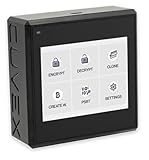
- Sovereign Self-Custody HSM: Personal hardware security module that encrypts secrets offline without relying on servers or third-party infrastructure
- Offline PSBT Signing: Sign Bitcoin PSBT transactions with deliberate human verification and dual air-gap security, minimizing attack surfaces
- No Telemetry, No Metadata Leakage: Designed with zero telemetry, zero balance auditing, and zero backend dependency for maximum privacy
- AES-256-GCM Cryptography: Seed phrases are encrypted offline with advanced AES-256-GCM; secrets never touch internet-connected systems
- Supports Any Wallet: Works seamlessly with existing wallets that expose recovery seeds (Ledger, Trezor, Coldcard, Jade, etc.)
Questions to answer before comparing networks
- Readers: Must the public inspect every transaction, or may only approved organizations view records?
- Submitters: Can any account propose a transaction, or must an identified customer, employee, or institution be approved first?
- Validators: Should validation be open to economically bonded operators, or limited to named organizations?
- Administrators: Who can add or remove members, change policies, pause an application, or deploy a new contract?
- Recovery authorities: Who can restore service after a lost key, corrupted node, software defect, or administrator compromise?
- Regulators and auditors: Do they need independent access to a public history, or a controlled audit trail with confidentiality controls?
Document the answers as a participation matrix. If the answer is “anyone” for validation and independent verification, a permissionless model may be necessary. If the answer is “only named parties” for most functions, a permissioned or hybrid design is normally easier to control.
Permissionless, permissioned, or hybrid?
The choice changes the assumptions your security controls must make. Public replication provides strong independent verification, but it also exposes metadata and makes deletion difficult. A consortium ledger can limit disclosure and define administrative responsibility, but you must trust its members, operators, and governance processes.
| Model | How participation is controlled | Main security strengths | Main trade-offs | Typical fit |
|---|---|---|---|---|
| Public permissionless | Open participation, with consensus security supplied by economic incentives and protocol rules | Independent verification, broad validator participation, public auditability, and resistance to a single organization rewriting history | Public metadata, replicated state, difficult deletion, fee and congestion exposure, and dependence on ecosystem governance | Public settlement, open interoperability, and proofs that must be independently verifiable |
| Permissioned | Identities and access policies authorize members, nodes, and actions | Known participants, policy-based access, organization-level endorsement, selective disclosure, and controllable governance | Trust shifts toward consortium members and operators; collusion or administrative compromise must be modeled | Enterprise workflows involving known institutions and confidential information |
| Hybrid | Private systems handle sensitive workflows while a public network receives proofs or commitments | Combines controlled disclosure with an independently verifiable tamper-evidence layer | Introduces more components, bridges, key-management paths, and operational dependencies | Applications needing both private workflow data and public evidence of integrity |
A hybrid architecture is not automatically safer. Every bridge, relayer, database, signing key, and synchronization process adds another failure path. Use it when the separate privacy and public-verification requirements are genuine, not simply because it sounds more robust.
Evaluate consensus, finality, and attack resistance
Do not judge a network by its consensus label alone. Ask what an attacker must control, how quickly a transaction becomes irreversible for your use case, and what happens when validators, peers, or organizations fail.
For permissionless networks
Review validator economics, penalties, fork-choice rules, reorganization behavior, censorship resistance, concentration of stake or infrastructure, client diversity, and the practical cost of an attack. Ethereum documentation describes a proof-of-stake consensus mechanism with rewards and penalties and a fork-choice rule. Its node guidance also emphasizes that diverse full nodes improve robustness and decentralization. Those properties matter only if your deployment and counterparties rely on the same assumptions.
- Finality: Establish whether the protocol offers deterministic finality, probabilistic settlement, or a combination. Set application-specific confirmation rules for payments, withdrawals, and irreversible actions.
- Reorganizations: Define how your application responds if a previously observed transaction is replaced or a block history changes.
- Validator concentration: Examine whether a small group of operators, staking pools, infrastructure providers, or jurisdictions could coordinate censorship or influence ordering.
- Client diversity: Identify how many independent implementations secure the network and what happens if a dominant client has a critical defect.
- Node independence: Confirm that your organization can run and monitor its own full node rather than trusting a single remote endpoint.
For permissioned networks
Start with the fault model: how many organizations may fail, misbehave, or collude before the ledger becomes unsafe? Then inspect quorum or endorsement thresholds, the ordering service, administrator separation, and the procedures for changing membership.
Hyperledger Fabric illustrates the policy-driven approach. Endorsement policies require specified organizations to execute and approve transaction results. That can provide strong business accountability, but it does not eliminate the need to model collusion among those organizations or compromise of an administrator with policy-changing authority.
What’s actually slowing this PC down?
Pick the symptom - the matching free tool is one click away.
- Record the minimum number of organizations required to endorse each transaction type.
- Separate endorsement, ordering, membership administration, and application administration where possible.
- Specify what constitutes a valid block, how failed organizations are replaced, and how a disputed transaction is investigated.
- Test whether an administrator can unilaterally alter policies, add a rogue node, or approve a contract upgrade.
Questions that apply to both models
- What is the exact quorum for committing a transaction?
- Can a minority censor transactions without creating an obvious outage?
- How are equivocation, double submission, or conflicting endorsements detected?
- What evidence is retained for an audit or dispute?
- How are consensus software vulnerabilities disclosed, patched, and coordinated across operators?
Treat confidentiality and deletion as architecture constraints
A broadly replicated ledger is a poor location for secrets, personal information, account credentials, or regulated payloads. NIST warns that immutability can become a security problem when information must later be deleted. Even if a field is encrypted, copies, backups, indexes, and metadata may remain across many systems.
Keep sensitive values off-chain by default
Store the substantive record in a controlled database, document store, or encrypted object system. Put only a commitment, hash, timestamp, or opaque identifier on the ledger. The on-chain value can prove that an off-chain document has not changed, while retention and deletion are handled in the controlled system.
This pattern requires disciplined key management. Destroying an encryption key may make data unreadable, but it is not equivalent to proving that every replicated copy has been physically erased. Define retention periods, backup expiration, key-destruction authority, and evidence of each action before launch.
Use restricted data features deliberately
Permissioned platforms can provide narrower disclosure without abandoning a shared ledger. Fabric documentation distinguishes channels, where the complete transaction ledger is confidential to channel members, from private-data collections, where hashes are broadly available for validation while the actual values remain with authorized peers.
Choose between those mechanisms based on the disclosure boundary. A channel may be appropriate when an entire workflow should be invisible to non-members. A private-data collection can be preferable when many members need to validate that a value exists or is consistent, but only a subset may read the value itself.
Assess metadata leakage
Confidential values are not the only concern. Addresses, timing, transaction sizes, counterparties, endorsement patterns, and network topology can reveal relationships. For a financial application, model what an observer could infer from transaction frequency or the identity of submitting organizations even when the amount or document is hidden.
Inspect identity and governance before trusting a permissioned design
“Private” does not mean automatically secure. A permissioned network is only as strong as its membership service, policy administration, and separation of duties.
Fabric uses X.509 identities, membership service providers, access policies, channel policies, lifecycle policies, and endorsement policies. When comparing platforms, request an equivalent explanation of each control:
Do these 3 things before closing this tab:
1Clear out junk files and repair common Windows errors2Fix the driver behind crashes, sound loss and screen glitches3Repair Windows errors before they cause bigger problems- Membership: Who issues identities, and what proof is required before an organization or node joins?
- Revocation: How quickly can a stolen certificate or compromised organization be blocked?
- Policy changes: Which organizations must approve a new member, endorsement rule, or channel policy?
- Contract lifecycle: How are smart-contract versions proposed, reviewed, approved, and rolled back?
- Emergency actions: Can operations pause a contract or reject a transaction class, and who authorizes that action?
- Administrator separation: Can one person or one organization both issue identities and approve its own transactions?
Require an auditable record for each membership, policy, and upgrade event. A ledger that records business transactions but leaves governance changes informal has an incomplete security model.
Make signing-key custody a first-class control
Identify every key that can authorize value movement, endorsements, blocks, policy changes, or administrative actions. For each key, document its owner, storage location, invocation path, rotation schedule, revocation method, backup procedure, and recovery quorum.
Hyperledger Fabric states that an HSM protects private keys and handles cryptographic operations, allowing peers to endorse transactions and orderer nodes to sign blocks without exposing private keys. That makes a hardware security module (HSM) a relevant control category for a security-sensitive deployment.
Decide what type of HSM deployment you need
- On-premises HSM: Provides physical custody inside your facilities, but requires procurement, power, site redundancy, firmware maintenance, and specialist operations.
- Cloud HSM: Can reduce hardware operations and improve geographic availability, but introduces a provider dependency and requires careful review of administrative access and service continuity.
- PKCS#11 compatibility: Verify that the blockchain clients, signing libraries, and operational tools support the interface you plan to use.
- Quorum authorization: Require multiple people or organizations to approve sensitive key operations where the threat model demands it.
- Backup and recovery: Test restoration without exporting keys into application memory or an uncontrolled workstation.
An HSM does not fix an overprivileged application. Limit which services can request signatures, require transaction policy checks before signing, rate-limit calls, and log every authorization attempt. Rotate keys without invalidating historical signatures, and maintain a documented procedure for emergency revocation.
Free tools Windows power users keep installed
One-click scans. No signup required.
Check production maturity and operating ecosystem
NIST guidance recommends a protocol with very high network security, an active technical development and support ecosystem, active contributors, and a mainnet rather than a weaker testnet for production records. Treat “mainnet” as a starting requirement, not proof of suitability.
Review the software and support lifecycle
- How often are node, client, SDK, and smart-contract dependencies released?
- Are security advisories specific, timely, and accompanied by upgrade instructions?
- Can operators run supported versions for the entire retention period of your records?
- Are there independent audits, reproducible builds, and a documented vulnerability-reporting process?
- How are breaking upgrades coordinated across organizations and geographic regions?
Review operational observability
- Monitor consensus participation, peer connectivity, endorsement failures, ordering latency, rejected transactions, and storage growth.
- Alert on unexpected validator or administrator changes, certificate expiry, key-use anomalies, and configuration drift.
- Maintain independent logs so that a compromised node cannot erase the only evidence of an incident.
- Test incident communications, including who contacts counterparties when the network is paused or a software defect is discovered.
Ethereum’s node documentation notes that full nodes enforce consensus rules and that greater node diversity improves robustness. The same operational principle applies to permissioned deployments: independent nodes, operators, locations, and software components reduce correlated failure.
Compare candidate architectures on explicit security axes
Use a scorecard instead of a single “security” rating. Require evidence for every score and mark an item as “not established” when the platform documentation does not answer it.
| Axis | What to verify |
|---|---|
| Participant admission | Open participation, invitation, certificate issuance, revocation, and emergency removal |
| Read, write, and validation permissions | Whether each action is public, role-based, organization-based, or contract-controlled |
| Consensus and finality | Fault model, quorum, reorganization behavior, finality conditions, and censorship resistance |
| Validator or peer concentration | Operator, geography, infrastructure-provider, and software concentration |
| Client diversity | Independent implementations, release practices, and migration options |
| Confidentiality and metadata leakage | Public state, channels, private collections, encryption, traffic patterns, and identity exposure |
| Smart-contract isolation | Sandboxing, permission boundaries, dependency control, upgrade authority, and failure containment |
| Key custody | HSM or equivalent support, access control, rotation, revocation, backup, and recovery |
| Governance and upgrades | Approval thresholds, emergency powers, version coordination, and auditability |
| Incident recovery | Node replacement, compromised-member removal, state restoration, and evidence preservation |
| Real workload performance | Latency, throughput, storage growth, and failure behavior under your transaction mix; generic marketing figures are insufficient |
| Cost | Fees, validators or peers, storage, HSMs, monitoring, staffing, audits, and recovery sites |
| Regulatory and geographic fit | Data location, retention, access, jurisdiction, and audit obligations |
| Ecosystem support | Maintained clients, SDKs, operators, documentation, contributors, and security response |
A practical scoring process
- Assign each axis a weight based on the application’s threat model. For a consumer payment system, key custody, finality, availability, and recovery may dominate. For an intercompany document workflow, confidentiality, identity, and governance may carry more weight.
- Set a non-negotiable threshold for critical controls. A candidate that cannot isolate signing keys or meet retention requirements should fail regardless of its other scores.
- Ask each platform team for configuration-specific evidence, not general protocol claims.
- Score the production configuration, including your chosen node topology, policies, key storage, and operating procedures.
- Re-score after a failure exercise and an upgrade rehearsal. A design that works only under normal conditions is not production-ready.
Run security and recovery tests before committing
Use a representative workload and the same controls planned for production. Do not treat a testnet as a production record system; use it to discover operational behavior.
- Model compromise: Assume an application server, validator or peer, administrator credential, and signing key are compromised one at a time. Record what the attacker can read, submit, approve, or censor.
- Exercise finality: Submit transactions, interrupt nodes, partition connectivity, and verify how the application identifies committed, pending, rejected, and conflicting states.
- Test membership removal: Revoke a certificate or remove an organization. Measure how long it takes for every node and policy engine to enforce the change.
- Test key rotation: Rotate application, peer, orderer, and administrator keys without exposing private material to application processes.
- Test HSM recovery: Restore service after an HSM outage or site loss using the documented quorum and backup procedure.
- Test contract upgrade: Deploy a new version, verify approval thresholds, confirm that old records remain interpretable, and rehearse rollback or emergency pause procedures.
- Test privacy boundaries: Use packet captures, logs, backups, and node storage to determine whether unauthorized parties can infer protected values or relationships.
- Test evidence: Confirm that an auditor can reconstruct who approved a transaction, policy, membership change, and upgrade without relying on one potentially compromised system.
Estimate the full production cost
Network fees are only one component. Budget for nodes or validator infrastructure, storage and backups, monitoring, secure network connectivity, HSMs, certificate and identity services, software maintenance, audits, incident response, and staff with consensus and key-management expertise.
A permissionless deployment may avoid running a consortium ordering service, but it can incur variable transaction fees, congestion exposure, node operations, and dependence on external infrastructure. A permissioned deployment may offer predictable transaction costs while requiring multiple organizations to operate redundant peers, ordering services, identity authorities, and governance processes.
For either model, calculate costs under the failure scenario rather than only the steady state. Include a second site, spare HSM capacity, emergency engineering time, legal and regulatory review, and the cost of retaining evidence for the required period. If the application cannot afford independent monitoring and recovery, the network choice is premature.
Common selection mistakes and how to correct them
Choosing by brand familiarity
A well-known network may still expose data, provide the wrong finality guarantees, or lack the membership controls your application requires. Correct this by scoring the threat model and production configuration first.
Quick wins for a faster PC:
Scan for outdated or missing drivers - takes under a minuteDriver Scan →Repair Windows errors before they cause bigger problemsFix Now →Fix the driver behind crashes, sound loss and screen glitchesFind Drivers →Rank #4
Putting sensitive payloads directly on a public ledger
Public replication can make deletion and access control impossible to guarantee. Move the payload off-chain, retain only a commitment, or use a restricted private-data mechanism with explicit retention and key-destruction procedures.
Assuming permissioned means trustless
Identified members can still collude, censor, lose keys, or abuse administrative power. Define endorsement thresholds, administrator separation, independent audit logs, and removal procedures.
Relying on one validator, peer, client, or remote endpoint
Single-provider dependence creates a concentrated outage and censorship risk. Operate independent nodes where feasible, diversify locations and software, and maintain a recovery path that does not depend on the failing component.
Leaving keys in application memory
Application processes are exposed to bugs, malware, debugging tools, and excessive operator access. Use an HSM or equivalent isolated key service, restrict signing requests, and test rotation and recovery.
Outdated Drivers Are Slowing You Down
One free scan finds every outdated or missing driver and matches the right update for your exact hardware.Free scan · exact hardware matchPC Slower Than It Used to Be?
A free scan shows the junk files, broken settings and background clutter dragging Windows down - then fixes them in one click.Free scan · Windows 10 & 11Using a testnet as the production record
Testnets may have different operators, incentives, availability, and upgrade practices. Require a maintained production network with a credible support ecosystem before recording binding financial or regulated events.
Ignoring governance until the first emergency
Without pre-agreed upgrade, pause, membership, and recovery rules, a crisis becomes a governance dispute. Approve those policies, thresholds, and communication channels before launch.
Decision examples
Public proof of settlement
Suppose several independent parties need to verify that a settlement event occurred, while the underlying customer documents remain confidential. A permissionless network can provide the public commitment and independent verification. Keep identities, documents, and account details in controlled systems, and define how application confirmations handle reorganization or delayed finality.
Confidential intercompany workflow
Suppose identified institutions exchange regulated records and must approve each state transition. A permissioned network can enforce membership, endorsement, and selective disclosure. Use separate channels or private-data collections according to who should see the complete ledger versus individual values, and require multiple organizations to approve policy changes.
Recommended Free Tools
Private workflow with public tamper evidence
Suppose a consortium needs confidentiality but an external auditor must independently verify that records were not rewritten. Keep the records and business logic in the controlled network, periodically anchor commitments to a public network, and treat the anchoring keys, scheduling service, and verification process as additional security-critical components.
Production readiness checklist
- The threat model names trusted, untrusted, and colluding parties.
- Read, write, validation, administration, upgrade, and recovery permissions are documented separately.
- The consensus fault model, quorum, finality, and reorganization response are understood for the actual workload.
- Validator, peer, operator, geographic, and client concentration have been assessed.
- Secrets and personal or regulated payloads are kept off-chain or inside explicitly restricted data features.
- Metadata leakage, backups, retention, and deletion procedures have been tested.
- Membership issuance, revocation, endorsement, policy changes, and contract upgrades require the intended approvals.
- Signing keys are isolated, access-controlled, rotated, revoked, backed up, and recoverable; HSM requirements are documented.
- Independent monitoring, audit evidence, incident communications, and recovery sites are operational.
- The selected network is a maintained production network with active contributors and a credible security-response process.
- Cost estimates include normal operation, redundancy, audits, staffing, and failure recovery.
- Security exercises have demonstrated how the system behaves during compromise, outage, partition, key loss, and upgrade.
The practical choice
Select a permissionless network when open participation, public verifiability, and economic Sybil resistance are core requirements. Select a permissioned network when identifiable participants, controlled disclosure, endorsement, and governance are more important than open validation. Select a hybrid architecture only when you can operate its additional keys, bridges, and recovery paths.
The safest decision is the one supported by an explicit threat model, tested finality and recovery behavior, diverse and maintainable infrastructure, strict data placement, and protected signing keys. The word “blockchain” does not supply those controls; your architecture and operating discipline do.
Quick Recap
Product prices and availability are accurate as of the date/time indicated and are subject to change. Any price and availability information displayed on Amazon at the time of purchase will apply.




