
The Tool Desk
Outbyte PC Repair FREEClear out junk files and repair common Windows errorsFree Scan →Outbyte Driver Updater FREEScan for outdated or missing drivers - takes under a minuteDriver Scan →Estimate a truck trip’s fuel expense with one formula: fuel cost = (total truck miles ÷ miles per gallon) × diesel price per gallon. First divide the miles the truck will actually run by its representative MPG to find gallons consumed. Then multiply those gallons by the expected diesel price. This estimates fuel expense only; driver pay, maintenance, tolls, truck ownership and a carrier’s fuel surcharge require separate calculations.
The trucking fuel-cost formula
Use these three calculations together:
- Gallons required = total trip miles ÷ truck MPG
- Total fuel cost = gallons required × diesel price per gallon
- Fuel cost per mile = diesel price per gallon ÷ truck MPG
The relationship is the same unit logic used in the fuel-cost calculation in 40 CFR §600.311-12, which expresses annual fuel cost as “Fuel Price/MPG × Average Annual Miles.” Applying that relationship to one route produces the trip formula above. The regulation is a vehicle fuel-label calculation, not a trucking-specific routing rule, so you still have to define the truck’s actual miles, MPG and fuel price.


As an Amazon Associate I earn from qualifying purchases.
Identify the three inputs
| Input | What to enter | How to qualify it |
|---|---|---|
| Total miles | Every mile the truck is expected to run for the job | Include loaded miles and relevant deadhead, pickup, repositioning and known detour miles. State whether the figure covers one leg or the entire job. |
| Truck MPG | A representative miles-per-gallon figure for that truck and operating pattern | Prefer the truck’s own fuel and mileage records under similar load, terrain and weather. Label a fleet average or generic assumption when records are unavailable. |
| Diesel price | The carrier’s expected purchase price per gallon or a dated benchmark | State the geography and date. A national or regional average is context, not a guaranteed price at a particular fuel stop. |
Calculate the estimate step by step
- Define the job. Decide whether you are pricing a single route leg, a round trip or all truck movement associated with a load. Write down the origin, destination and any planned pickup, delivery or repositioning movements.
- Build the mileage total. Start with the route distance, then add deadhead from the truck’s starting point to pickup, movement between stops and the return or repositioning miles that belong to the job. Include known detours. Do not use only the loaded distance if the truck must travel empty to perform the load.
- Select MPG. Use a representative observed result from the same truck when possible. The basic measurement is miles driven divided by gallons consumed. If you use a fleet average or planning assumption, record it as an assumption rather than presenting it as the truck’s measured performance.
- Choose the diesel price. Use the carrier’s expected transaction price when available. Otherwise use a dated benchmark and identify whether it is national, regional or tied to a particular purchasing area.
- Find gallons. Divide total miles by MPG. Keep extra decimal places during the calculation and round the displayed result at the end.
- Find total fuel cost. Multiply the gallons by the diesel price per gallon.
- Find fuel cost per mile. Divide the diesel price by MPG. This gives a quick operating figure that can be multiplied by any mileage estimate using the same assumptions.
- Save the assumptions. Record the mileage source, MPG period, diesel-price date and geography. A later actual-cost comparison is meaningful only if you know what was assumed.
Build a repeatable worksheet
A simple spreadsheet or dispatch worksheet can prevent the most common scope errors. Give each job a row with fields for loaded miles, deadhead to pickup, miles between stops, delivery or return miles, and other known repositioning. Sum those fields into total truck miles rather than typing one unexplained number.
What’s actually slowing this PC down?
Pick the symptom - the matching free tool is one click away.
Put the MPG assumption in a separate cell and label its source, such as a truck’s recent comparable trips, a fleet average or a provisional planning value. Put the diesel price beside it with the price date, geography and whether it is an expected transaction price or an EIA retail average. Then use formulas equivalent to:
#1 Best Overall
=total_miles/MPGfor gallons;=gallons*diesel_pricefor total fuel cost; and=diesel_price/MPGfor fuel cost per mile.
Keep unrounded gallons in the calculation and round only the displayed gallons or dollar total. This makes the worksheet useful for comparing dispatch revisions and then reconciling the estimate with receipts.
Worked example: 1,200 miles at 6.5 MPG
Assume the truck will travel 1,200 miles, its representative fuel economy is 6.5 MPG, and diesel is expected to cost $3.90 per gallon.
- Gallons: 1,200 ÷ 6.5 = 184.615…, or about 184.62 gallons.
- Total fuel cost: 184.62 × $3.90 = $720.00 after rounding.
- Fuel cost per mile: $3.90 ÷ 6.5 = $0.60 per mile.
The $3.90 price, 6.5 MPG and 1,200-mile distance are illustrative inputs, not an industry benchmark. Replace all three with figures relevant to the specific truck, job and purchase locations.
Why the mileage scope changes the answer
Suppose 1,050 miles are loaded and 150 miles are deadhead. The complete job is still 1,200 truck miles, so the estimate is $720. If someone prices only the 1,050 loaded miles, the calculation is 1,050 ÷ 6.5 × $3.90, or about $630. The $90 difference is the fuel cost of the omitted 150 miles under the same assumptions. This illustrates why a loaded-only quote can understate the carrier’s fuel exposure.
Count loaded, empty and repositioning miles
Loaded miles are only part of the fuel exposure
The truck burns fuel while carrying freight and while traveling empty. For a load estimate, include the empty trip to the pickup, movement between appointments, delivery travel and any empty repositioning that is part of fulfilling the job. Leaving out relevant deadhead miles understates both gallons and cost.
Say whether the estimate covers one leg or the whole job
A quote based on the loaded outbound leg is not the same as a cost estimate for the complete assignment. A complete-job figure might include the truck’s approach to pickup, the loaded route, a delivery reposition and an empty return. Label the scope in the worksheet or dispatch record so a per-mile figure is not accidentally applied to the wrong distance.
Route-planner miles are an estimate
Software or a map may calculate an efficient route, but dispatch changes, restricted access roads, construction, weather diversions and local detours can change the miles actually driven. Use planned miles for budgeting, then use odometer or electronic logging device mileage for later accounting.
Choose a defensible MPG
Use the truck’s own records when the estimate matters
Calculate observed MPG from a consistent period of fuel and mileage records:
Observed MPG = miles driven ÷ gallons purchased or consumed
A single fill-up can be distorted by a partial tank, a data-entry error or an odometer mismatch. A run of comparable trips gives a more useful planning value. Match the records to the situation being priced: a heavy load, mountain route, winter operation or extensive idling may not resemble a lightly loaded highway trip.
Label assumptions instead of hiding them
When truck-specific records are unavailable, a fleet average or generic planning MPG can still produce a preliminary estimate. Mark it clearly as an assumption, identify the period or fleet it represents if known, and replace it with observed performance when the truck begins operating. An unlabeled generic MPG creates false precision.
Understand why MPG changes
- Payload and trailer configuration affect the work the engine must do.
- Terrain and route elevation can change consumption even at the same distance.
- Speed, traffic and stop-and-go operation alter fuel use.
- Weather, wind and road conditions can reduce performance.
- Extended idling consumes fuel without adding miles, so a simple miles-per-gallon figure may understate fuel used when idling is substantial.
Because these variables are truck- and route-specific, use a value representative of the operation rather than treating one universal MPG as a rule.
Use a dated, geographically relevant diesel price
What the EIA benchmark represents
The U.S. Energy Information Administration publishes weekly retail on-highway diesel averages for the nation and regions. For the week of October 5, 2026, its table showed:
| Area | Weekly average |
|---|---|
| United States | $6.199 per gallon |
| Midwest | $6.286 per gallon |
| West Coast | $7.229 per gallon |
These are EIA weekly retail averages, including taxes, accessed October 13, 2026. They provide dated context; they are not a guaranteed price at a particular truck stop. Use the latest published week at the time you prepare an estimate, or use the carrier’s expected purchase prices when those are known.
Rank #3

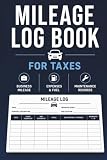
- KEEP DETAILED RECORDS OF THE CAR'S MILEAGE - This mileage log book for car, whether you are a professional driver who needs accurate mileage reimbursement records, or you just want to track your personal vehicle usage, our mileage log book is the perfect choice for you
- UNIQUE DESIGN - The vehicle mileage log book with spiral binding for truck drivers has 1732 entries to meet your needs. Each entry has space to log date, depart time, odometer readings, business & personal miles, purpose, vehicle info, start location & destination and expenses.
- MORE FUNCTIONS - Auto mileage log book help you keep track of mileage, expenses, gas consumption, lubrication, repairs & accessories, annual summary, contacts, important dates and notes.
- HIGH QUALITY - This mileage log book for business or personal, mileage logbook size of 5.8" x 8.5", just the perfectly size to fit in your backpack, purse or laptop case. Is used to high quality 100gsm pure white paper, elastic band and a back pocket for extra space.
- THE PERFECT GIFT - This driving log book can effectively organize and track your work or life, give it to your children, friends, family as a gift for Birthday| Easter|Children's Day|Halloween|Thanksgiving|Christmas|Back to school and New Year's Day.
See how geography affects the same trip
Applying the October 5, 2026 averages to the illustrative 1,200 miles and 6.5 MPG gives about 184.62 gallons. At $6.199, the fuel total is approximately $1,144.43; at the Midwest average of $6.286, it is about $1,160.49; and at the West Coast average of $7.229, it is about $1,334.58. These are demonstrations of price sensitivity, not quotes for a specific stop. A route that crosses regions may require expected prices for the locations where gallons will actually be purchased.
Match the price to the route
A national average applies one broad number to every gallon, even when a route crosses areas with different prices. For a preliminary budget, state that limitation. For a commercial estimate, use expected transaction prices by the locations where the truck will actually fuel, especially when the route has materially different purchase areas.
Know the publication timing
EIA collects its weekly retail prices on Monday and generally publishes the average on Tuesday. Government holidays can shift that schedule. Record the week represented by the number rather than describing it as today’s price.
Make estimates more useful when conditions vary
Recalculate the formula whenever one of the three inputs changes. A longer route increases gallons in direct proportion to miles. A lower MPG increases gallons for the same distance. A higher diesel price increases cost for every gallon consumed. Keeping the formula in a spreadsheet makes it easy to test a dispatch change, a different truck or a new fuel quote without changing the underlying method.
For example, with the illustrative 6.5 MPG truck, every additional mile requires 1 ÷ 6.5 gallons under the same conditions. With the illustrative $3.90 price, multiplying that incremental gallon amount by $3.90 shows the added cost. This is a planning relationship, not a promise that the truck will maintain identical MPG on every additional mile.
Free tools Windows power users keep installed
One-click scans. No signup required.
When comparing scenarios, change one assumption at a time if you want to understand its effect. If a new route is both longer and hillier, update miles and MPG rather than attributing the entire difference to distance.
Compare routes, trucks or load scenarios consistently
Use the same accounting scope for every alternative. For each route or truck, compare:
Rank #4

- 【Sufficient Recording Space】Auto mileage log book has 1260 entries, Each entry has space to log date, business purpose, odometer reading, and total mileage,emergency contacts, maintenance records, insurance information and so on. Accurate records of every trip, applicable to personal taxes and business claims
- 【Premium Materials and Perfect Size】The gas mileage log book with spiral binding is made of thick 100GSM paper with no ink bleed-through. Our mileage record book size 5.9"x 8.6" is easy to carry around and to fit in a glove compartment, center console or work bag. Waterproof PVC cover design, prevents pages from water and oil sprinkl
- 【Subjective Layout】The simple and clear design provides you with detailed car mileage and expenses and prevents you from missing every trip record. With the mileage notebook, efficiently maintain your vehicle and easily track expenses.
- 【Ideal Persent Suggestion】This driving log book is an excellent choice for every driver. It is very useful to record every trip.Whether it's a gift for friends and family, or as a holiday gift, our car journal will bring them convenience and practicality.
- Total truck miles, including the empty miles that belong to the job.
- Expected MPG under that route, payload and operating pattern.
- Diesel-price geography and date, or expected purchase prices at the planned fueling locations.
- Total fuel cost for the job.
- Fuel cost per mile, calculated from the same price and MPG assumptions.
Do not compare one option using a national average and another using a route-specific purchase price unless you clearly explain the difference. Likewise, do not compare a loaded-only distance with a full-job distance. If the alternatives use materially different fueling areas, compare their expected transaction prices rather than forcing one national average onto both.
Independent reader supportYour contribution helps us test, update, and keep practical guides available for everyone.Fuel expense is not the same as a fuel surcharge
The formula above estimates what the truck’s consumed diesel costs. A fuel surcharge is a separate pricing arrangement between a carrier and its customer. Companies use different surcharge methods; a surcharge may use a published index, a base fuel price, mileage bands or contract-specific rules.
Recommended Free Tools
EIA states: “We do not calculate, assess, or regulate diesel fuel surcharges, and we cannot tell transportation companies and freight carriers how to calculate a fuel surcharge.” It also says, “Every company has its own method for calculating fuel surcharges.” Therefore, do not present the trip-fuel formula as a universal surcharge formula, and do not assume that a surcharge collected equals the truck’s actual fuel expense.
Reconcile the estimate with actual fuel use
- Capture the truck’s starting odometer or ELD mileage for the job.
- Record ending mileage and identify which miles belong to the load.
- Keep gallons and prices from each fuel receipt or fuel-card transaction.
- Compare actual miles divided by actual gallons with the MPG used in the estimate.
- Compare actual fuel spending with the estimated gallons multiplied by the assumed price.
- Explain variances by category, such as extra deadhead, route detours, idling, weather, a changed fuel price or a different truck.
For ongoing operations, a truck mileage log book or fuel-and-mileage log can provide a simple record of odometer readings, gallons and prices across fill-ups. It is optional for the arithmetic, but consistent records improve the MPG input and make later estimates less dependent on generic assumptions.
Common mistakes and how to correct them
- Using only loaded miles: Add relevant deadhead and repositioning miles before dividing by MPG.
- Mixing route scopes: Decide whether the number is one leg, a round trip or the complete job and use that scope for every calculation.
- Applying an unqualified MPG: Identify whether MPG is measured for the truck, a fleet average or a planning assumption.
- Using an undated fuel price: Record the week, geography and whether the number is an expected transaction price or a retail benchmark.
- Rounding gallons too early: Keep decimals through the multiplication and round the final dollar result.
- Treating a benchmark as a pump quote: Regional and national averages include taxes but do not guarantee the price at a specific stop.
- Calling fuel cost a surcharge: Keep the consumed-fuel estimate separate from the carrier’s customer-pricing formula.
- Ignoring non-mile fuel use: Review idling and unusual operating conditions when a miles-per-gallon estimate does not reconcile with receipts.
What the calculation does and does not include
It includes the diesel needed for the defined truck miles, based on the selected MPG and price. It does not include driver wages, payroll taxes, maintenance, tires, tolls, insurance, depreciation, financing, dispatch costs, truck ownership or profit. Add those items separately when calculating a fully loaded cost per mile or a freight rate.
Commercial route-planning software can help estimate the distance input, and fuel-card or fueling-network data may help develop expected purchase prices. Those tools improve the inputs; they do not change the formula. The result is only as reliable as the route scope, MPG evidence and price date attached to it.
Do these 3 things before closing this tab:
1Scan for outdated or missing drivers - takes under a minute2Repair Windows errors before they cause bigger problems3Fix the driver behind crashes, sound loss and screen glitchesFrequently Asked Questions
What is the basic formula for trucking route fuel cost?
Divide total truck miles by representative MPG to estimate gallons, then multiply gallons by diesel price per gallon: (miles ÷ MPG) × price. Fuel cost per mile is price per gallon ÷ MPG.
Best Value
Should deadhead miles be included?
Yes. Include empty travel to pickup, movement between stops and other repositioning or return miles that belong to the job. Loaded-only miles can understate gallons and cost.
How do I measure a truck’s MPG?
Use a consistent set of fuel and mileage records: observed MPG equals miles driven divided by gallons purchased or consumed. A run of comparable trips is more useful than one partial or error-prone fill-up.
What if I do not have truck-specific MPG records?
Use a fleet average or generic planning MPG, but label it as an assumption and identify its period or source when known. Replace it with observed performance when records become available.
Can I use an EIA diesel price for a route estimate?
Yes, as a dated benchmark. EIA weekly national and regional averages include taxes but are not guaranteed prices at a specific stop. State the week and geography, or use expected purchase prices where available.
How often should the diesel price be updated?
Use the latest published EIA week when a benchmark is needed, or update the estimate when expected transaction prices change. EIA generally collects prices Monday and publishes the average Tuesday, with holiday shifts possible.
Is fuel cost the same as a fuel surcharge?
No. Fuel cost estimates consumed diesel. A surcharge is a separate carrier-customer pricing arrangement, and every company may use its own method.
What does this calculation leave out?
It excludes driver pay, maintenance, tires, tolls, insurance, depreciation, financing, dispatch, ownership and profit. Add those separately for a fully loaded operating cost or freight rate.
Outdated Drivers Are Slowing You Down
One free scan finds every outdated or missing driver and matches the right update for your exact hardware.Free scan · exact hardware matchPC Slower Than It Used to Be?
A free scan shows the junk files, broken settings and background clutter dragging Windows down - then fixes them in one click.Free scan · Windows 10 & 11How can I compare two routes fairly?
Use the same mileage scope and compare total truck miles, route-specific MPG, dated or location-specific diesel prices, total fuel cost and cost per mile. Do not mix loaded-only miles or inconsistent price bases.
The Bottom Line
Bottom line: Calculate (total truck miles ÷ representative MPG) × dated diesel price per gallon. Include relevant loaded, deadhead and repositioning miles, document the MPG and price assumptions, and keep fuel expense separate from any fuel-surcharge formula.
Quick Recap
Product prices and availability are accurate as of the date/time indicated and are subject to change. Any price and availability information displayed on Amazon at the time of purchase will apply.




