
What’s actually slowing this PC down?
Pick the symptom - the matching free tool is one click away.
If Social Security is your only income, build your hurricane reserve in layers rather than chasing a universal dollar amount. Start with a small, separate cash reserve you can reach during an outage, then size the next layer around your household’s actual evacuation, medication, food, lodging, utility and insurance-deductible costs. Automate a transfer immediately after each benefit deposit, prepare your records before storm season, and understand that FEMA disaster assistance and SSI treatment follow separate eligibility rules.
What a hurricane emergency fund is—and what it is not
The Consumer Financial Protection Bureau defines an emergency fund as “a cash reserve that’s specifically set aside for unplanned expenses or financial emergencies.” That definition fits hurricane preparation: the money is not a general spending account, and it is not reserved only for a named storm. It is available when evacuation transportation, replacement medication, temporary lodging, food, water, a utility reconnection or an insurance deductible must be paid before normal income and assistance catch up.
As an Amazon Associate I earn from qualifying purchases.
A Social Security-only household has less room to absorb a sudden bill, but that does not make saving pointless. The CFPB says even a small amount can provide some financial security. Your first objective is therefore a usable reserve, not a perfect balance. A reserve can prevent a minor disruption from forcing a missed utility payment, a high-cost credit-card balance or a choice between fuel and medication.
Free tools Windows power users keep installed
One-click scans. No signup required.
Do not treat the fund as a substitute for insurance, FEMA assistance or a disaster supply kit. Insurance pays only for covered losses after its deductible and claim process. FEMA assistance is limited by program rules and generally requires an application. A stocked kit reduces what you have to buy during shortages, while cash covers expenses that neither a kit nor a claim can solve immediately.
#1 Best Overall
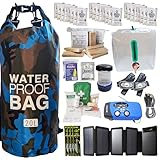
- Comprehensive Hurricane Kit: This pre-packed hurricane kit includes all the essential hurricane preparedness items for home safety, such as a hurricane lantern, hurricane food, and a hurricane radio weather radio, ensuring you are fully prepared for any emergency.
- Waterproof and Durable Bag: Conveniently packed in a waterproof bag, this hurricane emergency kit is designed to protect your hurricane supplies for home from water damage, ensuring that all your essential hurricane preparedness items remain dry and functional.
- Designed for Two People: Our hurricane kit emergency for home is thoughtfully designed to cater to the needs of two people, including enough hurricane preparedness items food, water and hurricane lights for indoor use, providing peace of mind for you and your loved ones.
- Essential Hurricane Gear: This kit includes a variety of essential hurricane items such as a led hurricane camping lantern, hurricane phone charger, and emergency hurricane supplies to ensure that you have all the necessary tools for effective hurricane preparedness.
- Emergency Communication Tools: Stay informed with the included hurricane radio weather radio, an indispensable part of your hurricane supplies. This radio ensures that you receive critical updates and alerts, making it a vital component of your hurricane emergency kit.
Set a target from your own essential costs
There is no CFPB-prescribed “hurricane amount” that applies to every Social Security recipient. Your target depends on where you live, who is in the household, how far you would travel, your health needs, your vehicle, your insurance and the unexpected costs you have experienced before.
Make an evacuation-cost worksheet
Write down the likely cost of one realistic evacuation, using current local prices and your household’s actual needs. Include:
- Transportation: fuel, fares, accessible transportation, parking, tolls or a repair needed to leave safely.
- Medication and medical supplies: early refills where permitted, refrigeration or mobility-related needs, and supplies that may be unavailable after a storm.
- Food and water: the amount you would buy before leaving or while waiting for stores, power and water service to return.
- Temporary lodging: a hotel, accessible room, pet-friendly room or another safe place if family housing is unavailable.
- Pet or service-animal care, including food, carriers, medication and boarding if necessary.
- Utility and communications costs, such as reconnection fees, replacement phone service or charging.
- Your likely insurance deductible and other immediate costs that must be paid before reimbursement.
Add the costs you would have to pay first, not the full value of every possible property loss. If a family member can reliably provide transportation or lodging, record that as a contingency rather than assuming it will always be available. Revisit the worksheet when rent, prescriptions, insurance or household size changes.
Windows Errors? Fix Them Before They Spread
Repair common Windows errors and clear accumulated junk for a smoother, more stable PC - no reinstall needed.Free scan · no reinstallOutdated Drivers Are Slowing You Down
One free scan finds every outdated or missing driver and matches the right update for your exact hardware.Free scan · exact hardware matchBuild the goal in layers
Use a staged target so a limited monthly income still produces progress:
- Immediate-evacuation layer: save enough for the first transportation, medication, food and communication needs you identified.
- Short-disruption layer: add the cost of temporary lodging, pet care, utility reconnection and essential bills during the first several weeks of disruption, to the extent your budget allows.
- Deductible and recovery layer: work toward the insurance deductible and other unavoidable costs that may arrive before a claim or assistance payment.
Several weeks of essential expenses can be a useful long-term direction, but it is not a requirement you must reach before the reserve has value. A smaller fund that is separate and accessible is more useful than an ambitious target that causes overdrafts or skipped necessities.
Find savings without endangering current benefits
Start with a written monthly cash-flow plan. List the date and amount of each Social Security or SSI deposit, then subtract housing, utilities, food, medication, transportation, insurance and other obligations. The remaining amount is the ceiling for a transfer—not a promise that every month will be identical.
Use a fixed transfer after the benefit deposit
Choose a small amount that can survive an expensive month and schedule an automatic transfer for the day after the benefit arrives. A fixed transfer creates a habit while leaving the deposit available for bills. If your bank allows separate recurring transfers, name the account “hurricane reserve” so it is not confused with rent or everyday spending.
Increase the transfer only after you have observed several months of actual spending. When a bill falls, a recurring expense ends or you receive irregular money, direct part of that amount to the reserve. Do not automate an amount that could trigger an overdraft or force you to delay medication, food or housing.
Rank #2

- [Preparedness for the Unknown]: While no one can predict when or how severe a disaster or unexpected event will be, our 262pcs survival kit helps your family stay prepared during the critical first 72 hours. Designed for family use, it was developed in collaboration with survival experts, outdoor professionals, special forces operators, and mountain guides. Whether you're preparing for earthquakes, tornadoes, wildfires, or hurricanes, our survival kit provides peace of mind.
- [Comprehensive Emergency Supply Kit]: The included emergency supplies are stored in a bright red pouch, containing tweezers, scissors and pins, non-woven pad, triangular cotton cloth, cotton swabs, cotton balls, a generous supply of adhesive strips etc., meeting your general emergency and outdoor needs. It also includes an emergency information card to record your basic information, helping others quickly access important information when needed.
- [Safety Companion for Journey]: Our emergency kit includes many survival gear and supplies to ensure access to food, water, warmth, and light in a crisis. The fishing kit and multi-usage spoon help you catch and prepare food, while the collapsible water container bag helps store water. Fire starter and stick make it easy to build a fire. A flashlight, camping lamp, and glow sticks provide up to 72 hours of lighting, crucial for signaling for help and safe navigation.
- [Essential Survival Gear]: Additionally, this survival kit includes a detachable multifunctional axe with hammer and a 2-in-1 shovel with pick, made of sturdy carbon steel. Combined with wire saw, emergency tent and blanket, rope, and compass, you can quickly set up an emergency shelter while helping retain warmth. Unlike other mini axes, our axe and shovel are 17 inches long, providing effective protection in the wild against animals or in other emergencies.
- [Convenient Packaging]: The survival gear and supplies are packed in a crossbody bag, making it easy to carry and access in emergencies. The bag features multiple compartments and molle compatible straps and D-rings, allowing you to attach extra pouches or survival tools. The crossbody strap is also detachable, making it easy to connect to a tactical survival backpack using carabiners or the molle system.
Use irregular money deliberately
Tax refunds, rebates, gifts, a one-time payment or money left after a necessary expense can move you toward the next layer faster than a larger monthly transfer. Decide in advance what share will go to the reserve. Keep the account for genuine emergencies so a temporary surplus is not silently absorbed into routine spending.
Do not borrow to create the fund
A hurricane reserve should be cash you own. A credit-card limit, payday loan or cash advance can disappear when networks are down and may add interest or fees while your income is fixed. If a transfer makes the account balance negative, reduce the transfer and rebuild from a sustainable amount.
Choose an account that works during an outage
Keep the main reserve in a dedicated, readily accessible account rather than in cash at home or mixed into your bill-paying balance. Before opening or switching accounts, check the fee schedule, minimum balance, withdrawal limits, transfer timing and whether deposits are covered by federal deposit insurance or applicable credit-union share insurance. Terms vary by institution and can change.
Quick wins for a faster PC:
Fix the driver behind crashes, sound loss and screen glitchesFind Drivers →Clear out junk files and repair common Windows errorsFree Scan →| Vehicle | Access during a disruption | Fees and protection to check | Best use |
|---|---|---|---|
| Separate insured savings account | Usually accessible by debit card, branch, ATM or transfer; outages can affect any channel. | Monthly fees, minimum balance, ATM charges and federal insurance or credit-union coverage. | Main reserve that is separated from everyday spending. |
| Existing checking account sub-account or labeled savings bucket | Fastest transfer access when the same institution’s systems are operating. | Overdraft linkage, account fees and whether the “bucket” is a separate insured account or only a label. | Households that need simple, familiar access. |
| Short-term certificate or restricted savings product | May impose a delay, penalty or early-withdrawal rule. | Withdrawal penalties, maturity date and insurance coverage. | Only money above the immediately accessible hurricane layer. |
| Physical cash | Works when payment networks and power are unavailable, but can be lost or stolen. | There is no account insurance; home storage and household safety are the risks. | A small outage buffer, not the entire reserve. |
Maintain a small amount of physical cash only within a limit that is safe for your household. Protect the remainder in the account. Keep more than one way to access funds when practical—such as a payment card and account information—because an individual ATM, phone or bank branch may be unavailable.
Protect account and identity information before storm season
Financial recovery is slower when you cannot prove who you are, what you own or where a payment should go. The CFPB points households to FEMA’s Emergency Financial First Aid Kit and to a CFPB/FEMA disaster checklist. Use those resources to assemble records before a warning is issued.
Gather paper copies
- Social Security number and benefit information.
- Government identification and household contact details.
- Insurance policies, agent contacts, deductibles and claim instructions.
- Bank and credit-union account information, including direct-deposit details.
- Medical information, prescriptions, providers and emergency contacts.
- Lease, mortgage, property, vehicle and utility records.
- Proof of residence and ownership or occupancy documents you may need for assistance.
Store copies in separate safe places rather than keeping every original in one folder. A waterproof and fire-resistant container can help, but it is not a guarantee. Consider a protected digital copy with strong passwords and multifactor authentication. Do not leave unencrypted identity documents in a shared public folder or on a device that could be lost with your evacuation bag.
Keep an inventory that supports a claim
Photograph or record important property and note model numbers, purchase information and condition where practical. Keep the inventory with your records, not only on the device that could be damaged. The purpose is to document losses accurately; it is not to inflate a claim or replace proof of coverage.
Review insurance and flood exposure
Read the declarations page for homeowners, renters, auto, flood and other relevant coverage. Write down the deductible, exclusions, temporary-living provisions, claim deadlines and the number to call after a loss. Ask the insurer what documentation is required and whether emergency repairs must be documented before debris is removed.
Rank #3

- 72 HOUR EMERGENCY KIT FOR 2 PEOPLE WITH FOOD AND WATER: Includes 2 emergency food bars totaling 4800 calories and 12 sealed drinking water pouches to support hydration and energy during disasters. Designed for emergency preparedness, survival kits, earthquake kits, and evacuation planning.
- COMPLETE DISASTER SURVIVAL KIT WITH SHELTER AND WARMTH: Equipped with 2 emergency ponchos and 2 survival blankets to help protect against rain, wind, and cold conditions. Critical gear for outdoor emergencies, power outages, and shelter in place situations.
- FIRST AID KIT AND SAFETY PROTECTION SUPPLIES: Features a 33 piece first aid kit, dust masks, and nitrile gloves to support basic medical care and protection from debris and airborne particles. Essential for emergency response, injury care, and disaster safety.
- EMERGENCY LIGHTING AND SIGNALING TOOLS INCLUDED: Comes with 2 long lasting 12 hour lightsticks and a safety whistle for visibility and communication in low light or rescue situations. Ideal for blackout emergencies, nighttime evacuation, and search scenarios.
- COMPACT BACKPACK FOR GRAB AND GO EVACUATION: Lightweight emergency backpack keeps all survival supplies organized and ready for fast response. Perfect for home emergency kits, car emergency kits, office preparedness, and bug out bags.
Flood coverage is a separate question from hurricane wind coverage for many households. FEMA risk tools can help you understand flood and other climate exposure, but being outside a high-risk flood zone does not eliminate flood risk. Use the result to decide whether your reserve should include a larger lodging, transportation or deductible layer—not to assume a claim will be paid.
If you rent, confirm what the landlord’s policy covers and what your own renters policy covers. A landlord’s insurance generally does not insure your personal belongings. If you own a vehicle, check comprehensive coverage and its deductible before assuming storm damage is insured.
Prepare a practical hurricane cash-and-supplies kit
Your reserve works best alongside supplies that reduce last-minute purchases. Build a portable kit that one person can carry or that fits your evacuation plan. Contents and prices vary, so check expiration dates, medical needs and local conditions rather than buying a fixed list blindly.
- Water and shelf-stable food suited to household members’ medical and dietary needs.
- At least the medications and medical supplies your clinicians and pharmacists say you can lawfully obtain in advance.
- Flashlights, spare batteries, battery or hand-crank communication equipment and phone-charging options.
- Basic hygiene items, protective clothing, masks, sanitation supplies and needed mobility equipment.
- Pet or service-animal food, medication, identification and transport equipment.
- Copies of financial and insurance records in a protected container, plus a small amount of cash.
Keep the kit portable enough to take if officials order evacuation. Store some supplies at home for sheltering in place and a smaller go-bag for leaving quickly. Replace expired food, batteries and medication-related items on a calendar.
What to do when a storm threatens
Before an evacuation order
- Check official local emergency alerts and determine whether your address is in an evacuation zone.
- Confirm transportation, an accessible destination and a pet plan; do not wait for fuel or rooms to become scarce.
- Withdraw only the safe cash amount you planned, charge devices and confirm that your reserve account and payment card are accessible.
- Refill medications and gather the document packet, identification, insurance information and direct-deposit details.
- Photograph the home and valuable property if it is safe to do so, and keep the images with your records.
During an outage or displacement
Prioritize food, safe shelter, medication, utilities, transportation and essential bills. Preserve the reserve for those needs rather than replacing nonessential property immediately. Keep receipts, shelter information, repair estimates and photographs. Never delay an evacuation to protect belongings or documents.
Independent reader supportYour contribution helps us test, update, and keep practical guides available for everyone.How FEMA disaster assistance fits into your plan
FEMA assistance is not an automatic replacement for savings. For a presidentially declared disaster, eligible survivors generally apply through DisasterAssistance.gov, the FEMA app, telephone or a Disaster Recovery Center. Availability, covered needs and deadlines depend on the specific declaration and program.
Information to have ready
- Your Social Security number and identity information.
- Insurance details and the insurer’s claim information.
- Annual household income.
- Current contact information and the damaged residence address.
- Bank information if you request direct deposit.
- A description of damage, losses and urgent needs.
Apply even if you are unsure whether a particular expense qualifies; describe the loss accurately and follow the program’s instructions. FEMA may require an insurance determination first or may coordinate with other assistance. Keep the application number, notices, receipts and appeal deadlines with your disaster records.
Recommended Free Tools
A declaration is geographic and event-specific. Living in a hurricane-prone state does not by itself create eligibility, and a storm that affects your household does not automatically mean a presidential disaster declaration has been issued for your location.
Rank #4
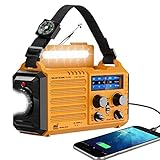
- 【NOAA Weather Alert Radio Keeps You Prepared Ahead】Our NOAA Weather Radio is certified by National Weather Service. Choose WB band and one of the 7 preset weather band to tune into your local weather station. When the National Weather Service issues a severe weather alert, the radio will make a loud SOS alarm that lasts for 9 secs, meanwhile, the red light flashes.You will never miss it even at sleep. Great 𝗲𝗺𝗲𝗿𝗴𝗲𝗻𝗰𝘆 𝗸𝗶𝘁 for tornadoes, tsunamis, Wildfire, hurricane & snowstorm.
- 【AM FM Shortwave Radio with Earphone Jack-Best Listening Experience】Easy to tune into your favorite broadcast, AM Radio(520-1710 Khz); FM Band(88-108MHz); SW Radio(7-19.00 MHZ). The crank radio has a comprehensive coverage of entertainment, sports, news or overseas broadcast like The BBC/Moscow/Beijing. The telescopic antenna makes it a portable radio with best reception. Big volume knob is designed for easy volume adjustment and the 3.5mm headphone jack for your enjoying radio shows privately.
- 【5 Power Sources-Long Runtime】This 𝘀𝗼𝗹𝗮𝗿 𝗰𝗿𝗮𝗻𝗸 𝗿𝗮𝗱𝗶𝗼 is ready and save your life in emergency. Built-in 5000 rechargeable battery, the 𝗘𝗺𝗲𝗿𝗴𝗲𝗻𝗰𝘆 𝗥𝗮𝗱𝗶𝗼 is easily recharged by solar/hand crank/power plug( 5V/2A, not included)and USB cord(included). Besides, it is also equipped with backup battery compartment(3pcs*AAA batteries, not included). No more power failure concerns in any situation. The full charged solar radio will last up to 13 hours only playing FM radio.
- 【All-in-One Portable Radio with LED Flashlight/Reading Lamp】Our 𝗵𝗮𝗻𝗱 𝗰𝗿𝗮𝗻𝗸 𝗿𝗮𝗱𝗶𝗼 is also designed for outdoor survival- provides 2 light sources.The side 3W LED flashlight provides strong and straight light to light up 80 meters away. A very vital survival gear and equipment if you are lost at night. 2.5W Reading Lamp with 2 adjustable brightness- Flipping up the solar panel makes the emergency crank radio a reading lamp with 6 built-in LED bulbs to illuminate 20㎡ room or campsite.
- 【Versatile for Emergency】Built in USB output port, this 𝗯𝗮𝘁𝘁𝗲𝗿𝘆 𝗼𝗽𝗲𝗿𝗮𝘁𝗲𝗱 𝗿𝗮𝗱𝗶𝗼 can charge more than one cellphone for important calls or texts. Besides, the compact light weight noaa emergency weather radio comes with a compass, hand strap, perfect for outdoor camping, field survival, hiking, trekking and night biking. We care you and provide one-year warranty, just email us with any question.
How disaster aid can affect SSI
SSI and Social Security retirement or disability benefits are not interchangeable programs. SSI is a needs-based program with income and resource rules; ordinary Social Security benefits are generally not subject to SSI’s resource rules unless you also receive SSI. Ask the Social Security Administration or a qualified benefits counselor about your own combination of benefits before moving money or reporting a payment.
Under 20 CFR § 416.1150, qualifying assistance received under the Disaster Relief and Emergency Assistance Act, or under another federal statute because of a catastrophe that the President declares to be a major disaster, is not counted as income under the specified SSI provision. The rule also addresses certain assistance from state or local governments or disaster organizations because of a presidentially declared catastrophe. The treatment depends on the type and source of the payment; do not assume every check, donation or insurance payment is excluded.
Keep the award letter, payment record and any notice describing the program. Report information when SSA instructions require it, and ask how the payment is treated rather than relying on its label as “disaster aid.” A payment that is excluded as income can still raise questions about resources later, depending on how it is retained and on the applicable SSI rules.
Do not confuse an SSI emergency advance with hurricane savings
SSA has a separate emergency-advance rule for an individual who is initially applying for SSI, is presumptively eligible and faces an immediate threat to health or safety. That narrow advance is not a general hurricane-fund payment for every Social Security or SSI recipient. It does not remove the need to prepare a reserve, apply for disaster assistance or document losses.
If you are applying for SSI during a crisis, ask SSA directly whether you meet the current presumptive-eligibility and emergency requirements. If you already receive benefits, use the ordinary disaster-assistance and benefit-reporting channels that apply to your case.
Recovery: spend in the right order and rebuild
After reaching safety, use available money first for immediate health and housing needs: food, shelter, medication, essential transportation, utilities and bills that keep housing or services in place. Then handle necessary repairs and replacement of items needed for work, mobility, health or safe living. Delay discretionary replacement until insurance and assistance decisions are clearer.
Record every reserve withdrawal and its purpose. When income resumes or a claim and assistance payment arrive, replenish the reserve before returning to nonessential spending. Update the worksheet with the storm’s actual costs: transportation, lodging, medication, deductibles, utility restoration and any expense you underestimated. That record gives your next target evidence instead of guesswork.
Do these 3 things before closing this tab:
1Fix the driver behind crashes, sound loss and screen glitches2Repair Windows errors before they cause bigger problems3Scan for outdated or missing drivers - takes under a minuteA repeatable annual checklist
- Set or review the evacuation-cost worksheet.
- Confirm the automatic transfer still fits the benefit amount and essential budget.
- Check account fees, access methods, insurance coverage and beneficiary or contact information.
- Refresh identity, bank, medical, property, utility and insurance records.
- Review deductibles, exclusions and flood exposure.
- Replace expired kit contents and verify medication and pet plans.
- Test digital access, multifactor authentication and at least one backup way to obtain funds.
- Recalculate after a move, new diagnosis, benefit change, vehicle change or household change.
The most durable strategy is modest and mechanical: save a sustainable amount after each deposit, keep it separate, protect the records that unlock help, and increase the target only when your real costs or available cash change.
Quick Recap
Product prices and availability are accurate as of the date/time indicated and are subject to change. Any price and availability information displayed on Amazon at the time of purchase will apply.




