
Quick wins for a faster PC:
Clear out junk files and repair common Windows errorsFree Scan →Fix the driver behind crashes, sound loss and screen glitchesFind Drivers →Repair Windows errors before they cause bigger problemsFix Now →Build the budget from what your household actually spends, then test it against higher rent, utilities, taxes, insurance and repairs. A workable plan includes the complete cost of keeping a home, protects essential savings, and leaves a realistic buffer for bills that change. It does not simply copy a lender’s maximum approval or force every category to fit a preferred housing-to-income ratio.
The process below works for renters deciding whether a lease is sustainable and for homeowners whose payment or other property costs are rising. It also shows what to check when the numbers stop balancing and where to seek help with rent or utilities.

As an Amazon Associate I earn from qualifying purchases.
Start with an as-is spending snapshot
The first worksheet should describe your current life, not an idealized version of it. The Consumer Financial Protection Bureau (CFPB) says about half of Americans do not have a budget, according to its page last modified December 12, 2024. Its recommended starting point is to review several months of account and credit-card history, receipts and cash spending, then compare the result with your actual account balances. See CFPB’s “Assess your spending” guidance.
Free tools Windows power users keep installed
One-click scans. No signup required.
Use enough history to reveal irregular bills
Three to six months is a useful starting window when records are available. A single month can miss an insurance premium, school expense, medical bill, gift, trip or seasonal utility spike. Record the date and amount of every purchase, including small cash transactions and automatic withdrawals.
#1 Best Overall

- Neatly Track & Organize Your Finances: The accounting ledger book is here for you to stay on top of your spendings & income! Clearly & neatly structured, it offers ample space for all crucial information about checks, savings, bills & other expenses or income
- Perfect For Small Business Owners: Keep it simple, yet super effective - the undated income and expense log book is an absolute must-have among small business supplies! Register your financial data and use your debit & credit records to compile a trial balance
- Premium Style With A Sturdy Cover: With the 120-page finance tracker, you can manage your finances conveniently in one place. A solid cover, thick paper and a reliable ring binding ensure maximum durability
- Beautiful Modern Minimalistic Design: A visual highlight just like you can expect from ZICOTO! The sage green cover of the ledger book, look stunning with a modern golden floral on the front - makes bookkeeping simply beautiful!
- Super Handy - Always At Hand: Thanks to its practical size, the 8.6x6.1” ledger book fits into any bag easily and is therefore always by your side. Whether used as a checkbook register or to track other financial flow, with the log book you’ve got it all sorted!
- Download or print recent checking, savings and card transactions.
- Collect receipts and make a note of cash purchases that do not appear in statements.
- Group each transaction into a category such as housing, food, transportation, health, debt, childcare, subscriptions, savings or miscellaneous.
- Convert less-frequent bills into a monthly amount. For example, divide an annual insurance bill by 12 so the budget reserves money before it is due.
- Record regular transfers to emergency, retirement, education or other savings as spending commitments rather than treating them as money that is always available.
- Reconcile the calculated “leftover” with the change in your bank balances. A gap usually means a missed cash purchase, an irregular bill or an overly optimistic category.
Choose a tracking method you will maintain
CFPB lists account history, saved receipts and its spending tracker, a small notebook, or a personal-finance tool from a bank, credit union or private company. A notebook is optional; no paid product is required. The best method is the one that captures cash, irregular costs and savings consistently.
Separate necessities from adjustable spending—after you measure reality
Once the as-is snapshot is complete, mark expenses as essential, flexible or occasional. Rent or a mortgage, basic utilities, food, insurance, transportation to work, minimum debt payments and necessary medical care generally need priority. Dining out, entertainment, travel, extra debt payments and some subscriptions may be adjustable, but their actual amounts still belong in the first version of the budget.
Do not make the worksheet balance by entering a wished-for grocery bill or deleting regular savings. Instead, create a second “changes” column. For each flexible category, write a specific action and its expected monthly effect—for example, cancelling a service, reducing restaurant spending or changing a travel plan. Keep the original amount beside it so you can see the trade-off.
Keep a miscellaneous category
A miscellaneous line is not a failure of discipline. It absorbs small purchases and genuinely hard-to-classify costs. If it is routinely exhausted, raise it or inspect the transactions rather than silently moving expenses into another category.
Rank #2

- Effective Budget Planning - Take control of your finances with the budget account book. This comprehensive planner allows you to plan and track your income, expenses, savings, and financial goals in one convenient place. With its intuitive layout and easy-to-use sections, you can stay organized and make informed decisions to achieve financial success.
- User-Friendly Layout - The budget planner features a user-friendly layout designed for easy navigation and organization. Each month, you'll find dedicated budget pages where you can set financial goals, track your income, and plan your expenses. Additional sections include debt trackers, savings goals, bill payment trackers, and more, making it simple to stay on top of your finances.
- Undated Monthly Calendar & Bonus Stickers - Featuring undated calendar each month, you'll have ample space to mark paydays, bills due, appointments, and important dates. Say goodbye to difficult writing spaces. Plus, we've included 3 cute sticker sheets that allow you to personalize your financial organizer and make budgeting more fun. Dates are not pre-printed and are completed by the user.
- Reliable and Convenient Design - Our monthly budget planner is designed for your convenience and built to last. The elastic band keeps everything securely in place, and the dual-sided pocket provides extra storage. Experience a budget planner that combines practicality and durability.
- Master Budgeting with Ease - Our financial planner includes a complete guidebook that provides valuable insights and instructions for optimal usage. From setting financial goals to tracking expenses, this guidebook offers step-by-step guidance and practical tips. Whether you're new to budgeting or an experienced user, this resource will help you make the most of your budget planner, empowering you to achieve financial success.
Protect savings while adjusting
When housing becomes more expensive, you may choose to slow a discretionary savings goal temporarily, but do not assume all savings can be removed. Emergency reserves, insurance deductibles and known annual bills prevent a small surprise from becoming new debt. Any reduction should have a stated amount, a review date and a plan to restore the contribution.
Calculate the full monthly housing burden
“Housing” is more than the advertised rent or a mortgage’s principal-and-interest figure. Put every recurring and reasonably predictable property cost in one section of the budget. Costs vary by location, building, household and loan, and some can rise over time.
For renters
- Base rent and any required parking, storage or amenity charges.
- Tenant-paid electricity, gas, water, sewer, trash, internet and other utilities.
- Renter’s insurance and recurring pet or service fees.
- Lease-renewal increases or a likely seasonal utility range, when the landlord or provider can supply an estimate.
- Moving, application or setup costs if a change of home is imminent; treat these as a separate short-term sinking fund rather than hiding them in monthly rent.
Ask the utility provider or landlord for a year of bills when possible. If utilities are bundled, confirm which charges can still change. A low advertised rent can be unaffordable once variable utilities and mandatory fees are added.
For homeowners
CFPB’s homebuying guidance says to include all of the following when estimating the payment:
| Cost | What to include |
|---|---|
| Loan payment | Principal and interest under the actual rate, term and loan type. |
| Taxes | Property taxes, including a realistic allowance for reassessment or known local changes. |
| Insurance | Homeowners insurance, mortgage insurance when required, and supplementary coverage such as flood insurance when applicable. |
| Association charges | Homeowners association or condominium fees and any known special assessments. |
| Utilities | Electricity, gas, water, sewer, trash and other household services paid by the owner. |
| Upkeep | Routine maintenance, service contracts and supplies. |
| Repairs | A monthly reserve for replacements and unexpected work, informed by the property’s age and condition. |
Get estimates from local tax officials, insurers, utility providers, the association and qualified contractors. A property’s size, age, location, construction and hazard exposure can materially change these figures. The estimate is not fixed merely because the principal-and-interest payment is fixed.
Build a purchase budget without relying on lender qualification
If you are considering buying, compare homes by the monthly amount your household can sustain after other expenses—not by the largest amount a lender will approve. CFPB’s affordability guidance states: “Focus on a mortgage that is affordable for you given your other priorities, not how much you qualify for.” The page was reviewed June 27, 2024; read it at CFPB’s mortgage-affordability answer.
Compare scenarios on the same axes
| Comparison | Questions to answer |
|---|---|
| Monthly sustainability | What remains after full housing costs, existing debts, living expenses and planned savings? |
| Cash required | How much is needed for the down payment, closing costs, moving, immediate repairs and reserves? |
| Loan structure | What are the rate, term, fixed or adjustable features, and any temporary payment arrangement? |
| Property costs | What are the taxes, insurance, utilities, association fees, maintenance and repair expectations? |
| Future changes | Which payment components can reset, rise or begin later? |
CFPB’s page last modified February 18, 2026 says closing costs typically range from 2% to 5% of the purchase price, excluding the down payment. That is a general estimate for the transaction, not a quote for your location or loan. The same discussion describes usually keeping three to six months of expenses as an emergency cushion when determining maximum cash available for closing. It is homebuying guidance, not a universal requirement for every household. Review the details at CFPB’s spending and cash-planning page.
The Tool Desk
Outbyte Driver Updater FREEScan for outdated or missing drivers - takes under a minuteDriver Scan →Outbyte PC Repair FREERepair Windows errors before they cause bigger problemsFix Now →A low-down-payment option can preserve cash but may increase the loan balance, mortgage insurance or total interest. Compare the effect on both the monthly budget and the cash reserve. CFPB and Freddie Mac also provide a homebuying budget calculator; use it to organize estimates, then replace rough numbers with current quotes.
Rank #4

- PERFECT FOR RECORD KEEPING: The 2 Pack account ledger books are versatile and can be used to track finances, budgets, expenses, and other business or personal records. They are perfect for individuals, entrepreneurs, or small business owners who need a reliable and efficient way to keep track of their finances. With 100 pages, customers can record transactions over an extended period, making it a handy tool for financial planning and organization.
- COMPACT AND LIGHTWEIGHT: The account ledger books are compact and lightweight with each book weighing 7 ounces and measuring 8.5 x 6.25 inch, making them easy to carry around. You can take them with them in a bag or briefcase, making them ideal for on-the-go use. This feature ensures that you can access your records at any time, whether you are at work or on the move.
- DURABLE KRAFT COVER: The kraft cover is a distinguishing feature of these account ledger books. It provides a durable layer of protection that can withstand daily wear and tear, making it suitable for long-term use. Additionally, the classic, rustic appearance of the cover gives it a timeless and professional look that can fit in any setting.
- PREMIUM QUALITY: Elegant style with the words ''Account Tracker'' embossed in fancy Gold Foils. The gold coil ring binding is a practical design feature that enhances the functionality of the account ledger books. It allows pages to turn smoothly and easily, making it effortless to flip through the book while keeping pages in place. The ring binding also ensures that pages won't fall out, preventing the loss of vital information.
Stress-test the budget before housing costs rise
A budget that works only under today’s exact charges is fragile. List each housing cost that could change and model a higher amount. You do not need to predict a national trend; you need to know whether your own household can absorb a plausible bill.
Run a simple scenario test
- Write the current full housing total.
- Increase one variable at a time—such as rent at renewal, an insurance premium, property taxes, utilities or an association fee—using the best estimate available from the provider, lease or local official.
- Subtract the new total from take-home income after existing obligations and planned savings.
- Repeat with two or more changes occurring together, because insurance and taxes can rise in the same year.
- Check whether the result still covers food, transportation, medical needs, minimum debt payments and a contribution to emergency or other priority savings.
- Record the monthly shortfall or surplus and the specific action that would address it.
For a prospective homeowner, update the calculation as the rate, insurance quote, tax information and inspection results become available. For a renter, use the lease’s renewal terms and actual utility history rather than assuming the current total will continue unchanged.
Allow for timing, not just averages
An annual bill can create a cash crisis even when the yearly total appears affordable. Maintain sinking funds for insurance, taxes, school expenses, medical costs, gifts, travel and seasonal energy use. Keep those reserves separate from money available for an ordinary month.
Why a mortgage payment can change
A changed payment does not by itself show that a servicer made an error. CFPB’s answer, reviewed January 14, 2025 and modified May 21, 2026, lists several possibilities at “Why did my monthly mortgage payment go up or change?”
Best Value
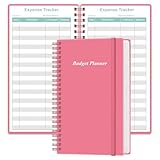
- MANAGE YOUR MONEY & ACHIEVE YOUR FINANCIAL GOALS - This budget tracker will help you keep your money organized, spend well, start saving, set and achieve financial goals. It can help you to manage all your personal finance, savings, debts, daily expense etc.
- UNIQUE DESIGN - This budget sheets expense tracker total 80 sheets/160 pages contains an annual overview (calendar from 2025-2026), yearly goals page, contact pages, important pages, and 10 pages (lined) for notes, lists, goals, etc, that help you manage your money efficiently and reach your finance goals perfectly.
- POCKET SIZE - This budget planner size of 3.75 x 6.75 inch, perfect size to fit in your bag, A6 envelopes pockets & wallet.
- SUPERIOR QUALITY - This expense budget sheets planner with 100gsm thick paper to reduce ink leakage, erase fraying and shade issues. Sturdy and flexible PP cover to protect the inner pages well. Strong metal and lay-flat twin-wire binding, Planner with inner pocket to store loose items, like tickets, cards etc and elastic closure to protect your finance planner.
- EASY TO USE - You can use this card to record your daily expenses. They can help you know where your every cent is going; Our expense tracker sheets can really help you keep track and stay on budget.
- Escrowed property taxes or homeowners insurance changed.
- An adjustable interest rate reset under the loan terms.
- A temporary interest-rate buydown ended.
- Principal payments began under a loan arrangement that initially deferred or reduced them.
Use the statement to identify the cause
- Compare the new statement with the prior one.
- Look for separate principal, interest, escrow, insurance, tax, fees or shortage entries.
- Check the escrow analysis or adjustment notice for the effective date and projected amount.
- Review your note or loan disclosures for adjustable-rate, buydown or payment-start provisions.
- Call the mortgage servicer if the itemized explanation is missing or unclear, and keep notes of the date, representative and requested documents.
Once the cause is known, put the new recurring amount—not the old payment—into the household budget. If the change reflects an escrow shortage or a temporary feature ending, ask the servicer what future amounts are expected and when they may change again.
What to do when the budget no longer balances
Act before a missed payment. Rank responses by urgency and by whether they address a one-time gap or a permanent monthly mismatch.
For a temporary gap
- Use a designated reserve for the specific bill rather than putting it on high-cost debt.
- Pause or reduce a discretionary purchase or optional trip already planned.
- Ask the provider whether a payment date or installment arrangement is available, without ignoring fees or long-term costs.
- Apply for assistance promptly; programs can take weeks to deliver funds.
For a permanent shortfall
- Rework flexible categories using actual transaction data.
- Reconsider a savings target deliberately and set a restoration date; do not eliminate essential reserves blindly.
- Contact a housing counselor to review rental or homeownership options.
- Ask the lender or servicer to explain available account-specific options before you miss a payment.
- For renters, evaluate the full cost and timing of a lease change, including moving and utility setup costs, rather than comparing base rents alone.
Do not solve a recurring shortfall by repeatedly using credit cards or draining every emergency reserve. That converts a housing problem into a debt and liquidity problem and leaves no protection for the next increase.
Where renters can seek help with rent and utilities
CFPB’s renter guidance, last modified September 25, 2026, recommends starting locally. Availability and eligibility vary by location, household income, immigration or disability status, program funding and other rules. Begin at CFPB’s “Get help paying rent and bills” page.
- Contact local or state rental-assistance organizations and ask what documents and deadlines apply.
- Call 211 for local referrals to housing, utility and emergency programs.
- Ask your local Low Income Home Energy Assistance Program (LIHEAP) office about help with utility bills.
- Check whether a HUD-approved housing counseling agency offers rental counseling or eviction-prevention guidance.
- Ask about housing vouchers or subsidized housing, recognizing that waiting lists and eligibility rules differ.
- If an eviction notice or shutoff warning has arrived, tell the agency the exact date and seek legal or tenant-support referrals immediately.
Keep copies of the lease, income records, identification, utility bills, notices and every application confirmation. Assistance may take several weeks, so apply while you are still communicating with the landlord or utility provider.
A repeatable monthly review
Housing costs can change between annual budget sessions. Set a short monthly check and a deeper quarterly review.
- Compare actual housing charges with the estimate and record the reason for any difference.
- Update sinking funds after an insurance renewal, tax notice, lease notice or major repair.
- Check that savings transfers occurred and that the emergency reserve still matches your household’s circumstances.
- Review upcoming one-time costs for the next 90 days.
- Rerun the stress test whenever income, household size, loan terms or lease terms change.
A budget is doing its job when it reveals a change early enough to choose among spending adjustments, savings decisions, assistance and professional guidance. It is not a promise that every month will be predictable.
Do these 3 things before closing this tab:
1Clear out junk files and repair common Windows errors2Fix the driver behind crashes, sound loss and screen glitches3Repair Windows errors before they cause bigger problemsQuick Recap
Product prices and availability are accurate as of the date/time indicated and are subject to change. Any price and availability information displayed on Amazon at the time of purchase will apply.




