
For U.S. federal income tax, being 55, 65, or older does not create a special home-sale exclusion. The standard Section 121 rules generally let an eligible seller exclude up to $250,000 of gain, or up to $500,000 for qualifying married couples filing jointly. Eligibility depends mainly on ownership, residence, a two-year lookback for a prior exclusion, and the details of the sale—not the seller’s age.
Do seniors get a tax break when they sell their home?
Not because of age alone. Federal law does not provide a separate “over-55” capital-gains exclusion for a home sale. The rule many people remember was an older provision that allowed certain sellers age 55 or above to defer or reduce tax when buying another home; it was replaced by the broader Section 121 exclusion in 1997.
As an Amazon Associate I earn from qualifying purchases.
Under the current rule described by the Internal Revenue Service (IRS) in Topic No. 701 and Publication 523 (2025), an eligible individual can generally exclude up to $250,000 of gain from the sale of a qualifying main home. A married couple filing a joint return may be able to exclude up to $500,000. The limits apply to gain, not to the home’s sale price, mortgage balance, or cash proceeds.
Age can still matter indirectly. Retirement, a move for medical care, a spouse’s death, or a job relocation may explain why a person sells or why a reduced exclusion could apply. Those are fact-specific circumstances, however; they are not an automatic senior benefit.
#1 Best Overall

- Get Organization in Style: This elegant folder with attractive color schemes definitely adds a pop to your workspace! Go for our folder with pleasant colors to brighten up your space and give a little flare to your life.
- Made to Last: Reinforced plastic folders withstand tearing, flexible to stretch but firm enough to keep from getting deformed and creased. Snap closure increases its ease of use and access yet prevents your papers from slipping out.
- Effortless Organization: This expanding file folder makes sorting and organizing your papers a breeze. 8 expandable pockets with tabs allow you to sort by subject or task. Sticky labels for easy labeling and tracking, enhancing your document organization and retrieval efficiency.
- Larger Capacity: This accordion folder with the expandable spine design is more stretchy to fit over 250 sheets without bulking up too much. Unlike regular spines that can easily get dented, our spine is made for quality and not easy to deform in transit.
- Portable & Lightweight: 13 x 9.5 inches. Fit A4/letter size. Convenient size to carry around. An alternative for a binder to fit perfectly in your backpack without making it bulky. Easily take your paperwork to a meeting or school.
How much gain can you exclude?
| Filing situation | Maximum federal gain exclusion | What controls eligibility |
|---|---|---|
| Eligible individual seller | Up to $250,000 | Ownership and main-home use for the required period, no disqualifying prior exclusion, and a qualifying sale |
| Qualifying married couple filing jointly | Up to $500,000 | Both spouses generally must satisfy the use test; either spouse can satisfy the ownership test |
| Seller with gain above the applicable limit | Exclusion only up to the limit | The excess gain may remain taxable |
| Seller who does not meet the full tests | Possibly a reduced exclusion | Usually requires a qualifying health, work, or unforeseen-circumstance exception |
There is no lifetime maximum number of times you can use Section 121. You can claim the exclusion again on a later home when the requirements are met, but the usual two-year lookback prevents repeated claims too close together.
The ownership and residence tests
At least 24 months of ownership in the five-year window
For the regular exclusion, you generally must have owned the home for at least 24 months during the five-year period ending on the sale date. The 24 months do not have to be one uninterrupted period, and they do not have to be the same months used to satisfy the residence test.
For a joint return, either spouse can generally meet the ownership requirement for the home. That does not by itself qualify the couple for the full $500,000 limit; the use requirement has a separate rule.
What’s actually slowing this PC down?
Pick the symptom - the matching free tool is one click away.
At least 24 months of qualifying main-home use
You generally must have lived in the property as your main home for at least 24 months during that same five-year period. The IRS treats the residence test as a use test: temporary absences may count in some circumstances, but a property that was primarily a rental or second home may not satisfy the requirement for the full period claimed.
For the full joint-filer exclusion, both spouses generally must have used the property as their main home for at least 24 months within the five-year period. The spouses do not necessarily need to have occupied it during identical months, but each must meet the applicable use requirement.
How to measure the five-year period
Count backward from the closing date, not from the date you listed the property or accepted an offer. For example, if the sale closes on June 30, the relevant period generally begins July 1 five years earlier. Keep a calendar or other records showing when the property was your main home, especially if you moved in and out, owned it with a spouse, or converted it to a rental.
The two-year prior-exclusion rule
You generally cannot exclude gain if you excluded gain from the sale of another home during the two-year period ending on the current sale date. This is a separate test from ownership and residence. A person who has lived in the current home for five years can still be barred from claiming the exclusion if they used it on another home too recently.
Free tools Windows power users keep installed
One-click scans. No signup required.
Rank #2

- Zipper Closure for True Security: Unlike folders using elastic bands that can let contents slip out, our expanding file folder features a dependable zipper closure, ensures everything stay safely secured inside, safe and sound. No more worries about losing small items.
- Sleek Design with Fresh Colors: 4 assorted pastels colored add a soft, delicate touch (purple, pink, sky blue, green). The black and gray hues present you a professional image. The tactile pattern exterior enhances and enriches the bright on trend colour-way.
- Unrivaled Durability: Say hello to an excellent all-rounder for secure and long-lasting storage. Made of PP tough shell (42% thickness upgraded) that endures daily handling and wear, and never tears. Acid-free, PVC-free. The metal zipper pull and reinforced edge construction offer reliable usage over time.
- Truly Large Capacity: 14 x 11.2 inches. Fit A4/letter size. This portable file organizer with expandable spine design is more stretchy to fit over 400 sheets without bulking up too much. Convenient size to carry around. Easily take your paperwork to a meeting or school.
- Monthly labels for Quick Retrieval: Customizable pastels stickers and 13 tabbed pockets allow you to sort by subject or task, bonus monthly labels increase its ease of locate and access.
The two-year rule is not a lifetime limit. Once the required interval has passed, a later sale can qualify again if the other tests are met. Exceptions and reduced exclusions may apply when a sale is connected with certain health, work, or unforeseen circumstances, but the facts and timing determine the amount.
How to calculate the gain that the exclusion covers
The exclusion applies to gain, not gross proceeds. Publication 523 provides worksheets for working through the calculation. A simplified formula is:
Gain = amount realized on the sale − adjusted basis
Amount realized
The amount realized is generally the selling price, reduced by allowable selling expenses such as certain commissions and closing costs. It is not simply the check you receive after paying off the mortgage. A mortgage payoff affects your cash, but it does not ordinarily reduce the amount realized for the gain calculation.
Do these 3 things before closing this tab:
1Repair Windows errors before they cause bigger problems2Scan for outdated or missing drivers - takes under a minute3Clear out junk files and repair common Windows errorsAdjusted basis
Your starting basis is usually what you paid for the home, plus certain acquisition costs. Basis can be increased by documented capital improvements—such as a qualifying addition, new roof, or permanent system upgrade—and reduced by items the tax rules require you to subtract. Ordinary repairs and maintenance generally do not increase basis.
Gather the purchase settlement statement, records of major improvements, refinancing and ownership documents, and the final sale statement. Improvements without receipts may be difficult to substantiate, so preserve invoices, permits, canceled checks, and photographs where available.
Illustrative calculation
Assume an individual sells a home for $700,000, has $20,000 of allowable selling expenses, and has an adjusted basis of $350,000. The simplified gain is $330,000 ($680,000 amount realized minus $350,000 basis). If all Section 121 tests are met, up to $250,000 may be excluded, leaving $80,000 of gain potentially taxable. The example is only arithmetic; the actual basis and allowable adjustments depend on the documents and applicable tax rules.
Rank #3
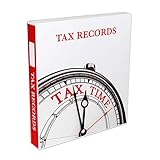
- FULLY ENCLOSED CASE - will make sure that your documents and receipts stay in the case
- INCLUDES TEN SHEET PROTECTORS - full size, standard weight sheet protectors will hold standard tax return forms as well as documents such as W2 and 1099
- FIVE RIGID ORGANIZATIONAL DIVIDERS WITH POCKETS - these pages included slots to store a business card and can help you keep everything organized
- SPINE INCLUDES AREA TO WRITE TAX YEAR - keep the documents on your bookshelf and easily find the year by writing on the spine or using a printed label
If the calculation produces a loss instead of a gain, a loss on the sale of a personal residence is generally not deductible.
Windows Errors? Fix Them Before They Spread
Repair common Windows errors and clear accumulated junk for a smoother, more stable PC - no reinstall needed.Free scan · no reinstallCrashes, No Sound, or Screen Glitches?
Random freezes, missing sound and display glitches usually trace back to one bad driver. Find and replace yours safely.Free scan · under a minuteWhen rental use, a home office, or depreciation changes the result
Depreciation cannot be excluded
Depreciation allowed or allowable for periods after May 6, 1997, generally cannot be excluded under Section 121. This is true even when you otherwise satisfy the ownership and residence tests. The depreciation-related portion is commonly called “recapture” and can remain taxable.
Former rental or business property
Converting a rental into your home, or using part of your home for business, can affect both the amount of gain eligible for exclusion and the forms used to report the sale. The timing of rental and personal use matters, as do depreciation deductions and the type of business use.
Because these calculations can involve several adjustments, a seller with rental history, a home office, or a property that changed use should work through the current Publication 523 worksheets and consider advice from a tax professional who can review the dates and depreciation records.
Special rule for certain surviving spouses
The IRS Tax Guide for Seniors describes a possible $500,000 exclusion for certain surviving spouses. This is not an age-based benefit. It is a narrowly conditioned rule tied to the death of a spouse.
Recommended Free Tools
Generally, the sale must occur within two years after the spouse’s death; the surviving spouse must not have remarried; the couple must have met the relevant ownership and use conditions; and neither spouse may have excluded gain from another home sale during the prior two years. If any condition is missing, the surviving spouse may be limited to the regular individual exclusion or another amount determined under the facts.
Because the death date, filing status, ownership form, occupancy history, and prior exclusion claims all matter, keep the deceased spouse’s closing records and prior returns when evaluating this rule.
Rank #4

- Eye-Catching Colors: Designed to stand out, this folder combines fresh, vibrant hues with sleek patterns, making organization not just functional but stylish. Perfect for adding a touch of charm and energy to your workspace
- Upgraded Spine for Larger Capacity: Our accordion file organizer with expandable spine design is more stretchy to fit over 250 sheets without bulking up too much. Unlike regular spines that can easily get dented, our spine is made for quality and not easy to deform in transit
- Easy Organization: This expanding file folder makes sorting and organizing your papers a breeze. Featuring 5 pockets with tabs and colorful labels for quick sorting and retrieval
- Made to Last: Reinforced plastic document folders resists tearing and creasing, with a secure snap closure to keep papers in place
- Portable & Lightweight: 13 x 9.5 inches. Fit A4/letter size documents. Compact and lightweight for easy carrying. Easily take your paperwork to a meeting or school
When you must report the sale
Receiving Form 1099-S
If you receive Form 1099-S, Proceeds From Real Estate Transactions, the IRS says you must report the sale even if the gain is fully excludable. The form reports proceeds; it does not decide whether you qualify for Section 121 or calculate your basis.
Gain that remains taxable
You generally must report the sale when gain exceeds the applicable exclusion, when depreciation or another rule leaves taxable gain, or when you fail one or more eligibility tests. The applicable-year tax return instructions identify the forms and lines to use.
Choosing not to claim an available exclusion
A seller may also need to report the transaction when choosing not to claim an exclusion that would otherwise be available. Follow the instructions for the tax year in which the sale closed, because forms and reporting procedures can change.
Single versus joint filing: the practical differences
| Question | Individual return | Married filing jointly |
|---|---|---|
| Potential maximum exclusion | Up to $250,000 | Up to $500,000 if the joint requirements are met |
| Ownership test | The seller generally must have owned the home for at least 24 months in the five-year period | Either spouse can generally satisfy ownership |
| Use test | The seller generally must have used the home as a main home for at least 24 months in the five-year period | Both spouses generally must satisfy the use test for the full limit |
| Prior exclusion | No exclusion of another home’s gain during the preceding two years, subject to exceptions | The couple generally must not have used the exclusion during the preceding two years |
Marriage alone does not double the exclusion. The couple must file jointly and satisfy the joint-return conditions. If only one spouse lived in the home for the required period, the full $500,000 limit may not be available.
Reduced exclusions when the full tests are not met
A seller who fails the standard two-year ownership, use, or prior-exclusion test may still qualify for a reduced exclusion in specified circumstances. The IRS identifies health, work-related moves, and unforeseen events as examples of circumstances that can support a partial exclusion.
- Health: A move may qualify when selling is related to a diagnosis, treatment, or other health necessity established under the applicable rules.
- Work: A change in employment can matter when the distance and timing satisfy the IRS requirements.
- Unforeseen circumstances: Events outside the seller’s reasonable control may qualify, but not every financial setback or voluntary move does.
The reduced amount is generally based on the fraction of the normal two-year period that the seller met before the sale. Do not assume that reaching retirement age, downsizing, or wanting a lower-maintenance home automatically creates a partial exclusion.
A decision checklist before closing
- Identify the closing date. Use the date the sale legally closes to establish the five-year and two-year lookback periods.
- Map ownership. Document who owned the property and the months each spouse held an ownership interest.
- Map occupancy. List the periods the property was your main home, a rental, a second home, or used for business.
- Check prior claims. Review federal returns and closing records for any home-sale exclusion claimed during the preceding two years.
- Assemble basis records. Collect the purchase statement, capital-improvement invoices, permits, and other documents that support adjusted basis.
- Separate selling costs from loan payoff. Use the closing statement to identify allowable selling expenses; do not treat every deduction from your proceeds as a reduction of gain.
- Calculate depreciation. Find depreciation allowed or allowable after May 6, 1997 for rental or business use.
- Determine reporting. Check whether you received Form 1099-S, have taxable gain, or are electing not to claim an available exclusion.
- Use the correct IRS edition. Publication 523 and the tax-return instructions should match the year in which the sale closed.
- Check state rules separately. Federal Section 121 treatment does not establish how your state will tax the sale.
Common mistakes older sellers make
- Relying on age: Being over 55, 65, or 70 does not substitute for the ownership and use tests.
- Calculating tax on the check received: Cash after the mortgage payoff is not the same as gain.
- Forgetting a prior sale: A qualifying current residence may still fail the two-year lookback.
- Ignoring depreciation: Depreciation from a former rental or business-use period can remain taxable.
- Assuming marriage doubles the limit: The $500,000 ceiling requires a qualifying joint return and generally requires both spouses to meet the use test.
- Discarding records after the sale: Basis and improvement documentation may be needed to support the calculation and future questions.
- Skipping a 1099-S report: The form can create a reporting obligation even when the gain is fully excludable.
Federal rules are only part of the answer
The rules above concern U.S. federal income tax. States do not all conform to federal law in the same way, and state filing requirements can differ. Before filing, check the law and instructions for the state where you are resident or where the property is located, as applicable.
For a straightforward owner-occupied sale, the main questions are usually the amount of gain, the $250,000 or $500,000 limit, the 24-month tests, and the two-year prior-exclusion rule. Rental conversions, depreciation, partial exclusions, surviving-spouse claims, shared ownership, and incomplete records can change the result enough to justify individual tax advice.
Quick Recap
Product prices and availability are accurate as of the date/time indicated and are subject to change. Any price and availability information displayed on Amazon at the time of purchase will apply.




