
What’s actually slowing this PC down?
Pick the symptom - the matching free tool is one click away.
Your affordable car is the one whose complete monthly cost fits after essential bills and savings—not the one with a payment a lender approves. Start with take-home income, subtract regular obligations and savings priorities, then estimate the specific vehicle’s insurance, fuel, maintenance, repairs, registration, taxes and financing. The amount left is the ceiling for a car payment and other transportation costs.
There is no responsible universal purchase-price answer. Your location, income, mileage, insurance quote, down payment, trade-in, vehicle and loan offer all change the result. The Consumer Financial Protection Bureau (CFPB) describes the same approach: add the up-front vehicle cost to recurring expenses such as interest, insurance and routine maintenance (CFPB affordability guidance).



As an Amazon Associate I earn from qualifying purchases.
Use a full-cost test, not a payment target
Dealers and lenders often foreground a monthly payment because it is easy to compare. Affordability works in the opposite order: establish what your household can spend, reserve the costs that do not appear in a loan quote, and only then determine a payment and vehicle price.
Write the calculation this way:
available transportation money = net monthly income − essential household costs − debt obligations − savings priorities
Then reserve the vehicle-specific operating costs:
maximum sustainable car payment = available transportation money − insurance − fuel − maintenance reserve − repair reserve − registration/tax reserve − other required vehicle costs
“Other required vehicle costs” can include parking, tolls or required equipment in your situation. If the proposed payment fits only by skipping an essential bill, reducing a savings contribution you have deliberately set, assuming an unusually low insurance quote or extending the loan far beyond your original plan, the vehicle is outside your budget.
The CFPB puts the principle plainly: “To find the true cost of a car or vehicle, add together the up-front cost of the car and features plus monthly expenses, such as interest, insurance, and routine maintenance.” (CFPB)
Build your household baseline before looking at cars
Use take-home income that actually arrives
Use net, or after-tax, income rather than a salary headline. Include income you can reasonably rely on each month; do not make a new car depend on an uncertain bonus, overtime or a temporary gig. If income varies, use a conservative normal month and keep a larger cash cushion for low-income months.
List regular obligations in their real amounts
Record housing, utilities, food, health and other insurance, minimum debt payments, child or family costs and any recurring commitments. Include obligations that are billed quarterly or annually by converting them to monthly reserves. A budget that omits an annual bill can make a payment look affordable for eleven months and unaffordable when that bill arrives.
Protect savings priorities
Decide which savings contributions are non-negotiable before setting a car limit. A down payment should not consume cash needed for emergencies or other obligations. The same test applies to a repair reserve: if one ordinary breakdown would force new debt, the payment is too high even when the loan is approved.
Separate transportation from the rest of the budget
Keep existing transportation costs visible while you shop. If you will still pay for a second vehicle, transit, parking or regular rides, those costs reduce the amount available for the proposed car. If the new vehicle replaces another expense, document the amount that truly disappears rather than assuming every old cost goes away.
Do these 3 things before closing this tab:
1Scan for outdated or missing drivers - takes under a minute2Repair Windows errors before they cause bigger problems3Fix the driver behind crashes, sound loss and screen glitchesCount every cost of owning the particular vehicle
consumer.gov lists registration fees, sales tax, insurance, gas and maintenance in addition to the car price (consumer.gov buying-a-car guide). The categories below turn that list into a working budget.
| Cost | How to estimate it | Budget treatment |
|---|---|---|
| Vehicle price and options | Use the written price for the exact trim and equipment. Add optional products only if you choose them. | Up-front or financed; include in the amount borrowed. |
| Sales tax, title and dealer fees | Use your jurisdiction’s actual rates and the seller’s itemized fees. | Usually up-front or financed; never assume an advertised price includes them. |
| Down payment or trade-in | Subtract only cash you can safely use and the trade-in value actually credited. Check any payoff balance. | Reduces the amount financed; it does not reduce insurance or running costs. |
| Loan interest | Compare the annual percentage rate (APR), interest rate, term and total interest for each offer. | Monthly payment plus the cumulative cost over the term. |
| Insurance | Obtain a quote for the actual driver, address, vehicle and coverage choices before committing. | Monthly premium or an annual premium divided by 12. |
| Fuel | Estimate expected miles, the vehicle’s realistic fuel economy and local fuel prices. | Variable monthly cost; recalculate if your commute or fuel prices change. |
| Routine maintenance | Use the vehicle’s service schedule and your expected mileage; include scheduled fluids, filters, tires and similar work. | Monthly reserve even when no service is due this month. |
| Repairs | Set a separate reserve for unscheduled work. Older, higher-mileage or complex vehicles may need a larger cushion. | Monthly reserve held for future use, not money you spend automatically. |
| Registration and recurring taxes | Use the renewal amount and due date for your location; include recurring personal-property or similar charges where applicable. | Annual bill divided by 12, with the cash set aside before the due date. |
| Parking, tolls and required equipment | Use your normal route and local charges. | Monthly or periodic reserve when they are part of using the car. |
Insurance is a quote, not a national average
Insurance can change materially with the driver, address, claims history, coverage limits, deductible and exact vehicle. Request a written quote using the vehicle’s trim or identification details when available, the drivers who will use it, your garaging address, expected annual mileage and the coverage you actually need. Ask how the premium changes with different deductibles, but do not select inadequate coverage merely to reach a payment target.
Fuel follows miles, not the sticker price
Estimate fuel with a transparent calculation:
monthly fuel cost = (expected miles per month ÷ expected miles per gallon) × local price per gallon
Use your real commute, errands and planned trips. A low-mileage driver and a 15,000-mile-per-year driver can face very different fuel bills in the same model. Recalculate if the vehicle’s fuel type or your driving pattern changes.
Outdated Drivers Are Slowing You Down
One free scan finds every outdated or missing driver and matches the right update for your exact hardware.Free scan · exact hardware matchPC Slower Than It Used to Be?
A free scan shows the junk files, broken settings and background clutter dragging Windows down - then fixes them in one click.Free scan · Windows 10 & 11Maintenance and repairs need two reserves
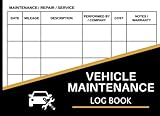
Routine maintenance is predictable because the manufacturer’s schedule identifies mileage or time intervals. Repairs are irregular: a month with no bill does not mean the cost is zero over the life of the car. Keep separate lines so a scheduled service does not consume the money intended for an unexpected failure. An optional maintenance logbook can help you record dates, mileage and amounts; the important part is reserving cash consistently.
Registration and taxes arrive at different times
Sales tax, title and dealer fees may be due at purchase or rolled into financing. Registration renewals and other recurring charges may arrive once a year. Divide each known annual amount by 12 and transfer that amount monthly. Requirements and rates vary by location, so a figure from another state or province is not a substitute for your local bill.
Turn irregular bills into a monthly ownership reserve
For every non-monthly cost, use annual amount ÷ 12. For a bill due every six months, use six-month amount ÷ 6. Add the resulting reserves to insurance and fuel before calculating the payment ceiling.
Keep the reserve in a separate savings bucket or clearly labeled budget category. When a registration renewal or scheduled service arrives, the cash is already available; do not treat a month without a bill as permission to raise the payment. If you have no reliable history for a used vehicle, use the service schedule, inspection information and a deliberately conservative reserve rather than a zero estimate.
The CFPB’s educational worksheet demonstrates this sequence: reserve insurance, gas, maintenance, repairs and registration, then subtract those amounts from a transportation budget to see what might remain for a payment. Its sample income and expenses are an activity example, not a recommended budget for every household (CFPB worksheet, Summer 2022).
Set a payment ceiling from the budget
Use your own residual amount first
After entering the full household budget and ownership reserves, the remaining transportation money is your maximum total car payment—not a target you must spend. Leave room for ordinary month-to-month variation. If the result is zero or negative, change the vehicle, reduce miles, increase the cash available without harming essential reserves, or postpone the purchase.
Understand percentage rules of thumb
The CFPB student worksheet uses 10–15% of net monthly income for transportation in an educational activity. That percentage is not a universal official affordability standard and does not replace your expense-by-expense calculation.
A February 5, 2026 AAA Northeast article reports two different rules of thumb: 10–15% of after-tax income for a payment and up to 20% of net monthly income for total car expenses. The denominators and scopes differ, so these figures are not a single consensus rule. Treat them as rough screening ranges only; your written budget and vehicle-specific estimates take priority (AAA Northeast, updated February 5, 2026).
Recommended Free Tools
Do not let lender approval define comfort
A lender evaluates repayment risk under its underwriting rules. Approval does not account for every household goal, irregular bill or desired savings contribution. Use the payment ceiling produced by your budget even if a lender offers more.
Convert a payment limit into a vehicle price
The price you can afford depends on APR, term, taxes, fees, down payment and trade-in—not on the payment alone. Start with the amount you can safely finance, then obtain a written out-the-door price and calculate how much of that price would be borrowed.
For a simple comparison, the CFPB’s loan illustration uses a $20,000 loan at 4.75%:
| Term | Illustrated monthly payment | Illustrated total interest | What changes |
|---|---|---|---|
| 36 months | $597 | $1,498 | Higher payment, shorter repayment period and less interest. |
| 72 months | $320 | $3,024 | Lower payment, longer repayment period and more interest. |
These are the CFPB’s educational figures, not a current rate offer. The example shows why a lower payment can cost more overall. Use the same loan amount when comparing terms, then repeat the calculation with the actual amount financed for each vehicle (CFPB loan comparison guidance).
Free tools Windows power users keep installed
One-click scans. No signup required.
Compare the fields that determine the real cost
For every offer, record the amount financed, APR, stated interest rate, length, monthly payment, total interest and total amount paid. The CFPB specifically identifies APR, interest rate, loan length, payment and total amount financed as comparison fields. A longer term can lower the required payment while increasing total interest.
Calculate an affordable purchase price only after the payment test
Once you have a maximum payment and a real loan offer, use the lender’s amortization figures to determine the largest amount financed that stays below the ceiling. Add the down payment you can safely provide, then subtract taxes, title, fees and any optional products that are not part of the vehicle’s base price. The result is a purchase-price range, not a permission to spend up to the last dollar.
Get an out-the-door price before discussing financing
Ask each seller for a written out-the-door price for the exact vehicle. The Federal Trade Commission says this makes apples-to-apples comparisons easier, surfaces add-ons and keeps attention on total cost rather than a monthly-payment presentation (FTC financing and leasing guidance).
The document should let you identify:
- Advertised vehicle price and every optional product.
- Sales tax, title, registration and dealer or documentation fees.
- Any rebate or condition attached to the displayed price.
- Your down payment and trade-in credit.
- Any payoff balance on a trade-in.
- The resulting amount financed before and after optional products.
Do not compare one vehicle’s base price with another vehicle’s out-the-door total. Put both on the same basis, then add each vehicle’s insurance, fuel, maintenance, repair and registration estimates.
Rank #4

- Made in USA - Proudly produced in Ohio by a Veteran-owned business
- This book will help you remember your last oil change /last service appointment. You can easily track all services, mileage and maintenance for multiple automobiles - great for business or personal use.
- The yearly expense summary is a very important part of this book. The yearly summary page is a perfect tool for your tax prep and your budget. After every month you should log your total business miles and personal miles in the “Annual Mileage Summary” page.
- This book comes in two convenient sizes, 8.5” x 11” - perfect to fit into any binder or clipboard that you may use for business and 5” x 7” which is the perfect size to fit into your glove compartment!
- Our unique cover is a semi-rigid transparent cover that leads to a sturdy book that resists stains and wrinkles. Reorder SKU: LOG-100-57CW-PP(Auto-Maintenance)
Handle down payments and trade-ins carefully
Down payment
A down payment reduces the amount financed and therefore the interest calculated on that amount. It should come from money genuinely available after preserving emergency reserves and meeting other obligations. A larger down payment is not a benefit if it leaves no cash for registration, insurance, routine service or an unexpected repair.
Trade-in with a remaining loan
Ask for the lender’s exact payoff amount and compare it with the trade-in credit. If the payoff exceeds the vehicle’s value, the difference is negative equity. Verify whether that shortfall is being added to the new loan; otherwise the new amount financed can be higher than the new vehicle’s price and the payment comparison will be misleading.
Independent reader supportYour contribution helps us test, update, and keep practical guides available for everyone.Use national averages only as context
AAA Northeast’s February 5, 2026 article attributes an average annual cost of $11,577, or $965 per month, to AAA’s 2025 Driving Costs analysis for a new car driven 15,000 miles per year. That is a defined scenario and average, not an individualized quote or a promise of future costs. Your insurance, fuel price, mileage, vehicle type, taxes and financing can move the result substantially.
Use an average like this as a prompt to check whether your estimate includes every category, not as a substitute for your own worksheet. A driver who travels fewer miles may spend less on fuel but still face similar fixed insurance or registration charges; a higher-mileage driver may experience the opposite mix.
The Tool Desk
Outbyte PC Repair FREERepair Windows errors before they cause bigger problemsFix Now →Outbyte Driver Updater FREEScan for outdated or missing drivers - takes under a minuteDriver Scan →A step-by-step affordability process
- Gather income evidence. Use dependable monthly take-home income and note any variation.
- Enter household obligations. Include housing, utilities, food, debt, family costs, insurance and other recurring commitments.
- Set savings priorities. Protect emergency and other planned savings before assigning transportation money.
- Determine the transportation envelope. Subtract obligations and savings from net income, while retaining existing transportation costs that will continue.
- Choose a candidate vehicle. Record its exact trim, age, mileage, fuel type and expected use.
- Obtain vehicle-specific estimates. Get an insurance quote, calculate fuel from expected mileage, and identify maintenance, repair, registration and tax amounts.
- Convert periodic bills. Divide annual or semiannual amounts by the number of months they cover and reserve them monthly.
- Set the payment ceiling. Subtract insurance, fuel, maintenance, repair, registration/tax and other required costs from the transportation envelope.
- Collect written out-the-door prices. Require the same fee and add-on detail for every vehicle under consideration.
- Compare loan offers. Record APR, interest rate, term, payment, amount financed, total interest and total paid; reject a term that makes the total cost or ownership period unsuitable.
- Check the cash after purchase. Confirm that the down payment, taxes, registration and first insurance payment leave enough money for essential obligations and reserves.
- Re-run the budget under a less favorable assumption. Test a higher insurance quote, more miles, a fuel-price increase or a repair reserve increase. If the vehicle fails that reasonable stress test, choose a lower-cost option.
Common affordability mistakes and fixes
Choosing a payment before the vehicle’s total cost
Problem: A payment fits a dealer’s screen, but insurance, fuel and maintenance push total transportation spending beyond the budget.
Fix: Calculate the ownership reserve first and let the remaining amount determine the payment.
Forgetting annual and irregular bills
Problem: Registration or scheduled service arrives as a surprise expense.
Fix: Divide every known periodic bill by its coverage period and save that amount monthly.
Using an optimistic insurance guess
Problem: The actual premium is higher because of the driver, address, coverage or vehicle.
Best Value
Fix: Obtain a quote for the exact situation before signing or placing a deposit.
Stretching the term to force approval
Problem: The monthly payment falls, but total interest rises and the debt lasts longer.
Fix: Compare total interest and total paid at each term; lower the vehicle price rather than hiding the gap in a longer loan.
Quick wins for a faster PC:
Fix the driver behind crashes, sound loss and screen glitchesFind Drivers →Repair Windows errors before they cause bigger problemsFix Now →Scan for outdated or missing drivers - takes under a minuteDriver Scan →Spending all available cash on the down payment
Problem: The loan is smaller, but there is no cash for required fees, insurance or repairs.
Fix: Preserve the reserves required by your household budget, then use only the remaining cash.
Rolling negative equity into a new loan without noticing
Problem: The new amount financed includes the old vehicle’s unpaid balance.
Fix: Compare payoff, trade-in credit and new amount financed as separate lines on the written worksheet.
What’s actually slowing this PC down?
Pick the symptom - the matching free tool is one click away.
Comparing advertised prices instead of out-the-door totals
Problem: Taxes, fees and add-ons make the supposedly cheaper vehicle more expensive.
Fix: Request written out-the-door prices and compare identical categories.
Quick Recap
Final decision checklist
- Net income and regular obligations are based on current, dependable figures.
- Savings priorities and emergency reserves remain intact after the purchase.
- Insurance is quoted for the actual driver, address, vehicle and coverage.
- Fuel uses expected mileage and a realistic local price.
- Maintenance and repairs have separate monthly reserves.
- Registration, taxes, title and fees are included at their actual timing.
- The written out-the-door price identifies every add-on.
- Down payment and trade-in figures are accurate, including any negative equity.
- Loan comparisons show APR, interest rate, term, payment, amount financed, total interest and total paid.
- The complete cost still fits if a reasonable cost estimate is less favorable than the first quote.
Product prices and availability are accurate as of the date/time indicated and are subject to change. Any price and availability information displayed on Amazon at the time of purchase will apply.




