
Windows Errors? Fix Them Before They Spread
Repair common Windows errors and clear accumulated junk for a smoother, more stable PC - no reinstall needed.Free scan · no reinstallOutdated Drivers Are Slowing You Down
One free scan finds every outdated or missing driver and matches the right update for your exact hardware.Free scan · exact hardware matchGold is generally the deeper, more liquid and less volatile market; silver is more tightly linked to industrial activity and tends to magnify market moves. That makes gold more useful when your priority is diversification and liquidity, while silver may suit an investor who accepts larger swings and greater sensitivity to the business cycle. Neither metal pays interest or dividends merely because you own it, and neither is a guaranteed hedge against losses.
The right choice depends on what you are trying to do, how you will buy, and how much price volatility you can withstand. The comparison below separates the metals’ demand bases, price drivers, trading costs, physical-ownership risks and practical uses so you can make that decision without treating a past rally or the gold-silver ratio as a forecast.
As an Amazon Associate I earn from qualifying purchases.
Gold and silver at a glance
| Comparison point | Gold | Silver |
|---|---|---|
| Demand mix | More balanced across investment, central-bank purchases, jewellery and technology. | Heavier industrial component, alongside investment, jewellery and technology demand. |
| Business-cycle sensitivity | Usually less tied to industrial output than silver. | More exposed to manufacturing activity and cyclical commodity sentiment. |
| Market liquidity | Deeper market in the World Gold Council comparison. | Less deep than gold in that comparison; transaction conditions can be less forgiving. |
| Reported average intraday spread | 2 basis points in the Council’s sample from 5 February 2025 to 17 February 2026. | 9 basis points in the same sample period. |
| Reported volatility | Lower in the Council’s comparison. | Roughly twice gold’s volatility in the series reported from 1 January 1991 to 12 March 2026. |
| Income while held | None from bullion itself. | None from bullion itself. |
| Main portfolio use | Diversification, liquidity and exposure to a monetary asset. | A more cyclical, higher-volatility precious-metals exposure. |
| Physical-buying issues | Premiums, authenticity, resale terms and storage still matter. | The same checks apply, with more metal weight needed for a given dollar value and potentially wider dealing friction. |
The spread figures are historical sample averages, not today’s dealer premiums or a promise of execution at those levels. Volatility is a measure of price variation, not a return forecast.
Quick wins for a faster PC:
Fix the driver behind crashes, sound loss and screen glitchesFind Drivers →Repair Windows errors before they cause bigger problemsFix Now →Why gold and silver behave differently
Gold has a broader, more balanced demand base
Gold demand is distributed among investment, central-bank purchases, jewellery and technology. That mix gives the market several sources of demand rather than concentrating the outcome in one industry. When investors seek liquidity or central banks add reserves, those flows can matter alongside jewellery and technology consumption.
#1 Best Overall

- Purity: .999 Fine Silver
- Diameter: 40.6 mm; Thickness: 3.2 mm
- Stock Photo; Image is indicative of quality
- Metal Content: 1 Troy Ounce per Coin; Total: 20 Troy Ounces
- You will receive twenty coins per purchase in an official United States Mint Tube; DISCLAIMER: Please note that we pull random year coins from the same tube, so all coins received per purchase will be from the same year— mixed bags are highly unlikely, ensuring a consistent and uniform collection for your enjoyment!
Silver is more industrial and therefore more cyclical
Silver also serves investment, jewellery and technology users, but its industrial share is larger. Demand tied to factories, equipment and business investment can weaken when economic activity slows and strengthen when manufacturing and commodity sentiment improve. This does not make silver a simple economic-growth trade: investment flows, supply conditions and broader risk appetite can overwhelm industrial signals for long periods. It does mean that silver usually has more direct exposure to the business cycle than gold.
Higher sensitivity is not a guaranteed reward
Because silver’s market is smaller and its industrial demand is more cyclical, a change in investor enthusiasm can produce a larger percentage move than the same broad impulse produces in gold. The reverse is also true during a sell-off. “More volatile” describes the path and the risk per dollar invested; it does not establish that silver will outperform over a chosen holding period.
What makes gold and silver prices go up or down?
Both metals ultimately respond to supply and demand, but several macroeconomic forces influence the balance. The World Gold Council’s framework groups gold’s drivers into four categories: economic expansion, risk and uncertainty, opportunity cost and momentum. Those categories are useful for silver as well, provided you give industrial demand greater weight for silver.
What’s actually slowing this PC down?
Pick the symptom - the matching free tool is one click away.
Economic expansion
Stronger economic activity can support jewellery, technology and industrial consumption. For silver, the industrial channel is particularly important because manufacturing and capital spending affect physical demand. Expansion can also lift investor confidence and shift money toward riskier assets, which may work against a defensive precious-metals trade. Gold can benefit from growth in jewellery and technology, but its investment response depends on what growth does to rates, currencies and risk appetite.
Risk and uncertainty
Geopolitical stress, financial-market instability and uncertainty can increase demand for liquid assets. Gold is often used as a diversifier because its returns can behave differently from equities and bonds. The World Gold Council describes that role this way: “Gold is a great diversifier to a portfolio – not because it has a low volatility but because it behaves so differently to equities and bonds.” See the Council’s discussion of risks and challenges at World Gold Council: Gold as a strategic asset, 2026 edition.
Silver can also attract safe-haven and investment flows, but its industrial exposure can pull in the opposite direction when investors fear a slowdown. A crisis therefore does not guarantee that silver will track gold’s response.
Rank #2
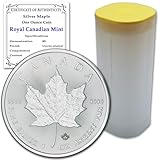
- Purity: .9999 Fine Silver
- Diameter: 38 mm; Thickness: 3.29 mm
- Metal Content: 1 Troy Ounce per Coin; Total: 10 Troy Ounces
- Stock Photo; Image is indicative of quality; Maple Tubes Available with coins while supplies last
- DISCLAIMER: Please note that we pull random year coins from the same tube, so all coins received per purchase will be from the same year— mixed bags are highly unlikely, ensuring a consistent and uniform collection for your enjoyment!
Opportunity cost: rates, yields and the dollar
Bullion does not pay a coupon or dividend. When interest-bearing assets offer more attractive yields, the opportunity cost of holding a non-income-producing metal can rise. Conversely, expectations of lower rates or falling real yields can improve the relative appeal of bullion. Dollar movements also matter because internationally traded metals are commonly quoted in U.S. dollars; a stronger dollar can create pressure on dollar-denominated prices, while a weaker dollar can provide support. These relationships are tendencies, not mechanical rules.
Recommended Free Tools
Investment demand, central banks and momentum
ETF flows, futures positioning, bar and coin buying, and other investment activity can move prices quickly. Central-bank purchases are especially relevant to gold’s demand mix. Momentum can reinforce a trend as investors buy rising markets or reduce positions in falling ones. The World Gold Council’s Gold Outlook 2026: Push ahead or pull back presents scenarios rather than guaranteed forecasts; no single indicator reliably predicts the next move in either metal.
Supply and physical-market conditions
Mine output, recycling, inventories and the ability of dealers and fabricators to source deliverable metal all affect prices. The Silver Institute’s World Silver Survey 2026 says silver investment demand in 2025 was supported by macroeconomic and geopolitical conditions, supply-demand fundamentals and tight physical-market conditions. That description explains why investment demand can matter even when industrial signals are mixed, but it is a statement about 2025 conditions, not a forecast for every future year.
Is gold safer than silver?
“Safer” needs a definition. If it means smaller day-to-day and month-to-month price swings, gold has the advantage in the World Gold Council comparison. The Council reports silver volatility at roughly twice gold’s over a series covering 1 January 1991 through 12 March 2026. A silver position of the same dollar size can therefore produce larger gains or losses from ordinary market movement.
If safer means “cannot fall much,” neither metal qualifies. The Council notes that gold has experienced annual gains close to 30% and annual losses close to 30%, citing examples including 2010 and 2013 in its 2026 strategic-asset edition. Silver’s higher volatility can make drawdowns more severe, but gold also has large negative years. The CFTC warns that precious-metals prices are predominantly determined by supply and demand and can also be affected by external influences; its consumer advisory is available at “Gold Isn’t Always a Safe Investment”.
Gold’s relative safety is therefore about market depth, liquidity and diversification characteristics—not a capital guarantee. A portfolio that cannot tolerate a substantial temporary or annual loss should not assume that bullion removes that risk.
Rank #3
- Purity: .9999 Fine Silver
- Diameter: 38 mm; Thickness: 3.29 mm
- Metal Content: 1 Troy Ounce per Coin; Total: 25 Troy Ounces
- Stock Photo; Image is indicative of quality; Coins will come with twenty-five certificates of authenticity
- You will receive twenty-five coins with an original Royal Canadian Mint acrylic tube; DISCLAIMER: Please note that we pull random year coins from the same tube, so all coins received per purchase will be from the same year— mixed bags are highly unlikely, ensuring a consistent and uniform collection for your enjoyment!
Liquidity, spreads and trading friction
Why market depth matters
Liquidity is the ability to buy or sell promptly without moving the market excessively. Deeper markets generally offer more continuous quotes and more participants. In the World Gold Council’s comparison, gold is deeper and more liquid than silver.
The reported spread difference
For the Council’s sample from 5 February 2025 to 17 February 2026, average intraday spreads were 2 basis points for gold and 9 basis points for silver. A basis point is one hundredth of a percentage point, so these figures describe the average gap between quoted buying and selling prices in that sample. They are not a universal dealer markup, a guarantee for a particular exchange-traded product, or a current quote for coins and bars. Your actual friction also includes commissions, fund expenses, storage, delivery, insurance, taxes and the dealer’s buyback price.
How liquidity affects a decision
- If you may need to sell quickly, compare the product’s normal trading volume, quoted spread and redemption process—not just the metal’s headline price.
- For physical bullion, ask what the dealer will pay to buy the item back and whether that price changes by product, quantity or condition.
- For a long holding period, a small entry premium can still matter because you must overcome it before the position breaks even.
Neither metal generates contractual income
A gold or silver bar, coin or other bullion holding does not pay interest, dividends or a contractual distribution. Your result comes from the eventual sale price minus purchase and holding costs. An exchange-traded product may have fees, and a mining company may pay dividends, but those are different exposures from owning bullion and should not be treated as interchangeable.
This lack of income changes how you evaluate an allocation. You must have a reason to hold a non-yielding asset—such as diversification, liquidity, monetary exposure or a view on supply and demand—and a plan for the costs and volatility while you wait.
Should you buy gold or silver?
Gold may fit a liquidity-and-diversification objective
Gold is the more natural starting point when your main objective is a relatively liquid precious-metals allocation with lower historical volatility than silver. Its demand base includes central banks and investment markets as well as jewellery and technology, and the Council characterizes it as deeper and more liquid. That does not tell you how much to own or when to buy; it identifies the market characteristics you are paying for.
Silver may fit a higher-risk, cyclical objective
Silver may be appropriate only for an investor who understands and accepts larger price swings and stronger exposure to industrial activity. Its potential to amplify an upswing is inseparable from its potential to amplify a downturn. A belief that silver is “cheaper” per ounce is not, by itself, a valuation argument: the ounce price does not reveal the appropriate portfolio weight or expected return.
Rank #4

- ✔️1 oz 2026 American Silver Eagle Coin
- ✔️Obverse: Adolph A. Weinman’s design of Lady Liberty wrapped in the American flag and elegantly striding over a ridge while the sun rises.
- ✔️Reverse: One eagle flying into land while carrying an oak branch in its talons.
A split allocation is not automatically diversified
Owning both metals can diversify the precious-metals exposure, but it does not remove their shared risks. Both can react to the dollar, rates, investment flows, geopolitical news and broad commodity sentiment. Adding silver to gold can increase volatility rather than simply smooth returns. Decide what risk you are adding and why, instead of assuming that two metals guarantee balance.
How to compare a physical purchase
Coins and ingots introduce operational risks that do not appear in a price chart. The CFTC’s consumer guidance recommends comparing the actual metal weight with the price and checking the seller and item details. Use this sequence before paying:
- Define the exposure. Confirm whether the item is bullion whose value is primarily tied to metal content, rather than a collectible whose price depends on rarity, grading or a marketing story.
- Verify weight and purity. Read the stated fineness and total metal weight. Compare the quoted price with the amount of gold or silver you are actually receiving, not just the number of coins or bars.
- Calculate the full entry cost. Include the dealer premium, shipping, insurance, payment surcharge and any taxes that apply where you live. The spot price alone is not your break-even price.
- Check authenticity and documentation. Review the seller’s identity, return policy, invoices, serial or assay information where applicable, and the product’s condition. Do not rely on urgency, scarcity claims or guaranteed-profit language.
- Establish the exit route. Ask whether the seller offers a buyback, how its bid is calculated, what verification it requires and how long settlement takes. A product that is easy to buy can still be expensive to sell.
- Plan storage and access. Decide who controls the metal, how it is insured, what happens if you lose documentation and how your heirs could identify and sell it.
Premiums and resale costs vary by product, quantity, location and market conditions. There is no current universal coin or bar premium established here, so treat every dealer quote as a separate transaction to evaluate.
Independent reader supportYour contribution helps us test, update, and keep practical guides available for everyone.Precious-metals IRAs and other specialized arrangements
Tax-advantaged accounts can impose eligibility, custody, storage and distribution rules that differ from ordinary bullion ownership. The CFTC specifically cautions that precious-metals IRA rules are complex. Confirm the applicable rules with the account custodian and a qualified tax professional in your jurisdiction before committing funds; do not assume that an IRA label removes market, fee or liquidity risk.
Common mistakes and how to avoid them
Calling either metal a guaranteed safe haven
Gold can diversify because it may behave differently from stocks and bonds, but diversification does not prevent losses. Silver can rise sharply in a risk-on or supply-constrained market, yet its industrial sensitivity can hurt during a slowdown. Use “diversifier” as a portfolio role, not as a promise of positive returns.
Do these 3 things before closing this tab:
1Clear out junk files and repair common Windows errors2Scan for outdated or missing drivers - takes under a minute3Repair Windows errors before they cause bigger problemsUsing the gold-silver ratio as a timing rule
The ratio can describe how many ounces of silver equal the value of one ounce of gold at a given moment. It does not, by itself, establish fair value, a turning point or which metal will outperform next. Any performance comparison must specify the same start and end dates, currency, instrument and price benchmark.
Best Value

- Purity: .9999 Fine Silver
- Stock Photo; Image is indicative of quality
- Diameter: 37.97 mm; Thickness: 3.29 mm
- Metal Content: 1 Troy Ounce per Coin; Total: 5 Troy Ounces
- You will receive five coins per purchase; DISCLAIMER: Please note that we pull random year coins from the same tube, so all coins received per purchase will be from the same year— mixed bags are highly unlikely, ensuring a consistent and uniform collection for your enjoyment!
Ignoring the instrument
A physical coin, an exchange-traded vehicle, a futures contract and a mining share have different fees, liquidity, counterparty exposure, tax treatment and operating risks. Saying “I bought silver” is incomplete unless you identify how you own it.
Comparing a spot quote with a retail transaction
Spot prices are reference prices for the underlying metal. Retail coins and bars can carry premiums above spot and buyback discounts below it. Compare the all-in purchase price with the realistic sale price, not a screen quote with no delivery or resale cost.
Buying from an unverified seller
Fraud can involve counterfeit metal, inflated grading, hidden financing charges, fake storage claims or pressure to act immediately. Verify the business, read the contract and independently confirm where the metal is held. Never treat a sales representative’s return or profit assurance as a substitute for documentation.
A practical decision framework
- Write the purpose in one sentence. For example: “I want a liquid diversifier,” or “I accept high volatility for cyclical commodity exposure.” If you cannot state the purpose, postpone the purchase.
- Set a maximum loss you can tolerate. Use the possibility of a large annual decline—not just an average return—to test whether the position is financially and emotionally manageable.
- Choose the ownership form. Compare physical custody with a regulated market vehicle on fees, liquidity, access and counterparty arrangements.
- Price the round trip. Add entry premium, spread, commission, storage, insurance, taxes and the expected exit discount.
- Use matched comparisons. When reviewing performance, keep dates, currency, benchmark and instrument identical. Do not infer future returns from a past rally.
- Review the allocation periodically. Reassess whether the original purpose still applies and whether the position has become larger or more volatile than intended.
What the evidence supports—and what it does not
The available comparison supports a clear relative conclusion: gold has the deeper and more liquid market, lower reported volatility and a more balanced demand base; silver has greater industrial exposure and roughly twice the reported volatility in the cited long series. The spread comparison is anchored to 5 February 2025–17 February 2026, and the volatility comparison to 1 January 1991–12 March 2026, so neither should be presented as a permanent market constant.
The evidence does not establish a current dealer premium, a jurisdiction-specific tax outcome, a guaranteed hedge, a suitable allocation for a particular person or a reliable signal from the gold-silver ratio. It also does not support a one-way prediction from interest rates, the dollar, central-bank buying or industrial demand. Those variables can push in different directions and are already reflected, imperfectly, in market prices.
Bottom line
Choose gold when you value relative liquidity, a broader demand base and lower historical volatility, while accepting that it can still lose close to 30% in a year and produces no contractual income. Choose silver only if you deliberately want more cyclical and volatile precious-metals exposure and can withstand larger drawdowns. In either case, judge the complete ownership cost and exit plan, verify every physical purchase, and treat diversification as risk management—not a guarantee.
Quick Recap
Product prices and availability are accurate as of the date/time indicated and are subject to change. Any price and availability information displayed on Amazon at the time of purchase will apply.
Free tools Windows power users keep installed
One-click scans. No signup required.




