Most standard dog boarding costs about $40–$85 per night in the United States. For planning purposes, basic boarding averages roughly $42 per night, veterinary boarding about $60, and luxury or resort-style boarding about $102. A seven-night stay therefore might cost approximately $294 for basic care, $420 for veterinary boarding, or $714 for luxury boarding—before taxes, holiday pricing, medication, grooming, private play, or late-pickup charges.
Those are budgeting benchmarks, not guaranteed quotes. The final bill depends on your location, the type of care, your dog’s size and needs, what the base price includes, and whether the facility bills by night or calendar day. The figures below reflect a U.S. research snapshot checked August 9, 2026; confirm the current written quote and contract before paying a deposit.
How much does dog boarding cost?
For a healthy dog staying at a conventional U.S. boarding facility, a practical starting budget is $40–$85 per night. Lower-cost kennels may advertise rates around $30–$60, while daycare-style boarding, veterinary facilities, private suites, and high-cost metro areas can be more expensive.
The best national benchmarks are separated by service level rather than reduced to one supposed average. CareCredit’s 2025 U.S. study reports these average nightly prices:
Crashes, No Sound, or Screen Glitches?
Random freezes, missing sound and display glitches usually trace back to one bad driver. Find and replace yours safely.Free scan · under a minutePC Slower Than It Used to Be?
A free scan shows the junk files, broken settings and background clutter dragging Windows down - then fixes them in one click.Free scan · Windows 10 & 11#1 Best Overall

- Foldable Design for Easy Transport: This soft dog crate features a foldable function, allowing for effortless unfolding and folding. Equipped with a convenient handle, it is easy to store and transport. Whether using it at home or while traveling, it saves valuable space and provides a comfortable living environment for your pet.
- Stable Structure and High-quality Materials: Made with high-strength iron pipes and high-quality 600D Oxford fabric, this collapsible dog crate is both lightweight and sturdy. The Oxford fabric is long-lasting, tear-tough, and convenient to clean, ensuring the crate's long-term durability.
- Good Ventilation: The dog crate includes three breathable mesh windows that provide ample airflow, keeping your pet comfortable inside. The mesh design allows you to easily observe your pet's condition, enhancing their sense of security and comfort. Additionally, you can unzip the door to roll up the mesh, allowing your dog to come and go freely.
- Detail-Oriented Design: Built-in safety leash secures your pet's collar, keeping them securely in the crate. The soft plush pad inside provides a comfortable relaxation space. The soft dog crate also features an external storage pocket for placing toys or treats during outings.
- Multiple Size Options: Available in three sizes to accommodate different breeds, from small to large dogs. Before purchasing, please measure your dog’s standing length, width, and height and refer to the size chart in the images to ensure you choose the correct size.
| Boarding level | Average nightly benchmark | Seven-night calculation |
|---|---|---|
| Basic | $42 | $294 |
| Mid-level | $47 | $329 |
| Veterinary | $60 | $420 |
| Luxury | $102 | $714 |
These calculations simply multiply the published benchmark by seven. They do not guarantee that seven nights will produce seven chargeable days. Some facilities use calendar-day billing, early-drop-off fees, noon checkout rules, or a full additional charge for late pickup.
Why published averages disagree
Online prices are often comparing different products:
- Facility type: A basic kennel, daycare resort, veterinary hospital, private sitter, and luxury suite provide different levels of housing and supervision.
- Location: Goose’s 2025 U.S. data found an average basic-boarding price of $44.99 and a median of $42. Its reported average was $62.47 in Washington, D.C., versus $31.24 in Mississippi.
- Published-rate methodology: Kennel Index’s March 2026 dataset reported a $51 average and $48 median, but it combined U.S. and Canadian facilities and used each facility’s cheapest publicly listed rate for a standard-size dog.
- Included services: A $60 stay with all-day supervised play is not equivalent to a $45 stay with lodging and a few scheduled potty breaks.
- Billing conventions: A business may advertise a nightly rate but charge by calendar day or apply a full-day fee after a pickup cutoff.
Use the numbers as a starting budget, then compare local facilities using the same questions and assumptions. There is no government-set national dog-boarding rate.
Dog boarding costs by type
Dog boarding means overnight care. It may take place in a commercial kennel, a daycare facility, a veterinary hospital, a private sitter’s home, or your own home with an overnight house sitter. Daycare normally ends the same day; daycare-plus-boarding combines daytime care with overnight accommodation. Rover explains the distinction between these service models, but its ranges should be treated as consumer guidance rather than a standardized rate card.
What’s actually slowing this PC down?
Pick the symptom - the matching free tool is one click away.
| Care type | Planning range or benchmark | What it generally means | Potentially best fit |
|---|---|---|---|
| Traditional kennel | About $30–$60 per night, with higher rates in expensive areas | A kennel, run, crate, or individual enclosure with scheduled feeding, potty breaks, and exercise | Healthy, adaptable dogs that do not require continuous individual attention |
| Daycare-plus-boarding | Often $55–$80 per night | Supervised daytime play or daycare plus an overnight sleeping space | Social, energetic dogs that are comfortable in groups |
| Veterinary boarding | About $60 on CareCredit’s benchmark; published rates may be roughly $35–$65 | Overnight housing at a veterinary hospital or clinic, often with medication or health observation | Dogs needing medication, monitoring, or close access to veterinary care |
| Luxury pet hotel or resort | About $102 per night on CareCredit’s benchmark; some published prices exceed $100 | Private suites, enrichment, one-on-one play, webcams, premium staffing, or spa services | Owners who value amenities or dogs that need more private space |
| In-home boarding | Often about $45–$90 per night; Rover’s guidance is roughly $45–$75 | Your dog stays in a sitter’s home, generally in a more residential setting | Dogs that dislike kennels or do better with fewer dogs and a quieter routine |
| House sitting | Often about $25–$45 per night in Rover’s comparison, but local rates vary | A caregiver stays in your home with the dog | Dogs with separation issues, mobility needs, medical routines, or strong home-based habits |
| Board-and-train | Approximately $1,500–$4,000 per stay in Rover’s guidance | Overnight care combined with structured training, generally as a multi-week package | Owners specifically seeking a training program rather than ordinary pet care |
These categories overlap. A veterinary facility may offer a simple kennel space or a premium suite. A daycare company may charge different prices for a crate, standard room, or VIP accommodation. Ask what you are actually purchasing before comparing rates.
What is usually included in the nightly price?
Most boarding quotes include some combination of the following:
- Secure overnight housing.
- Food and water, although many facilities ask owners to provide the dog’s usual food.
- Feeding according to written instructions.
- Potty breaks, outdoor time, walks, or supervised play.
- Basic observation and routine handling.
- Cleaning of the kennel, run, or sleeping area.
- Bedding, a cot, or a designated sleeping space, though personal bedding may not be accepted.
Medication administration, webcams, one-on-one time, grooming, and all-day play are not universal inclusions. Even the word exercise can mean different things: individual walks at one facility, group play at another, and brief outdoor turns at a third.
For example, Camp Bow Wow says its overnight rates include all-day open-play daycare, sleeping space, and hands-on care at its locations, which generally exercise dogs in play areas rather than providing separate walks. A VCA Kennel Club Resort Spring 2026 price sheet describes two daily playtimes for its classic dog accommodation, while its VIP room includes medication and a custom menu. Those are examples of individual business policies, not industry-wide minimums.
Rank #2

- Soft-sided dog crate for keeping a furry 4-legged friend safe and comfortable when traveling, includes a Small dog crate made of tan polyester fabric and a lightweight yet sturdy frame
- Sets up in seconds with no tools needed; folds flat for easy portability and compact storage;2 doors (top and front) for easy loading and unloading
- Secure zipper closures, plus fastening straps to keep unzipped rolled-up doors in place and out of the way; mesh windows and front door provide ventilation on all 4 sides
- Recommended for medium sized breeds such as Blue Heelers and Golden Retrievers (50 lbs)
- Product dimensions: 29.92"L x 21.3"W x 21.3''H (LxWxH)
Hidden dog-boarding fees to check before booking
The posted nightly rate is only one part of the total. Ask the facility to list every charge that could apply to your dog and dates.
- Private walks or exercise: Some facilities charge for individual attention beyond the included schedule.
- Daycare upgrades: Group play may be optional at a kennel or included at a daycare resort.
- Private suites: A larger room or premium accommodation can add a nightly charge.
- Medication: Pills, liquids, eye or ear medication, topical products, and injections may have different fees.
- Special diets: Raw food, prescription food, meal separation, refrigeration, or facility-provided food may cost extra.
- Grooming: Bathing, nail trimming, teeth brushing, ear cleaning, and de-shedding are usually separate services.
- Weight or size surcharges: Larger dogs may require a larger run or accommodation.
- Second-dog pricing: A second dog may receive a discount, but it may also be charged nearly at the full rate.
- Holiday or peak-season pricing: Christmas, Thanksgiving, spring break, and other busy periods may require higher rates, deposits, or stricter cancellation terms.
- Late pickup or extended care: A delayed flight can create an additional chargeable day.
- Transportation: Pickup and drop-off service may be billed separately.
- Emergency veterinary care: The owner may be responsible for examination, treatment, transportation, and medication costs.
- Deposits and cancellations: A deposit may be nonrefundable or forfeited for a late cancellation or no-show.
- Trial visits or temperament evaluations: A required daycare day or assessment may be billed before the overnight stay.
Examples of current add-on pricing
Published 2026 price sheets show why asking for details matters:
- Creekside Pet Center lists medication at $3 per day and private playtime at $15 per session.
- Creekside Kennels KC lists a $12 one-time medication fee and $20 field-exercise sessions, and says pickup after noon is charged as a full additional night.
- Bow Wow Bed & Bath lists pills at $2.50 per administration and insulin injections at $15 per administration.
- Dogtopia of Rock Hill lists a $15 nightly suite upgrade and a 10% second-dog discount, while its boarding price includes a full-day daycare component.
- VCA Kennel Club Resort lists classic accommodations at $74 per calendar day for dogs weighing 1–60 pounds, $79 for dogs over 60 pounds, and a VIP room at $115 per day.
- The Fritz Kennel lists 2026 rates of $48 per night for dogs under 50 pounds, $50 for dogs weighing 51–100 pounds, and $53 for dogs over 100 pounds.
- Sky Blue Kennels says owners may be charged separately for the kennel’s house food, illustrating why you should ask whether bringing your dog’s normal food is allowed and free.
Prices change by location and season. These examples demonstrate the kinds of charges to look for; they are not quotes for your local facility.
How much will a week of boarding really cost?
Use the facility’s rate, chargeable-day policy, and add-ons to build an estimate. Here are three simple illustrations:
Quick wins for a faster PC:
Repair Windows errors before they cause bigger problemsFix Now →Scan for outdated or missing drivers - takes under a minuteDriver Scan →Budget kennel example
- $42 × 7 nights = $294.
- Add medication only if the kennel charges for it.
- Check whether early drop-off or late pickup converts the reservation to eight chargeable days.
Daycare boarding example
- $60 × 7 nights = $420.
- Confirm that supervised daycare is included rather than an additional daily upgrade.
- Add any suite, grooming, holiday, medication, or second-dog charges.
Medical or luxury example
- $102 × 7 nights = $714.
- This premium may buy a private suite, more enrichment, or closer medical access, depending on the facility.
- A higher price does not automatically mean better care for every dog; fit, staffing, cleanliness, and the actual schedule matter more than décor.
A late-pickup policy can materially change the result. For example, a facility advertising $50 per night might charge $350 for seven nights, but a full additional day could raise the bill to $400 before any other extras.
Compare three facilities on an apples-to-apples basis
Before choosing, create a small worksheet for at least three local options:
| Question | Facility A | Facility B | Facility C |
|---|---|---|---|
| Advertised rate | |||
| Chargeable days for my drop-off and pickup | |||
| Food and bedding included? | |||
| Potty breaks, walks, or play included | |||
| Daycare or private exercise included? | |||
| Medication and special-food charges | |||
| Holiday, large-dog, or second-dog charges | |||
| Overnight staffing and emergency plan | |||
| Estimated total |
What does a typical boarding day look like?
There is no universal boarding routine. Ask to see the written schedule or have staff describe a normal day.
Traditional kennel model
- Scheduled feeding and medication.
- A set number of walks, potty breaks, or outdoor turns.
- Rest in a kennel, run, or enclosure between activities.
- Optional playtime purchased separately in some facilities.
- Less continuous human interaction than daycare-style boarding.
Daycare-plus-boarding model
- Group play during much of the day.
- Rest or nap periods.
- Feeding and medication breaks.
- Overnight sleeping in a crate, room, or suite.
Individual Dogtopia locations advertise roughly eight to ten hours of supervised open play, although schedules and requirements vary by location. This can be a good fit for a social, energetic dog, but group play may be unsuitable for an anxious, reactive, elderly, or medically fragile dog.
Rank #3

- Soft-sided dog crate for keeping a furry 4-legged friend safe and comfortable when traveling, includes a Small dog crate made of tan polyester fabric and a lightweight yet sturdy frame
- Sets up in seconds with no tools needed; folds flat for easy portability and compact storage;2 doors (top and front) for easy loading and unloading
- Secure zipper closures, plus fastening straps to keep unzipped rolled-up doors in place and out of the way; mesh windows and front door provide ventilation on all 4 sides
- Suitable for large breed dogs (70 pounds) like Boxers and German Shepherds; for use with crate-trained dogs only
- Product dimensions: 36 x 24 x 24 inches (LxWxH)
Veterinary boarding model
- Kennel or suite accommodation.
- Scheduled exercise and feeding.
- Medication administration or health observation, if the facility offers it.
- Access to veterinary staff or a designated veterinary provider.
Do not assume that a veterinary hospital provides a veterinarian on-site all night. Confirm who is physically present, who responds to an emergency, and how quickly the dog can reach an emergency hospital.
In-home boarding model
- A residential setting with a sitter and potentially fewer dogs.
- A more flexible routine than a commercial kennel.
- More individualized attention in some homes, but less formal staffing in others.
Rover’s expert guidance notes that in-home providers may suit senior dogs or dogs that cannot safely participate in group socialization, while also warning that licensing and insurance can vary. Treat that as a reason to verify the sitter’s credentials and emergency plan, not as a statement about every private provider.
Does overnight boarding mean someone is there all night?
No. “Overnight boarding” describes the dog’s accommodation, not necessarily continuous physical supervision.
Current facility policies illustrate the range:
- Camp Bow Wow describes 24/7 monitoring of temperature, fire, and security systems, with nearby employees notified if there is a problem.
- Downtown Dogs says staff generally leave after 10 p.m. and the boarding room is electronically monitored.
- Canine Crews says it has no overnight staff but performs a final walk-through and uses alarms.
- Yardstick advertises staff on-site 24/7/365.
- Noble Pet Resort also advertises a caregiver on-site at all times.
Ask these questions separately:
- Is someone physically on-site overnight?
- Are cameras, alarms, or remote temperature monitors used?
- Who responds to an overnight alarm, and how quickly?
- Which emergency veterinarian is used?
- Is overnight staffing included in the posted rate?
Is boarding right for your dog?
Price matters only after the care model is safe and appropriate for the individual dog.
| Your dog’s situation | Options to consider | What to verify |
|---|---|---|
| Healthy, social adult dog | Traditional kennel or daycare-plus-boarding | Temperament evaluation, group size, rest periods, and staff-to-dog ratio |
| Anxious or separation-sensitive dog | In-home boarding, house sitting, or a private suite | How the caregiver handles distress, escape attempts, barking, and nighttime behavior |
| Reactive or aggressive dog | Private boarding, house sitting, or a specialized facility | Whether group play is mandatory and whether private turnout is available |
| Senior or mobility-limited dog | Quiet in-home care or veterinary boarding | Non-slip floors, low-impact exercise, frequent potty breaks, and pain or appetite monitoring |
| Medically complex dog | Veterinary boarding or a qualified medical-caregiver arrangement | Medication types accepted, overnight staffing, emergency transport, and veterinary authorization |
| Puppy | Care that accepts the puppy’s age and vaccine status | Minimum age, vaccine waiting periods, socialization rules, and whether group play is safe |
Dogs respond differently to unfamiliar people, facilities, group play, and changes in routine. Boarding is not automatically stressful, but some dogs may show loss of appetite, diarrhea, lethargy, excessive barking, pacing, or other behavior changes. Tell the facility about any symptoms, and contact your veterinarian if the changes are persistent, severe, or medically concerning. Rover’s guidance identifies environmental stress, respiratory illness exposure, worsening health conditions, and reduced quality of care as risks to evaluate rather than inevitable outcomes.
Vaccines, paperwork, and health requirements
There is no single national boarding checklist. Requirements can depend on the facility, city or state, the dog’s age, and whether the dog will join group play.
Commonly requested records include:
- Rabies vaccination.
- Distemper/parvovirus combination vaccination.
- Bordetella, often called the kennel-cough vaccine.
- Sometimes canine influenza vaccination.
- Sometimes a fecal test, parasite-control confirmation, or health certificate.
- Medical history, current conditions, medication instructions, and behavior information.
The CDC’s pet-boarding information form asks for rabies, Bordetella, distemper/parvo, heartworm information, medical conditions, behavior concerns, veterinary contact details, and microchip information.
AAHA’s canine vaccination guidance distinguishes core vaccines from lifestyle- and risk-based vaccines. It identifies Bordetella, canine parainfluenza, and canine influenza as vaccines whose usefulness depends partly on exposure risk; higher-risk dogs may benefit from vaccination before boarding as advised by their veterinarian.
Recommended Free Tools
Rank #4
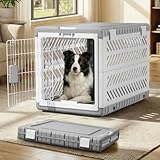
- Easy to Assemble: The one-piece folding dog box furniture eliminates the need for complex assembly. You can create a comfortable haven for your pet set up and fold down the crate in seconds with no tools required. Enjoy a wonderful life with your furry good friend!
- Space-Saving & Easy Mobility: This collapsible dog crate features a innovative foldable design, allowing it to be stored flat when not in use. Equipped with two smooth-rolling wheels and sturdy handles on both sides, this pet crate offers effortless mobility. Move your dog cage around the house or during travel with minimal effort
- Safe & Reliable: Gardner Pet pet kennel Features squeeze-latch locks on the door for quick and secure closure. allowing your furry friends to stay safely inside while also being friendly to the fingers of pet guardians. These locks are easy for owners to operate but prevent clever dogs from opening them.Our curved corners help prevent squeezing and the sinking of the chin and claws, and the rounded corners eliminate sharp edges
- Long-lasting Dog House: Composed of high-quality PE and strong metal wire, the indoor dog house is both functional and aesthetically pleasing for modern homes, providing your pet with a long-lasting, stable and safe resting place
- Multi-functional Dog Cage furniture: Modern style, suitable for any home decoration, whether as a cozy indoor dog house, a travel crate for road trips, or a temporary containment space outdoors
Facility deadlines vary. For example, PetSmart PetsHotel lists a minimum age of four months, prefers vaccination 10–14 days before check-in, and requires Bordetella at least 48 hours before check-in. Zoetis says some facilities require Bordetella at least one week before boarding and that canine influenza vaccination may ideally be completed at least two weeks beforehand. A Dogtopia location lists rabies, distemper, and Bordetella, with canine influenza strongly recommended.
Vaccination reduces risk but does not eliminate all respiratory illness. Bordetella is only one of several organisms associated with canine infectious respiratory disease. Confirm the facility’s policy and ask your veterinarian what is appropriate for your dog’s exposure risk.
Independent reader supportYour contribution helps us test, update, and keep practical guides available for everyone.What to bring to a boarding facility
- Your dog’s usual food, portioned by meal if practical.
- Written feeding instructions, including treats and food restrictions.
- Medication in the original labeled containers.
- A medication schedule and your veterinarian’s contact information.
- Current vaccination records.
- Your emergency contact and authorized pickup information.
- A collar, leash, current identification tag, and updated microchip contact details.
- A familiar blanket, bed, or toy if the facility allows personal items.
- A written note about anxiety triggers, escape risk, food guarding, handling sensitivities, and dog-to-dog compatibility.
Ask what the facility supplies before bringing bedding, bowls, food, or toys. Some facilities prohibit personal items because they can be destroyed, swallowed, or become a source of conflict.
How to choose a boarding facility
Tour before you book
Ask to see the sleeping areas, play spaces, food-preparation area, and isolation space. Look for clean floors and bowls, secure doors and fencing, reasonable noise levels, temperature control, fire alarms, backup plans, and staff who can explain the daily routine. The AKC and CareCredit recommend touring facilities and asking about sanitation, exercise, staffing, and emergency care.
Do these 3 things before closing this tab:
1Clear out junk files and repair common Windows errors2Scan for outdated or missing drivers - takes under a minute3Repair Windows errors before they cause bigger problemsAssess staffing and handling
- What is the staff-to-dog ratio during play?
- Are dogs grouped by size, age, energy, and temperament?
- Can the facility safely care for a dog that cannot join group play?
- Are staff trained in canine first aid and medication administration?
- Does the facility accept pills, liquids, eye or ear medication, and injections—or only some of them?
- How are sick, injured, fearful, or aggressive dogs separated?
- Does staff use reward-based, low-stress handling?
Check licensing and insurance
Licensing and inspection rules vary by state and municipality. Pennsylvania, for example, requires kennel licenses and distinguishes among kennel types. Massachusetts requires commercial boarding and training kennels to hold kennel licenses and encourages owners to verify that a sitter, daycare, boarding center, or training facility has an active license.
Those state examples are not nationwide law. Ask the local animal-control authority or agriculture department what applies where the facility operates, and ask the provider to show its current license and insurance.
Read the contract
Look for:
- Emergency-treatment authorization.
- Who transports the dog to the veterinarian.
- Who pays examination and treatment bills.
- Rules concerning bites, illness, escape, injury, and property damage.
- Deposits, cancellation deadlines, and no-show fees.
- Late-pickup and holiday pricing.
- Abandonment procedures.
- Webcam, photo, and communication policies.
- Whether the facility can change accommodations or isolate a dog.
A Dogtopia boarding form states that medical-care costs incurred while a dog is boarding are the owner’s responsibility and due at departure. That is a facility-specific contract term, not a universal legal rule.
Booking timeline for a first-time boarder
Popular facilities can fill weeks or months ahead, especially around major holidays. Start by arranging a tour, vaccine review, and meet-and-greet. For a first stay:
Free tools Windows power users keep installed
One-click scans. No signup required.
Best Value

- Medium 4-door folding pet travel kennel with soft sides for cats, dogs, rabbits, and other small animals
- Top door for sunlight and breathability, front and side doors with zipper lock clips for added security; Included straps to roll up and secure fabric doors when leaving the portable dog crate open
- Carrying handle and padded shoulder strap for easily transporting when pet kennel is folded; includes removable fleece pet bed pad
- Convenient pop-up pet crate design can be set up and folded down in seconds with no tools required
- Product Dimensions: 30 x 21 x 21 inches (LxWxH). Water-resistant base
- Tour the facility. Observe cleanliness, security, staffing, and the actual sleeping space.
- Confirm requirements. Ask about minimum age, vaccines, waiting periods, spay/neuter rules, temperament testing, and required trial visits.
- Try a short visit. A daycare day or trial night can reveal whether your dog eats, rests, and interacts safely away from home.
- Review the invoice and contract. Calculate chargeable days and likely add-ons before paying a deposit.
- Book the trip. Provide an emergency contact who can make decisions if you are unreachable.
Several Dogtopia locations require or recommend a daycare visit before a first overnight stay. Requirements differ by location, so confirm the policy at the specific branch rather than relying on the brand name alone.
Questions to ask before paying a deposit
- If I drop off Friday afternoon and pick up Friday morning, how many chargeable days is that?
- What exactly is included in the nightly rate?
- How many potty breaks, walks, or play sessions are included?
- Is daycare included, optional, or unavailable?
- Will my dog be in group play, private turnout, or both?
- Is someone physically on-site overnight?
- What happens if my dog becomes sick, injured, or refuses food?
- Which emergency veterinarian do you use, and who transports the dog?
- Who pays the emergency bill, and can you authorize treatment if I do not answer?
- Can you administer my dog’s exact medication, including injections or refrigerated medicine?
- What food can I bring, and is special meal preparation extra?
- Are large-dog, puppy, second-dog, suite, holiday, grooming, or transportation fees applicable?
- What vaccines and waiting periods are required?
- What happens if my flight is delayed?
- What are the deposit, cancellation, and late-pickup rules?
- Can I tour the facility and see where my dog will sleep?
Alternatives to commercial boarding
House sitting
An overnight caregiver in your home may be better for a dog that is calmer in familiar surroundings or needs frequent medical routines. The trade-off is the cost of inviting someone into your home and the need to verify references, insurance, emergency procedures, and backup coverage.
Drop-in visits
Drop-ins can work for an independent adult dog that does not need overnight companionship. They may be inadequate for dogs with severe separation anxiety, frequent medical needs, escape risk, or a need for continuous supervision.
Friends or family
This can reduce the cash cost, but use written feeding and medication instructions, provide emergency authorization, and identify a backup caregiver. Familiarity does not eliminate the need for a safety plan.
The Tool Desk
Outbyte Driver Updater FREEScan for outdated or missing drivers - takes under a minuteDriver Scan →Outbyte PC Repair FREERepair Windows errors before they cause bigger problemsFix Now →Veterinary boarding
This is worth considering when medical complexity makes an ordinary kennel unsuitable. Confirm whether a veterinarian or veterinary technician is physically present overnight; a veterinary location does not automatically mean 24-hour clinical supervision.
Board-and-train
Board-and-train should not be treated as ordinary boarding with a bonus lesson. It involves training goals, a longer stay, different contracts, and the need to evaluate the trainer’s methods, credentials, communication, and follow-up support.
Frequently Asked Questions
Is dog boarding charged by night or by day?
Either is possible. Some facilities charge per night, while others use calendar days or add a full day for pickup after a cutoff. Ask exactly how many chargeable days your drop-off and pickup times create.
Does dog boarding include 24-hour supervision?
Not necessarily. Some facilities have staff on-site all night; others use cameras, alarms, temperature monitors, and an employee who responds from nearby. Ask whether anyone is physically present overnight and what happens during an emergency.
How far ahead should I book dog boarding?
Book as early as possible for holidays and popular facilities—often weeks or months in advance. A first-time boarder should also allow time for a tour, vaccine review, temperament evaluation, and a trial daycare visit or overnight stay.
Is veterinary boarding always better than a regular kennel?
Not automatically. Veterinary boarding may be valuable for medication, observation, or medical complexity, but the best option depends on the dog’s needs. Confirm the actual staffing, monitoring, exercise schedule, and emergency response rather than choosing solely by facility type.
The Bottom Line
Budget about $40–$85 per night for ordinary U.S. dog boarding, but compare the total bill and care schedule—not just the headline rate. Ask about calendar-day billing, late pickup, medication, food, private exercise, holiday pricing, weight-based charges, overnight staffing, vaccine deadlines, and emergency treatment. For a social, healthy dog, daycare boarding may provide valuable activity; for an anxious, reactive, senior, or medically complicated dog, in-home care, a private arrangement, or veterinary boarding may justify a higher price.
Quick Recap
Product prices and availability are accurate as of the date/time indicated and are subject to change. Any price and availability information displayed on Amazon at the time of purchase will apply.




