Short answer: Gartner’s latest publicly reported market evaluation is the Magic Quadrant for Backup and Data Protection Platforms, dated June 29, 2026. It identifies six Leaders—Cohesity, Commvault, Dell Technologies, Druva, Rubrik, and Veeam—along with Huawei as a Challenger, HYCU and IBM as Visionaries, and Arcserve and OpenText as Niche Players. Public coverage also reports that Unitrends/Kaseya was removed from the formal analysis, creating an unresolved discrepancy: the summary says Gartner evaluated 12 vendors, but only 11 vendors are publicly identified in quadrant positions.
This is not a numbered list of the 12 best backup products. Gartner’s Magic Quadrant compares vendors by Ability to Execute and Completeness of Vision; a lower-positioned vendor can still be the better choice for a particular workload, geography, recovery model, budget, or operating strategy. Use the quadrant as a shortlist—not as a substitute for workload testing, recovery exercises, security review, and commercial due diligence.
The current Gartner report—and why the old title is misleading
The market was previously called Enterprise Backup and Recovery Software Solutions. Gartner had renamed it Backup and Data Protection Platforms by the 2025 edition, reflecting how enterprise backup now extends beyond traditional server copies and file restores. Current platforms may combine backup, cyber recovery, SaaS protection, cloud workload protection, identity resilience, recovery orchestration, analytics, and secondary-data management.
As of August 10, 2026, the latest publicly reported edition is Gartner’s Magic Quadrant for Backup and Data Protection Platforms, published June 29, 2026. Gartner’s accessible market page still displays the 2025 report, so the 2026 vendor positions below are based on public vendor announcements and independent reporting rather than a publicly accessible full Gartner graphic. See the Gartner market page, the Veeam announcement, the Commvault announcement, and StorageNewsletter’s report.
#1 Best Overall

- Easily store and access 2TB to content on the go with the Seagate Portable Drive, a USB external hard drive
- Designed to work with Windows or Mac computers, this external hard drive makes backup a snap just drag and drop
- To get set up, connect the portable hard drive to a computer for automatic recognition no software required
- This USB drive provides plug and play simplicity with the included 18 inch USB 3.0 cable
- The available storage capacity may vary.
Important qualification: Do not publish an unqualified table claiming that these are Gartner’s confirmed 12 current vendors. The public 2026 summary names 11 plotted vendors while separately discussing Unitrends/Kaseya. Until the complete 2026 Gartner report or graphic confirms the count, the accurate wording is publicly reported 2026 positions.
Publicly reported 2026 quadrant positions
| Quadrant | Vendors publicly identified | How to interpret the group |
|---|---|---|
| Leaders | Cohesity, Commvault, Dell Technologies, Druva, Rubrik, Veeam | Broad market capability and execution, but not automatically the best fit for every buyer. |
| Challenger | Huawei | Strong execution in relevant areas, with a vision or market approach that differs from the Leaders. |
| Visionaries | HYCU, IBM | Distinctive direction or innovation that may suit a particular architecture or strategic requirement. |
| Niche Players | Arcserve, OpenText | More focused capability, market reach, or use-case fit; quadrant position does not mean unusable technology. |
| Requires qualification | Unitrends/Kaseya | Public coverage says Unitrends was removed from the formal analysis and Kaseya appeared among honorable mentions. Confirm status against the full report before treating it as a 2026 quadrant vendor. |
The six Leader positions are separately supported by announcements from Cohesity, Commvault, Dell, Druva, Rubrik, and Veeam. HYCU also confirms its Visionary position. The quadrant labels are report-specific and should not be converted into a first-through-twelfth ranking.
What Gartner is evaluating
The current category covers platforms that capture point-in-time copies of enterprise data and recover data or systems after operational failures, application failures, accidental deletion, natural disasters, cyberattacks, and other loss events. Qualifying platforms can be delivered as software, an integrated appliance, vendor-hosted backup as a service, or a hybrid of those models.
The market is broader than a conventional on-premises backup server. Gartner’s publicly summarized 2025 market definition required platforms to address:
The Tool Desk
Outbyte Driver Updater FREEScan for outdated or missing drivers - takes under a minuteDriver Scan →Outbyte PC Repair FREEClear out junk files and repair common Windows errorsFree Scan →- Hybrid, multicloud, and SaaS protection.
- IaaS protection across at least two public-cloud providers.
- At least two major SaaS applications, such as Microsoft 365, Salesforce, or Google Workspace.
- Recovery from operational failure, application failure, accidental error, natural disaster, and cyberattack.
- Immutable-storage integration or vendor-provided immutable storage.
- Cyberrecovery readiness, including post-backup anomaly or entropy detection.
- Centralized management of distributed backup infrastructure.
These are publicly summarized 2025 criteria, not confirmed 2026 criteria. They are useful context for understanding why the quadrant emphasizes enterprise platforms rather than every excellent backup, replication, endpoint, SaaS-only, or managed-service product. The 2025 market-definition summary also reports thresholds involving commercial availability, revenue, customer count, large deployments, geographic coverage, international revenue, dedicated employees, and upper-midmarket or large-enterprise sales. Gartner’s 2025 Critical Capabilities report evaluated 12 products alongside the Magic Quadrant.
Is a Gartner Magic Quadrant a ranking?
No. Gartner’s two evaluation dimensions are:
- Ability to Execute: how effectively the vendor delivers, supports, sells, and develops its offering in the market.
- Completeness of Vision: how well the vendor understands the market, articulates its strategy, innovates, and anticipates customer needs.
A Leader scores strongly across both dimensions, but that does not mean it is the fastest, least expensive, easiest, or most secure product for every organization. A Visionary may be a compelling choice for a cloud-native or specialized environment. A Niche Player may deliver an excellent result for a particular hypervisor, region, appliance strategy, or managed-service model. Gartner’s methodology and its standard disclaimers caution readers not to treat quadrant placement as an endorsement or an instruction to select only the highest-positioned vendor. See Gartner’s Magic Quadrant methodology.
The six publicly reported Leaders
Cohesity
Reported position: Leader.
Cohesity should be evaluated as a broad data-protection and secondary-data platform rather than simply as a backup appliance. Its portfolio now has to be understood in the context of its combination with Veritas’ NetBackup and Alta Data Protection businesses. That transaction makes older comparisons that treat Cohesity and Veritas as wholly separate, unchanged competitors unreliable. Gartner published a transaction note on the Cohesity-Veritas combination.
For a buyer, the central question is portfolio fit: which workloads belong on Cohesity DataProtect, which require NetBackup-related capabilities, and whether consolidation preserves specialized functionality. Review software-only, appliance, and SaaS control-plane choices separately. Ask for a supported migration path for existing Veritas customers, a product-rationalization roadmap, clear support ownership, and a licensing explanation after the transaction.
Free tools Windows power users keep installed
One-click scans. No signup required.
- Potential fit: organizations seeking broad protection and secondary-data capabilities, especially those already operating Cohesity or legacy NetBackup estates.
- Validate: workload boundaries between DataProtect and NetBackup, migration effort, appliance dependence, storage and capacity pricing, and whether existing policies, catalogs, and retention controls transfer cleanly.
Commvault
Reported position: Leader.
Commvault is a strong candidate for complex hybrid enterprises with extensive application, compliance, retention, and recovery requirements. Its breadth can help a buyer standardize diverse workloads, but it can also increase design and administrative complexity. Evaluate the current Commvault Cloud portfolio, cloud workload protection, identity resilience, recovery orchestration, and cyberrecovery functions as an architecture—not as a collection of marketing labels.
- Potential fit: large, heterogeneous environments with demanding application recovery, retention, governance, and hybrid-cloud requirements.
- Validate: customer-managed versus BaaS deployment, the number of consoles and products required, implementation expertise, cyber-incident escalation arrangements, and whether licensing remains predictable as protected workloads grow.
Use the vendor’s 2026 announcement as a statement of its reported recognition, not as independent proof that every capability will meet your RPO, RTO, or compliance needs.
Dell Technologies
Reported position: Leader.
Dell’s offering is best understood as an integrated ecosystem involving PowerProtect Data Manager, Data Domain, PowerProtect Cyber Recovery, CyberSense, and related Dell infrastructure. It may be especially attractive where Dell storage and infrastructure are already strategic standards. However, the phrase Dell backup does not describe one product with one universal operating experience.
Rank #2

- 【Versatile Storage Expansion – For Gaming, Work & Everyday Use】 Running out of space on your PS5 or Xbox Series X/S? This external hard drive lets you store and play PS4 / Xbox One games directly, instantly freeing up your console’s internal storage for next‑gen titles. At the same time, it handles work file backups, media libraries, and cross‑device data transfers with ease. One drive, all your needs. *(Note: PS5 / Xbox Series X|S games cannot be run or stored directly from the external hard drive. However, by offloading your PS4 / Xbox One games, you can free up valuable space for newer titles.)*
- 【Patented Silicone Sleeve – Data Protection You Can Count On】 Worried about drops? We’ve got you covered. The patented built‑in silicone sleeve acts like a shock‑absorbing armor, cushioning your drive against bumps and falls. Whether it’s important work documents, precious family photos, or hard‑earned game saves, your data deserves this level of protection.
- 【Plug & Play, Compatible with Computers & Consoles】 No complicated setup—just plug in and go. Works seamlessly with Windows, Mac, and Linux computers, as well as PS4, PS5, Xbox One, and Xbox Series X/S. Process files at the office, back up data at home, or enjoy gaming in your downtime—one drive handles all your devices, simply and hassle‑free.
- 【USB 3.0 Ultra‑Fast Transfer – No More Waiting】 Tired of watching progress bars crawl? With USB 3.0 speeds up to 5Gbps, large files transfer in seconds. Whether you’re moving work documents, transferring hundreds of gigs of games, or backing up a year’s worth of photos, you get more done in less time.
- 【Sleek, Lightweight, and Ready to Go】 Weighing just 0.16 kg—lighter than a can of soda—this compact drive features a stylish mirror‑and‑frosted finish. Toss it in your bag and go, whether you’re heading to the office, visiting a friend for a gaming session, or giving a presentation on the road.
- Potential fit: Dell-centric data centers that value integrated appliances, storage efficiency, vendor support, and cyber-vault architectures.
- Validate: which components are mandatory for the desired cyberrecovery outcome, how many products and consoles administrators will operate, support for non-Dell infrastructure, cloud-first recovery, portability to non-Dell targets, and whether anomaly detection, malware inspection, and vaulting are separate purchases.
Do not infer that an integrated appliance automatically provides an isolated recovery environment. Test the full design, including identity, administration, network dependencies, and recovery to an environment that is unavailable during a primary-site incident. Dell’s public 2026 material discusses its cyber-resilience approach in relation to AI initiatives; the vendor announcement should be read with those product and architecture boundaries in mind.
Druva
Reported position: Leader.
Druva represents a cloud-delivered approach with relatively little backup-infrastructure management for the customer. That operating model can appeal to distributed organizations, SaaS-heavy estates, endpoint populations, cloud workloads, and lean IT teams. It is less automatically suitable for organizations with very large legacy data centers, strict sovereignty rules, or unusual recovery-location requirements.
- Potential fit: organizations that prefer vendor-hosted operations, distributed workload protection, SaaS coverage, and reduced appliance administration.
- Validate: management-plane location, backup-data geography, sovereignty controls, native support for specialized workloads such as GCP, MongoDB, and Cassandra, large-scale restore throughput, recovery dependencies, identity systems, and cloud control-plane recovery.
Ask the vendor to demonstrate a full recovery at your expected scale rather than relying on a small file restore. The public Druva announcement supports its reported position but does not settle geography, egress, or workload-specific questions.
Rubrik
Reported position: Leader. Rubrik publicly says it was positioned furthest in Vision.
Rubrik is positioned around security-led data protection, immutable copies, threat monitoring, clean recovery, and simplified management. That makes it a natural candidate for organizations treating backup as part of cyber resilience rather than solely as an infrastructure-admin function. Security-oriented positioning still does not prove superior recovery performance; the buyer must test whether the platform can restore usable applications and their dependencies.
- Potential fit: security-conscious enterprises prioritizing immutable protection, threat-aware recovery, operational simplicity, and SaaS management.
- Validate: cross-hypervisor recovery, compliance reporting, scale economics, agent and add-on requirements, identity and secrets recovery, network dependencies, and the difference between identifying a suspicious recovery point and proving that a restored application is clean.
Rubrik’s 2026 announcement contains the vendor’s recognition claims. Treat those separately from evidence produced during your own isolated-recovery test.
Veeam
Reported position: Leader. Veeam says it ranked highest for Ability to Execute for the seventh consecutive time.
Veeam’s portfolio spans virtual, physical, cloud, Kubernetes, SaaS, and managed-service deployments. Its broad ecosystem and flexible storage-target approach can suit heterogeneous environments. Compare the actual products—such as Veeam Data Platform, Veeam Data Cloud, Veeam Kasten, and the relevant Microsoft 365 or SaaS offerings—instead of treating Veeam as one homogeneous package.
- Potential fit: organizations with mixed infrastructure, substantial virtualization, varied storage targets, and a partner or managed-service ecosystem.
- Validate: which editions, products, and add-ons cover the full estate; the administrative burden of separate components; whether any Veeam Data Cloud architecture or cloud dependency fits your strategy; SaaS coverage beyond the applications you use today; and mass-restore RPO and RTO.
Veeam’s 2026 release is a vendor source for its Gartner recognition. It should not be used as a substitute for a product-by-product bill of materials and recovery test.
Quick wins for a faster PC:
Scan for outdated or missing drivers - takes under a minuteDriver Scan →Clear out junk files and repair common Windows errorsFree Scan →Fix the driver behind crashes, sound loss and screen glitchesFind Drivers →Challenger, Visionaries, and Niche Players
Huawei
Reported position: Challenger, reportedly the sole Challenger in 2026.
Huawei should be examined through OceanProtect and its scale-out, flash-oriented backup-appliance strategy. It may be relevant to organizations with Huawei infrastructure, regional procurement requirements, or a preference for appliance-based performance. Buyers should scrutinize support, ecosystem, portability, and multicloud coverage outside Huawei Cloud.
Rank #3
- Easily store and access 4TB of content on the go with the Seagate Portable Drive, a USB external hard drive.Specific uses: Personal
- Designed to work with Windows or Mac computers, this external hard drive makes backup a snap just drag and drop
- To get set up, connect the portable hard drive to a computer for automatic recognition no software required
- This USB drive provides plug and play simplicity with the included 18 inch USB 3.0 cable
- The available storage capacity may vary.
- Potential fit: Huawei-standardized environments and organizations with regional requirements or an appliance preference.
- Validate: native AWS, Azure, and Google Cloud protection; geographic and regulatory constraints; portability to non-Huawei targets; local support and partner coverage; and recovery if Huawei infrastructure is itself unavailable.
The position is reported in this public 2026 summary. The fact that Huawei was also listed in the 2025 materials does not answer current workload or regional-support questions.
HYCU
Reported position: Visionary.
HYCU is oriented toward cloud-native and SaaS protection, with particular relevance for Nutanix, public-cloud, and modern application environments. Its bring-your-own-storage model and application-aware recovery claims should be assessed by workload and storage target, not accepted as universal capabilities.
Do these 3 things before closing this tab:
1Clear out junk files and repair common Windows errors2Fix the driver behind crashes, sound loss and screen glitches3Repair Windows errors before they cause bigger problems- Potential fit: organizations seeking modern workload coverage without a traditional backup-infrastructure footprint, particularly around Nutanix and cloud environments.
- Validate: maturity for critical databases and legacy systems, BYOS compatibility with required targets and retention policies, direct SaaS support, recovery orchestration, and identity recovery during a full business restoration.
HYCU’s Gartner page and announcement provide the vendor’s position and claims. Require a demonstration using your own applications and storage design.
IBM
Reported position: Visionary.
IBM is particularly relevant to IBM infrastructure, mainframe, regulated-industry, and complex hybrid environments. Evaluate its portfolio as a set of products and dependencies rather than as a single turnkey platform. The review should clarify the roles of Storage Defender, Storage Protect, Storage Protect for Cloud, and any third-party control-plane or infrastructure dependencies.
- Potential fit: IBM-heavy, mainframe, regulated, or highly complex hybrid environments with existing IBM skills and infrastructure.
- Validate: IBM and non-IBM workload coverage, cloud and SaaS breadth, number of required products and consoles, licensing, integration, and whether the organization has enough in-house expertise to operate the design.
IBM’s reported 2026 position appears in the public quadrant summary. Use the 2025 Critical Capabilities listing as historical context, not as confirmation of every current edition or feature.
Arcserve
Reported position: Niche Player.
Arcserve may be a practical fit for midsize organizations, mixed environments, appliance deployments, replication requirements, and managed-service delivery. It should not automatically be treated as a like-for-like replacement for every large-enterprise platform in the Leader quadrant.
- Potential fit: midsize or mixed environments that value appliance options, replication, channel support, or MSP delivery.
- Validate: cloud and SaaS breadth, large-scale recovery performance, cyberrecovery isolation, AI-assisted detection claims, appliance portability, long-term retention, and the depth of local support.
Arcserve’s reported position appears in the public 2026 summary.
OpenText
Reported position: Niche Player.
OpenText is worth considering where content, information governance, archiving, Documentum, or existing Data Protector deployments influence the decision. Compare its customer-managed and hosted SaaS protection options, and determine whether the required workloads can be operated through a common control plane or through several products.
- Potential fit: organizations with important OpenText content, information-governance requirements, Documentum estates, or existing Data Protector skills.
- Validate: SaaS coverage, BaaS availability, product integration, identity recovery, cloud portability, recovery orchestration, and the number of consoles and contracts needed.
OpenText’s position is reported in the 2026 public summary. Do not assume that a strong fit for content governance equals a complete enterprise recovery platform for every other workload.
What happened to Veritas, Acronis, Microsoft, and Unitrends?
Veritas and NetBackup
Veritas should not be listed as a separate current Gartner vendor without explaining the corporate and product changes. Gartner reported on the combination of Veritas’ NetBackup and Alta Data Protection businesses with Cohesity. A current comparison must say whether it is discussing Cohesity DataProtect, Cohesity’s NetBackup portfolio, a legacy Veritas deployment, or another product such as Arctera Backup Exec.
What’s actually slowing this PC down?
Pick the symptom - the matching free tool is one click away.
This matters operationally. A buyer needs to know who owns support, which roadmap applies, whether a legacy catalog and policy set can be migrated, which specialized NetBackup functions remain available, and whether the new commercial model changes total cost. See Gartner’s transaction note. Do not use a historical Veritas position as if it were a separate 2026 vendor position.
Rank #4
- Easily store and access 1TB to content on the go with the Seagate Portable Drive, a USB external hard drive.Specific uses: Personal
- Designed to work with Windows or Mac computers, this external hard drive makes backup a snap just drag and drop. Reformatting may be required for Mac
- To get set up, connect the portable hard drive to a computer for automatic recognition no software required
- This USB drive provides plug and play simplicity with the included 18 inch USB 3.0 cable
- The available storage capacity may vary.
Acronis
Acronis remains relevant for endpoint protection, cyber-protection, SMB, and MSP use cases, but it was not listed in Gartner’s 2025 Magic Quadrant. Public 2024 coverage said Acronis exited because its MSP and edge/endpoint focus did not meet that report’s enterprise-market inclusion criteria. That absence does not prove that Acronis is poor technology; it means the product and market scope should be explained rather than quietly inserted into a current enterprise quadrant list. See the 2024 Gartner report and independent analysis.
Microsoft
Microsoft appeared in the 2024 report but not in the publicly accessible 2025 vendor list. It should therefore not be called a current 2026 quadrant vendor without confirmation from the full 2026 report. Microsoft-native retention, snapshots, replication, and cloud recovery services may still be relevant to a buyer, but those functions should be compared with independent backup and recovery requirements rather than treated as automatic proof of complete protection.
Unitrends and Kaseya
Public 2026 coverage says Unitrends disappeared from the formal Magic Quadrant analysis and that Kaseya appeared among honorable mentions. Unitrends remains potentially relevant to SMB and MSP buyers, but that is not the same as being a current 2026 quadrant vendor. Confirm its status in the complete Gartner report before putting it in a definitive 2026 vendor table.
Windows Errors? Fix Them Before They Spread
Repair common Windows errors and clear accumulated junk for a smoother, more stable PC - no reinstall needed.Free scan · no reinstallOutdated Drivers Are Slowing You Down
One free scan finds every outdated or missing driver and matches the right update for your exact hardware.Free scan · exact hardware matchHow to compare vendors by buyer fit
The useful question is not which vendor is universally number one. It is which architecture can protect and recover your highest-value workloads under the conditions you actually face.
| Buyer requirement | Vendors or groups to investigate first | Questions that decide the shortlist |
|---|---|---|
| Broad heterogeneous enterprise coverage | Commvault, Veeam, Cohesity, Rubrik, Dell | Can one policy and operating model cover physical servers, VMware, Hyper-V, Kubernetes, databases, NAS, SaaS, and public cloud? |
| Security-led recovery | Rubrik, Commvault, Dell, Veeam, Cohesity | Are copies immutable and isolated? Can the platform identify a clean point and recover in a separated environment? |
| SaaS-first or infrastructure-light operations | Druva, HYCU, Rubrik, Veeam | Where is the control plane? Where is data stored? What are the geography, egress, retention, and large-restore implications? |
| Dell-centric infrastructure | Dell Technologies, alongside broader software alternatives | Which PowerProtect components are needed, and how portable is recovery beyond Dell infrastructure? |
| Complex compliance, retention, and application requirements | Commvault, IBM, Cohesity, Veeam | Can retention locks, legal requirements, audit reporting, application consistency, and recovery evidence be managed without excessive customization? |
| Nutanix and modern cloud workloads | HYCU, Veeam, Rubrik, Druva, Cohesity | Are the exact Nutanix, Kubernetes, IaaS, PaaS, and SaaS versions supported, and can they be recovered across locations? |
| Midmarket or MSP-led deployment | Arcserve, Unitrends/Kaseya subject to current-status confirmation, Veeam, Acronis outside the current quadrant | Can the provider deliver delegated administration, predictable per-tenant economics, and an actual recovery service rather than only backup monitoring? |
| IBM, mainframe, or regulated environments | IBM, Commvault, Cohesity/NetBackup, Veeam | Are mainframe, identity, application, cloud, and non-IBM recovery requirements covered by a coherent operating model? |
These are shortlist categories, not independent rankings. Product editions, geography, implementation partners, and customer requirements can change the answer.
Enterprise backup selection scorecard
Use a weighted scorecard instead of reproducing Gartner’s axes as a fake numerical ranking. The following is an editorial evaluation framework, not a Gartner score:
| Criterion | Suggested weight | Evidence to require |
|---|---|---|
| Workload coverage | 20% | Support for physical systems, VMware, Hyper-V, Nutanix, Kubernetes, databases, NAS, endpoints, SaaS, IaaS, and PaaS. Record exact versions and whether support is agent-based, native, or an add-on. |
| Recovery assurance | 25% | Measured RPO and RTO, application-consistent recovery, mass VM recovery, bare-metal recovery, file and item recovery, cross-hypervisor recovery, cloud recovery, and clean-room recovery. |
| Cyber resilience | 20% | Immutability, isolation, air gap, anomaly detection, malware scanning, threat hunting, privileged-access controls, recovery-point assessment, and isolated recovery procedures. |
| Operating model | 15% | SaaS versus self-managed deployment, centralized console, APIs, automation, delegated administration, policy management, reporting, audit trails, and the number of separate products required. |
| Economics | 10% | Capacity, workload, user, instance, subscription, appliance, storage, egress, support, retention, add-on, and professional-services costs. |
| Strategic fit | 10% | Cloud strategy, data sovereignty, existing infrastructure, internal skills, partner ecosystem, migration risk, exit options, and recovery portability. |
Questions to put in every vendor response
- Which named product and edition protects each workload in our inventory?
- Is the control plane customer-managed, vendor-hosted, or split between both?
- Where are metadata, encryption keys, logs, and backup copies stored?
- Can an administrator with production privileges alter backup retention or delete copies?
- What happens if the primary management console, identity provider, DNS, KMS, secrets store, or network services are unavailable?
- Can we recover to a different hypervisor, cloud, region, or hardware platform?
- Which capabilities require additional licenses, appliances, agents, storage tiers, or professional services?
- What are the renewal, minimum-commitment, storage-growth, and egress assumptions?
- What is the supported exit or migration process if the platform is replaced?
Proof-of-concept: test recovery, not just backup
A successful backup job proves only that a copy was created according to the job’s rules. It does not prove that an application, identity system, network dependency, secret, certificate, or cloud control plane can be restored within the business RTO. Every shortlisted platform should pass a repeatable recovery test.
Recommended Free Tools
- Individual recovery: delete files and mail items, then measure search, authorization, item-level recovery, and audit evidence.
- Mass VM recovery: recover a realistic batch of virtual machines, not one demonstration VM. Record throughput, dependencies, boot order, and operator effort.
- Application-consistent recovery: restore a SQL Server or Oracle workload and verify transaction consistency, application startup, and user access.
- Ransomware recovery: select a known-compromised test environment, identify a known-clean restore point, recover in an isolated environment, and verify the application before reconnecting it.
- Administrator compromise: simulate loss or compromise of backup-administrator credentials. Test retention controls, privileged access, MFA, break-glass accounts, and the ability to operate recovery without the compromised identity path.
- Identity recovery: recover Active Directory or Entra ID dependencies, privileged accounts, certificates, secrets, and related configuration. Do not assume that application data alone is enough.
- Cloud-region outage: simulate loss of the primary cloud region and document where recovery runs, how networking is recreated, and what egress or cross-region charges apply.
- Cross-platform recovery: recover to a different hypervisor or cloud if the business continuity plan requires portability.
- Management-plane outage: test whether recovery is possible when the normal console is unavailable, disconnected, or inaccessible because identity services are impaired.
- SaaS recovery: test both item-level and tenant-level recovery for the actual SaaS applications in use. Include permissions, sharing, metadata, and cross-tenant or alternate-location requirements.
- Long-term retention: restore a copy retained through an upgrade or platform migration. Verify that catalogs, encryption keys, application consistency, and export procedures still work.
Record these results
- Actual RPO and RTO, not the proposal.
- Restore throughput and total elapsed time.
- Number of manual steps and operators required.
- Whether the result was application-consistent and usable.
- Whether the platform automatically judged the recovery point clean, and how that judgment was made.
- Cloud storage, API, retrieval, cross-region, and egress charges.
- Required add-ons, appliances, agents, or services.
- Support response time, technical depth, and escalation quality.
Define pass/fail criteria before the demonstration. A vendor should not be allowed to substitute a small file restore for a mass application recovery or to present immutability as proof of clean recoverability.
Costs that can change the decision
Backup pricing is difficult to compare from a headline subscription number. Build a five-year model that separates:
- Protected-capacity, workload, user, instance, or subscription charges.
- Backup-storage capacity, deduplication assumptions, and archive tiers.
- Appliance purchase or rental, maintenance, expansion, and replacement costs.
- Cloud API requests, retrieval, cross-region replication, and egress.
- SaaS-user licensing and application-specific add-ons.
- Premium cyberrecovery, anomaly-detection, malware-scanning, and orchestration features.
- Support tiers, implementation, training, migration, and recurring professional services.
- Minimum commitments, renewal increases, storage-growth assumptions, and data-retention changes.
Cloud delivery can reduce infrastructure administration but can also make large restores, long retention, and cross-region recovery more expensive than expected. Appliances can improve deployment, support, deduplication, and predictable local performance while increasing hardware dependence and limiting portability. Ask each vendor to price the same protected data set, retention policy, recovery scenarios, and growth rate.
Common recovery and security mistakes
Immutability is not isolation
Object Lock, immutable snapshots, retention locks, and vendor-managed immutable storage reduce the risk of deletion or overwrite. They do not automatically provide a separate administrative plane, separate identity system, physically or logically isolated recovery environment, protection from compromised credentials that can change retention, or a clean recovery point.
Do these 3 things before closing this tab:
1Repair Windows errors before they cause bigger problems2Scan for outdated or missing drivers - takes under a minute3Clear out junk files and repair common Windows errorsBest Value
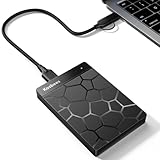
- 【Plug-and-Play Expandability】 With no software to install, just plug it in and the drive is ready to use in Windows(For Mac,first format the drive and select the ExFat format.
- 【Fast Data Transfers 】The external hard drives with the USB 3.0 cable to provide super fast transfer speed. The theoretical read speed is as high as 110MB/s-133MB/s, and the write speed is as high as 103MB/s.
- 【High capacity in a small enclosure 】The small, lightweight design offers up to 500GB capacity, offering ample space for storing large files, multimedia content, and backups with ease. Weighing only 0.35 Lbs, it's easy to carry "
- 【Wide Compatibility】Supports PS4 5/xbox one/Windows/Linux/Mac and other operating systems, ensuring seamless integration with game consoles,various laptops and desktops .
- Important Notes for PS/Xbox Gaming Devices: You can play last-gen games (PS4 / Xbox One) directly from an external hard drive. However, to play current-gen games (PS5 / Xbox Series X|S), you must copy them to the console's internal SSD first. The external drive is great for keeping your library on hand, but it can't run the new games.
SaaS retention is not automatically independent backup
Microsoft 365, Salesforce, Google Workspace, and cloud-provider retention features may help with short-term recovery, but native retention, recycle bins, snapshots, replication, and independent backup solve different problems. Test tenant loss, accidental deletion, compliance export, permissions, cross-tenant recovery, and the retention period your business actually needs.
Identity is part of the recovery dependency chain
An organization can have intact application data and still be unable to operate if Active Directory, Entra ID, Okta, privileged accounts, certificates, secrets, or key-management services are unavailable. Include those systems in the protection inventory and the POC.
AI is not one feature
When a vendor says its platform is AI-powered, identify the exact function. It may mean anomaly detection, malware classification, recovery-point scoring, data classification, natural-language administration, a generative-AI assistant, autonomous remediation, or protection for AI models, vector databases, and training data. These are materially different capabilities. Ask for the product name, edition, data inputs, human approval requirements, false-positive handling, and evidence generated during recovery.
Bottom line for an enterprise shortlist
Start with the six publicly reported Leaders if you need broad enterprise coverage, but do not stop there. Add Huawei, HYCU, IBM, Arcserve, or OpenText when their architecture, geography, existing infrastructure, or workload specialization matches your requirements. Treat Unitrends/Kaseya as a status requiring confirmation, and keep Acronis, Microsoft, legacy Veritas, and other specialists in a separate alternatives section unless the full current Gartner report places them in the quadrant.
Recommended Free Tools
The final decision should be made by measured recovery results, not quadrant location. Select the platform that protects the exact workload inventory, preserves clean and isolated recovery points, restores applications and identity within the required RTO, operates within your skills and sovereignty constraints, and has a commercial model that remains predictable as data grows.
Frequently Asked Questions
What is the latest Gartner Magic Quadrant for backup vendors?
As of August 10, 2026, the latest publicly reported edition is Gartner’s Magic Quadrant for Backup and Data Protection Platforms, dated June 29, 2026. Gartner’s accessible market page still displays the 2025 report, so the publicly available 2026 vendor positions should be qualified until the complete Gartner report or graphic is available.
Is Gartner’s Magic Quadrant a ranking from one to 12?
No. Gartner evaluates vendors by Ability to Execute and Completeness of Vision and places them in four quadrants: Leaders, Challengers, Visionaries, and Niche Players. It is not a universal first-through-twelfth product ranking.
Why is the report no longer called Enterprise Backup and Recovery Software Solutions?
Gartner changed the market name to Backup and Data Protection Platforms by the 2025 edition. The newer category reflects protection and recovery across hybrid cloud, multicloud, SaaS, immutable storage, cyberrecovery, identity, orchestration, and other modern data-protection requirements.
Is Veritas still a separate vendor in the current Gartner quadrant?
Do not treat Veritas as a separate current 2026 quadrant vendor without confirmation. Gartner reported the combination of Veritas’ NetBackup and Alta Data Protection businesses with Cohesity. A buyer must distinguish between Cohesity DataProtect, the NetBackup portfolio, legacy Veritas deployments, and products such as Arctera Backup Exec.
Why is Acronis absent from the current Magic Quadrant list?
Acronis was absent from Gartner’s publicly accessible 2025 Magic Quadrant. Public 2024 coverage attributed its exit to a market focus on MSPs and edge or endpoint workloads that did not meet that report’s enterprise-market inclusion criteria. Its absence is not proof that it is unsuitable for endpoint, SMB, or MSP use cases.
Does immutable storage guarantee ransomware recovery?
No. Immutability helps prevent deletion and overwrite, but it does not by itself provide an isolated administration plane, independent identity, a clean recovery point, or a working recovery environment. A ransomware-recovery test must include detection, clean-point selection, application validation, identity, secrets, networking, and recovery within the required RTO.
Does Microsoft 365 retention replace independent backup?
Not necessarily. Native retention, recycle bins, snapshots, replication, and independent backup have different purposes and limits. Test the exact item-level, tenant-level, compliance, export, permission, cross-tenant, and long-term-retention scenarios your organization requires.
What should smaller businesses or MSPs evaluate?
Smaller businesses and MSPs may evaluate Arcserve, Unitrends/Kaseya subject to its current Gartner status, Veeam, and Acronis outside the current quadrant, among other specialists. Compare delegated administration, per-tenant economics, local support, SaaS coverage, appliance requirements, and whether the provider can perform a real recovery rather than only monitor backup jobs.
The Bottom Line
Bottom line: Gartner’s 2026 Magic Quadrant is a useful enterprise shortlist, not a top-12 ranking. The publicly reported Leaders are Cohesity, Commvault, Dell Technologies, Druva, Rubrik, and Veeam; Huawei, HYCU, IBM, Arcserve, and OpenText occupy the other reported positions. Because public coverage has a 12-versus-11 vendor discrepancy, confirm the complete report before publishing a definitive vendor count. For procurement, let workload coverage, isolated recovery, identity resilience, measured RPO/RTO, five-year cost, and migration risk decide the winner.
Quick Recap
Product prices and availability are accurate as of the date/time indicated and are subject to change. Any price and availability information displayed on Amazon at the time of purchase will apply.




