
Do these 3 things before closing this tab:
1Fix the driver behind crashes, sound loss and screen glitches2Clear out junk files and repair common Windows errors3Scan for outdated or missing drivers - takes under a minuteSome links on this page are affiliate links: if you buy through them we may earn a commission, at no extra cost to you.
Short answer: Elon Musk’s increasingly polarizing politics and public conduct have become a material business risk for Tesla, but the available evidence does not prove that the company is facing an imminent disaster. Tesla’s reputation has deteriorated sharply, consumers increasingly associate the brand with Musk personally, and research suggests his partisan activity reduced U.S. Tesla demand. At the same time, Tesla still has substantial cash, remains profitable, and delivered 480,126 vehicles in the second quarter of 2026—25% more than in the same quarter a year earlier.
The more defensible conclusion is that Musk is one part of a compound problem. His personal brand may be discouraging some buyers and fleet customers just as Tesla’s core lineup ages, competition intensifies, incentives change, margins narrow, and management spends heavily on artificial intelligence, autonomy, robotaxis, and humanoid robots. Tesla can recover from a damaged reputation. The harder question is whether it can do so while remaining so closely identified with the person who damaged it.
As an Amazon Associate I earn from qualifying purchases.
The Tool Desk
Outbyte Driver Updater FREEScan for outdated or missing drivers - takes under a minuteDriver Scan →Outbyte PC Repair FREEClear out junk files and repair common Windows errorsFree Scan →The real question is not whether Tesla can still sell cars
Tesla’s second-quarter 2026 delivery rebound makes a simple collapse narrative untenable. The company reported 480,126 deliveries, including 467,762 Model 3 and Model Y vehicles. That is a meaningful recovery from a weak comparison period.
But a recovery in deliveries does not automatically mean that Musk’s reputational damage has disappeared. Tesla may still be selling cars by relying on a refreshed Model Y, lower prices, financing incentives, stronger European electric-vehicle demand, and a depressed 2025 comparison base. Those factors can restore volume without restoring the broad, climate-oriented brand appeal Tesla once enjoyed.
Popular on Amazon

- 8 x 12 Inch Aluminum Sign: Tesla Parking Only sign measures 8 x 12 inches and is made from lightweight aluminum; the Reserved Parking Only design is printed on one side
- Indoor or Outdoor Display: Rust-resistant aluminum and printed surface are made for routine indoor or outdoor placement in garages, driveways, parking areas, and other selected locations
- 2 Pre-Drilled Mounting Holes: Top and bottom mounting holes allow attachment to compatible walls, fences, gates, doors, posts, or poles; screws, zip ties, and other mounting hardware are not included
- Reserved Tesla Parking Message: Black-and-white Reserved Parking Only design displays a designated Tesla parking space and provides a parking notice
- Gift for Tesla Owners: Practical Tesla garage sign for owners and enthusiasts; suitable for workshops, man caves, home garages, or as a birthday, holiday, or new-car gift
For personal-finance readers, this distinction matters. A damaged brand can affect future resale demand, discounts, operating margins, employee recruitment, software adoption, and the long-term value of a shareholder’s investment even when the company is not close to running out of money.
Working thesis: Musk’s conduct is probably not the sole explanation for Tesla’s weakening automotive business. But Tesla’s unusually close connection between founder, product, mission, and company converts his personal polarization into a measurable operating and governance risk.
Windows Errors? Fix Them Before They Spread
Repair common Windows errors and clear accumulated junk for a smoother, more stable PC - no reinstall needed.Free scan · no reinstallOutdated Drivers Are Slowing You Down
One free scan finds every outdated or missing driver and matches the right update for your exact hardware.Free scan · exact hardware matchSpecial offer. See more information about Outbyte and uninstall instructions. Please review EULA and Privacy policy.
What Musk’s toxicity means in business terms
Toxicity is a loaded moral description. In a business analysis, it is more useful to define the term operationally. In Tesla’s case, it refers to several connected risks:
- Political polarization: Musk endorsed Donald Trump in 2024, worked closely with the Trump administration and DOGE, supported right-wing European political movements, and adopted increasingly partisan public messaging.
- Association risk: Customers, employees, fleet buyers, and investors may treat a Tesla purchase or association with the company as an endorsement of Musk.
- Reputational spillover: Controversies surrounding X, misinformation disputes, inflammatory comments, or gestures interpreted by critics as extremist can become associated with Tesla even when they have nothing to do with vehicle engineering.
- Governance risk: Musk’s conduct is a Tesla risk because the company depends so heavily on him. It is not merely a celebrity problem that can be separated from the business.
- Attention-allocation risk: Musk has major responsibilities and interests involving Tesla, SpaceX, xAI, Neuralink, and The Boring Company. Tesla itself says in its annual filing that Musk does not devote his full time and attention to the company.
Tesla’s own 2025 Form 10-K makes the exposure unusually explicit. The company says it is highly dependent on Musk and warns that negative perceptions of Tesla or its management may damage the brand and sales. It also says commentary about Tesla and its management has contributed to protests, some of which escalated to violence, as well as vandalism.
Why Tesla is more exposed than a conventional automaker
Traditional automakers have charismatic executives, but their brands generally outlast individual leaders. Ford, Toyota, Volkswagen, Hyundai, and Mercedes-Benz are institutional identities with decades of history, large dealer networks, and marketing systems that do not depend on one person’s social-media feed.
Tesla developed differently. Musk became its public face and the central character in its story of innovation, climate progress, technological ambition, and disruption. The company’s direct-to-consumer model also puts the brand relationship directly in front of individual buyers. There is less distance between the person placing an order, the product being delivered, and the founder dominating the public conversation.
Free tools Windows power users keep installed
One-click scans. No signup required.
That creates a powerful upside when Musk is viewed as visionary. It also creates unusual downside when he becomes politically polarizing. A consumer who dislikes the chief executive of a traditional automaker can usually buy the car without feeling that the purchase communicates anything about that executive. A Tesla buyer may not have the same psychological separation.
This does not mean every Tesla customer is making a political statement. A buyer may dislike Musk and still choose a Tesla because of its charging access, range, software, price, availability, or financing terms. Existing owners may put an anti-Musk sticker on a vehicle without selling it. A political objection may affect the next purchase rather than the car already sitting in a driveway. But the brand association raises the probability that a marginal buyer chooses another EV.
The reputation evidence is difficult to dismiss
No single poll proves that Musk caused Tesla’s sales decline. The case becomes stronger when several different measures point in the same direction.
Axios Harris: a steep fall in corporate reputation
Tesla ranked eighth in the Axios Harris Poll 100 in 2021. It fell to 63rd in 2024 and 95th in 2025. In the 2025 results, Tesla ranked last in the character category and near the bottom for ethics and citizenship.
This is strong evidence of perception deterioration. It is not, by itself, evidence that a specific number of vehicles was not sold. Reputation surveys capture how people feel about a company; they do not identify whether those people were in the market for a car, whether they had a practical Tesla alternative, or whether they changed their purchasing decision.
Brand Finance: lower modeled brand value
Brand Finance reported in April 2026 that Tesla’s brand value declined 36% to $27.6 billion. Its Brand Strength Index fell to 55.8 out of 100. Brand Finance attributed the deterioration to a combination of reputational challenges, competition, declining consumer trust, and weaker consideration.
The terminology matters. Brand value is a modeled estimate of an intangible asset. It is not Tesla’s revenue, cash balance, market capitalization, or an independently audited calculation of money lost because of Musk. It can reflect the consequences of weaker sales and expectations as well as perceptions that may independently affect future demand.
Consumer research links perceptions of Musk to purchase intention
A 2025 study published in Humanities and Social Sciences Communications used five U.S. survey studies conducted from 2023 through March 2025. The researchers found that political ideology predicted willingness to buy a generic EV, but ideological differences changed when respondents were asked specifically about Tesla. Perceptions of Musk also predicted willingness to purchase a Tesla.
The result is suggestive rather than conclusive. The study measured stated purchase intention, not completed transactions. Respondents in the Tesla condition were generally unlikely to buy one regardless of ideology, which means the research does not establish that Musk’s politics alone caused a large number of canceled purchases. It does show that Tesla is not perceived in the same politically neutral way as a generic electric vehicle. The study is available here.
Owner embarrassment is a signal, not a population estimate
The original WIRED reporting cited a Dutch survey of 432 Tesla drivers. Forty percent said they felt embarrassed to own a Tesla, while 31% said they were considering selling or had already sold their vehicle.
Those responses help explain the emotional mechanism behind brand damage, but they should be treated cautiously. The sample came from a news survey rather than a probability sample of all Tesla owners. The figures do not establish how many respondents actually sold a vehicle, whether they sold it because of Musk, or whether their behavior represents Tesla owners in other countries.
Also popular on Amazon
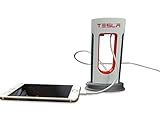
- ? REPLICA TESLA SUPERCHARGING DESKTOP STATION - Surprise your Tesla enthusiast with this unique 3D printed replica of Tesla's Supercharger - now made into a miniature desktop charging station!
- ? MANAGE YOUR WORKSPACE with the Desktop Supercharger USB cable organizer. Replicate the Supercharging experience in a miniature form while keeping your device charged and desk uncluttered.
- ? GREAT GIFTS FOR TESLA OWNERS - Designed based off the real life supercharging stations around the world. Made with PLA plastic. Extremely sturdy and lightweight. Comes in multiple pieces and is assembled together.
- ? PERFECT GIFT FOR A TESLA ENTHUSIEST - Upgrade your desktop with this unique home décor replica prop. Product requires assembly. Please follow the step-by-step instructions below in this listing on how to assemble this supercharger.
- ? USE YOUR OWN CHOICE OF POWER CORD - Charge your iPhone or Android with this super cool Tesla inspired supercharger. You can use this with any cable - USB-C, lightning cable, iphone cable, micro-usb cable.
What the sales data actually shows
Tesla’s sales history is consistent with a reputational problem, but it is also consistent with several nonpolitical explanations. Company-reported figures are usually deliveries, not a clean count of retail purchases made during the quarter. Deliveries can be affected by production timing, inventory, logistics, financing, incentives, and quarter-end pushes.
Quick wins for a faster PC:
Repair Windows errors before they cause bigger problemsFix Now →Fix the driver behind crashes, sound loss and screen glitchesFind Drivers →Clear out junk files and repair common Windows errorsFree Scan →| Period | Reported or cited result | What it establishes—and what it does not |
|---|---|---|
| 2024 | Tesla’s global deliveries declined for the first time in its modern growth era. | A significant business warning, but not proof that Musk was the sole cause. The broader EV market continued to expand. |
| 2024 Europe | WIRED cited a 13% decline in Tesla sales in the EU during 2024. | Shows regional weakness, but European countries differ in incentives, competition, politics, and product availability. |
| January 2025 Germany | WIRED cited a 59.5% year-over-year fall in German Tesla registrations. | A dramatic country-level decline that coincided with Musk’s support for Germany’s AfD, but also with competition and Model Y transition effects. |
| Full year 2025 | Tesla produced about 1.66 million vehicles and delivered about 1.64 million. Axios reported deliveries fell 8.6% and were 9.5% below the 2023 peak. | Confirms that weakness was not limited to one month or one country. It still does not isolate politics from product and market factors. |
| Q2 2026 | Tesla delivered 480,126 vehicles, including 467,762 Model 3/Y vehicles and 12,364 other models, up 25% from Q2 2025. | Shows that demand has not disappeared and is important evidence against an irreversible-collapse thesis. It is only one quarter and follows a weak base. |
The Q2 2026 result is therefore a counterweight, not a complete rebuttal. Tesla’s deliveries exceeded production in the quarter, and quarter-end timing can affect the result. More importantly, the comparison is with a depressed period. A company can grow 25% from a weak base while still losing market share or operating with a less attractive brand than it had several years earlier.
The strongest causal evidence: the Yale counterfactual
The most substantial attempt to separate Musk’s influence from general market conditions comes from a Yale working paper titled The Musk Partisan Effect on Tesla Sales. The researchers examined observed registrations in Democratic and Republican counties. They compared Tesla purchases with purchases of other electric and hybrid vehicles before and after Musk acquired Twitter in October 2022 and became more publicly partisan.
The working paper estimated that Tesla sales would have been 67% to 83% higher without what it calls the Musk partisan effect. In absolute terms, it estimated approximately 1 million to 1.26 million additional U.S. Tesla sales between October 2022 and April 2025.
This is more informative than an anecdote because it uses observed registrations and a comparison framework. It attempts to answer a counterfactual question: how did Tesla perform relative to comparable vehicles in politically different places after Musk’s public political shift?
But the result remains a model-based estimate from a working paper. It is not an audited count of cars that Tesla can demonstrably prove it lost. The observation period ends in April 2025, so the estimate does not automatically include the Q2 2026 rebound. It may also be difficult to perfectly separate Musk’s political effect from changing product availability, regional incentives, interest rates, competition, and the Model Y refresh. Yale’s explanation of the research provides additional context.
The appropriate conclusion is that the paper makes Musk-related demand damage credible and potentially large. It does not justify saying that Musk caused every Tesla sale that failed to occur.
Politics can help Tesla with some consumers—but probably does not create a complete replacement market
The reputational effect does not necessarily run in only one direction. A 2026 study in Political Behavior found that Musk’s alliance with Trump politicized Tesla’s brand. Democrats became more negative, while Republicans became more favorable across measures including perceived quality, value, employment reputation, and purchase consideration. The study’s findings are published here.
That creates a strategic question: can Musk attract enough right-leaning buyers to replace environmentally motivated liberal and moderate buyers who are leaving or avoiding Tesla?
The available evidence does not establish that he can. Greater favorability toward Musk is not the same as a completed vehicle purchase. A consumer can support Musk politically while preferring a gasoline vehicle, a hybrid, a competing EV, or a used car. The purchase decision also requires financing, insurance, charging access, service, ownership over several years, and acceptance of resale risk. Political enthusiasm may create online engagement and stock-market enthusiasm without producing equivalent vehicle demand.
The academic evidence therefore supports a narrower conclusion: Musk appears to have shifted Tesla’s political appeal, with Republicans becoming more favorable and Democrats more negative, but there is no proof that the favorable shift has replaced the lost demand one-for-one.
The serious non-Musk explanations
A responsible analysis must give Tesla’s product and market problems more than a token disclaimer. The timing of Musk’s controversies overlaps with several changes that could independently reduce sales.
1. An aging core lineup
The Model 3 and Model Y remained the foundation of Tesla’s volume, but their basic designs changed relatively little for years. Competitors improved their interiors, features, charging performance, warranties, driver-assistance systems, and overall selection. Axios identified the aging lineup as an important nonpolitical factor in Tesla’s sales weakness.
What’s actually slowing this PC down?
Pick the symptom - the matching free tool is one click away.
A buyer may reject a Tesla because it feels dated, expensive, poorly serviced, or less appealing than a newer Hyundai, Kia, Volkswagen, BMW, Mercedes-Benz, Ford, General Motors, Rivian, Lucid, Polestar, Volvo, Geely, or BYD model. That decision can have nothing to do with Musk.
2. Intensifying competition
Consumers have more EV choices than they did when Tesla faced little direct competition. According to Axios, BYD surpassed Tesla in full-year 2025 battery-electric vehicle sales. In markets where Chinese manufacturers are available, lower-priced and newer models add further pressure.
Market share is the relevant test. If Tesla sales fall while the entire EV market falls by the same amount, the brand may not be the primary problem. If Tesla underperforms the EV market after controlling for price, availability, and model transitions, the case for company-specific factors—including Musk’s reputation—becomes stronger.
3. The Model Y refresh
A major vehicle refresh can temporarily disrupt production, inventory, deliveries, and customer timing. Some buyers defer purchases while waiting for the new version. Factories may retool, and dealers or delivery centers may work through old inventory before the refreshed model becomes widely available.
Also popular on Amazon

- 【Compatibility】The Key Card Holder is compatible with all Tesla key cards and is specifically designed for Model 3, Model Y, Model X, and Model S. It maintains the original key card’s signal without interference.
- 【Easy Installation】Simply insert your key card into the slot and place the AirTag into the circular slot for a quick and effortless setup.
- 【Unique Design】The protective case features a sleek, stylish design with distinctive logo cutouts, adding a touch of elegance and dynamism to your key card.
- 【Anti-Scratch Material】Made from high-quality soft silicone, this key card case provides outstanding durability and scratch resistance. It protects your key card and AirTag from everyday wear and tear, keeping them in pristine condition.
- 【Lost and Theft Protection】Pair your key card with AirTag to prevent losing it again! The center cutout design ensures excellent signal strength for the AirTag while adding a sleek, sporty look.
The Model Y transition therefore complicates the early-2025 data. The refresh may have caused part of the decline independently of politics, while Musk’s conduct may have made the same supply disruption more damaging by giving hesitant buyers another reason to choose a competitor.
4. Tax credits, incentives, and policy changes
Tesla’s annual report says provisions of the U.S. One Big Beautiful Bill Act changed or removed EV incentives and could reduce consumer demand. The end of the federal EV tax credit also created a temporary buying rush in the third quarter of 2025, followed by a more difficult comparison period.
Country-specific subsidies, tariffs, trade rules, and emissions policies further complicate international comparisons. Europe is not one uniform market. The effect of a Musk controversy in Germany cannot simply be applied to France, the United Kingdom, Norway, or the United States.
5. Pricing, financing, and margin pressure
Tesla has used price cuts, cheaper variants, leasing changes, and financing incentives to support deliveries. Those measures can work commercially while weakening the economics of each vehicle sold. A vehicle sold with a discount may count as a delivery but generate less revenue and profit.
Recommended Free Tools
The Q2 2026 results illustrate the trade-off. Associated Press reporting put Tesla’s operating margin at approximately 1.4% as expenses rose, particularly around AI and robotics. The company’s energy-generation and storage revenue was approximately $3.14 billion, up 13% year over year, showing that the business is broader than cars. But energy growth does not automatically repair the consumer-vehicle brand or solve automotive-margin pressure. AP’s Q2 reporting is available here.
6. Product and execution concerns
Cybertruck demand and execution, service wait times, build-quality complaints, autonomy claims, and regulatory scrutiny can influence buying decisions independently of Musk’s politics. Tesla’s own risk disclosures warn that product defects, driver-assistance restrictions, alleged misrepresentations, and product-liability claims could hurt sales, reputation, and costs.
The company’s strategic shift also creates uncertainty. Tesla is asking investors and customers to look beyond conventional vehicles toward robotaxis, full self-driving services, AI infrastructure, and humanoid robots. Those businesses could eventually be more valuable than the automotive operation, but they require substantial spending and have not yet been demonstrated as reliable, large-scale profit engines.
How reputational damage could become financial damage
The connection between a controversial CEO and a company’s income statement is not automatic. It usually operates through several stages:
Quick wins for a faster PC:
Repair Windows errors before they cause bigger problemsFix Now →Scan for outdated or missing drivers - takes under a minuteDriver Scan →Clear out junk files and repair common Windows errorsFree Scan →- Musk becomes more politically polarizing. His endorsements, government role, European political interventions, and public statements receive attention that would not normally attach to a car company.
- Tesla becomes a political symbol. The vehicle can communicate something about the owner, fairly or unfairly, rather than functioning only as transportation.
- Some buyers avoid or defer Tesla. A consumer may select another EV, keep an existing car longer, or wait for a different model.
- Tesla compensates with incentives. Discounts, low-interest financing, reduced lease costs, and cheaper variants can preserve volume but reduce average revenue or profit per vehicle.
- Margins come under pressure. Lower volume, lower prices, product-transition costs, and higher operating expenses can reduce automotive profitability.
- The installed-base opportunity becomes smaller. Fewer Tesla owners can mean fewer potential customers for paid software, FSD subscriptions, insurance, charging, and future robotaxi services. This is a strategic risk, not a demonstrated one-to-one financial loss.
- Fleet and corporate sales become harder. Companies may worry about employees’ reactions, customer perception, or reputational exposure when providing Tesla vehicles.
- Recruiting and retention may suffer. Some employees may not want their professional identity associated with Musk’s controversies. Tesla could face higher hiring or retention costs, although the dossier does not establish a quantified Musk-specific cost.
- Investors apply a key-person or execution discount. Investors may value Musk’s ability to create products while also discounting the business for divided attention, succession uncertainty, and reputational volatility.
The first parts of this chain have the strongest supporting evidence: reputation scores, consumer research, owner sentiment, and the Yale counterfactual. The later parts are mechanisms that analysts should monitor unless Tesla or independent data measures them directly.
Tesla is financially strong enough to endure a brand crisis
Calling Tesla’s situation a disaster can imply insolvency or imminent corporate failure. The available financial data does not support that conclusion.
For 2025, Tesla reported:
- $94.83 billion in revenue, down $2.86 billion from 2024;
- $3.79 billion in net income attributable to common stockholders, down $3.30 billion;
- approximately 1.64 million vehicle deliveries;
- $44.06 billion in cash and investments at year-end; and
- $14.75 billion in operating cash flow.
Tesla’s annual report also says its 2026 capital-expenditure plan exceeds $20 billion, driven heavily by AI initiatives, computing infrastructure, data centers, manufacturing, and AI-enabled assets. That spending may support a valuable next phase, but it also raises the cost of being wrong about autonomy and robotics.
In Q2 2026, Tesla reported approximately $1.11 billion in net income, while AP reported an operating margin of about 1.4%. The combination is revealing: Tesla can remain profitable and cash-rich while its core automotive economics weaken. Financial strength buys time; it does not guarantee that the company will allocate that time effectively.
The governance paradox: Musk is both an asset and a risk
Tesla’s dependence on Musk is the central governance issue. His leadership helped turn Tesla into a mass-market EV company and remains closely tied to its autonomy and robotics ambitions. Replacing him could destroy value if the board cannot find a leader with comparable technical credibility, recruiting power, investor influence, and ability to execute ambitious projects.
But the same irreplaceability increases the consequences of his conduct. A conventional automaker can distance its brand from a controversial former executive. Tesla cannot easily do that while its current strategy, public identity, and investor narrative remain centered on Musk.
The governance record makes the trade-off clear:
- A 2023 shareholder proposal by Karen Róbertsdóttir raised the need for a succession plan for Musk and other key people, before the most severe 2025 sales weakness.
- Tesla’s 2025 CEO Performance Award provides Musk approximately 423.7 million shares if he meets 12 tranches tied to market-capitalization milestones ranging from $2 trillion to $8.5 trillion and operational milestones involving deliveries, FSD subscriptions, bots, robotaxis, and adjusted EBITDA.
- The 11th and 12th tranches require Musk to develop a CEO-succession framework approved by the board.
- Shareholders approved the award on November 6, 2025, with approximately 1.892 billion votes for and 564.9 million against. The SEC filing reports the vote.
Shareholder approval demonstrates continued support for retaining Musk. It does not prove that the arrangement is good governance or that reputational risk is acceptable. A succession framework is not the same thing as an independent operating structure, and a board-approved process is not evidence that a credible successor is ready.
The governance paradox can be stated simply:
Independent reader supportYour contribution helps us test, update, and keep practical guides available for everyone.Tesla’s board treats Musk as difficult to replace because he is strategically valuable. That same dependence increases the consequences of every avoidable controversy and makes the company less able to contain the damage.
Recommended: PC Feels Slow? A Free Scan Shows What's Dragging Windows Down →Recommended: Update Every Outdated Driver on Your PC in One Scan - Free →Recommended: Fix Windows Errors and Clear Junk Files in Minutes - Free Scan →Special offer. See more information about Outbyte and uninstall instructions. Please review EULA and Privacy policy.
Does the 2026 rebound mean the backlash is over?
No. It means the demand for Tesla vehicles has not vanished.
Also popular on Amazon

- This is a FITTED HAT with an elastic band- NOT A SNAPBACK OR HOOK AND LOOP CLOSURE
- Curved Brim: 98% cotton, 2% spandex
- Flat Brim: 83% acrylic, 15% wool, 2% spandex
- Available in 2 sizes: Sm-M and L-XL
- Curved Brim: S/M: 6 3/4" - 7 1/4" | L/XL: 7 1/8" - 7 5/8"
Several forces may have contributed to the Q2 improvement:
- The refreshed Model Y became available.
- Tesla offered cheaper variants and reduced leasing and financing costs in Europe.
- European EV demand strengthened. The European Automobile Manufacturers’ Association reported that battery-electric vehicles reached 20.7% of EU passenger-car registrations in the first half of 2026.
- Fuel-price increases improved the economics of switching to an EV.
- Quarter-end delivery timing and a lower year-earlier comparison helped the percentage growth rate.
The Washington Post also reported that Tesla’s Q2 sales rose after BYD had already taken the full-year global battery-electric sales lead in 2025. That detail matters: Tesla can rebound in absolute deliveries while still facing a more competitive market and a weaker relative position. The Washington Post’s analysis is here.
The right interpretation is that Tesla remains commercially attractive to many people. It is not that Musk’s reputational damage has been repaired. A durable recovery would require Tesla to outperform the overall EV market after the Model Y refresh, temporary incentives, and tax-credit effects normalize.
What would show that the problem is temporary or structural?
The Musk thesis should be treated as a testable corporate-risk claim rather than an ideological argument. Five tests are especially useful.
| Test | Evidence to monitor | What would strengthen the Musk-risk thesis |
|---|---|---|
| Brand effect | Independent reputation, trust, and consideration scores following major Musk events. | Tesla continues to decline relative to other automakers even when product and market conditions improve. |
| Customer effect | Repeat purchases, owner exits, trade-ins, residual values, and comparisons with other EV owners. | Tesla owners abandon the brand at higher rates than comparable EV owners for reasons linked to Musk or brand identity. |
| Sales effect | Tesla registrations versus total EV-market growth, by country, after controlling for incentives and model availability. | Tesla continues to underperform the EV market after the Model Y transition ends. |
| Financial effect | Average selling prices, incentives, automotive gross margin, inventory, customer-acquisition costs, and residual values. | Deliveries recover only through discounts while margins, cash generation, or owner economics deteriorate. |
| Governance effect | Board independence, executive turnover, succession disclosures, and evidence of divided management attention. | The board continues to tolerate avoidable reputational exposure because it cannot credibly separate Tesla from Musk. |
Evidence against a structural Musk effect would look different. Tesla would grow faster than the overall EV market across several quarters, consideration would recover among Democrats, moderates, and independents despite continuing controversy, margins would improve without unusually heavy incentives, and fleet and repeat buyers would return. A credible successor or more independent operating structure would also reduce the key-person risk.
What this means for Tesla buyers, owners, and shareholders
Prospective buyers
A buyer should separate the vehicle decision from the corporate-reputation decision, even though Tesla makes that separation unusually difficult. Evaluate total ownership cost, financing, insurance, charging access, service availability, warranty coverage, software features, likely resale demand, and whether the car’s public association with Musk is personally acceptable.
A dislike of Musk does not make every Tesla a bad financial choice. Conversely, a favorable view of Musk does not eliminate ordinary vehicle risks such as depreciation, repair costs, insurance premiums, or uncertain autonomy features. Claims about future robotaxis and full self-driving should not be treated as guaranteed savings or income.
Current owners
Existing owners may experience reputational discomfort without any immediate financial loss. The more practical questions are whether local trade-in values, private-sale demand, insurance costs, service quality, or software support are changing relative to competing vehicles. The available evidence does not quantify a universal Musk-specific depreciation penalty, so owners should avoid assuming that a poll or brand ranking predicts the value of an individual car.
Shareholders
Tesla’s cash balance and operating cash flow reduce short-term financial distress risk, but they do not remove strategic risk. Shareholders must evaluate whether the company’s large AI and robotics investments can produce returns while automotive margins are under pressure, whether Musk’s divided attention is manageable, and whether the board can provide credible succession planning.
This is a business-risk analysis, not a recommendation to buy, hold, or sell Tesla shares. The key distinction for investors is between solvency and economic durability. Tesla can remain solvent while losing brand equity, market share, pricing power, and the broad customer base that supported its earlier growth.
Bottom line: material risk, not proven disaster
Musk’s toxicity has become a real Tesla business issue because the company made his personal identity part of its value proposition. Reputation rankings have collapsed, brand-strength measures have weakened, consumer research connects views of Musk with Tesla purchase intention, and the Yale working paper estimates a substantial U.S. sales effect after Musk’s partisan turn.
Free tools Windows power users keep installed
One-click scans. No signup required.
Still, the evidence does not justify assigning every lost sale to Musk. Tesla’s aging lineup, the Model Y refresh, stronger competition, policy changes, pricing, incentives, service concerns, and strategic execution all matter. The Q2 2026 rebound proves that buyers have not abandoned Tesla altogether, while the company’s cash reserves and continuing profitability show that it is not currently facing an insolvency disaster.
The more serious long-term danger is strategic. Tesla may be narrowing a once-broad climate and technology brand into a political identity at the same time it is spending heavily on expensive, unproven future businesses. The decisive test is whether Tesla can remain attractive to people who want an EV but do not want to buy into Elon Musk personally—and whether its board can reduce that dependence before reputational risk becomes an operating constraint.
Frequently Asked Questions
Did Elon Musk personally cause Tesla’s sales decline?
The evidence supports saying that Musk likely contributed, not that he caused every decline. A Yale working paper estimated that Musk’s partisan activity reduced U.S. Tesla sales by approximately 1 million to 1.26 million vehicles between October 2022 and April 2025 relative to a modeled counterfactual. That is a research estimate, not an audited count, and Tesla also faced aging products, stronger competition, incentives, and Model Y production changes.
Is Tesla in danger of bankruptcy because of Musk’s controversies?
The available figures do not show imminent insolvency. Tesla ended 2025 with $44.06 billion in cash and investments, generated $14.75 billion in operating cash flow, and remained profitable. Its more credible risk is long-term erosion of demand, margins, market share, and brand equity while it spends heavily on AI and robotics.
The Tool Desk
Outbyte PC Repair FREERepair Windows errors before they cause bigger problemsFix Now →Outbyte Driver Updater FREEScan for outdated or missing drivers - takes under a minuteDriver Scan →Does Tesla’s Q2 2026 sales rebound prove the backlash is over?
No. Tesla delivered 480,126 vehicles in Q2 2026, up 25% year over year, which shows that demand has not disappeared. The increase also followed a weak comparison period and coincided with the Model Y refresh, incentives, stronger European EV demand, and favorable timing. Several more quarters of performance against the overall EV market are needed to show that the reputational damage has been repaired.
What should Tesla investors watch next?
Watch Tesla’s sales growth against the total EV market, average selling prices, incentives, automotive margins, inventory, repeat purchases, fleet demand, reputation and consideration scores, FSD adoption, employee turnover, and the specificity of its succession planning. Growth that depends on heavier discounts or increasingly speculative future businesses would be less reassuring than profitable growth from a broad customer base.
The Bottom Line
Bottom line: Musk’s polarizing public persona is a material risk to Tesla, but not yet proof of corporate disaster. The company remains financially capable of recovering, and its 2026 delivery rebound matters. The unresolved question is whether Tesla can rebuild broad consumer trust—and protect margins—while remaining so dependent on the person who has made its brand politically divisive.




