
What’s actually slowing this PC down?
Pick the symptom - the matching free tool is one click away.
Some links on this page are affiliate links: if you buy through them we may earn a commission, at no extra cost to you.
No—not automatically. A Windows 10 computer does not stop booting or erase your files simply because Microsoft ended standard support on October 14, 2025. If your PC officially qualifies for Windows 11, upgrading it is usually cheaper than replacing it. If it does not qualify, you can consider consumer Extended Security Updates (ESU), a supported alternative operating system, or a replacement PC.
The important distinction is that Windows 10 end of support is a security and support deadline, not a physical shutdown date. Your computer may continue to work, but ordinary Windows 10 versions no longer receive normal operating-system security updates, feature updates, reliability fixes, or technical support. For banking, work accounts, email, tax filing, medical information, and other sensitive online activity, a supported operating system is the financially safer choice over time.
As an Amazon Associate I earn from qualifying purchases.
Quick wins for a faster PC:
Clear out junk files and repair common Windows errorsFree Scan →Fix the driver behind crashes, sound loss and screen glitchesFind Drivers →Repair Windows errors before they cause bigger problemsFix Now →What changed on October 14, 2025?
Microsoft ended standard support for affected Windows 10 versions on October 14, 2025. That means Microsoft stopped providing the usual combination of:
- Regular Windows security updates and security fixes;
- Feature updates and new operating-system features;
- Normal quality, reliability, and bug fixes; and
- Standard technical support.
Your installed applications, personal files, peripherals, and most existing hardware did not suddenly disappear or stop working on that date. Windows 10 PCs continue to start, run programs, connect to the internet, and perform ordinary tasks. However, an unpatched operating system becomes more exposed as new vulnerabilities are discovered. Microsoft describes unsupported Windows versions as more vulnerable to viruses and malware; that does not mean every unsupported PC will be immediately compromised, but it does mean the risk and support disadvantage increase over time.
Popular on Amazon

- 256 GB SSD of storage.
- Multitasking is easy with 16GB of RAM
- Equipped with a blazing fast Core i5 2.00 GHz processor.
| What happens after standard support ends? | What it means for you |
|---|---|
| Existing Windows 10 installation | Continues to boot and run in most cases. |
| Personal files and installed applications | Are not automatically deleted. |
| Normal Windows security updates | Stop for standard, unsupported versions unless the device qualifies for an applicable security-update program. |
| Feature updates and normal bug fixes | Stop. |
| Technical support | Stops under the standard Windows 10 lifecycle. |
| Future app and hardware compatibility | May deteriorate as software and device makers drop older Windows versions. |
Microsoft’s Windows 10 support notice explains the distinction between continuing to use the operating system and continuing to receive support for it.
First, check whether your PC can run Windows 11
Do not decide that a PC must be replaced just because Windows Update has not displayed a Windows 11 offer. An eligible computer may not see the offer immediately because of a phased rollout, pending Windows 10 updates, a known driver or application problem, or a temporary compatibility hold.
Crashes, No Sound, or Screen Glitches?
Random freezes, missing sound and display glitches usually trace back to one bad driver. Find and replace yours safely.Free scan · under a minutePC Slower Than It Used to Be?
A free scan shows the junk files, broken settings and background clutter dragging Windows down - then fixes them in one click.Free scan · Windows 10 & 111. Confirm your Windows version
Press Windows key + R, type winver, and press Enter. The dialog shows the Windows edition, version, and build. You can also open Settings > System > About.
For ordinary consumer PCs, Windows 10 version 22H2 is the final major version. Special LTSC and IoT editions follow separate lifecycles, discussed below.
2. Run Microsoft’s PC Health Check
- Search Windows for PC Health Check and open the app.
- Under the Windows 11 eligibility section, select Check now.
- Read the specific reason for any failure instead of assuming the entire computer is unusable.
If the app is not installed, Microsoft provides it at aka.ms/GetPCHealthCheckApp. The official PC Health Check instructions are preferable to judging eligibility only by the processor’s marketing name or generation.
3. Check Windows Update
On Windows 10, open:
Start > Settings > Update & Security > Windows Update > Check for updates
Free tools Windows power users keep installed
One-click scans. No signup required.
If Windows 11 is offered, select Download and install. Microsoft recommends Windows Update as the normal upgrade route. The official installation guidance also explains why a missing offer does not necessarily prove incompatibility.
4. Investigate the exact failure reason
Windows 11 eligibility is based on more than CPU age. Microsoft’s stated minimums include:
| Component | Windows 11 minimum |
|---|---|
| Processor | 1 GHz or faster, at least two cores, compatible 64-bit processor or system on a chip, and on Microsoft’s approved list |
| Memory | 4 GB RAM |
| Storage | 64 GB or larger |
| Firmware | UEFI and Secure Boot capable |
| TPM | TPM 2.0 |
| Graphics | DirectX 12 or later with a WDDM 2.0 driver |
| Display | At least 720p, larger than 9 inches diagonally, with 8 bits per color channel |
| Initial setup | Internet connection and a Microsoft account for Windows 11 Home and personal-use Windows 11 Pro setup |
These are minimum compatibility requirements, not performance recommendations. A computer that barely passes with 4 GB of memory and 64 GB of storage may provide a poor modern experience. Likewise, an SSD upgrade can make an old computer feel faster but cannot make an unsupported processor qualify.
Microsoft’s full list is in its Windows 11 system requirements.
Do these 3 things before closing this tab:
1Fix the driver behind crashes, sound loss and screen glitches2Clear out junk files and repair common Windows errors3Scan for outdated or missing drivers - takes under a minuteUseful diagnostic commands
winver— shows the installed Windows version and build.tpm.msc— opens the TPM management console and can show whether a compatible TPM is present and whether its specification is 2.0.msinfo32— opens System Information, including firmware and hardware details.
Use tpm.msc and msinfo32 to investigate a PC Health Check result, not as substitutes for the complete compatibility check.
If the PC is eligible, upgrade it instead of replacing it
An eligible Windows 10 PC can generally be upgraded to Windows 11 for free. Microsoft’s upgrade guidance says the equivalent edition is retained—for example, Windows 10 Home upgrades to Windows 11 Home, and Windows 10 Pro upgrades to Windows 11 Pro.
The normal upgrade path is designed to preserve personal files and installed applications, but you should still make a backup before beginning. A major operating-system upgrade can expose existing storage problems, application conflicts, or driver issues.
Before selecting “Download and install”
- Back up important files to a separate drive or a trusted cloud backup, and verify that the backup can be opened.
- Make sure you know the passwords and recovery information for your Microsoft account and important applications.
- Confirm that essential printers, scanners, specialized software, games, and business applications work with Windows 11.
- For an encrypted PC, locate and save the BitLocker recovery key before changing firmware settings or upgrading.
- Connect a laptop to AC power and allow enough time for the installation and restarts.
A clean installation is not automatically necessary. Booting from Windows 11 installation media and choosing a fresh installation can remove files and applications. Use that route only when you have a complete backup and understand the consequences.
If Windows 11 does not appear in Windows Update
Install all available Windows 10 updates, restart, and run PC Health Check again. If the PC passes but the offer remains absent, check for a compatibility hold involving a driver or application. Do not bypass a known hold merely to force the installation; resolve the stated issue or wait for Microsoft’s guidance.
TPM or Secure Boot may be disabled rather than missing
Some computers contain compatible security hardware that is turned off in UEFI/BIOS. TPM-related settings may be labeled:
- Security Device;
- Security Device Support;
- TPM State;
- AMD fTPM or AMD PSP fTPM;
- Intel PTT; or
- Intel Platform Trust Technology.
Microsoft’s TPM 2.0 guidance describes these variations. A PC may also be Secure Boot capable but configured for legacy BIOS/CSM mode. Changing it to UEFI can require preparation and should not be treated as a casual switch.
For advanced users performing a non-Microsoft firmware update, Microsoft documents suspending BitLocker protection first. One documented example is:
Recommended Free Tools
Also popular on Amazon
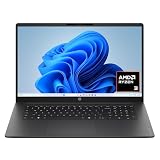
- FULL HD IPS DISPLAY - Enjoy vibrant, crystal-clear images with 178-degree wide-viewing angles
- AMD RYZEN 3 30 PROCESSOR - Everyday performance you can count on; Multitask, stream, game casually, and edit photos smoothly with responsive power and vibrant HDR visuals
- ENJOY UP TO 14 HOURS AND 15 MINUTES OF BATTERY LIFE - HP Fast Charge restores battery from 0 to 50% in approximately 45 minutes
- AMD RADEON 610M GRAPHICS - Experience smooth entertainment; Built for streaming and multitasking, enjoy realistic visuals and efficient performance for work and play
- STORAGE AND MEMORY - 512 GB PCIe NVMe M.2 SSD offers fast speed and efficient storage; and 8 GB LPDDR5 RAM memory boosts performance with higher bandwidth
Suspend-BitLocker -MountPoint "C:" -RebootCount 2After the update, protection can be resumed with:
Resume-BitLocker -MountPoint "C:"The correct reboot count depends on the manufacturer’s process. Follow the computer maker’s instructions rather than copying a command without understanding it. See Microsoft’s guidance on suspending BitLocker for firmware updates and its BitLocker FAQ.
What each failed check usually means
| Failure | Is it potentially fixable? | Practical interpretation |
|---|---|---|
| TPM disabled | Often | Verify that TPM 2.0 exists, then enable the correct firmware setting carefully. |
| Secure Boot disabled | Sometimes | The PC may be capable but using legacy boot configuration. Firmware changes can affect booting and BitLocker. |
| Insufficient RAM or storage | Sometimes | Desktops and some business laptops permit upgrades; many thin laptops do not. |
| Unsupported processor | Usually not economically | CPU approval is often the decisive limitation, particularly in laptops and OEM desktops. |
| Compatibility hold | Often temporary | A driver, application, or known reliability issue may delay the offer even when the hardware qualifies. |
Microsoft notes that processor clock speed and core count are inherent to the CPU and are not normally upgradeable. RAM and storage may be replaceable, depending on the machine.
If your PC is not eligible, compare four alternatives
Option 1: Enroll in consumer Windows 10 ESU
Consumer Extended Security Updates are a temporary bridge for eligible personal-use Windows 10 PCs. They provide selected critical and important security updates after standard support ended. ESU does not provide new features, general bug fixes, product improvements, a new Windows 10 lifecycle, or full technical support.
Microsoft’s current U.S. consumer page lists coverage through October 12, 2027. This is different from the commercial ESU lifecycle, which has separate rules and dates. Do not apply the commercial three-year schedule automatically to a home PC.
Consumer ESU requirements
Microsoft currently lists these requirements for the consumer program:
- Windows 10 version 22H2;
- Home, Professional, Pro Education, or Pro for Workstations edition;
- The latest Windows update installed;
- An administrator Microsoft account that is not a child account; and
- A device that is not in excluded commercial-management scenarios such as Active Directory domain join, Microsoft Entra join, or mobile-device-management enrollment.
Microsoft says Entra-registered devices can use the consumer program, but an organization-managed PC should be evaluated under the business or commercial licensing rules rather than assuming consumer enrollment applies.
U.S. consumer ESU enrollment choices
Microsoft’s current U.S. page lists three enrollment routes:
- No additional charge when PC settings synchronization is enabled;
- 1,000 Microsoft Rewards points; or
- A one-time $30 charge plus applicable tax.
The same ESU license can be used on up to 10 eligible devices, subject to Microsoft’s terms. Regional terms, including those in the European Economic Area, can differ.
The Tool Desk
Outbyte Driver Updater FREEFix the driver behind crashes, sound loss and screen glitchesFind Drivers →Outbyte PC Repair FREEClear out junk files and repair common Windows errorsFree Scan →How to enroll
- Open Settings > Update & Security > Windows Update.
- Select Enroll now if the device is eligible.
- Sign in with an administrator Microsoft account when prompted.
- Choose settings synchronization, Rewards points, or the paid enrollment option.
- Complete enrollment and verify that ESU is active.
Microsoft says enrolled devices receive the covered updates through Windows Update. The computer is more exposed during any period before enrollment, so ESU is not retroactive protection for vulnerabilities that existed while the PC was unsupported.
For current requirements and availability, use Microsoft’s consumer Windows 10 ESU page. Treat ESU as time to plan a replacement or migration—not as a permanent way to keep ordinary Windows 10 current.
Option 2: Buy a supported replacement
A replacement can be financially sensible, but “new PC” does not have to mean a factory-new, premium laptop. A reliable refurbished business-class Windows 11 computer may be sufficient if it is genuinely supported, has a return policy, and meets the user’s needs.
Consider replacing the machine when:
- It is already too slow for the user’s normal tasks;
- The hard drive, battery, cooling system, or other hardware is failing;
- It fails Windows 11 because of an unsupported processor or firmware that cannot reasonably be changed;
- Required software or peripherals are losing Windows 10 support;
- Repair and upgrade costs approach the cost of a supported replacement;
- The user needs reliable vendor support and cannot troubleshoot compatibility problems;
- RAM or storage cannot be upgraded; or
- The user needs a modern webcam, display, Wi-Fi connection, battery, ports, or portability.
When comparing a replacement, look beyond the sticker price:
- Verify Windows 11 compatibility and supported processor status.
- Look for UEFI, Secure Boot capability, and TPM 2.0 support.
- Prefer solid-state storage over an aging mechanical hard drive.
- Do not treat 4 GB of RAM and 64 GB of storage—the Windows 11 floor—as a sensible performance target.
- Check manufacturer driver and firmware support.
- Confirm that required ports, monitors, printers, scanners, and other accessories will work.
- For a used laptop, check battery health, display condition, keyboard, hinges, charger, and return rights.
- Include the cost of data transfer, software subscriptions, accessories, and any professional setup.
The date Windows 10 support ended is not, by itself, proof that buying a computer is the best use of the household budget. The condition of the machine, the user’s workload, and the cost of keeping it reliable matter more.
Option 3: Install Linux
Linux can extend the life of a computer that fails Windows 11’s processor or TPM rules. Many Linux distributions are free and can work well for browsing, documents, media, coding, and some gaming.
It is not a free Windows upgrade. Before switching, verify:
- Whether the user’s Windows-only programs have Linux versions or workable alternatives;
- Whether games depend on Windows-only anti-cheat systems;
- Whether printers, scanners, audio equipment, specialty hardware, and business peripherals have compatible drivers;
- How Microsoft Office files and macros will be handled;
- Where local files and backups will live; and
- Whether the user is comfortable learning a different software-installation and administration model.
Linux is a better fit for a technically comfortable user whose work is primarily browser-based or based on common cross-platform applications. It is a poor fit when a particular Windows application or peripheral is essential and has not been tested.
Option 4: Install ChromeOS Flex
ChromeOS Flex is another way to replace Windows without immediately buying a computer. Google says it works on many Windows, Mac, and Linux computers made over the past 10 or more years. However, Google provides the strongest support expectations only for exact models on its certified models list.
Check the exact model—not just the manufacturer or product family—before deciding. Non-certified devices may work, but Google does not guarantee that they will remain stable or that every feature will work across updates. Certification also has its own end date, so it is not a lifetime promise.
Also popular on Amazon

- Effortlessly chic. Always efficient. Finish your to-do list in no time with the Dell 15, built for everyday computing with Intel Core 3 processor.
- Designed for easy learning: Energy-efficient batteries and Express Charge support extend your focus and productivity.
- Stay connected to what you love: Spend more screen time on the things you enjoy with Dell ComfortView software that helps reduce harmful blue light emissions to keep your eyes comfortable over extended viewing times.
- Type with ease: Write and calculate quickly with roomy keypads, separate numeric keypad and calculator hotkey.
- Ergonomic support: Keep your wrists comfortable with lifted hinges that provide an ergonomic typing angle.
Important limitations include:
- ChromeOS Flex is not identical to ChromeOS on a Chromebook.
- Do not assume Google Play or general Android-app support.
- Some hardware features are tested but not guaranteed on every device.
- Installation may replace the existing operating system and erase the disk.
- Windows applications, games, specialty peripherals, and local workflows may not transfer.
Back up the Windows installation before experimenting. Google documents the differences and limitations in its ChromeOS Flex help page and provides separate information about non-certified devices.
Option 5: Keep Windows 10 for limited use
Keeping Windows 10 can be defensible as a short-term or offline solution, particularly for an old game, a local document archive, or specialized equipment that cannot be moved to a newer system. Disconnecting the computer from the internet reduces—but does not eliminate—many online attack paths.
It is a poor normal long-term choice for a PC used for:
- Online banking, credit-card management, or shopping;
- Email and password management;
- Tax filing or medical records;
- Work accounts, customer information, or company files;
- Sensitive personal documents; or
- Frequent downloads from unknown sources.
Antivirus protection is not a substitute for a supported operating system. Microsoft says Defender protection capabilities may continue on legacy systems, but antivirus and intelligence updates do not patch every Windows kernel, driver, firmware, or operating-system vulnerability. Keep sensitive activity on a supported Windows 11, ESU-covered Windows 10, Linux, ChromeOS Flex, or other supported device.
Independent reader supportYour contribution helps us test, update, and keep practical guides available for everyone.Should you force Windows 11 onto unsupported hardware?
Unofficial installation methods exist, but they should be treated as an unsupported experiment rather than the default money-saving recommendation. Microsoft says installing Windows 11 on hardware that does not meet minimum requirements is not recommended. Such a device may lack Microsoft support, experience compatibility problems, and may not receive updates—including security updates. Microsoft also warns that damage related to incompatibility may not be covered by the manufacturer’s warranty.
“The installation completed” is not the same as “the computer is officially supported.” A knowledgeable hobbyist with a full image backup may accept that uncertainty on a secondary machine. A family computer, work computer, banking computer, or support-dependent user’s primary PC generally should not rely on it.
Recommended Free Tools
If you do perform an upgrade, Microsoft says the normal rollback option is generally available for only 10 days. After that, the files needed to return to Windows 10 may be removed. Read Microsoft’s unsupported Windows 11 warning before proceeding.
What happens to Microsoft 365, Office, browsers, and other apps?
Application support and Windows operating-system support are separate. A program can continue to run—or even receive updates—while the underlying Windows installation remains unsupported.
Microsoft says Microsoft 365 Apps on Windows 10 can continue functioning and receive security updates until October 10, 2028. That does not make Windows 10 itself supported, and Microsoft still recommends moving to Windows 11.
- Microsoft 365 Apps: Scheduled to receive security updates on Windows 10 through October 10, 2028, according to Microsoft’s Windows 10 support notice.
- Office 2016 and Office 2019: Support has ended across operating systems.
- Office 2021 and Office 2024: May continue to run on Windows 10, but that is not the same as being in a supported Windows 10 configuration after the Windows 10 deadline.
- Browsers and antivirus: May continue receiving updates for a period, but individual vendor schedules vary and those updates do not patch Windows itself.
Do not conclude that a current Word, Outlook, browser, or antivirus version means the computer is fully patched.
Windows 10 LTSC is a separate case
Existing Windows 10 LTSC/LTSB installations have separate support lifecycles and should not be treated like ordinary Windows 10 Home or Pro. Microsoft’s supported Windows client versions list different dates for Enterprise and IoT Enterprise LTSC releases. For example, Windows 10 IoT Enterprise LTSC 2021 extends to January 13, 2032, while Windows 10 Enterprise LTSC 2021 does not receive that same extended period.
LTSC is an enterprise licensing and deployment scenario with different application and feature characteristics. Ordinary home users should not be told to obtain LTSC casually as a Windows 10 workaround. If your PC runs LTSC, identify the exact edition and release and check its lifecycle directly.
A practical decision framework
| Your situation | Best default | Reason |
|---|---|---|
| Passes PC Health Check and performs well | Upgrade to Windows 11 | Retains the existing hardware and returns the PC to a supported Windows path. |
| Fails only because TPM is disabled | Verify and enable TPM carefully | The required hardware may already be present. |
| Fails because of RAM or storage | Investigate an upgrade | Those components may be replaceable, although the CPU and firmware must also qualify. |
| Fails because of an unsupported CPU | ESU, another operating system, or replacement | A processor limitation is usually difficult or uneconomical to fix. |
| Healthy PC, but you need more time | Consumer ESU | Provides a temporary security bridge through the currently published consumer endpoint. |
| Slow, failing, or unreliable PC | Repair or replace | The Windows deadline may reveal an existing hardware problem; ESU will not fix failing storage or a weak battery. |
| Mostly browser-based work | Consider Linux or ChromeOS Flex | May avoid a hardware purchase if the exact applications and peripherals are compatible. |
| Windows-only applications or peripherals | Supported Windows 11 hardware or ESU temporarily | Alternative operating systems may not support the required workflow. |
| Considering an unsupported Windows 11 bypass | Use only as a deliberate hobbyist experiment | Updates, compatibility, and Microsoft support are not guaranteed. |
| Sensitive online activity with no ESU | Move to a supported operating system or device | Unpatched Windows 10 has increasing security exposure. |
| Existing LTSC installation | Check its exact lifecycle | LTSC dates differ from standard Windows 10 support dates. |
Recommended next steps
- Back up first. Create a separate, verified copy of important documents, photos, financial records, and other irreplaceable files.
- Run
winver. Confirm the edition and version. - Run PC Health Check. Select Check now and record the exact failure reason if any.
- Install pending Windows 10 updates and restart. Then check Windows Update again.
- If eligible, upgrade through Windows Update. Do not start with a clean installation unless you specifically need one and have a complete backup.
- If TPM or Secure Boot is the issue, pause. Locate the BitLocker recovery key and use the computer manufacturer’s instructions before changing firmware.
- If ineligible, compare the cost of ESU, repairs, a supported refurbished PC, and an alternative operating system. Include setup, software, accessories, and data-transfer costs.
- Match the choice to the risk. Keep sensitive online activity on a supported operating system; reserve unsupported Windows 10 for a limited, preferably offline role.
Consumer ESU, Windows 11 eligibility, and operating-system support terms can change. For a purchase or enrollment decision, verify the current details on Microsoft’s official pages rather than relying on older articles. In particular, older coverage may still list consumer ESU ending in October 2026; Microsoft’s current consumer page lists October 12, 2027.
Frequently Asked Questions
Will my Windows 10 computer stop working immediately?
No. A standard Windows 10 PC normally continues to boot and run its files and applications after October 14, 2025. The problem is that it no longer receives normal Windows security updates, feature updates, bug fixes, or technical support unless it is covered by an applicable program such as consumer ESU.
Free tools Windows power users keep installed
One-click scans. No signup required.
Is Windows 10 ESU the same as regular Windows support?
No. Consumer ESU provides selected critical and important security updates for eligible devices. It does not provide new features, general bug fixes, product improvements, or full technical support. Microsoft’s current U.S. consumer page lists coverage through October 12, 2027.
Can I upgrade to Windows 11 for free without buying a new computer?
Yes, if the existing PC officially meets Windows 11 requirements. Use PC Health Check and Windows Update first. The normal eligible upgrade is free and generally retains the equivalent Windows edition, such as Home to Home or Pro to Pro.
Should I use an old Windows 10 PC for online banking?
An unsupported Windows 10 PC is not the preferred choice for banking, email, password management, tax filing, work accounts, or sensitive files because newly discovered Windows vulnerabilities are no longer routinely fixed. Use Windows 11, consumer ESU, or another supported operating system instead.
The Bottom Line
Eligible PC: upgrade it to Windows 11 rather than replacing it. Ineligible but healthy PC: use consumer ESU temporarily, or investigate Linux or ChromeOS Flex if your applications and peripherals support them. Ineligible and aging PC: replace it with a supported Windows 11 computer—refurbished is acceptable if it is reliable and properly supported. You do not need a new PC merely because Windows 10 support ended, but you do need a plan for operating-system security.
What’s actually slowing this PC down?
Pick the symptom - the matching free tool is one click away.




