
What’s actually slowing this PC down?
Pick the symptom - the matching free tool is one click away.
Some links on this page are affiliate links: if you buy through them we may earn a commission, at no extra cost to you.
As of August 10, 2026, the crypto outlook is structurally constructive over the long term but tactically neutral-to-fragile and still Bitcoin-led. The market has meaningful support from regulated access, stablecoin growth, clearer U.S. rules, and institutional infrastructure. However, restrictive interest rates, elevated inflation, uncertain fund flows, and weak market breadth do not yet support a confirmed broad altcoin rally.
The most defensible several-month forecast is conditional rather than a single price target: Bitcoin is more likely than the average altcoin to remain the preferred institutional exposure in the near term. A durable market-wide advance would require easier liquidity, sustained spot demand, and improving breadth—not simply a bullish narrative or a protocol upgrade. This is a market framework, not a guaranteed prediction or personalized investment advice.
As an Amazon Associate I earn from qualifying purchases.
Do these 3 things before closing this tab:
1Scan for outdated or missing drivers - takes under a minute2Clear out junk files and repair common Windows errors3Fix the driver behind crashes, sound loss and screen glitches| Scenario | What would have to happen | Likely market behavior |
|---|---|---|
| Bear | Sticky inflation, higher real yields, a stronger dollar, weaker fund flows, or a credit shock | Bitcoin falls first but remains relatively defensive; Ethereum and most altcoins underperform; stablecoin dominance and liquidations rise |
| Base | Growth slows without a deep recession, inflation improves gradually, and rates stay restrictive for longer | Bitcoin trades in a wide range or recovers unevenly; BTC dominance remains elevated; ETH and SOL need evidence of renewed flows and usage |
| Bull | Disinflation permits easier policy, spot demand returns, stablecoin supply expands, and regulation enables new products | Bitcoin breaks higher first, followed by liquid infrastructure assets; broader altcoin participation comes later if BTC dominance turns lower |
Current crypto market snapshot
The following snapshot uses CoinMarketCap for the main market-wide figures and is dated August 10, 2026. Crypto trades continuously, so the numbers can change materially within hours. The source material does not provide a point-in-time BTC, ETH, or SOL price, and freezing a price without an exact time and timezone would create false precision. For current spot quotes, use the linked live dashboard at the time you read this analysis.
| Measure | August 10 snapshot | Why it matters |
|---|---|---|
| Bitcoin price | Live quote; refresh at reading | Bitcoin is the market’s primary liquidity and institutional benchmark |
| Ethereum price | Live quote; refresh at reading | ETH performance depends on staking, ETF demand, network usage, and value capture |
| Solana price | Live quote; refresh at reading | SOL is a higher-beta infrastructure and consumer-application exposure |
| Total crypto market capitalization | Approximately $2.21 trillion | Shows the size of the market, but not whether capital is flowing into or out of individual segments |
| Bitcoin dominance | 58.9% | High or rising dominance usually indicates preference for Bitcoin over riskier tokens |
| Ethereum dominance | 10.5% | ETH’s share helps show whether capital is broadening beyond Bitcoin |
| Altcoin Season Index | 37 out of 100 | Consistent with a Bitcoin-led market rather than a confirmed altcoin season |
| Fear & Greed | 40 out of 100 | Indicates cautious sentiment, but is not a standalone buy or sell signal |
| Implied volatility | BTC approximately 36.6; ETH approximately 50.9 | Options pricing reflects substantially greater uncertainty in ETH than BTC |
Stablecoins need to be tracked separately because the aggregate market-cap and dominance figures above come from CoinMarketCap. DeFiLlama’s stablecoin dashboard reports approximately $308.5 billion in total stablecoin capitalization and 59.6% USDT dominance in the supplied snapshot. Stablecoin capitalization is an important liquidity and payments metric, but it should not be added mechanically to CoinMarketCap’s total market capitalization.
Popular on Amazon

- Supports 300 Mainstream Cryptocurrencies — Easily switch between 300 popular coins including Bitcoin, Ethereum and others for flexible real-time monitoring on this compact crypto price display.
- WiFi Connectivity for Fast Updates — Connects to 2.4GHz WiFi networks to refresh cryptocurrency prices quickly and display live data without missing market changes.
- No App or Account Required — Operates independently without any mobile app, login, or personal account to maintain privacy during use as a desktop crypto ticker.
- Real-Time Information Display — Shows coin name, current time, 24-hour percentage change, live price in USD, and 7-day trend line graph on the 1.37-inch screen for clear cryptocurrency tracking.
- Simple Plug-and-Play Setup — Powered via included USB data cable (no built-in battery), features a clean interface for easy operation; English language only, compact size ideal for desk or nightstand placement.
Different data providers currently show different market totals. A CoinGecko global-data endpoint reports approximately $2.30 trillion in market capitalization and 56.68% Bitcoin dominance. Differences can result from asset coverage, stablecoin treatment, exchange selection, methodology, and update time. The practical lesson is to choose one provider for trend comparisons and record the provider and timestamp instead of mixing figures.
What the crypto market outlook actually covers
There is no single crypto market with one set of drivers. The market is a collection of overlapping exposures:
The Tool Desk
Outbyte PC Repair FREERepair Windows errors before they cause bigger problemsFix Now →Outbyte Driver Updater FREEFix the driver behind crashes, sound loss and screen glitchesFind Drivers →- Bitcoin: the largest and most institutionally accessible crypto asset, with demand increasingly influenced by exchange-traded products, corporate treasury activity, macro liquidity, and regulated derivatives.
- Ethereum: a settlement, smart-contract, staking, and rollup ecosystem whose network progress does not automatically translate into higher ETH returns.
- Solana and other execution networks: higher-beta bets on fast settlement, trading, payments, and consumer applications.
- Stablecoins: dollar-denominated payment, settlement, collateral, and trading infrastructure. They can grow even when volatile crypto prices are falling.
- DeFi and tokenized assets: applications involving lending, trading, derivatives, tokenized Treasuries, and other financial products.
- Memecoins and long-tail altcoins: highly speculative assets whose prices are especially sensitive to liquidity, leverage, attention, insider concentration, and token unlocks.
- Funds and public companies: indirect crypto exposure through ETFs, corporate holdings, custodians, exchanges, miners, and infrastructure providers.
The important forecast question is therefore not only whether crypto rises or falls. It is also: which segment receives the next dollar of demand? The August market structure points to Bitcoin first, with broader participation requiring confirmation.
The macro backdrop: supportive eventually, difficult immediately
Crypto remains highly sensitive to liquidity and risk appetite. The current U.S. backdrop is mixed rather than clearly bullish.
On July 29, 2026, the Federal Reserve held the federal-funds target range at 3.50%–3.75%. The decision passed 9–3, with three voting members preferring a 25-basis-point increase. The Fed said economic activity was expanding solidly but inflation remained elevated relative to its 2% objective. A restrictive Fed tends to make speculative assets less attractive by raising the opportunity cost of holding them and tightening financial conditions.
The economy is slowing, but the available data do not describe a collapse. The BEA’s Q2 2026 advance estimate showed real GDP growing at a 1.5% annualized rate, down from 2.1% in Q1. The Q2 PCE price index rose at a 5.1% annualized rate, while core PCE rose at a 3.4% annualized rate. These quarterly annualized figures are not directly comparable with year-over-year inflation rates, but both indicate that inflation remains an issue.
Free tools Windows power users keep installed
One-click scans. No signup required.
The July employment report showed payroll employment declining by 23,000, unemployment at 4.1%, and average hourly earnings up 3.2% year over year. Meanwhile, June CPI was up 3.5% year over year, with core CPI up 2.6%. July CPI was scheduled for release on August 12, 2026, the Q2 GDP second estimate for August 26, and the next scheduled FOMC meeting for September 15–16.
| Macro regime | Typical crypto effect |
|---|---|
| Disinflation without recession | The cleanest bullish setup: rates can eventually fall while earnings and risk appetite remain intact |
| Sticky inflation | Often negative for high-beta assets because the Fed has less room to ease |
| Recession or credit shock | Initially negative even if investors later expect rate cuts; forced selling and rising cash demand can dominate |
| Stagflation | Particularly difficult for altcoins because growth weakens while real yields and risk premiums remain high |
Good economic news can be bad for crypto if it keeps rates high. Bad economic news can also be bad initially if it triggers risk aversion. The most favorable combination is not simply strong or weak growth; it is moderating inflation, credible easing expectations, and no severe recession.
Also popular on Amazon

- Small enough for any desk: 1.38 x 1.57 x 1.77 in (35 x 40 x 45 mm), about the size of a golf ball, with a 1.54-inch diagonal color screen of 240 x 240 pixels; made to be read up close on a desk, shelf or nightstand
- Your coins and the whole market: Up to 12 of the top 1,000 coins by market cap, such as Ethereum, BNB, XRP, Solana, TRON, Zcash, Hyperliquid, Monero, Dogecoin, WhiteBIT Coin, LEO Token, Chainlink and Cardano; one coin with its chart from 24 hours to 90 days, or two or four per screen; change over a rolling 24 hours; volume, market cap and rank each on or off; Market overview and Sector heat screens, each on or off, as often as you choose
- No app, no account: Set it up and change it from the browser on your phone, tablet, PC or Mac; pick coins, layouts, ten colorsets, brightness and quiet hours; it updates its own firmware over Wi-Fi
- 2.4 GHz Wi-Fi and USB-C power: Joins a 2.4 GHz home network with internet access, secured with WEP, WPA or WPA2 (not 5 GHz-only or WPA3-only networks); USB-C, 5 V, about 0.2 A (about one watt), from any USB port or the included cables and 110 V adapter
- Designed, programmed, assembled and supported in the USA by the software engineer who developed it; two-year warranty
Bitcoin outlook: the strongest near-term position, but not a one-way trade
Bitcoin has the clearest institutional access and the deepest liquidity in the crypto market. That makes it the asset most likely to attract the first wave of new capital when institutions increase exposure, and the asset most likely to remain relatively defensive when investors reduce risk across altcoins.
Demand drivers
- Spot exchange-traded products: ETF creations can provide a new channel for spot demand, while redemptions can create concentrated selling pressure. Flows must be treated as real-time and reversible rather than as permanent capital.
- Corporate and treasury accumulation: Purchases can create persistent demand, but financing costs, leverage, equity dilution, and forced selling can amplify downturns for companies that use aggressive treasury strategies.
- Government policy: The March 6, 2025 executive order establishing the Strategic Bitcoin Reserve initially capitalized the reserve with government-held BTC obtained through forfeiture. It allows budget-neutral strategies for additional acquisition and states that reserve BTC is not to be sold except under specified legal circumstances. This is an important policy signal, but it is not proof of a continuous schedule of open-market government buying.
- Supply issuance: Bitcoin’s issuance is reduced by half every 210,000 blocks, roughly every four years, and total supply is capped at 21 million, according to the Bitcoin vocabulary reference. Reduced new supply matters, but its price effect depends on whether demand exceeds that supply.
- Miner and long-term-holder behavior: Miner profitability, reserve sales, realized profits, and long-term-holder distribution can determine how much available supply reaches the market during rallies.
- Macro and derivatives: Real Treasury yields, the dollar, equity volatility, options positioning, funding rates, open interest, and liquidation levels can overwhelm a favorable supply narrative over shorter periods.
Does the four-year halving cycle still work?
The halving is a protocol fact; the idea that it mechanically predicts a particular price path is an analyst hypothesis. The 2024 halving reduced new issuance, but it did not guarantee a 2026 rally. Demand from ETFs, corporations, and other buyers may make the current cycle structurally different from earlier retail-dominated cycles. The halving is best used as supply context, not as a precise timing system.
A constructive Bitcoin outlook would become more credible if sustained spot ETF inflows coincided with stable or declining exchange balances, healthy spot volume, controlled leverage, and improving macro conditions. A bearish interpretation would gain force if ETF outflows persisted, miners or long-term holders increased distribution, real yields and the dollar rose, or a credit event caused forced liquidations.
Ethereum outlook: better technology does not automatically mean better ETH returns
Ethereum has made meaningful technical progress, but the investment question is whether additional network activity creates enough value for ETH itself.
Fusaka went live on Ethereum mainnet on December 3, 2025. It included PeerDAS-related scaling improvements, increased potential blob capacity for rollups, and more flexible blob-parameter adjustments. These changes can lower costs and expand transaction capacity for layer-2 networks.
The value-capture question is more complicated. If users migrate to cheaper rollups, Ethereum may gain settlement importance while the mainnet collects less fee revenue per user. L2 growth can be bullish for the ecosystem but ambiguous for ETH unless it produces stronger settlement demand, staking demand, fee generation, or other durable economic demand for the token.
Recommended Free Tools
The Ethereum roadmap lists Glamsterdam and Hegotá as in-development 2026 upgrades. Their timing and final features remain subject to change, so roadmap references should not be treated as guaranteed catalysts.
Key ETH indicators include:
- ETH ETF flows: sustained inflows would show that institutional demand is broadening beyond Bitcoin.
- ETH/BTC relative strength: a sustained reversal would be stronger evidence of rotation than a short-lived ETH rally in dollar terms.
- Staking participation: growing demand can reduce liquid supply, but concentrated staking or liquid-staking risks also matter.
- Fees, burn, and settlement activity: these help test whether usage translates into token economics rather than merely higher transaction counts elsewhere.
- L2 economics: measure users, fees, data demand, and application activity—not just the number of transactions.
For the near term, ETH appears less defensive than BTC. The August 10 CoinMarketCap snapshot showed ETH implied volatility around 50.9 compared with approximately 36.6 for BTC, consistent with greater uncertainty. Ethereum can outperform if flows, ETH/BTC, and usage improve together; a technology upgrade alone is not enough.
Also popular on Amazon

- Supports 300 Mainstream Cryptocurrencies — Easily switch between 300 popular coins including Bitcoin, Ethereum and others for flexible real-time monitoring on this compact crypto price display.
- WiFi Connectivity for Fast Updates — Connects to 2.4GHz WiFi networks to refresh cryptocurrency prices quickly and display live data without missing market changes.
- No App or Account Required — Operates independently without any mobile app, login, or personal account to maintain privacy during use as a desktop crypto ticker.
- Real-Time Information Display — Shows coin name, current time, 24-hour percentage change, live price in USD, and 7-day trend line graph on the 1.37-inch screen for clear cryptocurrency tracking.
- Simple Plug-and-Play Setup — Powered via included USB data cable (no built-in battery), features a clean interface for easy operation; English language only, compact size ideal for desk or nightstand placement.
Solana and high-throughput chains: higher beta with a real adoption test
Solana should be analyzed as a higher-beta infrastructure and consumer-platform thesis, not merely as an Ethereum competitor. The bullish case rests on fast, inexpensive settlement; stablecoin payments; decentralized exchange and perpetuals activity; and consumer applications that attract users repeatedly rather than only during speculative token launches.
Solana’s Alpenglow upgrade is under development. Its stated target is approximately 150-millisecond finality compared with current TowerBFT finality of about 12.8 seconds. Mainnet activation is targeted for Q3 2026, but implementation and activation remain subject to risk. A target date is not a guarantee.
For SOL and similar networks, monitor:
- Stablecoin settlement and payment volume;
- DEX and perpetuals activity adjusted for incentives;
- Recurring consumer application usage;
- Application revenue compared with speculative token issuance;
- Validator and client diversity;
- Network reliability and upgrade execution;
- Token inflation, staking economics, and ownership concentration; and
- Whether activity remains after memecoin speculation cools.
Solana can outperform in a risk-on environment because of its higher beta. That same feature can produce larger drawdowns when leverage unwinds. Durable usage matters more than a single surge in transactions or trading volume.
Stablecoins and tokenization: strong structural themes, not automatic price catalysts
Stablecoins may be the strongest long-term infrastructure theme in crypto. They support exchange liquidity, collateral, cross-border payments, dollar access, tokenized Treasury markets, and settlement between financial institutions. Yet stablecoin growth does not automatically make Bitcoin, ETH, SOL, or every DeFi token rise. New activity may accrue to issuers, custodians, payment companies, applications, or public chains in different proportions.
DeFiLlama’s supplied snapshot puts total stablecoin capitalization at approximately $308.5 billion, with USDT representing about 59.6% of the total. That scale makes reserve quality, redemption, custody, and regulation important financial-market issues—not merely crypto trading details.
Why stablecoin growth could help
- More stablecoin supply can increase the amount of dollar liquidity available for trading and DeFi collateral.
- Businesses may use stablecoins for faster, programmable cross-border settlement.
- Issuers may purchase short-term government securities to back the tokens, potentially increasing demand for Treasury bills.
- Stablecoins can connect traditional financial institutions with on-chain settlement.
- Tokenized Treasuries and money-market products can provide regulated forms of on-chain yield and collateral.
Why stablecoin growth can also create risk
- Runs can occur if holders doubt the issuer’s reserves or ability to redeem at par.
- Reserve assets may have duration, liquidity, custody, or counterparty mismatches.
- Centralized issuers can freeze transactions or restrict access.
- Regulatory fragmentation can limit cross-border use.
- Large-scale dollar use can contribute to dollarization and capital-flight concerns in emerging markets.
The IMF’s stablecoin analysis highlights run risk, reserve design, issuer incentives, and financial-stability trade-offs. The BIS acknowledges potential benefits for faster and programmable payments while warning that current stablecoin designs have structural weaknesses that could create macro-financial risks at scale.
Regulation: more constructive, but not universally resolved
The U.S. regulatory backdrop is materially more constructive than the earlier enforcement-led period, but clearer rules do not mean every token, exchange, staking service, or DeFi protocol is now risk-free or automatically permitted.
- The GENIUS Act became Public Law 119-27 on July 18, 2025. The law establishes a U.S. framework for payment stablecoins, including permitted issuers, reserve backing, disclosures, and federal or state supervision.
- On March 17, 2026, the SEC and CFTC issued a joint crypto-asset interpretation addressing digital commodities, digital collectibles, digital tools, stablecoins, digital securities, staking, wrapping, airdrops, and investment-contract analysis. The related Federal Register action became effective March 23, 2026.
- The SEC Crypto Task Force remains active on token classification, disclosures, registration pathways, custody, and market structure. It is led by Commissioner Hester Peirce.
- The U.S. Treasury’s 2026–2030 strategic plan includes implementing the GENIUS Act and supporting the Strategic Bitcoin Reserve and Digital Asset Stockpile.
When evaluating a regulatory headline, classify it correctly: an enacted law, an agency interpretation, a proposed rule, a bill that has passed one chamber, a political statement, and an implementation date are not interchangeable. The GENIUS Act is directly relevant to payment stablecoins; it does not automatically legalize every other crypto activity.
Also popular on Amazon
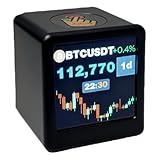
- Next-Gen System Upgrade — Backed by CoinGecko, it monitors real-time prices for over 2000 leading cryptocurrencies and the entire U.S. stock market. Designed with cutting-edge technology, it delivers a sleek, futuristic experience that puts global markets at your fingertips. Now enhanced with real-time gold price tracking for a more complete view of the markets.
- Smart Dynamic Display — More than markets, this display offers weather updates, a digital clock, and a customizable photo album for daily essentials. With GIF animations and photo albums, it blends vital info with personalized, vibrant visuals.
- Gifts A Man Can't Refuse — Tech-savvy and versatile, it’s an ideal present for crypto enthusiasts, stock traders, or anyone who loves smart gadgets—combining practicality with a premium touch.,And it's small,1.4X1.25 inch,Even during work, it won't attract the boss's attention。Additionally, we will give away a Collector's Edition Bitcoin Coin
- Pro-Tech Gadget — Designed for crypto enthusiasts and financial followers. This smart display features seamless 2.4GHz Wi-Fi connectivity for real-time streaming of Bitcoin (BTC), altcoins, and global stock market data. While no coding is required, users will access our dedicated web portal via a QR code to personalize tickers and layouts. Please ensure a compatible Wi-Fi environment and follow our comprehensive video guide for a professional-grade setup.
- Dual Market Coverage — Instantly switch between crypto (e.g., BTC, ETH, BNB, XRP, ADA) and U.S. stock data on one device. No need for multiple apps or platforms—get a unified view of the financial world in real time. Now also supports real-time gold price tracking for broader market coverage.
What institutional adoption really means
Institutional adoption is useful only when it is measurable. The phrase can refer to very different things:
- ETF assets and net creations or redemptions;
- Registered investment-adviser allocations;
- Custody, prime brokerage, and regulated derivatives;
- Corporate treasury purchases;
- Bank and payment-company stablecoin activity;
- Tokenized Treasury and money-market products;
- Institutional staking products; and
- On-chain settlement by financial institutions.
A January 2026 Coinbase and EY survey of 351 decision-makers reported that nearly three-quarters planned to increase crypto allocations and 74% expected prices to rise over the following 12 months. That is useful evidence of sentiment and intention, not proof of realized capital flows. A survey can remain bullish while ETF flows are negative.
Actual flows have also been volatile. CoinShares reported $857.9 million of inflows into digital-asset investment products for the week of May 11, 2026, including $706.1 million into Bitcoin products, $77.1 million into Ethereum, $47.6 million into Solana, and $39.6 million into XRP. The following week reported in its May 26 release showed $1.47 billion of outflows, including $1.315 billion from Bitcoin products and $223 million from Ethereum products. See the May 11 flow report and May 26 flow report. These figures demonstrate why flow trends must be updated through the publication date and interpreted alongside spot volume and price.
Altcoin outlook: breadth must earn the bullish label
The 37/100 Altcoin Season Index and 58.9% Bitcoin dominance do not show a broad, confirmed altcoin season. An individual altcoin can rally strongly while the wider market remains narrow. Readers should separate a liquid infrastructure asset from a low-float token, a revenue-producing DeFi protocol from a narrative token, and a stablecoin from a volatile altcoin.
A practical hierarchy is:
- Bitcoin as the primary institutional and liquidity exposure.
- Ethereum as the largest smart-contract and settlement ecosystem, with unresolved value-capture questions.
- Solana and other liquid infrastructure assets as higher-beta bets on execution and applications.
- Stablecoins and tokenized assets as infrastructure rather than conventional upside tokens.
- DeFi protocols with measurable users, fees, revenue, and credible security.
- Memecoins and long-tail tokens as the most speculative and liquidity-sensitive segment.
For every altcoin thesis, answer these questions before considering the narrative:
- What does the token capture economically?
- Is the token necessary for using the product?
- What is the circulating supply and fully diluted supply?
- When are future unlocks scheduled, and who receives them?
- Who controls issuance, governance, and treasury funds?
- How concentrated is ownership?
- What are actual users, fees, and revenue?
- Is activity organic or driven by temporary incentives?
- How liquid is the token during a sell-off?
- What legal, tax, custody, and geographic restrictions apply?
A network upgrade can improve a product while the associated token underperforms because value accrues to applications, validators, users, competing chains, or centralized intermediaries. Technology progress and token appreciation are related questions, not the same question.
Three conditional scenarios for the next several months
| Scenario | Macro assumptions | Flows and market structure | Likely winners and losers | Confirmation and invalidation |
|---|---|---|---|---|
| Bear case | Inflation remains sticky; the Fed stays restrictive or tightens; the dollar and real yields rise; growth weakens sharply or a credit shock develops | Spot ETF flows weaken or turn negative; open interest and funding remain elevated before liquidations; stablecoin dominance rises as traders seek liquidity | Bitcoin falls first but is relatively defensive; ETH, SOL, and most long-tail tokens underperform; leveraged traders and low-liquidity tokens are most vulnerable | Confirmed by persistent fund outflows, falling stablecoin supply, rising BTC dominance alongside falling total market cap, miner or exchange selling, and failed support after macro shocks. Invalidated by sustained spot inflows, falling inflation, improving breadth, and a durable ETH/BTC reversal |
| Base case | Growth slows without a deep recession; inflation improves gradually; rates stay restrictive for longer | Institutional flows are mixed but stabilize; Bitcoin remains the main liquidity destination; leverage is periodically cleared through sharp pullbacks | Bitcoin trades in a wide range or recovers unevenly; BTC dominance remains high; ETH and SOL rally selectively when their flows and usage improve | Confirmed by stable but unspectacular spot demand, range-bound macro data, and continued Bitcoin leadership. Invalidated by either a clear liquidity easing cycle with broadening breadth or a disorderly credit and liquidation event |
| Bull case | Disinflation becomes credible; rate-cut expectations rise without a severe recession; the dollar and real yields soften | Sustained spot ETF and corporate demand, expanding stablecoin supply, rising spot volume, controlled leverage, and improving market breadth | Bitcoin breaks into new highs first; ETH and high-liquidity infrastructure assets participate later; smaller altcoins outperform only after BTC stabilizes and dominance turns lower | Confirmed by persistent spot inflows, improving ETH/BTC, rising fees and organic application usage, and a falling BTC dominance with total market capitalization rising. Invalidated by ETF redemptions, falling stablecoin supply, higher real yields, or a major security or regulatory shock |
Central forecast: the base case is the most defensible starting point. Bitcoin is more likely than the average altcoin to remain the preferred institutional exposure, while a broad rally requires evidence that liquidity and breadth are improving together.
Independent reader supportYour contribution helps us test, update, and keep practical guides available for everyone.Leading indicators to monitor
A forecast should be updated when the evidence changes. The following dashboard is more useful than repeatedly searching for a new point target.
Also popular on Amazon

- 300 mainstream cryptocurrencies can be switched at . Quickly refresh data, no more missed trading . No annoying APP, no account login, no privacy disclosure. Description:
- Product features:
- The product does not come with a battery, and needs to be used with a data cable. It can only connect to 2.4G WiFi, and cannot be used in public networks that require secondary authentication (campus network, shopping malls, supermarkets, etc.). Currently only available in English
| Indicator | Why it matters | Bullish reading | Bearish reading | Suggested frequency |
|---|---|---|---|---|
| Bitcoin and Ethereum ETF net flows | Measures a major regulated demand channel | Sustained net creations across multiple sessions and products | Persistent redemptions or concentrated outflows | Daily, interpreted weekly |
| BTC dominance | Shows whether capital prefers Bitcoin or riskier segments | High dominance with total market cap rising can show healthy Bitcoin leadership; later, a controlled decline can support broadening | Rising dominance while total market cap falls shows defensive rotation | Daily or weekly |
| Altcoin breadth and relative performance | Tests whether gains are broad or limited to a few tokens | More liquid assets outperform BTC for several weeks with rising volume | Short-lived spikes in thin tokens and continued ETH/BTC weakness | Weekly |
| Stablecoin supply and chain activity | Indicates available dollar liquidity and settlement demand | Supply grows alongside spot volume and organic payments or DeFi activity | Supply contracts, depegs, or growth is confined to speculative leverage | Weekly |
| Spot volume versus derivatives volume | Helps distinguish genuine buying from leveraged positioning | Rising spot volume confirms price advances | Price rises mainly on futures volume and fragile leverage | Daily |
| Open interest and funding rates | Shows leverage and the risk of liquidation cascades | Open interest grows gradually with moderate funding | Open interest and funding become extreme while spot demand weakens | Daily |
| Options-implied volatility and skew | Prices expected movement and demand for downside protection | Volatility falls after a constructive breakout and skew normalizes | Put demand, volatility, or downside skew rises sharply | Daily or weekly |
| Real yields and the U.S. dollar | Proxy for the opportunity cost and liquidity available to risk assets | Real yields and dollar strength ease | Both rise, especially during a risk-off shock | Daily |
| Inflation, payrolls, GDP, and Fed communication | Determines whether restrictive policy can ease | Disinflation without a deep employment or growth shock | Sticky inflation or recessionary stress that causes forced selling | At each release and FOMC meeting |
| Miner selling and long-term-holder distribution | Identifies potential supply entering the market | Absorption of distributed coins without weakening price | Rising distribution combined with weak spot flows | Weekly |
| Network fees, revenue, users, and TVL | Tests whether protocol activity is economically durable | Organic usage and revenue rise without excessive incentives | Activity collapses when rewards or memecoin speculation decline | Weekly or monthly |
| Token unlock schedules | Measures future supply pressure for altcoins | Demand grows faster than newly circulating supply | Large unlocks arrive into weak liquidity | Monthly and before major unlocks |
For broad market figures, the CoinMarketCap charts dashboard provides market capitalization, dominance, sentiment, volatility, and related market measures. For stablecoins, use DeFiLlama. For macro data, use the official Federal Reserve calendar, BLS release schedule, and BEA release schedule. Always record the date, timezone, provider, and whether a figure is spot, index-based, or an aggregate across exchanges.
How to use the outlook without making a one-way bet
- Choose the exposure first. Decide whether the thesis is Bitcoin, Ethereum, Solana, stablecoin infrastructure, DeFi, or speculation. Do not treat them as interchangeable.
- Set a time horizon. A long-term supply thesis can coexist with a poor several-month setup. Separate investment duration from trading duration.
- Write the conditions. For example: ETF flows stabilize, real yields fall, and BTC dominance stops rising before increasing risk exposure. Conditions should be observable rather than narrative-based.
- Define invalidation. Decide what would change the thesis, such as persistent outflows, a major protocol exploit, falling stablecoin supply, or a macro liquidity shock.
- Size for volatility. A forecast can be directionally correct and still produce a drawdown large enough to force an investor to sell. Position size should reflect that possibility.
- Review token economics and custody. Check unlocks, liquidity, counterparty exposure, tax treatment, and whether the token actually captures the usage being discussed.
Readers who do not want to make a one-way price call have alternatives, including staged purchases instead of attempting to time one entry, a BTC-first allocation with strict position sizing, a diversified basket limited to liquid assets, holding cash or stablecoins for optionality, regulated futures or options for hedging, or waiting until macro and flow indicators improve. Each approach has costs and risks. Stablecoins can depeg, derivatives require margin and can be liquidated, funds have fees and tracking error, and self-custody creates operational responsibilities.
PC Slower Than It Used to Be?
A free scan shows the junk files, broken settings and background clutter dragging Windows down - then fixes them in one click.Free scan · Windows 10 & 11Crashes, No Sound, or Screen Glitches?
Random freezes, missing sound and display glitches usually trace back to one bad driver. Find and replace yours safely.Free scan · under a minuteRisks a crypto forecast cannot eliminate
- Volatility: Even a favorable long-term thesis can involve severe interim declines.
- Leverage: High open interest and crowded funding can turn an ordinary price move into a liquidation cascade.
- Custody and exchange risk: An asset’s price outlook does not protect against exchange insolvency, withdrawal restrictions, fraud, or operational failure.
- Smart-contract, bridge, and oracle risk: DeFi and cross-chain applications can fail independently of macro conditions.
- Stablecoin depeg and reserve risk: A stablecoin is an issuer and redemption claim, not the same thing as bank cash or insured deposits.
- Regulatory and tax risk: Rules differ by country and can affect access, reporting, staking, lending, and the classification of income or gains.
- Token unlocks and concentration: Low-float assets can display large market capitalizations while having limited tradable liquidity. New supply or concentrated selling can overwhelm adoption.
- Correlation risk: Bitcoin may initially behave like a high-beta risk asset during a recession or liquidity shock, even if some investors later view it as a monetary hedge.
- Upgrade and governance risk: Roadmap dates are targets, not guarantees, and upgrades can create technical, economic, or governance complications.
- Policy reversibility: Government priorities and political support can change. A reserve policy does not guarantee continuous buying.
These risks are why a market forecast should be treated as a set of conditional probabilities rather than a promise.
Frequently Asked Questions
Is the crypto market expected to rise or fall over the next several months?
The most defensible August 10, 2026 view is neutral-to-fragile in the short term, with Bitcoin better positioned than the average altcoin. A bullish outcome requires easing liquidity, sustained spot and ETF demand, expanding stablecoin activity, and improving market breadth. Sticky inflation, higher real yields, weak flows, or a credit shock would favor the bear case.
Is Bitcoin still preferable to altcoins?
For a near-term institutional-style exposure, Bitcoin currently has the strongest case because of its liquidity, market share, and regulated access. That does not mean Bitcoin cannot fall or that every altcoin will underperform. Ethereum, Solana, and other tokens need asset-specific evidence such as improving relative strength, organic usage, revenue, and manageable token supply.
Does the Bitcoin halving guarantee a price increase?
No. Bitcoin issuance is reduced by half every 210,000 blocks, roughly every four years, but the halving is not a mechanical timing system. Price also depends on demand, ETF flows, liquidity, real yields, miner selling, leverage, corporate activity, and broader risk appetite.
Quick wins for a faster PC:
Scan for outdated or missing drivers - takes under a minuteDriver Scan →Clear out junk files and repair common Windows errorsFree Scan →Fix the driver behind crashes, sound loss and screen glitchesFind Drivers →Is stablecoin growth automatically bullish for crypto prices?
No. Stablecoins can expand payments, settlement, collateral, and trading liquidity while the prices of volatile crypto assets remain flat or fall. Stablecoin growth also introduces reserve, redemption, issuer, regulatory, and financial-stability risks.
What is the clearest sign that an altcoin season has begun?
Look for sustained breadth rather than a few spectacular tokens: improving ETH/BTC, falling or stabilizing Bitcoin dominance while total market capitalization rises, stronger spot volume, persistent flows into liquid non-Bitcoin assets, and organic network usage. A short-lived memecoin rally is not sufficient confirmation.
The Bottom Line
Bottom line: the crypto market has stronger long-term infrastructure and policy support than it did in earlier cycles, but the August 10, 2026 setup is not a confirmed broad-based bull market. Bitcoin remains the most defensible near-term institutional exposure. Ethereum and Solana have credible technology and usage theses, but their tokens require evidence of value capture rather than upgrades alone. Stablecoins and tokenization are important structural developments, yet they do not guarantee native-token appreciation.
Update the view when the evidence changes: sustained spot flows, softer inflation and real yields, expanding stablecoin supply, improving ETH/BTC, rising organic network revenue, and broader participation would strengthen the bull case. Persistent outflows, rising BTC dominance during a falling market, higher leverage, weak liquidity, token unlocks, or a security or regulatory shock would strengthen the bear case.




