
Quick wins for a faster PC:
Scan for outdated or missing drivers - takes under a minuteDriver Scan →Clear out junk files and repair common Windows errorsFree Scan →Fix the driver behind crashes, sound loss and screen glitchesFind Drivers →Yes, but only as a short-term payment bridge—not as a substitute for cash savings. If you charge an unexpected expense and pay the full statement balance by the due date, your card’s purchase grace-period rules may let you avoid interest. If you carry the balance, you are borrowing at the card’s interest rate and may also face fees. An emergency fund is money already set aside, so it can cover a bill or a period of lost income without creating a new debt payment.
The practical answer is to use both tools for different jobs: build whatever cash reserve you can, and treat available credit as backup access rather than as your reserve.
As an Amazon Associate I earn from qualifying purchases.
What an emergency fund does that a credit card cannot
An emergency fund is cash reserved for unplanned costs and financial shocks. Consumer Financial Protection Bureau (CFPB) examples include car or home repairs, medical bills and a loss of income. The money is yours and does not create a required payment after you use it.
Free tools Windows power users keep installed
One-click scans. No signup required.
A credit card makes a purchase payable now, but it creates a balance that must be repaid. Your available credit can change, the account can be restricted, and a merchant must accept the card. Those limits matter most when an emergency is large, lasts for months or happens at the same time your income falls.
#1 Best Overall

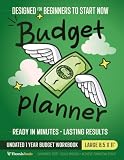
- Effective Budget Planning - Take control of your finances with the budget account book. This comprehensive planner allows you to plan and track your income, expenses, savings, and financial goals in one convenient place. With its intuitive layout and easy-to-use sections, you can stay organized and make informed decisions to achieve financial success.
- User-Friendly Layout - The budget planner features a user-friendly layout designed for easy navigation and organization. Each month, you'll find dedicated budget pages where you can set financial goals, track your income, and plan your expenses. Additional sections include debt trackers, savings goals, bill payment trackers, and more, making it simple to stay on top of your finances.
- Undated Monthly Calendar & Bonus Stickers - Featuring undated calendar each month, you'll have ample space to mark paydays, bills due, appointments, and important dates. Say goodbye to difficult writing spaces. Plus, we've included 3 cute sticker sheets that allow you to personalize your financial organizer and make budgeting more fun. Dates are not pre-printed and are completed by the user.
- Reliable and Convenient Design - Our monthly budget planner is designed for your convenience and built to last. The elastic band keeps everything securely in place, and the dual-sided pocket provides extra storage. Experience a budget planner that combines practicality and durability.
- Master Budgeting with Ease - Our financial planner includes a complete guidebook that provides valuable insights and instructions for optimal usage. From setting financial goals to tracking expenses, this guidebook offers step-by-step guidance and practical tips. Whether you're new to budgeting or an experienced user, this resource will help you make the most of your budget planner, empowering you to achieve financial success.
The CFPB describes the purpose of a reserve this way: “Having a reserve fund for financial shocks can help you avoid relying on other forms of credit or loans that can turn into debt.” That is the central distinction: savings absorb a shock; a card can postpone its cost.
When charging an emergency can work
Charging and paying in full
A card can be reasonable for timing when the expense is unavoidable, the merchant accepts cards and you can pay the entire statement balance by its due date. Purchase interest may be avoided when your account’s grace-period conditions apply and you pay in full. The exact rules are in your card agreement and statements; do not assume every transaction or account has the same treatment.
This approach is a payment choice, not evidence that you have an emergency reserve. You still need enough income or cash arriving before the due date to clear the balance.
Carrying the balance
If you pay only part of the statement, the unpaid amount becomes debt. Interest is often calculated daily, so the cost can grow while you are dealing with the original emergency. A promotional rate, if your account has one, may have conditions and an end date. Late payments can add fees and damage your ability to use the account when you need it most.
Rank #2

- Effective Budget Plan Book – Take control of your finances with the SUNEE budget account book. This all-in-one budget planner allows you to plan and track your income, expenses, savings, and financial goals. Its intuitive layout and easy-to-use sections help you stay organized and make smart decisions to reach financial success. Our financial planner also included a comprehensive guidebook with valuable tips and instructions to help you get the most out of your budgeting planner.
- Full-Page Calendars – Each month’s full-page calendar provides plenty of space to track paydays, bills due dates, appointments, and important events. No more cramped boxes or tight writing areas, you can easily plan and organize your schedule at a glance.
- Colorful Pages Layout and Tabs – This vibrant budget planner features a user-friendly design for easy navigation and organization. Each month includes dedicated budget pages to set financial goals, track income, and plan expenses. Additional sections like debt trackers, savings goals, and bill payment trackers make managing your finances a breeze. The colorful backgrounds on each page offer clear, instant visibility.
- Bonus 4 Stickers and Convenient Design – This monthly budget planner is built for convenience and durability. Water-resistant cover protects against spills, while the elastic band keeps everything secure, and the dual-sided pocket offers extra storage. Plus, we’ve included 4 adorable sticker sheets to personalize your planner and make budgeting more enjoyable. Experience a budget planner that combines practicality with lasting quality.
- UNDATED DESIGN & 1 YEAR USE - Undated finance books start with 1 page-financial goals, 1 page-Mind Map, 1 page-Financial Strategy, 1 page-Tactics, 2 pages-Important Dates, 4 pages-Bill Tracker, 4 pages-Saving Tracker, 8 pages-Debt Tracker, followed by 12 Months(10 pages per month, 1 unique color for each month). 2 pages-Christmas Budgeting, 2 pages-Yearly Summary, 2 pages-Check Register and 12 pages-Notes(dotted). It is UNDATED, so you could start at any time, suitable for 1 year use.
Cash advances are a different transaction
Using the card to obtain cash is not necessarily governed by the purchase terms. Cash advances may have a separate interest rate and fees. Check the agreement before using an ATM, convenience check or other cash-access feature.
Credit card versus emergency savings
| Question | Credit card | Emergency savings |
|---|---|---|
| What is available? | Available credit, subject to account status, credit limit and merchant acceptance. | Only the money actually set aside and accessible. |
| What does it cost? | No purchase interest only when applicable grace-period conditions are met and the balance is paid in full; carrying a balance can add interest and fees. | No borrowing cost on the amount withdrawn, although the account can have its own terms or opportunity costs. |
| What happens if income stops? | The bill remains due, and access to credit should not be assumed. | The reserve is intended to help cover unexpected costs and financial shocks. |
| Are there restrictions? | Purchases require an accepting merchant; cash advances can have different rates and fees. | Safety, access and withdrawal rules vary. Certificates of deposit (CDs), for example, may charge an early-withdrawal penalty. |
| Best use | A possible short-term bridge when repayment by the due date is realistic. | A buffer that reduces reliance on borrowing and can fund bills or income interruptions. |
These are general mechanics, not a prediction of your eligibility or the terms of a particular account.
What recent household data says
The Federal Reserve’s 2025 household survey, reported in its May 2026 report, asked about a hypothetical $400 expense. Sixty-three percent of adults said they would cover it with cash, savings or a credit card paid off at the next statement. That category combines cash resources with a card used as a short bridge; it does not mean all of those respondents had $400 in savings.
Fifteen percent said they would put the hypothetical $400 on a credit card and pay it over time. That response represents borrowing, not an emergency fund.
Rank #3

- Effective Budget Planning - Take control of your finances with the budget account book. This comprehensive planner allows you to plan and track your income, expenses, savings, and financial goals in one convenient place. With its intuitive layout and easy-to-use sections, you can stay organized and make informed decisions to achieve financial success.
- User-Friendly Layout - The budget planner features a user-friendly layout designed for easy navigation and organization. Each month, you'll find dedicated budget pages where you can set financial goals, track your income, and plan your expenses. Additional sections include debt trackers, savings goals, bill payment trackers, and more, making it simple to stay on top of your finances.
- Undated Monthly Calendar & Bonus Stickers - Featuring undated calendar each month, you'll have ample space to mark paydays, bills due, appointments, and important dates. Say goodbye to difficult writing spaces. Plus, we've included 3 cute sticker sheets that allow you to personalize your financial organizer and make budgeting more fun. Dates are not pre-printed and are completed by the user.
- Reliable and Convenient Design - Our monthly budget planner is designed for your convenience and built to last. The elastic band keeps everything securely in place, and the dual-sided pocket provides extra storage. Experience a budget planner that combines practicality and durability.
- Master Budgeting with Ease - Our financial planner includes a complete guidebook that provides valuable insights and instructions for optimal usage. From setting financial goals to tracking expenses, this guidebook offers step-by-step guidance and practical tips. Whether you're new to budgeting or an experienced user, this resource will help you make the most of your budget planner, empowering you to achieve financial success.
In the same 2025 survey, 55 percent said they had set aside money for three months of expenses in an emergency or “rainy day” fund. These are group-level findings, not a recommended target or a prediction of how any individual household will cope.
How much should you save?
Start with a personal amount
The CFPB says the right amount depends on your circumstances. Consider essential monthly costs, income stability, health and caregiving responsibilities, transportation needs, insurance deductibles and how quickly another source of income would arrive. A smaller reserve is still useful: it can reduce the amount you would have to put on a card.
Set a specific first goal that is feasible for your budget, then make regular contributions when possible. Track the balance so you can see progress and replenish it after a withdrawal. CFPB offers free printable budgeting tools; buying a planner is optional, not a requirement.
The Tool Desk
Outbyte PC Repair FREERepair Windows errors before they cause bigger problemsFix Now →Outbyte Driver Updater FREEFix the driver behind crashes, sound loss and screen glitchesFind Drivers →Use six months as a benchmark, not a rule
The Federal Deposit Insurance Corporation (FDIC) cites a general expert recommendation of six months of living expenses in a federally insured product. That is a benchmark for a larger cushion, not a universal prerequisite before you can call your savings useful. A household with variable income or a single earner may choose to work toward more; another household may need to begin with a much smaller amount.
Rank #4

- Unlock Your Financial Potential: Harness the power of financial mastery with our budget planner Undated . It's the ultimate tool for reaching your financial aspirations while gaining a comprehensive overview of your monthly income, savings, debts, and daily expenses. Seize control of your finances and elevate your financial game.
- User-Friendly Design: Our monthly budget planner features an intuitive layout, making it easy to navigate and understand. Each month includes dedicated budget pages to help you set financial goals, track income, and plan expenses. Additional sections such as debt tracker, savings tracker, bill tracker, and more ensure that managing your financial is a breeze.
- Start Whenever, Wherever: Our budget notebook is undated, allowing you to begin your financial planner journey whenever you're ready. Compact and conveniently sized at 5.5" x 8.5", it easily fits into any bag, ensuring it's always by your side, ready to guide your financial decisions.
- Functionality with Style: Our account book not only looks elegant but is also highly functional. With features like an elastic band and double-side pocket, it enhances practicality for effective budget planning. The twin-wire binding allows for 180° layflat, keeping your financial bill calendar plan safe and organized.
- Personalize Your Path to Financial Success: Our monthly bill planner includes three sticker sheets to unleash your creativity. Planning instructions provide guidance, while inspirational quotes on each monthly calendar page serve as constant reminders to stay focused on your financial goals.
If you use a CD for part of the reserve, account for its access rules. The FDIC notes that CDs may impose early-withdrawal penalties. Money needed for a near-term emergency should be kept where you can reach it under the account’s terms.
A practical plan for using both tools
- List the emergencies you are preparing for. Write down likely costs such as a repair, medical bill or temporary income loss. Separate one-time bills from an interruption that could last several months.
- Choose a first savings target. Base it on essential expenses and your circumstances, not on a universal number. Even a modest, accessible amount can lower the balance you would need to borrow.
- Automate or schedule contributions when feasible. A recurring transfer or a regular deposit makes progress measurable. If income varies, contribute when cash flow allows and monitor the total.
- Check your card before an emergency occurs. Find the purchase annual percentage rate, grace-period requirements, due date, late-payment fees and cash-advance rate and fees in the agreement or statement. Confirm your available credit and whether any promotional terms have conditions.
- Decide whether the expense can be repaid in full. Include the amount already owed on the card and bills due before the next paycheck. If full repayment is not realistic, compare the cost of borrowing with alternatives before charging.
- Use the least costly source that preserves stability. Cash savings can avoid borrowing costs. A card may handle a purchase when repayment is certain, but do not drain every dollar of cash if doing so leaves you unable to pay essentials.
- Rebuild after the event. Once the bill is paid, direct future contributions toward restoring the reserve. A card payment that consumes your next several paychecks can leave you exposed to the next shock.
Situations where a card is especially risky
The emergency also reduces your income
A job loss, reduced hours or illness can make a card balance harder to repay precisely when the bill arrives. A reserve can cover both essential spending and the original emergency, while a card only creates another obligation.
The expense is larger or ongoing
For a repair with continuing costs, recurring medical treatment or a long period without income, minimum payments can stretch the debt and increase interest. Credit availability is not a guarantee that the account will remain open or that the limit will be sufficient.
What’s actually slowing this PC down?
Pick the symptom - the matching free tool is one click away.
You need cash rather than a purchase
Rent, a payment to an individual or another bill may not accept cards. Converting credit to cash can trigger the separate cash-advance pricing described in your agreement.
Best Value
You are already carrying balances
If the account is not being paid in full now, a new emergency charge is likely to add to existing interest. Review the statement and make a repayment plan before relying on more credit.
What to check before you charge
- Grace-period eligibility: Verify that the transaction is a purchase covered by the account’s grace-period terms and that paying the full statement balance preserves that treatment.
- Purchase APR and daily interest practice: Interest may accrue daily when a balance is carried.
- Cash-advance terms: Check the separate rate, fees and repayment treatment before withdrawing cash.
- Due date and fees: Note when payment must arrive and what a late payment could cost.
- Repayment capacity: Count existing balances, essential bills and any expected change in income.
- Available credit and account status: A limit can be reduced or access restricted; do not treat it as guaranteed emergency capacity.
If you cannot afford the card payment
Contact the issuer promptly rather than waiting for a missed payment. The CFPB advises explaining what you can afford and when you expect normal payments might resume, then asking what options are available. Keep records of the conversation and confirm any arrangement, fees or changes in writing.
Do not assume that a relief option eliminates interest or protects the account under every circumstance. Read the issuer’s terms and continue monitoring statements for the amount due and the date.
Windows Errors? Fix Them Before They Spread
Repair common Windows errors and clear accumulated junk for a smoother, more stable PC - no reinstall needed.Free scan · no reinstallOutdated Drivers Are Slowing You Down
One free scan finds every outdated or missing driver and matches the right update for your exact hardware.Free scan · exact hardware matchCommon mistakes to avoid
- Calling a credit limit an emergency fund: A limit is borrowed capacity, not money set aside.
- Assuming every card purchase is interest-free: Grace-period rules and eligibility vary by account and transaction.
- Using a cash advance like a purchase: Rates and fees can be different.
- Choosing a six-month target that is impossible: The FDIC benchmark is general guidance; the CFPB’s approach is situation-specific and allows for starting small.
- Ignoring access restrictions on savings: A CD may impose an early-withdrawal penalty, so match the account to the timing of your needs.
- Waiting until after a missed payment to seek help: Contact the issuer as soon as repayment becomes unaffordable.
Bottom line
A credit card can bridge the timing of an emergency purchase when you can pay the full statement balance under the card’s grace-period terms. It cannot replace the protection of cash savings when the expense is large, ongoing or paired with lost income. Build an accessible reserve toward a goal that fits your circumstances, use credit deliberately, and treat any balance you carry as debt with a real cost.
Quick Recap
Product prices and availability are accurate as of the date/time indicated and are subject to change. Any price and availability information displayed on Amazon at the time of purchase will apply.




