Remote-work software can quietly become a large monthly expense. A 10-person team paying for chat, meetings, project management, documentation, and screen recording can spend hundreds of dollars before adding payroll, cloud storage, or security tools.
The best choice is therefore not the app with the longest feature list. It is the tool—or small combination of tools—that covers your team’s main workflow without charging for overlapping features. Google Workspace and Microsoft 365 are the strongest starting points for most businesses; Slack, Asana, Notion, Loom, and Miro make sense when a specific gap justifies the extra cost.
Best remote work software at a glance
| Best for | Software | Starting paid price | Main drawback |
|---|---|---|---|
| Google-based businesses | Google Workspace | $7 per user per month | Advanced security, retention, and meeting controls require higher editions |
| Microsoft-based businesses | Microsoft Teams with Microsoft 365 | $4 per user per month for Teams Essentials, paid yearly | Teams Free is not equivalent to business Teams |
| Team chat | Slack | $7.25 per user per month, billed annually | The free plan has significant history and retention limits |
| Video-first collaboration | Zoom Workplace | Free plan available | The free plan limits meetings to 40 minutes and restricts other tools |
| Structured project management | Asana | $10.99 per user per month, billed annually | Paid subscriptions require at least two seats |
| Broad project features at a low price | ClickUp | $7 per user per month, billed annually | Cumulative feature limits can freeze functions when reached |
| Simple all-in-one projects | Basecamp | $299 per month, billed annually | Less capable for complex resource and portfolio planning |
| Company wiki and documentation | Notion | $10 per member per month | Free collaborative workspaces have page and block restrictions |
| Async video messages | Loom | $18 per user per month for Business | Free recordings are limited to five minutes |
| Virtual whiteboards | Miro | $8 per member per month, billed annually | Free teams have only three editable boards |
Prices are U.S. list prices and exclude taxes, discounts, reseller arrangements, and negotiated enterprise pricing. Annual billing is shown where the vendor publishes a lower annual rate.
1. Google Workspace: best overall for Google-based teams
Google Workspace is the most economical starting point for a business already using Gmail, Drive, Docs, Sheets, Calendar, Meet, and Chat. One subscription provides business email, shared files, collaborative documents, video meetings, administration, and Gemini features that vary by edition.
The Tool Desk
Outbyte PC Repair FREERepair Windows errors before they cause bigger problemsFix Now →Outbyte Driver Updater FREEScan for outdated or missing drivers - takes under a minuteDriver Scan →#1 Best Overall

- Compatible with Nintendo Switch 2’s new GameChat mode
- Auto-Light Balance: RightLight boosts brightness by up to 50%, reducing shadows so you look your best—compared to previous-generation Logitech webcams (1)
- Privacy with a Slide: The integrated webcam cover makes it easy to get total, reliable privacy when you're not on a video call
- Built-In Mic: The built-in microphone lets others hear you clearly during video calls
- Easy Plug-And-Play: The Brio 101 works with most video calling platforms, including Microsoft Teams, Zoom and Google Meet—no hassle; it just works
- Business Starter: $7 per user per month, 30 GB of pooled storage per user, custom email, and Meet for up to 100 participants.
- Business Standard: $14 per user per month, 2 TB of pooled storage per user, Meet recording, and meetings for up to 150 participants.
- Business Plus: $22 per user per month, 5 TB of pooled storage per user, attendance tracking, Vault, and enhanced endpoint management.
For a five-person business, Starter costs $35 per month before tax. Standard costs $70. That predictable per-user structure is easier to budget than buying separate email, storage, meeting, and document products.
Watch for: Workspace is not automatically a complete compliance package. Data-loss prevention, context-aware access, data regions, and some endpoint controls are reserved for Enterprise. Also, an administrator must enable Meet; an employee may have a supported account but still be unable to use the service because of an organization policy.
Check Google Workspace pricing.
2. Microsoft Teams with Microsoft 365: best for Office-based businesses
Microsoft 365 is usually the better financial choice when a company relies on Outlook, Word, Excel, PowerPoint, OneDrive, SharePoint, or Planner. Teams acts as the communication layer while Microsoft 365 supplies the productivity and identity tools behind it.
- Teams Essentials: $4 per user per month when paid yearly, with chat, calls, meetings, file sharing, recordings, transcripts, captions, and 10 GB of storage.
- Business Basic: $6 per user per month when paid yearly, adding web and mobile Office apps, custom email, 1 TB of storage, Planner, Forms, and Bookings.
- Business Standard: $12.50 per user per month when paid yearly, adding desktop Office apps, webinars, Loop, and Clipchamp.
Do not compare Teams Free directly with business Teams. Teams Free is a personal-use product with a documented limit of 100 participants and 60 minutes per meeting, 5 GB of file storage, and a different administration model. A business that needs organizational teams, channels, recordings, security controls, and centralized account management should price Microsoft 365 Business Basic or Standard instead.
What’s actually slowing this PC down?
Pick the symptom - the matching free tool is one click away.
The listed business plans support up to 300 users. Microsoft also says Teams for personal use will no longer be available on desktop and web in China beginning July 28, 2026; that change does not represent a general shutdown of business Teams.
Compare Microsoft Teams business plans.
3. Slack: best for persistent team chat
Slack is strongest when work happens through channels, quick questions, searchable conversations, integrations, and lightweight huddles. It is often a useful addition to Google Workspace or Microsoft 365, but it can become an expensive duplicate if the team already uses Teams or Google Chat successfully.
Slack Pro costs $7.25 per user per month with annual billing or $8.75 monthly. It includes unlimited message history, group huddles, unlimited app integrations, and external group messaging. Business+ costs $15 per user per month annually and adds features such as enterprise search, daily recaps, AI file summaries, multiple SAML configurations, and native data-loss prevention for Slack Connect.
Rank #2
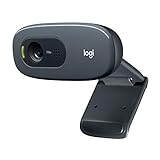
- Compatible with Nintendo Switch 2’s new GameChat mode
- Crisp HD 720p/30 fps video calls with diagonal 55° field of view and auto light correction. Compatible with popular platforms including Skype and Zoom.
- The built-in noise-reducing mic makes sure your voice comes across clearly up to 1.5 meters away, even if you’re in busy surroundings.
- C270’s RightLight 2 feature adjusts to lighting conditions, producing brighter, contrasted images to help you look good in all your conference calls.
- The adjustable universal clip lets you attach the camera securely to your screen or laptop, or fold the clip and set the webcam on a shelf. You’re always ready for your next video call.
The free plan deserves particular attention before a business treats it as a permanent archive:
- Users can view and search only the most recent 90 days of messages and files.
- Content older than one year is permanently deleted from free workspaces.
- Downgrading removes paid features, including some summaries, huddle notes, retention settings, and analytics.
- Slack’s own free-plan pages currently disagree about the third-party and custom app limit: one says 10, while another says up to three. Check the workspace’s current billing or help screen before relying on a specific number.
Administrators can review usage at Admin → Workspace analytics → Overview → Last 28 days. Retention settings are under Admin → Workspace settings → Data retention → Expand, and file retention is under Admin → Workspace settings → File history → Expand → Save.
See Slack pricing and free-plan limitations.
4. Zoom Workplace: best for video-first teams
Zoom Workplace makes sense for teams whose main remote-work activity is meetings. Its bundle now includes Meetings, Chat, Mail, Calendar, Whiteboard, Notes, Clips, and related productivity tools. It is more than a video-call product, but video remains its main advantage.
The free Workplace Basic plan supports up to 100 participants, but meetings are capped at 40 minutes. It also includes up to 10 shared Docs, three editable Whiteboards, five two-minute Clips, Chat, Mail and Calendar connections, manual Tasks, and Notes. Paid plans extend meetings to 30 hours and add capabilities such as AI note-taking, cloud storage, and broader productivity tools.
AI Companion may be included at no additional cost with eligible paid services, but availability varies by region and industry. Also, “Zoom One” is outdated terminology for current bundles; Zoom says Zoom One bundles were replaced by Zoom Workplace.
Recommended Free Tools
Choose Zoom Workplace when the alternative is paying separately for meeting, chat, notes, and basic collaboration tools. Do not choose it simply because a team occasionally needs a video call; Google Meet or Teams may already cover that need inside the company suite.
5. Asana: best for structured project management
Asana is a strong fit when the team needs explicit task owners, deadlines, forms, approvals, project views, and visibility across multiple initiatives. It is more structured than a chat channel and generally easier to adopt for conventional project management than a highly configurable workspace.
Rank #3

- 【Crystal-Clear 1080P HD Video】This 1080p webcam for PC delivers sharp, true Full HD video at 30 frames per second, bringing your digital world to life with vibrant clarity. Enjoy smooth, real-time streaming with enhanced high dynamic range (HDR) that keeps your face clearly visible even in low light or backlit conditions.
- 【Built-In Noise-Canceling Microphone】This computer camera with microphone features dual noise-reducing digital mics and an advanced audio processor, capturing rich stereo sound while filtering background noise. It ensures clear conversations during video calls, even in busy environments.
- 【Privacy Shutter for Added Security】This secure USB webcam includes a built-in privacy cover, letting you physically block the lens with a simple slide. Protect your visibility and keep the lens dust-free—no drivers needed, just plug into USB 2.0 and start using it immediately.
- 【Flexible Mount & Auto Light Correction】Designed for your computer or laptop, this webcam comes with an adjustable clip for monitors or standalone use. It offers automatic light correction and fixed focus for sharp, well-balanced images in any lighting.
- 【Wide Device & Platform Compatibility】This versatile webcam for laptop and desktop use is compatible with Windows, Mac, Linux, and Android systems. Supports Skype, Zoom, Twitch, YouTube, and more—featuring a 360° rotating head for easy adjustment. Simply plug and play.
- Personal: free for up to two users, with unlimited tasks and projects, list, board, and calendar views, and a 100 MB maximum per file.
- Starter: $10.99 per user per month annually or $13.49 monthly, adding timelines, Gantt views, dashboards, automations, forms, and custom fields.
- Advanced: $24.99 per user per month annually or $30.49 monthly, adding portfolios, goals, workload, approvals, proofing, time tracking, and formulas.
The two-user limit on the free plan makes Asana Personal suitable for an individual contractor or a two-person operation, but not a free project-management solution for a larger team. Asana’s smallest paid subscription is two seats. External guests do not count toward the seat limit when they are genuinely external collaborators.
Asana renamed its legacy Premium and Business plans to Starter and Advanced in 2025. The company says the transition did not increase prices or remove functionality for affected customers.
6. ClickUp: best feature-per-dollar project tool
ClickUp packs tasks, documents, boards, calendars, sprints, forms, chat, time tracking, goals, automations, and reporting into one product. Its breadth can reduce the number of separate subscriptions a growing team needs, and its paid entry price is lower than Asana’s.
- Free Forever: unlimited tasks and free-plan members, Docs, Kanban boards, calendar, sprint management, one Form, in-app video recording, and 60 MB of storage.
- Unlimited: $7 per user per month annually or $10 monthly, adding unlimited storage, integrations, custom fields, Gantt charts, time tracking, goals, portfolios, resource management, Chat, and email.
- Business: $12 per user per month annually or $19 monthly, adding advanced dashboards, mind maps, private whiteboards, Google SSO, and 5,000 automation executions per month.
The financial catch is that some ClickUp feature limits are cumulative rather than monthly allowances. When a workspace reaches one, existing data is not deleted, but users may be unable to create or edit new information using that feature until the company upgrades.
Free-plan guests also have full create and edit permissions that cannot be modified. Paid plans provide more control, including read-only guest options. ClickUp is a good value for teams willing to configure their workspace; it is less attractive if minimizing setup and governance work matters more than the number of features.
7. Basecamp: best simple all-in-one project workspace
Basecamp organizes projects around message boards, to-dos, Card Tables, Campfires, Pings, schedules, files, reports, and automatic check-ins. Its main paid plan costs $299 per month when billed annually, regardless of the number of users, and includes unlimited users, unlimited projects, 5 TB of storage, timesheets, onboarding, and priority support.
Quick wins for a faster PC:
Repair Windows errors before they cause bigger problemsFix Now →Fix the driver behind crashes, sound loss and screen glitchesFind Drivers →That pricing model is attractive for a large organization. At 50 users, the annual-billing cost works out to about $5.98 per user per month; at 10 users, it is $29.90 per user per month. The economics improve as the employee count rises.
Rank #4
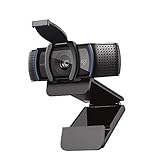
- Webcam comes with privacy shutter – puts you in control of what you show and protects the lens with a snugly fitting cover. Does not include the 3-month XSplit VCam license.
- Full HD 1080P video calls – premium video quality that makes you look like a Pro
- Full HD 1080P video Recording – a glass lens and full HD mean your recorded videos are crisp and vibrantly colored
- HD autofocus and light Correction – enjoy razor-sharp high Def in every environment
- Stereo audio with dual mics – capture natural sound on calls and recorded videos
Basecamp’s free plan is limited to one project, 1 GB of storage, and 20 users. Clients and contractors can be added without being charged as employees, which can reduce the cost of external collaboration.
The trade-off is depth. Basecamp is not designed to match Asana or ClickUp for complex portfolio planning, formulas, capacity planning, or advanced resource controls.
8. Notion: best for a company wiki and flexible documentation
Notion is useful when the core problem is scattered information: policies in email, meeting notes in personal documents, onboarding instructions in old chat threads, and project details spread across spreadsheets. Its documents, databases, wikis, forms, sites, project tracking, search, and AI meeting notes can create a central knowledge base.
Outdated Drivers Are Slowing You Down
One free scan finds every outdated or missing driver and matches the right update for your exact hardware.Free scan · exact hardware matchPC Slower Than It Used to Be?
A free scan shows the junk files, broken settings and background clutter dragging Windows down - then fixes them in one click.Free scan · Windows 10 & 11- Free: $0, but collaborative workspaces have page and block restrictions when two or more members work together.
- Plus: $10 per member per month, adding custom forms, custom sites, more collaboration features, charts, and a trial of Notion AI.
- Business: $20 per member per month, adding Notion Agent, AI Meeting Notes, enterprise search beta across connected apps, and SSO.
“AI included” does not mean the same thing across Notion plans. Free and Plus advertise trial AI capabilities, while the listed Business plan provides broader AI features. Paid seats are recalculated at renewal based on workspace membership, and adding members can create prorated charges.
Notion works best as the system of record for knowledge and lightweight project information. It may need to be paired with a dedicated task tool when deadlines, approvals, or workload planning are central to the business.
Independent reader supportYour contribution helps us test, update, and keep practical guides available for everyone.9. Loom: best for async video communication
Loom replaces some meetings with short screen-and-camera recordings. It is particularly useful for software walkthroughs, feedback, onboarding, customer explanations, and status updates that do not require a live discussion.
- Starter: up to 50 members, up to 25 recordings per person, five-minute recordings, and up to 720p quality.
- Business: $18 per user per month, with unlimited videos and recording length, basic editing, and no Loom branding.
- Business + AI: $24 per user per month, adding enhanced editing, video-to-text automation, meeting recaps and notes, summaries, chapters, filler-word removal, and silence removal.
Loom’s free limits are enough to test whether async video actually reduces meetings, but a team that records training libraries will likely outgrow five-minute recordings and per-person limits. Pricing and feature access can differ between subscriptions purchased through Loom.com and those purchased through Atlassian.com, so compare the correct purchase path.
Best Value

- 【Full HD 1080P Webcam】Powered by a 1080p FHD two-MP CMOS, the NexiGo N60 Webcam produces exceptionally sharp and clear videos at resolutions up to 1920 x 1080 with 30fps. The 3.6mm glass lens provides a crisp image at fixed distances and is optimized between 19.6 inches to 13 feet, making it ideal for almost any indoor use.
- 【Wide Compatibility】Works with USB 2.0/3.0, no additional drivers required. Ready to use in approximately one minute or less on any compatible device. Compatible with Mac OS X 10.7 and higher / Windows 7, 8, 10 & 11 / Android 4.0 or higher / Linux 2.6.24 / Chrome OS 29.0.1547 / Ubuntu Version 10.04 or above. Not compatible with XBOX/PS4/PS5.
- 【Built-in Noise-Cancelling Microphone】The built-in noise-canceling microphone reduces ambient noise to enhance the sound quality of your video. Great for Zoom / Facetime / Video Calling / OBS / Twitch / Facebook / YouTube / Conferencing / Gaming / Streaming / Recording / Online School.
- 【USB Webcam with Privacy Protection Cover】The privacy cover blocks the lens when the webcam is not in use. It's perfect to help provide security and peace of mind to anyone, from individuals to large companies. 【Note:】Please contact our support for firmware update if you have noticed any audio delays.
- 【Wide Compatibility】Works with USB 2.0/3.0, no additional drivers required. Ready to use in approximately one minute or less on any compatible device. Compatible with Mac OS X 10.7 and higher / Windows 7, 10 & 11, Pro / Android 4.0 or higher / Linux 2.6.24 / Chrome OS 29.0.1547 / Ubuntu Version 10.04 or above. Not compatible with XBOX/PS4/PS5.
10. Miro: best virtual whiteboard
Miro is designed for workshops, discovery sessions, diagrams, planning, retrospectives, and other visual collaboration. It supports boards, templates, Docs, Tables, Slides, Kanban, integrations, and AI workflows.
The free plan allows unlimited boards to be created, but only the three most recent remain editable. There is no guest role on Free; invited users are effectively members and can access the team’s boards. Starter costs $8 per member per month when billed yearly and adds unlimited private boards and visitor editing.
Paid plans distinguish members, guests, and visitors, which matters when clients or contractors need limited access. Removing a member generally takes effect at renewal, while adding one is prorated.
Miro’s plan names are changing. Its June 29, 2026 documentation says Business + AI Workflows is replacing the legacy Business plan, so older comparisons may describe pricing or AI access that no longer applies.
Free tools Windows power users keep installed
One-click scans. No signup required.
How to choose without overspending
- Pick the business suite first. If you use Gmail and Drive, price Google Workspace. If you use Outlook and Office, price Microsoft 365. Avoid buying separate email, storage, calendar, meeting, and document apps before checking what your existing suite includes.
- Identify the bottleneck. Add Slack for communication, Asana or ClickUp for task control, Notion for documentation, Loom for recurring explanations, or Miro for visual workshops—not merely because another team uses it.
- Calculate the whole monthly bill. For example, five users on Google Workspace Business Starter plus Asana Starter would cost about $89.95 per month before tax using annual rates: $35 for Workspace and $54.95 for Asana’s five-user price. That is materially different from looking at either product’s price alone.
- Check limits that can create switching costs. Examine storage per file, meeting duration, message retention, editable boards, recording length, guest permissions, and automation allowances. A free plan that loses old content can be more expensive than a paid plan if the company later needs recovery or migration.
- Assign an administrator. Set retention, remove former employees, review app access, and monitor unused seats. The cheapest list price is not a saving if accounts remain active after people leave.
- Run a short pilot. Test the exact workflow—such as a client project, an employee onboarding process, or a weekly planning cycle—before moving historical documents and committing to annual billing.
Suggested stacks by team type
| Team situation | Practical starting stack | Why |
|---|---|---|
| Small company using Gmail and Docs | Google Workspace, optionally Asana or Notion | The core suite already covers email, files, meetings, and documents |
| Office-heavy company | Microsoft 365 Business Basic or Standard | Teams, Outlook, Office, OneDrive, SharePoint, and Planner work together |
| Chat-driven agency | Google Workspace or Microsoft 365 plus Slack | Slack improves channel communication while the suite remains the document and identity base |
| Meeting-heavy consultancy | Google Workspace, Microsoft 365, or Zoom Workplace | Choose based on the existing office suite and whether meeting features are the main requirement |
| Large team with many projects | A business suite plus Asana, ClickUp, or Basecamp | Project ownership and reporting need a dedicated home |
| Distributed company with weak documentation | A business suite plus Notion | Policies, onboarding, decisions, and meeting notes become searchable |
| Training or customer-success team | Existing suite plus Loom | Reusable async explanations can reduce repeat meetings |
FAQ
What is the best free remote work software?
There is no single best free option. Google Workspace and Microsoft 365 have free personal tools but business administration differs. ClickUp offers unlimited free-plan tasks but only 60 MB of storage; Slack limits free history to 90 days and permanently deletes content older than one year; Zoom limits meetings to 40 minutes; Miro leaves only three boards editable; and Asana Personal supports only two users. Choose based on the limitation your team can tolerate.
Is Microsoft Teams Free the same as Microsoft Teams for business?
No. Teams Free is intended for personal use and has different storage, administration, teams, channels, recording, and security capabilities. Business Teams is supplied through Teams Essentials or Microsoft 365 business plans.
How much should a small business budget for remote-work software?
A five-person business can start with Google Workspace Business Starter at $35 per month before tax, or Microsoft 365 Business Basic at $30 per month when paid yearly. Add a specialist tool only when it solves a demonstrated problem. For example, five Asana Starter seats add $54.95 per month using annual pricing.
Should a remote team use several software products?
Usually it needs one system of record plus a limited number of specialized tools. A business suite can handle identity, email, files, calendars, and meetings; add Asana or ClickUp for structured projects, Notion for a wiki, Loom for async video, or Miro for visual collaboration. Avoid paying for Slack, Teams, Zoom, and another project tool when their overlapping features are not being used.
The Bottom Line
Google Workspace is the best overall starting point for Google-based teams, while Microsoft 365 with Teams is the better fit for Office-based organizations. Slack, Zoom Workplace, Asana, ClickUp, Basecamp, Notion, Loom, and Miro are specialist choices rather than universal winners. From a budgeting perspective, select the suite your team already understands, add only the tool that fixes its largest workflow problem, and audit seats and plan limits before renewing.
Quick Recap
Product prices and availability are accurate as of the date/time indicated and are subject to change. Any price and availability information displayed on Amazon at the time of purchase will apply.




