The Tool Desk
Outbyte Driver Updater FREEScan for outdated or missing drivers - takes under a minuteDriver Scan →Outbyte PC Repair FREERepair Windows errors before they cause bigger problemsFix Now →The best recruitment CRM depends on the type of hiring operation you run. An in-house talent-acquisition team usually needs passive-candidate sourcing, nurture campaigns, and ATS synchronization. A permanent-placement agency needs candidate and client pipelines. A temporary staffing firm may also need timesheets, billing, compliance, and pay-and-bill workflows.
For most buyers, Gem is the strongest in-house option, Recruit CRM is the best fit for small and midsize agencies, and Bullhorn is the more complete choice for staffing firms with operational requirements beyond recruiting. Lower-cost alternatives include Loxo, Manatal, and Zoho Recruit, while Beamery is aimed at large global enterprises.


Best recruitment CRM software compared
| Best for | CRM | Why consider it | Main drawback |
|---|---|---|---|
| In-house talent acquisition | Gem | Talent rediscovery, nurture campaigns, sourcing, analytics, and ATS synchronization | Pricing is mostly quote-based |
| Small and midsize recruitment agencies | Recruit CRM | Candidate and client pipelines, sourcing, sequences, submissions, and agency workflows | Some advanced functions are limited to Enterprise or add-ons |
| Temporary and contract staffing | Bullhorn | Recruiting, sales, client management, automation, and optional middle-office operations | Higher cost and more complex implementation |
| Free starting point | Loxo | Free one-user ATS/CRM with transparent paid tiers | Free plan is limited to one user |
| Low-cost agency CRM | Manatal | CRM features included in all plans and low annual pricing | Automation and enterprise controls require higher tiers |
| Budget customization | Zoho Recruit | ATS, CRM, automation, portals, assessments, and broad integrations | Active-job and feature limits apply |
| Global enterprise talent management | Beamery | Skills-based profiles, compliance, talent pools, and HCM integrations | Enterprise implementation and quote-only pricing |
1. Gem: best recruitment CRM for in-house teams
Gem is built around proactive recruiting rather than simply processing applications. It helps internal recruiting teams search existing databases, rediscover previous applicants, organize silver-medalist talent, and run personalized outreach campaigns.
Its features include AI talent rediscovery, natural-language search, talent pools, nurture campaigns, enriched profiles, activity tracking, analytics, and bi-directional ATS synchronization. Native ATS connections include Greenhouse, Workday, Lever, and iCIMS.
#1 Best Overall
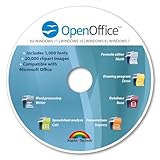
- THE ALTERNATIVE: The Office Suite Package is the perfect alternative to MS Office. It offers you word processing as well as spreadsheet analysis and the creation of presentations.
- LOTS OF EXTRAS:✓ 1,000 different fonts available to individually style your text documents and ✓ 20,000 clipart images
- EASY TO USE: The highly user-friendly interface will guarantee that you get off to a great start | Simply insert the included CD into your CD/DVD drive and install the Office program.
- ONE PROGRAM FOR EVERYTHING: Office Suite is the perfect computer accessory, offering a wide range of uses for university, work and school. ✓ Drawing program ✓ Database ✓ Formula editor ✓ Spreadsheet analysis ✓ Presentations
- FULL COMPATIBILITY: ✓ Compatible with Microsoft Office Word, Excel and PowerPoint ✓ Suitable for Windows 11, 10, 8, 7, Vista and XP (32 and 64-bit versions) ✓ Fast and easy installation ✓ Easy to navigate
Gem is available in two broad configurations:
- Gem + Your ATS: keeps the existing ATS and adds sourcing, outreach, scheduling, analytics, and CRM functions.
- Gem All-in-One: includes a built-in ATS as well as the CRM capabilities.
Pricing is generally customized using factors such as company size and selected modules. Gem also publishes a startup offer of $270 per month, or $130 per month with annual billing, for eligible companies with one to 10 full-time employees.
Choose Gem if: your team already has an ATS but is losing money and recruiter time by repeatedly sourcing people already present in its database.
Check before buying: ask whether AI seats, sourcing access, enrichment, scheduling, reporting, ATS functionality, and implementation are included in the quote.
2. Recruit CRM: best for small and midsize agencies
Recruit CRM combines ATS and CRM functions for recruitment agencies, executive-search firms, and permanent-placement businesses. It covers both sides of the agency model: finding candidates and developing client opportunities.
Recommended Free Tools
Notable features include a Chrome sourcing extension, AI resume parsing, AI candidate matching, GPT integration, email and calendar synchronization, email sequences, candidate and client deal pipelines, job-board posting, calling and recording, candidate submissions, Kanban views, reporting, and hiring-manager portals.
The published plans are Pro, Business, and Enterprise. Pro includes core sourcing, parsing, GPT integration, AI sourcing, unlimited open jobs, email and calendar sync, calling, reporting, and deal pipelines. Business adds features such as automated sequencing, bulk texting, multiple hiring pipelines, custom teams, SSO, and audit logs. Enterprise adds or includes advanced analytics, workflow automation, LinkedIn messaging, data enrichment, job multiposting, and Recruit Craft.
Recruit CRM supports Excel and CSV imports. Its paid migration service is estimated at 10–14 business days, although the final timetable depends on the size and condition of the source database.
Choose Recruit CRM if: you need one system for candidate records, client contacts, job pipelines, submissions, and sales activity without buying separate ATS and CRM products.
Quick wins for a faster PC:
Scan for outdated or missing drivers - takes under a minuteDriver Scan →Repair Windows errors before they cause bigger problemsFix Now →Rank #2
Watch the plan limits: AI matching, automated workflows, LinkedIn messaging, advanced analytics, data enrichment, and multiposting are not necessarily included in the lowest tier.
3. Bullhorn: best for staffing firms with operational depth
Bullhorn is most compelling for temporary staffing, contract staffing, and larger agencies that need recruiting connected to sales and operations. Its platform includes applicant tracking, resume parsing, client management, job posting, career portals, custom fields, workflows, LinkedIn integrations, an email sidebar, and recruitment sales functions.
Published core pricing lists:
| Plan | Published price | What to know |
|---|---|---|
| Starter | $99 per user per month | Core ATS functions, but not the complete CRM and automation package |
| Core | $165 per user per month | More ATS capability, but several advanced CRM features remain outside this tier |
| Pro | Quote required | Includes recruitment CRM sales pipeline, AI Assistant, automation, real-time analytics, and a dedicated account manager |
Separate middle-office components can add onboarding, timesheets, time interpretation, invoicing, billing, and pay-and-bill automation. These functions matter if the agency earns revenue from placing temporary workers and must manage the full employment and billing cycle.
Choose Bullhorn if: a missed timesheet, billing error, or compliance problem can cost more than the CRM subscription itself.
Important distinction: do not assume Starter or Core includes the full front-to-back Bullhorn platform. Confirm the price of sales CRM, automation, analytics, onboarding, and billing modules separately.
4. Loxo: best free-to-paid recruitment CRM
Loxo offers a genuine free ATS/Recruiting CRM starting point for one user. The free plan includes unlimited jobs and projects, importing, ATS functionality, and recruiting CRM capabilities. Access to personal contact information is an optional paid purchase.
The Basic plan costs $169 per user per month when billed annually. It adds sales CRM, organic job-board posting, resume parsing, multiple users, Chrome Extension access, reports, dashboards, analytics, and job-board posting. Professional adds Loxo Source, AI agents, Loxo Outreach, account-based prospecting, AI Notetaker, Loxo AI Chat, and a hiring-manager portal.
The CRM supports Boolean search, advanced filters, customizable views, activity history, duplicate-profile flags, and self-updating records. Recruiters can add people to jobs, campaigns, lists, or call queues.
Do these 3 things before closing this tab:
1Repair Windows errors before they cause bigger problems2Fix the driver behind crashes, sound loss and screen glitches3Clear out junk files and repair common Windows errorsRank #3
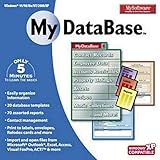
- Pre-designed templates for both business and personal use
- 10,000 clipart images and 100 fonts
- Notes table for history and to-do items
- Sort, filter and index
- Calculation & totaling
Choose Loxo if: you are an independent recruiter or small agency that wants to test the workflow before committing to a larger software budget.
Budget warning: the free plan is a one-user plan, not a free team deployment. Advanced sourcing, AI, outreach, and hiring-manager functions require a paid tier.
5. Manatal: best low-cost agency option
Manatal includes recruitment CRM features in every plan. Those features cover company and contact management, integrated email, revenue tracking, commercial analytics, notes, tasks, permissions, and candidate and client workflows. Its People-Match AI Chrome extension can import information from LinkedIn and LinkedIn Recruiter.
Annual-billing prices are published as follows:
| Plan | Price per user per month | Key limit or addition |
|---|---|---|
| Professional | $15 | 15 jobs and up to 10,000 candidates |
| Enterprise | $35 | Unlimited jobs and candidates plus workflow automation |
| Enterprise Plus | $55 | User groups, SSO, API access, priority support, and beta features |
Choose Manatal if: you need straightforward candidate and client management at a low recurring cost and do not require a deep enterprise implementation.
The $15 plan is not unlimited. Check job, candidate, automation, user-group, SSO, and API requirements before comparing it with more expensive platforms.
6. Zoho Recruit: best for budget customization
Zoho Recruit combines an ATS with candidate and client CRM features. It is especially practical for companies already using Zoho products or businesses that need custom fields, automation, portals, and integrations without enterprise-level pricing.
Capabilities include resume parsing, candidate sourcing, resume inbox, custom hiring pipelines, Blueprint and workflow automation, candidate and hiring-manager portals, candidate submissions, mass email, SMS and telephony integrations, assessments, scorecards, custom modules, permissions, and Zia candidate matching.
The current U.S. pricing structure lists:
| Plan | Annual price | Active-job allowance |
|---|---|---|
| Free | $0 | One active job per recruiter license |
| Standard | $25 per recruiter per month | 10 active jobs per recruiter |
| Enterprise | $50 per recruiter per month | 20 active jobs per recruiter |
Monthly billing is listed at $30 for Standard and $60 for Enterprise. Enterprise adds or includes AI candidate matching, candidate and staffing portals, Blueprint, advanced customization, recruitment automation, advanced analytics, custom reports, SMS and PhoneBridge, field-level security, and Google Meet and Microsoft Teams integrations.
Choose Zoho Recruit if: price, customization, and integration with a wider business-software ecosystem matter more than a highly specialized agency experience.
Do not overvalue the free edition: one active job per recruiter is a significant constraint for an agency handling multiple searches.
7. Beamery: best enterprise talent CRM
Beamery targets large, global organizations that need a skills-based talent ecosystem rather than a basic candidate database. It supports skills-based profiles, targeted talent pools, silver-medalist rediscovery, ATS and HCM integrations, AI-assisted workflows, global permissions, compliance automation, consent campaigns, multiple data-residency options, and LinkedIn CRM Connect.
Pricing and usage limits are available by request. Its terms describe possible limits involving contacts, users, and monthly email volume. LinkedIn CRM Connect may be available without an additional Beamery platform fee for customers that already have LinkedIn Recruiter seats, although the LinkedIn Recruiter subscription remains separate.
Free tools Windows power users keep installed
One-click scans. No signup required.
Choose Beamery if: your organization operates across countries, has complex privacy and permission requirements, and wants skills-based internal and external talent management.
What to look for in a recruitment CRM
A database of resumes is not automatically a recruitment CRM. A genuine CRM should manage relationships before, between, and after applications, including passive prospects, referrals, alumni, previous applicants, silver medalists, and client contacts.
- Searchable records: look for Boolean search, structured fields, tags, notes, activity filters, and duplicate detection.
- Complete relationship history: verify whether email, phone, SMS, LinkedIn, interview, submission, and consent activity stays attached to the record.
- Outreach controls: check templates, sequences, personalization, scheduling, unsubscribe handling, and engagement reporting.
- Rediscovery: test whether recruiters can find suitable previous applicants before buying new sourcing credits.
- ATS synchronization: ask whether stages, notes, rejection reasons, and candidate updates sync in both directions.
- Client collaboration: check for hiring-manager portals, submissions, feedback, approvals, and client activity tracking.
- Data maintenance: review enrichment, stale-record detection, duplicate handling, ownership rules, and record merging.
- Reporting: useful reports include source effectiveness, recruiter activity, conversion rates, time-to-fill, pipeline health, and agency revenue.
- Migration and export: confirm that the system can handle attachments, notes, tags, custom fields, ownership, job associations, consent history, and duplicate records.
- Security and compliance: examine role-based permissions, retention rules, consent management, audit logs, SSO, and data-residency options.
Common recruitment CRM buying mistakes
Confusing an ATS with a CRM
An ATS may handle applications and requisition stages very well while offering little support for passive-candidate engagement. During a demo, ask the vendor to show talent pools, long-term nurture, relationship history, rediscovery, and outreach—not just a candidate moving from application to hire.
Comparing only the advertised starting price
Feature placement varies considerably. Bullhorn places its recruitment sales pipeline, AI Assistant, automation, and real-time analytics in Pro. Recruit CRM places several advanced features in Enterprise or add-ons. Loxo reserves advanced sourcing and AI for Professional, while Manatal reserves unlimited jobs, workflow automation, SSO, user groups, and API access for higher plans.
PC Slower Than It Used to Be?
A free scan shows the junk files, broken settings and background clutter dragging Windows down - then fixes them in one click.Free scan · Windows 10 & 11Outdated Drivers Are Slowing You Down
One free scan finds every outdated or missing driver and matches the right update for your exact hardware.Free scan · exact hardware matchAssuming enrichment is always accurate
Enriched or self-updating records still need human review. Verify a person’s email address, phone number, job title, employment status, and outreach consent before sending a campaign.
Letting AI replace recruiter judgment
AI matching and resume parsing are screening aids, not final decisions. They may miss transferable skills, unconventional career paths, nonstandard job titles, career gaps, or context stored only in recruiter notes. Treat vendor performance statistics as marketing claims unless independently tested.
Migrating only names and resumes
A useful migration may also need historical emails, call activity, notes, attachments, tags, ownership, client relationships, consent records, and source attribution. Ask for a sample migration using a copy of your actual data before signing a long contract.
Ignoring staffing back-office requirements
Direct-hire recruiting and temporary staffing have different software needs. If your business requires timesheets, payroll coordination, invoicing, billing, or pay-and-bill automation, evaluate those features separately rather than assuming a standard ATS/CRM includes them.
Overlooking usage limits
Review recruiter versus hiring-manager seats, active-job limits, contact limits, email volume, AI usage, enrichment credits, job-board credits, SMS and calling charges, data retention, API access, SSO, and audit logs. These limits can change the real monthly cost more than the advertised seat price.
How to choose the right system
- Define the operating model: separate in-house recruiting, permanent placement, and temporary staffing requirements.
- Count the real users: include recruiters, sales staff, coordinators, hiring managers, and administrators who need access.
- List must-have integrations: identify your ATS, HCM, email, calendar, job boards, telephony, LinkedIn, payroll, and accounting tools.
- Calculate the full cost: include implementation, migration, extra modules, AI credits, enrichment, SMS, calls, job postings, and annual price increases.
- Test a realistic workflow: import a candidate, match them to a job, send an outreach sequence, record a reply, submit them to a client, and export the record.
- Check the exit plan: confirm how quickly you can export candidates, notes, activity, attachments, consent records, and custom fields if you leave.
FAQ
What is the best recruitment CRM overall?
There is no universal winner. Gem is the strongest choice for in-house proactive recruiting, Recruit CRM is well suited to small and midsize agencies, and Bullhorn is better for staffing firms that need recruiting connected to operational and billing workflows.
What is the best free recruitment CRM?
Loxo offers a genuine free ATS/Recruiting CRM plan, but it is limited to one user. Zoho Recruit also has a free edition, although it permits only one active job per recruiter license.
What is the difference between an ATS and a recruitment CRM?
An ATS primarily manages applicants and open requisitions. A recruitment CRM also manages passive prospects, previous applicants, referrals, alumni, nurture campaigns, relationship history, and often client-development activity.
What’s actually slowing this PC down?
Pick the symptom - the matching free tool is one click away.
How much does recruitment CRM software cost?
Published examples range from free plans to $15 per user per month for Manatal Professional, $25 per recruiter per month for Zoho Recruit Standard with annual billing, $99 per user per month for Bullhorn Starter, and $169 per user per month for Loxo Basic with annual billing. Enterprise products such as Gem and Beamery generally use custom pricing.
The Bottom Line
Gem is the best recruitment CRM for an in-house talent-acquisition team focused on passive candidates and ATS-connected nurture. Recruit CRM is the best general choice for a small or midsize permanent-placement agency. Bullhorn makes more sense for temporary staffing firms that need recruiting, sales, operations, and billing connected. Choose Loxo for a free one-user starting point, Manatal for low-cost agency basics, Zoho Recruit for budget customization, and Beamery for global enterprise talent management.
Before buying, compare the complete cost—not just the seat price—and test migration, permissions, integrations, outreach limits, and data export using your own recruiting workflow.
Quick Recap
Product prices and availability are accurate as of the date/time indicated and are subject to change. Any price and availability information displayed on Amazon at the time of purchase will apply.




