The best LinkedIn Articles do not win because they are the longest or because they follow a secret algorithm formula. They work because they give one professional audience a useful, credible answer to one meaningful question. Choose the right format, lead with a specific point of view, make the piece easy to scan, and distribute it with context rather than dropping a bare link.
This guide covers the current LinkedIn Article workflow, including format selection, topic research, structure, word count, visuals, SEO settings, publishing, promotion, analytics, AI-assisted writing, paid distribution, ownership, and troubleshooting. Platform details are current to August 10, 2026; LinkedIn’s interface and feature availability can change.
As an Amazon Associate I earn from qualifying purchases.
What is a LinkedIn Article?
A LinkedIn Article is native, long-form content published from an individual profile or an eligible LinkedIn Page. It is designed for professional expertise, analysis, commentary, lessons, trends, case studies, and practical guidance. Unlike a feed update, an Article can support a more structured argument and remain useful in a profile’s Activity area after the initial publication.
Do these 3 things before closing this tab:
1Repair Windows errors before they cause bigger problems2Fix the driver behind crashes, sound loss and screen glitches3Clear out junk files and repair common Windows errorsLinkedIn’s editor supports formatting such as bold and italic text, ordered and unordered lists, blockquotes, dividers, links, code, images, videos, and embeds. The current technical limit is 125,000 characters. A standard LinkedIn post is limited to 3,000 characters, making it better suited to a short idea, question, update, or distribution message. LinkedIn documents the distinction between formats in its post and Article guidance.
#1 Best Overall

- Please Note: It is NOT an e-ink Tablet, it is a Normal Android Tablet. The XPPen digital notetaking tablet comes with an X-key, you can choose between Monochrome LCD, Light Color, and Nature Color modes with one press. 3 color modes can meet all kinds of needs
- AG Nano-Etched Display: This 10.95-inch tablet features an AG nano-etched LCD screen equipped with TCL NXTpaper 3.0 technology, which reduces up to 95% of ambient light interference and delivers a Immersive visual experience. Please note: Since our product achieves paper-like texture and anti-glare functionality through AG etched glass technology, it differs fundamentally from E Ink screens in visual appearance
- 90Hz High Refresh Rate: The digital notebook is designed with a 90Hz refresh rate ensuring every frame of the image without page turn lag or ghosting, bringing you smoothness and clarity display. It also supports the display of 16.7 million colors, a brightness of 400 nit, and minimum brightness, offering a high-quality image for a comfortable reading and writing experience
- Pencil Upgraded for Noting: The XPPen electronic note-taking tablet is powered by the X3 Pro smart chip, the X3 Pro Pencil 2 features 16K sensitivity and a soft pen nib, which help you achieve varied annotation effects in both stroke thickness and color depth based on writing pressure, making your key content stand out at a glance. The magnetic suction and customized shortcut key enhance your productivity and convenience
- Native Note-taking App: XPPen Notes enables you to enjoy seamless note-taking with permanent membership. It supports converting handwriting to text, recording sound, importing and editing PDF files, selecting multiple pen brushes, an AI assistant, waking up the XPPen Notes with one click, saving your notes automatically, and you can choose to upload them to OneDrive or Google Drive, and so on. If you upgrade the system to 1PAE, you can enjoy the new AI Notes functions, which include summarizing the PDFs you upload, converting the key points of AI Notes into flashcards, and pressing the quiz function from AI Notes
Older coverage may call LinkedIn Articles Pulse, or use the word Article when it actually means a Newsletter edition. The distinction matters: an Article is usually a standalone piece, while a Newsletter is a recurring series that members can subscribe to and receive notifications about. LinkedIn’s current format definitions are summarized in its publishing guidance.
Article, post, Newsletter, or external blog?
Do not publish an Article simply because the topic is important. First decide what the reader and the business actually need.
| Format | Best use | Main trade-off |
|---|---|---|
| Feed post | A timely idea, short lesson, question, conversation starter, announcement, or excerpt from deeper content. | Fast and conversational, but limited to 3,000 characters and less suitable for a detailed evergreen resource. |
| Article | Evergreen analysis, a practical guide, case study, framework, detailed opinion, or professional explanation. | Provides structure and a durable portfolio asset, but requires more research and does not guarantee distribution. |
| Newsletter | A repeatable series about one recognizable topic for an audience that wants continuing editions. | Can build subscribers and notifications, but creates an ongoing publishing commitment. |
| External blog article | A definitive company resource, search-focused guide, lead-generation asset, or content that needs extensive ownership and conversion control. | Offers greater control over design, analytics, internal links, forms, and governance, but needs separate promotion on LinkedIn. |
Use an Article when the idea needs more than a short update, is likely to remain useful for months, and is supported by real experience, evidence, examples, or a defensible point of view. It is particularly useful for consultants, executives, subject-matter experts, job seekers, personal-finance professionals, and B2B marketers building an authority portfolio.
Use a post when the subject is timely, the goal is discussion, or you want to test an angle before investing in a full Article. A high-quality post can reveal which question or example deserves deeper treatment.
Use a Newsletter only when you can maintain a recognizable subject and a realistic cadence. LinkedIn currently says members can create up to five Newsletters, but the limit is less important than whether readers can anticipate useful future editions. A single excellent Article is often better than an inconsistent Newsletter. See LinkedIn’s Newsletter eligibility and limits and creation guidance.
Use an external site for the definitive version when you need control over navigation, structured data, internal linking, redirects, first-party analytics, email capture, or a conversion path. A practical hybrid is to publish the owned resource on your site and create an adapted LinkedIn Article with useful standalone content and a relevant link. Do not blindly duplicate employer-owned, client-owned, or third-party material.
Choose one audience and one reader problem
The most important editorial decision is not the number of headings or the publishing day. It is the fit between the topic, the audience, and the author’s authority.
Start with a one-sentence brief:
For [specific professional audience], this Article explains [one problem, decision, trend, or question] so they can [specific outcome].
Strong topics commonly answer questions such as:
- What should professionals in this field understand now?
- What problem is repeatedly misunderstood?
- What did the author learn from a difficult project, decision, or failure?
- What process or checklist can readers apply?
- What industry change needs explanation?
- What widely repeated claim is incomplete or wrong?
- What original data, research, benchmark, or field observation can be interpreted responsibly?
Score a possible topic from one to five on each of these criteria:
- Audience relevance: Is there a clearly identifiable group that needs this?
- Author authority: Does the author have experience, access, expertise, or a legitimate perspective?
- Practical usefulness: Will the reader know what to do next?
- Evidence: Are there examples, sources, data, or observations to support the argument?
- Distinctiveness: Does the Article add something beyond generic advice?
- Career or business relevance: Does it support a real professional objective?
- Shelf life: Is it evergreen, timely, or deliberately both?
For example, The Importance of Financial Literacy is too broad to promise a useful reading experience. A sharper angle would be Why New Investors Misread Emergency Funds—and a Three-Bucket Method for Choosing the Right Cash Reserve. The second topic names a problem, an audience, and a usable framework.
LinkedIn’s own writing and topic guidance emphasizes specific expertise, professional opinions, industry problems, career advice, and commentary on future trends. Those are starting points, not substitutes for an original angle.
Windows Errors? Fix Them Before They Spread
Repair common Windows errors and clear accumulated junk for a smoother, more stable PC - no reinstall needed.Free scan · no reinstallOutdated Drivers Are Slowing You Down
One free scan finds every outdated or missing driver and matches the right update for your exact hardware.Free scan · exact hardware matchResearch the Article before drafting
A professional Article should make clear what is firsthand experience, what is sourced evidence, and what is interpretation. That distinction is especially important for personal finance, investing, employment, tax, insurance, legal, medical, and other high-stakes subjects.
- State the central claim. Write the argument in one sentence before collecting links.
- Define the reader’s current problem. Identify what the audience misunderstands, cannot decide, or needs to do.
- Gather primary evidence. Prefer official data, original research, regulatory material, company documentation, direct interviews, and dated reports.
- Check scope. Verify the date, geography, population, industry, edition, and definitions behind every statistic or benchmark.
- Attribute outside ideas. Link or name the person, organization, study, or source near the claim it supports.
- Separate evidence from interpretation. Tell readers which point is documented and which point is your conclusion.
- Include limitations. Explain exceptions, uncertainty, or circumstances in which the framework should not be used.
- Synthesize rather than collect. An Article should add judgment and explanation; it should not be a list of links with a personal introduction.
If you have no original research, you can still write a strong Article using firsthand observations, anonymized examples, transparent synthesis of primary sources, or a clearly labeled opinion. What you should not do is manufacture statistics, imply access to private data, or present one company’s benchmark as a universal LinkedIn rule.
Rank #2
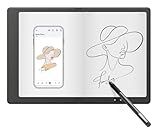
- Brings Handwriting Joy to The Digital Age: Smart digital note-taking with seamless sync on the writing tablet. Write naturally with XPPen Note Plus, and watch your lecture notes, meeting records, or anytime sketching idea appear instantly on your phone
- Real Paper & Dedicated Ink Pen: Write on real A5 paper with the exclusive matching ink pen only (no electronic screen). Every stroke will instantly sync to your phone via stable Bluetooth 5.3
- No More Scanning and Losing Notes: Featuring Bluetooth 5.3 for a stable connection, this digital notebook combines EMR technology with 8192 levels of pressure sensitivity to accurately capture every stroke for smart sketch creation and smooth writing
- Swap The A5 Notebook Inner Core At Will: Any A5-sized core ≤ 8mm thick is fully compatible-whether you dislike the original paper style or need a replacement when it's full, reducing waste as you're never locked into expensive refills. Write, draw, and digitize with the paper you already love
- Flexible Note Management: Built-in editing tools including brushes, highlighters, colors and page management, support tagging and quick search. Re-edit notes freely and highlight key ideas, with Google Cloud storage offering secure backup for easy access anytime with no storage limits to worry about
Write a headline that earns the right click
LinkedIn’s Sharing Guide says headlines matter and suggests asking whether you would click the headline during a busy day. The best test is not whether a headline sounds clever; it is whether the promise is specific, credible, and fulfilled by the Article. Review the LinkedIn Sharing Guide for its current editorial recommendations.
A strong headline:
- Names the subject clearly.
- Signals the intended reader or outcome.
- Uses concrete language.
- Makes the scope visible.
- Includes an important keyword naturally when search discovery matters.
- Avoids inflated promises and sensational claims.
- Matches the Article rather than merely attracting a click.
Useful patterns include:
- How to [achieve an outcome] without [common problem]
- The [number]-step framework for [specific audience]
- What [audience] should know about [change or trend]
- [Topic]: A practical guide for [audience]
- Why [common assumption] fails—and what to do instead
- Lessons from [specific experience] that apply to [professional problem]
Do not rely on a rigid headline character count as a performance guarantee. Display space, mobile truncation, audience familiarity, search intent, and specificity all matter more than a universal formula.
The Tool Desk
Outbyte PC Repair FREERepair Windows errors before they cause bigger problemsFix Now →Outbyte Driver Updater FREEFix the driver behind crashes, sound loss and screen glitchesFind Drivers →Open with the answer, not a long preamble
The opening should quickly tell readers:
- What the Article is about.
- Why the issue matters.
- Who should care.
- What the reader will learn or be able to do.
- What the author’s central point is.
A dependable opening sequence is:
- State the problem or tension.
- Explain why common advice is incomplete.
- Give the central answer.
- Preview the framework or steps that follow.
For example:
Most LinkedIn Article advice focuses on headline tricks and posting frequency. The more important decision is whether the topic deserves an Article at all. This guide explains when to use an Article instead of a post, how to structure one for real readers, and how to measure whether it reached the right professional audience.
An At a glance or Key takeaways box can help busy readers, but it should summarize the actual Article. Do not use it to repeat vague claims about visibility or personal branding.
Structure the Article for busy professional readers
A strong default structure is:
- Specific headline
- Relevant cover image or video
- Direct opening
- Key takeaways, when the subject is complex
- Why the topic matters
- Main framework, process, or argument
- Examples, evidence, or a case study
- Exceptions and trade-offs
- Action checklist
- Conclusion and next step
- Specific conversation prompt
- Author context or credentials, where it helps readers assess the perspective
Use short paragraphs, descriptive subheadings, numbered steps for processes, bullets for criteria, and examples immediately after abstract advice. Put links close to the claims they support. End with a practical action rather than a vague statement that readers should simply share their thoughts.
LinkedIn’s current Article editor does not support inserting tables. The comparison table in this web guide is useful for planning, but if you are writing inside LinkedIn, convert it into headings, bullets, or an image. Do not paste a complex table and assume it will render correctly. The current LinkedIn media and editor guidance lists the available content types and limitations.
How long should a LinkedIn Article be?
There is no single ideal word count. LinkedIn’s official materials provide two different directional signals:
- The Sharing Guide recommends approximately 500–1,000 words.
- A June 2026 LinkedIn marketing article suggests 800–1,200 words for evergreen Articles and detailed analysis.
- LinkedIn’s technical limit is 125,000 characters, not a required target.
The sensible editorial rule is to write the shortest Article that fully answers the question:
- 500–800 words: One focused lesson, professional opinion, or practical explanation.
- 800–1,200 words: Most evergreen guides, frameworks, and pieces of thought leadership.
- 1,200–2,000 words: Complex, evidence-heavy, comparative, or process-oriented subjects.
- More than 2,000 words: Appropriate only when the depth is genuinely necessary and the navigation is strong.
Do not pad a 700-word answer to reach 2,000 words. Conversely, do not cut essential evidence from a complex financial or professional topic simply to hit a benchmark. Test length against qualified reading, comments, shares, clicks, and outcomes—not just views.
Use visuals, media, and accessibility features
LinkedIn’s current media guidance recommends a cover image of 1,920 × 1,080 pixels, cropped to a 16:9 ratio. JPEG, JPG, PNG, and WEBP are supported for cover images. GIFs can no longer be used as cover photos, although GIFs are supported for in-Article images. LinkedIn also supports video covers and in-Article video, including captions and thumbnails. Because an older LinkedIn FAQ lists 2,000 × 600 pixels, use the newer media-specific guidance and check the editor’s crop before publishing.
What’s actually slowing this PC down?
Pick the symptom - the matching free tool is one click away.
LinkedIn’s Sharing Guide says Articles with cover photos tend to receive more engagement than Articles without them. That is LinkedIn’s own guidance, not proof that a cover image independently causes better results. Use a visual because it clarifies the subject and improves the reading experience, not as a substitute for a strong idea.
Good media choices include:
- An original diagram explaining a process.
- A clearly labeled chart with its source and date.
- A screenshot that demonstrates a step.
- A relevant photograph from the project or experience being discussed.
- A short video that adds information rather than repeating the text.
Keep important text away from crop-sensitive edges and avoid generic stock photos when a specific visual would make the argument clearer. Add alt text to informative images. LinkedIn allows alt text for images shared in the feed or embedded in Articles, helping screen-reader users understand the image; see its accessibility guidance. Caption videos, credit third-party media, and do not use a visual that implies evidence the Article does not contain.
Use LinkedIn’s SEO settings—but do not promise rankings
In the Article editor, open Manage → Settings to customize the Article URL, SEO title, and SEO description. LinkedIn’s current documentation says:
Rank #3

- A digital notebook for all your writing needs - Replace your stack of notebooks with a single device purpose-built for writing, reading, and thinking. No notifications or social media.
- With AI tools to transform your notes - Convert messy handwriting into readable font, summarize your notes, and change their length and tone with built-in AI notebook tools.
- Feels like pen on paper - See, feel and hear your thoughts meet the page with every stroke of the Premium Pen. No need to set up or charge, just start writing.
- Easily import and mark up documents - Import documents and PDFs using Send to Kindle, and mark them up directly on the page.
- Capture insights as you read – Just start writing on a book's page and Active Canvas will create space for your notes. Expand the margins to add more notes, or collapse them to see the original page.
- SEO titles longer than approximately 60 characters may be truncated.
- SEO descriptions should summarize the Article, use relevant keywords naturally, and aim for approximately 140–160 characters.
- The SEO title can differ from the visible Article headline.
Use the visible headline to earn the right reader’s click. Use the SEO title to state the topic concisely. Use the SEO description to explain the reader outcome. Set the URL carefully before publishing and avoid changing it casually afterward. LinkedIn’s SEO settings guidance explains the available controls.
Free tools Windows power users keep installed
One-click scans. No signup required.
These settings improve control over a search snippet; they do not guarantee indexing, search rankings, LinkedIn discovery, AI citations, traffic, or conversions. The reviewed LinkedIn documentation describes an Article URL, SEO title, and SEO description, but does not document a user-controlled canonical URL field. Do not claim that LinkedIn Articles offer the same canonical-management options as a website you control.
LinkedIn’s 2026 marketing material also makes directional claims about LinkedIn content appearing in AI-search results, including an analysis suggesting that Articles represent a substantial share of referenced LinkedIn content and that detailed Articles can improve discoverability compared with posts alone. These are claims from LinkedIn and its cited research, not independently established guarantees; the public methodology is not sufficient to treat the figures as universal benchmarks. Clear, original, well-sourced writing is a better strategy than writing for a supposed AI-search trick.
Step by step: publish a LinkedIn Article
Article publishing is currently a desktop or web-browser workflow. LinkedIn says it is not available in the mobile app, although the editor can be accessed through the desktop site or a browser on a tablet.
- Open LinkedIn on a desktop computer or supported web browser.
- At the top of the homepage, click Write article in the share box.
- If you are publishing for an organization, choose Publish as and select the personal profile or Page account. Page publishing depends on having the appropriate Page super admin or content admin role.
- Choose an individual Article, or select a Newsletter edition if you are publishing within an existing Newsletter.
- Upload the cover image or cover video.
- Enter the Article title and write the body.
- Add links, images, video, code, embeds, lists, quotes, or dividers as needed.
- Add alt text to informative images.
- Open Manage → Settings and set the Article URL, SEO title, and SEO description.
- Use Preview to inspect the layout.
- Use Share draft if a colleague or editor needs to review it. Shared drafts can be viewed only by LinkedIn members who are logged in.
- Click Next.
- In Tell your network what your article is about, write optional commentary that explains the value of the Article.
- Publish immediately, or use the scheduling control if it is available for your account.
- After publication, share the Article with a useful summary or question rather than relying on the Article page alone.
LinkedIn’s current Article publishing instructions cover the editor, Page selection, draft sharing, settings, preview, comments, and publication controls. Interface labels may vary during feature rollouts.
Quick wins for a faster PC:
Fix the driver behind crashes, sound loss and screen glitchesFind Drivers →Repair Windows errors before they cause bigger problemsFix Now →Scan for outdated or missing drivers - takes under a minuteDriver Scan →Promote the Article without spam
Publishing is not distribution. A useful Article still needs a reason for the right people to open it.
- Publish the Article.
- Write a companion feed post. Summarize the problem, identify the intended reader, and share one meaningful takeaway.
- Ask a specific question. Invite an experience, disagreement, or example that is genuinely related to the Article.
- Reply to substantive comments. Add evidence, clarify an exception, or extend the discussion instead of replying only with thanks.
- Reuse the ideas, not the identical promotion. Turn individual findings into later posts, short videos, email material, or a follow-up Article.
- Distribute through relevant channels. Share it in an email, on an owned website, in an appropriate professional community, or through other social channels when the audience fit is real.
LinkedIn supports sharing an Article to the feed with your thoughts, sending it by message, copying its link, and sharing it elsewhere. Its current sharing instructions describe these options.
LinkedIn’s marketing guidance also recommends topical consistency, cross-channel links, creator partnerships, and paid Article or Newsletter Ads. Treat any suggested cadence—such as publishing one Article and several posts each week—as an operating option, not a universal rule.
Avoid mass-tagging unrelated people, empty requests for agreement, automated comments, engagement pods, repetitive copy-and-paste promotion, and unrelated keyword-comment tactics. LinkedIn says coordinated engagement pods and automated comments can reduce distribution or result in account restrictions, while its Professional Community Policies prohibit artificial engagement and spam. LinkedIn’s 2026 statement on authentic content and conversations explains the current emphasis on genuine participation.
Recommended Free Tools
When paid Article Ads make sense
Organic distribution should be tested before spending money. If an Article is useful, audience-specific, and aligned with a measurable objective, Article Ads can extend its reach to a targeted audience.
LinkedIn says Article Ads support Brand Awareness, Engagement, and Lead Generation objectives. They can use a Lead Gen Form with an Unlock Article call to action. Newsletter Ads currently support Brand Awareness and Engagement, but not Lead Generation. Review the current Article and Newsletter Ads documentation and the requirements and limitations before planning a campaign.
LinkedIn reports that Article Ads in the feed saw 2.3 times higher click-through rate and 1.4 times higher engagement rate than Single Image Ads linking to a third-party article. This is a LinkedIn-reported advertising comparison, not independent evidence that every native Article will outperform every external article.
Paid distribution is appropriate when the audience is defined, the Article has passed a quality review, the objective is clear, and downstream results can be measured. It should not be used to compensate for a generic headline, weak content, poor audience fit, or an unclear offer.
Use AI as an assistant, not as the author
LinkedIn permits responsible AI assistance, but its guidance says the finished content should reflect the author’s own voice, perspective, and experience. The author remains responsible for accuracy and originality.
Rank #4

- THE ULTIMATE PAPER TABLET – For the first time on a reMarkable paper tablet, you can write, sketch, and read in color. Ultra-slim and portable, but with a full-size 11.8” color display, adjustable reading light, and an unmatched paper-like writing experience.
- WHAT’S IN THE BOX – You’ll find reMarkable Paper Pro, a digital notebook for unprecedented paper-like writing with 11.8” Canvas Color display; Marker Plus, the reMarkable pen with built-in eraser; 6 spare Marker tips
- PAPER-LIKE WRITING – Designed to work exclusively with the groundbreaking color display to deliver realistic friction and natural writing feel, the included Marker Plus offers precise control, incredible responsiveness, and all-day comfort.
- ALL YOUR WORK, ORGANIZED – Sort your notes and documents with folders and tags, write directly on PDFs, and instantly convert handwriting to typed text. Everything's in one place and easy to find.
- READ IN COMFORT, DAY OR NIGHT – Unlike most laptops and phones, reMarkable Paper Pro has a low-glare display that reflects natural light, so you can read without eye-strain, even outside. An adjustable reading light means you can keep working when the lights go out, too.
Useful AI-assisted tasks include brainstorming angles, organizing an outline, turning a transcript into a draft, identifying repetitive wording, checking clarity, and suggesting questions a skeptical reader might ask. The high-risk tasks are allowing a tool to invent examples, statistics, sources, quotations, credentials, or personal experiences.
Before publishing AI-assisted work:
- Fact-check every factual claim against primary or authoritative sources.
- Open and verify every citation and link.
- Replace generic language with specific experience, evidence, and judgment.
- Remove invented anecdotes and unsupported certainty.
- Check that the voice sounds like the actual author.
- Disclose substantial AI use when it is not obvious, consistent with LinkedIn’s AI-assisted content guidance.
LinkedIn does not say that every AI-assisted Article is penalized. Its current position is directed at generic, repetitive, low-value content that provides little original insight. The solution is not to hide AI use; it is to add genuine expertise, useful evidence, and accountable editorial judgment. LinkedIn’s June 2026 statement on keeping conversations real provides its current policy context.
Independent reader supportYour contribution helps us test, update, and keep practical guides available for everyone.Measure whether the Article worked
Define success before publication. An Article intended to build authority should not be judged by the same metrics as an Article intended to generate leads.
Free tools Windows power users keep installed
One-click scans. No signup required.
| Objective | Useful metrics | What to ask |
|---|---|---|
| Authority | Qualified reach, relevant comments, saves, shares, profile activity, and professional messages. | Did the right people find and trust the idea? |
| Audience development | Follower growth, demographic fit, repeat engagement, and Newsletter subscriptions where relevant. | Is the content attracting the intended audience? |
| Website traffic | Link clicks, tagged sessions, engaged sessions, and conversions. | Did LinkedIn send useful visitors to the right destination? |
| Lead generation | Qualified inquiries, form completions, booked calls, and assisted conversions. | Did the Article contribute to a business outcome? |
| Newsletter growth | Subscriptions, edition reach, and repeat readers. | Is this subject sustainable as a series? |
| Content learning | Questions, objections, examples, and sections that generated meaningful response. | What deserves a follow-up Article or post? |
Individual Article analytics can include discovery, in-network and out-of-network activity, profile activity, Article performance, social engagement, link engagement, and viewer demographics. LinkedIn says Article-specific analytics are available for two years. It also notes that your own views and engagements are included, and that demographic data is unavailable for content shared only with connections or in Groups. See LinkedIn’s individual content analytics documentation.
For Pages, LinkedIn documents impressions, members reached, clicks, reactions, comments, reposts, engagement rate, and demographic percentages for visitors to Page Articles or video posts. Some Page metrics can take up to 48 hours to appear, while reactions and comments may update in real time; see the Page analytics guidance.
Interpret the numbers carefully:
- Impressions are not unique readers.
- High views do not prove authority or commercial impact.
- Demographic estimates may be imprecise.
- A small audience of relevant professionals can be more valuable than a large general audience.
- Compare an Article with your own previous Articles on similar subjects, not with an unrelated viral post.
If the Article links to your site, use tagged URLs and measure engaged sessions and conversions in your own analytics. A click is useful evidence of interest, but it is not the same as a qualified lead or a completed action.
Ownership, republishing, and promotional boundaries
LinkedIn says authors retain rights to their original Articles, but writers must have permission to use third-party material. That includes photographs, charts, quotations, research, client examples, employer-owned content, and material copied from another publication. Review LinkedIn’s Publishing Platform Guidelines before republishing a company or client article from a personal account.
Republishing your own blog content can be reasonable, but decide which version is strategically important. Put a conversion-critical, frequently updated, or governance-sensitive resource on the owned website. On LinkedIn, publish an adapted version with a native introduction and enough useful content to stand on its own. Do not claim that LinkedIn’s SEO fields provide the same canonical, redirect, archive, and first-party analytics controls as your own site.
Also avoid turning an Article into a direct advertisement. LinkedIn’s publishing guidelines say advertisements and promotions for events, products, and services are not appropriate Article content. Educate, explain, analyze, or share expertise in the Article; use a suitable post, Page update, landing page, or advertisement for the direct commercial pitch.
Troubleshooting and common failure modes
The Write article option is missing
Confirm that you are using LinkedIn on desktop or the web rather than the mobile app. If publishing for a Page, confirm that you have the necessary Page administrator role. Availability can also vary by account and feature rollout. LinkedIn’s current publishing help page is the best place to check if the labels have changed.
The title or editor fields are not clickable
LinkedIn specifically identifies browser extensions such as Grammarly and Lazarus as possible causes. Disable the extensions, refresh the page, and try again in a current browser or a private window.
Recommended Free Tools
The cover image is cropped badly
Use the current 1,920 × 1,080, 16:9 recommendation, keep important text and faces near the center, and inspect the preview. Do not design to the older 2,000 × 600 FAQ size without checking how the current editor displays it.
The Article needs a table
Tables are not currently supported in the Article editor. Convert the information to bullets, numbered comparisons, a readable image with alt text, or a link to a table on your owned site.
Best Value
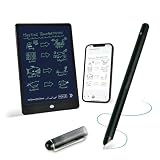
- 【Free APP-Ophaya Pro+】 Write naturally on the included writing board with the smart pen, and instantly sync every stroke, note, and drawing to your phone via the Ophaya Pro+ app. No delays, no missing details – just real-time precision.Compatible with iOS and Android smartphones.
- 【OCR Handwriting Recognition/Searchable】Handwritten text can be converted to digital text, which can then be shared as a word document. Handwritten notes can be searched by using keywords, tags.,making it easier to find specific information.
- 【Multiple note file formats for storage and sharing】 PDF/Word/PNG/GIF/Mp4 (Note: Multiple PDF and png files can be combined before sharing).
- 【Audio Recording】After successfully connecting the smart pen to the app, you need to enable the recording feature in Ophaya Pro+ App, or notebook's/writing board’s control. The phone's microphone will capture audio while you write, and you can then click the playback button in the app to review or download the recording.(NOTE:The smart pen itself does not have a built-in recording function. )
- 【Offline Storage】This feature allows you to continue writing and saving content even when not connected to your phone. Once reconnected, the saved content will automatically upload to the app, which is especially useful for preventing the loss of key information during work or class, helping you review important details later.
A colleague cannot review the draft
Shared drafts can be viewed only by logged-in LinkedIn members. Send the draft link to a LinkedIn member, or use an external document for review if non-members need access.
The Article receives little reach
Do not immediately conclude that Articles do not work. Check the audience fit, headline, opening, cover image, profile and Article visibility settings, companion post, comment responses, and whether the content was generic, promotional, repetitive, or too narrowly timed. LinkedIn says Article visibility and distribution depend on settings, relevance, and community engagement—not one guaranteed tactic. Review its Article visibility guidance.
Quick wins for a faster PC:
Repair Windows errors before they cause bigger problemsFix Now →Fix the driver behind crashes, sound loss and screen glitchesFind Drivers →The Article gets views but no business result
Possible explanations include attracting the wrong audience, answering a low-intent question, using a vague call to action, linking to a poorly matched destination, or measuring attention without measuring qualified actions. An awareness Article may be doing its job even when it is not a direct-response asset; define the intended role before judging it.
The published Article needs a correction
Edit it from the Articles area of Posts & Activity, then choose Update. LinkedIn says connections are not notified of edits, no edited label is shown, and the original version is no longer available. Keep a final copy outside LinkedIn if version history or regulatory records matter; see the Article editing guidance.
Comments become hostile or misleading
Respond to substantive disagreement with evidence and clarification. Moderate professionally, protect private information, and remove or report material that is abusive or violates policy. Authors can disable comments on published Articles, but thoughtful criticism should not be removed merely because it is unfavorable.
Pre-publication checklist
- One clearly defined professional audience.
- One central question, problem, trend, or decision.
- A clear reader outcome.
- Original expertise, attributed evidence, or a transparent synthesis.
- A specific headline that matches the Article’s promise.
- A direct opening that explains why the topic matters.
- Scannable headings, short paragraphs, lists, and examples.
- A relevant 16:9 cover image or video.
- Alt text for informative images.
- Checked links, sources, quotations, permissions, and image credits.
- SEO title and description completed in Manage → Settings.
- Preview reviewed before publication.
- Companion feed commentary prepared.
- A specific question ready for discussion.
- A measurement plan tied to the objective.
- No unsupported statistics, exaggerated promises, artificial engagement, automated comments, or copied material without permission.
A repeatable Article-to-post workflow
A sustainable system separates creation from distribution:
- Find the question: Use recurring client questions, reader objections, project lessons, industry changes, or a post that generated unusually thoughtful discussion.
- Choose the format: Test a timely angle as a post; develop it into an Article if readers need a durable explanation; make it a Newsletter edition only if it belongs to a repeatable series.
- Research and draft: Build the argument around evidence, examples, limitations, and a practical framework.
- Publish natively: Complete the cover, alt text, settings, preview, and visibility checks.
- Distribute with context: Write a companion post that explains who should read the Article and why.
- Listen: Treat meaningful comments and objections as research for the next piece.
- Measure: Compare qualified audience, profile activity, clicks, subscriptions, leads, and downstream outcomes against the original objective.
This workflow builds a library of useful professional ideas without requiring every topic to become a long-form Article or every Article to be forced into a Newsletter.
Frequently Asked Questions
Can I publish a LinkedIn Article from the mobile app?
Not according to LinkedIn’s current help documentation. Use LinkedIn on a desktop computer or a supported web browser; a tablet browser may also provide access to the editor. The mobile app does not currently offer Article publishing.
What is the best word count for a LinkedIn Article?
There is no guaranteed optimum. LinkedIn’s current materials suggest approximately 500–1,000 words in its Sharing Guide and 800–1,200 words for evergreen Articles and detailed analysis in a June 2026 marketing article. Use the shortest length that fully answers the reader’s question.
Should I publish my blog article as a LinkedIn Article too?
You can republish content you or your organization owns or have permission to use. A hybrid approach is often strongest: keep the definitive, conversion-critical resource on your website and publish an adapted, useful LinkedIn version with a relevant link. Do not assume LinkedIn provides the same canonical and analytics controls as an owned site.
Why did my LinkedIn Article get views but no leads?
The Article may have attracted the wrong audience, answered a low-intent question, used a vague call to action, or sent readers to a poorly matched destination. Views measure exposure, not business impact. Compare qualified audience, link clicks, engaged sessions, inquiries, and conversions with the objective you set before publishing.
Does using AI prevent a LinkedIn Article from being distributed?
LinkedIn does not say that all AI-assisted content is penalized. Its current guidance focuses on generic, repetitive, low-value content. Use AI for outlining, editing, or transcription if useful, but verify facts, remove invented material, add firsthand expertise, and ensure the final Article represents the author’s voice and judgment.
The Bottom Line
Bottom line: Publish a LinkedIn Article when one professional audience needs a detailed, durable answer and you can provide genuine expertise or well-attributed evidence. Keep it focused, scannable, accessible, and honest about uncertainty. Set the available SEO fields, promote it with an original companion post, avoid artificial engagement tactics, and judge success by qualified actions—not by raw views or a supposed magic word count.




