
Some links on this page are affiliate links: if you buy through them we may earn a commission, at no extra cost to you.
As of August 10, 2026, typical U.S. HELOC rates are about 7.2% to 7.5%, but the lowest public offers can be below the current 6.75% prime rate. There is no single best HELOC for every homeowner: your rate depends on credit, combined loan-to-value ratio, income, property, state, lien position, line size, and lender relationship.
Among the offers reviewed, Third Federal is worth investigating for the lowest clearly posted ongoing rate, while Alliant combines a very low introductory rate with a competitive post-intro rate and no lender closing costs where available. FourLeaf has a strong 12-month promotion but unusually strict draw requirements. Truist offers a nine-month promotion, Bank of America offers fixed-rate conversion flexibility, Navy Federal is a leading military-affiliated option, and Figure is designed for fast online funding—but its full-initial-draw structure is unlike a conventional HELOC.
As an Amazon Associate I earn from qualifying purchases.
Use the fully indexed rate, fees, repayment payment, and product structure—not the teaser APR alone—to determine which offer is actually cheapest for you.
Rate date: The rates and promotional terms below were publicly posted or reported on dates between July 6 and August 10, 2026. HELOC rates are variable or otherwise subject to change, and a public advertised rate is not a personalized offer. Verify the current written disclosure before applying.
Popular on Amazon
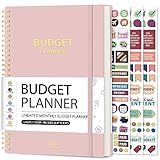
- Effective Budget Planning - Take control of your finances with the budget account book. This comprehensive planner allows you to plan and track your income, expenses, savings, and financial goals in one convenient place. With its intuitive layout and easy-to-use sections, you can stay organized and make informed decisions to achieve financial success.
- User-Friendly Layout - The budget planner features a user-friendly layout designed for easy navigation and organization. Each month, you'll find dedicated budget pages where you can set financial goals, track your income, and plan your expenses. Additional sections include debt trackers, savings goals, bill payment trackers, and more, making it simple to stay on top of your finances.
- Undated Monthly Calendar & Bonus Stickers - Featuring undated calendar each month, you'll have ample space to mark paydays, bills due, appointments, and important dates. Say goodbye to difficult writing spaces. Plus, we've included 3 cute sticker sheets that allow you to personalize your financial organizer and make budgeting more fun. Dates are not pre-printed and are completed by the user.
- Reliable and Convenient Design - Our monthly budget planner is designed for your convenience and built to last. The elastic band keeps everything securely in place, and the dual-sided pocket provides extra storage. Experience a budget planner that combines practicality and durability.
- Master Budgeting with Ease - Our financial planner includes a complete guidebook that provides valuable insights and instructions for optimal usage. From setting financial goals to tracking expenses, this guidebook offers step-by-step guidance and practical tips. Whether you're new to budgeting or an experienced user, this resource will help you make the most of your budget planner, empowering you to achieve financial success.
Current HELOC rate snapshot
Market averages differ because providers use different samples, loan amounts, borrower profiles, and reporting dates. Bankrate reported a 7.43% national average on July 22, 2026. Experian, citing Curinos, reported a 7.50% July average. Forbes Advisor reported 7.22% on July 8 for a $100,000 HELOC at 60% LTV.
These figures are useful benchmarks, not promises. A highly qualified borrower with low CLTV may receive a rate below the market average. A borrower with a high CLTV, weaker credit, an investment property, or a less favorable lien position may be quoted well above 10%.
The Federal Reserve’s latest verified H.15 data showed the bank prime rate at 6.75% in late July 2026. Most traditional HELOCs use a variable formula based on prime plus or minus a lender margin, so the prime rate is an important reference point.
Publicly posted offers worth comparing
| Lender or product | Publicly posted terms | Best fit | Important limitation |
|---|---|---|---|
| Third Federal | 6.24% APR as of July 29, 2026; stated margin of prime minus 0.51% | Lowest clearly posted ongoing rate to investigate | Limited footprint; official pages conflict about fees, maximum line, and other terms |
| Alliant Credit Union | 3.99% fixed introductory APR for six months; as low as 6.75% variable afterward | Low teaser rate plus competitive ongoing rate | Availability is limited by state and qualification; state taxes may apply |
| FourLeaf Federal Credit Union | 5.99% fixed introductory APR for 12 months; 6.75% standard variable APR | Borrowers who can meet the one-year promotion conditions | Requires, among other conditions, 75% maximum CLTV, 720 VantageScore 4.0, and a $25,000 maintained draw |
| Truist | Nine-month promotional APR currently 5.24% to 11.84%; standard variable APR 7.00% to 13.60% | Long promotion from a major bank | Lowest rate requires excellent credit and the offer has application and closing deadlines |
| Bank of America | Example: 5.740% variable introductory APR for six months and 8.275% afterward | National-bank servicing and fixed-rate conversion flexibility | Example assumes specified discounts, a $100,000 line, and a $60,000 initial withdrawal |
| Navy Federal Credit Union | 7.00% APR as low as for a standard HELOC; 8.00% for interest-only | Eligible military-affiliated borrowers | Membership required; not available in Texas; advertised rate assumes a 750 FICO and favorable factors |
| Figure | Initial APRs of 6.80% to 14.25% as of July 27, 2026 | Fast online process and fixed-rate structure | Full line is initially drawn; origination fee can be 0% to 4.99% |
| U.S. Bank | 5.95% to 10.85% variable APR as of July 6, 2026 | Borrowers seeking a broad published range and fixed-rate options | The floor is a best-case range point; a $75 annual fee and early-closure fee may apply |
| PNC | 7.49% to 14.50% variable APR as of June 1, 2026 | Another large-bank quote to include in shopping | Actual pricing depends on borrower, property, line size, and relationship factors |
How to read the table: U.S. Bank’s published range begins at 5.95%, below Third Federal’s specific 6.24% posting, but a range floor is not necessarily comparable to a rate available to you. It may depend on relationship, CLTV, credit, line amount, or other assumptions. Third Federal is the first lender to investigate for a clearly posted ongoing rate, but its official disclosures should be resolved before you treat it as the lowest-cost choice.
Best HELOC lenders by borrower and goal
Best low ongoing rate: Third Federal, with a disclosure warning
Third Federal posted a 6.24% APR as of July 29, 2026, based on prime minus 0.51%, and says its HELOC has a 10-year availability period. Its FAQ states that it charges no application, origination, or closing costs.
However, the lender’s official disclosures are not fully consistent with its rate and FAQ pages. One disclosure states a $275 annual fee, a $300,000 maximum line, and a 30-year term, while other current materials present different terms. Do not rank Third Federal solely on the 6.24% rate or assume the line is fee-free. Request the state-specific application disclosure and confirm the annual fee, maximum line, draw period, repayment period, and early-closure terms in writing.
Recommended Free Tools
Best combination of low intro rate and low ongoing rate: Alliant
Alliant advertises a 3.99% fixed introductory APR for six months, followed by a variable APR as low as 6.75%. It says there is no application fee or lender closing cost, although state-specific taxes may still apply. Its materials generally indicate an 85% maximum LTV, meaning the borrower must retain at least 15% of the home’s value.
This is attractive for a short renovation or other expense that will be repaid quickly. It is less compelling if the borrower will carry a balance for many years, particularly if the personalized margin is higher than the advertised floor. Alliant’s published APR range can reach 16.00%, and the lowest rate is not guaranteed. Check the current rate disclosures and whether your state is served before relying on the offer.
Best 12-month introductory rate: FourLeaf Federal Credit Union
FourLeaf advertises a 5.99% fixed introductory APR for 12 months and a standard variable APR as low as 6.75%. It pays closing costs for qualifying lines up to $500,000 and offers a fixed-rate loan option.
The promotion is unusually conditional. Among the stated requirements are a maximum 75% CLTV, a minimum 720 VantageScore 4.0, a $25,000 initial draw that must remain outstanding for 12 consecutive months, and automatic payments. The borrower may also have to repay waived closing costs if the HELOC closes within 36 months. This is not a good fit for someone who wants a mostly unused emergency line or needs less than $25,000.
Best major-bank promotional period: Truist
Truist offers a nine-month promotional period, longer than the six-month promotions listed by Alliant and Bank of America. As of the cited disclosure, the promotional APR ranges from 5.24% to 11.84%, while the standard variable APR ranges from 7.00% to 13.60%. The lowest rate is reserved for stronger applications.
The promotion applies to qualifying applications received by August 31, 2026, and loans closed by October 31, 2026. Truist commonly structures the product with a 10-year draw period and a 20-year repayment period, offers fixed-rate options, and lists lines from $15,000 to $1 million. Its closing-cost offer may be recaptured if the account closes within 36 months, so a short-term borrower should include that possible charge in the comparison.
Best national-bank flexibility: Bank of America
Bank of America’s published example showed a 5.740% variable introductory APR for six months and 8.275% afterward, using rates as of July 1, 2026. The illustration assumes a $100,000 line, a $60,000 initial withdrawal, autopay, an initial-withdrawal discount, and other specified conditions. It also assumes excellent credit. The introductory rate is variable, so it can change with the index even during the promotional period.
Also popular on Amazon

- Still superior, and now upgraded for life’s biggest advancements: Originally crafted to suit the advanced professional, we recently added smart changes to this customized vegan leather portfolio for those returning to pursue their MBA, or interviewing for that next wrung up the ladder; features include solar calculator, full PU leather interior, dual start zipper, and abundant storage so paper never crunches or falls out
- For million project masters: Juggle less, get more done. Professional, thoughtfully designed storage designed with those who “do it all” without batting an eye. Custom pockets allow you to quickly and easily access your tablet, pens, calculator, cards and everything else without giving it a second thought.
- Sleek & stunning in hand - Compact for travel: Leather folder looks gorgeous held in hand walking into the board meeting, law school, or interview while sliding neatly into handbags, backpacks while maintaining far greater storage than traditional leather planners.
- Give the gift that says, “I believe you will succeed” with this premium, practical, stylish gift for graduates, lawyers, business professionals and those on the rise. Carries your entire suite of supplies from travel tickets, documents, resumes, professional pens and everything you need to outshine others in the business world.
- Ultimate satisfaction: Quality. Service. Elation with everything you order from us, that’s the Cossini brand philosophy. From the luxurious PU leather, to the buttery smooth zipper pull, to the organization that flows with your changing life, you’ll feel satisfied with your decision to purchase.
Bank of America stands out for offering qualifying borrowers the ability to convert at least $5,000 of a balance to a fixed-rate loan option. That can help a borrower use the HELOC for both flexible and predictable-rate borrowing. The conversion may have its own rate, terms, and restrictions, so ask whether the fixed option is available for your line and what fee or minimum applies.
Quick wins for a faster PC:
Repair Windows errors before they cause bigger problemsFix Now →Scan for outdated or missing drivers - takes under a minuteDriver Scan →Best for military-affiliated borrowers: Navy Federal
Navy Federal advertises a standard HELOC at 7.00% APR as low as and an interest-only option at 8.00%. It advertises a 20-year draw period followed by a 20-year repayment period, no application, origination, annual, or inactivity fee, and borrowing of up to 95% for qualified borrowers.
Membership is required, the product is not available in Texas, and the advertised rate assumes a 750 FICO score along with favorable LTV, occupancy, and other underwriting factors. The interest-only option deserves particular caution: it lowers the draw-period minimum but does not pay down principal, so the payment can rise substantially when repayment begins. Confirm prepaid items, valuation costs, state charges, and the applicable maximum CLTV in your quote.
Best for speed and payment predictability: Figure
Figure advertises initial APRs from 6.80% to 14.25% as of July 27, 2026, with funding in as few as five days for qualifying applications. It offers fixed and variable options, lines up to $750,000, and generally does not require an in-person appraisal for loans below $400,000.
Figure is not structured like a conventional cash-as-needed HELOC. The full line is initially drawn, less any applicable origination fee, and additional draws become available as principal is repaid. The draw period is generally two to five years rather than the 10-year period common at traditional banks. The origination fee can range from 0% to 4.99% of the initial draw, and valuation, appraisal, notarization, recording, or recording-tax charges may also apply. A five-day funding estimate is a best-case lender estimate, not a guarantee.
Do these 3 things before closing this tab:
1Scan for outdated or missing drivers - takes under a minute2Clear out junk files and repair common Windows errors3Fix the driver behind crashes, sound loss and screen glitchesWorth comparing: U.S. Bank and local credit unions
U.S. Bank published a 5.95% to 10.85% variable APR range as of July 6, 2026. The lowest rate depends on factors including CLTV, line size, credit score, and a U.S. Bank checking relationship. A $75 annual fee may apply after the first year unless waived through a qualifying checking package. U.S. Bank also discloses an early-closure fee equal to 1% of the original line, capped at $500, if the HELOC is closed within 30 months. It offers a fixed-rate option for portions of a balance.
A local bank or credit union can sometimes compete effectively, particularly when it offers a narrower margin, lower fees, or more flexible property rules. Do not compare its headline rate with a national lender’s teaser APR. Ask for the index, margin, rate cap, adjustment frequency, full fee schedule, and repayment formula for the same line amount and CLTV.
Published rankings also are not universal answers. For example, NerdWallet selected Truist as a 2026 best HELOC lender partly because of its promotional period, CLTV flexibility, and fixed-rate option, while Bankrate selected Aven overall and Figure for fast funding. Those are category judgments based on each publisher’s methodology, not proof that the lender will offer every borrower the lowest total cost.
How HELOC rates are calculated
A traditional HELOC is an open-end line of credit secured by your home. During the draw period, you can generally borrow, repay, and borrow again up to the credit limit. Most traditional HELOCs have variable rates.
The Tool Desk
Outbyte PC Repair FREERepair Windows errors before they cause bigger problemsFix Now →Outbyte Driver Updater FREEFix the driver behind crashes, sound loss and screen glitchesFind Drivers →The basic pricing formula is:
HELOC APR = index rate + lender margin − applicable discounts
The index is commonly the Wall Street Journal prime rate. The margin is the lender’s markup or discount and may depend on your credit profile, LTV or CLTV, line amount, occupancy, property type, lien position, and relationship with the lender. Regulation Z requires disclosures about the plan’s variable-rate provisions, fees, payment calculations, and other terms.
For example, if prime is 6.75% and a lender’s margin is prime minus 0.51%, the starting fully indexed rate is 6.24%. If prime rises to 7.75% and the margin does not change, the rate would generally rise to 7.24%. The lender’s disclosure controls: check whether the margin is fixed, how often the rate adjusts, whether there is a floor or maximum APR, and how quickly a change affects your payment.
Fully indexed rate versus introductory APR
Always place these figures side by side:
- Introductory APR: the temporary rate, which may be fixed or variable.
- Intro period: how long the promotion lasts.
- Fully indexed APR: the index plus the lender margin before temporary discounts.
- Discounted ongoing APR: the rate after autopay, relationship, initial-draw, or other discounts.
- Maximum APR and floor: the contractual boundaries for a variable rate.
- Fee-adjusted cost: interest plus application, origination, valuation, annual, closing, and early-closure charges.
A low teaser may be useful when you will repay the balance quickly. It can be a poor long-term deal if the post-intro rate is high, the promotion requires a large draw, or fees are substantial. For illustration, a 3.99% rate for six months on a $50,000 interest-only balance saves about $690 in first-six-month interest compared with 6.75%. A 4.99% fee on a $50,000 initial draw, if charged, would be $2,495—more than that initial interest saving.
Free tools Windows power users keep installed
One-click scans. No signup required.
Also popular on Amazon

- Complete estate planning binder kit: Includes estate document binder, 6 pre-labeled index tabs, 6 heavy-duty sheet protectors, interior document folder, and USB holder for digital backups — everything needed to organize important documents in one place.
- re-labeled tabs for instant organization: This estate planning organizer includes six clearly labeled sections — Trust Agreement, Funding, Last Will & Testament, Power of Attorney, Health Care Directives, and Miscellaneous — so your estate binder is set up in minutes.
- Premium construction, made in the USA: Faux leather cover and durable 1.5" D-ring binder securely hold your documents while maintaining a clean, professional appearance for home or office use.
- Designed for the moments that matter most: Clearly labeled sections make it easy for family members or attorneys to quickly locate critical documents — even in high-stress situations — without confusion or searching.
- A thoughtful way to protect what matters most: Whether for yourself or as a meaningful gift for parents, spouses, or clients, this estate organizer ensures important documents are organized, accessible, and never left behind.
How much can you borrow?
A practical estimate is:
Estimated maximum HELOC = home value × lender maximum CLTV − existing mortgage and other liens
Example:
- Home value: $500,000
- Lender maximum CLTV: 85%
- Maximum secured debt allowed: $425,000
- Existing mortgage and liens: $300,000
- Estimated maximum HELOC: $125,000
This is only an estimate. The lender may use a lower appraised or automated value, impose a lower CLTV for a condo or investment property, require reserves, or reduce the line based on income, debt-to-income ratio, credit, property condition, lien position, or occupancy. A lender’s maximum CLTV is not a recommended borrowing amount: leaving equity unused can reduce payment risk and make approval easier.
Alliant’s materials generally imply an 85% maximum LTV. Navy Federal advertises up to 95% for qualified borrowers, but the exact maximum depends on underwriting and applicable state and property rules. A higher CLTV can increase the margin, narrow the lender pool, and leave less protection if home values decline.
HELOC payment examples
The following illustrations assume the entire balance is outstanding and use simple monthly interest for the draw-period examples. They exclude fees and do not reproduce every lender’s daily-average-balance or minimum-payment formula.
What’s actually slowing this PC down?
Pick the symptom - the matching free tool is one click away.
Interest-only draw-period payment
| APR | $25,000 balance | $50,000 balance | $100,000 balance |
|---|---|---|---|
| 6.75% | $140.63 | $281.25 | $562.50 |
| 7.43% | $154.79 | $309.58 | $619.17 |
| 8.275% | $172.40 | $344.79 | $689.58 |
An interest-only payment does not reduce the principal. If the balance stays at $50,000 and the rate rises from 7.43% to 8.43%, the simple interest-only payment rises to about $351.25. At 9.43%, it rises to about $392.92.
Repayment-period payment
If a $50,000 balance were amortized over 20 years at a fixed 8.275%, the principal-and-interest payment would be approximately $426.82 per month. The corresponding payments would be approximately $213.41 for $25,000 and $853.64 for $100,000.
That comparison shows why a minimum payment during the draw period can be misleading. The payment can rise because the rate increases, because principal repayment begins, or both. Some plans use an interest-only minimum, some require principal and interest from the beginning, and some allow fixed-rate subaccounts with separate payment schedules. The actual plan documents—not a generic calculator—determine the payment.
What happens when the draw period ends?
A common traditional structure has a 10-year draw period followed by a 10-, 15-, or 20-year repayment period. During the draw period, you may be able to borrow and redraw as you repay. Once repayment begins, additional draws generally stop and the balance must be amortized.
Bank of America describes a typical 10-year borrowing period followed by a repayment stage often lasting 20 years. Navy Federal advertises a much longer 20-year draw followed by 20 years of repayment. Figure’s generally two- to five-year draw structure is shorter and should be evaluated separately.
Read the disclosure for these potential outcomes:
- Whether principal is required during the draw period.
- How the repayment payment is calculated.
- Whether the repayment term changes if you make new draws near the end of the draw period.
- Whether the lender can demand a balloon payment or full repayment under specified circumstances.
- Whether the rate remains variable during repayment.
- Whether the line can be renewed or converted.
Can a HELOC rate be fixed?
Some products allow you to convert all or part of a balance to a fixed-rate subaccount, lock individual advances, or use a product with a fixed initial draw. A fixed option generally improves payment certainty, but its rate may be higher than the initial variable rate and the converted balance may no longer have the same revolving flexibility.
- Bank of America: qualifying borrowers can convert at least $5,000 of a balance to a fixed-rate loan option.
- U.S. Bank: offers a fixed-rate option for portions of a HELOC balance; see its fixed-rate HELOC information.
- Figure: offers fixed and variable choices, but initially funds the full line and makes additional draws available as principal is repaid.
- Truist and FourLeaf: disclose fixed-rate options, subject to product and borrower conditions.
Ask whether the fixed rate applies to every future draw or only to a converted balance, whether there is a minimum conversion amount, whether a fee applies, and whether the converted portion can be paid off and redrawn.
Outdated Drivers Are Slowing You Down
One free scan finds every outdated or missing driver and matches the right update for your exact hardware.Free scan · exact hardware matchWindows Errors? Fix Them Before They Spread
Repair common Windows errors and clear accumulated junk for a smoother, more stable PC - no reinstall needed.Free scan · no reinstallHELOC requirements
Credit score
There is no universal minimum credit score. Lenders use different scoring models and reserve their best pricing for their strongest applicants. FourLeaf’s promotional conditions specifically cite a minimum VantageScore 4.0 of 720, while Truist says excellent credit is required for its lowest advertised rates.
Also popular on Amazon

- Cash Envelopes System:1pcs PU leather money saving binder,8pcs A6 6-holes binder pockets,12pcs expense budget sheets,3 sheets of category sticker labels,Budget binder with cash envelopes perfect for you to save money.
- PU Leather Binder:Cash binder has attractive double-colors cover,Premium PU leather A6 binder has many hidden compartments and pen hoops,which is convenient for storing pen, passports, ID cards, bank cards.
- Binder Pockets:8PCS A6 zipper cash envelope made from superior material. It is resists tearing and acid-free which can protect your items from water and dust.As cash envelopes is convenient for storing money, cards, stamps, tickets, pens.
- Category Stickers & Budget Sheet: Money binder with category stickers and budget sheets can help you organize your expenses and track your deposits and withdrawals and achieve budget goals.
- Easy to Carry:A6 Binder Budget Envelopes System fits in your handbag, backpack,suitcase or desk;A6 ring binder suitable for all standard A6 size inner pages.
A high score does not guarantee approval or the headline APR. High CLTV, high debt-to-income ratio, unstable or difficult-to-document income, a second home or rental property, a subordinate lien, or a property the lender does not accept can change the decision.
Income and debt-to-income ratio
The lender will generally evaluate income, existing mortgage payments, other debts, and the proposed HELOC payment. Self-employed borrowers, commission-based workers, retirees, and borrowers with substantial rental income may need additional documentation. Ask which payment the lender uses for an undrawn line and whether it underwrites the maximum line, the requested draw, or both.
Property, occupancy, and lien position
Primary residences typically have the broadest availability, but rules differ for second homes, rentals, investment properties, condos, manufactured homes, co-ops, and multi-unit buildings. The lender may require the HELOC to be a second lien, may require payoff of an existing HELOC, or may price a first-lien line differently.
Windows Errors? Fix Them Before They Spread
Repair common Windows errors and clear accumulated junk for a smoother, more stable PC - no reinstall needed.Free scan · no reinstallCrashes, No Sound, or Screen Glitches?
Random freezes, missing sound and display glitches usually trace back to one bad driver. Find and replace yours safely.Free scan · under a minuteConfirm state availability before submitting a full application. State law can affect fees, waiting periods, maximum CLTV, property eligibility, and funding. Figure describes a Texas-specific 12-day waiting period and an 80% LTV cap, while Navy Federal says its HELOC is not available in Texas. Alliant, Third Federal, and Figure also have state-specific availability rules.
Fees that can change the cheapest offer
Compare the following charges for the full time you expect to keep the line open:
- Application or credit-report fee
- Origination fee
- Appraisal, automated valuation, or property inspection fee
- Title search and title insurance
- Recording charges, mortgage taxes, and other state taxes
- Annual fee
- Inactivity or minimum-use fee
- Fixed-rate conversion or rate-lock fee
- Fees for additional draws, transfers, checks, or expedited funding
- Late-payment and returned-payment fees
- Early-closure fee
- Repayment of closing costs the lender initially paid
Alliant says it charges no lender closing costs or application fee, but state taxes may apply. Navy Federal says it charges no application, origination, annual, or inactivity fee, but prepaid items and other charges may remain. U.S. Bank lists a $75 annual fee after the first year unless waived through a qualifying relationship and an early-closure charge of 1% of the original line, capped at $500, if closed within 30 months. Figure’s origination fee can be as high as 4.99%. Truist and FourLeaf may require repayment of lender-paid closing costs when the account closes within 36 months.
No closing costs does not necessarily mean free. The offer may exclude taxes or valuation costs, require a higher margin, or include a clawback if you close the account early. The CFPB’s Regulation Z rules require disclosures concerning plan fees, third-party fees, draw and repayment periods, minimum-payment calculations, and how the APR can change.
Recommended Free Tools
HELOC versus other borrowing options
| Your need | Usually worth considering | Main reason and caution |
|---|---|---|
| Unknown or staged expense | Traditional HELOC | Borrow only as needed and redraw during the draw period; rate and payment can change |
| Known lump sum with a predictable payment | Fixed home-equity loan | Receives a defined amount with a fixed amortizing payment; less flexible for changing costs |
| Replace the mortgage while withdrawing cash | Cash-out refinance | One combined mortgage payment, but it may replace a valuable low-rate first mortgage and create new closing costs |
| No home collateral or a smaller borrowing need | Personal loan | Does not put the home directly behind the debt, but the rate, term, and amount may be less favorable |
| Temporary liquidity reserve | Traditional HELOC, with caution | Useful if available when needed, but a lender may freeze or reduce the line after a major home-value or financial change |
A HELOC can preserve an existing low-rate first mortgage because it usually adds a second lien instead of refinancing the mortgage. That advantage should be compared with the HELOC’s variable rate, fees, and payment risk. A cash-out refinance may simplify payments but can apply today’s mortgage pricing to the entire first-mortgage balance.
Independent reader supportYour contribution helps us test, update, and keep practical guides available for everyone.Risks and fine print
Variable-rate risk
Stress-test the payment at the current rate, current rate plus one percentage point, current rate plus two percentage points, and the contractual maximum APR when practical. The lender’s disclosure should state the maximum APR, rate floor, index, margin, and adjustment frequency. A rate that begins below prime can still rise if prime rises.
Payment shock
An interest-only payment keeps the minimum low but leaves the principal intact. When amortization begins, the payment can rise even if the interest rate does not. Do not compare an interest-only minimum with a fully amortizing personal loan or home-equity loan without showing the repayment phase.
Your home secures the debt
Failure to repay a HELOC can put the home at risk. A lower rate than an unsecured credit card does not make the borrowing risk-free. Avoid borrowing more than your budget can handle after a rate increase, income interruption, or home repair emergency.
The lender can freeze unused credit
According to the CFPB, a lender may restrict additional borrowing if the home’s value falls significantly or if the lender believes your financial circumstances changed and your ability to repay is impaired. An undrawn HELOC is therefore not guaranteed emergency cash in every future scenario.
Full-initial-draw products can create unnecessary interest
Figure’s structure can be useful when you need the whole amount promptly, but it can be expensive if you intended to use only a small portion. You may pay interest on money sitting in a deposit account or being used later, and you may pay an origination fee on the initial draw.
Also popular on Amazon

- Effective Budget Planning - Take control of your finances with the budget account book. This comprehensive planner allows you to plan and track your income, expenses, savings, and financial goals in one convenient place. With its intuitive layout and easy-to-use sections, you can stay organized and make informed decisions to achieve financial success.
- User-Friendly Layout - The budget planner features a user-friendly layout designed for easy navigation and organization. Each month, you'll find dedicated budget pages where you can set financial goals, track your income, and plan your expenses. Additional sections include debt trackers, savings goals, bill payment trackers, and more, making it simple to stay on top of your finances.
- Undated Monthly Calendar & Bonus Stickers - Featuring undated calendar each month, you'll have ample space to mark paydays, bills due, appointments, and important dates. Say goodbye to difficult writing spaces. Plus, we've included 3 cute sticker sheets that allow you to personalize your financial organizer and make budgeting more fun. Dates are not pre-printed and are completed by the user.
- Reliable and Convenient Design - Our monthly budget planner is designed for your convenience and built to last. The elastic band keeps everything securely in place, and the dual-sided pocket provides extra storage. Experience a budget planner that combines practicality and durability.
- Master Budgeting with Ease - Our financial planner includes a complete guidebook that provides valuable insights and instructions for optimal usage. From setting financial goals to tracking expenses, this guidebook offers step-by-step guidance and practical tips. Whether you're new to budgeting or an experienced user, this resource will help you make the most of your budget planner, empowering you to achieve financial success.
Tax treatment is limited
For federal tax purposes, the IRS currently says interest on a home-equity loan or HELOC is generally deductible only when the borrowed funds are used to buy, build, or substantially improve the home securing the debt, subject to mortgage-interest limits and itemization requirements. IRS Publication 936 states a $750,000 limit for qualifying mortgage debt incurred after December 15, 2017, or $375,000 for married taxpayers filing separately.
Do not assume interest is deductible merely because the debt is secured by a home. Debt consolidation, tuition, a vehicle, a vacation, or business use may not qualify under the applicable home-mortgage-interest rules. Keep invoices, contracts, permits, and a record of each draw if you may claim a deduction for qualifying improvements. IRS guidance and tax law can change, so verify the rule for the tax year in question with the current IRS publication or a tax professional.
Three-business-day cancellation right
For a HELOC secured by a principal dwelling, federal law generally provides a three-business-day right of rescission after the later of account opening or receipt of the account-opening disclosures. The borrower must notify the lender in writing within that period. See the Regulation Z rescission rule and CFPB guidance. This is not a general right to cancel every home-secured credit product at any time; state law and the contract may provide additional protections.
A worksheet for comparing HELOC offers
Complete this table from each lender’s written offer or plan disclosure. Do not leave the permanent margin or repayment payment blank merely because the lender advertises an introductory APR.
| Item | Lender A | Lender B | Lender C |
|---|---|---|---|
| Intro APR | |||
| Intro period | |||
| Intro rate fixed or variable? | |||
| Index | |||
| Margin | |||
| Fully indexed APR today | |||
| Rate floor | |||
| Maximum APR | |||
| Adjustment frequency | |||
| Maximum CLTV | |||
| Minimum credit score | |||
| Minimum line | |||
| Required initial draw | |||
| Draw period | |||
| Repayment period | |||
| Interest-only available? | |||
| Fixed-rate conversion? | |||
| Annual fee | |||
| Origination fee | |||
| Appraisal or valuation fee | |||
| Early-closure fee or recapture | |||
| State availability | |||
| Expected three-year cost |
How to get the best HELOC rate
- Calculate your estimated CLTV. Use a realistic current property value, subtract every mortgage and lien balance, and calculate the line at each lender’s maximum CLTV. Also calculate a lower-CLTV version; requesting less may improve pricing and approval odds.
- Decide whether you need a revolving line. A HELOC suits uncertain or staged expenses. A fixed home-equity loan may be simpler for one known amount. Consider a cash-out refinance only after measuring the effect on your existing mortgage rate and closing costs.
- Request multiple written quotes. Ask for the index, margin, fully indexed APR, adjustment frequency, floor, maximum APR, payment formula, fees, draw and repayment periods, minimum line, and all promotional conditions.
- Compare the same scenario. Request the same line size, initial draw, occupancy type, lien position, and repayment assumptions from each lender. A quote for a $100,000 line at 60% CLTV is not directly comparable with one for a $25,000 line at 85% CLTV.
- Ask about discounts. Confirm autopay, checking-account, existing-member, initial-withdrawal, and credit-union discounts. Ask whether a discount disappears if autopay stops or the balance falls below a threshold.
- Negotiate the margin, not just the teaser. Ask whether the lender can match a competitor’s margin, waive an annual fee, reduce an origination charge, or offer better pricing for a lower CLTV or larger line.
- Calculate total cost over six months, one year, three years, and your expected holding period. Include interest, annual fees, origination fees, valuation costs, taxes, and possible closing-cost recapture.
- Stress-test the payment. Calculate the draw-period payment and the repayment-period payment at the current rate, current rate plus one point, and current rate plus two points. Use the lender’s actual formula where possible.
- Confirm property and state eligibility. Ask about condos, rentals, co-ops, manufactured homes, second homes, multi-unit properties, Texas restrictions, first- versus second-lien availability, and any waiting period.
- Distinguish prequalification from a full application. Ask whether an initial rate check uses a soft inquiry and when the lender will make a hard credit inquiry. A soft prequalification inquiry and a full application are not the same.
- Review the disclosures before closing. Confirm that the written plan matches the verbal offer, including the margin, discounts, fees, draw requirements, payment calculation, maximum APR, and early-closure terms.
- Preserve tax documentation. If you may claim a deduction for qualifying improvements, retain contracts, invoices, permits, and a clear record of how each draw was spent.
Bottom line
For most homeowners, a good HELOC rate in August 2026 is a fully indexed rate near or below the market benchmark of roughly 7.2% to 7.5%, with reasonable fees and a payment you can afford after the draw period ends. Exceptional borrowers may find rates below prime, while less favorable profiles may face rates above 10%.
Investigate Third Federal for a low ongoing rate, but resolve its conflicting official disclosures. Consider Alliant for a low introductory rate and competitive ongoing floor where available. FourLeaf’s one-year promotion is compelling only if you can keep the required $25,000 draw and meet its 75% CLTV and 720-score conditions. Truist offers the longest highlighted major-bank promotion, Bank of America offers useful fixed-rate conversion flexibility, Navy Federal is attractive for eligible military-affiliated borrowers, and Figure may suit borrowers who value speed and fixed-rate funding more than traditional draw-as-needed flexibility.
The winning offer is the one with the lowest fee-adjusted cost for your holding period, the clearest permanent margin, an acceptable maximum APR, and a repayment payment that remains manageable—not necessarily the offer with the lowest number in an advertisement.
Frequently Asked Questions
What is a good HELOC rate right now?
As of August 10, 2026, national benchmark averages are approximately 7.2% to 7.5%. A highly qualified borrower with low CLTV may receive a rate below the 6.75% prime rate, while a borrower with higher CLTV or weaker qualifications may receive a rate above 10%. Compare the fully indexed APR and fees rather than relying on the market average.
What is the lowest HELOC rate available?
There is no universal lowest rate because lenders price by state, credit, CLTV, property, line size, and relationship. Publicly posted rates reviewed include Third Federal at 6.24% APR, Alliant as low as 6.75% after its introductory period, FourLeaf at 6.75% standard APR, and U.S. Bank with a published range beginning at 5.95%. These are advertised or range-floor rates, not guaranteed personalized offers.
Can a HELOC payment increase after closing?
Yes. Most traditional HELOCs have variable rates tied to an index such as prime, so the rate and payment can rise. The payment can also increase when an interest-only draw period ends and principal repayment begins. Check the plan’s adjustment rules, maximum APR, and repayment formula.
Do these 3 things before closing this tab:
1Clear out junk files and repair common Windows errors2Scan for outdated or missing drivers - takes under a minute3Repair Windows errors before they cause bigger problemsIs HELOC interest tax-deductible?
It may be deductible for federal tax purposes when the funds are used to buy, build, or substantially improve the home securing the debt, subject to itemization and applicable mortgage-interest limits. Do not assume that debt consolidation, tuition, vehicle, vacation, or business-use borrowing qualifies. Check the current IRS guidance for the tax year and consult a tax professional.
The Bottom Line
Bottom line: Start with a benchmark of roughly 7.2% to 7.5%, then seek a personalized quote based on your CLTV, credit, property, and state. Compare the permanent indexed rate, fees, repayment payment, and early-closure terms before giving any weight to a teaser APR.




