
Some links on this page are affiliate links: if you buy through them we may earn a commission, at no extra cost to you.
Short answer: RAM prices are not broadly falling in the United States as of August 10, 2026. The rate of increase has slowed in some wholesale markets, and retailers are occasionally discounting individual kits, but consumer memory remains far more expensive than it was in 2025.
TrendForce’s latest third-quarter outlook still calls for DRAM contract prices to rise approximately 13%–18% quarter over quarter. That is a major improvement from the extraordinary increases forecast for the first half of 2026, but it is still an increase—not a return to normal pricing.
As an Amazon Associate I earn from qualifying purchases.
The most accurate summary is: the price surge is slowing; the shortage is not over. For shoppers, that means a good promotion may be worth taking, but a single discounted DDR5 kit is not proof that the overall market has turned.
What “RAM prices” actually means
Discussions about memory prices often combine several different products and points in the supply chain. That can make apparently conflicting headlines all seem true at the same time.
Popular on Amazon
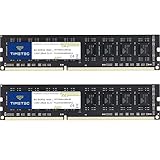
- [Color] PCB color may vary (black or green) depending on production batch. Quality and performance remain consistent across all Timetec products.
- DDR3L / DDR3 1600MHz PC3L-12800 / PC3-12800 240-Pin Unbuffered Non-ECC 1.35V / 1.5V CL11 Dual Rank 2Rx8 based 512x8
- Module Size: 16GB KIT(2x8GB Modules) Package: 2x8GB ; JEDEC standard 1.35V, this is a dual voltage piece and can operate at 1.35V or 1.5V
- For DDR3 Desktop Compatible with Intel and AMD CPU, Not for Laptop
- Guaranteed Lifetime warranty from Purchase Date and Free technical support based on United States
| Term | What it means for buyers |
|---|---|
| Consumer DRAM | Conventional memory sold as desktop DIMMs, laptop SO-DIMMs, and some other system-memory products. |
| DDR4 | An older desktop and laptop memory standard that remains common in existing PCs and embedded products. |
| DDR5 | The current standard for most new desktop and laptop platforms. A DDR5 motherboard cannot use DDR4 modules, and vice versa. |
| LPDDR | Low-power memory commonly used in phones and laptops. It is frequently soldered to the motherboard and is not an ordinary upgradeable DIMM. |
| Server DRAM and RDIMM | Higher-capacity, registered memory used in servers and data centers. It is a separate product category from ordinary desktop RAM. |
| HBM | High-bandwidth memory stacked near an AI accelerator or graphics processor. It is not interchangeable with a consumer DDR5 kit, but it competes for DRAM manufacturing capacity and advanced packaging resources. |
| NAND flash | The storage memory used in SSDs, phones, and other devices. It is affected by some of the same AI infrastructure trends, but it should not be counted as RAM. |
There are also several different prices to distinguish:
- Retail price: What a U.S. consumer pays for a finished module or kit at a retailer or marketplace.
- Contract price: The negotiated price paid by large OEMs, module makers, and other business customers. These deals may cover a quarter or longer and do not move one-for-one with retail listings.
- Spot price: A short-term market price for memory chips or components. Spot prices can weaken even while contract prices remain high.
A forecast for the global memory industry is therefore not a direct forecast for a 32GB desktop kit. Industry-revenue forecasts can include conventional DRAM, HBM, NAND, and other products, and can be influenced by both unit volume and pricing. TrendForce’s market analysis should not be read as a direct U.S. retail price index.
Do these 3 things before closing this tab:
1Repair Windows errors before they cause bigger problems2Scan for outdated or missing drivers - takes under a minute3Clear out junk files and repair common Windows errorsThe price timeline: from stable to extreme, then merely less extreme
The change is easier to understand as a timeline than as one dramatic percentage.
| Period | What the evidence showed | How to interpret it |
|---|---|---|
| September 2024–May 2025 | PCPartPicker-based historical coverage showed relatively stable consumer pricing. | This is the pre-surge baseline for much of the current comparison. |
| October 2025 | Many conventional 32GB DDR5 kits sold for roughly $100–$200. | Product specifications varied, so this was a range rather than a universal average. |
| Q1 2026 | TrendForce projected PC DRAM prices to rise by more than 100% quarter over quarter and conventional DRAM contract prices by approximately 90%–95%. | This was an extraordinary wholesale increase, not a typical retail sale-price change. |
| Q2 2026 | TrendForce projected conventional DRAM contract prices to rise approximately 58%–63% quarter over quarter. | The increase was smaller than in Q1, but still exceptionally large. |
| Q3 2026 | TrendForce’s latest public estimate narrowed to approximately 13%–18% quarter over quarter for DRAM contract prices. | The acceleration has slowed substantially, but the forecast remains positive. |
| August 2026 retail | Some kits have received temporary discounts, while the least expensive in-stock 32GB DDR5 kits remain several times more expensive than historical lows. | Retail volatility is not the same as a broad market correction. |
These percentages are not interchangeable. A quarter-over-quarter contract forecast is not a year-over-year retail comparison. Also, moving from a 90% increase to a 15% increase means inflation has slowed; it does not mean the original price has been restored.
What U.S. shoppers are paying in August 2026
Tom’s Hardware’s U.S. RAM tracker reported that a typical 32GB DDR5 kit that sold for approximately $100–$200 in October 2025 started at about $350 or more in August 2026. Its snapshot included a 32GB DDR5-6000 kit at approximately $399 and a 64GB kit at approximately $826.
Another August snapshot put the lowest available prices around $379 for 32GB of DDR5-5600 and $399 for 32GB of DDR5-6000, compared with historical lows near $72 for some comparable kits. These are tracker snapshots, not averages across every retailer or every specification. Stock can disappear quickly, and a premium RGB kit should not be compared directly with a basic JEDEC kit.
Free tools Windows power users keep installed
One-click scans. No signup required.
| Memory configuration | Historical reference | Reported price evidence | What it suggests |
|---|---|---|---|
| 32GB DDR5 | Approximately $100–$200 in October 2025 | About $350 or more at the low end in August 2026; examples around $379–$399 | Still severely elevated versus 2025. |
| 64GB DDR5 | Historically much lower than current listings | Approximately $826 in the cited U.S. tracker snapshot | High-capacity kits are especially exposed to supply and density constraints. |
| 32GB DDR4 | Approximately $60–$90 in October 2025 | Reported around $150–$180 by January 2026, with additional volatility afterward | DDR4 is not automatically a cheap fallback. |
There are genuine retail exceptions. TechRadar reported a temporary U.S. Corsair 32GB DDR5-6000 promotion at approximately $422, down from roughly $470–$490 for that particular listing. That is meaningful relief for that SKU, but it is still much higher than the same capacity commonly cost in 2025—and it does not establish a market-wide bottom.
Why AI is raising the price of ordinary PC memory
The simplified explanation—“AI uses all the RAM”—is misleading. An AI accelerator does not directly consume a consumer DDR5 module. The more accurate explanation is that AI infrastructure changes what memory manufacturers produce and where they allocate capacity.
Also popular on Amazon
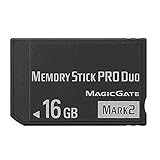
- Compatible with MagicGate copyright protection technology
- Can be used to perfect on the PSP adn digital camera
- Memory Stick PRO-HG Duo is ideal for high-speed data transfer and for continuous shooting
- 16GB capacity Flash memory Ideal for burst shooting with DSLR Up to 30MB/s read/write speed
- Can be used to perfect on the PSP(PSP1000/2000/3000/3000) and digital camera.
AI servers need several kinds of memory
- HBM supplies extremely high bandwidth beside AI accelerators.
- Server DRAM provides large system-memory pools for CPUs and AI servers.
- Enterprise SSDs provide the storage capacity needed for training data, models, and inference workloads.
- Low-power and specialized memory architectures support phones, edge devices, and other AI-enabled systems.
Manufacturers can often earn more from server, HBM, and enterprise products than from conventional PC memory. As a result, they have an incentive to prioritize those products and reduce or redirect capacity available for ordinary desktop and laptop DRAM.
HBM also requires significantly more wafer input than conventional DRAM for an equivalent amount of memory capacity. TrendForce explains that higher HBM production does not translate proportionally into additional DRAM bits. That helps create a squeeze even when total spending on memory is rising.
Outdated Drivers Are Slowing You Down
One free scan finds every outdated or missing driver and matches the right update for your exact hardware.Free scan · exact hardware matchPC Slower Than It Used to Be?
A free scan shows the junk files, broken settings and background clutter dragging Windows down - then fixes them in one click.Free scan · Windows 10 & 11Samsung said in its July 30, 2026 results announcement that strong server and AI demand should keep the market undersupplied in the second half of 2026 despite some moderation in mobile and PC demand. Samsung also said its memory business was focusing on server products and expected demand for server DRAM, enterprise SSDs, and HBM to accelerate in the second half.
Long-term agreements make consumer supply less flexible
Large cloud providers, server manufacturers, and other strategic customers are increasingly seeking supply certainty through multiyear agreements. Micron reported agreements covering roughly 20% of its DRAM volume over the agreement period, while SK hynix reported long-term agreements with around 10 customers. Those contracts do not mean that every AI company has reserved every consumer memory chip. They do mean that a larger share of future output can be committed before ordinary PC buyers compete for what remains.
That is one reason a slowdown in consumer demand has not immediately produced an oversupply of desktop DIMMs.
Why weaker PC demand has not caused prices to collapse
This is the central apparent contradiction: consumers are buying fewer PCs because memory is expensive, yet memory remains expensive.
What’s actually slowing this PC down?
Pick the symptom - the matching free tool is one click away.
TrendForce says PC DRAM contract prices are still rising, although negotiations are becoming more contested and the gains are narrowing. Rising retail prices are also suppressing notebook demand. IDC expects the rate of memory-price acceleration to slow in the second half of 2026, but it still expects prices to remain elevated.
Several forces can produce weaker consumer demand and high prices at the same time:
Also popular on Amazon
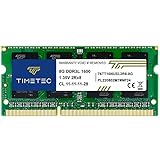
- [Specs] DDR3L / DDR3 1600MHz PC3L-12800 / PC3-12800 204-Pin Unbuffered Non ECC 1.35V CL11 Dual Rank 2Rx8 based 512x8
- [Size] Module Size: 8GB Package: 1x8GB
- [Voltage] JEDEC standard 1.35V, this is a dual voltage piece and can operate at 1.35V or 1.5V
- [Compatibility] Compatible with DDR3 Laptop / Notebook PC, Mini PC, All in one Device
- [Color] PCB Color is Green
- AI and server demand remain strong. Data-center customers can absorb capacity that PC buyers are no longer willing to purchase.
- Manufacturers can redirect output. If server and HBM products offer better margins, suppliers do not necessarily keep producing the same quantity of consumer memory.
- New capacity takes years. Building or expanding a fab, installing equipment, changing processes, and qualifying output cannot solve a near-term shortage.
- Large customers have priority. Long-term agreements can reduce the amount of freely available supply.
- Retail prices include inventory timing. A store may still be selling modules purchased at an earlier, higher chip cost even after spot prices soften.
In other words, lower PC demand can reduce the rate at which prices rise without creating enough excess supply to force prices down.
Retail, contract, and spot prices can move in opposite directions
The supply chain helps explain why a cheaper listing can appear while industry forecasts still predict rising prices.
| Market stage | Current signal | Why it may differ from the other stages |
|---|---|---|
| Contract DRAM | Still rising, with Q3 growth estimated at approximately 13%–18% quarter over quarter. | Large buyers negotiate supply and pricing over longer periods; contracts can lag short-term retail or spot movements. |
| Spot DRAM | Some prices have softened or moved below contract prices. | Buyers are resisting additional increases, and spot transactions respond more quickly to immediate demand. |
| Finished retail kits | Occasional promotions and inventory corrections, but prices remain far above 2025 levels. | Module inventory, product specifications, retailer margins, coupons, and seller behavior all affect the final price. |
A retailer may discount a kit to clear a particular batch. A module maker may have bought chips at a lower spot price. A marketplace seller may be liquidating inventory. None of those events necessarily means that OEM contract pricing or the overall supply balance has normalized.
Geography matters as well. European retail DDR5 prices reportedly corrected after extreme February peaks, but that is a regional retail development and should not be generalized to U.S. shoppers. In China, used 16GB DDR4 modules in Shenzhen reportedly fell more than 30% from their early-2026 peak. Even after that drop, the reported price remained roughly five to six times higher than a year earlier.
DDR4 is not necessarily the safe, inexpensive alternative
DDR4 is often cheaper than DDR5 in an individual listing, but the older standard has also been caught in the supply squeeze.
As manufacturers shift away from older technologies, shortages can extend into mature-node products. TrendForce has reported continued consumer DRAM shortages in the third quarter and pressure affecting older categories such as DDR3 and DDR2. Tom’s Hardware’s pricing history showed 32GB DDR4 kits rising from roughly $60–$90 in October 2025 to approximately $150–$180 by January 2026, followed by further volatility.
That creates four practical rules:
- For an existing DDR4 computer: DDR4 may still be the only practical upgrade. Compare new and used options carefully rather than assuming waiting will make it cheap again.
- For a new desktop: Do not choose an older platform solely because DDR5 prices are high. The motherboard, processor, performance, upgrade path, and total platform cost matter more than the memory kit alone.
- For a laptop: First determine whether the system uses upgradeable SO-DIMMs, soldered LPDDR, or another module format. A desktop DDR4 or DDR5 kit may be useless for the machine.
- For a workstation: Compare the cost of memory in a complete prebuilt or workstation against buying a high-capacity kit separately. OEMs may have better contracted supply than retail shoppers.
DDR4 and DDR5 are not interchangeable. Even if a module fits physically or appears similar in a product photo, the platform must support the correct memory standard. TechRadar’s DDR5 coverage also notes the practical incompatibility between the two standards.
How to compare RAM prices without being misled
A headline price is useful only when the products are genuinely comparable. Record these details before deciding that one listing is cheaper:
Also popular on Amazon
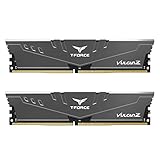
- Simple design to perfectly protect the cooling module
- High thermal conductive adhesive
- Supports Intel & AMD motherboards
- Selected high-quality IC, Supports XMP2.0
- Lifetime warranty
- Capacity: Compare 16GB, 32GB, 48GB, 64GB, and 96GB separately.
- Module layout: A 2×16GB kit is not the same purchase as a single 32GB module. The configuration can affect channel operation, upgrade flexibility, and compatibility.
- Generation: DDR4 and DDR5 belong to different platform ecosystems.
- Form factor: Desktop DIMMs, laptop SO-DIMMs, soldered LPDDR, and server RDIMMs are not substitutes.
- Speed and timings: DDR5-5600, DDR5-6000, and slower JEDEC-rated modules can have different prices and performance characteristics.
- Platform profile: Check whether the kit supports the required Intel XMP or AMD EXPO profile, and whether the motherboard’s qualified-memory list includes it when compatibility is important.
- ECC status: Workstations and servers may require ECC or registered memory, while ordinary consumer desktops commonly use non-ECC DIMMs.
- Warranty and seller: Confirm that the item is new, authentic, actually in stock, and covered by a usable warranty.
- Discount conditions: Note whether the price requires a coupon, membership, rebate, bundle, or credit-card offer.
Do not compare a $399 RGB DDR5-6000 kit with a basic JEDEC kit and attribute the entire difference to the memory shortage. Specifications and branding can explain part of the gap. Conversely, do not dismiss a severe market increase simply because one premium listing is unusually expensive.
Why some viral price percentages are unreliable
Claims that memory prices are up 300%, 400%, or 600% may be based on real data, but they need context. The comparison must identify:
The Tool Desk
Outbyte PC Repair FREERepair Windows errors before they cause bigger problemsFix Now →Outbyte Driver Updater FREEFix the driver behind crashes, sound loss and screen glitchesFind Drivers →- the exact memory product;
- the country and sales channel;
- the starting and ending dates;
- whether the data covers chips, finished modules, or complete systems;
- whether the comparison is against a normal price, a temporary sale, or a historical low.
For example, Counterpoint has reported extremely large increases for broad consumer-memory applications, including products used in broadband routers and set-top boxes. That should not be presented as the price change for every U.S. desktop DDR5 kit.
Likewise, an increase in total memory-market revenue does not prove that a particular consumer kit rose by the same percentage. HBM and server products can have a major effect on industry revenue and supplier priorities even though they are not products a PC builder can install.
Independent reader supportYour contribution helps us test, update, and keep practical guides available for everyone.When might RAM prices normalize?
The strongest current evidence points to elevated prices through the remainder of 2026, slower percentage increases than those seen early in the year, and continued supply tightness into 2027. Meaningful relief is possible in late 2027 or 2028, but that is an outlook—not a promised date.
TrendForce says some planned new capacity may not make a substantial contribution until the second half of 2027 or 2028. It also expects AI demand to continue outpacing DRAM supply expansion in 2027. Micron’s June 2026 outlook is similarly cautious, saying DRAM and NAND supply-demand conditions could remain tight beyond calendar 2027. Samsung has warned that supply constraints could be more severe in 2027 and continue into 2028.
Recommended Free Tools
These projections depend on several uncertain variables:
- continued AI infrastructure spending and hyperscaler capital expenditure;
- HBM production yields and customer validation;
- the timing of new fabs and equipment installations;
- how much high memory prices reduce PC, laptop, and phone demand;
- a possible inventory correction;
- the development of alternative suppliers, including China’s CXMT;
- an unexpected slowdown in AI investment.
There is also evidence that the memory shortage is affecting complete devices, not only retail components. IDC expects worldwide PC shipments to decline 11.3% in 2026 and says higher memory prices will suppress unit demand even while prices remain elevated. Gartner has forecast that combined DRAM and SSD price increases could raise PC prices by 17% and reduce worldwide PC shipments by 10.4% in 2026. Those forecasts concern complete systems and use different assumptions; neither is a direct prediction for a standalone RAM kit.
Also popular on Amazon
- Simple design to perfectly protect the cooling module with high thermal conductive adhesive
- Supports Intel & AMD motherboards
- Selected high-quality IC
- Supports XMP2.0
- Energy saving with ultra-low working voltage
Should you buy RAM now or wait?
There is no financially responsible universal answer. The right decision depends on whether the memory solves an immediate problem and whether the exact kit is reasonably priced.
Buy sooner when:
- Your computer is genuinely memory-constrained, unstable because of a failed module, or unusable for the work you need to do.
- You find a confirmed-compatible kit at a price that is reasonable for the current market.
- The purchase supports a business, workstation, or project where delay costs more than the premium.
- You are upgrading an existing DDR4 system and cannot count on older stock becoming cheaper.
- You need a specific capacity or form factor that may become difficult to find later.
Consider waiting when:
- Your current system works adequately and the upgrade is optional.
- You are building speculatively rather than for an immediate need.
- The desired kit carries a large premium for RGB lighting, extreme overclocking, unusually tight timings, or a capacity you do not need.
- You can monitor several reputable retailers and wait for a promotion.
- A prebuilt PC or laptop offers better total-system value than buying memory separately.
Do not base the decision on:
- a single retailer’s “sale” label;
- a marketplace seller with unclear warranty or authenticity;
- historical prices from 2024 or early 2025 without checking the current supply situation;
- the claim that one AI project has reserved all RAM;
- the assumption that a 10% discount proves the market has reached its bottom.
A practical buying checklist
- Identify the platform first. Confirm whether the system requires DDR4, DDR5, SO-DIMM, ECC, registered memory, or a soldered design.
- Set the capacity based on the workload. Gaming, office work, content creation, virtual machines, and professional applications have different memory needs. Do not treat 32GB as a universal technical minimum.
- Choose a realistic specification. A mainstream speed and reliable compatibility profile may offer better value than a premium overclocked kit.
- Compare the exact SKU across multiple reputable sellers. Track the price, stock status, shipping, return policy, and warranty.
- Compare total platform cost. If a new DDR4 motherboard is required to save on memory, or a prebuilt includes memory at a lower effective cost, the cheapest kit may not produce the cheapest computer.
- Test promptly after purchase. Verify that the full capacity is recognized and run an appropriate memory-stability test during the return period. Keep packaging and documentation until the system is confirmed stable.
Bottom line: slowing inflation is not falling RAM prices
As of August 10, 2026, the evidence does not support saying that U.S. consumer RAM prices have broadly begun to fall. It supports a narrower and more useful conclusion: the pace of wholesale price increases has slowed, spot prices have softened in places, and retailers are offering occasional discounts—but the underlying shortage remains.
Quick wins for a faster PC:
Scan for outdated or missing drivers - takes under a minuteDriver Scan →Repair Windows errors before they cause bigger problemsFix Now →For an urgent upgrade, buy a compatible kit when you find a fair current price. For an optional upgrade, waiting and tracking the exact product is reasonable. The most likely near-term outcome is continued volatility and elevated prices, not an immediate return to the inexpensive DDR4 and DDR5 pricing seen in 2025.
Frequently Asked Questions
Are RAM prices actually falling in August 2026?
Not broadly in the United States. Some individual DDR5 kits and regional markets have declined from recent peaks, and spot prices have softened in places. However, TrendForce still forecasts DRAM contract prices to rise approximately 13%–18% quarter over quarter in Q3 2026, while U.S. retail prices remain far above 2025 levels.
Is DDR4 cheaper than DDR5 right now?
DDR4 is often cheaper in individual listings, but it is not reliably inexpensive. Reported 32GB DDR4 prices rose from roughly $60–$90 in October 2025 to approximately $150–$180 by January 2026. DDR4 and DDR5 are also incompatible, so the motherboard and processor platform determine which one you can use.
Should I wait until 2027 to buy RAM?
Wait if your current system works and the upgrade is optional. Buy sooner if you need the capacity for work, a failed module requires replacement, or you find a fair price for a compatible kit. Forecasts suggest that meaningful supply relief may not arrive until late 2027 or 2028, but that timing is uncertain.
Can I use laptop or server memory in a desktop PC?
Usually not. Laptop SO-DIMMs, soldered LPDDR, server RDIMMs, ECC modules, and desktop DIMMs are different product categories with different physical and electrical requirements. Check the system or motherboard specifications before buying.
The Bottom Line
Bottom line: RAM prices are rising more slowly, not falling broadly. Q3 2026 DRAM contract prices are still forecast to increase 13%–18% quarter over quarter, and U.S. retail DDR4 and DDR5 remain substantially more expensive than in 2025. Treat discounts as individual buying opportunities, not evidence that the memory shortage is over.




