
Some links on this page are affiliate links: if you buy through them we may earn a commission, at no extra cost to you.
Short answer: Amazon’s November 2025 warning was about criminals impersonating Amazon to steal passwords, one-time codes, payment details and personal information. It was not an announcement that Amazon’s database had been breached or that 300 million customer accounts were compromised.
The “300 million” figure came from contemporary media reports describing the apparent reach of an Amazon warning email. Amazon has not publicly established that figure as a count of breached accounts, successful attacks or individually targeted customers. The underlying scam remains relevant in 2026, however: criminals continue to use fake delivery notices, refund offers, recall messages, customer-service accounts, recruitment offers and Prime alerts to trick shoppers into handing over information.
As an Amazon Associate I earn from qualifying purchases.
Quick wins for a faster PC:
Repair Windows errors before they cause bigger problemsFix Now →Fix the driver behind crashes, sound loss and screen glitchesFind Drivers →Updated August 9, 2026: The November 2025 alert is a historical warning, but Amazon’s latest public scam update, dated June 24, 2026, says impersonation attempts continue through email, phone calls, social media and text messages.
What Amazon actually warned customers about
Reports published on November 24–26, 2025 said Amazon warned more than 300 million users about impersonation scams aimed at shoppers. The reported warning covered several ways criminals pretend to be Amazon representatives, delivery agents, support staff or legitimate sellers.
Popular on Amazon

- Advanced RFID secure sleeve designed to protect credit cards, money cards, identification cards from electronic fraud or theft; RFID shields are a superb debit card protector, RFID blocking to provide superior travel security.
- Made from special RFID blocking material, this credit cards holder is thin and lightweight. certified secure sleeves for credit cards protect against scanning of digital and electronic chips by thieves, tear- and water-resistant
- RFID sleeve with electronic armor is the identity theft protection for your bank cards. this credit card and ID holder prevents electronic access to your cards. valuable credit card protection, an ID card protector. RFID to block scanning and skimming
- Credit card protection sleeve designed with color coding system to find each card easily and quickly. RFID credit card holder have different colors for superior convenience. the special high quality rigid aluminum foil coating of these tiny slim RFID blocking wallets ensures you will never be a victim of high-tech crime
- Includes 12x RFID credit card protector sleeves for ultimate fraud prevention and travel safety
Amazon’s warning was about customer exposure to social engineering. A scammer might contact a shopper directly, or place a fake advertisement or search result in front of them, then use a convincing story to obtain information voluntarily.
- Fake delivery problems: A message claims that a package could not be delivered, an address must be confirmed or a fee is required.
- Fake account alerts: The recipient is told that an account has been suspended, a payment method failed or an unauthorized order requires immediate action.
- Fake advertisements and bargain offers: An unusually cheap product, Black Friday promotion or holiday deal leads to a counterfeit Amazon-looking store or login page.
- Unofficial payment and login requests: The scammer asks for a password, one-time password, card number, bank details, gift cards or another form of payment.
- Fake support calls: An unsolicited caller claims to be fixing an account or processing a refund and asks for remote computer access, a verification code or payment-card information.
- Look-alike websites: A link opens a page designed to resemble Amazon but controlled by the criminal. The page records anything typed into it.
These approaches can arrive by email, SMS, phone, social media, a browser notification, a search advertisement or a shopping website. The Amazon branding may look genuine even when the message and destination are not.
What’s actually slowing this PC down?
Pick the symptom - the matching free tool is one click away.
Amazon’s official scam-trends reporting confirms that fake order confirmations, shipping notifications, refund offers and calls requesting payment-card information remained common scam themes during 2025 and into 2026.
Was Amazon hacked?
There is no evidence in the reporting reviewed for this warning that Amazon suffered a breach compromising 300 million retail customer accounts. The alert described criminals attacking customers through Amazon impersonation, phishing and account-takeover attempts—not a disclosed intrusion into Amazon’s customer database.
That distinction matters. “Amazon attack” can refer to several very different events:
| What it could mean | What the November 2025 warning described |
|---|---|
| Amazon corporate-system breach | Not established by the evidence reviewed for this alert. |
| Amazon shopping-account takeover | A possible result when a victim gives a criminal credentials, an MFA code or control of a device. It applies to affected accounts, not all 300 million customers. |
| Amazon-branded phishing campaign | Yes. Criminals impersonated Amazon through messages, websites, advertisements and calls. |
| AWS infrastructure incident | Not what this warning concerned. AWS accounts and cloud infrastructure should not be conflated with ordinary Amazon shopping accounts. |
The 300 million number should therefore be treated as a media-reported or estimated audience figure, not a verified count of compromised accounts. Amazon’s public 2025 Form 10-K does not provide a comparable official total of active retail customer accounts that would independently verify the number.
How an Amazon impersonation scam turns into account takeover
Not every scam uses every step, but the common attack chain looks like this:
- Initial contact: The criminal sends an email or text, calls the victim, replies to a social-media complaint, places a search ad or promotes a fake deal.
- A credible problem or reward: The message mentions an unauthorized purchase, delivery failure, refund, Prime renewal, account lockout, product recall or unusually attractive deal.
- Pressure to act: The victim is told to respond immediately or lose an order, refund, account or limited-time offer.
- Fake login or payment page: A link leads to a look-alike site that captures the Amazon username and password, or requests card and bank information.
- One-time-code theft: The criminal asks the victim to read out an OTP or enter it into the fraudulent site. The code may allow the attacker to complete a sign-in or password reset.
- Account takeover: Using the stolen information, the criminal may enter the real Amazon account, change the password, alter delivery addresses, add payment methods, place orders or change recovery details.
- Secondary attacks: If the password was reused, the criminal may try it against email, banking, social-media or other retail accounts.
The FBI described this broader account-takeover method in its November 25, 2025 public service announcement. That alert concerned criminals impersonating financial-institution support personnel—not a breach of Amazon—and said the FBI had received more than 5,100 account-takeover complaints with reported losses exceeding $262 million from January 2025 onward. Those figures must not be interpreted as Amazon-specific complaints or losses.
Also popular on Amazon
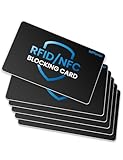
- Secure Your Information: Simply insert the RFID blocking card into your wallet to protect against digital pickpocketing. Block unauthorized scanning of your contactless cards, including credit/debit cards, passports, driver's licenses - to safeguard your identity and financial security
- Effective Protection: Our RFID blocking card utilizes advanced electromagnetic shielding technology, which features an embedded antenna mesh and chip that instantly detects and scrambles scanning attempts, providing consistent and reliable protection for the entire wallet
- Ultra Slim & Easy to Use: Credit-card-sized and just 0.03 inches (0.76 mm) thick, it slips easily into your wallet, purse or card holder adding no bulk. No charging or batteries needed. It will not demagnetize other cards, nor interfere with your phone signals
- A Thoughtful Gift: Give the practical gift of security. Effortlessly protecting your loved ones from digital theft – offering instant peace of mind, which is a truly meaningful way to show your care
- Test the Card: Test our RFID blocking card at self-checkout: Layer your contactless card with our RFID card on the reader - payment fails instantly, error message pops up
The FBI also warned that multifactor authentication does not protect someone who types credentials and an MFA code into a fraudulent login page or voluntarily gives the code to an impostor. MFA reduces risk, but it cannot correct a user’s decision to authorize the attacker.
Why the alert was especially relevant during holiday shopping
Delivery, refund and order-confirmation stories become more believable when people are buying gifts and receiving frequent shipping notifications. Criminals can exploit that volume while shoppers are distracted or expecting a problem with an order.
FortiGuard Labs’ 2025 holiday-threat analysis found more than 18,000 holiday-themed domains registered during the preceding three months, with at least 750 classified as malicious. It also identified more than 19,000 e-commerce-themed domains imitating major retail brands; approximately 2,900 were classified as malicious. The report identified about 1.57 million e-commerce login accounts in stealer-log collections.
Those figures describe the wider holiday e-commerce threat environment. They do not mean that 18,000 Amazon domains existed, that 1.57 million Amazon accounts were stolen or that any particular number of Amazon customers were compromised.
How to check whether an Amazon message is genuine
Do not authenticate an email, text or caller solely because it contains Amazon’s logo, an order number, a familiar name or a convincing caller ID. Sender addresses and caller IDs can be spoofed, and criminals can copy the appearance of legitimate communications.
- Stop interacting with the message. Do not click links, open attachments, reply, call the supplied number or follow instructions to install software.
- Open Amazon independently. Use the Amazon app or type the website address yourself. Do not use the link, phone number or search result supplied by the suspicious communication.
- Check Your Orders. Confirm whether the claimed order, delivery issue, cancellation or refund appears in the account. Amazon says legitimate purchases should appear in the account’s order history.
- Check Message Center. Look for related account communications inside Amazon. If the message cannot be corroborated there or in the account, treat it as suspicious and verify through Amazon’s official customer-service route. Its absence is a warning sign, but not a universal proof test for every type of communication.
- Inspect the account directly. Review payment methods, delivery addresses, recent orders, subscriptions and security settings.
- Report the attempt. Forward a suspected phishing email to [email protected] and use Amazon’s official reporting or customer-service tools.
Amazon does send legitimate email. The safe rule is not “every message outside an @amazon.com address is fake.” Instead, verify independently and never provide a password, OTP, sensitive payment information or remote access in response to an unsolicited request.
The Tool Desk
Outbyte Driver Updater FREEScan for outdated or missing drivers - takes under a minuteDriver Scan →Outbyte PC Repair FREERepair Windows errors before they cause bigger problemsFix Now →What to do if you already interacted with the scam
The right response depends on what happened. A link click alone is different from entering a password, handing over an OTP, exposing card data or granting control of a computer.
If you clicked but entered nothing
- Close the fraudulent page and do not return to it.
- Do not download an offered application, browser extension or file.
- Update the browser and device operating system.
- Run a reputable security scan if anything downloaded, opened or installed.
- Review Amazon orders, addresses, payment methods and security settings.
- Change the Amazon password if there is any possibility that it was entered or exposed.
- Monitor financial accounts if the page involved a payment, refund or purchase.
A click alone does not prove that an account was taken over. The risk is substantially higher if the page caused a download, requested an installation, or received credentials or payment information.
Also popular on Amazon

- ONE CARD PROTECTS YOUR WHOLE WALLET: Drop a single KF-Premium card into your wallet, purse, or card holder and every card sitting near it is shielded from contactless RFID and NFC scans, so you do not need a separate sleeve on each card. This 2-pack covers a second wallet, a passport holder, or a family member.
- ULTRA THIN AT 0.9MM, BARELY THERE: Each blocking card is only 0.9mm thick, about as slim as one of your bank cards, so it slides into any wallet slot without the bulk of foil sleeves or switching to a new wallet. Slim enough that you forget it is working.
- STOPS FRAUD BEFORE IT STARTS: The armoured shield design sends out an interfering counter-signal that blocks unauthorized RFID and NFC readers from skimming your debit cards, credit cards, and IDs. It guards against contactless payment fraud, identity theft, and digital pickpocketing in crowds, on transit, and while you travel.
- WORKS THE MOMENT IT IS IN YOUR WALLET: No batteries, no charging, no app, and nothing to switch on. Protection is automatic and continuous for the life of the card, and the durable, high-quality build holds up to daily wear in a back pocket or bag.
- A PRACTICAL GIFT THEY WILL ACTUALLY USE: The black and gold finish gives it a premium look that suits travelers, students, parents, and anyone who carries contactless cards. Boxed as a 2-pack, it works for birthdays, holidays, or a stocking filler that quietly protects the people you care about.
If you entered your Amazon password
Use a trusted device that was not exposed to the scam if possible:
- Open the Amazon app or manually enter Amazon’s address.
- Go to Account & Lists → Your Account → Login & security.
- Edit the password and create a new, unique password that has never been used elsewhere.
- Change the password anywhere else it was reused, especially your email account, banking accounts and other shopping services.
- Review orders, saved cards, bank accounts, delivery addresses, subscriptions, phone numbers and email addresses.
- Remove unfamiliar information and contact Amazon through the official site or app if access was changed.
- Turn on two-step verification and add a passkey if the option is available.
Amazon’s published two-step-verification instructions use the Login & security and Advanced Security Settings areas. Labels can differ by country, marketplace, app version or account status.
Recommended Free Tools
If you gave the scammer an OTP or approved an MFA request
Treat the account as potentially compromised even if you did not knowingly share the password. Immediately change the Amazon password, change any reused password and inspect the account for changes the criminal may have made.
Pay particular attention to:
- unrecognized orders or cancellations;
- new delivery addresses;
- changed payment methods;
- new phone numbers or email addresses;
- altered password or recovery settings;
- unfamiliar subscriptions or digital purchases.
If the attacker changed the password or recovery information, contact Amazon through the official app or website rather than using a number supplied by the caller or message.
If you entered card or bank information
- Call the card issuer or bank using the number on the physical card or an official statement.
- Explain that the information was entered into a suspected phishing site.
- Ask whether the card should be frozen, replaced or monitored.
- Dispute unauthorized transactions and ask what additional protections are available.
- Monitor the account for further charges, transfers or changes.
- After securing the Amazon account, remove the exposed payment method from it.
Do not pay anyone claiming to be an “Amazon recovery agent,” “refund specialist” or account-security employee. Amazon’s phishing guidance recommends contacting the card company and removing a card submitted to a spoofed site.
If you installed software or granted remote access
This is a higher-severity incident because the scammer may have seen passwords, financial information, files or active account sessions.
- Disconnect the device from the internet.
- End the remote-access session and uninstall the remote-access application.
- Use a different, trusted device to change Amazon, email, banking and other important passwords.
- Contact the bank or card issuer if financial information was visible or entered.
- Run a reputable malware scan or obtain professional technical help.
- Inspect installed applications, browser extensions, saved passwords and email-forwarding rules.
- Check important accounts for new recovery addresses, devices, sessions and payment activity.
Amazon’s 2026 scam reporting includes remote-access requests among account-takeover techniques. The FTC’s Amazon impersonation data spotlight also warns that someone demanding remote access to process a refund is a scammer.
Account protections worth enabling now
Use a unique password
A long, unique password prevents a password stolen from another service from automatically opening the Amazon account. A password manager can generate and store separate credentials for Amazon, email, banking and other high-value accounts.
Also popular on Amazon
- SECURITY - Protects your RFID enabled cards, passport, driving license, etc from RFID skimming (electronic pickpocketing).
- TECHNOLOGY - Uses sophisticated electromagnetic jamming technology frequently used in military applications.
- CONVENIENCE - You no longer need to wrap your credit card in foil. Just keep VAULTCARD together with your cards in your wallet to ensure RFID security.
- NO BATTERY - VAULTCARD lasts forever. The card has an extremely efficient energy harnessing technology which allows it to be powered by energy from RFID scanner.
- AUTO-ADJUST POWER - VAULTCARD automatically adjust power of its jamming signal to ensure your RFID enabled cards, passport etc remain protected even against very powerful RFID skimming systems.
FortiGuard’s reference to millions of e-commerce credentials in stealer-log collections does not establish that the credentials came from Amazon or worked against Amazon accounts. It does show why reusing a shopping password is risky.
Enable two-step verification
Amazon’s documented path is:
- Sign in and select Account & Lists.
- Select Your Account.
- Select Login & security.
- Under Advanced Security Settings, select Edit.
- Select Get Started under two-step verification.
- Choose SMS, voice call or an authenticator app.
- Add a backup verification method.
- Confirm the code and enable the feature.
An authenticator app avoids dependence on cellular delivery, while SMS is convenient and widely compatible. Both can still be defeated by phishing if a victim enters the code into a fraudulent site or reads it to an impostor.
Do these 3 things before closing this tab:
1Repair Windows errors before they cause bigger problems2Scan for outdated or missing drivers - takes under a minute3Clear out junk files and repair common Windows errorsPrefer a passkey where available
Amazon says passkeys use a device fingerprint, face scan or PIN instead of a traditional password and are less susceptible to phishing. The published setup route is Your Account → Login & Security → Set up next to Passkeys; the exact labels and availability may vary by browser, operating system, app, marketplace and account.
A passkey is not a substitute for securing the device itself. Protect the device lock screen, keep recovery methods current and do not approve unexpected sign-in prompts.
Independent reader supportYour contribution helps us test, update, and keep practical guides available for everyone.Scam variants that remain relevant in 2026
Fake refund and failed-purchase texts
The FTC warned about texts claiming that an Amazon purchase failed a “quality inspection” or was recalled, then offering a refund through a link. The link leads to phishing designed to steal money or personal information. Do not use the link; check the order and refund status inside Amazon instead. See the FTC consumer alert.
Fake product-recall notices
Amazon warned in March 2026 about emails pressuring customers to confirm recall eligibility through an external refund website. Genuine recall information should be verifiable inside the Amazon account under Messages or Your Orders, along with official product-safety information reached through Amazon’s own site.
Free tools Windows power users keep installed
One-click scans. No signup required.
Fake customer-service accounts on social media
Scammers monitor public complaints, reply from a look-alike customer-service account, move the conversation into private messages and send a suspicious link. Amazon reported a 33% increase in reported social-media customer-service impersonation scams since December 2024. Do not assume that an account replying to a public post is an official Amazon support representative.
Fake Amazon recruitment offers
Amazon reported a 90% increase in reported employment-impersonation cases from January through March 2025. In 83% of those reported cases, scammers allegedly requested upfront payment through cryptocurrency or gift cards or sought sensitive personal information. Verify Amazon jobs through amazon.jobs, and never pay to apply for a job.
Also popular on Amazon

- RFID/NFC SECURITY: Works on 13.56MHz frequency, protect your credit cards, debit cards and ID cards away from fraud scanning.
- SMART IDEA & HARDCORE FEATURES: Advanced RFID blocking technology 24/7/365 alll days working. No batteries required, no charging, no manual operation.
- CARD PROTECTION VALID RANGE: Effective within diameter of 2.4inches/ 6cm of the card protector. One card protector for one wallet. Recommend one per side if you use a bulky bi-fold/tri-fold wallet.
- SLIM SIZE FOR BUSINESS & TRAVEL: ONLY 0.09 cm thick. Fits well for slim wallets, card holders, badge holders or passport wallets.
- GIFT IDEAS: Premium matte textured apperance, stable and powerful function, packaged with VULKIT gift package. The best gift for you.
Fake Prime-renewal notices
Another recurring lure claims that Prime will renew at an unexpected price and directs the recipient to a cancellation or account-update page. Open Amazon independently to review membership and billing details. Treat the message as a lure unless the account confirms the claim.
What Amazon’s reported data says about the trend
Amazon’s 2025 customer-report statistics do not show a simple, uninterrupted rise in every form of scam. Amazon said reported impersonation scams declined across 2025, with fourth-quarter reports 36% below the year’s first-quarter peak. Phone-based scams reportedly fell from 30% of reports in Q1 to 26% in Q4, while SMS scams rose from 3% to 13%.
PC Slower Than It Used to Be?
A free scan shows the junk files, broken settings and background clutter dragging Windows down - then fixes them in one click.Free scan · Windows 10 & 11Outdated Drivers Are Slowing You Down
One free scan finds every outdated or missing driver and matches the right update for your exact hardware.Free scan · exact hardware matchIn the United States, Amazon said email accounted for 40% to 50% of reported impersonation-scam contacts in 2025. Its November data put email at 45% of reported contacts and package-delivery problems at 34% of reported tactics. These are statistics from Amazon customer reports, not a census of all scams worldwide or a measurement of successful account compromises.
Amazon’s June 24, 2026 update says phishing SMS messages tend to increase after Prime Day, when consumers are more likely to expect delivery and refund notifications. That makes post-shopping-event texts worth treating with particular caution.
How to report the scam
- Amazon: Use Amazon’s official scam-reporting or customer-service route. Suspected phishing emails can be forwarded to [email protected]. Amazon’s suspicious-email guidance explains the reporting process.
- Suspicious text messages: Forward the message to 7726, which spells “SPAM,” or use the phone’s report-junk function.
- U.S. consumer fraud: File a report at ReportFraud.ftc.gov.
- Account takeover or cybercrime: Report it to the FBI’s Internet Crime Complaint Center.
- Financial loss: Contact the bank, card issuer or payment service immediately. Do not wait for a government report to be processed.
The bottom line on the “300 million customers” headline
The headline should not be read as proof that Amazon was hacked or that 300 million accounts were compromised. It describes a reported warning to a very large customer audience about criminals impersonating Amazon.
The practical risk is real but individual: a scammer may be trying to make you disclose information or authorize access. Verify every order, refund, delivery problem, recall and account alert inside the Amazon app or a website opened independently. If you already shared a password, OTP, payment detail or remote access, secure the affected accounts and financial products immediately.
Frequently Asked Questions
Are 300 million Amazon accounts compromised?
No evidence reviewed for the November 2025 warning establishes that 300 million Amazon accounts were breached or taken over. The figure was reported as the approximate audience for an Amazon warning, not as a verified compromise count.
Will Amazon ever send a legitimate email?
Yes. Amazon does send legitimate emails. Do not rely only on the sender address, logo or caller ID. Open Amazon independently, check Your Orders and Message Center, and never provide a password, one-time code, sensitive payment information or remote access in response to an unsolicited request.
Does two-factor authentication stop Amazon phishing?
It reduces the damage from a stolen password but does not stop a person from entering credentials and a code into a fake website or reading a code to an impostor. Passkeys are generally more resistant to phishing, where available, but the device and recovery methods must still be protected.
What should I do if I gave an Amazon scammer my one-time code?
Change the Amazon password immediately from a trusted device, change any reused password, inspect orders, payment methods, addresses and recovery settings, and contact Amazon through its official app or website if access was changed. Contact your bank or card issuer if financial details were also exposed.
Do these 3 things before closing this tab:
1Scan for outdated or missing drivers - takes under a minute2Clear out junk files and repair common Windows errors3Fix the driver behind crashes, sound loss and screen glitchesThe Bottom Line
Bottom line: Amazon’s November 2025 alert was a warning about impersonation scams, not a disclosed breach of 300 million accounts. The safest response is to ignore links and phone numbers supplied in unexpected messages, verify activity through Amazon’s app or manually opened website, and act immediately if you entered a password, OTP, payment detail or granted remote access.




