
Outdated Drivers Are Slowing You Down
One free scan finds every outdated or missing driver and matches the right update for your exact hardware.Free scan · exact hardware matchPC Slower Than It Used to Be?
A free scan shows the junk files, broken settings and background clutter dragging Windows down - then fixes them in one click.Free scan · Windows 10 & 11Some links on this page are affiliate links: if you buy through them we may earn a commission, at no extra cost to you.
Yes—AI data centers are a major reason memory has become dramatically more expensive. But the popular explanation needs an important correction: AI companies are not buying the same ordinary RAM sticks that fit a consumer laptop or desktop. They are consuming huge quantities of high-bandwidth memory (HBM), high-capacity server DRAM, low-power server memory, and enterprise SSDs. Those products are different from consumer DDR5, but they compete for related wafer capacity, advanced manufacturing, packaging, testing, and supplier investment.
That indirect crowding-out effect is already reaching consumers. Upstream contract prices for conventional DRAM and NAND storage have surged, retail DDR5 kits have reached extraordinary prices, and manufacturers are responding with higher prices, smaller RAM and storage configurations, fewer budget models, or lower profit margins. The most likely result is not that every laptop or gaming PC suddenly becomes 50% more expensive. It is that buyers will pay more for the same specifications—or receive less memory and storage for the same price.
As an Amazon Associate I earn from qualifying purchases.
Quick wins for a faster PC:
Clear out junk files and repair common Windows errorsFree Scan →Fix the driver behind crashes, sound loss and screen glitchesFind Drivers →This analysis reflects market information available through August 10, 2026. Forecasts are identified as forecasts, and retail examples are dated snapshots rather than guarantees of what every buyer will pay.
Why AI is making consumer memory more expensive
AI training and inference systems require far more memory bandwidth and capacity than conventional workloads. A modern AI server may combine accelerators fitted with HBM, large pools of server DRAM, and high-capacity SSDs holding training data, model checkpoints, indexes, and other frequently accessed information.
Popular on Amazon
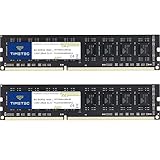
- [Color] PCB color may vary (black or green) depending on production batch. Quality and performance remain consistent across all Timetec products.
- DDR3L / DDR3 1600MHz PC3L-12800 / PC3-12800 240-Pin Unbuffered Non-ECC 1.35V / 1.5V CL11 Dual Rank 2Rx8 based 512x8
- Module Size: 16GB KIT(2x8GB Modules) Package: 2x8GB ; JEDEC standard 1.35V, this is a dual voltage piece and can operate at 1.35V or 1.5V
- For DDR3 Desktop Compatible with Intel and AMD CPU, Not for Laptop
- Guaranteed Lifetime warranty from Purchase Date and Free technical support based on United States
At the same time, the memory industry is concentrated. TrendForce’s Q1 2026 revenue data put Samsung at approximately 38.5% of DRAM revenue, SK hynix at 28.8%, and Micron at 22.4%—roughly 90% combined. That concentration makes allocation decisions by a small number of manufacturers important to the entire device market.
Those manufacturers have a strong financial incentive to prioritize products sold into AI infrastructure and high-end servers. When capacity moves toward HBM, server DRAM, and enterprise SSDs, less supply is available for PC memory, mobile memory, graphics memory, and client SSDs. AI is therefore a major driver of the shortage, although it is not the only one. Supplier allocation decisions, limited near-term fab expansion, long-term contracts, and strong server demand also matter.
Recommended Free Tools
“RAM” is several different products
Headlines often use RAM as if it were one interchangeable commodity. It is not. The current shortage spans several related memory markets:
| Memory type | Typical use | Why consumers should care |
|---|---|---|
| HBM | AI accelerators and high-performance computing | The main AI demand driver. It is not a plug-in replacement for desktop or laptop RAM, but it consumes substantial DRAM and advanced-packaging capacity. |
| DDR5 RDIMM | Servers and AI infrastructure | High-capacity server memory is being prioritized alongside HBM. |
| DDR5 UDIMM/SODIMM | Desktop PCs and upgradeable laptops | This is the conventional consumer RAM most visible to DIY builders and upgraders. |
| LPDDR4X/LPDDR5X | Phones, tablets, thin laptops, and some servers | It is commonly soldered or integrated, so buyers often cannot add more later. |
| GDDR6/GDDR7 | Graphics cards and gaming systems | Graphics memory has its own supply dynamics, but it is also exposed to broader graphics and memory constraints. |
| NAND Flash | SSDs, phones, tablets, and embedded storage | AI data centers are increasing demand for enterprise SSDs, which can raise the cost of consumer storage. |
Micron describes HBM as vertically stacked memory dies connected with through-silicon vias and a much wider interface than conventional DDR5. HBM is designed to deliver extremely high bandwidth close to an AI processor; ordinary DDR5 modules are designed for general-purpose system memory. They are different products with different interfaces and packaging.
How can HBM affect ordinary DDR5 if the products are different?
This is the central point: HBM does not directly replace or consume a consumer DIMM. The effect is indirect competition for manufacturing resources.
- Both products belong to the broader DRAM manufacturing ecosystem. They rely on related DRAM wafer capacity and advanced process technology.
- HBM is unusually resource-intensive. Its dies are stacked, connected using TSVs, tested, and integrated into advanced packages.
- The same nominal capacity does not require the same manufacturing input. Larger HBM dies and additional processing mean fewer usable HBM dies can be produced from a wafer than conventional DRAM capacity in a simple one-to-one comparison.
- Manufacturers prioritize the highest-value demand. If AI customers are willing to sign large, long-term contracts for HBM and server memory, suppliers have a reason to allocate production away from lower-margin PC and module customers.
- Consumer supply tightens even without a physical substitution. Fewer wafers, packages, or finished dies reach the conventional DRAM market, so prices rise.
Micron said in its fiscal Q1 2026 earnings remarks that the HBM-to-DDR5 trade ratio was approximately 3:1. In practical terms, a major increase in HBM demand can consume disproportionately more DRAM manufacturing capacity than an equivalent nominal capacity increase in conventional DDR5. Micron also said the ratio rises with future HBM generations.
What’s actually slowing this PC down?
Pick the symptom - the matching free tool is one click away.
That ratio should not be interpreted literally as one 36GB HBM stack taking one 36GB consumer kit off a store shelf. It is a manufacturing-capacity comparison, not a claim that the two products are interchangeable.
SK hynix has separately explained that TSVs increase HBM die size and that stacking and advanced packaging add complexity. Those factors reduce the number of usable HBM dies that can be produced from a given wafer.
How much DRAM capacity is moving toward HBM?
The crowding-out effect is large relative to the number of memory bits HBM contains. TrendForce estimated that HBM wafer input among Samsung, SK hynix, and Micron would represent approximately:
- 18% of total DRAM wafer input by the end of 2025;
- 22% by the end of 2026; and
- 30% by the end of 2027.
Because HBM requires more wafer input per bit, TrendForce estimated that HBM’s share of total DRAM bits would be lower—approximately 8%, 9%, and 13% in those same years. The difference is why a minority share of total DRAM bits can still consume a much larger share of constrained wafer and packaging capacity.
Free tools Windows power users keep installed
One-click scans. No signup required.
IDC characterizes the situation as a structural reallocation of manufacturing capacity toward HBM, high-capacity DDR5, and other AI-oriented memory products rather than a simple, short-lived inventory shortage. Its analysis says the shift is affecting both PC and smartphone markets.
Also popular on Amazon

- Boosts System Performance: 32GB DDR5 RAM laptop memory kit (2x16GB) that operates at 5600MHz, 5200MHz, or 4800MHz to improve multitasking and system responsiveness for smoother performance
- Accelerated gaming performance: Every millisecond gained in fast-paced gameplay counts—power through heavy workloads and benefit from versatile downclocking and higher frame rates
- Optimized DDR5 compatibility: Best for 12th Gen Intel Core and AMD Ryzen 7000 Series processors — Intel XMP 3.0 and AMD EXPO also supported on the same RAM module
- Trusted Micron Quality: Backed by 42 years of memory expertise, this DDR5 RAM is rigorously tested at both component and module levels, ensuring top performance and reliability
- ECC Type = Non-ECC, Form Factor = SODIMM, Pin Count = 262-Pin, PC Speed = PC5-44800, Voltage = 1.1V, Rank And Configuration = 1Rx8
AI is also pushing up SSD and NAND prices
AI infrastructure needs storage as well as working memory. Data centers use high-capacity enterprise SSDs for:
- training datasets;
- model checkpoints;
- vector databases;
- indexing;
- inference-related data; and
- storage tiers that complement or extend expensive HBM and server DRAM.
Micron identifies high-performance and high-capacity SSDs as important components of AI data-center infrastructure. TrendForce said AI-server demand was shifting NAND capacity toward enterprise SSDs and limiting the supply available for client SSDs. It forecast client SSD prices to rise by at least 40% quarter over quarter in Q1 2026, and NAND prices more broadly to rise by 70–75% quarter over quarter in Q2. Those increases affect the storage component of a laptop, tablet, phone, or gaming PC even when its RAM capacity does not change.
How severe has the price increase become?
The clearest public figures are upstream contract-market forecasts. These are prices negotiated between manufacturers, OEMs, and other industry buyers—not a promise that a retail RAM kit or finished laptop will rise by the same percentage.
| Period | Market forecast or snapshot | What it means |
|---|---|---|
| Q1 2026 | Conventional DRAM contracts: +90–95% quarter over quarter. NAND: +55–60%. | TrendForce said PC DRAM prices could at least double during the quarter. |
| Q2 2026 | Conventional DRAM: +58–63%. NAND: +70–75%. | Another major sequential increase, not a return to normal pricing. |
| Q3 2026 | Conventional DRAM: +13–18%. NAND: +10–15%. | The rate of increase is moderating, but prices remain elevated. |
| August 6, 2026 | Some U.S. retail listings showed 32GB DDR5 kits around $350–$400, 64GB kits around $826, and 128GB kits above $2,000. | A dated lowest-available retail snapshot, not an average and not a quote for every kit. |
The Q1, Q2, and Q3 figures are sequential contract forecasts and should not be casually added together. Retail prices also vary by capacity, speed, timings, brand, availability, region, seller, and whether the listing is actually in stock. TrendForce’s Q1 forecast, Q2 forecast, and Q3 DRAM research describe the upstream market, while Tom’s Hardware provides a useful but volatile U.S. retail view.
What will happen to laptop prices?
Laptops are exposed through several components:
- DDR5 SODIMMs in upgradeable models;
- soldered LPDDR5X in thin-and-light laptops;
- NVMe SSD storage;
- GDDR6 or GDDR7 graphics memory in gaming laptops; and
- the OEM’s negotiated memory and storage contracts.
A manufacturer has four basic ways to respond when the bill of materials rises:
- Raise the retail price.
- Keep the list price but reduce discounts or promotions.
- Keep the price but ship less RAM or storage.
- Cancel, delay, or withdraw a low-margin configuration.
That means a laptop buyer may not see a dramatic price increase on the shelf. Instead, a configuration that used to include 16GB of RAM and a 1TB SSD may launch with 16GB and 512GB, or a lower-priced model may move from 16GB to 8GB. IDC has described this kind of specification reduction in phones and says a similar process could occur in PCs—for example, moving from 12GB/256GB to 8GB/128GB at the same price. IDC also expects larger vendors with stronger supplier relationships to be better positioned than smaller brands.
Upgradeable laptops can be financially safer because a buyer may start with a reasonable amount of RAM and add capacity later. However, the upgrade itself may become expensive, and many thin laptops use soldered LPDDR memory that cannot be replaced. Check the exact model—not just the product family—before assuming an upgrade is possible.
What will happen to tablets?
Tablets generally use soldered LPDDR4X or LPDDR5X memory and embedded UFS or eMMC storage. That makes the supply-chain exposure similar to smartphones and makes post-purchase upgrades uncommon or impossible.
TrendForce reported sharp increases in LPDDR4X and LPDDR5X contract prices and said smartphone brands could adjust production plans as memory costs mounted. Tablets use much of the same mobile-memory supply chain.
The likely consumer effects are higher prices, less storage at a given price, fewer inexpensive configurations, or slower product refreshes. But public forecasts do not support a universal percentage increase for tablets. Tablet pricing depends heavily on screen size, processor, cellular connectivity, software support, retailer promotions, and the manufacturer’s ability to absorb component costs.
For a tablet, compare the actual RAM and storage numbers with the previous generation. A model name such as “2026 edition” does not guarantee that the entry configuration is as generous as last year’s model.
Also popular on Amazon
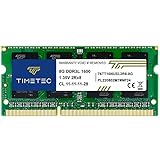
- [Specs] DDR3L / DDR3 1600MHz PC3L-12800 / PC3-12800 204-Pin Unbuffered Non ECC 1.35V CL11 Dual Rank 2Rx8 based 512x8
- [Size] Module Size: 8GB Package: 1x8GB
- [Voltage] JEDEC standard 1.35V, this is a dual voltage piece and can operate at 1.35V or 1.5V
- [Compatibility] Compatible with DDR3 Laptop / Notebook PC, Mini PC, All in one Device
- [Color] PCB Color is Green
What will happen to gaming PCs?
DIY desktop builders
DIY buyers feel the increase directly because they purchase memory as a separate retail component. A 32GB or 64GB kit can represent a meaningful share of an entire build budget when prices are elevated.
Compare the cost of building a system from individual parts with the price of a complete desktop. Large OEMs may have contracts or purchasing power that temporarily gives them better access than individual buyers. That advantage is not guaranteed, but it is worth checking before assuming DIY is automatically cheaper.
Do not assume DDR4 is an escape route. DDR4 uses an older platform and may be cheaper in some cases, but Tom’s Hardware reported that some DDR4 prices had also doubled or tripled from October 2025 levels. A DDR4 system may also limit future processor and motherboard upgrades. Compare the complete platform cost, not just the memory kit.
Gaming laptops
Gaming laptops combine system RAM, GPU memory, and SSD storage, so they can be exposed on several fronts at once. TrendForce said rising memory costs were weighing on notebook and gaming-device demand, while constrained graphics-memory supply kept GDDR prices elevated. That does not mean HBM prices mechanically determine every gaming-laptop or graphics-card price; GPU die supply, tariffs, board costs, demand, and retailer margins also matter.
The Tool Desk
Outbyte PC Repair FREERepair Windows errors before they cause bigger problemsFix Now →Outbyte Driver Updater FREEScan for outdated or missing drivers - takes under a minuteDriver Scan →Graphics cards, consoles, and handhelds
GDDR6 and GDDR7 are not the same as DDR5 system memory, and a shortage in HBM does not automatically set the retail price of a graphics card. Nevertheless, graphics memory is part of the wider memory supply chain and can add pressure to gaming hardware.
Consoles and handheld PCs may also face higher memory and storage costs, but publicly available forecasts are not precise enough to assign them a reliable universal price increase. Their final prices will depend on fixed hardware contracts, platform subsidies, product cycles, and inventory.
Who is most exposed?
The consumers most likely to feel the crisis are:
- buyers of sub-$500 laptops and entry-level tablets;
- DIY builders who need 64GB or 128GB of RAM;
- buyers of high-capacity SSDs;
- people purchasing thin devices with non-upgradeable memory;
- small PC brands without large, long-term supply contracts; and
- businesses planning a large refresh of laptops or workstations.
Entry-level products are especially vulnerable because memory represents a larger proportion of their total cost. Gartner estimated that memory could rise from 16% of a PC’s bill of materials in 2025 to 23% in 2026. It forecast average PC prices rising 17%, smartphone prices rising 13%, PC shipments falling 10.4%, and smartphone shipments falling 8.4% in 2026. Gartner also forecast that the sub-$500 PC segment could disappear by 2028. That last point is a forecast, not an established outcome.
IDC’s later forecast was more pessimistic on unit volumes, projecting an 11.3% decline in worldwide PC shipments and a 12.9% decline in smartphone shipments in 2026. IDC expects memory tightness to continue through 2026 and well into 2027, with prices not returning to 2025 levels within its forecast horizon. The difference between Gartner and IDC reflects different forecast models, not proof that either percentage will apply to every product.
Do these 3 things before closing this tab:
1Fix the driver behind crashes, sound loss and screen glitches2Repair Windows errors before they cause bigger problems3Scan for outdated or missing drivers - takes under a minuteWhy falling PC demand has not fixed the problem
Ordinarily, weaker demand would push component prices down. This market is unusual because manufacturers can reduce consumer allocations while directing available capacity toward AI and server products with stronger pricing.
TrendForce has described lower PC demand occurring alongside reduced shipments to PC OEMs and module makers. In other words, fewer consumers buying PCs does not automatically create more consumer RAM if suppliers are prioritizing other customers.
Samsung’s Q1 2026 presentation cited higher average selling prices caused by supply shortages, strong server DRAM and SSD demand, and continued AI infrastructure expansion. Micron said industry supply would remain substantially below demand for the foreseeable future, while SK hynix reported significant quarter-over-quarter increases in both DRAM and NAND prices in Q2 2026, began mass HBM4 shipments, and said customer demand exceeded its supply capabilities. These statements support the conclusion that the shortage reflects real supply-and-demand pressure, not merely a retail markup.
Also popular on Amazon
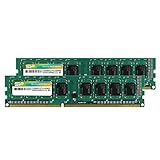
- Efficient performance: A lower voltage of 1.35 V is applied to reduce 20% power, enabling to effectively decrease hardware power consumption.
- System upgrade: With our high quality memory module, ideal for virtualization, cloud computing and multitasks handling, 100% factory-tested for stability, durability and compatibility.
- Durability Armed: 100% factory-tested to make sure the high stability, durability and compatibility.
- Compatibility is imperative: Compatible with major DDR3L / DDR3 motherboards.
- 【NOTE】The DDR3L UDIMM is backed by a lifetime warranty to promise complete services and technical support.
Why relief may take years
Memory fabs cannot be expanded quickly. A new facility requires construction, semiconductor equipment, process qualification, yield improvement, testing, packaging capacity, utilities, and customer validation. Even then, new production may initially be allocated to HBM and server products rather than consumer modules.
Micron’s stated timelines illustrate the delay: its first Idaho fab was expected to produce its first wafers in mid-2027, its second Idaho fab was targeted for operation by the end of 2028, and its first New York fab was expected to provide supply from 2030 onward. Those are company targets, not guaranteed dates.
SK hynix said its Yongin Phase 1 cleanroom was expected to open in early 2027 and described additional investments as phased according to customer demand. The relevant bottlenecks include advanced packaging, TSV and stacking yields, testing, power, water, equipment, and qualified labor—not just cleanroom space.
More capacity also may not immediately mean cheap consumer RAM. New output could be committed first to HBM4, HBM4E, high-capacity server DDR5, server LPDDR, or enterprise SSDs. Micron said HBM4 was in high-volume shipments and expected HBM4E volume production in calendar 2027. New HBM generations may therefore create additional demand even as current expansion projects ramp.
What could make prices better—or worse?
Reasons prices could remain high
- AI infrastructure demand continues to grow faster than supply.
- New HBM generations require more capacity per bit.
- Long-term contracts reserve supply for major data-center customers.
- Server and enterprise SSD demand remains stronger than consumer demand.
- A small number of suppliers control most DRAM production.
Reasons the situation could improve
- New fabs and packaging capacity eventually add output.
- AI investment slows or customers delay data-center projects.
- Model quantization, compression, and more efficient inference reduce memory demand per workload.
- Additional suppliers, including Chinese memory companies, contribute more conventional DRAM or NAND.
- Consumer and enterprise buyers delay purchases long enough to reduce demand.
These are scenarios, not equally likely forecasts. IDC says smaller Chinese suppliers may provide some relief but does not expect that relief to offset the near-term shortage meaningfully. Efficiency improvements could reduce memory demand per AI task, but current industry forecasts generally assume aggregate AI infrastructure demand continues to grow.
How to decide whether to buy now or wait
If you are building a desktop PC
- Buy the capacity you actually need. If 32GB is sufficient for your workload, the premium for 64GB or 128GB may be difficult to justify.
- Compare complete systems. An OEM’s contract pricing may make a prebuilt computer competitive with a DIY build.
- Verify compatibility. Check the motherboard’s supported memory type, capacity, number of modules, and desired speed before buying.
- Consider DDR4 carefully. It may reduce the platform cost, but DDR4 prices have also risen and the platform may have less upgrade potential.
- Skip cosmetic premiums. A plain kit with equivalent capacity, speed, and timings may be a better value than an RGB version.
- Use reputable sellers. Be cautious with marketplace listings, gray-market modules, unclear warranties, and kits with uncertain chip provenance.
If you need a laptop or tablet
- Prioritize the configuration at purchase. Soldered memory and embedded storage usually cannot be upgraded.
- Compare the actual numbers. Check RAM and storage against last year’s model instead of relying on the product name or AI branding.
- Consider upgradeable laptops. A thicker model with replaceable memory may have a lower total cost over its useful life.
- Look at refurbished and last-generation devices. They can offer better specifications per dollar if the battery, warranty, security updates, and software-support period are acceptable.
- Do not overpay for an AI label. An “AI PC” may have useful capabilities, but the label alone does not justify a higher memory or storage price.
If you can wait
Waiting makes sense when your current device works, your workload is flexible, and you can take advantage of sales, refurbished inventory, or a lower configuration. It is less attractive when the machine is needed for work or school, is already failing, or when you need an unusually large amount of memory.
The evidence supports continued tightness through the rest of 2026 and likely into 2027, but it does not prove that retail prices will rise every week. A slowing rate of increase is not the same as a price decline, however. IDC explicitly expects the acceleration to moderate while prices remain elevated. If you wait, do so because your personal timing and alternatives are favorable—not because a rapid return to 2025 prices is assured.
What this crisis does not prove
It does not prove that every device will rise by the same percentage
Gartner’s forecast of a 17% increase in average PC prices combines the effects of DRAM and SSD costs at the market level. It is not a prediction that every laptop’s memory bill or retail price will rise 17%. High-end brands may absorb some costs through margins, while budget products may be downgraded or discontinued.
It does not prove illegal price fixing
Supplier concentration and pricing power deserve scrutiny, but the available evidence also shows genuine AI demand, capacity reallocation, long-term contracts, and physical manufacturing constraints. Those facts do not by themselves establish unlawful coordination. Claims of price fixing would require verified court filings, regulator action, or an official investigation.
It does not mean AI data centers are using all consumer RAM
Data centers primarily use HBM, server DRAM, server LPDDR products, and enterprise SSDs. The consumer impact comes from shared manufacturing resources and allocation decisions—not from data centers purchasing laptop SODIMMs in bulk.
Three possible outcomes for consumers
Base case
Memory and storage prices remain elevated through 2026, the rate of increase slows, and relief arrives unevenly as new capacity ramps. Premium server and AI products continue receiving priority, so consumer prices may decline later and more slowly than upstream supply improves.
Also popular on Amazon

- [Color] PCB color may vary (black or green) depending on production batch. Quality and performance remain consistent across all Timetec products.
- DDR3L / DDR3 1600MHz PC3L-12800 / PC3-12800 240-Pin Unbuffered Non-ECC 1.35V / 1.5V CL11 Dual Rank 2Rx8 based 512x8
- Module Size: 32GB KIT(4x8GB Modules) Package: 4x8GB ; JEDEC standard 1.35V, this is a dual voltage piece and can operate at 1.35V or 1.5V
- For DDR3 Desktop Compatible with Intel and AMD CPU, Not for Laptop
- Guaranteed Lifetime warranty from Purchase Date and Free technical support based on United States
Consumer bear case
AI demand accelerates, newer HBM generations consume even more capacity, and manufacturers continue prioritizing data-center customers. Budget laptops and tablets lose RAM or storage, price points disappear, and high-capacity DIY builds become particularly expensive.
Relief case
AI investment cools, memory-efficiency improvements reduce demand growth, and new fabs or additional suppliers add enough conventional DRAM and NAND to trigger a correction. This could produce meaningful discounts, but its timing cannot be established from current evidence.
Recommended Free Tools
Gartner forecasts combined DRAM and SSD prices to be 130% higher by the end of 2026 than in 2025. That figure is not a forecast that every RAM kit, laptop, tablet, or gaming PC will cost 130% more. It describes a combined memory-and-storage market forecast; the impact on a finished device is diluted by its processor, display, battery, chassis, labor, software, distribution, taxes, and retailer margins.
Frequently Asked Questions
Are AI data centers directly buying the RAM used in laptops?
No. AI systems primarily use HBM, server DRAM, server LPDDR products, and enterprise SSDs. These are different from laptop SODIMMs and desktop UDIMMs. They still compete indirectly for related DRAM wafer capacity, advanced packaging, testing, and supplier investment, which reduces the supply available for consumer products.
Should I buy DDR4 instead of DDR5 to save money?
Not automatically. DDR4 can be a practical choice for a compatible, lower-cost platform, but DDR4 prices have also risen sharply in some capacities. Compare the full motherboard, processor, memory, and upgrade costs rather than assuming an older generation is insulated from the shortage.
Will every laptop become 17% more expensive?
No. Gartner’s 17% figure is a forecast for average PC prices, not every laptop. Manufacturers may raise prices, reduce discounts, lower RAM or SSD capacity, absorb some of the cost, or discontinue low-margin models. The effect will vary by brand, configuration, geography, and retail channel.
What’s actually slowing this PC down?
Pick the symptom - the matching free tool is one click away.
When will RAM prices return to normal?
There is no reliable single date. Current forecasts point to elevated prices through 2026 and likely into 2027, while new fab and packaging projects will take years to ramp. Prices could correct sooner if AI demand weakens, but current evidence does not support assuming a quick return to 2025 pricing.
Is refurbished hardware a good response to high memory prices?
It can be. A refurbished or last-generation laptop may offer more RAM and storage for the money than a new entry-level model. Check battery health, warranty coverage, security-update support, storage condition, and whether the memory is sufficient for the device’s expected life before buying.
The Bottom Line
The shortage is real, and AI data centers are a major cause—but the mechanism is indirect. AI infrastructure is absorbing HBM, server memory, and enterprise SSD capacity while competing with consumer products for the same constrained manufacturing ecosystem. That pressure is raising the cost of DDR5, LPDDR, graphics memory, and NAND storage.
For consumers, the result will be uneven: higher prices for some products, less RAM or storage at familiar price points, fewer budget choices, and especially high costs for large standalone memory kits. If you need a computer now, compare the complete configuration and consider upgradeable, refurbished, or prebuilt alternatives. If you can wait, do not assume prices will fall quickly—the current forecasts point to continued tightness through 2026 and into 2027.
Do these 3 things before closing this tab:
1Clear out junk files and repair common Windows errors2Scan for outdated or missing drivers - takes under a minute3Repair Windows errors before they cause bigger problems



