
What’s actually slowing this PC down?
Pick the symptom - the matching free tool is one click away.
British currency is pound sterling, usually written with the £ symbol and identified internationally by the code GBP. One pound contains 100 pence: £1 = 100p. The United Kingdom’s currency includes physical cash—Bank of England notes, Royal Mint coins, and certain Scottish and Northern Irish banknotes—as well as electronic money held in bank accounts.
This guide explains what the current notes and coins look like, why Scotland and Northern Ireland issue their own banknotes, what “legal tender” really means, how to handle old or suspicious notes, and how British money differs from related currencies in the Crown Dependencies and Overseas Territories. Current facts in this article were checked against the supplied research on 11 August 2026; note issuers, cash-use figures, exchange rates, and product availability can change.
As an Amazon Associate I earn from qualifying purchases.
British currency at a glance
| Question | Answer |
|---|---|
| What is the currency? | Pound sterling |
| Currency symbol | £ |
| ISO code | GBP |
| Subunit | Pence; 100 pence = £1 |
| Current Bank of England notes | £5, £10, £20 and £50 |
| Current circulating coins | 1p, 2p, 5p, 10p, 20p, 50p, £1 and £2 |
| Decimal currency introduced | 15 February 1971 |
“Sterling” is the usual financial term for the pound. In ordinary writing, prices put the pound sign before the amount—£12.99—while pence are normally written after the number, such as 25p, not “p25.” An amount of 50p is commonly pronounced “fifty pence” or, informally, “fifty pee.”
The Tool Desk
Outbyte Driver Updater FREEScan for outdated or missing drivers - takes under a minuteDriver Scan →Outbyte PC Repair FREEClear out junk files and repair common Windows errorsFree Scan →Modern money is not mostly cash. The Bank of England estimates that approximately 96% of UK money is electronic bank money and about 4% is physical cash. Cash nevertheless remains important for budgeting, accessibility, financial inclusion, and use during digital-payment or communications outages.
#1 Best Overall

- Package Contents: You will receive 2 pieces of coin sorter in two color, including blue and green. It is designed for the Japanese yen coin to find the change and dispense coins quickly and easily.
- Product Size: Measuring about 9.2x4.5x1.2cm/3.62x1.77x0.47in, the yen coin holder is designed with 6 slots for holding various currencies, small and light and can be easily put into your pocket.
- Quality Material: This coin sorter is made of reliable plastic, it is sturdy, lightweight, not easy to break or damage. The inner silicone can hold the coins firmly, ensuring that the coins will not fall out easily even if the holder is shaken.
- Practical and Convenient: The coin sorter is a time-saver gadget when you traveling in the Japan. The clear sorting design makes it easy to find your change without fumbling.
- Easy to Use: Coins can be easily pushed out by holding the coin holder and gently pushing the coin out with your thumb, decreasing the the stress and fumbling of finding the exact change when when there are several people queuing behind you.
Current British coins
The Royal Mint strikes the United Kingdom’s official coinage on behalf of His Majesty’s Treasury. The everyday circulating set consists of:
- 1p
- 2p
- 5p
- 10p
- 20p
- 50p
- £1
- £2
The 50p coin has a distinctive seven-sided form based on an equilateral-curve heptagon. The modern £1 coin is twelve-sided and uses its shape and edge treatment as part of its security design. It became legal tender on 28 March 2017, replacing the older round £1 coin.
Many denominations have special designs. Commemorative 50p and £2 coins may be legal tender and may sometimes appear in everyday change, but not every design produced by the Royal Mint is intended for routine circulation. Proof coins, bullion coins, presentation pieces and many commemorative products are primarily made for collectors.
Face value is not the same as collector value
A £5 commemorative coin, for example, may have a face value of £5 while selling for more—or less—depending on its metal, condition, mintage, authenticity, demand and market timing. A coin being legal tender does not guarantee that a retailer will accept it or that it is valuable to collectors. Precious-metal value and numismatic value are separate from face value.
Current Bank of England banknotes
The Bank of England’s current banknote denominations are £5, £10, £20 and £50. All four current denominations are printed on polymer rather than traditional paper.
| Note | Portraited figure | Useful identification detail |
|---|---|---|
| £5 | Sir Winston Churchill | Smallest current Bank of England note; no raised-dot cluster |
| £10 | Jane Austen | Two raised-dot clusters for tactile identification |
| £20 | J. M. W. Turner | Second smaller transparent window; three raised-dot clusters |
| £50 | Alan Turing | Second smaller transparent window; four raised-dot clusters |
The polymer notes include several designs intended to make counterfeiting more difficult. Important features include a large transparent window containing a clearly defined monarch portrait, the denomination and repeated “Bank of England” wording; denomination-specific metallic foil; a smaller transparent window on the £20 and £50; and a silver holographic foil patch that changes between the denomination and the word “Pounds” when the note is tilted.
Other features include a three-dimensional coronation crown, a coloured metallic patch on the reverse, raised print that can be felt on the front, sharp fine detail and ultraviolet features in which the denomination appears in bright red and green under a suitable UV light.
PC Slower Than It Used to Be?
A free scan shows the junk files, broken settings and background clutter dragging Windows down - then fixes them in one click.Free scan · Windows 10 & 11Crashes, No Sound, or Screen Glitches?
Random freezes, missing sound and display glitches usually trace back to one bad driver. Find and replace yours safely.Free scan · under a minuteQueen Elizabeth II and King Charles III notes
Bank of England notes bearing King Charles III’s portrait entered circulation on 5 June 2024. The monarch’s portrait changed, but the denominations and principal designs did not otherwise change. Notes bearing Queen Elizabeth II’s portrait remain legal tender and circulate alongside the Charles III versions.
That means a genuine Queen Elizabeth II note does not need to be exchanged merely because a King Charles III version exists. New notes are expected to be printed mainly to replace worn or damaged notes or to meet overall demand.
How to check a Bank of England note
- Feel the note. Genuine polymer notes have areas of raised print on the front. The raised-dot clusters also help identify denominations by touch: none on the £5, two on the £10, three on the £20 and four on the £50.
- Look through the large window. It should be genuinely transparent, with a sharp portrait, denomination and repeated Bank of England wording.
- Tilt the note. The holographic foil should change between the denomination and “Pounds.”
- Inspect the smaller window. The £20 and £50 include a second smaller transparent window.
- Check print quality. Blurred lettering, uneven lines, missing fine detail or suspiciously flat print are warning signs.
- Use ultraviolet light only as one check. The denomination should appear in bright red and green under suitable UV light.
Do not decide that a note is counterfeit based only on one damaged feature. A genuine polymer note can be worn, scratched or damaged. Compare a suspect note with one known to be genuine and follow Bank of England or police guidance. Never try to pass a suspicious note to somebody else.
Rank #2

- HIGH-QUALITY CONSTRUCTION. Expertly handcrafted with a strong spring frame and leather, this Squeeze Coin Purse will provide long-lasting strength and a classic look that will serve you well throughout the years.
- COMPACT SIZE. You can easily carry this change holder with you everywhere you go. Measuring approximately 3.5” W x 3.25” H, it easily fits inside your pocket, handbag, backpack and more for easy access when you need it.
- SECURES YOUR MONEY. Outfitted with a snap top closure, this coin purse securely stores several dollars, coins and other small items. It opens and closes in a snap so you don’t have to waste time fumbling with zippers.
- GREAT GIFT IDEA. If you need to get a gift for a special occasion, this Coin Purse Holder will make a great practical gift for men and women alike. Stylish, compact and durably made, it’s a gift they can use every day for years to come.
- CHOICE OF COLOR. To accommodate everyone’s taste, the Nabob Leather Squeeze Coin Purse is available in a large selection of colors. There are over 15 colors to choose from – and more on the way.
Scottish and Northern Irish banknotes
Scotland and Northern Ireland have long-standing arrangements under which commercial banks issue their own pound-denominated banknotes. These are genuine banknotes issued under a statutory regime; they are not counterfeit Bank of England notes. Their designs, issuing banks and technical legal status are different from Bank of England notes.
Authorized issuers checked in August 2026
Scotland:
- Bank of Scotland plc
- Clydesdale Bank plc
- The Royal Bank of Scotland plc
Northern Ireland:
- Bank of Ireland (UK) plc
- Northern Bank Limited, trading as Danske Bank
- National Westminster Bank plc, trading as Ulster Bank in Northern Ireland
These banks must hold backing assets worth at least the value of the notes in circulation. Eligible backing can include Bank of England notes, UK coins and funds held at the Bank of England. This arrangement is intended to protect holders of genuine notes if an issuing bank fails.
The Bank of England regulates the issuance framework and checks compliance with backing-asset rules. It does not design the six banks’ notes or take responsibility for the effectiveness of each bank’s anti-counterfeiting design.
Scottish and Northern Irish notes are commonly accepted across the UK, but acceptance is ultimately a matter of agreement between the business and customer. A retailer may refuse one, particularly if staff are unfamiliar with its appearance or the business has a cash-handling policy.
AIB Group UK, formerly First Trust Bank in Northern Ireland, stopped issuing banknotes on 30 June 2020. An older AIB or First Trust note should be handled through AIB’s exchange arrangements rather than assumed to be a current note from an active issuer.
Legal tender does not mean “every shop must accept it”
Legal tender is a technical concept about settling a debt. It is not a guarantee that a shop, restaurant, taxi or other business must accept every note or coin. A business can choose to accept cash, cards, contactless payments or other methods, and the parties can agree to use a payment method that is not legal tender.
The regional position is particularly important:
- England and Wales: Royal Mint coins and Bank of England notes are legal tender.
- Scotland and Northern Ireland: Royal Mint coins are legal tender, but banknotes—including Scottish and Northern Irish notes—are not legal tender there.
- Everywhere in the UK: Debit cards, cheques and contactless payments are not legal tender, although businesses routinely accept them by agreement.
There are also technical limits for coins. Under Royal Mint guidance, 1p and 2p coins count as legal tender for amounts up to 20p; 5p and 10p coins up to £5; 20p and 50p coins up to £10; and £1 and £2 coins for any amount. These limits do not create a general rule that a retailer must accept—or must reject—a large pile of coins.
The safest practical summary is: legal tender concerns the settlement of a debt, not a retailer’s obligation to accept every denomination.
Old, withdrawn and damaged notes
When the Bank of England formally withdraws a note, it usually gives advance notice. The note may stop being legal tender for ordinary payments, but a genuine withdrawn Bank of England note retains its face value when exchanged with the Bank of England under its procedures.
Quick wins for a faster PC:
Clear out junk files and repair common Windows errorsFree Scan →Fix the driver behind crashes, sound loss and screen glitchesFind Drivers →A shop, commercial bank, building society or Post Office may stop accepting a withdrawn note in ordinary transactions. Commercial institutions can also have different policies about accepting old notes for deposit. Check the Bank of England’s current withdrawn-note and exchange guidance before posting or visiting an institution.
Rank #3

- No More Bulky Pockets - Unique Round Shape: This coin pouch measures 7.5 cm/3 inches in diameter and 2.5 cm/1 inch thick; the round design fits comfortably in your palm or pocket without sharp corners, reducing pocket bulk while keeping your loose change and small items neatly organized
- Built to Last - 1000D Nylon: Made from rugged 1000D nylon fabric that resists water splashes, light rain, and daily scratches from keys and coins; unlike leather or soft fabrics that crack, stain, or wear out over time, this durable nylon holds up strong for daily use at work or on the go
- Keep Coins and Gear Organized - Holds It All: Holds about 70-80 pennies (or 35-40 quarters), plus wireless earbuds, short charging cables, USB drives, memory cards, small keys, and other daily tiny items; a clean, simple way to organize pockets without a bulky wallet or messy jumble
- Hands Free Carry - Triangle Buckle: Built with a sturdy triangle buckle that lets you hang it on belts, backpacks, or bags; free up your pockets and enjoy convenient, hands-free carry - just hook it on and go.
- No Spills or Lost Items - Smooth Zipper: A reliable, smooth zipper keeps coins and small essentials safely contained to prevent spills or loss; it opens easily and closes tightly for quick access whenever you need change or small items
Scottish and Northern Irish notes should generally be dealt with through the relevant issuing bank, especially where the issuer has stopped issuing that series. Do not assume that a bank branch in another region will exchange every old regional note.
For a damaged polymer note, retain as much of it as possible and use the relevant exchange guidance. Damage to a foil or window is not, by itself, proof that the note is fake.
Reproducing banknotes
Images and reproductions of banknotes can create legal problems even when they are made for a film, classroom, training exercise or website. A reproduction capable of being mistaken for a genuine note may breach the Bank of England’s reproduction conditions or be treated as counterfeit material.
Do these 3 things before closing this tab:
1Scan for outdated or missing drivers - takes under a minute2Repair Windows errors before they cause bigger problems3Fix the driver behind crashes, sound loss and screen glitchesAnyone preparing printed or digital currency artwork should check the Bank of England’s current reproduction rules before publishing or distributing it. Do not assume that adding a small disclaimer makes a reproduction lawful.
Crown Dependencies and British Overseas Territories
The Isle of Man, Jersey and Guernsey are Crown Dependencies, not parts of the United Kingdom. They have their own governments, legal systems and fiscal systems, and issue local notes and coins that are generally linked to sterling at parity.
Several British Overseas Territories and related jurisdictions also issue local versions of the pound. Examples include Jersey, Guernsey, the Isle of Man, Gibraltar and the Falkland Islands. A local pound may be worth one pound sterling in its home territory while still not being automatically legal tender in the UK.
For travellers, the practical rule is to check exchange and acceptance arrangements before leaving. A local note that is accepted at parity in its territory may be refused by a UK retailer, bank or cash machine. Policies vary by issuer and institution, so avoid accumulating large amounts of local cash immediately before returning home.
British currency before decimalization
Before Decimal Day, the pound was divided into pounds, shillings and pence, represented by the symbols £sd. The old system was:
- 12 old pence = 1 shilling
- 20 shillings = £1
- 240 old pence = £1
The £ sign developed from libra, while “s” and “d” relate to the Latin solidus and denarius. The penny has Anglo-Saxon and earlier roots, and the pound began as a unit of account associated with a pound weight of silver. The Royal Mint traces the use of pound sterling as the official currency of unified England to the reign of Athelstan in AD 927, while noting that the pound has taken many forms over its history.
The first gold sovereign appeared under Henry VII in 1489. The modern sovereign was reintroduced in 1817 as a 20-shilling gold coin. Modern sovereigns are principally bullion or collectible pieces, not coins normally used to pay for everyday purchases.
Rank #4
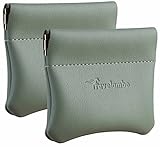
- High-Quality Construction: Expertly handcrafted with a strong spring frame and faux leather, this squeeze coin purse will provide long-lasting strength and a classic look that will serve you well throughout the years
- Compact Size: You can easily carry this change holder with you everywhere you go. Measuring approximately 3.5” W x 3.25” H, it easily fits inside your pocket, handbag, backpack and more for easy access when you need it
- Secures Your Money: Outfitted with a snap top closure, this coin purse securely stores several dollars, coins and other small items. It opens and closes in a snap so you don’t have to waste time fumbling with zippers
- Great Gift Idea: If you need to get a gift for a special occasion, this Coin Purse Holder will make a great practical gift for men and women alike. Stylish, compact and durably made, it’s a gift they can use every day for years to come
- Choice Of Color: To accommodate everyone’s taste, the Nabob Leather Squeeze Coin Purse is available in a large selection of colors. There are over 15 colors to choose from – and more on the way
Decimal Day
The UK decimalized its currency on 15 February 1971. The pound was retained, but it became 100 new pence rather than 20 shillings or 240 old pence. The 5p and 10p coins entered circulation before Decimal Day at values equivalent to the old shilling and florin; the 50p followed, then the remaining decimal coins.
Important conversions include:
- One old penny was 1/240 of a pre-decimal pound.
- One shilling was 12 old pence and equal to 5 new pence.
- One florin was 2 shillings and equal to 10 new pence.
- One old pound was 20 shillings or 240 old pence, but remained £1 after decimalization.
For example, £1 10s 6d means one pound, ten shillings and six old pence. It is not decimal notation for £1.106. Face-value conversion also is not the same as converting an old price into modern purchasing power; that requires a separate inflation calculation.
Some pre-decimal coins remained temporarily usable after Decimal Day. The old sixpence was withdrawn in 1980, the halfpenny in 1984, and the old round 5p was eventually replaced by a smaller coin.
Using British currency today
Cash represented about 9% of UK payments by volume in 2024, according to the supplied Bank of England research. It is declining overall, but remains significant for people who budget with cash, have accessibility needs, lack reliable access to digital services, or need a payment fallback during outages. The research also cites 2.6 million heavy cash users in the FCA’s Financial Lives 2024 Survey.
The UK cash system connects note and coin issuers with wholesale distributors, cash centres, bank branches, ATMs, retailers and deposit services. The Bank of England’s wholesale cash oversight regime became fully operational on 12 June 2025 under powers created by the Financial Services and Markets Act 2023.
Free tools Windows power users keep installed
One-click scans. No signup required.
Practical advice for visitors
- Carry some low-value notes and coins, but check whether a business accepts cash before relying on it.
- Do not assume a £50 note will be accepted merely because it is genuine or legal tender.
- Scottish and Northern Irish notes are often accepted widely, but a retailer may refuse them.
- Keep local Crown Dependency or Overseas Territory notes separate from UK cash and check exchange arrangements before travelling home.
- For a current GBP exchange rate, use a current provider or rate source. Bank of England daily spot rates are indicative, not official rates.
- When withdrawing cash, check the denomination dispensed by an ATM and whether the machine applies fees or a conversion markup.
Collecting British coins and banknotes
British money is popular with collectors because its designs cover monarchs, historical figures, anniversaries, national symbols, scientific achievements and major events. A sensible beginner’s collection can be organized by denomination, monarch or reign, year, minting variety, circulating versus commemorative status, metal composition, condition and provenance.
Before buying or selling, separate three questions:
- What is its face value? This is the amount printed or assigned to the coin or note for monetary purposes.
- What is its collector value? This depends on authenticity, rarity, condition, mintage, demand and provenance.
- What is its material value? This may matter for bullion or precious-metal pieces, but is not the same as collector value.
A modern commemorative coin is not automatically rare, and a coin with an unusual design is not automatically valuable. If a significant sum is involved, consult a reputable specialist or established reference rather than relying on a generic online list. Never clean a potentially valuable coin aggressively: cleaning can permanently damage its surface and reduce its numismatic value.
Disclosure: The following are optional tools, not necessary for using ordinary British currency, and availability and prices should be checked before purchase.
Recommended Free Tools
- A British coin collecting guide book can help with dates, designs, terminology and historical context. It cannot guarantee a valuation or authenticate a rare piece.
- A UK coin album or collection folder can organize circulating and commemorative coins, but check that its slots fit the denominations being collected.
- Acid-free banknote sleeves or a banknote album can protect withdrawn, regional or collectible notes. Storage does not authenticate a note or establish its market value.
- A non-abrasive magnifier and a basic digital coin scale can help inspect dates, lettering, edges and approximate physical attributes. Neither replaces professional authentication.
Collectors interested in official products can also compare the Royal Mint’s commemorative, proof, bullion and historical offerings. These are distinct from the ordinary circulating coin set, and any purchase should be assessed for its collecting purpose rather than assumed investment returns.
Best Value

- Classic small coin bag in soft PU leather fabrication, features a metal kiss lock
- The fabric is waterproof, scratch resistant, and easy to clean. The clasp is reliable for preventing accidental opening
- Vintage design with a solid color exterior, ruched waist, silky textured lining and a brass color kiss lock
- Measuring 4.5 inches × 4 inches × 1.2 inches, it easily fits into your pocket or handbag. Convenient for everyday use, shopping, traveling, driving, or trips to the laundromat
- This women's leather coin purse offers ample storage space for coins, cash, keys, ID cards, debit, credit cards, lipstick, or small items like earphones and charging cables
How to identify what you have: a quick decision guide
- Is it denominated in pounds or pence? If it says £5, £10, £20 or £50 and is polymer, compare it with current Bank of England security features.
- Does the note name a Scottish or Northern Irish bank? Treat it as a genuine regional banknote only after checking the issuer and security features; acceptance depends on the recipient.
- Is it a local pound? Look for an issuer from Jersey, Guernsey, the Isle of Man, Gibraltar, the Falkland Islands or another related territory. Do not assume it is UK legal tender.
- Is it old or pre-decimal? Determine whether it is withdrawn modern money or historic £sd currency. Do not apply decimal arithmetic to an old notation such as £1 10s 6d.
- Could it be suspicious? Do not spend it. Compare multiple features, preserve it and follow official exchange or police guidance.
- Could it be collectible? Avoid cleaning it, record its condition and provenance, and obtain specialist advice before assigning a value.
Frequently Asked Questions
What is British currency called?
The official currency of the United Kingdom is pound sterling. It uses the £ symbol and the ISO currency code GBP. One pound is divided into 100 pence.
Are Scottish and Northern Irish banknotes legal tender?
No. In Scotland and Northern Ireland, Royal Mint coins are legal tender, but banknotes—including locally issued Scottish and Northern Irish notes—are not. They are genuine notes issued under a statutory system and are commonly accepted by agreement.
Are old Queen Elizabeth II banknotes still valid?
Current Bank of England notes bearing Queen Elizabeth II’s portrait remain legal tender and circulate alongside King Charles III notes. A genuine note does not need to be exchanged solely because the monarch’s portrait differs.
What’s actually slowing this PC down?
Pick the symptom - the matching free tool is one click away.
Will every shop accept a £50 note?
No. Legal-tender status does not require every retailer to accept every denomination. A business may refuse a £50 note or choose to accept only cards or other payment methods.
How many pence are in a British pound?
There are 100 pence in one pound. This decimal system began on 15 February 1971.
Can I spend a Crown Dependency pound in the UK?
Not automatically. Notes and coins from Jersey, Guernsey, the Isle of Man and other related territories may be linked to sterling at parity but are not automatically legal tender in the United Kingdom. Acceptance and exchange depend on the retailer or institution.
What should I do with a withdrawn Bank of England note?
Check the Bank of England’s current withdrawn-note and exchange guidance. Genuine withdrawn Bank of England notes retain their face value for exchange through the Bank of England, while commercial banks and other institutions may apply their own policies.
How can I tell whether a polymer banknote is genuine?
Check several features, including the transparent window, holographic foil, raised print, sharp fine detail, smaller window on £20 and £50 notes, and ultraviolet features. Do not rely on a single test, and never pass a suspicious note to someone else.
The Bottom Line
British currency is pound sterling: £1 equals 100p and the international code is GBP. The current Bank of England notes are £5, £10, £20 and £50, while the circulating coins run from 1p to £2. Scottish and Northern Irish banknotes are genuine but commercially issued, and “legal tender” does not mean every retailer must accept every note or coin. For old, regional, damaged, collectible or suspicious money, identify the issuer first and use the relevant official or specialist guidance before trying to exchange, spend or value it.
Quick Recap
Product prices and availability are accurate as of the date/time indicated and are subject to change. Any price and availability information displayed on Amazon at the time of purchase will apply.




