Lowering your fuel bill does not require an expensive hybrid, a questionable fuel additive, or a drastic change to your routine. The most reliable savings come from using less gasoline: make fewer trips, reduce wasted idling, maintain the vehicle, and drive in ways that preserve fuel economy.
These changes also reduce tailpipe emissions. Start by tracking your actual fuel economy for two or three fill-ups, then apply the habits that fit your vehicle and commute. Your savings will depend on fuel prices, annual mileage, vehicle type, traffic, weather, and how much driving you can avoid.
1. Combine errands into fewer trips
Plan nearby stops as one outing instead of making several separate drives. This practice, often called trip chaining, can replace multiple cold starts and duplicate routes with one efficient loop.
Before leaving, group destinations by location and opening hours. For example, pick up a prescription, groceries, and a package during one trip if the stops are close together. A route-planning app can help, but even a quick look at a map may reveal that two errands can be handled on the same drive.
Free tools Windows power users keep installed
One-click scans. No signup required.
#1 Best Overall

- Accurate, Dependable Readings: Factory‑calibrated to ±1 PSI, so you can confidently match your vehicle’s recommended PSI (check the door jamb sticker). Ideal for monthly checks and road trips — consistent results every time, cold or warm.
- Bright Backlit Display & Nozzle Light: The illuminated nozzle helps you find the valve stem in the dark, while the backlit LCD makes readings crystal clear in dim garages or at night. No more squinting or holding a flashlight.
- 4 Measurement Units, One Button: Quickly switch among PSI, Bar, Kgf/cm², and KPA with a single press. No complex settings — just press and cycle to your preferred unit. Perfect for drivers who need multiple scales.
- Broad Compatibility for Everyday Vehicles: 0–150 PSI covers cars, SUVs, motorcycles, and spare tires (often 60 PSI). Fits standard Schrader valves; just press on for a reading.
- Auto‑Off to Extend Battery Life: The gauge automatically powers down after 30 seconds of inactivity, so the included 2*AAA batteries last longer. Always ready for your monthly checks without surprise dead batteries.
Combining trips will not always reduce miles if it creates a long detour. Compare the total route with the separate journeys you would otherwise make.
2. Drive less when a practical alternative exists
The cheapest gallon is the one you never need to buy. Walking, biking, public transit, carpooling, ride-sharing, and telework can all reduce fuel consumption when they are safe and realistic options.
Look for repeatable substitutions rather than trying to eliminate every car trip. Examples include working from home one day a week, taking transit to a regular appointment, walking to a nearby store, or sharing the drive to work with a colleague. If a round-trip commute is 30 miles and you replace it four times per month, that removes about 120 miles of driving monthly.
To estimate the financial effect, use:
miles avoided ÷ vehicle MPG × price per gallon = fuel cost avoided
The Tool Desk
Outbyte Driver Updater FREEScan for outdated or missing drivers - takes under a minuteDriver Scan →Outbyte PC Repair FREEClear out junk files and repair common Windows errorsFree Scan →That calculation excludes parking, tolls, transit fares, and vehicle wear, so compare the full cost when choosing an alternative.
3. Accelerate and brake smoothly
Hard launches, rapid lane changes, and late braking waste energy. The U.S. Department of Energy says aggressive driving can reduce fuel economy by up to 30% at highway speeds and up to 40% in stop-and-go traffic.
Press the accelerator progressively, leave enough following distance to avoid repeated braking, and look ahead for red lights, traffic backups, and merging vehicles. Smooth driving does not mean driving slowly or obstructing traffic. Maintain a legal, predictable pace and use the brakes when safety requires it.
4. Avoid unnecessary speed
Fuel economy generally falls as speed rises, especially above roughly 50 mph. Air resistance increases at higher speeds, requiring more energy from the engine.
Rank #2
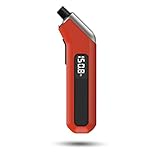
- PROCESS LEVEL ACCURACY: Each ETENWOLF’s digital tire pressure gauge is calibrated manually to ANSI B40.7 Grade 2A(plus-minus 1 PSI).Presta valve adapter not included, if used for bicycles, it must be purchased separately
- ACCURACY IN EXTREME PRESSURE RANGE: Whether tire pressure is below 12 PSI or above 140 PSI, ETENWOLF’s digital tire gauge is accurate as well
- ACCURACY IN EXTREME WEATHER: Built-in AI chip with thermal compensation inside, ETENWOLF’s tire gauge works normally even in extreme cold or hot weather(-4°F-130°F/-20°C-54°C)
- PRESSURE RANGE 3-200 PSI : ETENWOLF’s digital tire pressure gauge can measure pressure of all types of vehicles
- REPLACEABLE AAA BATTERIES: Batteries are easy to replace and helps to extend the tire pressure gauge’s life span, with LED light to illuminate dark areas for easy tire pressure reading
Follow the posted speed limit and current traffic conditions; do not create a safety hazard by driving below the appropriate flow of traffic. The money-saving choice is to avoid unnecessary speeding and rapid changes in speed, not to ignore road rules.
5. Use cruise control on suitable highway stretches
Cruise control can prevent small, repeated speed increases that consume extra fuel. It is most useful on relatively level roads with light traffic, good visibility, and steady conditions.
Do not use it where frequent braking or speed adjustments are needed, including slippery roads, heavy traffic, winding routes, or steep hills. On changing terrain, a driver who anticipates hills may sometimes use less fuel than a system that constantly accelerates to hold an exact speed. Follow your vehicle manual and local safety guidance.
6. Turn off the engine instead of idling unnecessarily
An idling vehicle burns fuel without taking you anywhere. The Department of Energy estimates that idling can consume approximately one-quarter to one-half gallon per hour, depending on engine size and air-conditioning use.
Switch the engine off while waiting for someone, sitting in a pickup line, or parked for an extended period. Do not sacrifice safety: follow local rules, keep the vehicle running when needed for defrosting or visibility, and never idle in an enclosed garage. Avoid repeated starts and stops when traffic is moving only a few feet at a time; use judgment rather than treating every pause identically.
7. Remove cargo you do not need
Extra weight makes the engine work harder, with the effect generally more noticeable in smaller vehicles. Clear out unused tools, sports equipment, boxes, and other items from the trunk or cargo area.
Do not remove equipment required for safety or emergencies. The goal is to avoid using the car as permanent storage. A monthly cargo check can prevent a heavy collection of items from becoming part of every trip.
8. Remove an unused roof rack or rooftop carrier
Roof-mounted racks, boxes, and carriers increase aerodynamic drag, even when they are empty. If you only use a roof rack for occasional vacations or seasonal activities, remove it between uses if the manufacturer permits.
Rank #3

- PRO ACCURACY - mechanic recommended, performance tested, & calibrated accurate to professional ANSI 2A standards - with dual pressure sensors certified to ±0.50% FS (0.50 PSI), offering reliable readings up to 100 PSI w/ precise readout resolution of 0.10 PSI - so you can now maintain your tires with a shop-grade mechanic trusted tool
- STRONG & RUGGED - feels solid in the hand & built to last from 100% solid brass & steel parts shielded by our shock-resistant gear-style protective guard to protect against drops & impact. Features ultra soft & strong 10" fully rotational, leak-proof HybridFlex air hose w/ 360 swivel angled air chuck that can be swapped out w/ any 1/4" NPT chuck
- ADVANCED ENGINEERING - all readings lock-on to the display until the "ON" button is pressed once to reset to zero. Features built-in air bleeder valve that bleeds pressure in real time without needing to reset the display - ideal for cars, trucks, motorcycles, bikes, RV & trailers, spare tires, and much more
- SMART DISPLAY - features high-resolution digital 2.5 inch LCD display screen w/ battery life indicator & bright LED backlight for high visibility in the dark. Gauge is programmed to auto shut-off after 150 seconds of inactivity to save battery (2x AAA batteries included)
- 100% Lifetime Warranty by JACO - serving the automotive industry for 35+ years. Enjoy longer-lasting tires, improved fuel economy, and superior vehicle performance & handling with properly inflated tires.
When you need extra carrying capacity, a rear-mounted box or tray generally creates less fuel-use penalty than rooftop equipment, according to the Department of Energy. Check the vehicle’s weight limits, hitch rating, visibility requirements, and the carrier manufacturer’s instructions before switching setups.
9. Check tire pressure every month
Underinflated tires can reduce fuel economy and affect handling. Check all four tires, and the spare, at least monthly and before long trips. Measure them when the tires are cold, ideally before driving or after the vehicle has been parked for several hours.
Use the pressure on the vehicle’s Tire and Loading Information Label, usually found on the driver’s-side door edge, doorjamb, or B-pillar, or use the pressure in the owner’s manual. Do not use the maximum pressure molded into the tire sidewall as the normal target for your vehicle.
A basic tire-pressure gauge costs little and lets you check pressure at home. Inspect for punctures, uneven wear, or visible damage; a slow leak is a safety problem as well as a potential fuel-economy problem.
Recommended Free Tools
10. Follow the manufacturer’s maintenance schedule
Maintenance prevents small problems from turning into expensive repairs and helps the vehicle operate as designed. Follow the schedule in the owner’s manual rather than paying for a generic “tune-up” with no connection to the vehicle’s actual needs.
Address warning lights and unresolved running problems promptly. Use the manufacturer-recommended motor-oil grade, including the specified viscosity where applicable. A repair that restores a malfunctioning vehicle may improve fuel economy, but routine maintenance is not a guarantee of a dramatic MPG increase.
Keep receipts and record mileage. This creates a useful service history and makes it easier to spot an unusual change in fuel consumption.
11. Use air conditioning thoughtfully
Air conditioning can reduce fuel economy, but the common claim that open windows are always more efficient is too simple. The result depends on speed, outside temperature, vehicle design, and the A/C load.
Do these 3 things before closing this tab:
1Clear out junk files and repair common Windows errors2Scan for outdated or missing drivers - takes under a minute3Repair Windows errors before they cause bigger problemsRank #4

- Enhanced Visibility in Low Light: Features a green backlit LCD screen and integrated flashlight, allowing for clear reading of tire pressure even in dark or dimly light conditions.
- Durable & Heavy-Duty Design: Constructed from robust stainless steel, specially engineered for RV and truck use. Helps maintain proper tire pressure to reduce wear and extend tire lifespan.
- Nozzle easily forms a seal with the valve stem giving quick and accurate readings in 0.1 increments; 4 settings with longer range: 0-230 PSI / 0-16 Bar / 0-16 Kg/cm² / 0-1585 Kpa
- Wide Pressure Range & Easy Operation: Covers 0-230 PSI / 0-16 Bar / 0-16 Kg/cm² / 0-1585 Kpa. Simply press the “ON/UNIT/OFF” button to turn on, select your unit, and it auto-shuts off after 30-40 seconds to conserve battery.
- User-Friendly & Versatile: Ergonomic non-slip texture ensures a firm grip. Includes batteries and comes with a 1-year warranty. Suitable for cars, trucks, motorcycles, bicycles, and more.
In hot weather, briefly open the windows when you first enter to release some of the trapped heat. At lower speeds, open windows may be practical when comfort and safety permit. At highway speeds, using the A/C may be more efficient than creating substantial aerodynamic drag with open windows.
Do not drive while overheated or distracted to save a small amount of fuel. Comfort, alertness, and safe control come first.
12. Use the vehicle’s efficiency features
If your car has an Eco mode, test it in normal driving. Depending on the manufacturer, it may soften throttle response, alter transmission behavior, or adjust climate-control settings to reduce fuel use. It can make acceleration feel slower, so use the setting that allows safe, predictable driving.
Factory start-stop systems shut off the engine at certain stops and restart it when you release the brake or engage the accelerator. The EPA says these systems provide the greatest benefit in stop-and-go conditions and can improve fuel economy by about 4% to 5%. Operation varies by vehicle, and the system may not activate when the battery charge, cabin temperature, or other conditions require the engine to run.
Windows Errors? Fix Them Before They Spread
Repair common Windows errors and clear accumulated junk for a smoother, more stable PC - no reinstall needed.Free scan · no reinstallCrashes, No Sound, or Screen Glitches?
Random freezes, missing sound and display glitches usually trace back to one bad driver. Find and replace yours safely.Free scan · under a minuteThese factory features are different from aftermarket “fuel-saving” devices. Be skeptical of magnets, air-bleed products, additives, and similar gadgets promising guaranteed savings. The Federal Trade Commission has warned about exaggerated claims, and cited EPA testing found no significant MPG improvement from more than 100 purported gas-saving devices and additives.
Independent reader supportYour contribution helps us test, update, and keep practical guides available for everyone.13. Choose a more efficient vehicle when replacing your car
A vehicle purchase can affect fuel costs for years, so compare fuel economy before signing a loan or lease. Use the combined, city, and highway MPG figures on the vehicle’s Fuel Economy and Environment Label or search the model at fueleconomy.gov.
For a quick comparison, estimate annual fuel cost this way:
annual miles ÷ combined MPG × price per gallon = estimated annual fuel cost
Best Value

- Digital Tire Pressure Gauge 2 Pack, Industrial Tire Gauge 3-200 PSI, Calibrated to ANSI B40.7 Grade 2A(plus-minus 0.5%), Air Pressure Gauge with Replaceable AAA Batteries
- ACCURACY IN EXTREME PRESSURE RANGE: Whether tire pressure is below 12 PSI or above 140 PSI, ETENWOLF’s digital tire gauge is accurate as well
- ACCURACY IN EXTREME WEATHER: Built-in AI chip with thermal compensation inside, ETENWOLF’s tire gauge works normally even in extreme cold or hot weather(-4°F-130°F/-20°C-54°C)
- PRESSURE RANGE 3-200 PSI : ETENWOLF’s digital tire pressure gauge can measure pressure of all types of vehicles
- REPLACEABLE AAA BATTERIES: Batteries are easy to replace and helps to extend the tire pressure gauge’s life span, with LED light to illuminate dark areas for easy tire pressure reading
Example: at 12,000 miles per year and $3.50 per gallon, a 25-MPG vehicle uses about 480 gallons and costs approximately $1,680 in fuel. A 35-MPG vehicle uses about 343 gallons and costs approximately $1,200, a difference of about $480 per year at that fuel price.
Those figures are estimates, not promises. Real-world MPG varies with traffic, weather, terrain, cargo, tire pressure, A/C use, and driving style. Also compare purchase price, financing, insurance, maintenance, depreciation, and charging or fuel availability. A more efficient car is not automatically the cheaper overall choice if it costs substantially more to buy and the fuel savings never recover that premium.
How to turn fuel savings into a measurable budget result
- Record a baseline. At a fill-up, note the odometer or trip-counter reading, gallons purchased, and price per gallon.
- Calculate actual MPG. Divide miles driven since the previous fill-up by gallons purchased. Use several tanks to smooth out rounding and unusual trips.
- Track cost per mile. Divide the fuel bill by miles driven. This is more useful than watching the pump price alone.
- Change one or two habits. For example, combine errands and remove a roof carrier before changing your driving style.
- Compare over similar conditions. A highway-heavy vacation tank will not fairly measure a city-commute habit. Compare several weeks of similar driving.
Do not budget the projected savings twice. If you reduce driving, update both your fuel budget and any mileage-based reimbursement or work-expense assumptions. Put confirmed savings toward a specific goal—such as an emergency fund, debt payment, or vehicle maintenance reserve—so the lower fuel spending does not simply disappear into other purchases.
Common fuel-saving mistakes
| Claim or habit | What to do instead |
|---|---|
| Inflate tires to the number on the tire sidewall | Use the vehicle manufacturer’s pressure on the door label or in the owner’s manual. |
| Assume every additive or gadget pays for itself | Be cautious of guaranteed MPG claims and check independent evidence before spending money. |
| Keep windows open at every speed to avoid A/C | Use windows at lower speeds when practical; at highway speeds, A/C may be the better choice. |
| Treat the EPA MPG figure as a promise | Use the standardized label to compare vehicles, then expect real-world results to vary. |
| Buy a more efficient car without checking total ownership cost | Compare fuel savings with purchase price, financing, insurance, maintenance, and depreciation. |
FAQ
What is the fastest way to reduce my gas bill?
Reduce unnecessary miles first by combining errands, replacing practical trips with walking or transit, and carpooling. Then eliminate unnecessary idling and aggressive acceleration. The financial impact depends on your annual mileage, vehicle MPG, and local fuel price.
What’s actually slowing this PC down?
Pick the symptom - the matching free tool is one click away.
How often should I check tire pressure for better fuel economy?
Check all tires, including the spare, at least once a month and before long trips. Check them when cold and use the pressure listed on the vehicle’s Tire and Loading Information Label or in the owner’s manual—not the maximum pressure printed on the tire sidewall.
Does using cruise control always save gas?
No. Cruise control can help on suitable, steady highway stretches, but it is inappropriate in heavy traffic, poor traction, winding roads, or conditions requiring frequent speed changes. Use it only when it supports safe driving.
Are fuel-saving additives and gadgets worth buying?
Treat large or guaranteed MPG claims skeptically. The FTC has warned about misleading claims for products such as magnets, air-bleed devices, and additives, and cited EPA testing that found no significant improvement from more than 100 purported gas-saving products.
The Bottom Line
The most dependable fuel savings come from reducing miles, combining trips, driving smoothly, avoiding unnecessary idling, keeping tires correctly inflated, and maintaining the vehicle on schedule. Track your own gallons, miles, and cost per mile before and after making changes. That turns general eco-driving advice into a realistic number for your household budget—and helps you avoid spending money on products that promise savings without evidence.
Quick wins for a faster PC:
Repair Windows errors before they cause bigger problemsFix Now →Scan for outdated or missing drivers - takes under a minuteDriver Scan →Quick Recap
Product prices and availability are accurate as of the date/time indicated and are subject to change. Any price and availability information displayed on Amazon at the time of purchase will apply.




