
Some links on this page are affiliate links: if you buy through them we may earn a commission, at no extra cost to you.
The 10 soft skills most broadly useful across jobs are communication, teamwork, critical thinking, adaptability, emotional intelligence, leadership, professionalism, time management, creativity, and conflict resolution. They can help you apply technical knowledge, work effectively with other people, earn trust, and respond to changing conditions.
There is no universally accepted ranking of exactly 10 soft skills. The list below is a practical synthesis of skills that recur across employer, occupational, and workforce frameworks. They are not substitutes for technical qualifications, and they are not equally important in every job. A software engineer, nurse, sales representative, accountant, and warehouse supervisor will use different combinations of them.
As an Amazon Associate I earn from qualifying purchases.
Outdated Drivers Are Slowing You Down
One free scan finds every outdated or missing driver and matches the right update for your exact hardware.Free scan · exact hardware matchPC Slower Than It Used to Be?
A free scan shows the junk files, broken settings and background clutter dragging Windows down - then fixes them in one click.Free scan · Windows 10 & 11For a résumé, cover letter, interview, or promotion discussion, do not merely claim that you are a good communicator or team player. Show the behavior: name what you did, explain the situation, and describe the result or lesson. That approach is more credible—and more useful—than a list of unsupported adjectives.
Quick reference: the 10 essential soft skills
| Soft skill | What it means | Workplace example |
|---|---|---|
| Communication | Exchanging information clearly and listening actively. | Summarizing a complex issue for a nontechnical customer. |
| Teamwork and collaboration | Coordinating with others toward a shared goal. | Creating a handoff process across departments. |
| Critical thinking and problem-solving | Analyzing causes, options, evidence, and trade-offs. | Finding the source of recurring errors instead of repeatedly fixing symptoms. |
| Adaptability and resilience | Adjusting to change and recovering productively from setbacks. | Revising a project after a supplier delay. |
| Emotional intelligence and empathy | Managing your reactions and understanding other perspectives. | Addressing a frustrated colleague without becoming defensive. |
| Leadership and influence | Helping people and resources move toward a shared objective. | Coordinating a project without formal authority. |
| Professionalism, reliability, and work ethic | Showing integrity, ownership, preparation, and dependable follow-through. | Flagging a delay early and proposing a recovery plan. |
| Time management and organization | Prioritizing work and managing deadlines, dependencies, and commitments. | Sequencing tasks so the work blocking colleagues is completed first. |
| Creativity, curiosity, and learning agility | Asking useful questions, learning, and applying new ideas. | Learning a knowledge-base system to reduce repeated customer questions. |
| Conflict resolution and negotiation | Addressing disagreement and reaching a workable decision or escalation path. | Turning competing department deadlines into a phased launch plan. |
This is a framework, not a universal ranking from most to least important.
Popular on Amazon
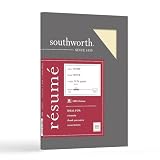
- Life Is Noteworthy. Create a resume that is noteworthy and will stand out from the crowd with this Southworth Resume Paper!Make a good first impression with this 100 percent Cotton Resume paper. Each sheet is lignin-free and acid-free to resist yellowing, and can be used in copiers as well as inkjet and laser printers for convenience. This Southworth Resume Paper comes 100 sheets per box to ensure there's enough on hand.
- Resume paper is ideal for resumes, cover letters, and thank-you notes
- Paper size: 8.5"W x 11"L
- Printer compatibility: laser, inkjet, copier
- Acid- and lignin-free
What are soft skills?
Soft skills are learnable behaviors and capabilities that affect how you work, communicate, make decisions, manage yourself, and interact with other people. Although some may be related to personality tendencies, they should not be treated as fixed personality traits. Asking a clarifying question, documenting a decision, meeting a commitment, resolving a disagreement, and adapting to new information are all observable behaviors that can be practiced.
| Soft skills | Hard or technical skills |
|---|---|
| Transferable interpersonal, judgment, and self-management capabilities. | Job-specific knowledge and technical abilities. |
| Examples include listening, prioritization, collaboration, judgment, and conflict resolution. | Examples include SQL, welding, accounting, project-management software, and medical procedures. |
| Often demonstrated through behavior, decisions, work samples, and outcomes. | Often demonstrated through tests, credentials, portfolios, or technical work samples. |
The terminology is not perfectly consistent. Employers and educators may use soft skills, human skills, transferable skills, employability skills, core skills, or social and emotional skills for overlapping ideas. The International Labour Organization’s core-skills framework, for example, groups capabilities into social and emotional skills, cognitive and metacognitive skills, digital skills, and green-job skills.
That breadth is why one list cannot capture every useful capability. The 10 skills in this article were selected because they are broadly relevant across occupations, recur in major frameworks, can be demonstrated through behavior, transfer across school and work, can improve through practice, and are distinct enough to be useful in a job search.
Why do soft skills matter?
Technical competence is necessary in most jobs, but it is rarely used in isolation. Employees also need to interpret information, coordinate handoffs, explain decisions, respond to customers or colleagues, and adjust when a plan changes. Soft skills help people apply technical skills effectively with other people and under real-world constraints.
- Employer demand: NACE’s research on entry-level college graduates emphasizes evidence of teamwork, problem-solving, communication, and other workplace skills rather than unsupported labels on a résumé. See NACE’s guidance on the skills employers seek.
- Occupational relevance: The U.S. Bureau of Labor Statistics’ occupational skill data shows that the most important skills vary by occupation, but adaptability, interpersonal skills, speaking and listening, leadership, and problem-solving appear repeatedly across many roles.
- Labor-market context: Historical research by David Deming found that U.S. jobs requiring substantial social interaction grew as a share of employment between 1980 and 2012, with especially strong outcomes for work combining analytical and social skills. That is historical context—not proof that soft skills guarantee higher pay or employment today. Read the NBER study for its scope and limitations.
Do not conclude that soft skills are more important than hard skills. The more accurate conclusion is that employers generally need a combination of technical ability and the human capabilities required to use it accurately, ethically, and collaboratively.
The 10 essential soft skills, with examples
1. Communication
What it means: Communication is the clear and effective exchange of information, ideas, facts, expectations, and feedback, combined with listening for understanding. It includes written, verbal, nonverbal, active-listening, questioning, and culturally responsive communication. NACE’s career-readiness framework uses a similarly broad definition.
Recommended Free Tools
Behaviors that demonstrate it:
- Writing concise, organized messages.
- Listening without interrupting and confirming what you heard.
- Asking clarifying questions before acting.
- Explaining technical information in plain language.
- Adjusting detail and tone for the audience.
- Confirming responsibilities, owners, and deadlines.
- Giving feedback that is specific and constructive.
Workplace example: A customer reports a recurring billing problem. Instead of forwarding the complaint without context, the employee summarizes the issue, documents the affected account, explains the next step to the customer, and gives the billing team the information needed to investigate.
Résumé example:
Translated recurring billing issues into concise case summaries for the finance team, reducing back-and-forth clarification requests and speeding customer follow-up.
Interview question to prepare for: “Tell me about a time you had to explain a complicated issue to someone unfamiliar with it.”
Common mistake: Speaking frequently, sending many emails, or using confident language is not the same as communicating well. Jargon without a check for understanding can create more work.
What’s actually slowing this PC down?
Pick the symptom - the matching free tool is one click away.
How to improve it: End meetings with a short summary of the decision, each owner, and each deadline. Send that summary in writing, then ask a colleague whether it was clear to someone who was not in the meeting.
Communication should not be reduced to one narrow style. Eye contact, gestures, interruption norms, directness, and self-promotion vary across cultures, abilities, and neurotypes. Evaluate clarity and outcomes rather than assuming that extroversion or a particular nonverbal style proves competence.
2. Teamwork and collaboration
What it means: Teamwork is working with others toward a shared goal while sharing responsibility, respecting different viewpoints, managing handoffs, and addressing problems constructively. It does not mean agreeing with everyone.
Behaviors that demonstrate it:
- Clarifying roles, deliverables, and decision rights.
- Contributing reliably without dominating or withdrawing.
- Sharing relevant information promptly.
- Inviting useful disagreement.
- Giving credit to other contributors.
- Supporting teammates without taking over their work.
- Keeping commitments that affect the group.
Workplace example: During a cross-functional project, an employee creates a shared handoff checklist so design, engineering, and marketing know what information is needed before each stage begins.
Résumé example:
Coordinated a four-person class project by assigning milestones, maintaining a shared task tracker, and delivering the final presentation two days ahead of schedule.
Interview question to prepare for: “Tell me about a time you worked with people who had different priorities or viewpoints.”
Common mistake: Writing “I’m a team player” without explaining your contribution. Shared responsibility is not an excuse to avoid accountability, and teamwork is not measured by how often a group agrees.
How to improve it: In your next group project, agree on roles, deadlines, and a method for raising concerns at the start. Afterward, ask teammates which behavior helped the group and which handoff could have been clearer. Research on teamwork training supports combining preparation, execution, and reflection rather than teaching communication in isolation; see this review of teamwork-training evidence.
Free tools Windows power users keep installed
One-click scans. No signup required.
3. Critical thinking and problem-solving
What it means: Critical thinking and problem-solving involve understanding the real problem, evaluating relevant information, identifying assumptions and trade-offs, choosing an appropriate response, and explaining the reasoning behind it.
Behaviors that demonstrate it:
- Defining the underlying problem instead of reacting to symptoms.
- Separating facts from assumptions.
- Consulting relevant sources and stakeholders.
- Generating more than one option.
- Weighing cost, risk, timing, and consequences.
- Testing a solution on a manageable scale.
- Reviewing the result and adjusting when necessary.
Workplace example: Instead of repeatedly correcting order-entry mistakes, an employee reviews the error pattern, discovers that a confusing form field causes most of the errors, proposes a revised form, and monitors results after implementation.
Résumé example:
Analyzed recurring order-entry errors, identified an ambiguous form field as the primary cause, and recommended a redesign that reduced correction work by 20%.
Interview question to prepare for: “Describe a time you had to diagnose a problem before deciding what to do.”
The Tool Desk
Outbyte PC Repair FREEClear out junk files and repair common Windows errorsFree Scan →Outbyte Driver Updater FREEFix the driver behind crashes, sound loss and screen glitchesFind Drivers →Common mistake: Jumping to a solution before defining the problem, or presenting a decision without explaining trade-offs. Persistence alone is not problem-solving if the approach is never diagnosed or adjusted.
How to improve it: For a recurring problem, write down the observed facts, possible causes, constraints, options, and success measure before acting. Afterward, compare the result with the measure you chose.
4. Adaptability and resilience
What it means: Adaptability is changing your approach when priorities, tools, information, roles, or circumstances change. Resilience is recovering and continuing productively after difficulty or failure. They overlap, but they are not identical.
The World Economic Forum’s Future of Jobs Report 2025 places resilience, flexibility, and agility among important current and rising skills.
Do these 3 things before closing this tab:
1Clear out junk files and repair common Windows errors2Scan for outdated or missing drivers - takes under a minute3Repair Windows errors before they cause bigger problemsBehaviors that demonstrate it:
- Learning a new tool or process.
- Reprioritizing when an urgent issue arises.
- Communicating clearly during uncertainty.
- Accepting useful feedback.
- Revising a plan when evidence changes.
- Recovering from an unsuccessful attempt without hiding the problem.
Workplace example: When a vendor changes its delivery schedule, an employee identifies affected dependencies, notifies stakeholders, proposes two alternatives, and revises the project timeline before the delay becomes a larger problem.
Also popular on Amazon

- Premium Quality Business Paper – This 70lb luxury resume paper offers a smooth, bright white finish, perfect for creating professional resumes, cover letters, and business correspondence. The 70lb weight ensures durability while maintaining a refined look and feel.
- Perfect for Printing and Writing – Designed for superior printability, this high-quality paper is ideal for inkjet and laser printers, ensuring crisp, sharp text and vibrant colors for your documents. It also provides a smooth surface for writing with pens or pencils.
- Versatile 8.5" x 11" Size – Standard letter-sized (8.5" x 11") paper that fits perfectly in most office printers and filing systems. Whether you're printing resumes, invitations, or professional documents, this paper is a great choice for any project.
- 100 Sheets per Pack – Comes with 100 sheets of luxury paper, offering excellent value and ensuring you have enough for multiple print jobs or professional documents. Ideal for office, home, or school use.
- Sustainable and Eco-Friendly – Made from high-quality, eco-conscious materials to support sustainability. This paper is sourced responsibly, making it a great choice for environmentally-conscious consumers.
Résumé example:
Replanned a customer launch after a supplier delay, coordinated two alternative delivery schedules, and kept stakeholders aligned through weekly status updates.
Interview question to prepare for: “Tell me about a time a plan changed unexpectedly. What did you do?”
Common mistake: Treating resilience as silently tolerating an impossible workload or poor management. Adaptability does not mean accepting every change without question, and forced positivity is not emotional regulation.
How to improve it: When a plan changes, identify what is fixed, what can move, what new information matters, and who needs to know. Practice communicating the revised plan rather than trying to conceal uncertainty.
5. Emotional intelligence and empathy
What it means: Emotional intelligence involves recognizing emotions in yourself and others, regulating your response, understanding another person’s perspective, and choosing a constructive response. Empathy is one component: attempting to understand another person’s experience does not require agreeing with every position.
Behaviors that demonstrate it:
- Noticing when stress is affecting a conversation.
- Pausing before responding defensively.
- Asking what concern is driving resistance.
- Acknowledging another person’s perspective.
- Separating intent from impact.
- Delivering difficult feedback respectfully.
- Maintaining appropriate professional boundaries.
Workplace example: A colleague misses a deadline. Rather than assuming laziness, the employee asks what prevented completion, confirms the new priority, agrees on a recovery plan, and still makes the impact of the delay clear.
Résumé example:
Mentored three new volunteers, adapted training to their questions and experience levels, and helped each complete customer-service shifts independently.
Quick wins for a faster PC:
Clear out junk files and repair common Windows errorsFree Scan →Fix the driver behind crashes, sound loss and screen glitchesFind Drivers →Repair Windows errors before they cause bigger problemsFix Now →Special offer. See more information about Outbyte and uninstall instructions. Please review EULA and Privacy policy.
Interview question to prepare for: “Tell me about a time you had to respond to an upset customer, colleague, or teammate.”
Common mistake: Using empathy to avoid accountability. Understanding someone’s feelings does not mean endorsing a missed commitment or removing a necessary boundary.
How to improve it: In a difficult conversation, first describe what you observed without judgment, ask for the other person’s perspective, acknowledge the impact, and then agree on a specific next step. A systematic review of workplace emotional-competency training found moderate improvements in controlled interventions, with effects still detectable three months later, but it also noted study-quality and measurement limitations; see the review and meta-analysis.
The OECD’s research on social and emotional skills connects these capabilities with work and life outcomes, while noting that associations vary by skill, country, and context.
6. Leadership and influence
What it means: Leadership is helping people move toward a shared goal by creating direction, making decisions, building trust, coordinating resources, and encouraging others. It is not limited to managers or people with formal authority.
Behaviors that demonstrate it:
- Taking initiative without waiting for a title.
- Setting a clear objective.
- Allocating tasks according to strengths and capacity.
- Making or escalating decisions appropriately.
- Creating room for others to contribute.
- Giving credit and accepting responsibility.
- Helping other people develop.
Workplace example: An employee notices that a recurring process has no owner, proposes a simple workflow, coordinates contributions from three departments, and tracks completion until the process becomes routine.
Résumé example:
Initiated and coordinated a volunteer food-drive workflow across three student organizations, assigning responsibilities and collecting 1,200 donated items.
Interview question to prepare for: “Tell me about a time you influenced a decision or organized people without formal authority.”
Common mistake: Confusing leadership with charisma, seniority, or control. Taking credit for a team result and motivating through pressure are poor evidence of effective leadership.
How to improve it: Volunteer to own a small process with a clear outcome. Define the objective, ask contributors what they need, keep progress visible, and report both the result and your own mistakes.
7. Professionalism, reliability, and work ethic
What it means: Professionalism is demonstrating integrity, preparation, accountability, sound judgment, dependable follow-through, respect, and attention to the responsibilities of the role. It is not the same as unpaid overtime, constant availability, a particular accent, clothing style, or level of confidence.
NACE’s professionalism competency includes integrity, accountability, preparation, dependability, prioritization, meeting expectations, attention to detail, and dedication to quality.
Behaviors that demonstrate it:
- Arriving prepared.
- Meeting commitments or flagging risks early.
- Taking ownership of mistakes.
- Protecting confidential information.
- Treating colleagues and customers respectfully.
- Producing accurate work.
- Following through without constant reminders.
- Maintaining ethical standards under pressure.
Workplace example: An employee realizes a report will miss its deadline, informs the manager before the due date, explains the cause, delivers the highest-priority sections first, and proposes a prevention step for the next cycle.
Résumé example:
Managed weekly inventory reconciliations for six months, reported discrepancies promptly, and maintained 100% on-time submission of required records.
Interview question to prepare for: “Tell me about a time you made a mistake or realized you might miss a commitment.”
Common mistake: Treating burnout, constant availability, or conformity as proof of work ethic. Reliability means communicating and following through within reasonable role expectations—not hiding structural barriers or accepting unsafe demands.
How to improve it: Keep a visible record of commitments, review it before accepting new work, and flag risks as soon as you can explain the likely impact and a possible alternative.
8. Time management and organization
What it means: Time management is prioritizing work, estimating effort, managing deadlines and dependencies, protecting focus, and keeping commitments visible. It does not mean doing everything at once.
Behaviors that demonstrate it:
- Breaking large tasks into milestones.
- Identifying dependencies.
- Distinguishing urgent work from important work.
- Using a calendar, task list, or project board consistently.
- Building in review time.
- Limiting avoidable context switching.
- Communicating capacity before accepting more work.
Workplace example: Facing three simultaneous deadlines, an employee maps the dependencies, completes the task blocking two colleagues first, reserves review time for the client deliverable, and negotiates a later deadline for a lower-impact request.
Résumé example:
Scheduled and tracked 25 weekly service appointments, prioritized urgent requests, and maintained accurate records while meeting all customer deadlines.
The Tool Desk
Outbyte Driver Updater FREEScan for outdated or missing drivers - takes under a minuteDriver Scan →Outbyte PC Repair FREERepair Windows errors before they cause bigger problemsFix Now →Special offer. See more information about Outbyte and uninstall instructions. Please review EULA and Privacy policy.Also popular on Amazon
Sale Southworth® 100% Cotton Résumé Paper, 8 1/2" x 11", 32 Lb, 100% Recycled, White, Pack of 100
- Life Is Noteworthy. Create a resume that is noteworthy and will stand out from the crowd with this Southworth Resume Paper!Make a good first impression with this 100 percent Cotton Resume paper. Each sheet is lignin-free and acid-free to resist yellowing, and can be used in copiers as well as inkjet and laser printers for convenience. This Southworth Resume Paper comes 100 sheets per box to ensure there's enough on hand.
- Resume paper is ideal for resumes, cover letters, and thank-you notes
- Paper size: 8.5"W x 11"L
- Printer compatibility: laser, inkjet, copier
- Acid- and lignin-free
Interview question to prepare for: “How have you handled several competing deadlines?”
Common mistake: Treating busyness as productivity, relying on memory for commitments, or overpromising to appear helpful. No personal system can make an objectively impossible workload realistic.
How to improve it: At the start of each week, list deadlines, dependencies, estimated effort, and consequences. Do the work blocking others first, reserve time for review, and renegotiate lower-priority commitments when capacity changes.
9. Creativity, curiosity, and learning agility
What it means: This skill combines asking useful questions, exploring alternatives, learning from feedback, acquiring new knowledge, and applying it to unfamiliar situations. Creativity is not limited to artistic work; it can mean finding a better process or clearer explanation.
Do these 3 things before closing this tab:
1Scan for outdated or missing drivers - takes under a minute2Clear out junk files and repair common Windows errors3Fix the driver behind crashes, sound loss and screen glitchesThe WEF identifies creative thinking and curiosity or lifelong learning among important current and rising skills. NACE’s career-readiness framework also includes continued development and curiosity within career self-development.
Behaviors that demonstrate it:
- Asking why a process exists before changing it.
- Seeking information outside a narrow job description.
- Generating more than one possible approach.
- Experimenting on a manageable scale.
- Learning from failed attempts.
- Requesting feedback and applying it.
- Transferring a skill from one context to another.
Workplace example: A customer-service employee notices repeated questions, learns the company’s knowledge-base system, drafts clearer help content, and tests whether customers can solve the issue without contacting support.
Résumé example:
Independently learned the team’s knowledge-base software, rewrote 15 customer-help articles, and reduced repeated clarification requests during the pilot period.
Interview question to prepare for: “Tell me about a skill or tool you learned and then applied to improve your work.”
Common mistake: Calling novelty innovation, brainstorming without implementation, or claiming to be a quick learner without explaining what you learned and how it changed the result.
How to improve it: Choose a small work problem, ask two people how they currently solve it, learn one relevant tool or method, test an improvement, and record what happened. Curiosity should produce useful action, not endless research.
10. Conflict resolution and negotiation
What it means: Conflict resolution is addressing disagreement by clarifying interests, separating people from problems, evaluating options, and reaching a workable agreement or escalation path. Negotiation is the related process of finding terms that account for different needs and constraints.
Behaviors that demonstrate it:
- Raising concerns early and directly.
- Separating facts, interpretations, and interests.
- Listening before proposing a solution.
- Identifying common goals.
- Offering options instead of personal attacks.
- Documenting decisions and responsibilities.
- Escalating serious, unsafe, discriminatory, or retaliatory conduct appropriately.
Workplace example: Two departments disagree about a launch date. The employee documents each team’s constraints, identifies which tasks truly depend on the disputed date, proposes a phased launch, and records the decision owners and review point.
Crashes, No Sound, or Screen Glitches?
Random freezes, missing sound and display glitches usually trace back to one bad driver. Find and replace yours safely.Free scan · under a minutePC Slower Than It Used to Be?
A free scan shows the junk files, broken settings and background clutter dragging Windows down - then fixes them in one click.Free scan · Windows 10 & 11Résumé example:
Resolved a scheduling dispute between two volunteer teams by documenting capacity constraints, proposing a phased schedule, and securing agreement on owners and review dates.
Interview question to prepare for: “Tell me about a time you handled a disagreement with a colleague or customer.”
Common mistake: Avoiding conflict until it becomes personal, or forcing a so-called win-win when interests genuinely conflict. Employees should not be expected to privately mediate harassment, discrimination, retaliation, or unsafe conduct without appropriate organizational support.
How to improve it: State the shared goal, describe the observable issue, ask about the other party’s constraints, offer two or three options, and document the decision. Escalate when the issue involves safety, law, policy, or an abuse of power.
Free tools Windows power users keep installed
One-click scans. No signup required.
How to demonstrate soft skills on a résumé
Use this three-part rule:
- Name the behavior. What did you actually do?
- Give the situation. What project, customer, deadline, problem, or responsibility required it?
- Show the result or lesson. What changed, improved, became clearer, or was learned?
A skills-only statement is weak:
Strong communication and teamwork skills.
A behavior-based bullet is stronger:
Coordinated a four-person class project, created a shared task tracker, and delivered the final presentation two days ahead of schedule.
Whenever possible, add scope or evidence: team size, customer volume, number of tasks, deadline, error rate, response time, funds raised, people trained, or another honest measure. A result does not have to be a dollar amount. Fewer errors, clearer handoffs, faster completion, improved customer understanding, or a documented process can all be meaningful.
Where to find evidence if you are a student or recent graduate
You do not need a long corporate history to demonstrate these skills. Relevant evidence may come from:
- Classes and group projects.
- Internships, apprenticeships, and part-time jobs.
- Student organizations, sports, and clubs.
- Volunteer work and community projects.
- Freelance work or a personal business.
- Caregiving, household coordination, or other responsibilities—translated into work-relevant behavior without overstating the experience.
- Customer-facing, retail, hospitality, or service work.
NACE recommends connecting skills to academic, work, extracurricular, internship, and volunteer experiences rather than limiting evidence to paid employment. Its 2026 employer research should also be interpreted in context: the Spring Update surveyed 185 respondents—142 NACE employer members and 43 nonmembers—about entry-level college graduates. It is useful evidence of employer sentiment, not a law that represents every employer or worker. See the NACE survey scope and its guidance on showcasing skills.
Recommended Free Tools
Cover-letter formula
Connect one skill to one requirement in the job description and one piece of evidence:
“Your posting emphasizes accurate client communication. In my campus advising role, I converted complex registration rules into step-by-step email guidance for students, then tracked recurring questions to improve the next version.”
This is more persuasive than writing that you are “a highly motivated people person.”
How to discuss soft skills in an interview
Prepare two or three behavioral stories using the STAR structure:
- Situation: What was happening?
- Task: What were you responsible for?
- Action: What did you specifically do?
- Result: What changed, and what did you learn?
For example:
Situation: Two teammates disagreed about the direction of a class project.
Task: We needed to choose an approach without missing the deadline.
Action: I summarized both proposals, clarified the grading criteria, and helped the group test each option against the available time.
Result: We selected one approach, submitted on time, and used a shared decision checklist for the next project.
Do not invent a dramatic story. A small, specific example is better than a vague claim about being a natural leader. If the result was imperfect, explain what you changed afterward. A useful result may be improved clarity, fewer errors, faster completion, reduced conflict, better customer understanding, or a lesson that changed your next action.
Independent reader supportYour contribution helps us test, update, and keep practical guides available for everyone.How to improve soft skills: a practical development loop
Soft skills are not fixed attributes that people either have or lack. People begin with different strengths, but many of these capabilities can improve through deliberate practice, feedback, coaching, simulations, work-based learning, and repeated use. The OECD notes that social and emotional skills develop across contexts, including school, extracurricular, and workplace environments.
Also popular on Amazon

- Premium Paper Set: Made from 90 GSM parchment paper for easy writing.Heavy-weight,avoid ink bleed through.Parchment paper is light enough in color for writing,all write smoothly on this paper.
- Vintage Design: Designed with vintage textures,these diploma papers have retro appearances,crafted with attention to detail,experience the appeal of vintage paper.
- Smooth Texture for Writing and Printing: It works well on a variety of laser and inkjet printers at home as well as professional printers in the office.Whether you prefer the printing or writing,our parchment paper offers a smooth and consistent surface.
- Product Specifications: Each pack contains 25 sheets,sized at 8.5 x 11 inches.The blank design allows for easy addition of text, graphics,catering to various personalized demand.
- Multi-Purpose: This paper is great for certificates, resumes,diplomas,business cards and invitations.Ideal for use in homes,schools,and businesses,as well as for artistic,crafts and more,offering possibilities for your creativity.
- Choose one skill. Start with a skill the target job requires or one that repeatedly limits your performance.
- Define a target behavior. Replace “be a better communicator” with “end meetings by confirming owners and deadlines.”
- Practice in a real situation. Use a class project, shift, volunteer assignment, meeting, or household responsibility.
- Request specific feedback. Ask, “Was my summary clear?” or “What could I have done differently when priorities changed?”
- Review the outcome. Note what changed, what did not, and what you would repeat.
- Repeat in a harder context. Try the behavior with more ambiguity, a shorter deadline, or a different audience.
- Collect evidence. Save the résumé bullet, outcome, feedback, or example for future applications and performance reviews.
Example: a 30-day communication plan
- Target behavior: End meetings with clear owners and deadlines.
- Week 1: Practice summarizing decisions verbally at the end of each meeting.
- Week 2: Send a written summary after every relevant meeting.
- Week 3: Ask a colleague whether the summary is clear to someone who did not attend.
- Week 4: Review whether follow-up questions, missed handoffs, or late tasks decreased.
- Evidence: Keep one anonymized example and a measurable or observable result.
Useful practice settings include team projects, internships, apprenticeships, volunteer leadership, customer-facing work, presentations, peer mentoring, role-play, simulations, structured feedback, and cross-functional assignments.
What’s actually slowing this PC down?
Pick the symptom - the matching free tool is one click away.
How to choose the right soft skills for a specific job
Do not copy all 10 into every application. Compare the list with the job description and the work itself.
- Identify repeated signals. If the posting repeatedly mentions customers, deadlines, cross-functional work, analysis, or change, those clues point to the skills to emphasize.
- Study the role’s consequences. In safety-critical or regulated work, precision, reliability, judgment, and communication may matter more than charisma. In sales, public-facing communication and negotiation may be central. In project work, organization, teamwork, and conflict resolution may be more prominent.
- Select three to five skills. Choose the capabilities most connected to the role and for which you have credible evidence.
- Match each skill to a story. If you cannot describe a situation, action, and result, do not lead with the label yet.
- Use the employer’s language carefully. Mirror relevant terms for clarity, but do not stuff keywords into a résumé without proof.
The BLS detailed occupational data and the O*NET content framework are useful reminders that skill priorities vary by occupation.
Soft skills in remote, hybrid, and AI-enabled work
Remote and hybrid work
Remote work makes some soft skills more visible because informal office context is reduced. Evidence may include:
- Writing concise asynchronous status updates.
- Documenting decisions so absent teammates can act.
- Making handoffs explicit.
- Facilitating an inclusive video meeting.
- Respecting time zones and response-time expectations.
- Separating urgent from nonurgent communication.
- Maintaining relationships without relying entirely on informal office contact.
For example, “Worked well remotely” is vague. “Posted weekly status updates with risks, owners, and next steps, allowing a distributed four-person team to complete the deliverable on schedule” shows the behavior.
Quick wins for a faster PC:
Clear out junk files and repair common Windows errorsFree Scan →Scan for outdated or missing drivers - takes under a minuteDriver Scan →Repair Windows errors before they cause bigger problemsFix Now →AI and technology
Soft skills are not a replacement for digital or AI literacy. The WEF’s 2025 skills outlook identifies AI and big data, networks and cybersecurity, and technological literacy among fast-growing skills while also highlighting analytical thinking, creativity, resilience, leadership, and collaboration. NACE’s 2026 update likewise reports rising AI expectations in entry-level work alongside continued demand for communication, teamwork, and problem-solving.
The practical lesson is complementarity: learn enough technology to use tools responsibly, and develop the judgment to check outputs, explain decisions, protect confidential information, recognize risks, and collaborate with people affected by the work.
Important limits and fairness considerations
Soft skills are context-dependent. A skill can be valuable in one role and less central in another. A person who rarely gives presentations may still communicate exceptionally well in writing, documentation, one-to-one conversations, or technical explanations.
Personality is not the same as skill. Extroversion does not equal communication, quietness does not equal poor teamwork, confidence does not equal leadership, eye contact does not equal honesty, constant positivity does not equal resilience, and social ease does not equal emotional intelligence.
Expression varies. Culture, language, disability, neurodiversity, and individual communication preferences can affect eye contact, gestures, directness, interruption, punctuality, self-promotion, and other behaviors. NACE’s framework instructs users to account for varied communication abilities, learning styles, and cultural differences. Evaluate clarity, reliability, judgment, collaboration, and outcomes instead of enforcing one narrow version of professional presence.
Do not use resilience to excuse bad systems. Employees may need support for caregiving, transportation, disability, inaccessible systems, excessive workloads, discrimination, or unsafe conditions. Individual development cannot solve every organizational problem.
Measurement is imperfect. Self-ratings can be unreliable, and one interview may not reveal how consistently a person behaves. The OECD discusses limitations in self-assessment and the need for better direct assessment. A fairer evaluation uses multiple sources: work samples, structured behavioral interviews, simulations, references, peer or manager feedback, project outcomes, and repeated behavior over time.
How the 10-skill framework was selected
This article uses the following criteria rather than presenting an arbitrary universal ranking:
- Cross-occupational relevance: usefulness in multiple industries and job levels.
- Employer convergence: recurring ideas across NACE, WEF, ILO, O*NET, BLS, OECD, or comparable frameworks.
- Observable behavior: the skill can be demonstrated rather than merely asserted.
- Transferability: evidence can come from school, work, volunteering, customer service, caregiving, or projects.
- Trainability: the capability can improve through practice, feedback, or experience.
- Distinctiveness: the list avoids presenting ten near-synonyms.
- Practical usefulness: each skill helps with applications, interviews, development plans, or performance reviews.
- Inclusivity: competence is not defined by one culture, personality type, communication style, or level of extroversion.
WEF, NACE, BLS, ILO, and OECD use different populations, definitions, geographies, and purposes. Their lists should therefore be synthesized, not treated as interchangeable rankings. NACE’s career-readiness framework currently describes eight competencies, with its Equity and Inclusion competency under review; that framework is one input to this broader, job-search-oriented list.
Frequently Asked Questions
What is the difference between soft skills and hard skills?
Soft skills are transferable behaviors and capabilities such as communication, prioritization, collaboration, judgment, and adaptability. Hard or technical skills are job-specific abilities such as accounting, SQL, welding, medical procedures, or operating specialized software. Most jobs require both: soft skills help you apply technical skills effectively, but they do not replace technical qualifications.
Which soft skills should I put on my résumé?
Choose three to five skills that appear in the target job description and that you can support with specific evidence. Instead of listing only communication or teamwork, describe the situation, your action, and the result—for example, coordinating a four-person project, improving a handoff, reducing errors, or meeting competing deadlines.
Are soft skills more important than technical skills?
There is no general basis for ranking one above the other. Technical competence is necessary for accurate and safe work, while soft skills help people communicate, collaborate, make decisions, and adapt while using that competence. Employers commonly evaluate the combination.
Can soft skills be learned?
Many can be developed. Practice, feedback, coaching, simulations, work-based learning, and repeated real-world use can improve skills such as communication, emotional regulation, organization, and teamwork. Development is not instant or identical for everyone, so use specific behaviors and gradual practice rather than vague advice.
What are examples of soft skills for students?
Class projects can demonstrate teamwork, communication, organization, and problem-solving. Student organizations can show leadership and negotiation. Volunteering, customer-facing work, caregiving, and internships can provide evidence of reliability, empathy, adaptability, and conflict resolution.
How can I prove I have good communication skills?
Describe a communication task and its outcome: explaining technical information to a nontechnical audience, writing instructions that reduced questions, documenting a handoff, or resolving a customer issue. On an interview, use a specific STAR story rather than saying you are a strong communicator.
Is emotional intelligence a soft skill?
Yes. Emotional intelligence generally involves recognizing emotions, regulating your response, understanding perspectives, and responding constructively. Empathy is one part of emotional intelligence, not a complete synonym, and empathy does not require agreeing with every decision or removing accountability.
Is time management a soft skill?
Yes. It involves prioritizing work, estimating effort, managing dependencies, protecting focus, and communicating trade-offs. It does not mean being constantly busy or accepting an impossible workload without discussion.
Are soft skills the same for every job?
No. They are broadly transferable, but their importance and expression depend on the occupation. Negotiation may be central in sales, conflict resolution in management or healthcare, and precision and reliability in regulated or safety-critical work. Compare the framework with the target job description.
How can introverts demonstrate soft skills?
Use evidence rather than personality labels. Written clarity, active listening, thoughtful questions, reliable follow-through, one-to-one relationship building, well-prepared presentations, and effective asynchronous collaboration are all soft-skill behaviors. Extroversion is not a requirement for communication, teamwork, or leadership.
How should I discuss soft skills without sounding vague?
Use the formula: behavior, situation, result. Say what you did, explain the context, and describe what changed or what you learned. For instance, replace “I am organized” with “I mapped dependencies across three deadlines, completed the task blocking two colleagues first, and delivered the client work on schedule.”
Windows Errors? Fix Them Before They Spread
Repair common Windows errors and clear accumulated junk for a smoother, more stable PC - no reinstall needed.Free scan · no reinstallOutdated Drivers Are Slowing You Down
One free scan finds every outdated or missing driver and matches the right update for your exact hardware.Free scan · exact hardware matchThe Bottom Line
Soft skills are not a universal top-10 ranking or a substitute for technical ability. They are observable, transferable behaviors that help you apply your expertise and work effectively with others. Pick three to five that matter for your target role, practice one behavior at a time, and document specific examples. On your résumé and in interviews, show what you did and what changed instead of merely naming the skill.




