Some links on this page are affiliate links: if you buy through them we may earn a commission, at no extra cost to you.
The semiconductor industry needs more than additional engineers. As the United States expands chip fabrication, advanced packaging, equipment production and research, employers need a connected talent system that can produce technicians in months, engineers in years, researchers over longer horizons and construction workers immediately. That means scaling STEM education by volume, speed, relevance, geographic reach and continuity—not simply increasing four-year degree enrollment.
Why the workforce gap is growing
The CHIPS and Science Act is accelerating domestic semiconductor investment. The Department of Commerce describes CHIPS for America as a program with $50 billion in authorized funding and says it had proposed more than $32 billion across 16 states, associated with more than 115,000 potential jobs. Those are proposed investments and estimated jobs, not positions already filled. Commerce semiconductor industry overview
Demand also comes from artificial intelligence, automobiles, telecommunications, defense, medical devices and clean energy. Semiconductors support more than 300 downstream industries. The Semiconductor Industry Association (SIA) says the U.S. industry directly employs about 345,000 people across chip design, electronic-design automation, fabrication and equipment production. SIA 2025 State of the Industry report
Do these 3 things before closing this tab:
1Repair Windows errors before they cause bigger problems2Scan for outdated or missing drivers - takes under a minute3Clear out junk files and repair common Windows errorsShortage estimates are not interchangeable. Commerce previously projected a shortfall of 90,000 skilled technicians by 2030, while SIA’s 2025 report projected a 67,000-worker semiconductor talent shortfall by that year. They use different dates, occupational categories and methods; they should not be added together. SIA also identified a broader, economy-wide gap of 1.4 million computer-science, engineering and technician jobs. Commerce workforce remarks
#1 Best Overall

- 35+ Guided Electronics Projects: Progress from LEDs and buttons to RFID access, real-time clocks, motion and distance sensing, environmental monitoring, motor control and interactive displays for STEM learning, coding clubs and maker projects
- More I/O and Memory for Larger Builds: The MEGA 2560 R3 provides 54 digital I/O pins, including 15 PWM outputs, 16 analog inputs, 4 hardware serial ports and 256 KB flash for projects that combine more sensors, controls and displays
- 200+ Components for Prototyping: Includes LCD1602, RC522 RFID, RTC, DHT11, HC-SR501 PIR, ultrasonic and water-level sensors, GY-521, MAX7219, keypad, joystick, rotary encoder, relay, SG90 servo, stepper motor, DC motor, breadboard and more
- Learn, Modify and Create: Follow 35+ guided lessons with example code, then adjust sensor thresholds, timing, display text, motor behavior and control logic to turn structured exercises into access systems, monitors, alarms and interactive projects
- Organized for Repeatable Learning: Pre-soldered modules, a solderless breadboard, storage case and small-parts box reduce setup time and keep sensors, LEDs, ICs, wires and other components easy to find between projects
The pressure extends beyond factory payrolls. New fabs require electricians, pipefitters, cleanroom HVAC specialists, tool-installation crews, facilities engineers and construction managers. Commerce earlier cited a need for more than 100,000 construction workers connected to new facilities. These workers may not be labeled conventional STEM employees, but without them a fab cannot open or operate.
What “scaled STEM education” actually means
Scaling has five dimensions:
- Volume: more learners, instructors, apprentices and graduates.
- Speed: short pathways for production, maintenance and equipment roles, alongside longer university and research routes.
- Relevance: instruction in cleanroom behavior, contamination control, semiconductor materials, vacuum systems, electronics, automation, statistical process control, metrology and safety.
- Reach: delivery through community colleges, minority-serving institutions, regional universities, rural communities and incumbent-worker programs—not only elite research campuses.
- Continuity: a progression from K–12 exposure to credentials, paid work experience, bachelor’s transfer, graduate study and lifelong upskilling.
Education supplies mathematical, scientific and technical foundations. Workforce training builds competence on specific tools, processes, shifts and safety procedures. Employers need both.
The semiconductor job ladder
| Workforce tier | Representative roles | Useful preparation |
|---|---|---|
| Technician and production | Fab, process, equipment, maintenance, facilities, metrology, inspection, quality, automation, chemical handling, packaging, assembly and test technicians | Certificates, associate degrees, career-and-technical education, apprenticeships, paid employer training |
| Bachelor’s level | Process, yield, integration, equipment, manufacturing, electrical, computer, materials, chemical, industrial, software, reliability and quality engineers | Engineering or computer-science degree plus laboratory, internship or co-op experience |
| Advanced degree and research | Device and process researchers, materials scientists, lithography specialists, computational scientists, chip architects, packaging, photonics and quantum-device researchers | Master’s or doctoral study, research facilities and industry or national-laboratory collaboration |
| Construction and infrastructure | Construction managers, electricians, pipefitters, HVAC and cleanroom specialists, mechanical and electrical trades, facilities engineers and tool-installation specialists | Registered apprenticeships, trade credentials, employer qualification and project experience |
Commerce has said more than 60% of fab jobs do not require a college degree. That refers to fab positions, not every semiconductor occupation, and it does not mean the work requires no specialized preparation. Commerce workforce remarks
Free tools Windows power users keep installed
One-click scans. No signup required.
Why four-year degrees alone cannot close the gap
- Jobs have different requirements. A process technician, facilities operator and device researcher cannot be trained through one generic STEM pathway.
- Manufacturing readiness is experiential. Cleanroom conduct, contamination control, equipment troubleshooting, shift operations and safety are learned through laboratories and work-based practice.
- Degree capacity takes time. New programs require faculty, accreditation, laboratories and research equipment.
- Regional capacity is uneven. A fab may be far from universities that traditionally produce semiconductor engineers.
A degree-heavy strategy remains essential for design, process engineering and research, but it is slower, more expensive and less accessible for technician roles. Certificates, associate degrees and apprenticeships can move people into jobs faster, provided employers validate the competencies and offer real positions.
Rank #2
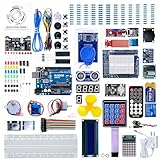
- 30+ Guided Electronics Projects: Start with LEDs and build toward LCD1602 displays, RFID access, motion detection, distance sensing, motor control and environmental monitoring for STEM learning, coding clubs, classrooms and hobby projects
- 200+ Components Across 63 Types: Includes an ELEGOO UNO R3 controller, LCD1602, RC522 RFID, RTC, HC-SR501 PIR sensor, ultrasonic sensor, DHT11, GY-521, MAX7219, keypad, joystick, relay, SG90 servo, stepper motor, breadboard and more
- Begin Without Soldering: Pre-soldered modules, a solderless breadboard, organized storage case and small-parts box reduce setup time and help beginners move from lesson to lesson while keeping LEDs, ICs, wires and sensors easy to find
- Learn, Modify and Create: Program the ELEGOO UNO R3 board with Arduino IDE using the included PDF tutorial and example code, then adjust sensor thresholds, timing, display text and motor behavior to turn guided lessons into original projects
- Flexible Power and Project Setup: Includes a 9 V, 1 A power supply, breadboard power module, 9 V battery and USB cable to support controller, breadboard and module experiments without sourcing basic setup accessories separately
Community colleges and apprenticeships are the fast lane
Community colleges can offer two-year technical degrees, short certificates, evening classes and incumbent-worker training near fabs. They can also create bridges into bachelor’s programs, allowing students to earn while building experience instead of relocating or taking on substantial debt.
Commerce reported in a 2025 competitiveness document that semiconductor programs had expanded to more than 80 community colleges across 22 states and that more than 20 semiconductor companies were deploying apprenticeship models. This is an administration-reported snapshot, not a comprehensive census. Investing in American Competitiveness
The strongest model is stackable: a short credential leads to a paid placement, the placement counts toward an associate degree, and later coursework can transfer toward a bachelor’s or advancement into higher-skill roles. Employers should supply equipment access, instructor training, competency assessments and transparent hiring pathways.
Recommended Free Tools
Universities must expand capacity and practical relevance
Universities are needed for process integration, chip architecture, materials, packaging, photonics, equipment, computing and research. Expansion should include semiconductor-focused tracks, cleanroom and fabrication laboratories, industry-sponsored capstones, paid internships, co-ops, shared facilities and faculty with current industry experience.
Programs should not focus only on chip design. Advanced packaging, materials, manufacturing equipment and process control are equally important to a complete domestic ecosystem. Regional consortia can share expensive tools and laboratories, while transfer agreements connect community-college technicians with university engineering programs.
Rank #3

- TURN CODE INTO REAL-WORLD RESULTS — Follow 22+ guided lessons to make LEDs blink, read temperature and distance, move servo and stepper motors, control an LCD and respond to joystick or IR input; ideal for a family weekend build, homeschool unit, coding club or STEM classroom
- MORE PROJECT VARIETY IN ONE ORGANIZED KIT — Includes the UNO R3 controller, LCD1602 with pre-soldered header, breadboard power module, ultrasonic and DHT11 sensors, joystick, IR receiver and remote, SG90 servo, stepper motor, relay, DC motor, fan blade, displays, LEDs, buttons, resistors and jumper wires
- START WITHOUT SOLDERING — Plug-in modules, a solderless breadboard and the pre-soldered LCD help beginners focus on wiring, code and testing; the illustrated component list makes it easier to find each part and move from one lesson to the next
- LEARN THE LOGIC, THEN CREATE YOUR OWN — Use Arduino IDE and the included example code to understand digital input and output, analog sensing, timing, motor control and display functions, then change thresholds, speeds and sequences for alarms, environmental monitors, reaction games and motion projects
- CLEAR SETUP SUPPORT FOR FIRST-TIME BUILDERS — Download the latest tutorial and code, select the UNO board and correct computer port, check component polarity and breadboard rows, and keep power-module input at 9V or below; younger learners should work with an experienced adult
K–12 determines the longer-term pipeline
K–12 cannot solve an immediate technician shortage, but it determines who is prepared to enter physics, chemistry, mathematics, computing, electronics, robotics and engineering. National Science Board data for 2026 show continuing weaknesses in U.S. mathematics and science performance, including declines from pre-pandemic levels and weak comparative performance among eighth graders. National Science Board, State of U.S. Science and Engineering 2026
Useful interventions include:
- Microelectronics modules in science and mathematics courses.
- Robotics, electronics and project-based laboratory work.
- Teacher externships with fabs and equipment manufacturers.
- Dual enrollment and career-and-technical education.
- Fab, supplier and research-lab visits.
- Industry-supported competitions and mentoring.
- Prerequisite support and deliberate recruitment of women, veterans and underrepresented communities.
Awareness alone is not enough. Programs should track mathematics preparation, enrollment, persistence, credentials and employment.
Windows Errors? Fix Them Before They Spread
Repair common Windows errors and clear accumulated junk for a smoother, more stable PC - no reinstall needed.Free scan · no reinstallOutdated Drivers Are Slowing You Down
One free scan finds every outdated or missing driver and matches the right update for your exact hardware.Free scan · exact hardware matchFederal infrastructure is taking shape
CHIPS for America
Commerce and the National Institute of Standards and Technology administer the $50 billion CHIPS framework for manufacturing, research, innovation and workforce development. Authorized funding is not the same as money already spent. Commerce semiconductor industry overview
NSTC Workforce Center of Excellence
Commerce announced an expected $250 million investment over 10 years in a National Semiconductor Technology Center Workforce Center of Excellence. The planned effort connects employers, nonprofits, colleges, universities, labor organizations and workforce providers across research, design, manufacturing and production. Commerce Workforce Center announcement
Rank #4
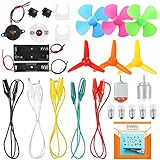
- COMPLETE CIRCUIT KIT: Comes with one instructions, 5 x crocodile clip leads, 5 x bulbs, 2 x motors, 2 x motor holder, 2 x rocker switches, 3 x propeller with 3 Vanes, 3 x propeller with 4 Vanes, 1 x buzzer sounder, 1 x bulb holders, AA size battery holder (1 x 1.5V), AA size battery holder (2 x 1.5V), packaged with enough circuit accessories for you do science project easily
- SCIENCE EXPERIMENT KIT: This popular and interesting electronic science experiment STEM toys can well inspire and encourage kids learning about science. This Montessori learning toy is good for curious kids, turning your own new ideas and inventions into reality. Also perfect for Children's school science STEM engineering projects, Ideal back to school gift for curious minds
- WIDE APPLICATIONS: The circuit motor kit can well catch kids attention and let the them try to build, experiment and explore basic electrical simple circuits. It can also be used in school in science, STEM, technology and design courses, easy to meet your project needs, properly educating some circuit knowledge would be a good interaction time with your kids together
- NOTICE: It is recommended that the voltage be 1.5V-3V. If the voltage is 3V, please control the time. The use time should not be too long, and the time should be controlled within 3 minutes. After 5-10 minutes, the circuit will generate heat and a short circuit.
- WARNING: Suitable for 8+ years. CHOKING HAZARD—Small parts, not for children under 3 years. Be careful of scald caused by short circuit. Do not mix old and new batteries. Do not mix alkaline, standard (carbon-zinc), or rechargeable batteries, the kids must use under the supervision of adults
National Network for Microelectronics Education
NSF and Commerce designed the NNME to connect regional consortia, education providers, industry, labor and workforce organizations; share curricula; promote careers; and provide technical assistance. The initial framework described up to $30 million over five years for a coordination hub. NSF-Commerce NNME announcement
In May 2026, the SEMI Foundation and NSF announced the first four regional nodes. They reported more than 325 participating organizations and potential support of up to $20 million per node over five years. Participation does not establish that every organization already operates a semiconductor program. SEMI Foundation NNME announcement
What’s actually slowing this PC down?
Pick the symptom - the matching free tool is one click away.
Domestic preparation and international talent are complementary
U.S. education systems need stronger domestic preparation, but advanced research and engineering also depend on international graduates. In 2024, temporary visa holders earned 42% of U.S. science-and-engineering master’s degrees and 38% of doctorates. They accounted for 54% of engineering doctorates and 61% of computer-and-information-sciences doctorates. These are degree-award figures; they do not show who remains in the United States. National Science Board data
SIA says international students make up 60% of advanced-degree graduates in U.S. semiconductor-relevant engineering and computer-science fields and supports immigration changes that help highly skilled graduates stay. That is an industry policy position, not a neutral estimate. SIA 2026 workforce policy blueprint
Best Value

- Learn electronics with ProTechTrader's Make: Electronics 3rd Edition Kit 1 Economy pack. Nearly 200 selected parts match Sections 1-3 by Charles Platt.
- Build hands-on circuit projects on solderless breadboards, then move selected work to perforated board. The electrical components match the early lessons and diagrams.
- Test switching, sound, and control circuits with an electronics kit that includes passive parts and semiconductors. An 8-ohm speaker and 9V relay support key experiments.
- Four wire colors separate circuit paths, and alligator-clip leads handle temporary connections. ProTechTrader sorts components in labeled bags for fast cleanup.
- Choose the Economy component pack for Sections 1-3 at home, in supervised STEM, homeschool, or club use if you own bench tools and project power. Book sold separately. This product is not a toy and is designed for use by teens and adults ages 13 and up
The practical strategy is both-and: improve domestic STEM preparation, remove barriers that keep qualified international graduates from working in the United States, and make technical careers accessible to people already living near new facilities.
What can derail the effort
- Forecast error: fab delays, construction changes and technology shifts can leave programs training for jobs that arrive later or elsewhere.
- Weak employer alignment: certificates have little value when companies do not define competencies, provide placements or recognize the credential.
- Capacity bottlenecks: qualified instructors, cleanrooms, equipment, consumables, safety systems and student support are difficult to scale.
- Nonportable credentials: company-specific training may not transfer to another employer.
- Access barriers: tuition, transportation, childcare, shift schedules, weak mathematics preparation and distance from fabs can exclude potential workers.
- Job-quality problems: recruitment and retention suffer when wages, shift premiums, safety, housing access and advancement are unclear.
- Geographic competition: multiple fabs can compete for the same technicians, tradespeople and instructors.
- Counting announcements instead of outcomes: enrollment, completion, placement, retention, wage progression and employer satisfaction matter more than the number of grants announced.
How to measure a genuinely scaled system
Government and employers should publish results by occupation and skill level, including:
- Completion, placement, retention and wage progression.
- Time from enrollment to job readiness.
- Apprenticeship completion and internship-to-hire conversion.
- Employer assessment of technical competencies.
- Instructor numbers, laboratory and cleanroom capacity.
- Community-college transfer and incumbent-worker advancement.
- Participation by gender, race, veteran status and geography.
- Regional vacancy duration and whether graduates remain locally.
A program that produces many certificates but few sustainable jobs is not a successful scale-up.
What success would look like
A durable semiconductor talent system would combine national competency standards and shared curricula with regional delivery. It would offer stackable credentials, paid work-based learning, shared laboratories, strong K–12 foundations, transfer routes and employer-funded upskilling. It would measure hiring and retention, not publicity, and would treat technician, construction, engineering and research roles as parts of one workforce ladder.
That approach recognizes the central reality: education is necessary but insufficient. The United States also needs competitive job quality, housing and transportation around fabs, reliable infrastructure, employer training and immigration policies that retain high-skill graduates. Scaling STEM education is therefore an operating system for semiconductor expansion—not a single grant program or a promise that more four-year degrees alone will solve the shortage.
Quick Recap
Product prices and availability are accurate as of the date/time indicated and are subject to change. Any price and availability information displayed on Amazon at the time of purchase will apply.



