What’s actually slowing this PC down?
Pick the symptom - the matching free tool is one click away.
Some links on this page are affiliate links: if you buy through them we may earn a commission, at no extra cost to you.
1Password did not eliminate every standalone option in 2017. It promoted memberships while standalone licenses and locally stored vaults still existed, leaving customers unsure which product they could buy and what would happen to their data. The change became much more concrete with 1Password 8, which requires a membership and account-based migration. Today, the choice is less about whether 1Password is “in the cloud” than whether managed syncing and sharing are worth an ongoing fee and dependence on a vendor account.
What changed—and when?
The confusion makes sense because 1Password’s move happened in stages, not on a single date. The older model let a customer buy a license for a particular app version and keep vault data in standalone vaults. Customers could store those vaults locally and arrange their own synchronization, such as through Dropbox or Wi-Fi. The membership model instead put account setup, synchronization and related services under 1Password’s management.

In July 2017, CyberScoop reported that both models still existed: 1Password said standalone licenses remained available and that it had no immediate plan to stop supporting existing standalone vaults. But the company was steering new customers toward memberships, and some users found the standalone route difficult to locate and understand. The dispute was not simply that “1Password went cloud-only in 2017.” It was that the practical buying path and public explanations made the available choices—and their future—unclear.
There are several different claims that can get compressed into “cloud-based”: a company can market a cloud account as the default, store encrypted account data on its servers, require an account to use its current app, or make an app dependent on a live connection for every task. Those are not interchangeable. In 2017, standalone vaults had not vanished. The later 1Password 8 requirement is the clearer break for customers who want to keep using the current app without a membership.
#1 Best Overall
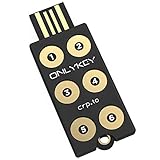
- ✅ PROTECT ONLINE ACCOUNTS – A password manager, two-factor security key, and secure communication token in one, OnlyKey can keep your accounts safe even if your computer or a website is compromised. OnlyKey is open source, verified, and trustworthy.
- ✅ UNIVERSALLY SUPPORTED – Works with all websites including Twitter, Facebook, GitHub, and Google. Onlykey supports multiple methods of two-factor authentication including FIDO2 / U2F, Yubico OTP, TOTP, Challenge-response.
- ✅ PORTABLE PROTECTION – Extremely durable, waterproof, and tamper resistant design allows you to take your OnlyKey with you everywhere.
- ✅ PIN PROTECTED – The PIN used to unlock OnlyKey is entered directly on it. This means that if this device is stolen, data remains secure, after 10 failed attempts to unlock all data is securely erased.
- ✅ EASY LOG IN –No need to remember multiple passwords because by plugging OnlyKey to your computer, it automatically inputs your username and password. It works with Windows, Mac OS, Linux, or Chromebook, just press a button to login securely!
Why the subscription model appealed to 1Password
A membership gives the company one account-centered service to support across devices. It can make setup and syncing more consistent, and it supports features such as shared family vaults, administration, recovery processes and ongoing product development. 1Password’s current personal plans advertise cross-platform use, Watchtower alerts, sharing and storage for information beyond passwords. Its business plans include administrative and security controls, identity-provider integrations and developer tools.
Those capabilities are a plausible business rationale for recurring revenue: the service and its features are maintained over time rather than sold only as a particular app version. They are not proof that every customer gets equal value. A person who wants a password vault on one device may see little benefit in family sharing or managed setup; a household with several platforms may value those features more than the subscription cost.
1Password 8 made membership a requirement
For many longtime customers, the transition became tangible when moving from 1Password 7 to 1Password 8. According to 1Password’s migration documentation, version 7 and earlier supported standalone vaults, while version 8 requires a 1Password membership. Standalone data must be migrated into a 1Password account. In the documented upgrade flow, installing version 8 uninstalls version 7.
Quick wins for a faster PC:
Scan for outdated or missing drivers - takes under a minuteDriver Scan →Clear out junk files and repair common Windows errorsFree Scan →Rank #2

- POWERFUL SECURITY KEY: The Security Key C NFC is the essential physical passkey for protecting your digital life from phishing attacks. It ensures only you can access your accounts.
- WORKS WITH 1000+ ACCOUNTS: Compatible with Google, Microsoft, and Apple. A single Security Key C NFC secures 100 of your favorite accounts, including email, password managers, and more.
- FAST & CONVENIENT LOGIN: Plug in your Security Key C NFC via USB-C and tap it, or tap it against your phone (NFC) to authenticate. No batteries, no internet connection, and no extra fees required.
- TRUSTED PASSKEY TECHNOLOGY: Uses the latest passkey standards (FIDO2/WebAuthn & FIDO U2F) but does not support One-Time Passwords. For complex needs, check out the YubiKey 5 Series.
- BUILT TO LAST: Made from tough, waterproof, and crush-resistant materials. Manufactured in Sweden and programmed in the USA with the highest security standards.
That is why older users may describe the move as being pushed into the cloud, even though that description is too broad for the events of 2017. The current product is account-based; the older standalone approach belongs to earlier versions. Keeping an old version may preserve a familiar workflow for a time, but it can mean relying on aging software, operating-system compatibility and browser integrations. Do not assume an old installation will continue receiving security updates or working with current devices indefinitely.
If you are migrating from a standalone vault
- Keep the original vault files and do not uninstall or delete them until you have checked the migration.
- Follow the official migration steps and compare important items in the new account. 1Password says items that cannot be imported may receive tags so they can be repaired.
- Check shared vaults separately; the migration documentation notes that they may need to be shared again.
- Keep a separate, secure backup while you confirm the new account works on your devices. A migration is not complete merely because the new app opens.
Does cloud storage mean 1Password can read your passwords?
No—not as a simple consequence of hosting account data. 1Password says vault contents are end-to-end encrypted and protected using the account password and Secret Key. Its security white paper describes its security architecture, and its password-manager explanation discusses encryption. In that design, data stored on the company’s servers is not the same thing as a plaintext password database available to the provider.
That does not make the arrangement risk-free. Your account password and Secret Key need protection; phishing, malware, compromised devices and account takeover can expose information after it is decrypted on a device. An encrypted server-side data breach would not be equivalent to a plaintext password leak, but it would still be a security incident. Cloud accounts also introduce service availability, account access and recovery dependencies. Encryption is an important safeguard, not a reason to ignore those risks.
Rank #3

- Requires 3 "AAA" batteries (included)
- Unit auto-locks for 30 minutes after 5 consecutive incorrect PINs
Nor does an account-based app mean every operation works offline. A device may retain encrypted data for local use, but setting up a new device, syncing changes, recovering an account or using some account functions can require connectivity. If offline access is critical, test the exact devices and situations you depend on rather than assuming either that the vault is always unavailable or that every function works without a network.
What you give up—and what you get
| With a standalone, local-first approach | With a 1Password membership |
|---|---|
| Buy a particular app version rather than paying indefinitely for a membership | Managed account setup and synchronization across supported devices |
| Keep direct control of vault files and choose how to sync them | Centralized sharing and account management, including family and business features |
| Keep vault data outside 1Password’s hosted account service | Ongoing service features, updates and support tied to a current account |
| Take responsibility for backups, recovery, syncing and access across devices | Accept a recurring charge and dependence on account access and service availability |
Local storage is not automatically safer: a lost device, corrupted file or poorly managed backup can be disastrous, and self-managed syncing creates its own risks. Conversely, a managed service can reduce routine setup work without eliminating the need to secure devices and account credentials. The real trade-off is control and responsibility versus convenience and centralized service.
Current U.S. prices and the cost over time
On 1Password’s official U.S. personal pricing page, the prices observed in August 2026 were $2.99 per month for Individual when billed annually, or $3.99 month to month. Families was listed at $4.49 per month when billed annually, or $5.99 monthly. The Families plan covers the organizer and up to five invited members. The page advertises a 14-day trial and does not offer a permanent free consumer tier. These are a dated U.S. snapshot, not a guarantee of the price shown to every customer: region, currency, billing channel, promotion and legacy plan can matter. Check the current pricing page and your renewal terms before deciding.
Coverage reported a U.S. price increase effective March 27, 2026; TechRadar Pro reported the date, while 9to5Mac discussed the debate around it. Some coverage characterized the increase as as much as 33%, depending on plan and billing arrangement. Do not assume every customer’s bill changed by the same percentage: renewal timing, region, app-store billing, promotion and grandfathered pricing can affect what an individual pays. The practical personal-finance question is the renewal amount you actually face, multiplied over the years you expect to use the service—not just the monthly equivalent in an advertisement.
Regional accounts also affect currency and hosting location. 1Password lists U.S., Canadian and European account regions; see its regional account guide for details. Changing billing frequency can have consequences for customers on older plans, so check the subscription management guidance before making a change.
What happens if you cancel?
Cancellation does not generally mean immediate deletion. Under 1Password’s subscription guidance, the subscription stays active through the current billing period; after it ends, the account becomes frozen. Users retain access to passwords, but some features are disabled, and the subscription can be restarted. Billing changes may need to be handled through 1Password.com, Apple or Google, depending on where the subscription began.
Best Value

- FIDO-ONLY FUNCTIONALITY: Supports FIDO2 (passkeys) and FIDO U2F protocols for passwordless and second-factor authentication. Does not support OTP, TOTP, Smart Card (PIV), or other advanced features - upgrade to YubiKey 5 Series for extended functionality
- SECURE AND CONVENIENT: Passwordless MFA login with the YubiKey Bio authenticator and biometric information using a fingerprint, with a PIN as a fallback. Simply plug in via USB and use your fingerprint to authenticate
- DEVICE & OS COMPATIBILITY: Compatible with Windows, macOS, ChromeOS, and Linux. Works seamlessly with supported services like Google and Microsoft accounts, and major password managers. See the full compatibility list at "Works With YubiKey"
- DURABLE & RELIABLE: Resistant to tampering, water, and crushing. No batteries or network connectivity required, offering dependable authentication without any downtime. Securely manufactured in USA & Sweden
- Yubico Authenticator App - Fingerprint enrollment, passkey management and PIN configuration available via the app app - Upgrade to YubiKey 5 Series to generate one-time-passwords (OTP) via Yubico Authenticator and for advanced compatibility (OATH, PIV)
Before cancelling, export or migrate anything you need and confirm that the destination manager imports the items that matter to you. Keep the export protected: it may contain readable secrets, so do not leave it in an ordinary downloads folder or send it through an untrusted service. Verify the frozen-account rules for your plan and billing channel rather than treating cancellation as either instant deletion or a promise that every feature will remain available.
Family membership has a separate, important edge case. If an organizer removes a member, 1Password says the member immediately loses access to shared items and has 30 days to sign in and migrate personal items to a new account; personal data may be permanently deleted if migration is not completed in that period. Review the family account guidance before removing a member or relying on a family account as the only place a person’s data exists.
Which model is right for you?
Stay with 1Password if managed synchronization, support, broad device coverage and sharing are worth the recurring expense to you. It can be a particularly practical choice for households using different operating systems or people who want family and business administration rather than managing vault files themselves.
Crashes, No Sound, or Screen Glitches?
Random freezes, missing sound and display glitches usually trace back to one bad driver. Find and replace yours safely.Free scan · under a minuteWindows Errors? Fix Them Before They Spread
Repair common Windows errors and clear accumulated junk for a smoother, more stable PC - no reinstall needed.Free scan · no reinstallConsider an alternative if perpetual ownership, local control, avoiding a recurring fee or independence from a vendor account is a requirement. Compare the whole workflow—backup, recovery, sharing and mobile access—not just the advertised price.
- Bitwarden: worth considering for a lower-cost or free personal entry point and an open-source-oriented ecosystem. It also documents a self-hosting option, which adds setup and maintenance responsibility (self-hosting guide). Its interface and workflows may not match 1Password’s.
- Proton Pass: a possible fit if you already use Proton or want a cloud password manager with free and paid plans. Check that its item types, sharing and work features fit your needs rather than assuming full feature-for-feature equivalence.
- KeePassXC: aligns most closely with local-first vault control and does not require a vendor account. You must arrange backups, synchronization, mobile access and sharing yourself, so it is not a hands-off family-service replacement.
- Apple Passwords: a sensible built-in option for people whose needs and devices are primarily in Apple’s ecosystem. It is less compelling for mixed-device households or advanced business workflows.
- Enpass: relevant if you specifically want local storage and flexible synchronization choices. Confirm current licensing, platform support and features before treating it as a direct substitute.
Bottom line: the product changed, but not all at once
The 2017 criticism was substantially justified as a complaint about confusing choices and subscription-first marketing, not as proof that every local vault disappeared that year. The decisive practical change came later: 1Password 8 requires a membership, making the modern product an account-based subscription service. That model can deliver useful managed syncing and sharing, but it trades perpetual ownership and self-managed storage for recurring cost and account dependence. Decide based on the control model you want, the services you will actually use and the renewal price you will actually pay.
Quick Recap
Product prices and availability are accurate as of the date/time indicated and are subject to change. Any price and availability information displayed on Amazon at the time of purchase will apply.



