Recommended Free Tools
Some links on this page are affiliate links: if you buy through them we may earn a commission, at no extra cost to you.
Europe’s proposed Chips Act 2.0 should be judged not by how many fabs it announces, but by whether it turns research into commercially viable production, attracts private capital, secures buyers and reduces critical supply vulnerabilities. The European Commission adopted the proposal on June 3, 2026; it is not yet EU law, and its final provisions may change in negotiations. (European Commission proposal.)
The first Act built a framework, not semiconductor security
The 2023 European Chips Act gave the EU a shared semiconductor policy framework, supported research and pilot infrastructure, improved coordination and helped mobilise public and private investment. The Commission’s evaluation also credits it with strengthening stakeholder confidence. Those are meaningful institutional and research gains, but they are not the same as dependable manufacturing capacity or supply-chain control. The Commission says Europe remains structurally dependent on non-EU suppliers, particularly for advanced technology nodes. (Commission evaluation and proposal.)
Keep the scorecard precise: a pilot line is not a mass-production fab; a project announcement is not completed capacity; public funding committed is not private capital at risk; and a factory located in Europe may still rely on imported equipment, software, materials, intellectual property and customers. A useful project tracker should distinguish announcement, state-aid approval, financing close, construction, tool installation, process qualification, customer qualification, volume production and sustainable utilisation.
Quick wins for a faster PC:
Clear out junk files and repair common Windows errorsFree Scan →Scan for outdated or missing drivers - takes under a minuteDriver Scan →Europe produces around 10% of global semiconductors, according to the Commission’s 2026 communication. A separate Commission document estimates that EU-based production is roughly one fifth of EU semiconductor consumption. These figures use different denominators: one compares Europe with worldwide production, the other compares production in the EU with consumption in the EU. Neither by itself measures resilience. (Commission communication; Commission impact assessment.)
#1 Best Overall
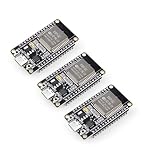
- Dual-Core Performance Up to 240 MHz: Run sensor processing, wireless communication, automation logic and connected-device tasks on a 32-bit dual-core ESP32 platform designed for responsive embedded and IoT projects
- Built-in Wi-Fi and Bluetooth 4.2: Connect to 2.4 GHz Wi-Fi networks or use Bluetooth Classic and BLE for wireless sensors, smart devices, remote controls, home automation and other connected projects
- Flexible Power-Saving Modes: ESP32 power-management features support dynamic clock scaling and low-power operating modes, helping developers reduce energy use in compatible sensing, monitoring and connected-device applications, suitable for battery-powered Internet of Things (IoT) devices.
- USB-C Programming with CP2102: Connect through USB-C for power, sketch uploads and serial monitoring, while GPIO, UART, SPI and I2C interfaces support sensors, displays, motor drivers and other modules (USB-C cable not included)
- Over-the-Air Update Support: Configure OTA functionality through a compatible ESP-32 software framework to update deployed firmware over Wi-Fi without reconnecting the board by USB for every revision
Fix 1: Close the gap between pilot lines and commercial production
The Commission’s evaluation identifies the lab-to-fab gap as a central weakness: Europe has strengthened its technology infrastructure and advanced technologies, but struggles to industrialise them and reach scale. Research success does not establish that a process can deliver the yield, reliability, throughput and cost required by customers.
That transition is difficult for practical reasons. Pilot lines can show that a process works without demonstrating that it will be economical at volume. Start-ups often need substantial capital for reliability testing, customer qualification and production ramp-up. Customers, meanwhile, hesitate to redesign products around a supplier without a proven record. Manufacturing also requires an ecosystem—equipment, materials, packaging, maintenance, software and experienced staff—not simply a fab building.
Chips Act 2.0 should fund the transition explicitly. Support should cover yield improvement, reliability testing, packaging and qualification as well as process research. Grants and other public support should be tied to published milestones, including customer qualification and credible production targets. That lets policymakers distinguish operating capability from a ribbon-cutting or a pilot demonstration.
Fix 2: Make financing crowd in private capital
The Commission says limited private investment, especially late-stage and institutional capital, continues to constrain European semiconductor firms. This is not just a question of spending more. Policymakers should identify which risks private investors will not bear, why, and whether public support is addressing that specific market failure rather than underwriting a project that cannot survive commercially. (Commission evaluation.)
A stronger financing model could provide an EU-level facility for semiconductor scale-ups and use guarantees, co-investment or carefully designed first-loss protection to attract long-term institutional investors. It should separate public-interest resilience projects from projects expected to earn commercial returns, assess the ecosystem value of a project rather than just its headline construction cost, and require credible customers, operating teams and supply-chain access.
Rank #2

- The Raspberry Pi Pico is a beginner-friendly microcontroller board that uses MicroPython to give you a taste of the Internet of Things and microcontrollers. The RP2040 is a well-designed microprocessor that can be utilized in almost any Internet of Things project. It has enough power to complete the task quickly.
- 【Raspberry Pi RP2040 Microcontroller】Raspberry Pi Pico features Dual-core ARM Cortex M0+ processor, flexible clock running up to 133 MHz. With 264KB of SRAM, and 2MB of on-board Flash memory.Supports up to 16 MB of off chip flash memory via a dedicated QSPI bus
- 【Multiple Software Support】Pico has rich and complete software support, it comes with a complete Rasberry Pi official C/C++ SDK, Micropython SDK.The programming and burning of Pico need to be carried out on the computer. Supported operating systems and computers include:Raspberry Pie with Raspberry Pi OS,Other platforms equipped with Debian based Linux system Computer with MacOS, Computers with Windows, etc.
- 【Rich Hardware Interface】Raspberry Pi Pico has 30 GPIO pins, 4 pins for analog signal input and 26 × multi-function GPIO pins, 2 × SPI, 2 × I2C, 2 × UART, 3 × 12-bit ADC, 16 × controllable PWM channels.USB 1.1 supported by host and device, The installation mode can be flexibly selected by users to facilitate welding with other development boards.
- 【Build Project in Tiny Size】Only 2.1cm*5.1cm ( as small as your thumb). Pico has been designed to use either soldered 0.1" pin-headers or can be used as a surface-mountable 'module'.
Support also needs consequences. Agreements should set out investment, capacity, employment and production commitments, with transparent reporting and clawbacks or renegotiation if recipients materially fail to meet them. The goal is not to eliminate industrial risk; it is to make clear who bears it and what Europe receives in return.
Fix 3: Create demand before capacity comes online
A subsidised factory is not viable simply because it has been built. It needs customers willing to qualify, buy or co-design its products. The first Act leaned heavily toward supply; the Commission’s new proposal places greater emphasis on demand. That change should produce practical mechanisms, not just a broader statement of intent. (European Parliament Research Service briefing; Chips Act 2.0 policy page.)
The Tool Desk
Outbyte PC Repair FREERepair Windows errors before they cause bigger problemsFix Now →Outbyte Driver Updater FREEScan for outdated or missing drivers - takes under a minuteDriver Scan →Options include advance purchase commitments, aggregated procurement by public buyers, pre-commercial procurement for European chip designs, and long-term offtake agreements with customers in automotive, industry, telecommunications, energy, healthcare and defence. Design-in incentives could help customers test a European component early enough to include it in a product. Demand aggregation matters for mainstream and specialty chips as well as leading-edge processors.
Procurement should reward resilience and reliable supply, not impose an unrealistic rule that every component be European. A blanket “Buy European” requirement could increase costs, restrict technical choice or overlook the global inputs on which European production itself depends. A July 2026 opinion argued for a stronger European preference or local-value label; that is commentary, not a settled feature of the proposal. (Cinco Días opinion.)
Fix 4: Define strategic projects by the vulnerability they solve
The proposal expands attention to strategic projects across the value chain, including manufacturing, design, equipment, materials, packaging and assembly. “Strategic” should not become a label attached to any large or politically visible investment. A project should address an identified supply vulnerability, have a credible technology and operating plan, show a route to qualified customers, and contribute capabilities likely to endure after public support ends. Cross-border benefits, workforce needs, energy, water, environmental effects and logistics belong in the assessment too. (Commission proposal and evaluation.)
Rank #3

- Brand New 2 pack of chips
- Genuine SST 27SF512 Chips
- Works with many different burners including Burn2
Europe should avoid defining resilience as a race to build every leading-edge process domestically. Its portfolio needs advanced logic for AI and high-performance computing, but also mature-node and analogue chips for cars and factories; power semiconductors for electrification; sensors, radio-frequency and photonics components; secure microcontrollers; and the packaging, testing and integration that turn dies into usable products. A prestigious advanced-node project cannot compensate for shortages in the chips used by vehicles, medical equipment, energy systems and industrial controls.
Advanced packaging deserves particular attention. Chiplets and 2.5D/3D packaging can combine dies made using different processes, and are increasingly relevant to AI, high-performance computing, automotive and industrial uses. The Commission has described a proposed project pairing leading-edge manufacturing with chiplet integration and advanced packaging, with an estimated €3–4 billion in potential public and private investment. That is a project estimate, not a confirmed final EU spending commitment. (Commission project information.)
Policy should fund packaging, assembly and testing alongside wafer fabrication; connect design houses to packaging facilities early; support interoperability and design enablement for chiplets; and measure qualified capacity and yield, not only planned facilities.
Fix 5: Build supply-chain intelligence with safeguards
Governments cannot prepare for a shortage they cannot see. The Commission’s impact assessment says current arrangements rely substantially on voluntary information-sharing outside crises and have not delivered sufficiently deep or timely supply-chain intelligence. The blind spots extend beyond wafer fabs to materials, equipment, packaging, substrates and critical components. (Commission impact assessment.)
A stronger system should collect regular, proportionate information on capacity, utilisation, inventories, lead times and disruptions; stress-test critical sectors such as defence, healthcare, energy, communications and automotive; and set out an escalation process before shortages become crises. It also needs secure, confidential reporting, with data minimisation, aggregation where company-specific detail is unnecessary, cybersecurity protections and independent oversight. Any emergency intervention should have clear limits and due process. Better visibility should not become routine micromanagement or expose trade secrets.
What’s actually slowing this PC down?
Pick the symptom - the matching free tool is one click away.
Rank #4

- 🍭 MOLD SIZE: This mold has 4 cavities. The cavity capacity 1.1 ounces. Please do not use with hard candy. This mold is NOT dishwasher safe and should be cleaned by hand. The molds are not suitable for children under 3.
- 🧁 GET CREATIVE: Create goodies for parties such as birthdays and baby showers or delicious wedding favors. Make candies for holidays such a Valentines Days or Christmas. Unleash your inner artist and use the molds to make custom soaps, bath bombs or wax melts.
- 🍩 BE PROFESSIONAL: Create expert looking confections with the addition of our candy cups in a variety of colors and sizes, our high-quality lollipop sticks and clear cello bags. Take your chocolate molding to a new level with our exclusive Chocolatier's Guide, which explains how to melt, mold, and paint chocolate.
- 🍰 CYBRTRAYD: We are a company dedicated to providing confectionery and soap making tools. We want to provide you with quality tools to make your creative process as easy and fun as possible. Our experts are here to help. Your satisfaction is important to us. Contact us with any quality issues or concerns.
Fix 6: Coordinate state aid across the EU
The proposal maintains the first-of-a-kind state-aid approach, subject to EU competition rules. National governments may provide much of the fiscal support, but their ability to do so differs. Without stronger coordination, wealthier states can outbid smaller ones, subsidy offers can distort location decisions, and cross-border projects can be fragmented by separate procedures. (Commission proposal.)
EU coordination should go beyond approving national subsidies after the fact. Publish comparable data on support, milestones and outcomes; set common expectations for clawbacks and capacity commitments; and require major publicly supported projects to demonstrate EU-wide benefits where relevant. A predictable, coordinated approval path can reduce duplication while leaving legitimate national decisions subject to common rules.
Independent reader supportYour contribution helps us test, update, and keep practical guides available for everyone.Fix 7: Treat skills and infrastructure as part of the investment
Facilities require process engineers, equipment technicians, materials scientists, software specialists, reliability engineers and experienced managers. A project that is approved before its workforce plan is credible risks commissioning delays or an inability to reach stable production. Funding should therefore require plans for recruitment, training and retention, and track whether permanent specialist jobs are filled rather than relying on announced totals.
Training must include vocational and technician pathways, not only university research programmes. Europe also needs practical routes for specialists to move between Member States, recognition of qualifications, retraining from adjacent industries and workforce policies that can attract and retain experienced talent.
Crashes, No Sound, or Screen Glitches?
Random freezes, missing sound and display glitches usually trace back to one bad driver. Find and replace yours safely.Free scan · under a minuteWindows Errors? Fix Them Before They Spread
Repair common Windows errors and clear accumulated junk for a smoother, more stable PC - no reinstall needed.Free scan · no reinstallPower, water, clean-room infrastructure, chemical handling and logistics are equally decisive. One-stop permitting, clear timelines and a coordinating authority can make decisions faster, but not by waiving environmental review. Projects should assess grid and water availability early, plan for reuse and recycling, and account for regional competition for infrastructure. Faster permitting should mean earlier conflict resolution and better preparation—not automatic approval.
Best Value

- Product Features: have the advantages of small size, light weight, long life, high reliability, good performance, and the power consumption is low, so you don't have to worry even if you work for a long time.
- IC chip contains: SN74LS00N, SN74LS02N, SN74LS04N, SN74LS08N, SN74LS32N, SN74LS47N, SN74LS86N, SN74LS90N, SN74LS138N, SN74LS245N SN74HC00N, SN74HC02N, SN74HC04N, SN74HC08N, SN74HC14N, SN74HC32N, SN74HC138N, SN74HC164N, SN74HC165N, SN74HC595N.
- There are 2 models for each model, a total of 40, The packaging is sorted accordingly in plastic storage boxes Including 5 pcs DIP14 socket, 5 pcs DIP16 socket.
- Function: NAND, NOR, Inverter, OR, Decoders/Demultiplexer.
- Wide Applications: suitable for automotive electronics, medical equipment, security monitoring, household Electrical appliances, student experiments and communication equipment.
Replace the single market-share goal with resilience measures
The original political ambition to reach 20% of global semiconductor production by 2030 offers a headline, but market share alone does not tell policymakers whether critical users can keep operating during a disruption. The European Parliament Research Service’s 2026 briefing says the goal is unlikely under current conditions. That is a forecast, not a final result before 2030. (EPRS briefing.)
Keep a market-share measure if useful, but pair it with indicators that describe supply security: qualified capacity for strategically important chips; time needed to replace a disrupted supplier; the number of qualified second sources; capacity and yields in packaging and testing; availability of critical design, equipment and materials inputs; scale-up survival; and the time from pilot demonstration to qualified volume production. Installed wafer capacity matters, but only alongside utilisation, yield and customers.
What the second Act should avoid
- Autarky: Semiconductor supply chains are global. Europe should reduce critical dependencies and diversify suppliers, not promise to make everything domestically.
- Fab-count politics: More buildings do not automatically mean more resilience. The chips must be relevant, qualified and supported by upstream inputs and skilled operators.
- Unconditional subsidies: Public investment should address a defined market failure and have measurable obligations.
- Indiscriminate protectionism: Geographic preference can have costs and may not secure the imported equipment or materials a European plant needs.
- A leading-edge-only strategy: Advanced AI chips matter, but so do mature, power, analogue, sensor and embedded chips used throughout the economy.
The distinction that should guide the negotiations is between resilience, diversification, sovereignty and autarky. Resilience is the ability to withstand and recover from disruption; diversification means having alternatives; sovereignty means controlling or guaranteeing access to capabilities deemed essential. None requires Europe to sever global partnerships. The Commission’s stated objective is to reduce strategic dependencies and vulnerabilities, not end international interdependence. (Commission policy page.)
Chips Act 2.0 will be a stronger policy if it converts Europe’s research base into production that customers will qualify and buy, backed by investors willing to stay through the ramp-up and directed toward genuine supply vulnerabilities. The test is not how much money is announced or how many fabs appear on a map; it is whether Europe can sustain critical capabilities when supply is disrupted.
Quick Recap
Product prices and availability are accurate as of the date/time indicated and are subject to change. Any price and availability information displayed on Amazon at the time of purchase will apply.



