What’s actually slowing this PC down?
Pick the symptom - the matching free tool is one click away.
Some links on this page are affiliate links: if you buy through them we may earn a commission, at no extra cost to you.
NVIDIA NIM stands for NVIDIA Inference Microservices. It is not a new AI model or a fundamentally new inference algorithm. NIM is a productized serving layer: NVIDIA packages a model (or a way to obtain its weights), an optimized inference engine, CUDA and other runtime dependencies, an HTTP API, and deployment artifacts into a container that can run on supported NVIDIA GPUs.
NVIDIA introduced NIM in March 2024 and expanded developer access in June 2024. The current question is less whether it is “new” and more whether its convenience, optimization, support, and portability justify NVIDIA hardware dependence and, for production, NVIDIA AI Enterprise licensing.


The short answer
Inference is the process of running a trained model to produce an output. A microservice is a self-contained service that an application calls over a network. NIM combines those ideas into deployable, NVIDIA-optimized services for language, vision-language, speech, embeddings, biology, and other workloads.
Do these 3 things before closing this tab:
1Clear out junk files and repair common Windows errors2Scan for outdated or missing drivers - takes under a minute3Repair Windows errors before they cause bigger problemsNVIDIA describes NIM as portable across cloud, data-center, workstation, and edge environments, but “portable” means compatible NVIDIA-accelerated environments—not arbitrary AMD, Intel, Apple, or CPU-only hardware. See NVIDIA’s technical introduction and NIM overview.
#1 Best Overall

- Model: 900-2G414-0000-000, Series: Tesla P4
- Integer Operations (INT8): 22 TOPS (Tera-Operations per Second)
- GPU Memory: 8 GB
- Memorty Bandwidth: 192 GB/s, System Interface: Low-Profile PCI Express Form Factor
- Max Power: 50W/75W
Why serving an AI model is difficult
Downloading model weights is only the beginning of production deployment. A team normally must:
- Choose and configure an inference engine.
- Convert, compile, quantize, or otherwise optimize the weights.
- Match precision, memory use, GPU architecture, and multi-GPU execution.
- Configure batching, concurrency, scheduling, tensor parallelism, and latency targets.
- Build an API and add readiness, liveness, logging, metrics, authentication, and rate limits.
- Package CUDA, PyTorch, TensorRT and related dependencies.
- Test every driver, engine, model, and container update.
- Operate the service on Docker, Kubernetes, or another production platform.
NIM attempts to hide much of that assembly work behind validated containers and standard interfaces. NVIDIA’s original launch materials suggested moving from weeks of deployment work to minutes; that is a vendor positioning claim, not a production guarantee.
What is inside a NIM?
A typical NIM may coordinate the following stack:
Model or model access → optimized engine → CUDA/runtime libraries → API and health endpoints → container → cloud, server, workstation, or Kubernetes deployment.
- Model weights, or a mechanism for downloading them.
- An optimized serving engine and model metadata.
- GPU configuration, dependencies, and NVIDIA acceleration libraries.
- HTTP endpoints, often including OpenAI-compatible routes where supported.
- Container and deployment artifacts.
NIM is not one single engine. Depending on the model and service, NVIDIA says it can use TensorRT-LLM, vLLM, SGLang, Triton, PyTorch, or related components. The product layer is the packaging, validation, API, and lifecycle model around those technologies.
How NIM differs from other ways to run a model
| Approach | You manage | Main advantage | Main limitation |
|---|---|---|---|
| Hosted model API | Usually application code, credentials, quotas, and provider settings | Fastest start and least infrastructure work | Less control over data location, hardware, availability, and pricing |
| Self-built serving stack | Model, engine, GPU compatibility, API, orchestration, monitoring, and updates | Maximum flexibility and hardware choice | Highest engineering and operating burden |
| NVIDIA NIM | NIM package plus NVIDIA infrastructure and production operations | Middle ground: self-hosting control with a curated serving stack | NVIDIA GPU dependence and possible enterprise licensing |
Compared with vLLM or SGLang, NIM is a higher-level NVIDIA product rather than simply an open serving framework. Triton Inference Server is a general-purpose inference server; NIM is a model-oriented package that may use Triton or other components underneath.
Deployment in practice
- Choose a model and read its current NIM support matrix.
- Confirm GPU model, driver, container runtime, memory, and any multi-GPU requirements.
- Obtain the appropriate image or hosted endpoint and authenticate to NVIDIA’s registry if required.
- Run and test the service locally or on a GPU server.
- Integrate the HTTP endpoint into the application.
- For production, add Kubernetes, ingress, secrets, TLS, monitoring, quotas, autoscaling, and rollback procedures.
- Verify model licensing and NIM production licensing before serving real users.
A generic container pattern looks like this:
docker run nvcr.io/nim/publisher_name/model_nameNVIDIA’s illustrative completion request uses port 8000:
curl -X POST
  http://0.0.0.0:8000/v1/completions
  -H "accept: application/json"
  -H "Content-Type: application/json"
  -d '{
    "model": "model_name",
    "prompt": "Once upon a time",
    "max_tokens": 64
  }'
These are templates, not guaranteed copy-and-paste instructions. Image names, environment variables, model identifiers, authentication, and GPU requirements vary by NIM. The model-specific documentation is authoritative.
Windows Errors? Fix Them Before They Spread
Repair common Windows errors and clear accumulated junk for a smoother, more stable PC - no reinstall needed.Free scan · no reinstallOutdated Drivers Are Slowing You Down
One free scan finds every outdated or missing driver and matches the right update for your exact hardware.Free scan · exact hardware matchWhere supported, an OpenAI-style client can point to a local endpoint:
from openai import OpenAI

client = OpenAI(
    base_url="http://YOUR_LOCAL_ENDPOINT_URL/v1",
    api_key="YOUR_API_KEY"
)

response = client.chat.completions.create(
    model="model_name",
    messages=[{"role": "user", "content": "Write me a love song"}],
    temperature=0.7
)
API compatibility reduces application changes, but it does not make models interchangeable. Tokenization, context limits, tool calling, structured output, streaming, safety behavior, and error handling still need application-level tests.
Where Kubernetes fits
A NIM container can run by itself, but production fleets need lifecycle management. The NVIDIA NIM Operator helps Kubernetes administrators deploy NIM services, cache model data, describe requirements through custom resources, and support autoscaling. A cache can prevent every new replica from repeatedly downloading large weights.
Do not confuse the products:
- NIM container: the model-serving package.
- NIM Operator: Kubernetes lifecycle tooling for NIM services.
- NVIDIA GPU Operator: broader Kubernetes management of NVIDIA GPU resources.
- NVIDIA AI Enterprise: the commercial software, support, and lifecycle offering.
Current NIM offerings and licensing
NVIDIA’s current documentation separates development access from enterprise production:
- Basic NIM: free for exploration, research, development, and testing; validated on a smaller set of NVIDIA GPUs and released quickly as upstream models become available. NVIDIA says these packages are not part of the NVIDIA AI Enterprise portfolio.
- NIM Certified: the enterprise-production path, with broader hardware compatibility, documented refreshes, CVE handling, rolling inference-stack updates, validation aligned with NVIDIA AI Enterprise branches, and applicable compliance-oriented capabilities.
According to NVIDIA’s FAQ, production use—including serving real end users—requires NVIDIA AI Enterprise licensing. NVIDIA lists a starting signal of $4,500 per GPU per year, or approximately $1 per GPU-hour in the cloud. Treat that as published guidance rather than a universal quote; confirm commercial terms for the exact environment.
That license is separate from the cost of GPUs, hosts, storage, networking, cloud charges, power, cooling, Kubernetes operations, and engineering labor. NIM availability also does not grant rights to use the underlying model. Check the original model license, commercial restrictions, acceptable-use terms, and NVIDIA terms.
Performance: useful evidence, not a guarantee
NVIDIA reports a benchmark of 1,201 tokens per second versus 613 tokens per second for a comparison configuration using Llama 3.1 8B Instruct, one H100 SXM, and 200 concurrent requests. That result shows why optimized packaging can matter, but it is a vendor benchmark, not proof that NIM always beats vLLM, SGLang, Triton, or a custom stack.
Actual throughput and latency depend on model architecture, precision and quantization, input and output lengths, concurrency, GPU count, interconnect, engine version, scheduling, and your latency target. Benchmark the exact workload before making a purchasing decision.
Rank #4
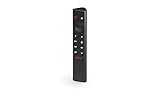
- Works with SHIELD TV 2015/2017/2019 models. Requires upgrade to the latest SHIELD Experience.
- Easy to use in the most darkly lit room. Pick up the remote and the buttons will instantly light up.
- Press the microphone button to access the powerful Google Assistant on your Android TV. Search for new movies, TV shows, or YouTube videos, look up stock prices, or check your commute time, all on your SHIELD TV.
- Customize your menu button with more than 25 choices. Launch your favorite app, enable AI upscaling, or mute your sound, or more! Different options can be applied to up to 3 actions: single press, double press, long press.
- Control your home entertainment center with SHIELD Remote’s built in IR blaster. Control volume, power, or input source.
What NIM does not solve
- It does not guarantee factual accuracy, low hallucination rates, safe outputs, retrieval quality, or correct tool use.
- It does not remove the need for evaluation, observability, capacity planning, security, or incident response.
- It does not make every model run on every GPU.
- It does not eliminate cloud, hardware, power, or licensing costs.
- It does not make a five-minute container launch equivalent to a production-ready service.
NVIDIA states that enterprise support covers the optimized inference engine and runtime, not the model’s generated answers or model quality.
Independent reader supportYour contribution helps us test, update, and keep practical guides available for everyone.Common failure modes
Hardware mismatch or insufficient memory
A fast-moving basic NIM may be validated on only a subset of GPUs. Large models can require multiple GPUs, quantization, tensor parallelism, or a smaller model. Parameter count alone is not a sufficient hardware estimate.
New architecture support arrives first in an open engine
NVIDIA’s documentation notes that vLLM may support a newly released architecture before an official model-specific NIM exists. Direct vLLM deployment can then be the faster route.
Fine-tuned and customized models
Supported fine-tuning methods may work without creating a separate NIM, but support is model- and method-specific. Do not assume every adapter, quantization format, or custom operation will work unchanged.
Recommended Free Tools
Air-gapped operation
Air-gapped deployment requires planned image and weight transfer, registry access, licensing, vulnerability scanning, update procedures, and support processes. Some NIM documentation provides air-gap paths, but they are not automatic.
Updates alter behavior
Pin container, model, engine, and CUDA versions. Test latency, memory, output formatting, and numerical behavior before rollout, and retain a rollback image.
Who should use NIM?
NIM is a strong candidate when an organization already has NVIDIA GPUs, needs private or regulated deployment, wants a standardized API, lacks the staff to tune every serving engine, and values enterprise validation and support. It is especially attractive when the desired model is already covered by a suitable NIM.
Be cautious if the workload must run on non-NVIDIA accelerators, hardware neutrality is strategic, the model is unsupported, the team already operates a mature vLLM/SGLang/Triton platform, or a small workload can be served more cheaply through a hosted API. A startup without GPU operations may find a managed platform such as Amazon SageMaker, Google Vertex AI, or Azure Machine Learning simpler. NIM can also be available through cloud platforms, so these choices can overlap.
Quick wins for a faster PC:
Scan for outdated or missing drivers - takes under a minuteDriver Scan →Clear out junk files and repair common Windows errorsFree Scan →Could NIM change the industry?
Potentially—but through standardization rather than a new algorithm. NIM could make “model as a deployable service” a more repeatable commercial pattern, reduce specialized inference-optimization labor, and make NVIDIA’s software layer as important to buyers as its GPUs.
The same strategy can increase switching costs. Moving between a private data center and a cloud provider may be straightforward inside the NVIDIA ecosystem, while moving to another accelerator family can require a different runtime, container, and optimization path. Its long-term impact will depend on model coverage, pricing, support quality, open-source competition, and non-NVIDIA serving options.
Quick Recap
Questions to answer before buying
- Which exact model, modality, GPU, driver, and NIM release are supported?
- Is the intended use development/testing or production?
- What are the model’s commercial and acceptable-use restrictions?
- What is the measured cost per request at your latency and concurrency target?
- Do you need NIM Certified lifecycle, CVE, compliance, and support features?
- How will you pin, evaluate, canary, monitor, and roll back updates?
- What is your exit plan if you later choose AMD, Intel, another cloud, or an open serving stack?
Product prices and availability are accurate as of the date/time indicated and are subject to change. Any price and availability information displayed on Amazon at the time of purchase will apply.



