Windows Errors? Fix Them Before They Spread
Repair common Windows errors and clear accumulated junk for a smoother, more stable PC - no reinstall needed.Free scan · no reinstallOutdated Drivers Are Slowing You Down
One free scan finds every outdated or missing driver and matches the right update for your exact hardware.Free scan · exact hardware matchSome links on this page are affiliate links: if you buy through them we may earn a commission, at no extra cost to you.
Intel did not disappear, but it lost the advantages that once made it the default leader in PC and server processors. Manufacturing delays weakened its lead, rivals captured important markets, and an expensive attempt to rebuild its factories strained its finances. The company is now trying to recover under CEO Lip-Bu Tan, but early signs of improvement are not proof that the turnaround is complete.
Intel’s decline, in brief
Intel’s troubles were not caused by one bad product or one CEO. The company’s problems compounded over years: it fell behind in manufacturing, remained too dependent on PC and server CPUs as computing shifted, and then took on the cost and risk of rebuilding its manufacturing lead while trying to become a foundry for other companies.
That strategy addressed a real weakness, but required enormous investment before Intel had secured enough outside customers. Meanwhile, AMD strengthened its CPU competition, Arm-based chips spread beyond phones, and Nvidia became the central supplier of AI training accelerators. Intel remains a major chipmaker; the question is whether it can again deliver competitive products and manufacturing economics while spending within its means.
What Intel used to control
Intel’s historic strength was x86 processors for PCs and servers—not every category of semiconductor. It combined chip design with its own factories, a model called integrated device manufacturing. For long stretches, Intel’s manufacturing process lead helped it make fast, efficient chips at scale. Relationships with computer makers and enterprise customers, along with high margins and cash generation, funded further research and factory construction.
#1 Best Overall

- Next‑Gen Platform Support: Compatible with Intel 800 Series Chipset‑based motherboards with LGA1851 Socket enabling PCIe 5.0/4.0 and high‑speed DDR5 memory (up to 7200 MT/s).
- High‑Performance Core Configuration: Features up to 24 cores (8 P‑cores + 16 E‑cores) for demanding gaming and creator
- Ultra‑Fast Boost Clocks: Reaches up to 5.5 GHz max turbo frequency for top‑tier responsiveness and performance
- Built for Enthusiasts: Unlocked for performance tuning when paired with Intel Z‑series chipsets, making it ideal for overclockers and power users.
- Robust Power & Thermal Design: Engineered with 125W base power and 250W max turbo power to sustain high‑intensity
That reinforcing cycle weakened when process technology fell behind. Intel’s delays around 10nm and later generations made its traditional advantage less dependable. TSMC and the companies designing chips for its factories gained credibility and flexibility. Intel’s product teams, too, had to consider outside manufacturing for some products. A factory is not economically successful simply because it is advanced: it needs good yields, enough production volume, customer demand and competitive costs.
How the market shifted away from Intel’s strengths
Intel’s manufacturing problems mattered more because the industry was changing. Arm-based chips became central to smartphones, a major growth market in which Intel did not establish a durable position comparable to its PC business. That was a missed opportunity, not the sole cause of Intel’s decline. Arm later became more prominent in laptops, servers and cloud infrastructure as well.
Intel also faced stronger CPU competition from AMD in PCs and servers. In AI, the largest prize was not simply a faster general-purpose CPU. Nvidia built a dominant position in training accelerators and the surrounding software, networking and systems ecosystem. Cloud companies also began designing or commissioning specialized chips.
Intel still participates in AI-related computing through CPUs, AI PCs, networking, packaging and selected accelerator efforts. Its Core Ultra products target AI PCs, and CPUs remain important in data centers. But participation is different from capturing the accelerator economics and developer ecosystem that have made Nvidia so influential.
Rank #2

- Game Without Compromise. Play harder and work smarter with Intel Core 14th Gen processors
- 20 cores (8 P-cores plus 12 E-cores) and 28 threads. Integrated Intel UHD Graphics 770 included
- Up to 5.6 GHz with Turbo Boost Max Technology 3.0 gives you smooth game play, high frame rates, and rapid responsiveness
- Compatible with Intel 600-series (with potential BIOS update) or 700-series chipset-based motherboards
- DDR4 and DDR5 platform support cuts your load times and gives you the space to run the most demanding games
The costly foundry comeback
In 2021, then-CEO Pat Gelsinger set out to restore Intel’s manufacturing leadership and build Intel Foundry into a business that would make chips for outside customers. The logic was straightforward: stronger manufacturing could support Intel’s own products, outside customers could help fill factories, and more geographically diverse advanced-chip production could matter to customers and governments.
The difficulty was timing and scale. Intel needed to develop successive process generations, achieve competitive yields, build capacity and win customers willing to commit production. Those commitments are hard to win before a foundry has proved its reliability and economics; factories are hard to justify without committed demand. Intel’s product groups also had to decide when its own factories made more sense than external manufacturing.
Intel’s 2025 annual report describes its shift from an internally focused manufacturing model toward a customer-centric foundry business, while acknowledging substantial investment and utilization risks. In 2025, CEO Tan warned that Intel could pause or discontinue its pursuit of 14A and successor leading-edge nodes if it could not secure an external 14A customer, according to the company’s 2025 Form 10-K. That is a stated contingency, not confirmation that Intel has exited foundry manufacturing.
Recommended Free Tools
Financial damage and a change in leadership
The investment burden arrived alongside deteriorating results. Intel reported an approximately $18.8 billion net loss for 2024, suspended its dividend and announced plans to cut about 17,500 jobs. Its workforce was about 108,900 at the end of 2024. These figures show the scale of the reset, but do not mean one round of layoffs solved the underlying product and manufacturing problems. The Associated Press reported on the 2024 loss, dividend suspension and workforce cuts.
Rank #3

- Get ultra-efficient with Intel Core Ultra desktop processors that improve both performance and efficiency so your PC can run cooler, quieter, and quicker.
- Core and Threads 24 cores (8 P-cores plus 16 E-cores) and 24 threads. Integrated Intel Graphics included
- Performance Hybrid Architecture Integrates two core microarchitectures, prioritizing and distributing workloads to optimize performance
- Performance Unlocked Up to 5.7 GHz unlocked. 40MB Cache
- Compatibility Compatible with Intel 800 series chipset-based motherboards
Gelsinger left in December 2024, and Lip-Bu Tan became CEO on March 18, 2025. Tan’s approach has emphasized fewer open-ended investments, a flatter organization, stronger focus on core client and server products, and closer scrutiny of factory spending and customer commitments. Intel planned to end 2025 with about 75,000 core employees, excluding subsidiaries, after layoffs and attrition, according to AP coverage.
Cost cutting can preserve cash, but it is not the same as a turnaround. Cuts that remove essential engineering experience or slow product development could make the operating problems harder to fix. The test is whether Intel can spend more selectively without weakening its ability to execute.
What the recent financial numbers do—and do not—show
| Period | Reported result | How to read it |
|---|---|---|
| 2024 | About $53.1 billion in revenue; $18.8 billion net loss | A severe loss year that prompted workforce reductions and the dividend suspension. |
| 2025 | About $52.9 billion in revenue; about $0.3 billion net loss; operating margin of negative 4.2% | The much smaller net loss is an improvement in the reported figure, not by itself proof of a healthy operating recovery. Restructuring, unusual items, divestiture effects and continuing foundry costs matter. |
| Q1 2026 | $13.6 billion revenue, up 7% year over year; GAAP loss per share of $0.73 and non-GAAP earnings per share of $0.29 | Product demand showed signs of improvement, but Intel was still loss-making under GAAP. |
Intel’s Q1 2026 results also reported Data Center and AI revenue of $5.1 billion, up 22%, and Intel Foundry segment revenue of $5.4 billion, up 16%. Foundry segment revenue includes transactions between Intel businesses, so it is not the same as revenue from outside foundry customers or consolidated company revenue. Portfolio changes complicate comparisons too: Altera was deconsolidated after a transaction closed in September 2025 and is now reflected as an external foundry customer in Intel’s reporting.
Quick wins for a faster PC:
Fix the driver behind crashes, sound loss and screen glitchesFind Drivers →Clear out junk files and repair common Windows errorsFree Scan →Intel 18A: an important milestone, not a verdict
Intel 18A is a leading-edge manufacturing process intended to restore the company’s competitiveness. It incorporates new transistor and backside-power-delivery technologies. Intel said it met its commitment to deliver its first 18A product by the end of 2025; its annual report identifies Core Ultra Series 3 as the first AI-PC platform built on 18A. Those are meaningful milestones, but a process announcement does not establish that Intel has regained manufacturing leadership.
Rank #4
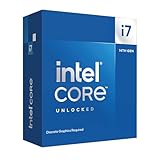
- Game Without Compromise. Play harder and work smarter with Intel Core 14th Gen processors
- 20 cores (8 P-cores plus 12 E-cores) and 28 threads. Discrete graphics required
- Up to 5.6 GHz with Turbo Boost Max Technology 3.0 gives you smooth game play, high frame rates, and rapid responsiveness
- Compatible with Intel 600-series (with potential BIOS update) or 700-series chipset-based motherboards
- DDR4 and DDR5 platform support cuts your load times and gives you the space to run the most demanding games
The harder tests are commercial: whether yields improve, products ship in meaningful volume, performance and power efficiency compete, and the cost per good chip makes sense. Intel also needs customer acceptance and reliable delivery. A technology can work in a product and still fail to attract enough production to support the factory investment.
The 14A customer dilemma
Intel’s next leading-edge process, 14A, makes the foundry challenge especially clear. An outside customer could validate the process, provide volume and help justify capacity. But a customer considering a large production commitment wants evidence of yields, design tools, packaging, confidentiality, reliability and delivery economics first. Intel needs customer commitments to justify future investment, while potential customers want proof before committing.
Intel’s annual-report materials say customers were expected to make 14A decisions in the second half of 2026 and into the first half of 2027. That is a forward-looking company expectation, not a guaranteed schedule. Until Intel lands credible production customers, the economics of building every future node remain uncertain.
What’s actually slowing this PC down?
Pick the symptom - the matching free tool is one click away.
Where Intel stands now
Q1 2026 offered signs of stabilization: revenue rose, and Data Center and AI revenue grew faster than total revenue. Intel also said Xeon 6 was selected as the host CPU for Nvidia’s DGX Rubin NVL8 systems and described expanded relationships with Google and other partners. Such developments support the view that Intel remains relevant in CPUs and related infrastructure. They do not establish that Intel has caught up in AI accelerators or that its foundry business is financially sustainable.
Best Value

- Game without compromise. Play harder and work smarter with Intel Core 14th Gen processors
- 24 cores (8 P-cores plus 16 E-cores) and 32 threads. Integrated Intel UHD Graphics 770 included
- Leading max clock speed of up to 6.0 GHz gives you smoother game play, higher frame rates, and rapid responsiveness
- Compatible with Intel 600-series (with potential BIOS update) or 700-series chipset-based motherboards
- DDR4 and DDR5 platform support cuts your load times and gives you the space to run the most demanding games
Intel still supplies substantial PC and server CPUs, and x86 compatibility matters to many enterprise and cloud deployments. The company also has factories, engineering talent and advanced-packaging capabilities that could matter to customers seeking supply-chain diversification. Strategic importance, however, is not the same as financial safety or a guarantee of renewed leadership.
How to tell whether the turnaround is working
- Manufacturing: Are 18A yields and production volumes rising, with competitive performance, power use and cost? Are outside customers moving from evaluation to production?
- Products: Are client CPUs competitive on performance, efficiency and battery life? Is Xeon holding or gaining useful positions in cloud and enterprise systems? Are launches on time?
- Foundry: Does Intel secure a credible 14A customer? Are factories being built or expanded in response to real demand rather than hoped-for demand?
- Finances: Are revenue and margins improving organically, and is cash generation improving? Are foundry losses narrowing through better utilization rather than simply lower investment?
- Customer trust: Are manufacturers, cloud providers and chip designers willing to rely on Intel’s schedules, yields and support for production products?
These tests involve trade-offs. Spending less can preserve cash but risk future engineering capability. Building ahead of demand can leave Intel with underused factories; waiting for customers can mean missing the chance to serve them. Using outside foundries can help Intel deliver products or control costs, but may leave its own factories with less work. And growth in AI infrastructure does not guarantee that Intel captures the most valuable parts of the market.
Verdict: damaged, relevant, and not yet back
Intel’s crisis came from the interaction of manufacturing delays, missed growth opportunities, stronger competition and a capital-intensive recovery plan. Under Tan, the company is trying to narrow its priorities and tie investment more closely to customer demand. The first 18A products and improved Q1 2026 revenue are encouraging evidence of activity, not proof of a completed comeback. Intel has to show that it can ship competitive products, manufacture them economically, win external foundry customers and generate durable cash while doing so.
Quick Recap
Product prices and availability are accurate as of the date/time indicated and are subject to change. Any price and availability information displayed on Amazon at the time of purchase will apply.



