Some links on this page are affiliate links: if you buy through them we may earn a commission, at no extra cost to you.
This February 2009 interview captures ST-Ericsson’s opening strategy: combine inherited modem, processor and customer assets into a broad 2G, 3G and LTE platform business. “LTE rollout” here means a chip supplier preparing for the next mobile standard—not a schedule for carriers to deploy networks. The interview also reveals the harder task: integrating overlapping businesses while funding a very large research and development operation.
EE Times published its interview with Alain Dutheil, ST-Ericsson’s newly installed chief executive, on February 23, 2009, during Mobile World Congress in Barcelona. The timing mattered: the joint venture had begun operations only weeks earlier, while handset makers and chip suppliers still had to serve existing 2G and 3G markets even as they prepared for LTE.
Dutheil’s message was ambitious but conditional. ST-Ericsson wanted to offer customers a broad set of wireless platforms and components, yet management had not resolved every product overlap or chosen every manufacturing route. The interview is therefore best read as a snapshot of intended strategy and integration challenges, not as proof that the proposed products reached market. Read the original EE Times interview.
Do these 3 things before closing this tab:
1Fix the driver behind crashes, sound loss and screen glitches2Clear out junk files and repair common Windows errors3Scan for outdated or missing drivers - takes under a minuteA new company built from existing businesses
ST-Ericsson was a 50/50 joint venture between Ericsson and STMicroelectronics. Ericsson’s 2009 filing dates its formation to February 2, when Ericsson Mobile Platforms and ST-NXP Wireless were combined. The company was headquartered in Geneva and led by Dutheil. Ericsson’s 2009 filing and its corporate history document the formation and ownership.
#1 Best Overall

- 【Fast Wi-Fi 6, 3000M wireless speed】GL-X2000 provides reliable cellular networks for remote access and high speed internet in urban areas with up to 574Mbps (2.4GHz) + 2402Mbps (5GHz) Wi-Fi speeds.*Speed Tests conducted on a local network. Real world speeds may differ depending on your network configuration.
- 【Dual-SIM with Single Standby】Dual-SIM flexibility for selecting the stronger and faster ISP connection, AT&T & T-Mobile certificated while supporting Network Failover and the option to configure Failover priorities among multiple connection methods.
- 【Multi-WAN】Spitz Plus' cellular 4G router with multi-WAN technology lets users utilize multiple connection methods, including Ethernet, Repeater, Cellular, and Tethering; Load-balancing capabilities let users distribute bandwidth by custom proportion among multiple connection methods.
- 【VPN Tunnelling & Remote Access】Provides pre-installed OpenVPN and WireGuard to support 30+ VPN services and encrypts all network traffic within the connected network so that the network is secured when connecting to a public Wi-Fi. Max. VPN speed of 30 Mbps (OpenVPN); 190 Mbps (WireGuard) *Speed Tests conducted on a local network. Real world speeds may differ depending on your network configuration.
- 【Interchangeable SMA Connectors】The GL-X2000 features four SMA connectors, allowing for the integration of multiple external antennas to enhance the device's performance across various application scenarios.
This was not a clean-sheet LTE startup. Ericsson Mobile Platforms brought mobile-platform and modem experience; ST-NXP Wireless brought mobile-chip assets from ST and NXP. The combination also meant inherited intellectual property, software, product road maps and customer relationships—with overlap among them. The strategic proposition was to turn that breadth into a coherent supplier rather than preserve several competing internal platforms.
Continuity first, consolidation next
Dutheil said the immediate priority was avoiding disruption to customer support while the organizations were integrated. That was a practical prerequisite: handset customers could not simply pause existing product programs while their supplier reorganized. The longer-term work was to determine which platforms, technologies and partnerships would remain.
He described predecessor-company relationships with Nokia (ST), Sony Ericsson (Ericsson Mobile Platforms) and Samsung (NXP). These were inherited relationships that could give the combined company access to important handset makers; they should not be mistaken for commitments by those manufacturers to adopt future ST-Ericsson LTE products.
What “complete solutions” meant
Dutheil’s aim was to provide platforms spanning 2G and 3G, followed “in timely fashion” by LTE, as well as individual components. In principle, that could let a handset maker source several parts of its wireless system from one supplier. The value would depend on both breadth and execution: a wide portfolio is useful only if its components are competitive, integrate well and arrive on customers’ schedules.
Rank #2
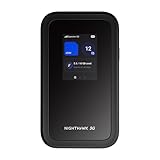
- WIFI 7 SPEEDS UP TO 3.6 GBPS, ANYWHERE YOU GO: Powered by a 5G or 4G cellular connection, M7 delivers fast, reliable WiFi 7 performance. Real-world speeds depend on carrier network, signal strength, location, and connected devices
- GLOBAL COVERAGE WITH NETGEAR eSIM IN 140+ COUNTRIES: Purchase 5G or 4G data plans from the Nighthawk app with no contracts. Requires free NETGEAR account. Coverage and speeds vary by country and carrier
- US CARRIER SUPPORT: The M7 is certified for AT&T and T-Mobile, unlocked for flexible use across compatible carriers. For US local carrier eSIM or SIM activation and data plan details, contact your carrier directly
- POWERFUL BUILT IN SECURITY - includes firewall protection, WPA3 encryption, and automatic firmware updates help protect your data when using public WiFi
- CONNECT UP TO 32 DEVICES AND FREE UP YOUR PHONE: A dedicated hotspot outperforms phone tethering. Connect laptops, tablets, and smart devices simultaneously while keeping your phone free
That balance was especially important in early 2009. HSPA handsets and data dongles were part of the immediate market, while LTE was the next major technology transition. Suppliers had to maintain support for existing generations while developing for a new one. Ericsson later said it launched a commercial 4G network with TeliaSonera in December 2009; that milestone came after the interview, and should not be read as evidence that LTE was already a mass-market reality in February. Ericsson’s history gives the company’s account of the launch.
Overlapping technology—and an unfinished decision
The merger had substantial duplication. Dutheil described three protocol stacks, three potential 3G baseband offerings (including access to Nokia modem intellectual property), and three application-processor options: ST’s Nomadik, NXP’s Nexperia range and Ericsson Mobile Platforms’ technology. The stated goal was to streamline toward one technology base across the group, but the interview did not establish that every product choice had already been made.
For the modem direction, Dutheil said ST-Ericsson intended to advance Ericsson Mobile Platforms’ in-house technology, extending it toward HSPA, HSPA+ and LTE data rates. He also said the company would continue investing in ST’s Nomadik application-processor effort. These were management intentions, not confirmation of a shipping LTE modem or of the architecture’s eventual commercial success.
Recommended Free Tools
The strategic trade-off was clear: retaining overlapping teams and road maps might preserve customer options, but would strain resources; consolidating quickly could lower duplication, but risk disrupting programs or discarding technology customers valued. Dutheil acknowledged the need to persuade customers that the company’s solutions were the best, not merely comprehensive.
Rank #3

- 8K gaming, streaming, and video calls
- Multi-gigabit speeds for 64 devices
- Exclusive 6GHz band
- URL filtering, device blocking, LCD passcode
- 5.8Gbps, up to 2,000 sq. ft. coverage
A large R&D organization with a large bill
Dutheil put the new company at about 8,000 employees, including roughly 7,000 in research and development, and said annual expenses associated with that R&D base exceeded $1 billion. The figure was an expense estimate, not revenue. He also noted that about 500 people had already been laid off when the business was still ST-NXP Wireless.
He did not present the 7,000-person R&D organization as a settled long-term structure. Management was reviewing platforms, resources and possible synergies; decisions were expected in the following weeks, potentially to be discussed with first-quarter results in April. In other words, ST-Ericsson’s challenge was not simply whether it had technical capacity. It was whether it could focus that capacity on products customers would adopt quickly enough to justify its cost.
Independent reader supportYour contribution helps us test, update, and keep practical guides available for everyone.Manufacturing: close to ST, with other routes available
Dutheil characterized ST-Ericsson as fabless while describing a close manufacturing relationship with STMicroelectronics. Long-term contracts covered front-end and back-end operations, and most production was initially expected to remain at ST facilities. The company could also use foundries and outsourced test-and-assembly providers. “Fabless” therefore did not mean operationally detached from a parent’s manufacturing infrastructure.
Free tools Windows power users keep installed
One-click scans. No signup required.
On process technology, Dutheil said ST-Ericsson was designing chips that would require 32-nanometer manufacturing. He discussed more than one possible route: foundry production, including TSMC’s involvement in the Crolles2 32-nanometer effort, or the IBM-led 32-nanometer alliance, with a possible later transfer to Crolles2. He also mentioned work on derivative technologies such as RF CMOS and mixed-signal processes. These were plans and possibilities, not completed production commitments; the interview does not establish yields, costs or volume output.
Rank #4

- 5G High-Speed Internet Gateway Designed for fast and stable connectivity using T-Mobile 5G network
- Model G5AR-1 Official T-Mobile gateway device
- Dual-Band WiFi Support Provides reliable wireless connections for multiple devices simultaneously
- Wi-Fi 7
- Wide Device Compatibility Works with PCs, smart TVs, smartphones, gaming consoles, and smart home devices
The manufacturing choices reflected a broader platform challenge. Advanced modems and related components require close coordination among design, process technology, supply and product schedules. Using ST facilities offered an established relationship; external foundries and outsourced assembly offered alternatives. The interview provides no figures to compare their cost or performance.
What happened after the interview
- February 2, 2009: ST-Ericsson was formed as Ericsson and STMicroelectronics combined Ericsson Mobile Platforms and ST-NXP Wireless.
- December 2009: Ericsson says it launched a commercial LTE network with TeliaSonera.
- August 2013: Ericsson and STMicroelectronics completed the split of ST-Ericsson. Ericsson took the LTE multimode thin-modem business and about 1,800 employees and contractors; ST took most other products and related operations, while the GNSS business went to a third party. The companies’ completion announcement sets out the division.
- 2014: Ericsson said it would discontinue further modem development, citing a smaller addressable market, strong competition, price erosion and rapid technological change. The reasons appear in its 2014 annual report.
The later breakup does not make the 2009 ambition self-evidently irrational. The venture was an attempt to combine scale, customer access and technical breadth at a moment when LTE was becoming strategically important. Its difficulty was converting those assets into a focused and financially sustainable business amid overlapping products, expensive development and a fast-moving market.
Why the interview remains useful
Dutheil’s answers show that the LTE race was not only about predicting a new radio standard. For a semiconductor supplier, it also meant supporting legacy products, choosing which technologies to carry forward, retaining customer confidence, funding advanced development and arranging manufacturing. The interview captures those linked decisions at the moment ST-Ericsson began—not a carrier rollout plan, and not a guarantee that the company’s roadmap would endure.
What’s actually slowing this PC down?
Pick the symptom - the matching free tool is one click away.
Quick Recap
Product prices and availability are accurate as of the date/time indicated and are subject to change. Any price and availability information displayed on Amazon at the time of purchase will apply.



