Quick wins for a faster PC:
Fix the driver behind crashes, sound loss and screen glitchesFind Drivers →Repair Windows errors before they cause bigger problemsFix Now →Scan for outdated or missing drivers - takes under a minuteDriver Scan →Some links on this page are affiliate links: if you buy through them we may earn a commission, at no extra cost to you.
Via Technologies announced on May 2, 2002, in Taipei that it had acquired LSI Logic’s CDMA product operations, including the company’s CDMA standard-products design center in San Diego. The purchase price was not disclosed. The announcement marked Via’s attempt to enter cellular chipsets, but it did not establish that Via received LSI’s Qualcomm license or even that the existing product line would transfer immediately.
What Via announced it was buying
The contemporary account in EDN’s May 2, 2002 report identifies the acquired operation as LSI Logic’s CDMA product operations and specifically names its San Diego CDMA standard-products design center. The center was developing integrated circuits for next-generation wireless voice and data applications. LSI’s product activity covered CDMA chipsets for 2G and 2.5G handset applications.
That description points to an engineering operation and product business, not a documented transfer of every asset associated with LSI’s wireless work. The announcement did not itemize patents, mask sets, inventory, customer contracts, fabrication arrangements, or specific licensing rights. Nor did it say Via was acquiring all of LSI Logic’s wireless business.
Recommended Free Tools
There is also a difference between buying a design operation and obtaining the right to sell products built from its designs. EDN said it was unclear whether Via would immediately take on LSI’s existing CDMA product line. The announcement alone therefore does not establish which products, customers, or commercial obligations changed hands.
#1 Best Overall
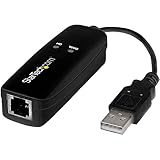
- DIAL-UP & FAX SUPPORT: Hardware-based USB 2.0 Fax modem adds data and fax functionality to your computer / laptop via USB without putting additional load on your CPU; For faxing, rural internet access, security systems, POS credit authorization
- VOICE AND CALLER ID SUPPORT: Make and receive phone calls through your desktop / laptop computer; This portable USB modem supports Caller ID functionality and is compatible with most dial-up ISP (Internet Service Provider) networks
- DATA/FAX MODE SUPPORT: Data: V.92, V.90, V.34, V.32bis, V.32, V.22bis, V.22, V.23, V.21 Bell 212A & Bell 103; Fax: V.17, V.29, V.27, V.21 Ch 2, EIA/TIA 578 Class 1 and T.31 Fax Class 1.0; DTMF support
- TECH SPECS: External 56K Modem; Data Fax; USB Type A; 1 x RJ11 Telephone Jack; 56 Kbps Down, 33.6 Kbps Up Data; 14.4 Kbps Fax V.92; V.44 Compression; Conexant CX93010-21Z; USB Powered; TAA Compliant
- COMPATIBILITY: Drivers available for Windows, Windows Server, macOS (10.9 to 12.x) and Linux (kernel 3.16 and up); Windows Drivers available for download
When the deal was announced—and what it cost
Via announced the acquisition on May 2, 2002, from Taipei, Taiwan. The price was undisclosed. The available contemporary account does not establish a closing date or say whether the consideration involved cash, stock, assumed liabilities, or another arrangement. It is most accurate to describe this as an announced acquisition, rather than to infer undisclosed closing mechanics.
Why LSI Logic was selling
LSI had entered CDMA chipsets in the late 1990s, but contemporary coverage described its effort to compete with Qualcomm as unsuccessful. Its decision to divest the CDMA operation formed part of a broader retreat and restructuring, rather than looking like an isolated, routine sale.
Rank #2

- Mobile Broadband Modem Device For Verizon Wireless That Works With USB Slots
- Surf The Internet, Check Email, Access Corporate Networks - All Over Verizon's Cellular Network
- Operates On Verizon's Rev-A EVDO High-Speed Network
- Blazing Data Download Speeds Reach 2.4 Mbps
- Includes XP, Vista, Windows 2000 and MacOS Drivers
In January 2002, LSI announced plans to cut approximately 1,400 jobs, or 20% of its workforce, while divesting its CDMA and DSL product units, according to EDN’s account. Selling the CDMA operation let LSI reduce exposure to a difficult market; for Via, the same move offered a way to acquire wireless design capability.
Free tools Windows power users keep installed
One-click scans. No signup required.
Why Via wanted a CDMA operation
Via was best known as a PC-chipset supplier and was described in the period as the world’s second-largest supplier in that market. It was pursuing a broader “Total Connectivity” strategy spanning PC, communications, optical, and other components. The CDMA acquisition was intended to extend that strategy into cellular silicon.
Rank #3

- Plug and play: 4G mobile is plug and play, enjoy 4G internet, convenient USB power supply method, connect power device, insert SIM card, use SIM card data to surf the Internet anytime, anywhere.
- Multiple : router adopts multiple design, more secure, WPA/WPA2 encryption, effectively avoid internet squatting, support data control.
- Support Multiple Users: USB portable supports multiple terminals to access the Internet at the same time, and supports 10 devices, such as mobile phones,laptops, computers, smart TVs and other devices.
- USB Powered: Portable supports multiple 4G networks, sharing up to 10 users, powered by devices with USB ports, such as mobile phone chargers, car chargers, power banks, etc.
- High Speed Stable: 4G USB portable provides fast and stable high speed Internet access, high speed 4G internet, stable , feel the wonderful internet life, and fast Internet access.
Via CEO Wenchi Chen presented the deal as a way to strengthen wireless development by adding an experienced design team. That was the company’s stated rationale, not evidence that the acquisition subsequently produced a successful commercial CDMA business. Cellular baseband work required more than an engineering team: a supplier also needed suitable rights, software and protocol expertise, qualification with customers, interoperability, manufacturing scale, and durable customer relationships.
Why the Qualcomm license mattered
The central uncertainty was whether LSI’s Qualcomm license could transfer to Via. A design team’s expertise and a product line’s technical assets do not, by themselves, establish the right to use licensed technology. EDN explicitly reported uncertainty over whether Via could take on LSI’s existing products and whether Qualcomm’s license would transfer.
Rank #4
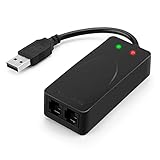
- 56K data/fax modem with USB interface, compliant with V.90, and V.42/V.42bis/MNP5 protocols and V.17, V.29, and V.27ter Group 3 fax protocol.
- Support Auto-Dial, Tone and pulse dialing, Auto answer, Auto retrain.
- Support Windows 98SE/2000/ME/XP/Vista/Win 7.
- Support Caller ID and distinctive ring detect, Auto format/speed sensing, Data/Fax/Voice call discrimination, Single configuration profile stored in host, call forward/fallback.
- 2 RJ11 Ports, you can set your telephone, fax system. Up to 56K data download, 48K data upload, and 14.4K fax communication.Provide Quick Connect and Modem-on-Hold features.
EDN described Qualcomm as having licensed CDMA chipset technology to DSP Communications, LSI Logic, PrairieComm, and VLSI Technology. The report also recounted that Qualcomm had terminated or challenged licensing arrangements after Intel and Philips entered the market through acquisitions involving DSP Communications and VLSI Technology; Intel and Philips reportedly had to renegotiate with Qualcomm at substantial cost. That history made license transfer a material risk for Via, but it does not show that Qualcomm blocked this transaction or that Via definitely lost LSI’s license.
The Tool Desk
Outbyte PC Repair FREEClear out junk files and repair common Windows errorsFree Scan →Outbyte Driver Updater FREEScan for outdated or missing drivers - takes under a minuteDriver Scan →- Design operation: EDN says Via acquired LSI’s CDMA product operations and identifies the San Diego design center.
- Existing products: Immediate transfer of LSI’s CDMA product line was described as unclear.
- Qualcomm license: Transfer was also unresolved in the announcement coverage.
The 2002 competitive landscape
Via was entering a market with a formidable incumbent and substantial technical and commercial barriers. Contemporary analysts cited by EDN put Qualcomm at 90% or more of the CDMA chipset market. That figure is a period analyst estimate, not a current statistic or an independently audited market-share measure.
Best Value
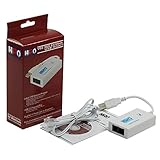
- Dual port built in buzzer, compatible with Windows 10, latest Windows OS installation for Windows 10, 8.1, 8, 7, 32-bit, 64-bit
- Tested on Dell inspiron 3847 Windows 10 home 64-bit -send/receive fax successfully -dial up connection connected to NetZero at 46.6 KBPS
- USB 2.0 plug and play -fast & easy hardware and driver installation - USB powered, no power adapter needed
- Dual RJ-11 phone jack for expansion - dual jack for connecting an additional telephone or answering machine
- Fax compatibility ITU-T- send & receive rates up to 14.4k BPS, mOh - receive phone call during active internet connection
| Company or group | Position described in 2002 coverage |
|---|---|
| Qualcomm | Dominant CDMA chipset supplier; analysts cited at least 90% market share. |
| Texas Instruments | Major baseband and DSP supplier, particularly in GSM and TDMA; EDN did not characterize it as a direct CDMA rival to Qualcomm in the same way. |
| Nokia | Designed CDMA chips for its own phones rather than selling them broadly in the merchant market. |
| Analog Devices, Infineon, and Motorola | Other significant cellphone-chipset suppliers. |
| Intel and Philips | Large semiconductor companies whose CDMA market entries through acquisitions had involved licensing challenges and renegotiations, according to EDN. |
| LSI Logic | A recent CDMA entrant that was divesting its product operation. |
For Via, the challenge was not simply designing a competitive chip. Cellular baseband products had to work within an ecosystem of intellectual-property rights, software and protocol stacks, handset designs, network requirements, and customer qualification processes. Qualcomm’s established position made the task harder; it did not make success impossible, but acquiring a design center alone could not demonstrate that Via had overcome those barriers.
What the announcement leaves unanswered
The May 2002 report establishes the announced transaction and its identified design-center asset, but it does not provide a complete asset schedule or a later business outcome. The following details are not established by that account:
- Purchase price, form of consideration, or closing date.
- Number of engineers or other employees who moved to Via.
- Whether particular patents, mask sets, customer contracts, inventory, or manufacturing arrangements transferred.
- Whether the existing product line transferred immediately.
- Whether Qualcomm approved a license transfer, or the ultimate disposition of LSI’s license.
- Whether Via launched a commercial CDMA product from the acquired operation, generated measurable revenue from it, or later ended its wireless-chip ambitions.
The SEC EDGAR archive for LSI Logic is a starting point for corporate filings, but the available transaction account does not resolve those deal-specific questions. Without a definitive closing or licensing record, the announcement should not be treated as proof that Via obtained unrestricted rights or built a lasting CDMA business.
Windows Errors? Fix Them Before They Spread
Repair common Windows errors and clear accumulated junk for a smoother, more stable PC - no reinstall needed.Free scan · no reinstallOutdated Drivers Are Slowing You Down
One free scan finds every outdated or missing driver and matches the right update for your exact hardware.Free scan · exact hardware matchQuick Recap
Product prices and availability are accurate as of the date/time indicated and are subject to change. Any price and availability information displayed on Amazon at the time of purchase will apply.



