Windows Errors? Fix Them Before They Spread
Repair common Windows errors and clear accumulated junk for a smoother, more stable PC - no reinstall needed.Free scan · no reinstallOutdated Drivers Are Slowing You Down
One free scan finds every outdated or missing driver and matches the right update for your exact hardware.Free scan · exact hardware matchSome links on this page are affiliate links: if you buy through them we may earn a commission, at no extra cost to you.
The UK government plans a free national digital identity credential, but the scheme is not yet a finished product or an operating national system. Its public consultation ran from 10 March to 5 May 2026. The government has also qualified its original proposal for mandatory digital ID in right-to-work checks: digital verification is still intended to be required, but a worker may be able to use other digital documents, such as a passport or eVisa, rather than the new national credential. That distinction matters. The debate is not simply about whether everyone will have to download an app; it is about whether this identity infrastructure will be necessary, safe, inclusive and genuinely optional for other purposes.
For personal-finance users, the stakes extend beyond logging in to government services. If the credential is accepted more widely, it could eventually be used to verify facts about a person in interactions with employers, banks, landlords and other organisations. Whether that happens, what data those organisations could see, and what alternatives people would retain are among the unresolved questions.

What is the proposed UK digital ID?
The proposal is for a reusable digital identity credential, associated with GOV.UK One Login and GOV.UK Wallet, that could help people access public services and prove information about themselves. The government describes its intended principles as useful, inclusive and trusted. It has presented the credential as freely available, but the full design, legal framework, delivery model and programme cost have not been settled.
Free tools Windows power users keep installed
One-click scans. No signup required.
It is useful to distinguish four things that are often collapsed into the phrase “digital ID”:
#1 Best Overall

- FIDO2 SECURITY: Advanced USB-C security key providing FIDO2 authentication protocol support for enhanced login protection
- NFC COMPATIBILITY: Features both USB-C connection and NFC wireless capability for flexible authentication options across devices
- UNIVERSAL SUPPORT: Works seamlessly with major platforms and services that support FIDO2 authentication standards
- COMPACT DESIGN: Small, portable form factor makes it easy to carry on a keychain or in a pocket for security on-the-go
- DURABLE CONSTRUCTION: Robust blue casing protects the internal components while providing clear visibility of the device status
- An account: a way to sign in to a service, such as GOV.UK One Login.
- A wallet: a place on a device to hold or present digital credentials.
- A credential: a verified statement, such as a person’s identity or eligibility for a service.
- An identity database: a system holding source records or information about people. A digital credential does not, by itself, prove that every use is recorded in one central database.
The consultation envisages a digital ID supporting public-service access and potentially enabling digital-verification-service providers to create further credentials using verified information. The important design question is what a check reveals. A privacy-preserving system might confirm only that a person meets a requirement—for example, that they are over 18—without disclosing their full date of birth. The final technical and legal rules will determine whether that kind of minimal disclosure is required, optional or unavailable.
The government has not established in the material available that the system will use a particular biometric technology, create a single record of every transaction, or link health, tax, benefits and immigration records. Those claims should not be treated as settled features. The relevant questions are what data will be used, who can access it, what is logged, and what law restricts future uses.
What is it meant to solve?
The government’s case is that a reusable credential could make identity and eligibility checks quicker, reduce repeated form-filling, improve access to public services and support digital right-to-work checks. It also presents the system as infrastructure for more integrated digital government and wider use by approved organisations. The proposal is described in the government’s digital identity consultation.
Those benefits are plausible, but they are not automatic. A single sign-in may reduce repeated logins without fixing a badly designed service or inconsistent government records. Reusing a verified attribute may be more convenient than presenting documents repeatedly, but it also creates a dependency on accurate records, functioning accounts and an effective process for correcting errors. A digital check might deter some document fraud, while creating other risks such as phishing, account takeover or mistaken matches.
The test is whether the new infrastructure provides demonstrable value beyond existing options, including passports, eVisas, driving licences, current Home Office right-to-work checks and existing identity-verification services. In its report on the government’s plans, the House of Commons Home Affairs Committee questioned why a new mandatory route was needed when official documents were already used in right-to-work checks.
How the policy changed after its launch
- September 2025: The government announced a national digital ID and said digital ID would be mandatory for proving the right to work by the end of the current Parliament.
- After the announcement: The proposal faced criticism over civil liberties, privacy, exclusion, security and the speed of the decision.
- March 2026: The government launched a consultation on the developing system. Its announcement said digital right-to-work verification was still intended to become mandatory, while allowing for other digital evidence, such as a passport or eVisa, rather than requiring the new national credential in every case.
- 5 May 2026: The consultation closed. A People’s Panel was also established to examine public views and trade-offs.
The Home Affairs Committee criticised the initial announcement as rushed and said the lack of prior consultation had damaged public confidence. Its findings and the policy chronology are summarised in the House of Commons Library briefing and the committee’s May 2026 news release.
Rank #2

- Bio-Tap to login: Truly PASSWORDLESS and PINless security key. Cross-device, phishing-resistant login. Fingerprint stays with you—never lost or copied. FIDO2 (Passkey) and U2F login via fingerprint. Works with usb fingerprint reader & USB-C.
- Online web login (Windows): Use WebAUTHN browsers (Chrome, Edge) with contactless NFC or smart card reader to log in to Passkey-enabled sites. Supports laptops, usb hub setups, and fingerprint reader functionality.
- Online web login (Mac & iPhone): Works on Safari with contactless NFC or card reader, or use iPhone NFC. Supports Apple Mac devices and Passkey login. Ideal for two-factor authentication and users of usb security key or yubico alternatives.
- Digital Business Card: Partner with Tapni to activate card as NFC-enabled digital business card. Tap to Phone or Bio-Tap to connect instantly. Share profile like a smart thumb drive. Supports encrypted flash drive-style data linking.
- Device login (Windows only): Use Bio-Tap for Entra ID logins via contactless or contact reader. Or subscribe to ATKey.Login to use ATKey.Card NFC for secure access. Compatible with usb ports and Apple PC biometric authentication.
As of the latest position described in the government’s consultation and parliamentary material, the proposal is being developed; it should not be described as an operational scheme with a settled launch date. The final architecture, legislation, procurement arrangements and full costs remain open questions.
“Voluntary” can mean more than one thing
The government has framed the credential as optional for most purposes, while proposing a mandatory digital-verification environment for right-to-work checks. These positions are not necessarily contradictory: requiring a digital check does not necessarily mean requiring every worker to possess this particular credential. But the practical effect depends on which alternatives count and how easily people can use them.
There are at least four tests for whether a system is genuinely voluntary:
- Legal: Is there a law requiring everyone to obtain the national credential?
- Functional: Can a person still access essential public services without it?
- Commercial: Can an employer, bank or landlord insist on this credential when another accepted route exists?
- Practical: Are non-users subjected to slower checks, extra expense or worse treatment?
A credential can be optional in law yet become difficult to avoid if organisations increasingly prefer it. That is a risk to assess, not a proven outcome of the current proposal. The government will need to specify accepted alternatives and whether essential services can make the credential their only route. For a worker, an especially important safeguard would be a way to keep working while a technical failure or disputed record is reviewed.
The distinction between digital right-to-work verification and possession of the national credential is particularly important for people who are entitled to work but are not British citizens. A digital ID is not necessarily proof of citizenship, and a failed check is not, on its own, evidence that someone lacks the right to work. Errors could stem from a technical problem, inaccurate records or a failed identity check. The rules must make clear who investigates and who bears the cost when that happens.
Recommended Free Tools
Privacy, surveillance and the risk of mission creep
A digital credential does not automatically create mass surveillance. But assurances about privacy principles do not settle how the system will work in practice. The details matter: where source information is held, whether a use produces a record, who can see that record, whether providers can correlate a person’s activity across services and what limits bind future governments.
Rank #3

- PKI FIDO2 SECURITY KEY: This USB-A security key combines X509 digital certificates (PKI) and FIDO for maximum protection. Supports digital signatures, file encryption, and phishing-resistant authentication based on FIDO or PKI. FIDO 2.0 level 1 and U2F certified
- PASSWORDLESS CONVENIENCE: Replace frustrating passwords with a simple 4-digit PIN for accessing apps and sites. Seamlessly login to web apps and Windows sessions
- BROAD COMPATIBILITY: Works with Windows, Linux and USB-A devices. Seamlessly integrates with Identity Providers or Credential Management Systems supporting FIDO2, ensuring secure use across various platforms, including Thales, Microsoft, AWS, and Google
- ENHANCED USER ADOPTION: Features a sensitive presence detector on the USB key, providing ease of use and superior security. Certified for U2F and FIDO2, ideal for individuals who want to secure access to their personal online accounts - Microsoft, Google, Twitter, Facebook, GitHub
- THALES: We offer a wide range of FIDO authenticators, providing robust, phishing-resistant MFA that comply with stringent regulations. With almost three decades of experience, Thales is a pioneer in passwordless authentication devices, supported globally by the FIDO Alliance and industry analysts
Before the system expands, the public should be able to see clear answers to questions such as:
- Can a person prove a specific fact without revealing the underlying document or unrelated personal details?
- Which organisations can issue, accept or verify credentials, and what information can each receive?
- Are records of use visible to the person concerned? How long are they kept?
- Are providers prohibited from combining activity across services or using data for unrelated purposes?
- What legal threshold applies to law-enforcement access?
- Can new uses be added by ministers, or would significant expansions require a fresh Act of Parliament?
- Can users challenge an incorrect record and see who is responsible for correcting it?
Data-protection law is a necessary baseline, not a complete answer to questions about purpose limits, cross-service data correlation or future expansion. Strong safeguards would include statutory limits on use, independent oversight, auditable access, clear deletion rules, separation of datasets where appropriate and a meaningful route to challenge errors. The consultation discusses privacy and the intended use of digital identity, but those principles must be translated into enforceable rules.
Cybersecurity and resilience: what happens when the system fails?
A national credential would be a valuable target for criminals, and a heavily reused identity layer could make an outage or error affect several services at once. The risks go beyond a single database breach. They include stolen phones, SIM-swap attacks, phishing for login details, compromised verification providers, insider misuse, inaccurate source records and denial-of-service attacks.
Quick wins for a faster PC:
Scan for outdated or missing drivers - takes under a minuteDriver Scan →Clear out junk files and repair common Windows errorsFree Scan →Recovery is as important as prevention. Someone who loses a phone or changes their number needs to regain access without relying on the very credential they have lost. A person affected by identity theft needs a fast way to freeze or replace a compromised credential. If an account is locked just before a job, benefit or other urgent transaction, there must be a reliable alternative.
Before broad reliance on the system, the government should publish its threat model and independent security-test results, explain breach notification and account recovery, set measurable resilience targets, and show how people can use services during outages. It should also state who is liable when a system error causes employment or financial loss. The government identifies security and resilience as design priorities, but the final architecture and operational guarantees remain unsettled.
Inclusion is an operational test, not a slogan
The government says the system should be inclusive, including for people without conventional identity documents or who are digitally excluded. Whether it succeeds will depend on actual enrolment, support and fallback arrangements—not simply on whether an app is free.
Rank #4
Potential barriers include not owning a smartphone, using an unsupported or shared device, having unreliable internet access, being unable to complete an automated check, needing disability accommodations, lacking conventional documents, having an unstable address, or needing help in another language. People fleeing abuse may not have safe or private control of their devices. Older or digitally inexperienced users may need face-to-face support.
What’s actually slowing this PC down?
Pick the symptom - the matching free tool is one click away.
Practical questions are still open: Can people enrol through staffed government facilities or local services? Is there a non-smartphone option? Can a person without a passport or other conventional document establish identity through another route? Can someone get help without handing control of their identity to another person? Are support, replacement and correction free, and how quickly are errors resolved?
“Digital by default” can become “digital only” through everyday practice even when policy promises alternatives. A paper, telephone or assisted route is meaningful only if it is easy to find, accepted by employers and public bodies, and does not leave users waiting longer or paying more.
Independent reader supportYour contribution helps us test, update, and keep practical guides available for everyone.Accuracy, biometrics and fair treatment
If the final system uses facial recognition, liveness checks or automated document verification, it will need to address false rejections, false matches and differences in performance between groups. It will also need a non-biometric route, human review and a clear appeal process. The dossier does not establish that the national credential will rely on facial recognition, so it would be premature to describe that technology as a confirmed feature.
Any automated check should be treated as evidence to review, not as an unquestionable verdict. People must be able to correct a wrong name, date of birth or status and receive a fair temporary route while a dispute is investigated. Particular care is needed for people whose appearance or documents have changed, including transgender people and those with facial injuries.
Duplication, cost and accountability
The case for a national credential depends partly on whether it can reduce duplication across existing systems. But consolidation can itself create costs: integrating departments, maintaining accounts and help desks, supporting people who need assistance, handling appeals, securing providers and keeping offline alternatives available. Employers may also face new compliance costs. A software budget alone would not show the total cost of ownership.
Best Value
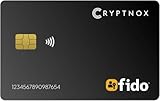
- FIDO2 CERTIFIED: FIDO Alliance Certified FIDO2 v2.1 and CTAP Level 1 for 2FA and MFA on Google Microsoft Apple GitHub login.gov AGOV SwissID and any WebAuthn service
- PASSKEY READY: Works as a hardware passkey for passwordless sign-in where the service enables it and as a U2F and WebAuthn security key everywhere else
- CERTIFIED SECURITY: NXP JCOP 4.5 secure element rated Common Criteria EAL6+ (augmented)
- TAP OR INSERT: Dual NFC ISO 14443 and contact ISO 7816 interface in an ID-1 format smart card that is passive and battery-free
- BUILT TO LAST: Passive smart card made in Switzerland designed by Swiss company Cryptnox and backed by a 2 year manufacturer warranty
A parliamentary answer in March 2026 said the design and delivery model were still subject to consultation; it did not provide a settled programme cost. No definitive total should be inferred from that answer. The government will need to explain what it plans to build or procure, how existing One Login and Wallet infrastructure will be used, whether contracts create vendor lock-in, what ongoing support will cost and what savings are expected. The answer is available in the parliamentary written question on programme cost.
Governance is equally important. The final framework should identify which department owns the system, which regulator supervises it, what role Parliament has in approving new uses, how complaints and appeals work, and who is responsible after a breach or error. The UK Government will also need to explain how the system will work with public services delivered differently across Scotland, Wales and Northern Ireland.
How to judge whether the scheme is ready
The strongest argument for digital identity is that well-designed reusable credentials could make some checks simpler and disclose less information than repeatedly handing over full documents. The strongest objection is not that every digital credential inevitably enables surveillance; it is that broad identity infrastructure can become difficult to avoid and hard to constrain if law, technology and oversight are weak.
Before the scheme becomes routine, look for evidence on seven tests:
- Necessity: What specific problem cannot be solved adequately with existing documents and services?
- Proportionality: Is the information requested limited to what each check needs?
- Privacy: Are minimal disclosure and purpose limits enforceable, with clear rules for logs and provider access?
- Inclusion: Can people use a free, assisted or offline route without a smartphone or conventional documents?
- Resilience: Can people work and access essential services during an outage, lost-device incident or disputed check?
- Accountability: Is there independent oversight, a fast correction and appeal process, and clear liability for harm?
- Value for money: Are lifetime costs, employer costs, parallel alternatives and claimed savings all disclosed?
The decisive issue is not whether digital identity can work technically. It is whether the government can demonstrate that the system solves a real problem while keeping its use limited, its alternatives usable and its failures answerable to the people affected.
Quick Recap
Product prices and availability are accurate as of the date/time indicated and are subject to change. Any price and availability information displayed on Amazon at the time of purchase will apply.



