Do these 3 things before closing this tab:
1Scan for outdated or missing drivers - takes under a minute2Clear out junk files and repair common Windows errors3Fix the driver behind crashes, sound loss and screen glitchesSome links on this page are affiliate links: if you buy through them we may earn a commission, at no extra cost to you.
The United States has not broadly reopened Nvidia’s China market. On January 13, 2026, the Commerce Department moved Nvidia H200 and comparable advanced AI chips from a presumption of denial to conditional, case-by-case license review. A limited number of licenses followed, and a Commerce official said on July 14 that very few H200 shipments had begun. That is materially different from unrestricted exports—and there is no public evidence yet that China-bound shipments have caused a measurable shortage, price increase, or longer lead times for U.S. enterprise buyers.
What the U.S. actually approved
The policy change created a legal route for qualifying exports; it did not authorize every Chinese company to buy H200 accelerators automatically. The rule was announced by the Bureau of Industry and Security (BIS) on January 13 and became effective January 15, 2026. Applications are reviewed individually rather than under a blanket approval. BIS describes the policy change, while the Federal Register rule provides the technical and compliance conditions.

The framework covers Nvidia H200, AMD Instinct MI325X, and comparable products that meet the relevant regulatory requirements. It references thresholds including total processing performance below 21,000 TPP and total DRAM bandwidth below 6,500 GB/s. Those are regulatory tests—not a guarantee that every chip below those numbers is exportable.
H200 is a high-end Hopper-generation accelerator, but it is not Nvidia’s newest platform. Blackwell and Rubin are newer product families, and the January framework described here is specifically about eligible products such as H200 and MI325X rather than a general authorization for Nvidia’s latest chips. The Associated Press provides additional product and policy context.
#1 Best Overall

- Standard Memory: 40 GB
- Host Interface: PCI Express 4.0
- Cooler Type: Passive Cooler
- Product Type: Graphics Card
Five steps that are easy to confuse
“The U.S. approved H200 exports” can describe several different events. They should be kept separate:
- Policy permission: BIS allows applications to be considered under a new review standard.
- U.S. export license: A specific transaction, exporter, product, and customer receive approval.
- Physical shipment: The hardware leaves the United States.
- Chinese import clearance: Chinese authorities allow the equipment through customs and into the market.
- Deployment: The customer installs and operates the GPUs without violating end-use or remote-access restrictions.
A U.S. license does not guarantee Chinese customs approval, delivery, or deployment. Nvidia said in a filing that it had received a license in February for small amounts of H200 products for specific China-based customers, but that it had generated no revenue under the program at the time and did not know whether China would permit the imports. The units also had to undergo inspection in the United States before shipment. Nvidia’s SEC filing explains these limitations.
What conditions apply?
Applicants must satisfy conditions designed to protect U.S. supply and limit national-security risks. Among the key requirements are:
Recommended Free Tools
Rank #2

- GPU processor: NVIDIA RTX A5500
- CUDA cores: 10240
- 24GB GDDR6 ECC Graphics Memory
- System Interface: PCI-Express 4.0 x16
- 1 x DisplayPort to HDMI adapter
- Authorized exports must not delay existing or new U.S. customer orders.
- Exports must not divert foundry capacity that would otherwise serve U.S. customers.
- China and Macau shipments must not exceed 50% of the comparable product volume shipped to U.S. customers for U.S. end use.
- The exporter and recipient must use customer-screening and “know your customer” procedures.
- Transactions must avoid prohibited military, intelligence, nuclear, missile, chemical, and biological end uses or end users.
- Qualifying shipments must undergo testing by a qualified third party in the United States.
- Remote access by prohibited parties must be prevented.
The 50% provision is not a promise that China can receive half of Nvidia’s total H200 production. It is a product-specific comparison tied to relevant shipments to U.S. customers for U.S. end use, and it operates alongside the other licensing requirements.
Have H200 shipments to China actually begun?
According to Reuters reporting on July 14, Commerce Under Secretary Jeffrey Kessler told Congress that H200 shipments had begun but remained “very few” or “minimal.” Reuters also reported that roughly 10 Chinese companies had previously been cleared to buy H200s, with additional companies—including a ZTE unit and other Chinese firms—identified in later reporting. Those reports distinguish approval to purchase from actual delivery.
Reported companies include ZTE Kangxun Telecom, server maker Maginfra, and a Kingsoft subsidiary connected with AMD products. Earlier approved H200 buyers reportedly included Alibaba, Tencent, ByteDance, and JD.com. These reports do not establish that every named company received GPUs or deployed them in China. Reuters’ shipment-status report and its company-approval report provide the available details.
Why China’s decision matters
Washington can approve an export while Beijing still delays, restricts, or discourages the import. Chinese customs, domestic technology policy, end-use scrutiny, and political considerations can all affect whether licensed hardware enters the country.
Quick wins for a faster PC:
Repair Windows errors before they cause bigger problemsFix Now →Fix the driver behind crashes, sound loss and screen glitchesFind Drivers →This creates a two-sided approval process:
- U.S. approval addresses export-control and national-security requirements.
- Chinese approval determines whether the product can be imported, accepted, and deployed locally.
That is why the January policy should not be described as a return to normal Nvidia sales in China.
Could China-bound demand tighten enterprise GPU supply?
It could create additional demand, but a China-driven supply shock has not been established.
Rank #4
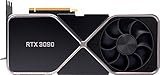
- Chipset: NVIDIA GeForce RTX 3090
- Video Memory: 24GB GDDR6X
- Memory Interface: 384-bit
- Output: DisplayPort x 3 (v1.4a) / HDMI 2.1 x 1
- Nvidia India 3 Year *
Why the risk is real
H200 systems depend on constrained advanced semiconductor, memory, packaging, server, and networking supply chains. Even a limited new sales channel could compete for hardware that enterprise customers already want. The rule’s explicit requirements concerning U.S. orders and foundry capacity show that policymakers recognized this risk. Nvidia has also warned investors that changing export controls can disrupt supply chains, distribution, customer service, and the company’s ability to serve markets.
Why the immediate effect appears limited
- Shipments were described as “very few” or “minimal” as of July 14.
- Each transaction requires case-by-case approval rather than automatic authorization.
- Testing, end-user screening, supply certifications, and Chinese import review add friction.
- H200 is an older generation relative to Blackwell and Rubin, so its supply may not directly determine allocations of the newest platforms.
- No public evidence identified here quantifies a China-caused reduction in U.S. inventory, a price increase, or longer enterprise lead times.
The most defensible conclusion is that the policy creates a potential source of incremental demand, not that Chinese buyers are taking half of U.S. GPU supply or already displacing American customers. The latest concrete shipment evidence in the available record is from July 14, 2026; later shipment volumes, U.S. inventory effects, and pricing changes have not been established here.
What enterprise buyers should check
Organizations purchasing servers, clusters, or cloud capacity should treat export policy as part of infrastructure risk management.
Best Value

- Graphics Card Interface: Pci E
- Verify the transaction, not just the product name. Confirm the exact GPU configuration, seller, exporter, ultimate consignee, deployment country, and end user.
- Separate allocation from availability. Obtain a written delivery schedule. A vendor listing or cloud webpage is not a capacity guarantee.
- Review remote access. A server physically outside China can still raise compliance issues if a restricted entity or user can access it remotely.
- Plan for policy reversal. A license-policy change could affect expansion, replacement parts, support, firmware, or future transfers during a multiyear hardware lifecycle.
- Test software portability. Nvidia’s CUDA ecosystem may reduce migration costs, while AMD or domestic alternatives may require application porting and validation.
- Assess lifecycle value. H200 may fit an existing Hopper and CUDA stack, but newer platforms could offer better performance or longer useful life if they are legally and commercially available.
- Check support geography. Confirm who can provide repairs, technical support, replacement hardware, and software updates across borders.
H200, alternatives, and cloud capacity
Nvidia H200: A reasonable choice when CUDA compatibility, HBM capacity, and existing Nvidia investment outweigh export and allocation risk. It is a poor fit when the buyer needs guaranteed China deployment or long-term certainty that the product will remain transferable.
AMD Instinct MI325X: The most directly relevant alternative in this policy discussion because BIS identified it alongside H200. It may diversify hardware sourcing, but buyers must validate ROCm support and workload compatibility rather than assume drop-in equivalence. See AMD’s product information.
Newer Nvidia platforms: They may offer better performance or lifecycle economics, but their availability and export status require separate verification. A license for H200 should not be generalized to newer products.
Cloud GPUs: AWS, Google Cloud, Microsoft Azure, CoreWeave, and Lambda can be more practical than buying servers for temporary capacity or rapid deployment. Buyers still need to check region, actual capacity, hourly or committed pricing, egress, data residency, and export-control restrictions. Cloud access does not automatically eliminate compliance obligations.
Domestic Chinese accelerators: These may reduce exposure to U.S. export restrictions for China-based deployments, but software compatibility, model support, performance, availability, and serviceability remain decisive. Regulatory durability alone is not enough to justify a production migration.
Bottom line for enterprise procurement
The January 2026 action is a narrow, conditional opening—not unrestricted Nvidia sales to China. Limited H200 shipments reportedly began, but the public evidence describes a small flow and does not show that it has materially disrupted U.S. enterprise GPU supply. Buyers should monitor allocations and lead times, but they should not attribute every shortage or price movement to China exports without transaction-level evidence.
Quick Recap
Product prices and availability are accurate as of the date/time indicated and are subject to change. Any price and availability information displayed on Amazon at the time of purchase will apply.



