Some links on this page are affiliate links: if you buy through them we may earn a commission, at no extra cost to you.
Short answer: Reports described preliminary discussions about a joint venture to operate some of Intel’s chipmaking facilities, with TSMC potentially holding about 20% of that new venture. They did not establish that TSMC was buying 20% of Intel Corporation, or that a final deal had been signed or completed. The distinction matters: the venture’s assets, valuation and terms were not disclosed.
What the reported 20% would represent
The Information reported that Intel and Taiwan Semiconductor Manufacturing Co. (TSMC) were tentatively discussing a new company to operate Intel chipmaking facilities. Under the reported proposal, TSMC would receive roughly 20% of that venture, while Intel and other U.S. semiconductor companies would retain a majority. Reuters also described the proposal as preliminary and reported that Intel and TSMC declined to comment.
That is not the same as TSMC purchasing 20% of Intel’s publicly traded parent company. It is also not necessarily the same as buying 20% of Intel Foundry Services as it currently exists: the reported structure involved a proposed new venture, whose legal form and asset boundaries were not specified. No final ownership table, definitive agreement, closing date or list of facilities was reported.
| What the stake could refer to | What is known |
|---|---|
| Intel Corporation | The reports did not say TSMC was acquiring 20% of Intel parent-company shares. |
| A new chipmaking joint venture | The reported proposal contemplated approximately 20% for TSMC; terms were preliminary. |
| Intel Foundry Services or a separated foundry entity | Whether the venture would encompass all or part of the foundry business was not established. |
| IMS Nanofabrication | A separate Intel-controlled business. In 2023 TSMC acquired about 10% of IMS, while Bain Capital acquired about 20%, according to Intel’s annual report. |
The IMS transaction is one reason a “20%” figure can be confusing: it was Bain, not TSMC, that bought about 20% of IMS. IMS makes semiconductor manufacturing equipment; it is not Intel’s broad chipmaking operation.
#1 Best Overall

- Next‑Gen Platform Support: Compatible with Intel 800 Series Chipset‑based motherboards with LGA1851 Socket enabling PCIe 5.0/4.0 and high‑speed DDR5 memory (up to 7200 MT/s).
- High‑Performance Core Configuration: Features up to 24 cores (8 P‑cores + 16 E‑cores) for demanding gaming and creator
- Ultra‑Fast Boost Clocks: Reaches up to 5.5 GHz max turbo frequency for top‑tier responsiveness and performance
- Built for Enthusiasts: Unlocked for performance tuning when paired with Intel Z‑series chipsets, making it ideal for overclockers and power users.
- Robust Power & Thermal Design: Engineered with 125W base power and 250W max turbo power to sustain high‑intensity
Is there a signed deal?
The available reporting described talks and a tentative proposal, not a completed transaction. It did not establish a binding, definitive joint-venture agreement. A reported outline can change, stall or fall apart; it should not be treated as a closed deal or as a confirmed investment by TSMC.
For investors, the clearest confirmation would be official company disclosures: a signed agreement, an ownership and governance structure, a defined list of contributed assets, and any required regulatory filings or approvals. Until those details appear, the 20% figure remains a reported proposal, not a known ownership position.
What might TSMC contribute?
The reported concept contemplated TSMC providing manufacturing expertise, methods or know-how and training for Intel personnel. The reporting suggested that such contributions could substitute for, or reduce, a conventional cash payment for its proposed interest. It did not disclose the value of any contribution, the rights TSMC would receive, or the scope of any technology license.
Rank #2

- Get ultra-efficient with Intel Core Ultra desktop processors that improve both performance and efficiency so your PC can run cooler, quieter, and quicker.
- Core and Threads 24 cores (8 P-cores plus 16 E-cores) and 24 threads. Integrated Intel Graphics included
- Performance Hybrid Architecture Integrates two core microarchitectures, prioritizing and distributing workloads to optimize performance
- Performance Unlocked Up to 5.7 GHz unlocked. 40MB Cache
- Compatibility Compatible with Intel 800 series chipset-based motherboards
It would therefore be premature to say TSMC had agreed to transfer its proprietary process technology. Know-how could mean a range of things—from operational guidance and training to more formal technology access—and the public reporting did not settle where the proposal fell on that spectrum.
Why Intel might want a partner
Intel has invested heavily in manufacturing capacity while trying to build its foundry business and attract customers beyond its own product divisions. A partner with TSMC’s manufacturing experience and industry standing could potentially help improve operations, lend credibility with customers and share the cost and risk of running capital-intensive facilities. The intended business case would be stronger if the venture could attract outside customers and keep its fabs well utilized; a new ownership structure alone would not guarantee either outcome.
Intel has also disclosed that it may use third-party foundries, particularly TSMC, for products beyond its Intel 18A and 18A-P processes if circumstances require it. That context underscores the complexity: Intel could be seeking help with its own manufacturing operation even as it considers relying on outside manufacturing. See Intel’s filing for its discussion of third-party foundries.
Rank #3

- Game Without Compromise. Play harder and work smarter with Intel Core 14th Gen processors
- 20 cores (8 P-cores plus 12 E-cores) and 28 threads. Integrated Intel UHD Graphics 770 included
- Up to 5.6 GHz with Turbo Boost Max Technology 3.0 gives you smooth game play, high frame rates, and rapid responsiveness
- Compatible with Intel 600-series (with potential BIOS update) or 700-series chipset-based motherboards
- DDR4 and DDR5 platform support cuts your load times and gives you the space to run the most demanding games
Why TSMC might participate—and why it might hesitate
A stake could give TSMC a role in U.S. manufacturing capacity, access to facilities and engineering talent, and influence in a proposed business without requiring it to build every site from scratch. A minority position could also be more politically palatable than outright ownership or control, though that is an inference about the possible appeal of the structure, not a disclosed reason for it.
Quick wins for a faster PC:
Scan for outdated or missing drivers - takes under a minuteDriver Scan →Clear out junk files and repair common Windows errorsFree Scan →The risks are substantial. TSMC could be asked to share valuable expertise with a potential manufacturing competitor, while taking on operational, financial and integration risks tied to Intel’s turnaround. Its other customers may compete with Intel or worry about confidential information reaching a rival. A Reuters analysis highlighted the difficulty and cost of combining foundry operations and the challenge of sharing expertise with a future competitor.
What remains unknown
The proposal’s practical and financial significance cannot be assessed from “20%” alone. The reports did not specify:
Rank #4
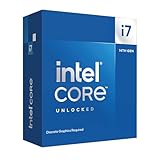
- Game Without Compromise. Play harder and work smarter with Intel Core 14th Gen processors
- 20 cores (8 P-cores plus 12 E-cores) and 28 threads. Discrete graphics required
- Up to 5.6 GHz with Turbo Boost Max Technology 3.0 gives you smooth game play, high frame rates, and rapid responsiveness
- Compatible with Intel 600-series (with potential BIOS update) or 700-series chipset-based motherboards
- DDR4 and DDR5 platform support cuts your load times and gives you the space to run the most demanding games
- Which facilities, equipment, employees, process nodes, intellectual property or customer contracts would be included.
- Whether sites in Arizona, Ohio, New Mexico, Oregon or elsewhere would be part of the venture.
- Whether the new company would own the plants or operate facilities owned by Intel.
- Whether it would make Intel-designed chips, serve external foundry customers, or do both.
- How much cash, if any, TSMC would contribute, and how any know-how or training would be valued.
- The venture’s assets, liabilities, debt, valuation or accounting treatment in Intel’s financial statements.
- Whether TSMC’s minority interest would carry board representation, voting rights, vetoes or operational authority.
- Whether other U.S. chip companies would invest or become customers.
- What regulatory reviews or approvals would apply, or when a transaction could close.
Without a defined entity and valuation, multiplying 20% by Intel’s stock-market value would be misleading. A minority interest in a venture holding selected facilities is not automatically worth 20% of Intel Corporation.
Independent reader supportYour contribution helps us test, update, and keep practical guides available for everyone.Government involvement is a separate issue
Reporting said White House and Commerce Department officials were encouraging Intel and TSMC to consider an arrangement. That does not mean the government owns the proposed venture, guaranteed the deal, approved it, or required TSMC to accept particular terms.
The Tool Desk
Outbyte PC Repair FREEClear out junk files and repair common Windows errorsFree Scan →Outbyte Driver Updater FREEScan for outdated or missing drivers - takes under a minuteDriver Scan →The U.S. government did separately become an Intel shareholder in 2025. Intel disclosed a completed $8.9 billion transaction for approximately 9.9% of the company, along with a conditional warrant for up to an additional 5%; the transaction closed on August 27, 2025. See the transaction announcement and the closing filing. That government investment was in Intel itself and is separate from the reported TSMC joint venture.
Best Value

- Game without compromise. Play harder and work smarter with Intel Core 14th Gen processors
- 24 cores (8 P-cores plus 16 E-cores) and 32 threads. Integrated Intel UHD Graphics 770 included
- Leading max clock speed of up to 6.0 GHz gives you smoother game play, higher frame rates, and rapid responsiveness
- Compatible with Intel 600-series (with potential BIOS update) or 700-series chipset-based motherboards
- DDR4 and DDR5 platform support cuts your load times and gives you the space to run the most demanding games
A venture involving a foreign semiconductor company and strategically important U.S. facilities could raise questions about national security, foreign ownership and control, export controls, antitrust, customer confidentiality and conditions attached to public funding. Taiwanese approvals or political considerations may also matter. The available reporting does not establish which reviews would be required or whether any have taken place. Majority ownership by Intel and U.S. companies, if retained, might address some political concerns, but ownership percentage alone would not resolve questions about operational control, sensitive technology or access to customer information.
What the proposal could mean for shareholders
For Intel shareholders, a successful arrangement could reduce the capital and operating burden of running fabs alone, bring outside expertise, improve utilization and help attract customers. It could also dilute Intel’s economic interest in the contributed assets, reduce its strategic discretion or create complicated governance and related-party questions. Even if TSMC contributes meaningful expertise, the venture would still need competitive manufacturing performance, adequate funding and customers.
For TSMC shareholders, the potential upside is a larger U.S. footprint and influence over additional capacity. The counterweights include management distraction, exposure to Intel’s execution risks, the possibility of technology leakage, political scrutiny and conflicts with customers. Neither shareholder group can infer the financial impact from a headline percentage without knowing what is being contributed and what rights accompany the stake.
Recommended Free Tools
The key test is whether the arrangement improves manufacturing economics and performance—not merely whether ownership is reorganized. A venture could transfer assets without fixing yield, cost, demand or customer-confidence problems.
Quick Recap
Product prices and availability are accurate as of the date/time indicated and are subject to change. Any price and availability information displayed on Amazon at the time of purchase will apply.



